What that sudden wave of pounding, shaking alarm actually is, why an adrenaline dump can arrive with no frightening thought behind it, and what an autonomic evaluation measures.
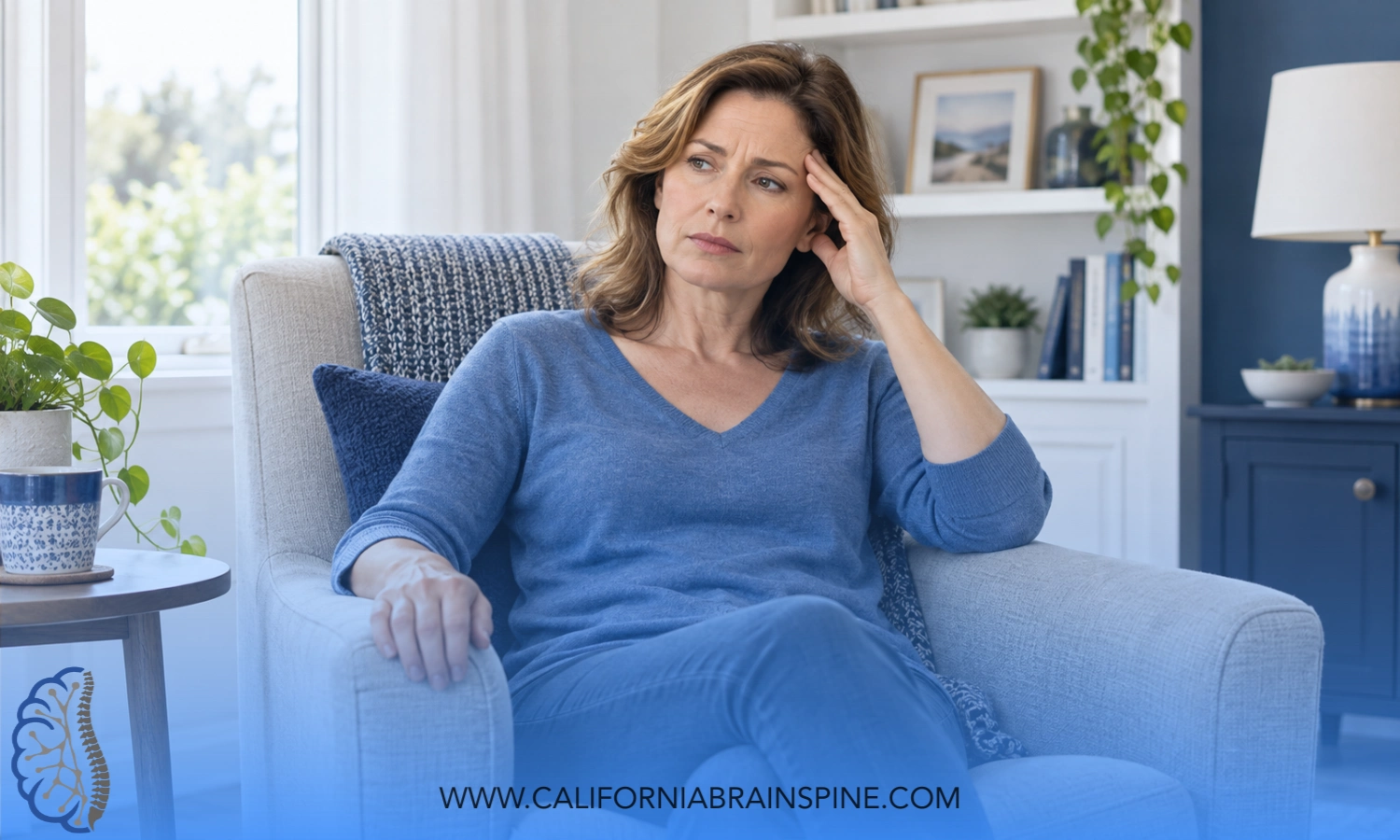
An adrenaline dump is a sudden surge of the body's fight-or-flight chemistry, and in people with POTS it can arrive with no frightening thought behind it. If your heart slams, your hands shake, your chest goes tight and a wave of dread turns up out of nowhere, you are not overreacting and you are not failing to cope.
I am Dr. Alireza Chizari, DC, DACNB, a board-certified chiropractic neurologist at California Brain & Spine Center in Calabasas. Most people who come to see me about these surges arrive with a normal ECG, normal bloodwork, and the conclusion that it is stress. Those results are worth having, because they rule real things out. What they do not explain is why the heart rate climbs the moment you stand, why the surges cluster at three in the morning, or why heat as an adrenaline-dump trigger can turn a hot shower into an episode.
This article covers what an adrenaline dump is, what it feels like during and after, why POTS can drive the pattern, how it differs from a panic attack, and what a POTS evaluation and treatment plan actually looks at before anyone recommends care.
Key Takeaway
An adrenaline dump is a sudden release of the body's fight-or-flight chemistry, which raises heart rate, cardiac output, blood pressure and blood glucose. The phrase is patient language rather than a diagnosis. In POTS, these surges are commonly described alongside a nervous system that struggles to regulate circulation on standing, and they deserve evaluation rather than reassurance.
What Is an Adrenaline Dump?
An adrenaline dump is the body's fight-or-flight response firing hard and fast: the adrenal glands release adrenaline into the bloodstream, and heart rate, cardiac output, blood pressure and blood glucose all rise while blood is redirected to the large muscles. The phrase is patient language, not a formal diagnosis.
The chemistry itself is well described. A peer-reviewed review of the stress response puts it plainly: these hormones trigger the classic fight-or-flight response by increasing heart rate, cardiac output, blood pressure and blood glucose, while redirecting blood flow to skeletal muscles. Almost everything an adrenaline dump feels like is somewhere on that list. The pounding chest, the tremor, the sudden alertness, the strange clarity followed by a crash: that is a system doing exactly what it was built to do, at a moment when nothing is chasing you.
What the phrase is not is a diagnosis. It is the words patients use for the experience. The closest clinical construct is the hyperadrenergic phenotype of POTS, which a peer-reviewed review of postural orthostatic tachycardia syndrome characterizes by an excessive increase in plasma norepinephrine, at or above 600 pg/mL, together with a rise in systolic blood pressure of at least 10 mmHg while standing upright for ten minutes. That is something a clinician tests for. It is not something anyone can conclude about themselves from how hard a bad episode hit.
Both things can be true at once, and holding them together is the useful position: the experience is real and physiological, and the label patients use for it is a description rather than an answer.
What Does an Adrenaline Dump Feel Like?
Many people describe an adrenaline dump starting in the chest. A pounding or racing heart, internal trembling nobody else can see, a rush of heat and then sweating or chills, chest tightness, air hunger, nausea, and a wave of dread with no matching thought behind it. Afterwards, many people describe feeling shaky, foggy and drained.
Adrenaline dump symptoms during the surge
- A pounding, racing or forceful heartbeat, sometimes with beats that feel skipped or out of rhythm.
- Internal shaking that stays invisible to everyone else in the room, which is part of why it is so isolating.
- A rush of heat, then sweating or chills, which many people describe within the same episode.
- Chest tightness and air hunger, the sense that a breath is not going all the way down.
- Nausea or a sudden, urgent need for a bathroom.
- A wave of fear or dread with nothing behind it, arriving before any thought that could explain it.
Adrenaline dump symptoms in the hours afterwards
The aftermath is the part patients most often leave out of the appointment, and many people describe it as the harder part of the episode. Many people describe shakiness and a heavy fatigue out of proportion to what happened, brain fog, a low tolerance for noise and light, and no reserve left for anything else that day.
That combination overlaps heavily with POTS itself. The National Institute of Neurological Disorders and Stroke notes that POTS can cause lightheadedness or dizziness, fainting and palpitations which often occur upon standing, and that some people may also have blurred or tunnel vision, weakness in the legs, chest pain, fatigue, sleep problems, digestive issues, shortness of breath, and difficulty concentrating. An adrenaline dump may be part of that same picture rather than a second illness stacked on top of it. Nausea during adrenaline surges may belong to the digestive issues POTS can cause.
Why Do Adrenaline Dumps Happen in POTS?
POTS is part of a group of disorders that feature orthostatic intolerance, which NINDS describes as symptoms that occur when a person stands up and can be relieved by lying down. That sentence locates the problem in the transition between positions rather than in the person's temperament, which is the reframe the rest of this article rests on.
The compensation, not the original problem
When someone stands, gravity pulls blood toward the legs and abdomen. Less blood returns to the heart, and the autonomic nervous system compensates by driving heart rate and blood vessel tone to keep the brain supplied. In some patients that compensation overshoots, and the sympathetic response that was meant to be a correction becomes the loudest thing in the body.
This is the reframe that tends to land hardest in a consultation room. What a person feels during an adrenaline dump is usually the compensation rather than the underlying fault. The body may be over-solving a circulation problem, and the over-solving is what hurts.
Why Can POTS Feel Like an Adrenaline Rush?
This short animation shows the same physiological idea in simple terms. When standing changes how blood circulates through the body, the autonomic nervous system may increase sympathetic activity to help maintain circulation. That response can feel intense and may include a racing heart, shakiness, sweating, dizziness, or a strong fight or flight sensation.
A simple visual explanation of why a POTS episode can feel like a sudden adrenaline rush even when there is no actual danger.
The defining sign of POTS is measured rather than felt. NINDS describes a heart rate that may increase by more than 30 beats per minute or exceed 120 beats per minute within 10 minutes of standing, usually improving again on lying down, with a threshold of at least 40 beats per minute in adolescents. Those are diagnostic criteria a clinician applies with proper measurement. They are not a home test, and a smartwatch reading on a bad morning is not a diagnosis.
The hyperadrenergic phenotype, and why it is not a self-diagnosis
Patients who read about adrenaline dumps often arrive convinced they have the hyperadrenergic subtype, and the reasoning is understandable. The evidence asks for more caution than that. A peer-reviewed study of symptom presentation by POTS phenotype found that the standing serum norepinephrine cut-off of 600 pg/mL may serve better to rule out hyperadrenergic POTS rather than rule in. The test that defines the subtype is better at telling you what you do not have.
The same study is blunter still about symptoms: POTS phenotypes are not distinguishable based on symptoms alone, and if phenotyping is sought, testing is necessary. How hard the surges hit, how often they come, and how frightening they feel say nothing reliable about which subtype is present. That is not a reason to doubt the symptoms. It is a reason to measure.
Why the pattern often starts when it does
POTS commonly begins after a pregnancy, major surgery, puberty, trauma or a viral illness, and NINDS notes that recent studies suggest a link between COVID-19 and the development of POTS, with some people who have Long COVID going on to develop it. For many patients the adrenaline dumps start in the same stretch of life as the rest of the picture, which is one reason a careful history earns its place beside the testing. A pattern that began in the weeks after an infection is telling you something a symptom checklist cannot.
Why do adrenaline dumps happen at night?
Night-time surges are commonly described and poorly explained. NINDS does list sleep problems among the symptoms POTS may cause, and the connection between autonomic regulation and sleep is real. Beyond that, an honest answer is that the mechanism behind waking in the small hours with a hammering heart is not settled, and a confident explanation would be a guess dressed up as science. What can be said is that waking at night with a racing heart is common enough to be worth recording carefully rather than dismissing.
Patients rarely tell me the racing heart is the worst part. It is not knowing when the next one is coming.
Is an Adrenaline Dump the Same as a Panic Attack?
Not the same, and the difference is not that one is real and the other is not. Both are real. They are defined on different axes, which is why the two get confused so often, and why that confusion can contribute to a delayed diagnosis.
A panic attack is defined by the experience and its context. The National Institute of Mental Health describes panic attacks as characterized by a sudden wave of fear or discomfort or a sense of losing control even when there is no clear danger or trigger. An adrenaline dump, as patients use the phrase, is defined by the physiology: the fight-or-flight surge itself, whatever set it off.
The overlap between an adrenaline dump and a panic attack is well recognized, and it has consequences. The same review of postural orthostatic tachycardia syndrome notes that patients with POTS can be misdiagnosed as having severe anxiety, panic disorder, or chronic fatigue syndrome, because of their similar clinical features, and that some of the physical symptoms of POTS, such as tachycardia and palpitations, are similar to those of anxiety, but POTS is not caused by anxiety.
Two things follow, and both of them matter. The first is that being told your surges are anxiety does not settle whether POTS is also present, because the physical features overlap and the misdiagnosis is documented. The second, which gets said far less often, is that having anxiety or a panic disorder does not exclude POTS either, and neither does being treated for it. Panic disorder is a real condition in its own right, and nothing in this article diagnoses it in you or rules it out.
What a clinician can do is measure the physiology, and that is the practical route into how POTS surges differ from panic attacks in a given person. If the heart rate response to standing is abnormal on proper testing, that finding stands on its own, independently of how frightened anyone was at the time. And if the standing response is normal, that is genuinely useful information too, because it moves the search somewhere more productive than the space between "it is all in your head" and "nobody knows".
How Do You Stop an Adrenaline Dump Once It Starts?
There is no switch. Once an adrenaline dump is running, the useful goal is to take load off the system and let it settle, and to do it the same way every time so that the response becomes familiar rather than frightening. What follows are general comfort measures, not treatment, and they are more useful once the underlying drivers have actually been identified. The fluid and salt point in particular needs your own clinician's approval before it becomes a habit.
- Get horizontal and get your legs up. Orthostatic intolerance describes symptoms that appear on standing and can be relieved by lying down, so taking the upright load off is the first thing worth trying.
- Lengthen the exhale. Breathing out for longer than you breathe in is a widely used self-regulation technique, and it is easier to hold on to than a complicated one when your chest is tight.
- Cool down. Heat is a trigger patients describe often, so a cooler room or a cold cloth on the neck is a reasonable first move.
- Fluids and salt, if your clinician has cleared them. Increasing blood volume by adding extra salt to the diet and drinking more fluids, and reducing venous pooling by using compression garments, is recommended in POTS. It is not appropriate for everyone, so confirm it with your own physician first.
- Name what is happening. Naming the reaction is a standard grounding technique, and it gives you something deliberate to do while the surge runs its course.
- Write it down afterwards. Time of day, what came before it, how long recovery took, what you had eaten and drunk. A few weeks of that record gives an evaluation something concrete to work with.
Beyond the moment, the first line of management in POTS is not a drug. Alongside the salt, fluid and compression measures above, NINDS notes that research suggests cardiovascular rehabilitation with physical activity that slowly builds in intensity can also improve tolerance to standing, while adding that because some people with POTS also have exercise intolerance, this is not recommended for everyone. That caveat is not a footnote. Getting the dose wrong is how a graded programme turns into a week of adrenaline dumps, which is why the programme is built after the evaluation rather than before it. That sequence, evaluation first and programme second, is how POTS is treated at the clinic.
When an Adrenaline Dump Is Not an Adrenaline Dump
Not every racing heart and tight chest is a surge from a dysregulated autonomic system, and the assumption that it must be is dangerous. The National Heart, Lung, and Blood Institute's guidance on heart attack symptoms is to call 9-1-1 for emergency medical care, even if you are not sure that you're having a heart attack. Uncertainty is a reason to call, not a reason to wait.
If symptoms come on suddenly or severely - a sudden severe headache, weakness, trouble speaking, vision loss, or fainting - that is an emergency. Call 911 or go to an emergency room, not a clinic appointment.
Not Sure Whether Your Surges Are POTS?
A structured autonomic evaluation measures what your body actually does on standing instead of guessing at it. That measurement is where a real plan starts.
How Is an Adrenaline Dump Evaluated in Calabasas?
At California Brain & Spine Center in Calabasas, Dr. Alireza Chizari, DC, DACNB, a board-certified chiropractic neurologist working in functional neurology, begins with a 120-minute neurodiagnostic assessment rather than with a plan written off the symptom list. The purpose is to find out which system is generating the surges before anything is recommended.
I trained as an engineer before I trained in healthcare, and it still shapes how I work: measure the system before adjusting it. In practice that means orthostatic heart rate and blood pressure responses, pupillary light-reflex measurement, eye-movement testing, and balance measures, because autonomic symptoms, dizziness, brain fog and concussion history interact in ways that a symptom list alone does not reveal. More about my background.
The reason for the measurement is not thoroughness for its own sake. POTS phenotypes are not distinguishable based on symptoms alone, and if phenotyping is sought, testing is necessary. Two patients can describe an identical adrenaline dump and have entirely different findings on standing, and the plans that follow are different too.
| What patients typically describe | Patterns that suggest something more | What the evaluation looks at |
|---|---|---|
| Heart pounding within moments of standing up | Fainting, or a fall that caused an injury | Heart rate and blood pressure measured across ten minutes of standing, against the published criteria |
| Internal shaking, heat, then chills | Chest pain, or any symptom that could be cardiac | Cardiac causes ruled out first, because uncertainty about chest symptoms is an emergency-care question |
| Adrenaline dumps that wake you in the early hours | Episodes becoming more frequent, or harder to recover from | A symptom record read against sleep, activity, hydration and meals |
| A wave of dread with no matching thought | Sudden fear or a sense of losing control with no clear danger or trigger at all | The measured standing response, which sits alongside any anxiety or panic assessment rather than replacing it |
| Brain fog and flattening fatigue after a surge | New neurological signs such as weakness, numbness or changed speech | Eye movements, pupillary responses and balance, which map how the brain is handling load |
| Symptoms that began after an infection or a pregnancy | A picture that is steadily progressing rather than fluctuating | History taken across the events POTS commonly follows, including viral illness and Long COVID |
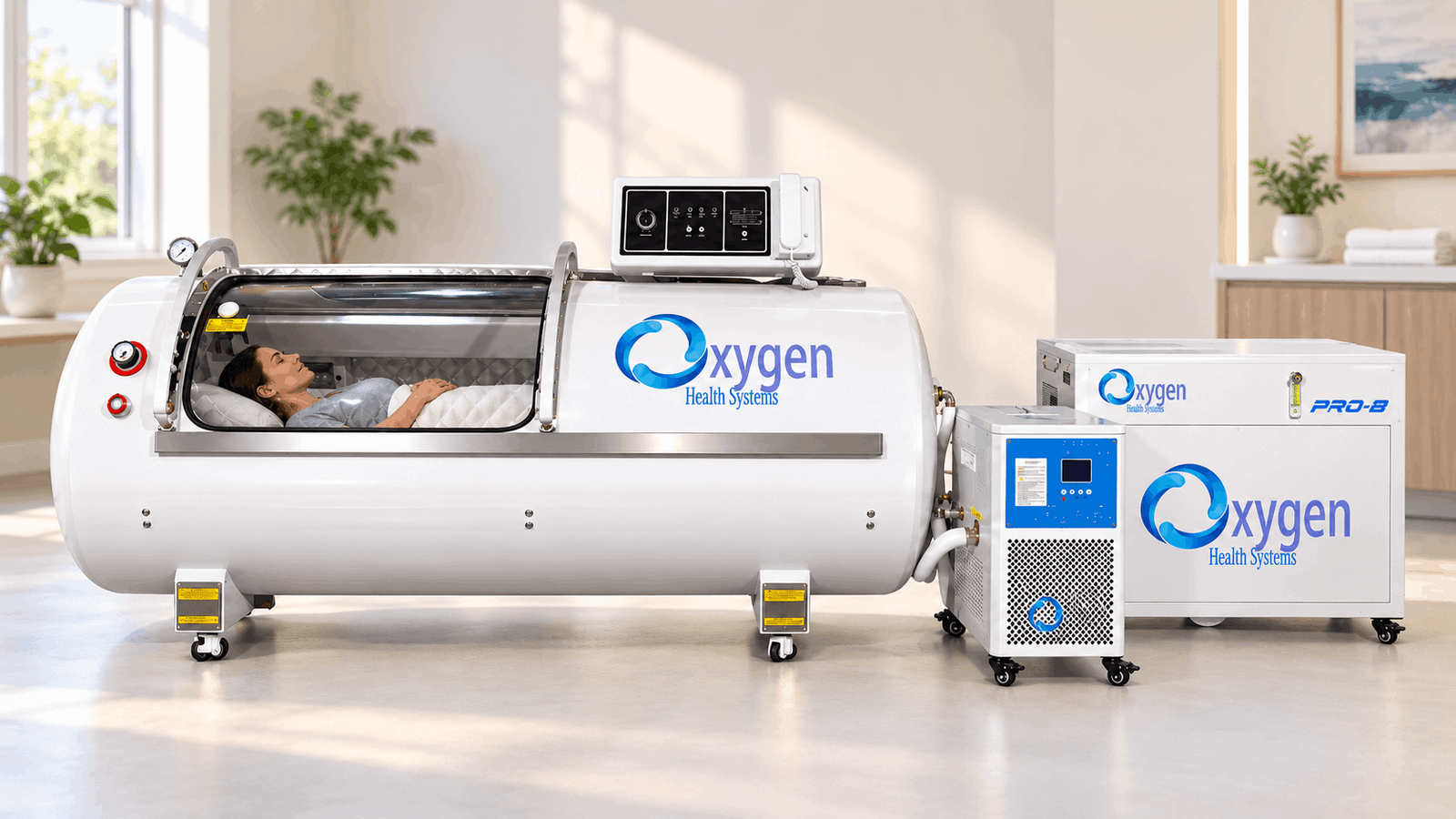
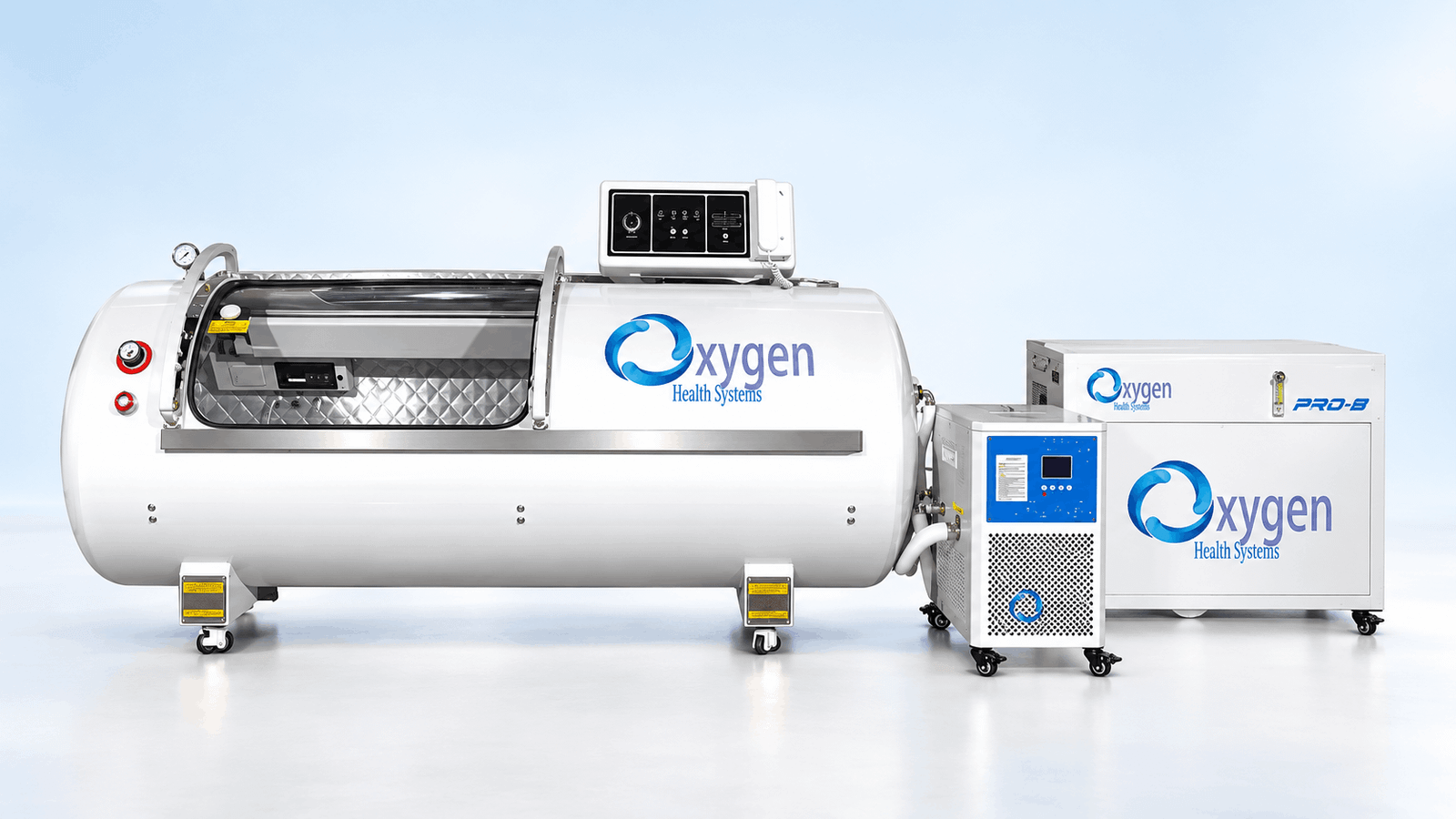
Where the findings support it, care may include Vestibular Rehabilitation when dizziness and motion sensitivity are feeding the system, Cognitive Rehabilitation where brain fog and task intolerance dominate, or NeuroSensory Integration for a nervous system that has become over-reactive to ordinary input. Some patients may also benefit from carefully selected non-invasive support: LLLT, which is low-level laser therapy; PEMF, pulsed electromagnetic field therapy; HBOT, hyperbaric oxygen therapy; or GammaCore vagus nerve stimulation, a hand-held device that stimulates the vagus nerve through the skin of the neck. Each of these is considered when clinically appropriate after evaluation rather than as a default. Where the pattern points more broadly at dysautonomia than at POTS specifically, that changes the plan too, and the dysautonomia care page is where that wider picture is set out.
Patients travel to the Calabasas clinic from Woodland Hills and across the wider San Fernando Valley and greater Los Angeles area, and the practice works alongside primary care, medical neurology and cardiology rather than in place of them. If a cardiologist has already ruled out a cardiac cause, that work is not repeated. It is used.
What Happens When Someone Has Had Adrenaline Dumps for Years?
Cases like this are common in our Calabasas clinic, and the pattern is worth describing because almost everyone thinks their own version of it is unusual. Someone who commutes the 101 from Woodland Hills has been having adrenaline dumps for a couple of years and has been told more than once that the tests are normal. The surges wake her. She has started building her life around them: no early meetings, no hot yoga, an aisle seat, always.
On testing, her heart rate response to standing is abnormal, and it stays elevated well into recovery instead of settling, which may suggest the system is not switching back down after effort. Eye-movement testing shows she loses target stability under visual motion, and her worst weeks turn out to be the ones with the most screen time. None of that was visible from the symptom list she had been carrying between appointments.
The plan that follows is unglamorous. Fluids, salt and compression cleared with her own physician, since that is the combination recommended first in POTS and it is not appropriate for everyone. A graded activity programme built deliberately below the threshold that provokes a surge, because activity that builds slowly in intensity is not recommended for every patient with POTS either. Rehabilitation aimed at the visual and vestibular load that keeps setting one off. Every part of it is measured against the same standing test that started the process rather than against how the week happened to feel.
Not every case moves this way, and it would be wrong to present it as though it did. Cases like this are a pattern worth recognising, not a promise.
Common Questions About Adrenaline Dumps
Is an adrenaline dump the same as an anxiety attack?
Not necessarily. NIMH defines a panic attack by a sudden wave of fear or a sense of losing control even when there is no clear danger or trigger. An adrenaline dump names the physical surge itself. POTS is also commonly misdiagnosed as panic disorder because the physical symptoms overlap, and POTS is not caused by anxiety.
What do adrenaline dump symptoms feel like the day after?
Many people describe a shaky, drained, foggy stretch once the surge settles. NINDS lists fatigue, sleep problems and difficulty concentrating among the symptoms POTS may cause, which is the same territory. If adrenaline dump symptoms are becoming more frequent or harder to recover from, that is worth an evaluation rather than endurance.
Can an adrenaline dump happen at night?
Yes, waking with a pounding heart is a commonly described version of an adrenaline dump. Why it clusters at night is not settled, and a confident mechanism would be a guess. NINDS does list sleep problems among the symptoms POTS may cause. Record the times and what preceded them, and bring that record to an evaluation.
How is POTS actually diagnosed?
POTS is diagnosed on a measured response to standing, not on how a bad episode felt. NINDS describes a heart rate that may increase by more than 30 beats per minute, or exceed 120 beats per minute, within ten minutes of standing, with a higher threshold in adolescents. A clinician applies that criterion.
Where can I have an adrenaline dump evaluated near Calabasas?
California Brain & Spine Center is at 4768 Park Granada, Ste 107, Calabasas, CA 91302, serving Calabasas, Woodland Hills and the greater Los Angeles area. Dr. Alireza Chizari, DC, DACNB performs the neurodiagnostic assessment personally. Book a complimentary consultation at californiabrainspine.janeapp.com or call (818) 649-5300.
This content is for educational purposes only and is not medical advice. Consult a qualified healthcare provider about your specific situation.
If your body keeps slamming into fight-or-flight for reasons you cannot name, the next step that helps is measurement rather than reassurance. An adrenaline dump that keeps coming back is a pattern, and a pattern can be mapped, which is a very different position to be in than waiting for the next one. Read more about POTS treatment in Calabasas, or come in and let us measure what your nervous system is doing. California Brain & Spine Center | 4768 Park Granada, Ste 107, Calabasas, CA 91302 | (818) 649-5300.
Get a Straight Answer About Your Surges
A 120-minute neurodiagnostic assessment with Dr. Alireza Chizari, DC, DACNB measures the standing response, the eye movements and the balance system before anyone recommends care. California Brain & Spine Center, 4768 Park Granada, Ste 107, Calabasas, CA 91302.

Dr. Alireza Chizari
This article has been medically reviewed for clinical accuracy by Dr. Alireza Chizari, DC, DACNB. Committed to evidence-based practice, Dr. Chizari ensures all content reflects the highest standards of functional neurology care.
Comments
Find our article more easily in Google.
FAQ
What is Functional Neurology?
Functional Neurology is a healthcare specialty that focuses on assessing and rehabilitating the nervous system’s function. It emphasizes neuroplasticity—the brain’s ability to adapt and reorganize—using non-invasive, evidence-based interventions to improve neurological performance.
How does Functional Neurology differ from traditional neurology?
Traditional neurology often concentrates on diagnosing and treating neurological diseases through medications or surgery. In contrast, Functional Neurology aims to optimize the nervous system’s function by identifying and addressing dysfunctions through personalized, non-pharmaceutical interventions.
Is Functional Neurology a replacement for traditional medical care?
No. Functional Neurology is intended to complement, not replace, traditional medical care. Practitioners often collaborate with medical professionals to provide comprehensive care.
What conditions can Functional Neurology help manage?
Functional Neurology has been applied to various conditions, including:
• Concussions and Post-Concussion Syndrome
• Traumatic Brain Injuries (TBI)
• Vestibular Disorders
• Migraines and Headaches
• Neurodevelopmental Disorders (e.g., ADHD, Autism)
• Movement Disorders
• Dysautonomia
• Peripheral Neuropathy
• Functional Neurological Disorder (FND)
Can Functional Neurology assist with neurodegenerative diseases?
While Functional Neurology does not cure neurodegenerative diseases, it can help manage symptoms and improve quality of life by optimizing the function of existing neural pathways.
What diagnostic methods are used in Functional Neurology?
Functional Neurologists employ various assessments, including:
• Videonystagmography (VNG)
• Computerized Posturography
• Oculomotor Testing
• Vestibular Function Tests
• Neurocognitive Evaluations
How is a patient’s progress monitored?
Progress is tracked through repeated assessments, patient-reported outcomes, and objective measures such as balance tests, eye movement tracking, and cognitive performance evaluations.
What therapies are commonly used in Functional Neurology?
Interventions may include:
- Vestibular Rehabilitation
- Oculomotor Exercises
- Sensorimotor Integration
- Cognitive Training
- Balance and Coordination Exercises
- Nutritional Counseling
- Lifestyle Modifications
Are these therapies personalized?
Absolutely. Treatment plans are tailored to the individual’s specific neurological findings, symptoms, and functional goals.
Who can benefit from Functional Neurology?
Individuals with unresolved neurological symptoms, those seeking non-pharmaceutical interventions, or patients aiming to optimize brain function can benefit from Functional Neurology.
Is Functional Neurology suitable for children?
Yes. Children with developmental delays, learning difficulties, or neurodevelopmental disorders may benefit from Functional Neurology approaches.
How does Functional Neurology complement other medical treatments?
It can serve as an adjunct to traditional medical care, enhancing outcomes by addressing functional aspects of the nervous system that may not be targeted by conventional treatments.
How is technology integrated into Functional Neurology?
Technological tools such as virtual reality, neurofeedback, and advanced diagnostic equipment are increasingly used to assess and enhance neurological function.
What is the role of research in Functional Neurology?
Ongoing research continues to refine assessment techniques, therapeutic interventions, and our understanding of neuroplasticity, contributing to the evolution of Functional Neurology practices.