
The headache is often the first symptom to arrive and the last to leave. Here is what seems to drive it - and how to tell a nuisance from a signal.
A COVID headache lingers because the infection's immune response can leave the head-pain system sensitized after the virus itself is gone - and calming that system, rather than only masking the pain, is what tends to help. The congestion clears, the test turns negative, and the pressing, band-like ache is still there, sometimes weeks or months later. If that describes you, you are not imagining it, and you are not alone: lingering headache is one of the most frequently reported post-COVID symptoms. This guide, from California Brain & Spine Center in Calabasas, walks through what a COVID headache is, why it can persist, and which relief strategies and evaluations may actually help.
Key Takeaway
A COVID headache is a headache triggered by the body's immune response to the infection, not by the virus damaging the brain. In most people it settles within a couple of weeks, but in some it persists - often behaving like a migraine or tension-type headache - and a persistent one deserves evaluation rather than endurance.
What Is a COVID Headache?
A COVID headache is a headache that begins with - or shortly after - a COVID-19 infection, driven mainly by the body's inflammatory response. It is typically felt on both sides, pressing or throbbing, and can be resistant to the usual pain relievers. It may appear as an early symptom, or linger after the infection as part of long COVID.
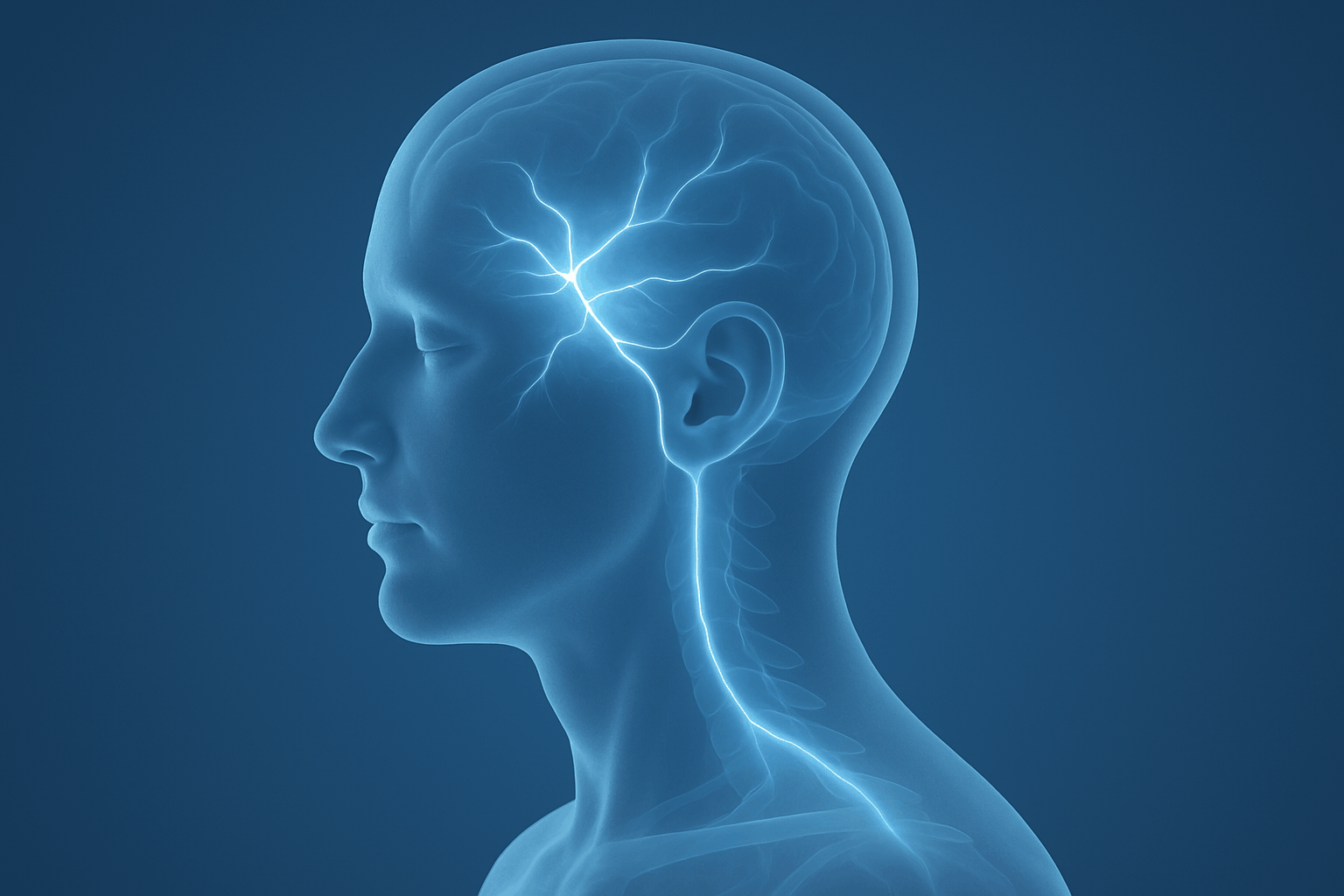
The reassuring part first: in most studied cases, the virus is not attacking the brain itself. The prevailing explanation is that infection activates the immune system, and the inflammatory messengers it releases sensitize the trigeminal system - the nerve network that carries head pain. The result feels like a very real, sometimes severe headache, produced by signaling rather than by structural damage.
What patients describe is fairly consistent: pressure or throbbing on both sides of the head, often across the forehead or behind the eyes, frequently worse with coughing, bending over, or long stretches at a screen. Some notice their usual pain relievers do less than expected - a common feature of inflammation-driven headache, and one reason it can feel so discouraging. Neck stiffness and disturbed sleep often ride along, and each can quietly feed the headache in turn.
Why Does a COVID Headache Linger?
Several mechanisms may keep the ache going after the infection has passed, and they can stack:
- A sensitized pain system. Once the trigeminal network has been wound up by inflammation, it can stay over-responsive for a while - the alarm keeps ringing after the trigger is gone.
- Migraine biology, switched on. In people predisposed to migraine, the infection can act as a trigger that converts occasional headaches into frequent ones. A long COVID headache often behaves like a migraine: light sensitivity, nausea, symptoms that worsen with screens and exertion.
- Autonomic involvement. Post-viral changes in the autonomic nervous system - the machinery behind heart rate, blood pressure, and sleep - are associated with headache, fatigue, and brain fog in some patients as part of what the WHO defines as post-COVID-19 condition, which is why these symptoms so often travel together.
- Medication-overuse headache. Weeks of frequent over-the-counter pain relievers can, in some people, become a headache driver of their own - a well-described trap when any headache lingers.
Which of these dominates differs from person to person - and that is precisely why a persistent headache after COVID is worth mapping rather than guessing at.
How Long Does a COVID Headache Last?
Published follow-up studies report that most COVID-related headaches settle within about two weeks of onset. In a smaller group they persist for months as part of long COVID. As a practical rule: a headache after COVID that is still frequent beyond four to six weeks is no longer something to wait out - it is something to evaluate.
Duration by itself is not the alarming part; pattern matters more. A slowly fading ache is a different story from one that is escalating, changing character, or arriving with new neurological symptoms - the distinction the safety note below is about.
| Typical presentation | Patterns that suggest something more | What the evaluation looks at |
|---|---|---|
| Band-like pressure on both sides of the head | A sudden, worst-ever headache | Onset story and headache character mapping |
| Worse with screens, coughing, or bending over | New weakness, numbness, or trouble speaking | Eye movements and visual processing |
| Flares travelling with fatigue or brain fog | Symptoms escalating steadily week over week | Autonomic screening (heart rate, blood pressure responses) |
| Neck stiffness riding along with the ache | Fever with confusion or a stiff neck | Cervical contribution to head pain |
| Pain relievers helping less than expected | Waking at night with vomiting | Medication timeline and overuse pattern |
Four Weeks In and No Better?
A headache that has outlasted the infection deserves a map, not another month of waiting. Our Calabasas evaluation looks at the systems that keep post-viral headache going.
COVID Headache Relief: What May Help
While every plan should follow an evaluation, several strategies are commonly used for covid headache relief, and none of them require heroics:
- Steady inputs. Regular sleep and wake times, consistent meals, and hydration - a sensitized headache system reacts to volatility, so reducing volatility is treatment, not filler advice.
- Paced activity. Gradual, sub-symptom-threshold activity tends to be better tolerated than boom-and-bust cycles of a big day followed by a crash.
- Screen and light management. If the headache behaves like a migraine, treating it like one - breaks from screens, managing bright light and noise - may reduce flares.
- Careful use of pain relievers. Discuss frequency with a healthcare provider; using them many days per week can feed medication-overuse headache in some people.
- Structured care for the stubborn cases. When a headache disorder persists, care guided by an actual assessment - rather than another round of the same pain reliever - is where progress usually comes from.
When a Lingering Headache Deserves a Neurological Workup in Calabasas
At California Brain & Spine Center in Calabasas, Dr. Alireza Chizari, DC, DACNB, a board-certified chiropractic neurologist, evaluates persistent post-COVID headache with a 120-minute neurodiagnostic assessment - eye movements, balance, autonomic screening, and cervical contributors - to identify which systems are keeping the headache going. Based on those findings, a plan may include neurological rehabilitation and non-invasive support such as GammaCore or low-level laser therapy - when clinically appropriate after evaluation. The practice works alongside primary care and medical neurology, not in place of them, and sees patients from Calabasas, Thousand Oaks, and the greater Los Angeles area. If your covid headache has come with dizziness or brain fog after illness, say so at booking - those symptoms are often part of the same picture and are assessed together.
What Getting Better Often Looks Like
Cases like this are common in our Calabasas clinic. Someone from Thousand Oaks caught COVID months ago, recovered from everything except the headache, and has been told the labs and the scan are normal. By the time they arrive, the pattern runs their week: mornings are workable, afternoons at the screen are not. The evaluation finds the drivers are treatable ones - a wound-up migraine biology, an autonomic system still recalibrating, and a pain-reliever schedule quietly feeding the cycle. Care starts small: a structured routine, paced activity, targeted rehabilitation, and a plan for the medication pattern made with their primary care provider. Improvement tends to arrive in stretches rather than all at once - two lighter weeks, a flare, then a steadier month. Not every case follows that arc, and nobody honest promises one. What changes reliably is that treatment finally aims at the drivers instead of the symptom.
When a Headache Is an Emergency
If symptoms come on suddenly or severely - a sudden severe headache, weakness, trouble speaking, vision loss, or fainting - that is an emergency. Call 911 or go to an emergency room, not a clinic appointment.
Frequently Asked Questions About COVID Headache
Is a COVID headache different from a migraine?
They overlap more than they differ. A COVID headache is defined by its trigger - the infection - while a migraine is defined by its features. In many people the lingering form behaves like a migraine, with light sensitivity and nausea, and in others it resembles a tension-type headache. The behavior, not the label, guides care.
Can a headache come back weeks after COVID?
Yes. Some people improve, then notice the headache returning in flares - often alongside fatigue or brain fog - as part of long COVID. A relapsing pattern is not evidence that something was missed the first time, but it is a reasonable prompt for a structured evaluation rather than repeated waiting.
What helps a COVID headache that keeps coming back?
Consistency first: regular sleep, hydration, paced activity, and care with how often pain relievers are used. If flares continue, an evaluation can identify what is driving them - migraine biology, autonomic involvement, or cervical contributors - so treatment can target the actual driver rather than the symptom alone.
Do I need imaging for a headache after COVID?
Not always. Imaging is a medical decision made on red flags - sudden severe onset, new neurological deficits, a pattern that keeps escalating. Many lingering post-COVID headaches have normal scans, because the problem lives in sensitized signaling rather than structure. An evaluation helps determine whether an imaging referral is warranted.
Where can I get a lingering COVID headache evaluated near Calabasas?
California Brain & Spine Center is at 4768 Park Granada, Ste 107, Calabasas, CA 91302, serving the San Fernando Valley and greater Los Angeles area. Dr. Alireza Chizari, DC, DACNB performs the neurodiagnostic assessment personally; book online at californiabrainspine.janeapp.com or call (818) 649-5300.
This content is for educational purposes only and is not medical advice. Consult a qualified healthcare provider about your specific situation.
Still Dealing With the Headache COVID Left Behind?
A structured evaluation at our Calabasas clinic maps what is keeping it going before any care is recommended. California Brain & Spine Center · 4768 Park Granada, Ste 107, Calabasas, CA 91302.