What the trials found, what the FDA and the VA/DoD guideline say, and how I decide whether a chamber belongs in someone's care at all.
Hyperbaric oxygen therapy for concussion has mixed evidence. One trial without a sham control reported improvements. A sham-controlled military trial found oxygen did no better than pressurized room air. The VA/DoD guideline for mild traumatic brain injury recommends against it for those symptoms.
Maybe you are months past a head injury, still pushing through work with a fog that does not lift, and a chamber has started to sound like the one thing left to try. I understand the pull. I am Dr. Alireza Chizari, DC, DACNB, a Board-Certified Functional Neurologist, and I offer hyperbaric oxygen to selected patients at California Brain & Spine Center in Calabasas. Because I offer it, you deserve the plain version of the research from me first.
The more useful first question is usually what is keeping the symptoms going. An evaluation for lingering concussion symptoms is built to look at that, and any conversation about HBOT comes after it.
Key Takeaway
Hyperbaric oxygen for concussion is not an established treatment. The FDA has not established it as safe and effective for brain injury, the VA/DoD guideline recommends against it for mild TBI symptoms, and trial results are mixed. In my practice it is offered only to selected patients, after screening, and the first step is a complimentary consultation.
Does Hyperbaric Oxygen Therapy for Concussion Actually Work?
Possibly, but the evidence is mixed. Hyperbaric oxygen therapy for concussion has one trial without a sham control that reported improvements. A sham-controlled military trial found oxygen did no better than pressurized room air. Both chamber groups improved more than usual care, which the authors suggested may reflect placebo effects rather than oxygen.
What the Military Sham-Controlled Trial Found
The HOPPS trial, published in JAMA Internal Medicine, randomized service members with persistent post-concussion symptoms to 40 hyperbaric oxygen sessions at 1.5 atmospheres absolute (ATA), 40 sham sessions of room air at 1.2 ATA, or no chamber sessions at all. Oxygen showed no benefit over the sham. Both chamber groups did better than post-concussion care alone, and the authors suggested the gains were not oxygen-mediated but may reflect nonspecific or placebo effects.
That detail matters if you are weighing weeks of sessions. Feeling better during a course of chamber visits does not, on its own, show that the oxygen was the part doing the work.
What the 1.5 ATA Crossover Trial Reported
A randomized crossover trial (the comparison group later received the treatment too) published in PLoS One gave people with long-lasting post-concussion symptoms 40 sessions of 100% oxygen at 1.5 ATA, 60 minutes each, five days a week. The authors reported improvements in brain function and quality of life. The trial had no sham arm, so it cannot separate the oxygen from everything else that comes with daily sessions, and a single trial of that design does not settle the question.
What Is Hyperbaric Oxygen Therapy, and What Has the FDA Cleared It For?
Hyperbaric oxygen therapy (HBOT) is breathing oxygen inside a pressurized chamber, and the FDA has cleared hyperbaric chambers for certain medical uses, such as treating decompression sickness in divers (FDA consumer update on HBOT).
Brain injury is not among those cleared uses. The FDA lists it among the conditions for which the safety and effectiveness of HBOT have not been established, and it has written that it is concerned some claims made by treatment centers using HBOT "may give consumers a wrong impression that could ultimately endanger their health" (FDA, Hyperbaric Oxygen Therapy: Don't Be Misled). I keep that sentence in mind every time I talk with someone about a chamber.
What Does the VA/DoD Guideline Say About HBOT After a Concussion?
The 2021 VA/DoD clinical practice guideline for post-acute mild traumatic brain injury recommends against hyperbaric oxygen for patients whose symptoms are attributed to mild TBI. That is the guideline's own recommendation, stated plainly.
The Department of Veterans Affairs community care guidance goes on to describe the scientific evidence for HBOT in traumatic brain injury as inconclusive, and it repeats that the guideline advises against HBOT for mild TBI. In my view, a recommendation against routine use does not mean no individual should ever try it. It does mean HBOT should never be presented as standard concussion care, and that is how I describe it to patients.
Not Sure What Is Keeping Your Concussion Symptoms Going?
Start with a complimentary consultation in Calabasas. I can go over your history, the evidence on hyperbaric oxygen, and whether something else should come first.
Does Hyperbaric Oxygen Therapy Help Long COVID Brain Fog?
Hyperbaric oxygen therapy for long COVID has one sham-controlled trial reporting cognitive gains and a second finding no short-term difference from placebo, so the evidence is early and still developing.
The first is a randomized, double-blind (neither patients nor staff knew who got oxygen), sham-controlled trial published in Scientific Reports, in people with post-COVID symptoms lasting months. HBOT was associated with improvements in global cognitive function, attention and executive function compared with sham, along with gains in energy, sleep, psychiatric symptoms and pain interference. That protocol used 100% oxygen by mask at 2 ATA for 90 minutes with air breaks, and its authors describe the sample as relatively small (Zilberman-Itskovich et al., Europe PMC).
The second, the HOT-LoCO trial, was a randomized, placebo-controlled, double-blind phase II trial published in BMJ Open. Ten HBOT sessions did not show more short-term benefit than placebo for long COVID, and both groups improved. It delivered 100% oxygen at 2.4 bar for 90 minutes (Kjellberg et al., PubMed Central).
A systematic review in the journal Life found some benefits of HBOT for long COVID symptoms and concluded that larger, rigorous randomized trials are still needed to establish indications and protocols. If brain fog is your main concern, the page on brain fog care describes how the practice approaches it before any single therapy is discussed.
Why Does the Pressure Used in Each Study Matter?
The pressure used in each HBOT study matters because results at one pressure cannot be assumed to carry over to another, and the trials discussed here ran from 1.5 ATA up to 2.4 bar.
| Study | Who took part | Pressure and sessions | Compared with | What it reported |
|---|---|---|---|---|
| HOPPS, JAMA Internal Medicine | Service members with persistent post-concussion symptoms | 40 sessions of oxygen at 1.5 ATA | Sham room air at 1.2 ATA, and usual care | No benefit of oxygen over sham; both chamber groups improved more than usual care |
| Boussi-Gross et al., PLoS One | People with long-lasting post-concussion symptoms | 40 sessions of 100% oxygen at 1.5 ATA, 60 minutes each | Crossover design, no sham arm | Improvements in brain function and quality of life |
| Zilberman-Itskovich et al., Scientific Reports | People with post-COVID symptoms lasting months | 100% oxygen by mask at 2 ATA, 90 minutes with air breaks | Sham, double-blind | Gains in global cognition, attention and executive function compared with sham; relatively small sample |
| HOT-LoCO, BMJ Open | People with long COVID | 10 sessions of 100% oxygen at 2.4 bar, 90 minutes | Placebo, double-blind | No more short-term benefit than placebo; both groups improved |
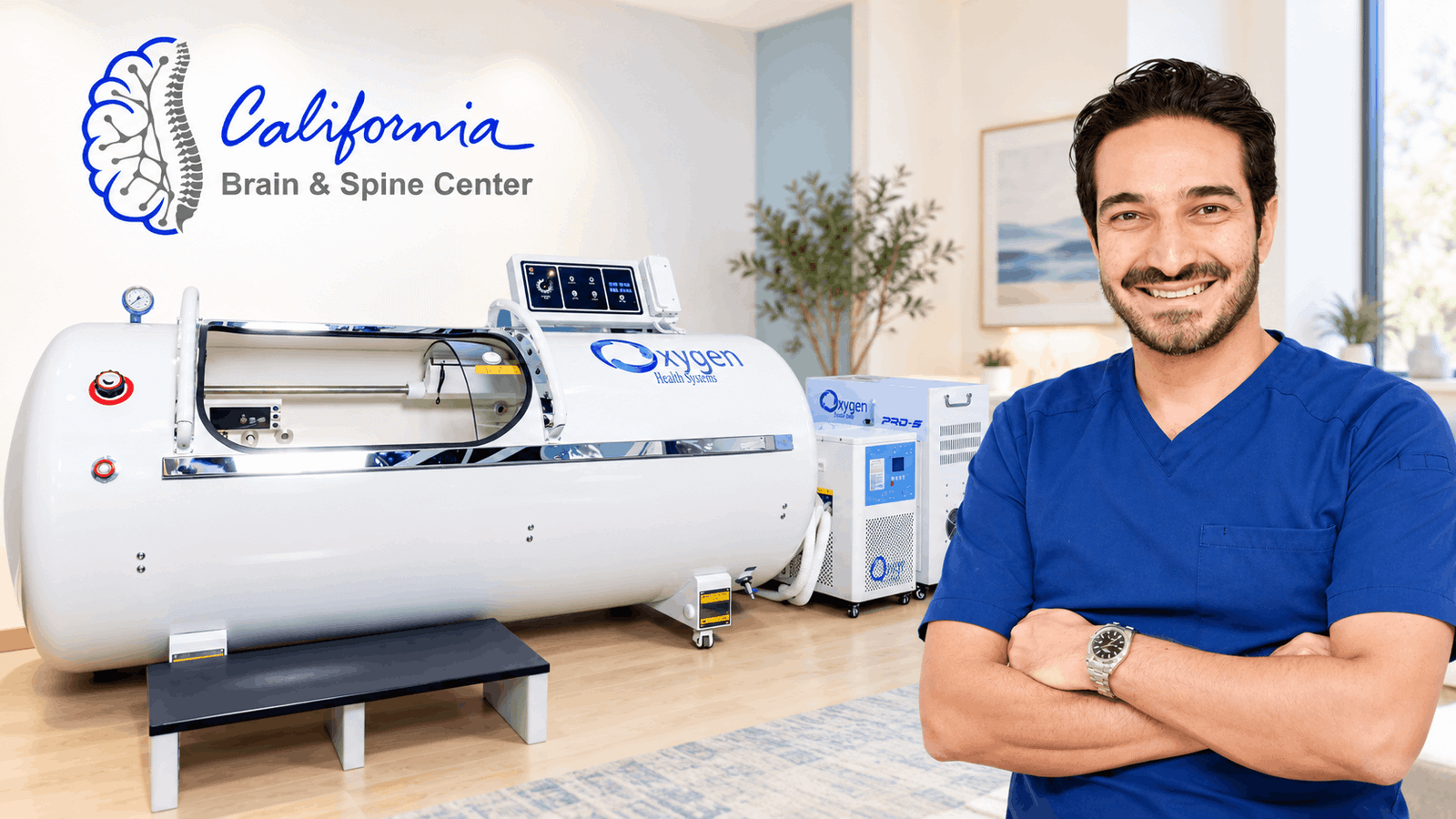
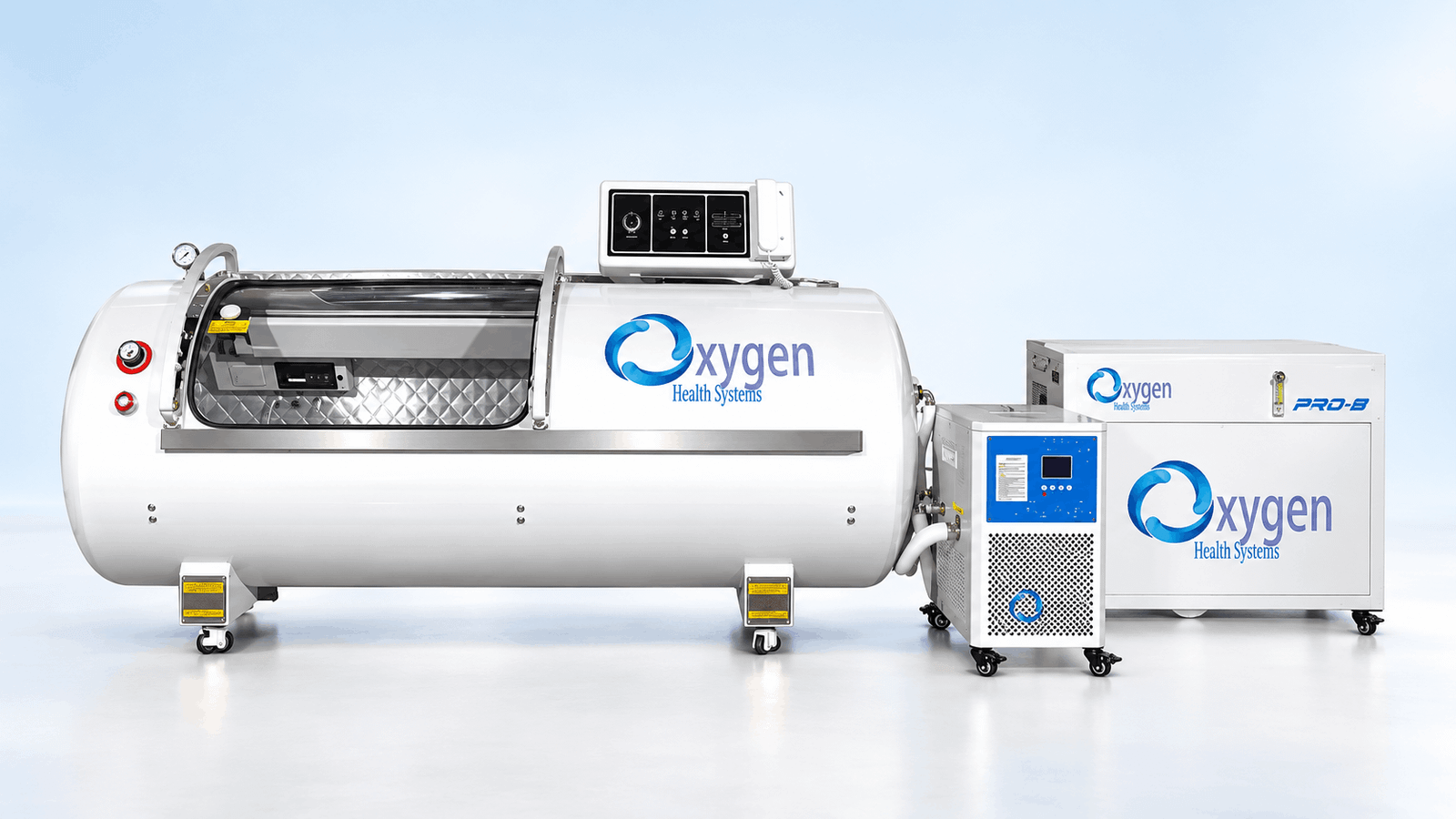
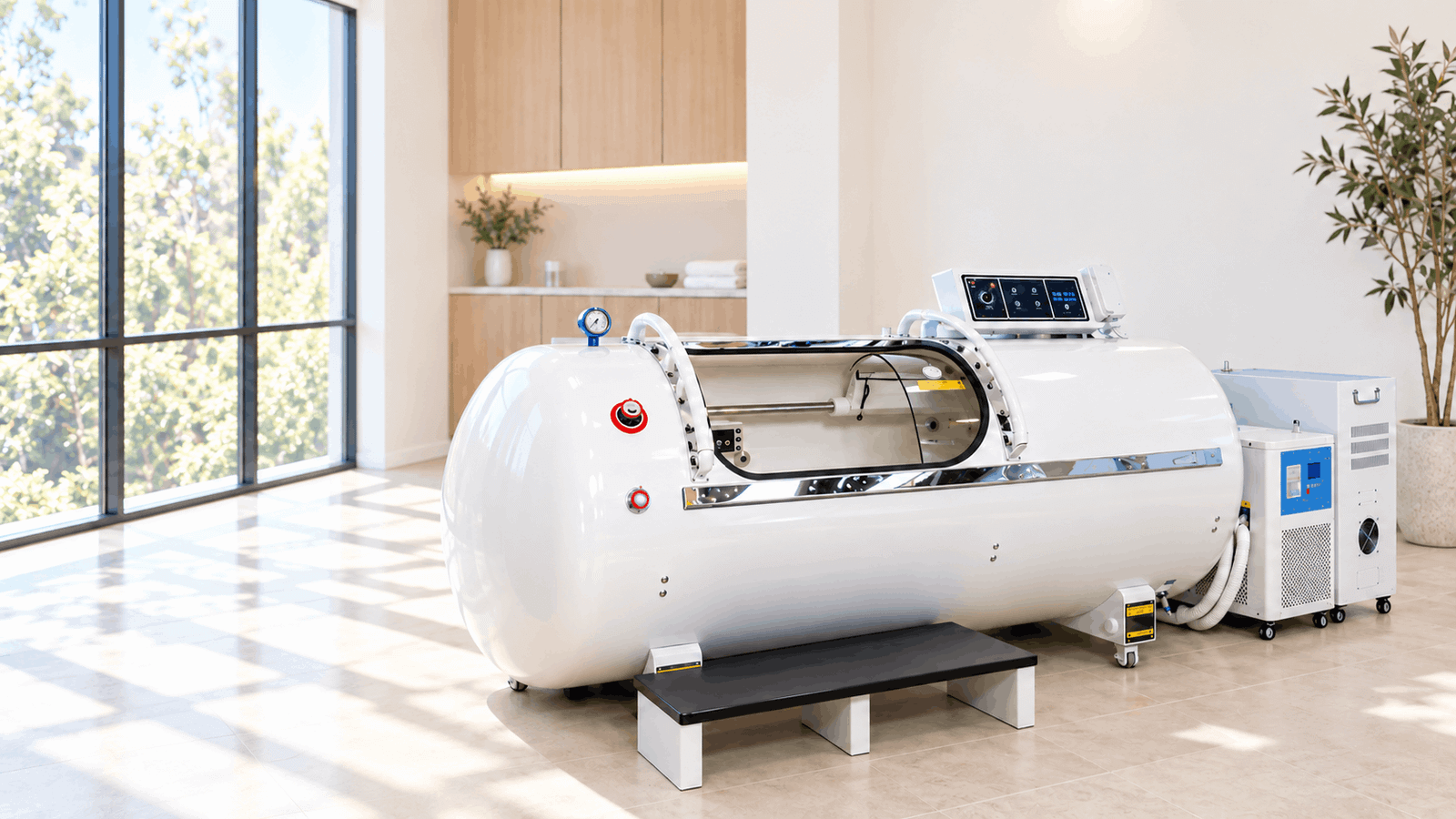
The two chambers in my clinic are Oxygen Health Systems hard-shell units that you lie down in. The original runs up to 1.5 ATA, and the newer chamber adjusts from about 1.2 ATA to slightly higher than the original's maximum. Neither is a soft chamber. That places them near the concussion trials above and below the 2 ATA and 2.4 bar used in the two post-COVID trials, so I do not borrow those trials' results when I talk about what a session here might do.
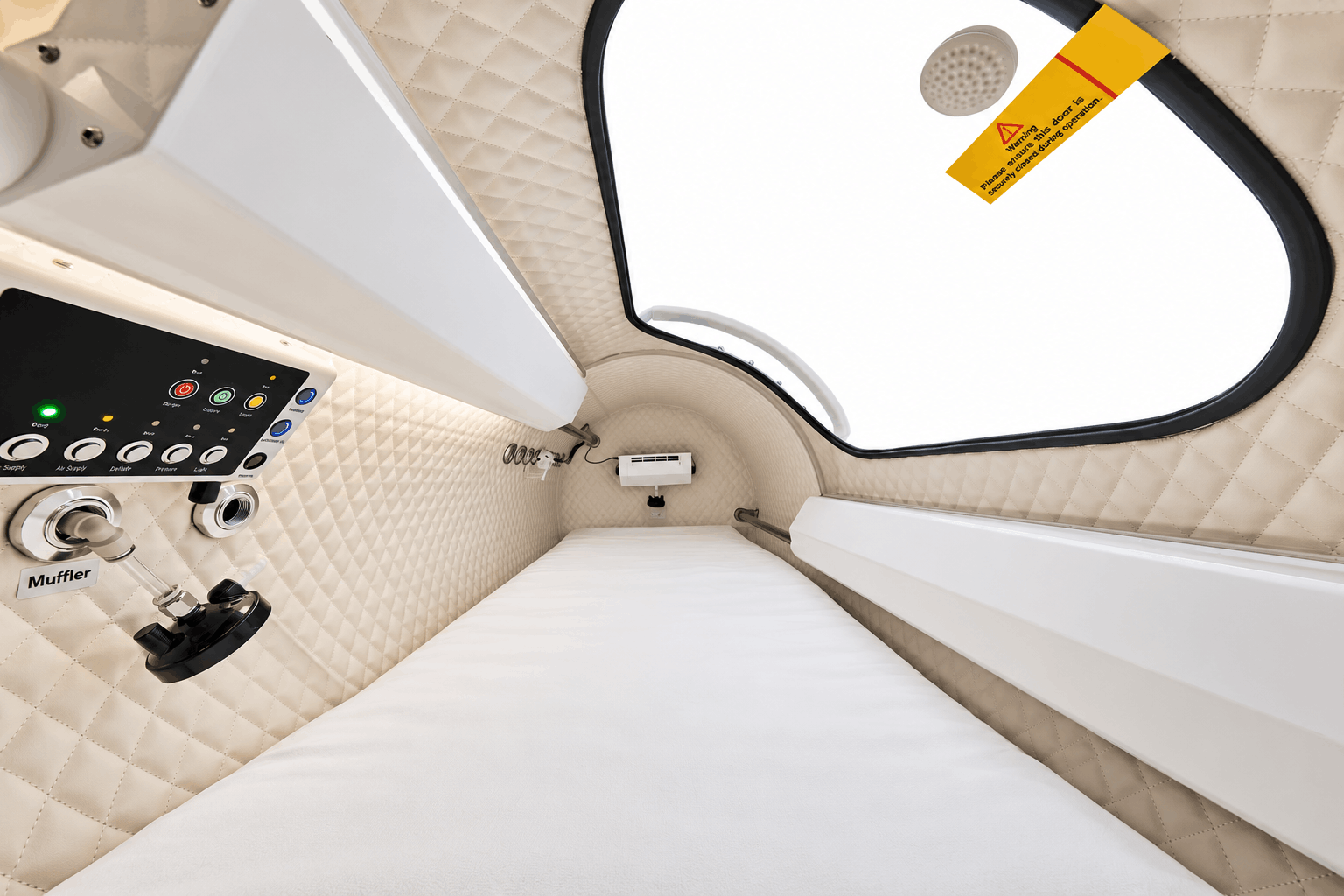
Is Hyperbaric Oxygen Therapy Safe, and Why Is Screening Done First?
Hyperbaric oxygen therapy can cause side effects, including ear and sinus problems from pressure changes, and serious complications are uncommon, which is why every patient here is screened before a first session.
Cleveland Clinic lists earache, bleeding in the tensor tympani muscle (a small middle-ear muscle), fluid in the ear and eardrum rupture among the possible middle ear injuries from pressure changes (Cleveland Clinic on HBOT).
Screening asks whether pressure changes are a reasonable idea for you at all. After that, pressure, session count and frequency are set individually. A session lasts about 60 minutes, and sessions are run by trained clinic staff under my supervision.
When a Concussion Needs Emergency Care, Not a Chamber
The CDC lists danger signs after a head injury that need emergency care in an adult (CDC, Signs and Symptoms of Mild TBI and Concussion):
- a headache that gets worse and does not go away
- weakness, numbness or seizures
- repeated vomiting or slurred speech
- one pupil larger than the other
- confusion, loss of consciousness or unusual drowsiness
If symptoms come on suddenly or severely - a sudden severe headache, weakness, trouble speaking, vision loss, or fainting - that is an emergency. Call 911 or go to an emergency room, not a clinic appointment.
For signs that deserve a prompt check without being an emergency, see post-concussion red flags.
Who Might Reasonably Consider HBOT After a Concussion?
Hyperbaric oxygen after a concussion is something a selected person might consider after screening and an evaluation, as an adjunct to rehabilitation or on its own, never as a replacement for finding out what is driving the symptoms.
The people I discuss it with are selected, and each of them is screened first. They usually fall into one of these groups:
- persistent post-concussion symptoms such as brain fog or cognitive fatigue, after screening and an evaluation
- selected post-COVID symptoms, knowing the trials used higher pressures than these chambers
- athletic recovery, described as support and not as treatment
- recovery after surgery, only with the surgeon's or treating provider's clearance
Hyperbaric oxygen is not something I offer as a treatment for a named disease, and it does not replace emergency care, medical neurology or the work of finding the cause. The practice offers HBOT-only programs and multi-session packages with no rehabilitation program required, and the page on hyperbaric oxygen therapy has more about the chambers.
What Do Patients in Calabasas Ask Me About Hyperbaric Oxygen?
Patients in Calabasas most often ask me whether hyperbaric oxygen can replace the rest of concussion care, and my answer is that it cannot; at most it is one part of a plan built after an evaluation.
A second question I hear is whether a higher pressure works better. The research does not support a simple yes. The two post-COVID trials at 2 ATA and 2.4 bar disagreed with each other, and the two concussion trials at 1.5 ATA disagreed as well.
People also ask about insurance and price. The practice is out of network, superbills may be provided when appropriate, and I tell people not to assume coverage for neurological, post-concussion or post-COVID uses. Prices and package plans are not published; they are something to go over by phone or at a complimentary consultation.
As Dr. Alireza Chizari, DC, DACNB, I keep the chamber conversation for after the 120-minute neurodiagnostic assessment, never before it. That assessment is a detailed look at how your nervous system is working, and its results shape whether HBOT has any place in your plan.
"He took the time to perform a detailed evaluation, explain my condition, and create a personalized treatment plan."
From a Google review
The clinic is at 4768 Park Granada, Suite 107, in Calabasas, a short drive along the 101 for anyone coming from Agoura Hills.
Questions About Hyperbaric Oxygen Therapy for Concussion
Is HBOT FDA approved for concussion?
FDA has cleared hyperbaric chambers for certain medical uses, such as decompression sickness in divers, and brain injury is not one of them. FDA lists brain injury among conditions where HBOT's safety and effectiveness have not been established, so hyperbaric oxygen therapy for concussion is not an established treatment and stays an individual decision made after screening.
How many HBOT sessions did the concussion studies use?
Trials of hyperbaric oxygen therapy for concussion used 40 sessions at 1.5 ATA, and one ran each session for 60 minutes, five days a week. Those numbers describe research protocols, not a plan for you. At this practice, pressure, session count and frequency are set individually after screening.
Does HBOT help brain fog after long COVID?
One sham-controlled trial at 2 ATA found HBOT was associated with gains in global cognitive function, attention and executive function, while the HOT-LoCO trial at 2.4 bar found no short-term difference from placebo. A systematic review called for larger, rigorous trials. For HBOT and brain fog after long COVID, the evidence is early and still developing.
Where can I get HBOT near Calabasas?
California Brain & Spine Center in Calabasas has two hard-shell, lie-down chambers and offers hyperbaric oxygen therapy for concussion symptoms to selected patients, after screening and an evaluation. People come from across the San Fernando Valley. Prices are not published; call (818) 649-5300 or book a complimentary consultation to go over options.
Is hyperbaric oxygen safe after a concussion?
Hyperbaric oxygen can cause side effects, including ear and sinus problems from pressure changes, and serious complications are uncommon. Every patient is screened before a first session. A head injury with danger signs, such as repeated vomiting, slurred speech or a worsening headache, needs emergency care, not a chamber session.
Where Does That Leave You?
Hyperbaric oxygen therapy for concussion sits in a genuinely uncertain place: a regulator that has not established it for brain injury, a guideline that recommends against it for mild TBI symptoms, and trials that point in different directions. If you are still not yourself after a head injury, the first step is understanding what is driving that. A chamber may or may not have a place after that, and I am glad to talk it through with you.
California Brain & Spine Center | (818) 649-5300 | Calabasas, CA 91302. Book online at californiabrainspine.janeapp.com.
This content is for educational purposes only and is not medical advice. Consult a qualified healthcare provider about your specific situation.
Wondering Whether HBOT Has a Place in Your Concussion Care?
Book a complimentary consultation in Calabasas to go over the evidence, the screening process and every question you have about the chamber.