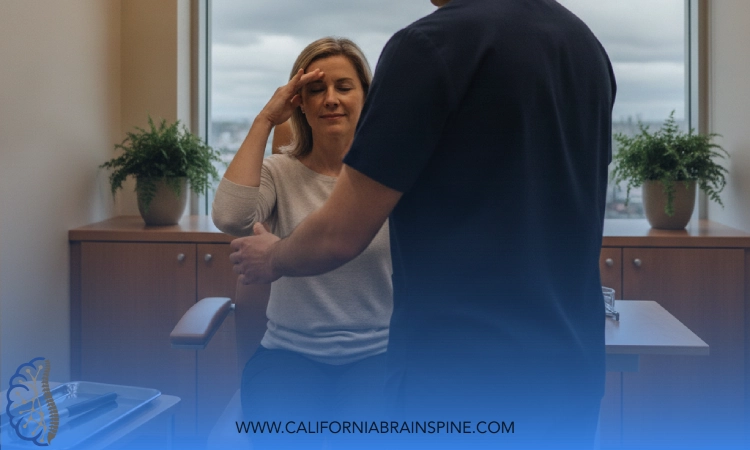
Barometric Pressure Migraines: Why the Weather Affects Your Brain
If your head starts to throb before a storm rolls in or when the Santa Ana winds shift, you aren't imagining it — and you aren't just stressed.
Weather-triggered migraines are real for many people, and the frustration is compounded when your symptoms arrive before anyone else has even noticed the forecast changing. This isn't a character flaw, a stress excuse, or something to simply push through.
For some patients, changes in air pressure influence sensitive neurological, vestibular, vascular, and autonomic systems in ways that trigger pain, dizziness, light sensitivity, nausea, brain fog, and fatigue. Understanding which of those systems is involved is what turns an unpredictable problem into a manageable one.
The short answer
Barometric pressure shifts can affect pressure-sensitive nerves, blood-flow regulation, sinus pressure, vestibular function, and autonomic balance. People with migraine sensitivity, concussion history, neck dysfunction, dizziness, or dysautonomia often react more strongly — because weather is usually the final trigger on a system already close to overload.
Why weather migraines feel so personal
Patients often say, "I can feel the weather changing in my head." That sentence matters clinically — it means you've noticed a pattern, and patterns are useful.
Barometric pressure is simply the weight of the air around us. When it rises or falls, especially quickly, some migraine-sensitive brains interpret that environmental change as a stressor. For some people that involves the trigeminal nerve, which drives head and facial sensation. For others it's blood vessel regulation, inner ear sensitivity, neck mechanics, inflammation, sleep disruption, or autonomic imbalance.
In real life it's rarely one single factor. It's usually a network of systems that has become more reactive than it should be.
"When your symptoms finally make sense, the fear often starts to lose its grip."
Weather may be the trigger — not the cause
If you have a history of concussion, whiplash, vestibular dysfunction, chronic neck tension, poor sleep, visual sensitivity, or dysautonomia, your threshold for migraine activation may already be lower than it should be.
That distinction changes everything, because it gives us something to work with. Nobody can control the weather in Southern California — but the systems that determine how your brain responds to it can often be evaluated and supported.
Key insight: the migraine is real even when the scan looks normal
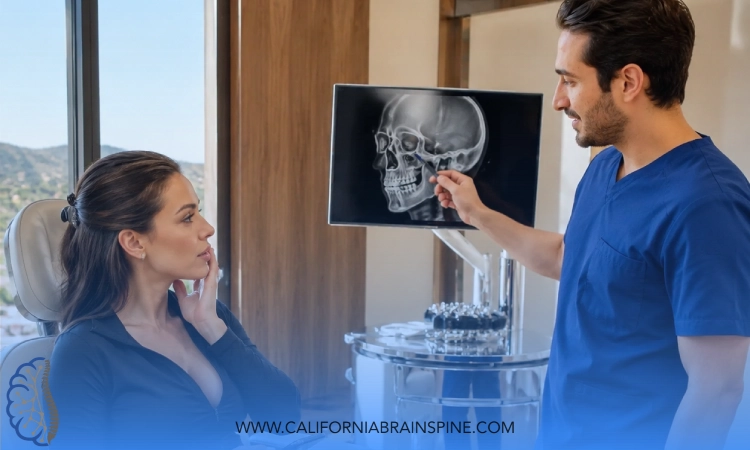
A normal imaging report doesn't mean your symptoms are imagined. Weather-related migraines usually involve function, sensitivity, regulation, and communication between neurological systems — things standard imaging isn't designed to capture. That's precisely why a detailed functional neurological and vestibular evaluation can be so useful.
Why dizziness and migraine so often travel together
Many patients with weather-sensitive migraines also report dizziness, motion sensitivity, visual discomfort, or imbalance. That happens because the vestibular system, visual system, brainstem, cerebellum, and autonomic nervous system all work together to tell your brain where your body is in space. When those systems are irritated or poorly coordinated, a pressure change feels far more intense.
Where that pattern shows up, evaluation may point toward vestibular rehabilitation, visual tracking work, cervical assessment, or autonomic support. A previous concussion — even one from years ago — can leave the brain more sensitive to light, motion, pressure changes, and visual demand.
When it suggests autonomic stress
The autonomic nervous system regulates heart rate, blood pressure, temperature, digestion, and many functions that should run quietly in the background. Patients with dysautonomia often notice that pressure changes, heat, dehydration, travel, poor sleep, or stress intensify both headaches and brain fog.
Matching your symptom pattern to what to investigate
Two people can both say "the weather gives me migraines" and need completely different care. This is roughly how the pattern guides the assessment:
| Symptom pattern | Possible contributor | Why evaluation matters |
|---|---|---|
| Head pressure before storms | Migraine sensitivity, trigeminal irritation, sinus or vascular response | Separates migraine biology from other pressure-related symptoms |
| Dizziness with weather shifts | Vestibular dysfunction or visual-vestibular mismatch | May guide vestibular rehabilitation and balance therapy |
| Brain fog and fatigue | Post-concussion stress, autonomic imbalance, sleep disruption | Supports a broader plan than pain control alone |
| Neck stiffness with migraine | Cervical joint, muscle, or sensory input issues | Helps identify whether cervical or rehabilitation strategies fit |
What a careful evaluation looks like
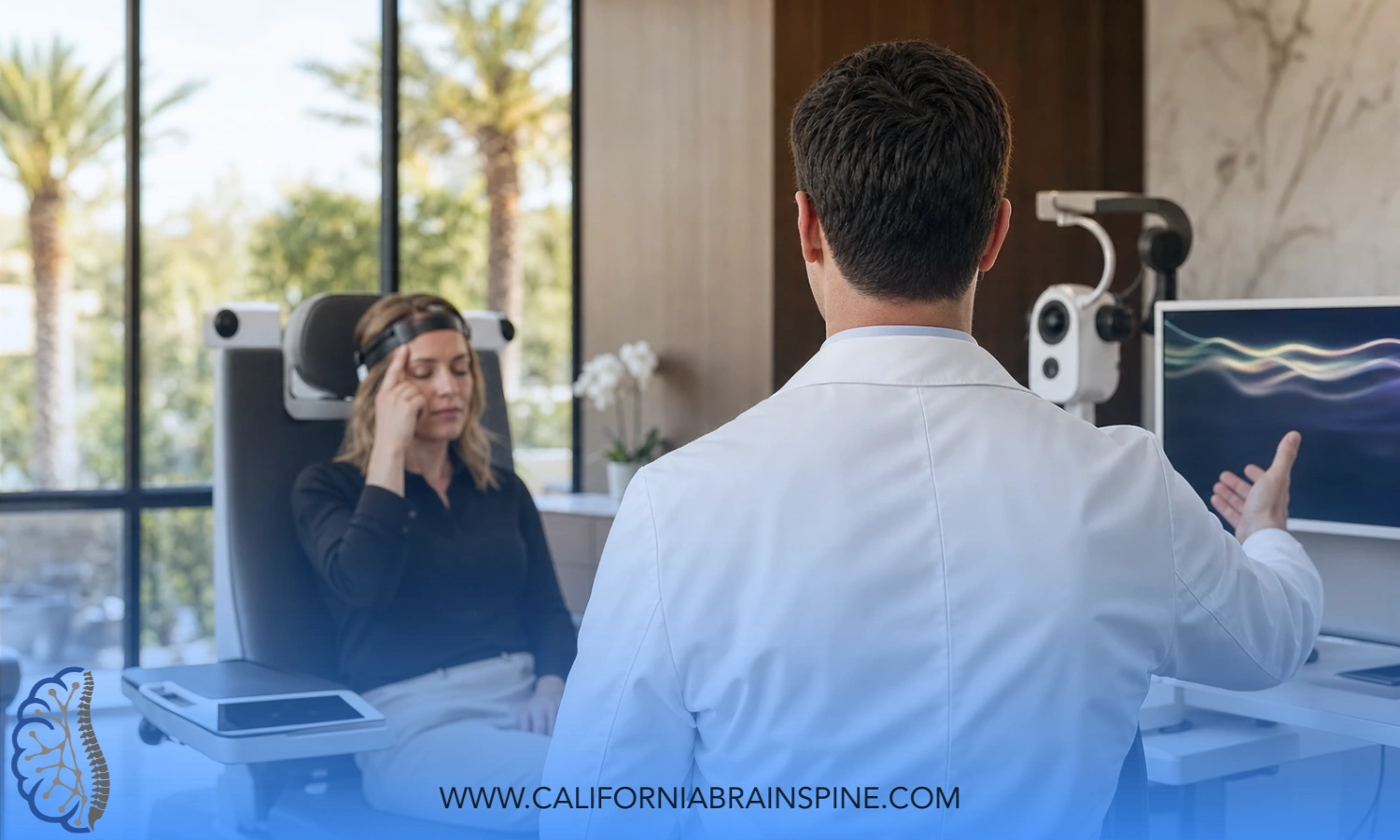
Care shouldn't feel random. A responsible pathway starts with your history — migraine timing, weather patterns, concussion history, neck trauma, sleep, hydration, stress, and visual triggers. From there, assessment examines eye movements, balance, coordination, sensory integration, cervical function, and autonomic clues.
Only then does a plan make sense. Depending on findings, it may include vestibular rehabilitation, cognitive rehabilitation for brain fog and post-concussion fatigue, and neuroplasticity-based retraining of how the nervous system processes sensory input. When clinically appropriate, plans may add non-invasive support such as LLLT, PEMF, HBOT, GammaCore vagus nerve stimulation, or the NeuroRevive Program.
These aren't one-size-fits-all solutions — they're tools that have to be matched to the patient, the findings, and the safety profile.
Symptom management and functional improvement aren't the same thing
Symptom management asks: how do we quiet the pain today? Functional improvement asks: why is this system so reactive, and what can we safely train, support, or regulate over time? Both questions matter. The best plans respect both.
When to seek urgent medical care
Most weather-related migraines aren't emergencies, but some headache symptoms need urgent attention. Seek emergency care for the worst headache of your life, sudden neurological weakness, facial drooping, confusion, fainting, chest pain, fever with neck stiffness, a new headache after significant trauma, or a sudden change in speech or vision.
How to prepare for your visit
Bring as much pattern information as you can. You don't need a perfect diary — even a few notes help. Write down when the migraine started, what the weather was doing, whether dizziness or visual symptoms came with it, how long recovery took, and what helped or made it worse.
Many patients arrive after months or years of managing alone. Some have been told their headaches are just stress. Others have tried medications, supplements, diets, neck treatments, or home remedies with partial relief. A good evaluation respects what you've already tried while looking carefully for the missing pieces.
A realistic patient story
A patient came in after noticing her migraines often appeared a full day before a major weather shift. It wasn't only head pain — she also had dizziness, brain fog, light sensitivity, and a strange sense that her eyes and balance weren't working together. She'd had a mild concussion in a car accident years earlier, but had been told everything looked normal.
Her evaluation examined eye movements, balance, vestibular responses, cervical findings, and how her symptoms behaved. The plan combined vestibular rehabilitation, elements of cognitive rehabilitation, and neuroplasticity-based work to help her brain tolerate sensory change more effectively — plus practical guidance on pacing, hydration, sleep consistency, and responding early when she noticed pressure changes coming.
Progress wasn't instant, and no single patient's result is a guarantee for anyone else. But over time she reported fewer days lost to weather changes, more confidence driving in windy conditions, and less dread when the forecast shifted. Not perfection — a more stable, capable life.
Frequently asked questions
Can barometric pressure really trigger migraines?
Yes, for some people. Pressure changes may affect pressure-sensitive nerves, vascular regulation, sinus pressure, vestibular sensitivity, and autonomic function. Not every migraine is weather-related — but if your symptoms repeatedly appear before storms, wind shifts, altitude changes, or sudden temperature swings, that pattern is worth evaluating.
Why do I feel a migraine before the weather actually changes?
Your nervous system may detect subtle pressure or environmental changes before they're obvious to anyone else. Some patients also react to related shifts in humidity, wind, temperature, or sleep quality. It doesn't mean you're oversensitive in a negative sense — it may simply mean your brain has a lower threshold for migraine activation.
Are weather migraines related to concussion?
They can be. A concussion may leave patients more sensitive to light, motion, visual demand, sleep disruption, neck input, and vestibular stress. When those systems stay reactive, weather changes become a stronger trigger — which is why a post-concussion and vestibular evaluation helps patients whose migraines changed after a head or neck injury.
Should I just take medication when the weather changes?
Medication is an important part of migraine care for many people, and you should follow your prescribing clinician's guidance. At the same time, if you're repeatedly losing days to weather-triggered symptoms, it's worth evaluating underlying functional contributors — vestibular dysfunction, autonomic imbalance, visual sensitivity, neck input, or post-concussion changes.
When should I schedule an evaluation?
Consider one if your migraines are frequent, worsening, affecting work or family life, occurring alongside dizziness or brain fog, linked to a concussion history, or not responding well to your current approach.
Weather you can't control. Your nervous system's response, often you can.
A personalized neurological and vestibular evaluation can help clarify what's actually driving your symptoms — and which options make sense for you.

Dr. Alireza Chizari
This article has been medically reviewed for clinical accuracy by Dr. Alireza Chizari, DC, DACNB. Committed to evidence-based practice, Dr. Chizari ensures all content reflects the highest standards of functional neurology care.
Comments
Find our article more easily in Google.
FAQ
What is Functional Neurology?
Functional Neurology is a healthcare specialty that focuses on assessing and rehabilitating the nervous system’s function. It emphasizes neuroplasticity—the brain’s ability to adapt and reorganize—using non-invasive, evidence-based interventions to improve neurological performance.
How does Functional Neurology differ from traditional neurology?
Traditional neurology often concentrates on diagnosing and treating neurological diseases through medications or surgery. In contrast, Functional Neurology aims to optimize the nervous system’s function by identifying and addressing dysfunctions through personalized, non-pharmaceutical interventions.
Is Functional Neurology a replacement for traditional medical care?
No. Functional Neurology is intended to complement, not replace, traditional medical care. Practitioners often collaborate with medical professionals to provide comprehensive care.
What conditions can Functional Neurology help manage?
Functional Neurology has been applied to various conditions, including:
• Concussions and Post-Concussion Syndrome
• Traumatic Brain Injuries (TBI)
• Vestibular Disorders
• Migraines and Headaches
• Neurodevelopmental Disorders (e.g., ADHD, Autism)
• Movement Disorders
• Dysautonomia
• Peripheral Neuropathy
• Functional Neurological Disorder (FND)
Can Functional Neurology assist with neurodegenerative diseases?
While Functional Neurology does not cure neurodegenerative diseases, it can help manage symptoms and improve quality of life by optimizing the function of existing neural pathways.
What diagnostic methods are used in Functional Neurology?
Functional Neurologists employ various assessments, including:
• Videonystagmography (VNG)
• Computerized Posturography
• Oculomotor Testing
• Vestibular Function Tests
• Neurocognitive Evaluations
How is a patient’s progress monitored?
Progress is tracked through repeated assessments, patient-reported outcomes, and objective measures such as balance tests, eye movement tracking, and cognitive performance evaluations.
What therapies are commonly used in Functional Neurology?
Interventions may include:
- Vestibular Rehabilitation
- Oculomotor Exercises
- Sensorimotor Integration
- Cognitive Training
- Balance and Coordination Exercises
- Nutritional Counseling
- Lifestyle Modifications
Are these therapies personalized?
Absolutely. Treatment plans are tailored to the individual’s specific neurological findings, symptoms, and functional goals.
Who can benefit from Functional Neurology?
Individuals with unresolved neurological symptoms, those seeking non-pharmaceutical interventions, or patients aiming to optimize brain function can benefit from Functional Neurology.
Is Functional Neurology suitable for children?
Yes. Children with developmental delays, learning difficulties, or neurodevelopmental disorders may benefit from Functional Neurology approaches.
How does Functional Neurology complement other medical treatments?
It can serve as an adjunct to traditional medical care, enhancing outcomes by addressing functional aspects of the nervous system that may not be targeted by conventional treatments.
How is technology integrated into Functional Neurology?
Technological tools such as virtual reality, neurofeedback, and advanced diagnostic equipment are increasingly used to assess and enhance neurological function.
What is the role of research in Functional Neurology?
Ongoing research continues to refine assessment techniques, therapeutic interventions, and our understanding of neuroplasticity, contributing to the evolution of Functional Neurology practices.