What you are paying for, what Medicare covers, and the questions worth asking before you compare prices.
Hyperbaric oxygen therapy cost depends less on a single price tag than on four things: the kind of chamber, the pressure it reaches, how many sessions you need, and whether your reason for treatment is one that insurance recognizes. When people call our office in Calabasas about the chamber, the price question usually arrives with a second one close behind it, which is whether any of it is covered.
I am Dr. Alireza Chizari, DC, DACNB, a Board-Certified Functional Neurologist and the Clinical Director of California Brain & Spine Center in Calabasas, where functional neurology care and hyperbaric oxygen therapy (HBOT) are offered in the same practice. We do not publish prices on this page or anywhere else on the site. For current prices and package plans, call (818) 649-5300 or book a complimentary consultation. What follows is how the price is built, so that any number you are quoted, here or elsewhere, is something you can judge.
Key Takeaway
Hyperbaric oxygen therapy cost varies with the chamber type, pressure, session length and number of sessions. Medicare covers a fixed list of conditions and nothing else. Neurological, post-concussion, post-COVID and athletic uses are not on that list, so do not assume coverage. Ask what the chamber is before comparing prices, and get screened before committing to a course.
How Much Does Hyperbaric Oxygen Therapy Cost?
Hyperbaric oxygen therapy cost comes down to four factors: the type of chamber, the pressure it reaches, how long each session runs, and how many sessions are planned. Medicare pays only for listed conditions, and neurological uses are not among them, so do not assume insurance pays.
What Changes the Price From One Clinic to the Next
The chamber is the first variable. Hyperbaric medicine societies define hyperbaric oxygen therapy as breathing near 100% oxygen while fully enclosed in a chamber pressurized to at least 1.4 ATA (atmospheres absolute: pressure measured against normal air pressure at sea level), according to a position statement drafted with the Undersea and Hyperbaric Medical Society's safety and oxygen therapy committees. A wellness studio running a low-pressure fabric chamber and a clinic running a hard-shell chamber may both write "HBOT session" on a price list while selling different things.
Session length and session count come next. One session is a single line on an invoice; a course is that line multiplied, and the multiplier is set by the reason for treatment and by what screening shows. Published cost guides also separate hospital outpatient departments, standalone clinics and wellness studios, since each sets its own prices for an hour in a chamber.
What a Quoted Course Price Leaves Out
A price for a full course, quoted before anyone has screened you, is a guess. At California Brain & Spine Center every patient is screened first, and the pressure, the number of sessions and how often they happen are set for that person. Two people asking the same question on the phone can end up with different plans, which is why I prefer to talk about price once the plan exists.
Does Medicare Cover Hyperbaric Oxygen Therapy?
Medicare covers hyperbaric oxygen therapy only for the conditions listed in its national coverage determination, and every use not on that list is not covered under the Medicare program, according to the national coverage determination for hyperbaric oxygen therapy from the Centers for Medicare & Medicaid Services (CMS). The listed conditions are:
- Carbon monoxide poisoning and cyanide poisoning
- Decompression illness and gas embolism
- Gas gangrene, actinomycosis and necrotizing infections
- Crush injuries and compromised skin grafts
- Chronic refractory osteomyelitis and radiation injury to bone and soft tissue
- Qualifying diabetic wounds of the lower extremities
Concussion, brain fog, neurological fatigue, post-COVID symptoms and athletic recovery are not on it. Medicare.gov adds that Part B may cover the therapy when it is given in a chamber and you have one of the qualifying conditions, and that you usually pay 20% of the Medicare-approved amount, with the Part B deductible possibly applying.
Does Insurance Cover Hyperbaric Oxygen Therapy for Concussion or Brain Fog?
Insurance coverage for hyperbaric oxygen therapy should not be assumed for concussion, brain fog, post-COVID symptoms, wellness or athletic recovery, because those uses fall outside the conditions Medicare lists. Plan for the possibility that sessions are paid out of pocket.
California Brain & Spine Center is out of network with insurance plans. When it is appropriate, the practice can provide a superbill, which is an itemized statement of the visit with the codes an insurer asks for, and some patients send it to their plan to ask about out-of-network reimbursement. Whether anything comes back depends on your plan, so a call to your insurer before you start is worth the time. If you have a health savings or flexible spending account, ask the plan administrator whether these sessions qualify.
Want to Know What a Plan Would Cost for You?
Screening comes first, then a plan, then a price that matches it. Call the office or book a complimentary consultation in Calabasas.
Is a Soft Hyperbaric Chamber the Same as Hard-Shell HBOT?
A low-pressure fabric chamber, often sold as a soft or mild chamber, is a different class of device from a hard-shell medical chamber, and the price difference reflects that. The same position statement reports that fabric chambers operating below 1.4 ATA carry FDA 510(k) clearance (the FDA's clearance route for a device similar to one already on the market) for acute mountain sickness only, are designed to be pressurized with air only, and that the FDA prohibits their use with supplemental oxygen.
Set against the definition above, a session in one of these chambers may not meet the medical definition of hyperbaric oxygen therapy at all. That matters when a lower price per hour looks like a bargain.
| What to compare | Low-pressure fabric (soft) chamber | HBOT as hyperbaric societies define it |
|---|---|---|
| Pressure | Below 1.4 ATA | 1.4 ATA or higher |
| What you breathe | Designed to be pressurized with air only | Near 100% oxygen |
| Supplemental oxygen | Use with supplemental oxygen is prohibited by the FDA | Oxygen is part of the definition |
| FDA clearance noted in the position statement | Acute mountain sickness only | Varies by device; ask the clinic |
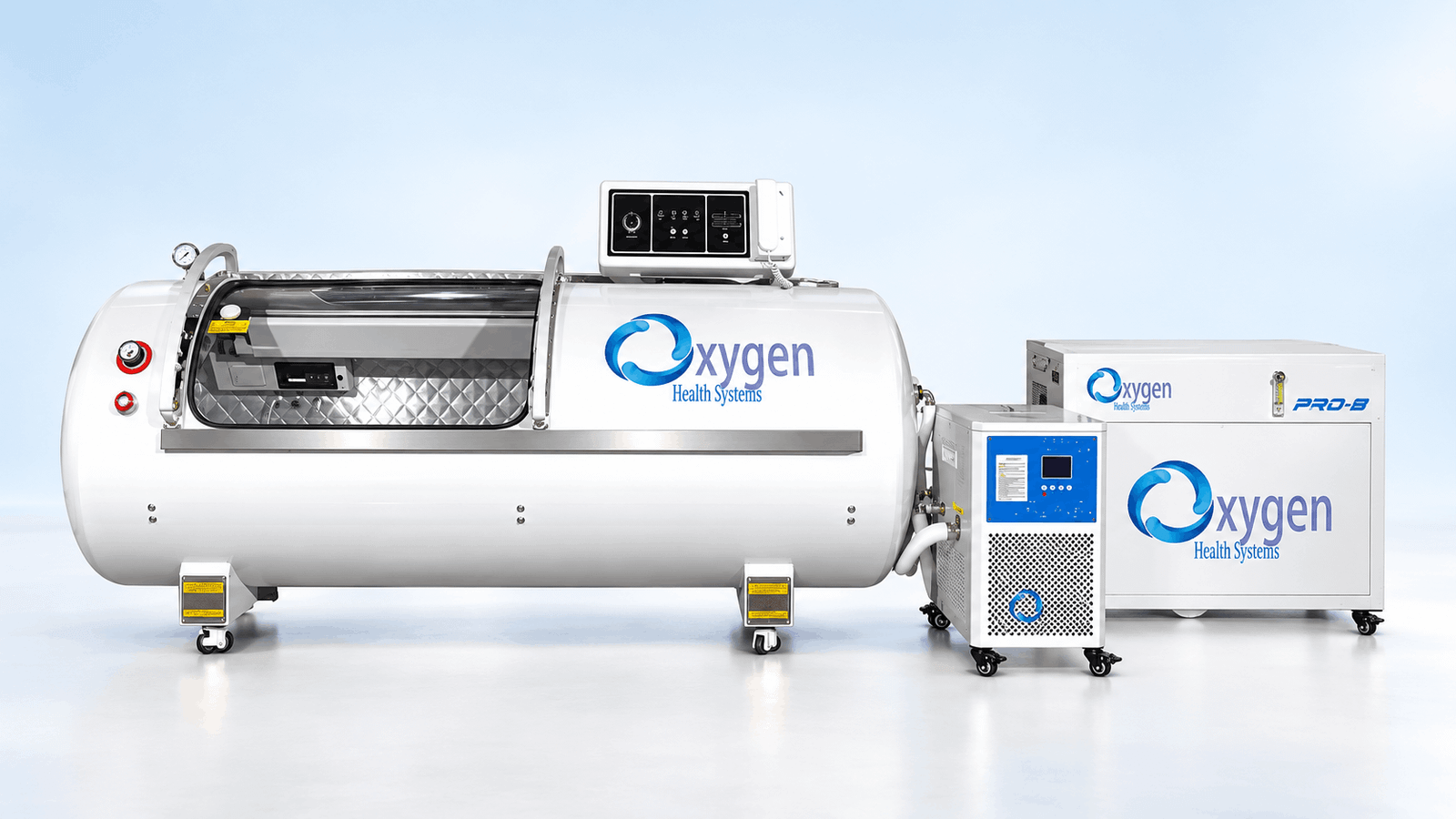
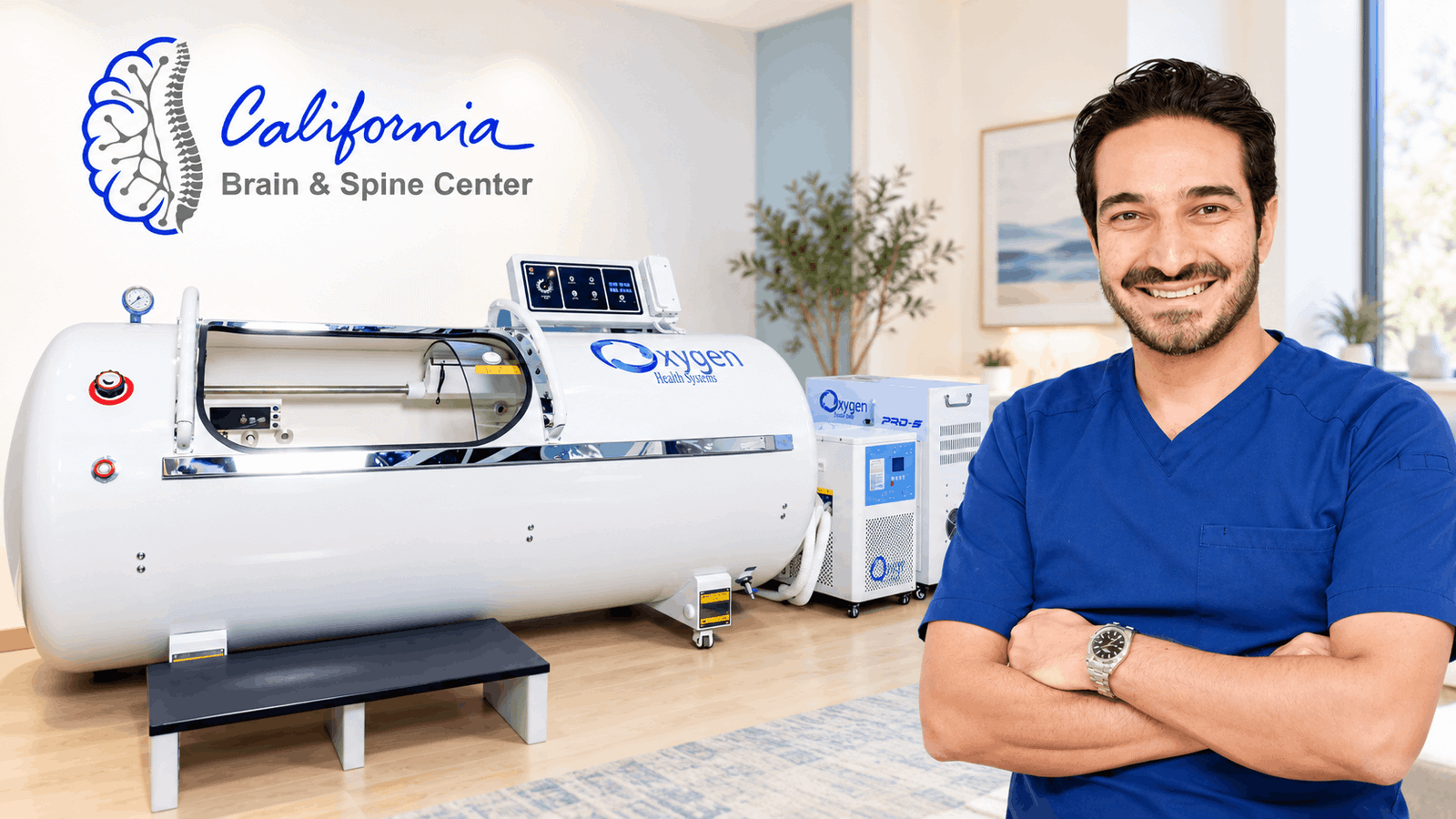
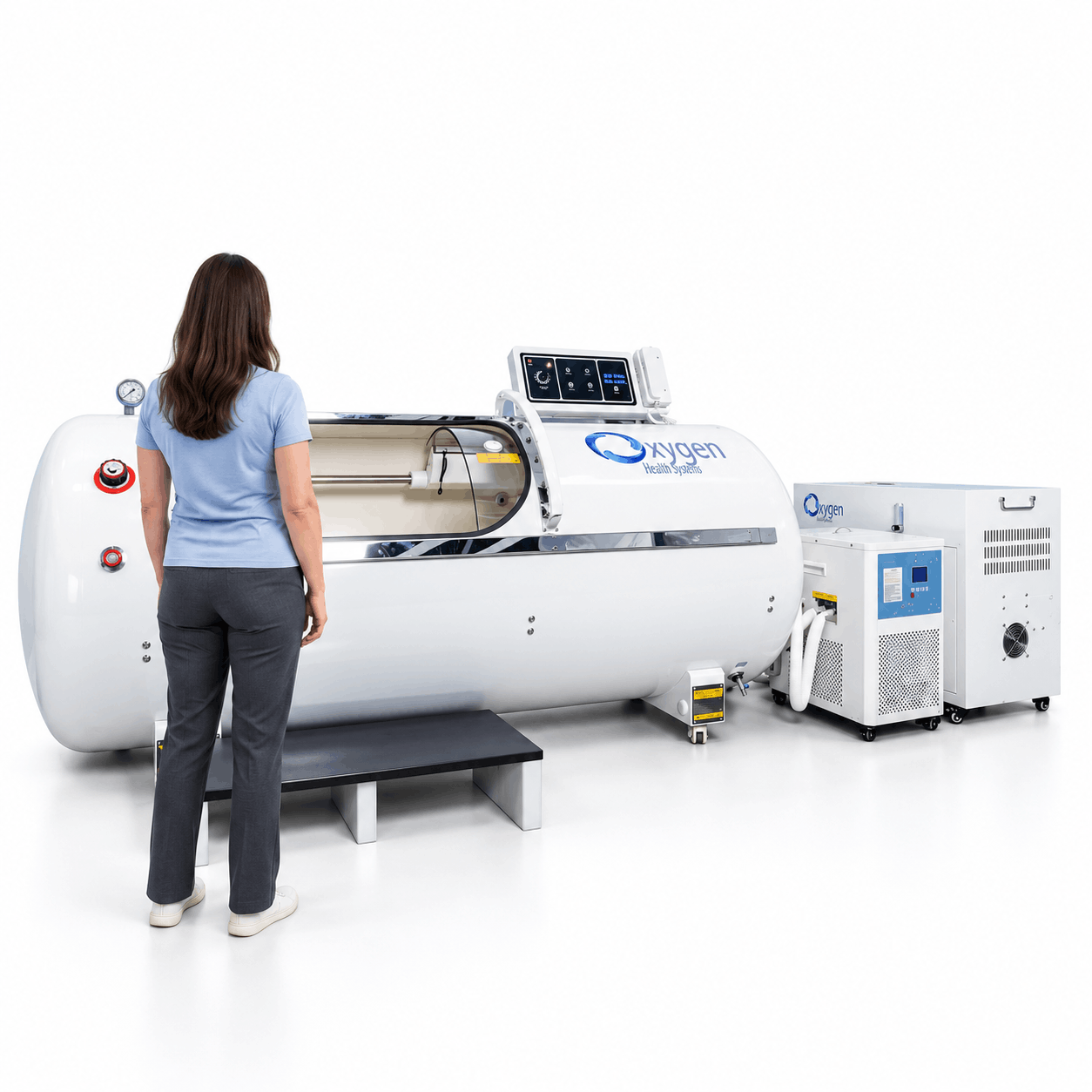
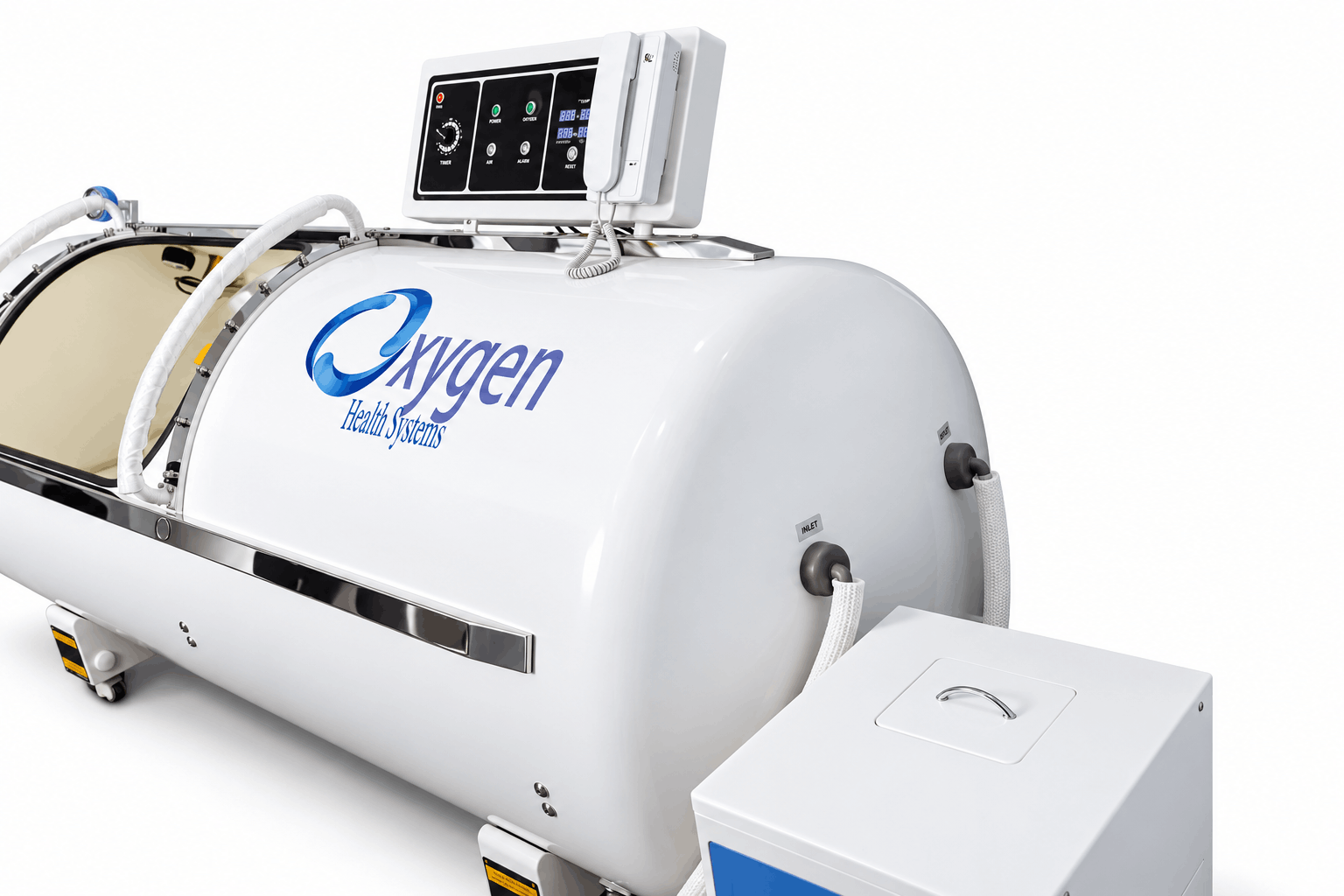
Both chambers at California Brain & Spine Center are Oxygen Health Systems hard-shell units, and you lie down in each. The original chamber runs above the 1.4 ATA threshold in the definition above, and the newer, wider chamber adjusts across a range that reaches above it. Neither is a soft chamber and neither is a high-pressure hospital chamber, so compare like with like when you look at other quotes, and ask for the exact pressure in ATA when you call.
How Many Sessions Does Hyperbaric Oxygen Therapy Take?
The number of hyperbaric oxygen therapy sessions varies with the condition being treated. Cleveland Clinic reports that sessions may be scheduled anywhere from once a week to five days a week, for up to 30 or more sessions in total. It also describes two kinds of chamber: a monoplace chamber, where one person lies on a table that slides inside, and a multiplace chamber, where several people breathe oxygen through masks.
At California Brain & Spine Center a session is about an hour, and the count and frequency follow the screening rather than a fixed package size. The practice offers HBOT-only programs and multi-session packages, and neither requires signing up for a rehabilitation program.
Price is one thing to weigh, and safety is another. Cleveland Clinic lists possible side effects that include middle ear injuries such as earache or, rarely, a ruptured eardrum, along with claustrophobia, temporary nearsightedness and, rarely, seizures from oxygen toxicity. Screening is where those risks are discussed for your situation, before any session is booked.
What Should You Ask a Clinic Before Comparing Hyperbaric Oxygen Therapy Cost?
Ask what the price buys before you compare it, because two quotes for an "HBOT session" can describe different devices, pressures and session lengths. These are the questions I would ask on your behalf:
- Is the chamber hard-shell, or is it a low-pressure fabric chamber?
- What pressure is used, stated in ATA?
- At that pressure, do you breathe oxygen or air?
- How long is each session, and how many are planned before anyone reassesses?
- Is there a screening before the first session, and who supervises the sessions?
- Is the facility accredited by the Undersea and Hyperbaric Medical Society?
That last question comes from the FDA's consumer guidance on hyperbaric oxygen therapy, which advises checking with a health care provider before using it and, if it is recommended, getting it at a facility that has been inspected and accredited by the Undersea and Hyperbaric Medical Society.
What Does the Evidence Say About Hyperbaric Oxygen Therapy for Concussion?
Published research on hyperbaric oxygen therapy after mild traumatic brain injury has produced conflicting results, and the evidence is still developing, as a systematic review by Harch and colleagues in Frontiers in Neurology sets out. The FDA has also cautioned that some hyperbaric centers promote chambers for uses it has not cleared or approved, such as cancer, Lyme disease, autism or Alzheimer's disease.
At California Brain & Spine Center, hyperbaric oxygen therapy is offered as a possible adjunct for selected people after screening: persistent post-concussion symptoms, brain fog or neurological fatigue, selected post-COVID presentations, athletic recovery support, and post-surgical recovery support with the surgeon's or treating provider's clearance. It is not presented as a proven treatment for any of them. For someone with lingering concussion symptoms it may be one part of concussion care, when clinically appropriate after evaluation.
When It Is Not a Clinic Matter
If symptoms come on suddenly or severely - a sudden severe headache, weakness, trouble speaking, vision loss, or fainting - that is an emergency. Call 911 or go to an emergency room, not a clinic appointment.
If you are weighing hyperbaric sessions after a head injury, read the post-concussion red flags first. A chamber appointment is never the place for a symptom that is getting worse quickly.
Where Can You Get Hyperbaric Oxygen Therapy Near Calabasas and Agoura Hills?
California Brain & Spine Center provides hyperbaric oxygen therapy at 4768 Park Granada in Calabasas, a short drive on the 101 for people coming from Agoura Hills and the rest of the West Valley. Sessions are run by trained clinic staff under Dr. Chizari's supervision, after the screening described above.
One question patients often ask me is whether they need to be in a rehabilitation program to use the chamber. They do not. HBOT-only programs exist for that reason, and a person can come for the chamber alone once screening says it is appropriate. Another is whether a package commits them before anyone has looked at them, and it does not: the screening comes before the plan, and the plan comes before the price.
What I look at first is the reason for the visit and the history around it, since that decides whether the chamber makes sense at all, what pressure is reasonable, and how many sessions to plan before we reassess. The misunderstanding I hear most often is that a cheaper "mild" session buys a smaller dose of the same thing. As the comparison above shows, it may be a different device altogether.
"Dr. Chizari took the time to explain everything clearly and made the whole process easy to understand."
From a Google review
What Else Do People Ask About Hyperbaric Oxygen Therapy Cost?
The answers below cover the hyperbaric oxygen therapy cost and coverage questions that come up most often on the phone.
Does private insurance cover hyperbaric oxygen therapy cost?
Coverage depends on your plan, and for neurological, post-concussion, post-COVID or athletic uses you should not assume any. Medicare's list is narrow and excludes those uses. California Brain & Spine Center is out of network, and a superbill may be provided when appropriate, so check your plan before you start to understand your hyperbaric oxygen therapy cost.
Does Medicare cover hyperbaric oxygen therapy for concussion?
No. Concussion is not among the conditions in Medicare's national coverage determination for hyperbaric oxygen therapy, and CMS states that every indication not listed is not covered under the Medicare program. The covered list centers on problems such as carbon monoxide poisoning, decompression illness and certain chronic wounds, infections and radiation injuries.
Where can I find hyperbaric oxygen therapy near Calabasas or Los Angeles?
California Brain & Spine Center offers hyperbaric oxygen therapy in two hard-shell chambers at 4768 Park Granada in Calabasas, close to the 101 for people coming from Los Angeles and the West Valley. Every patient is screened first, and HBOT-only programs are available, with no rehabilitation program required, so the hyperbaric oxygen therapy cost reflects the sessions you need.
Why is a soft chamber session cheaper than a hard-shell session?
A soft vs hard hyperbaric chamber comparison is not like for like. Fabric chambers run below 1.4 ATA, are designed for air only, are FDA-cleared for acute mountain sickness only, and may not meet the medical definition of hyperbaric oxygen therapy, so a lower price can reflect a different device rather than a discount.
How do I find out the hyperbaric oxygen therapy cost at California Brain & Spine Center?
Call (818) 649-5300 or book a complimentary consultation. The practice does not publish prices online, because the hyperbaric oxygen therapy cost for you depends on the plan set after screening: the pressure, the number of sessions and how often they happen. Packages and HBOT-only programs are explained when you call.
If you are comparing hyperbaric oxygen therapy cost across clinics, I would start with what each one is selling: the chamber, the pressure, the gas, the session length and the screening. Then look at coverage plainly. Medicare's list is short, and for concussion, brain fog or recovery support I would plan as though insurance does not pay. With those facts in hand, a quoted price becomes something you can weigh.
To ask about screening, packages or a price for your situation, contact California Brain & Spine Center | (818) 649-5300 | Calabasas, CA 91302, or book online at californiabrainspine.janeapp.com.
This content is for educational purposes only and is not medical advice. Consult a qualified healthcare provider about your specific situation.
Talk Through Hyperbaric Oxygen Therapy Before You Commit
Screening first, then a plan for your situation, then the price. Patients come from across the West Valley and Los Angeles.