What hyperbaric oxygen therapy can feel like, which side effects published sources report, and who is asked to wait before a first session.
When people ask me about hyperbaric oxygen therapy side effects, my first answer is short. Complications are uncommon, and the one reported most often is ear discomfort as the pressure changes. Harvard Health notes that complications of hyperbaric oxygen therapy are uncommon, but they can occur, and a systematic review and meta-analysis of hyperbaric trials found ear discomfort to be the most frequent side effect.
I am Dr. Alireza Chizari, DC, DACNB, a Board-Certified Functional Neurologist, and I supervise hyperbaric oxygen therapy at California Brain & Spine Center in Calabasas. If you are thinking about a first session, you are probably carrying two questions at once: is it safe for me, and what does an hour in the chamber actually feel like?
Below are the side effects published sources describe, how pressure and screening shape them, who is usually asked to wait, and a plain walk-through of a first session in the practice's two hard-shell chambers.
Key Takeaway
Hyperbaric oxygen therapy side effects are uncommon. Ear pressure is the one reported most often; sinus pain, temporary vision change, claustrophobia and, rarely, oxygen effects on the nervous system can occur. Screening comes first, pressure is set for each person, and anyone with an untreated collapsed lung is not a candidate.
What Are the Common Hyperbaric Oxygen Therapy Side Effects?
Usually, the hyperbaric oxygen therapy side effects people notice are ear fullness or popping as pressure changes, the complaint reported most often in trials. Less often there is sinus pain, sleepiness afterward, a temporary change in vision or claustrophobia. Uncommon complications include eardrum rupture and, rarely, oxygen effects on the central nervous system or lung collapse.
Hyperbaric oxygen therapy is a treatment in which you sit or lie in a special chamber while the pressure around you is raised above normal air pressure, and the oxygen level in your blood rises. Each side effect below connects to some part of that experience: the pressure change, the oxygen, or simply spending an hour in an enclosed space.
Pressure, the Ears and the Sinuses
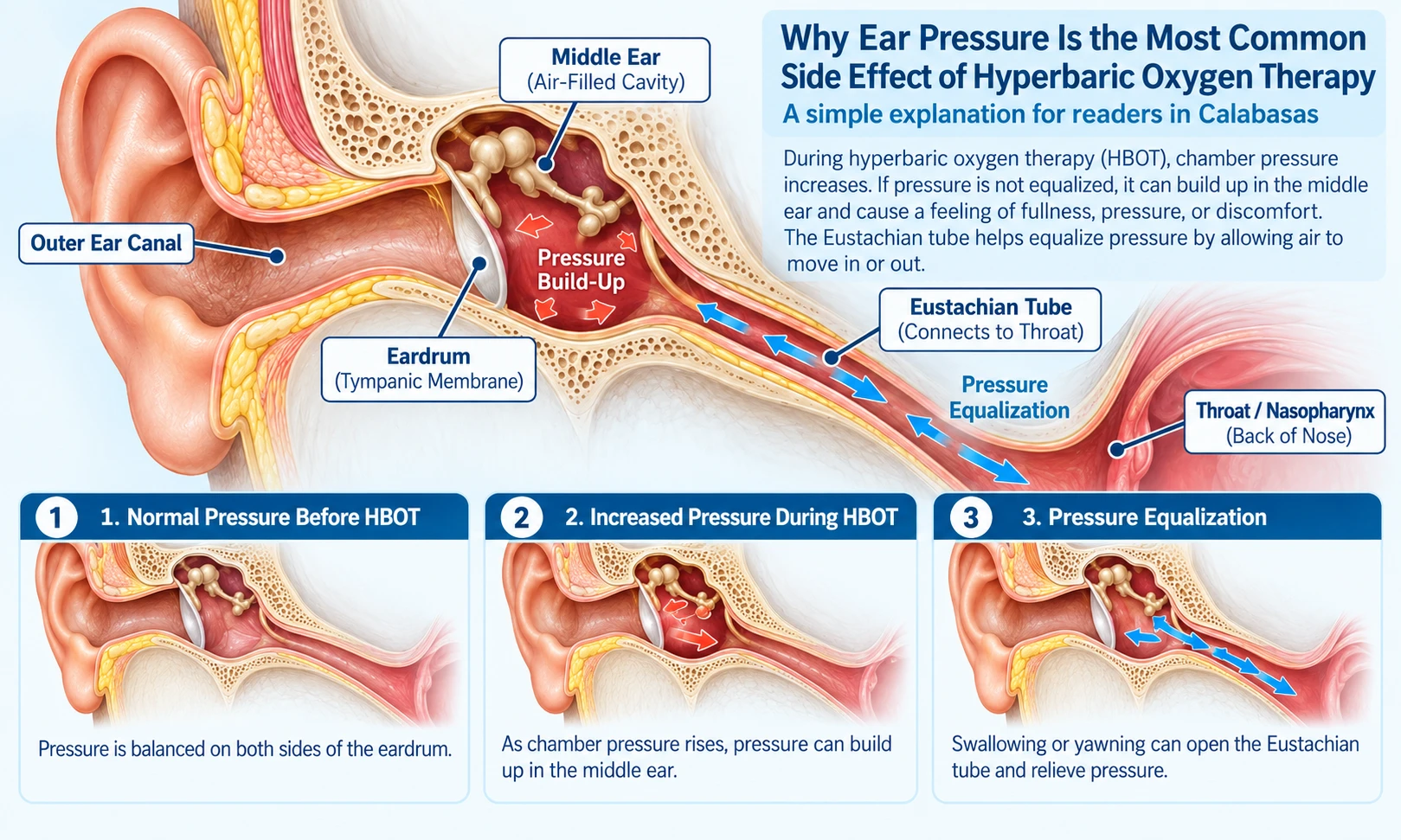
As the pressure changes, Cleveland Clinic explains, your ears may feel clogged or start to pop, much like flying in an airplane or driving through mountains. University of Iowa Health Care describes ear barotrauma, a pressure injury to the ear, as the most frequent complication of hyperbaric oxygen.
The sinuses follow the same physics in smaller spaces. When they cannot equalize with the pressure in the chamber, the result can be significant sinus pain, often called a sinus squeeze. That is one reason a session pauses for nothing more dramatic than you raising a hand and saying your ears or sinuses hurt.
The Rarer Effects Worth Knowing About
Harvard Health lists the complications that are uncommon but possible: ear and sinus pain, rupture of the eardrum, temporary vision changes and, rarely, lung collapse. The vision change has a specific mechanism. According to University of Iowa Health Care, hyperbaric oxygen can temporarily change the shape of the lens in the eye, which can change how clearly you see during a course of treatment.
The rarest concern is the oxygen itself. The high level of oxygen in the blood during treatment can be toxic to the central nervous system, and that is the reason behind the rare risk of seizures. At the practice, screening comes first for everyone, and pressure, session count and frequency are set for each person.
Do Hyperbaric Oxygen Therapy Side Effects Depend on Pressure?
In a pooled analysis of trials, hyperbaric oxygen therapy side effects were reported more often at higher chamber pressures and over longer courses of treatment. That meta-analysis in Frontiers in Medicine also found ear discomfort to be the most frequent side effect across the trials it reviewed.
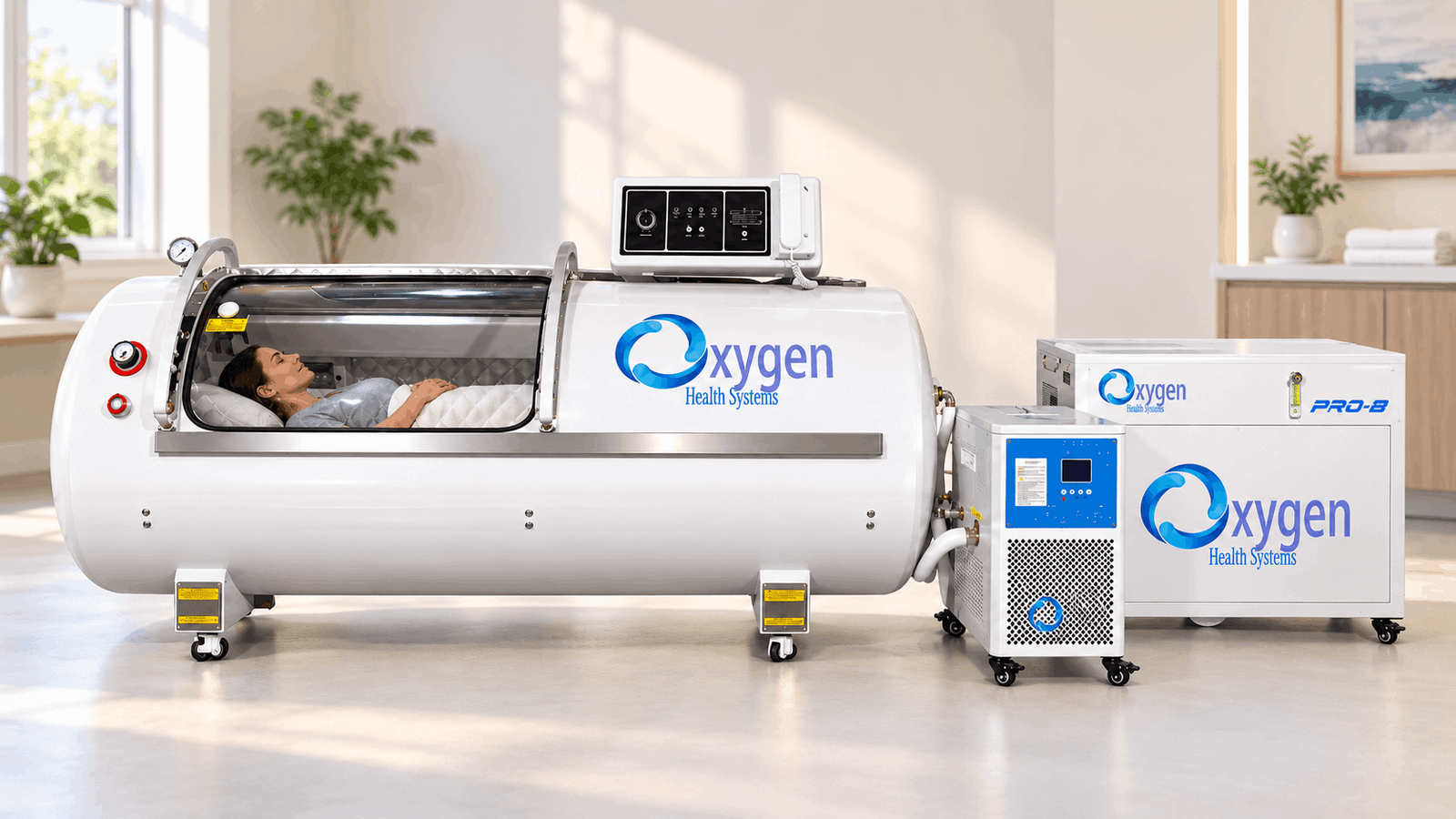
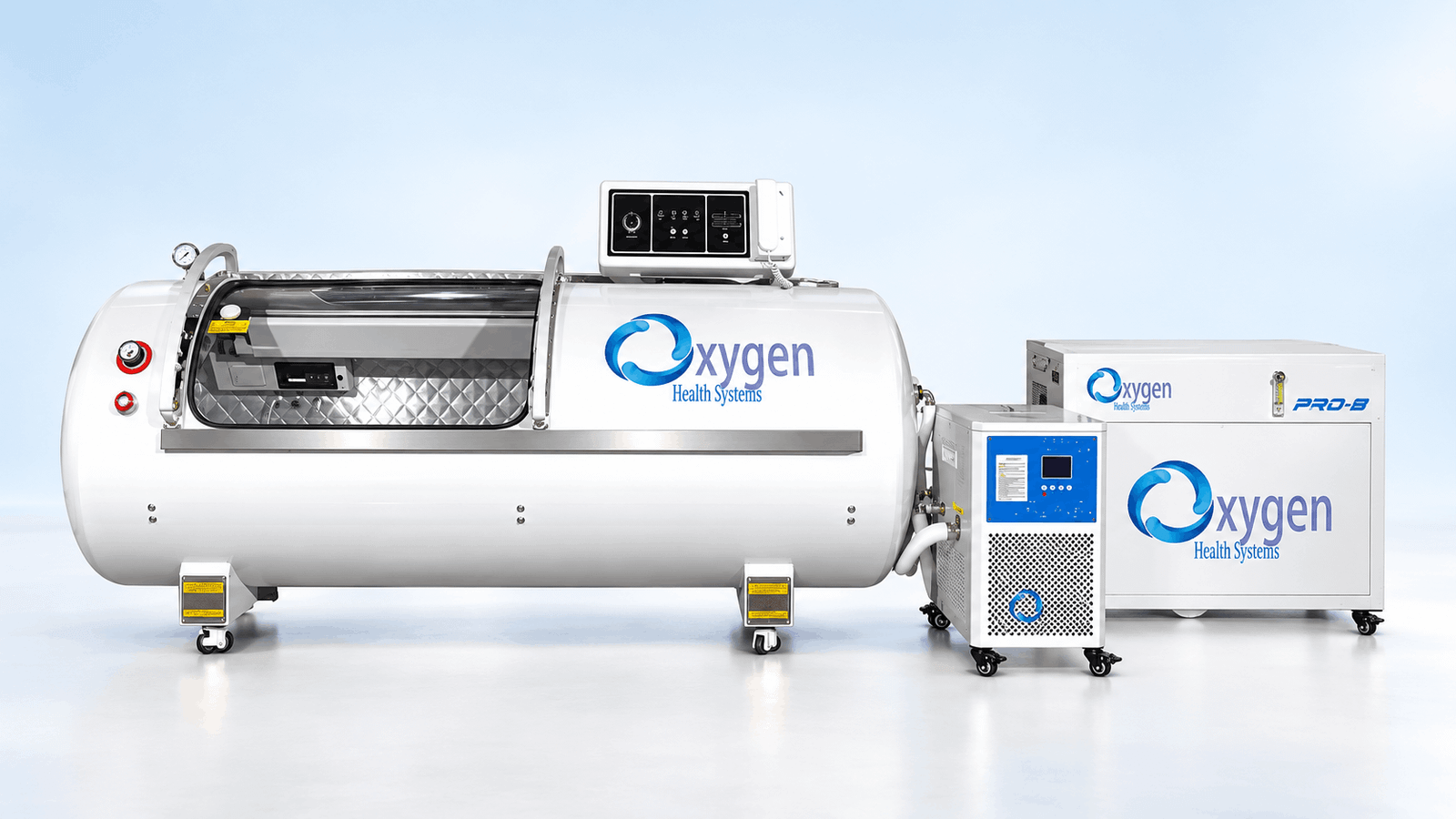
Both chambers at California Brain & Spine Center are hard-shell units in which you lie on your back. The original chamber and the newer, larger one each work within their own pressure range, and the setting used for you is chosen after screening. Neither is a soft chamber.
What ATA Means
ATA stands for atmospheres absolute, a measure of the total pressure around you, counted against ordinary air at sea level. A higher setting means more pressure above ordinary air for your ears and sinuses to adjust to.
Lower pressure does not mean no side effects. Your ears can still feel the change at any setting, and the same screening applies to everyone. What the pooled analysis gives is a reason to take pressure and course length seriously, and here both are decided person by person after screening rather than taken from a standard protocol.
Wondering Whether Hyperbaric Oxygen Suits You?
Screening comes before any session. Book a complimentary consultation in Calabasas to go through your health history, your questions about side effects, and whether a session makes sense for you.
What Happens at Your First Hyperbaric Oxygen Therapy Session?
A first hyperbaric oxygen therapy session at the practice starts with screening, then about an hour lying in a hard-shell chamber, with the session run by trained clinic staff under Dr. Chizari's supervision. In order, it looks like this.
- Before anything else, you are screened: your health history, lung history, any pregnancy, diabetes and how you feel in enclosed spaces.
- From what screening finds, your pressure, number of sessions and frequency are set individually. There is no single standard course.
- You lie down on your back in the chamber, and only what the staff have cleared goes in with you, because high concentrations of oxygen carry a fire risk, as Harvard Health points out.
- As the pressure builds, your ears may feel full or pop; you clear them as it rises, and you tell the staff straight away if your ears or sinuses hurt.
- The session itself lasts about an hour, with staff nearby throughout.
- Afterward, Cleveland Clinic notes, you may feel sleepy, so a quiet stretch after your first sessions is sensible.

How Might Each Side Effect Feel, and What Should You Tell Staff?
Most hyperbaric oxygen side effects feel like ear fullness or popping, sinus pain, a change in vision or sleepiness, and during a session you tell staff at once about any of them. The table below sets out what each may feel like and what to do, during the session or at screening beforehand.
| Side effect | What you may notice | What to do |
|---|---|---|
| Ear pressure (ear barotrauma) | Fullness or popping as pressure changes, much like flying. The most frequent complication. | Clear your ears as pressure builds and tell staff at once if it hurts. |
| Sinus squeeze | Sinus pain when the sinuses cannot equalize with chamber pressure. | Tell staff at once. |
| Vision change | A temporary change in the shape of the eye's lens can change vision during a course. | Report it as soon as you notice it. |
| Tiredness | Feeling sleepy after a session. | Mention it at your next visit. |
| Claustrophobia | Feeling closed in; it can be harder for people who are already claustrophobic. | Say so at screening, before your first session. |
| Low blood sugar | A drop in blood sugar during treatment in some people with diabetes. | Tell screening that you have diabetes and which medications you take. |
| Oxygen effects on the nervous system | Rare. High oxygen levels can be toxic to the central nervous system. | Screening comes first for everyone, and pressure is set individually. |
Who Should Not Have Hyperbaric Oxygen Therapy?
An untreated collapsed lung (pneumothorax) is the one condition considered an absolute contraindication (a reason not to have treatment at all) to hyperbaric oxygen therapy, according to StatPearls on the NCBI Bookshelf. Other conditions are relative contraindications, weighed person by person during screening.
Cleveland Clinic names a collapsed lung, certain lung diseases such as COPD, and pregnancy among the situations in which a person may not be a candidate. That is why the screening questions reach well beyond the reason you came in, and why it helps to raise these points yourself:
- If you have diabetes, say so, because some people with diabetes experience a drop in blood sugar during hyperbaric treatment.
- If enclosed spaces bother you, mention it early: some people feel claustrophobic in the chamber, and people who already are may find it harder.
- Any lung history, including COPD or a past collapsed lung, belongs on the screening form, along with a pregnancy.
When It Is an Emergency
During a session, tell the supervising staff at once about ear or sinus pain, a change in vision, or simply feeling unwell. After you leave, the rule is different.
If symptoms come on suddenly or severely - a sudden severe headache, weakness, trouble speaking, vision loss, or fainting - that is an emergency. Call 911 or go to an emergency room, not a clinic appointment.
Can Hyperbaric Oxygen Help After a Concussion or With Brain Fog?
For some neurological patients, hyperbaric oxygen may be considered as an adjunct, meaning one addition to their care, for selected people after screening. I do not present it as a proven treatment for any of these problems.
The people it may be considered for include those with persistent post-concussion symptoms, brain fog or cognitive fatigue, neurological fatigue, and selected post-COVID presentations. Whether it has a place alongside concussion care in Calabasas is decided after an evaluation, never assumed.
The practice also offers hyperbaric-only programs and multi-session packages, with no rehabilitation program required. If foggy thinking is your main concern, the page on brain fog treatment describes how that symptom is looked at as a whole.
Hyperbaric oxygen therapy is not FDA cleared or approved for conditions such as Alzheimer's disease, autism, cancer and Lyme disease, as Harvard Health points out, and it is not offered here for them.
What Do Patients in Calabasas Ask Before a First Session?
Patients in Calabasas and Agoura Hills often ask me whether the pressure hurts, what can go into the chamber, and why screening asks about diabetes or their lungs.
One question patients often ask me is whether the pressure is going to hurt their ears. My honest answer is that the ears may feel clogged or pop as pressure changes, much as on a flight, and that you tell the staff the moment it is uncomfortable. Your pressure is set for you after screening, within the range of the chamber you use.
Another is what they can bring in with them. Because high concentrations of oxygen carry a fire risk, only what the staff clear goes into the chamber. The width of the screening surprises people too, and the reason sits in the contraindications above: lung history, pregnancy and diabetes all change whether and how a session is planned.
At California Brain & Spine Center in Calabasas, Dr. Alireza Chizari, DC, DACNB, a Board-Certified Functional Neurologist whose field is functional neurology, supervises every hyperbaric session, and the chamber, the pressure plan and the reason behind each screening question are explained before a first session is booked.
"Dr. Chizari took the time to explain everything clearly and made the whole process easy to understand."
From a Google review
Hyperbaric Oxygen Therapy Side Effects: Short Answers
Hyperbaric oxygen therapy side effects raise a handful of shorter questions before a first session, and these are the ones answered in a few sentences each.
Is it normal to feel tired after hyperbaric oxygen therapy?
Yes, it can be. Cleveland Clinic notes that you may feel sleepy after hyperbaric oxygen therapy, and it is one of the hyperbaric oxygen therapy side effects people mention after a session. If it feels heavy, tell the staff at your next visit so the plan can take it into account.
Can hyperbaric oxygen therapy side effects affect your vision?
They can, temporarily. Hyperbaric oxygen can temporarily change the shape of the lens in the eye, which can change vision during a course of treatment. Among hyperbaric oxygen therapy side effects, this one is worth reporting to staff as soon as you notice it, so it can be noted in your plan.
Is hyperbaric oxygen therapy in Calabasas done in a soft chamber?
No. Both chambers at California Brain & Spine Center in Calabasas are hard-shell units in which you lie down. Each works within its own pressure range. Screening sets your pressure, and hyperbaric oxygen therapy side effects are discussed before your first session.
Can someone with diabetes have hyperbaric oxygen therapy?
It depends on screening. Some people with diabetes experience a drop in blood sugar during hyperbaric treatment, so diabetes is one of the first things screening asks about. Tell the staff about your medications and how your blood sugar usually runs, and say at once if you feel unwell during a session.
How much does hyperbaric oxygen therapy cost?
Prices are not published on this site. Pressure, session count and frequency are set for each person after screening. For current prices and package plans, call (818) 649-5300 or book a complimentary consultation. The practice is out of network, and superbills may be provided when appropriate, but do not assume insurance coverage.
The short version of hyperbaric oxygen therapy side effects is the one I started with. Complications are uncommon, ear pressure is the one people notice, and screening decides who goes ahead and at what pressure. If you are weighing a first session, I would rather you arrive with your questions written down than sit on them. You can reach the practice at California Brain & Spine Center | (818) 649-5300 | Calabasas, CA 91302, or book online.
This content is for educational purposes only and is not medical advice. Consult a qualified healthcare provider about your specific situation.
Talk Through a First Session Before You Book One
Bring your health history and your questions about side effects. In Calabasas, Dr. Chizari goes through screening, chamber pressure and what a session involves, so you can decide with the facts in front of you.

vestibular neuritis and how long recovery really takes
hyperbaric oxygen therapy side effects and what your first session is like
how much hyperbaric oxygen therapy costs and when insurance pays?
HBOT after concussion and long COVID

How Long Does Brain Fog Last? Causes and When to Get Help

COVID Headache: Why It Lingers and What May Help

Head Feels Heavy Every Day!: Causes and What to Do
Barometric Pressure Migraines

What Is Functional Neurology? How It Compares With Medical Neurology

Care for repeated concussions in athletes in Woodland Hills

Dizziness When Scrolling: Why Screens Make You Dizzy

Dysautonomia in Teens: Helping Your Child Return to the Classroom