Why loud music and sudden noise can set off dizziness in some people, which ear and migraine conditions are linked to it, and who to see first.
Can loud music cause vertigo? For some people it can, because hearing and balance share the same small space in the inner ear, and a few specific conditions let sound spill into the balance system. One question I am often asked in my Calabasas practice is whether dizziness around loud sound means something is wrong with the ears or the brain.
It is a fair question, and it usually has a specific answer. You may have walked out of a show feeling as if the floor was moving, woken the next morning with ringing and a wobbly head, or found that a siren or a blender sends you reaching for the counter. Those experiences are real, and they are worth sorting out properly, because the right first stop depends on what else comes with them.
I am Dr. Alireza Chizari, DC, DACNB, a Board-Certified Functional Neurologist at California Brain & Spine Center in Calabasas. Sound-triggered vertigo, ringing and hearing changes are an ENT or audiology question first, and I say so to anyone who calls. Where I come in is later: when the ear workup is complete and dizziness keeps coming back, a dizziness evaluation in Calabasas can look at how the rest of the balance system is working, starting with a complimentary consultation.
Key Takeaway
Loud music can bring on vertigo or dizziness in some people, because hearing and balance share the inner ear. Superior canal dehiscence, perilymph fistula and vestibular migraine are the named conditions linked to it. Sound-triggered vertigo, ringing or hearing changes are an ENT question first, and sudden hearing loss is a medical emergency.
Can Loud Music Cause Vertigo?
Yes, for some people. The answer to "can loud music cause vertigo" depends on the inner ear, where hearing and balance sensors sit side by side. In superior canal dehiscence, a perilymph fistula or vestibular migraine, loud sound can set off vertigo or dizziness. Ringing or muffled hearing alongside it is a reason to see an ENT first.
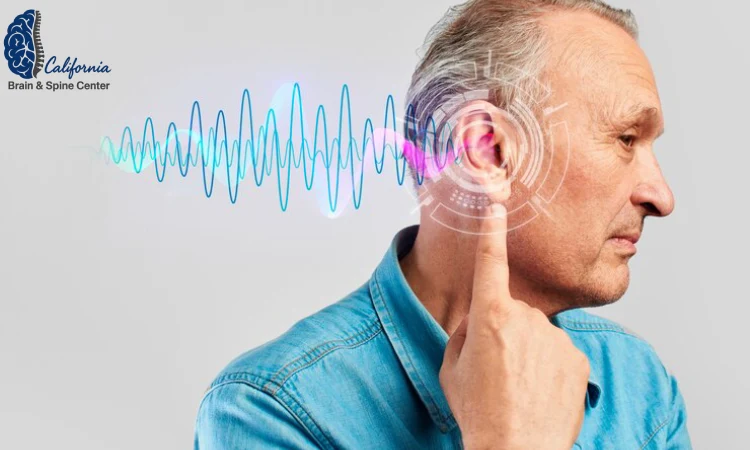
The inner ear holds the hearing organ and the balance organs in one bony structure. The Hearing Health Foundation notes that because hearing and balance share the inner ear, intense or long exposure to loud noise can damage the balance organs and their pathways to the brain as well as hearing.
How Sound Can Reach the Balance System
The balance sensors normally respond to movement of your head, and sound is meant to stay on the hearing side. Superior canal dehiscence is a thin or missing patch of bone over one of the inner ear's balance canals. The otolaryngology department at Washington University School of Medicine explains that in people with this condition, the gap can let sound energy stimulate balance sensors that usually respond only to head movement. Loud music or noise can then bring on vertigo, the sense of movement when none is present, or oscillopsia, a sense that the visual world itself is moving.
A tear in the membrane between the middle and inner ear, called a perilymph fistula, is a second route. Vestibular migraine is a third, and there loud noise works as a trigger for an attack. Each is covered below with the clues that tend to go with it.
Can Loud Music Make You Dizzy Without True Vertigo?
Loud music can leave you dizzy without any spinning, and the difference is worth noticing. Vertigo is a false sense of movement. Dizziness is broader: unsteadiness, a floating or rocking feeling, or a sense that you cannot quite trust the floor.
The Vestibular Disorders Association lists dizziness without true spinning among the most common symptoms of a perilymph fistula, and it notes that many people with vestibular migraine have dizziness or vertigo as the main symptom with no headache at all. So a concert that leaves you swaying still counts, and it still deserves the same questions about your ears.
Why Do Loud Noises Make Me Dizzy?
Loud noises make some people dizzy because a specific condition lets sound reach the balance system, or because noise sets off a migraine attack in which dizziness is the main symptom. Three patterns are linked to sound in published sources, and a fourth, Meniere's disease, can look similar.
Sound Induced Vertigo From Superior Canal Dehiscence
Sound induced vertigo is one of the recognised features of superior canal dehiscence. When loud sound reaches the thin spot over the canal, the balance sensors can respond as if the head had moved, and vertigo or a jumping visual world can follow.
A review of the first twenty years of research on the syndrome, by Ward, Carey and Minor in Frontiers in Neurology, adds two points people rarely connect to their ears. Ongoing unsteadiness between episodes is common, and many patients describe a brain fog that may be related to the balance system's role in attention.
The same review describes how the condition is confirmed: high-resolution CT of the temporal bone, together with vestibular evoked myogenic potential (VEMP) testing, which frequently shows abnormal responses to a click or tone in these patients. Both are otology tests, ordered and interpreted by an ENT.
Perilymph Fistula After a Head Injury or Pressure Change
A perilymph fistula is a hole or tear in one of the membranes that separate the middle ear from the inner ear. According to the Vestibular Disorders Association, head trauma is the most common cause, usually a direct blow to the head or in some cases a whiplash injury, and ear barotrauma from flying or diving is another.
Its symptoms most commonly include ear fullness, fluctuating or "sensitive" hearing, dizziness without true spinning and motion intolerance, and they often get worse with altitude changes such as a fast elevator or a flight. Balance & Dizziness Canada notes that some people with a perilymph fistula find loud noises trigger their symptoms. If loud-noise dizziness started after a fall, a car accident or a dive, that history belongs at the top of what you tell your ENT.
Vestibular Migraine, Where Loud Noise Is a Trigger
Vestibular migraine is a form of migraine in which vertigo or dizziness is often the main symptom. The Vestibular Disorders Association lists loud noise among the typical migraine triggers that often provoke attacks, alongside stress, sleep irregularities, missed meals, dehydration, bright lights, weather changes and motion sickness.
Many people with vestibular migraine have no headache during an attack, and sensitivity to sound and light is common. The absence of a headache therefore does not rule this pattern out, and it is worth mentioning any migraine history when you describe your dizziness to a clinician.

Meniere's Disease, Which Can Look Similar
Meniere's disease is an inner-ear disorder that causes episodes of vertigo along with ringing in the ear, hearing loss and a feeling of fullness in the ear, according to the National Institute on Deafness and Other Communication Disorders. It is most often diagnosed and treated by an otolaryngologist, the ear, nose and throat doctor. Sound is not what defines it, but the ringing and fullness make it easy to confuse with the patterns above, which is one more reason ear symptoms go to an ENT first.
Dizzy When the Volume Goes Up?
If the ear side has been checked and loud-noise dizziness keeps coming back, a complimentary consultation in Calabasas is a practical place to start on the balance side of the question.
Can Loud Music Cause Vertigo the Next Day?
Loud music can leave next-day effects, and the ones health agencies describe most clearly are ringing and a temporary drop in hearing; next-day dizziness needs a closer look at which pattern it fits.
The National Institute on Deafness and Other Communication Disorders explains that loud noise sometimes causes a temporary hearing loss that disappears 16 to 48 hours later, and that there may still be lasting damage to hearing even after it seems to recover. Loud noise exposure can also cause tinnitus, a ringing, buzzing or roaring in the ears or head.
Dizziness the day after follows different rules. A late concert can stack several recognised migraine triggers at once: loud noise, bright lights, an irregular night of sleep, a missed meal and too little water. In someone prone to vestibular migraine, that combination may explain a wobbly day after. Intense noise can also affect the balance organs directly, which is why lingering dizziness should not be written off as a late night.
Vertigo After Concert Noise: What to Notice
The details you notice help whoever evaluates you, so write them down without trying to diagnose yourself:
- whether the room spun or you only felt unsteady, and whether it came on during the sound or hours later
- any ringing, muffled hearing or fullness, and which ear it was in
- whether pressure changes such as flying or a fast elevator bring on the same feeling
Add any headache, any sensitivity to light or sound, and anything that happened to your head or ears beforehand, including a fall, a dive or a flight.
When the Ringing or Muffled Hearing Does Not Clear
Hearing that stays muffled, ringing that does not settle, or dizziness that lasts more than a few days or keeps getting worse is worth an evaluation, starting with an ENT or audiologist. A rapid, unexplained loss of hearing is different. The NIDCD advises treating sudden deafness as a medical emergency and seeing a doctor immediately, because delay makes treatment less effective.
Can Noise Make Vertigo Worse if You Already Have a Balance Problem?
Noise can make vertigo worse in several existing conditions, most clearly vestibular migraine, where loud noise is one of the typical attack triggers.
In superior canal dehiscence, unsteadiness between episodes is common, so a loud environment lands on a balance system that is already unsettled. With a perilymph fistula, some people find loud noises bring on their symptoms. The table below sets the patterns side by side. It is a way to organise what you tell a clinician, and it cannot diagnose you.
| Pattern | What loud sound can do | Other clues | What to raise with a clinician |
|---|---|---|---|
| Superior canal dehiscence | Bring on vertigo or a moving visual world (oscillopsia) | Unsteadiness between episodes; many describe brain fog | Ask an ENT whether high-resolution CT and VEMP testing fit your symptoms |
| Perilymph fistula | Trigger symptoms in some people | Ear fullness, fluctuating hearing, worse with altitude changes | Any head injury, whiplash, flight or dive before it started |
| Vestibular migraine | Act as one of the typical attack triggers | Often no headache; sound and light sensitivity common | Other triggers such as poor sleep, missed meals and bright light |
| Meniere's disease | Not its defining trigger | Vertigo episodes with ringing, hearing loss and fullness | It is most often diagnosed and treated by an ENT |
| Loud noise exposure | Cause ringing and temporary hearing loss | Hearing may seem to recover while some damage remains | Muffled hearing or ringing that has not cleared |
| Sudden hearing loss | May come with dizziness, ringing or fullness | Rapid, unexplained drop in hearing | A medical emergency: see a doctor immediately |
When Dizziness After Loud Noise Is an Emergency
A sudden, unexplained loss of hearing, with or without dizziness, ringing or ear fullness, is a medical emergency according to the NIDCD. See a doctor immediately rather than waiting for an appointment.
If symptoms come on suddenly or severely - a sudden severe headache, weakness, trouble speaking, vision loss, or fainting - that is an emergency. Call 911 or go to an emergency room, not a clinic appointment.
Who Should Check Sound-Triggered Dizziness First?
An ENT or audiologist should usually check sound-triggered vertigo, ringing or hearing changes first, because the tests that confirm these ear conditions are theirs to order and interpret.
High-resolution CT of the temporal bone and VEMP testing are how superior canal dehiscence is confirmed, and both sit with the ENT. Meniere's disease is most often diagnosed and treated by an ENT as well. A perilymph fistula is a tear between the middle and inner ear, which again makes it an ear question before anything else.
I do not order or read temporal bone scans, and I do not treat ear disease. What I can do, once the ear side has been looked at, is evaluate how the rest of the balance system is working and send any ear finding back to the ENT who is following it. The practice works alongside primary care, medical neurology, ENT and physical therapy, and dizziness that involves the ear is shared care from the start.
Are Visual and Sound Triggers for Dizziness Connected?
Visual and sound triggers for dizziness can overlap: in vestibular migraine, sensitivity to both sound and light is common.
This page used to cover the visual side in detail, and that part now has its own articles. If scrolling a phone or watching fast video makes you dizzy, read why scrolling can make you dizzy.
If supermarket aisles, malls and crowded stations are the problem, read why busy visual environments make you dizzy.
Light that feels physically uncomfortable is its own topic as well, covered in our article on light sensitivity and photophobia.

When both kinds of trigger appear together, the next step is the one this article keeps returning to. Note what sets the dizziness off, have the ear checked by an ENT when sound or hearing is involved, and look at the wider balance system if the dizziness persists after that.
What Does a Functional Neurology Evaluation in Calabasas Look At?
A functional neurology evaluation looks at how the balance system, eye movements and posture work together once the ear workup is complete.
At California Brain & Spine Center, Dr. Alireza Chizari, DC, DACNB, starts with a 120-minute neurodiagnostic assessment. It can include videonystagmography, which records eye movements with infrared cameras, and computerized posturography, which measures how steadily you stand while the information from your eyes, feet and inner ears is changed. Results are explained test by test, in plain language, before any plan is discussed.
One question patients often ask me is whether a normal hearing test means the ear is fine. A standard hearing test looks at hearing. Superior canal dehiscence, for example, is confirmed with CT and VEMP testing, so I ask whether an ENT has considered those before we assume the problem sits somewhere else.
Another question I hear is whether someone should stop going to concerts. My first answer is that the cause comes before the rule: sound-triggered vertigo from the ear, a migraine pattern and noise damage to hearing each lead to different next steps, and an ENT sees the ear side before anyone decides what to avoid.
When the evaluation points to the balance system itself, care may include neurological rehabilitation such as neurosensory integration, when clinically appropriate after evaluation. Any ear finding goes back to the ENT.
"Then we did the full examinations like eye tracking and balance test and he explained my results and what they mean for my symptoms."
From a Google review
For sound-triggered dizziness in Calabasas, Woodland Hills or elsewhere along the 101, the usual order is an ENT first and a balance evaluation second if dizziness continues. The practice is on Park Granada in Calabasas, a short drive from Woodland Hills. If you already have ENT or audiology results, bring them; they shape what the assessment focuses on and avoid repeating work that has been done.
Questions About Loud Music, Noise and Dizziness
Loud music and noise raise a few practical questions that the sections above do not answer directly.
Can loud noises make you pass out?
Fainting around loud noise is a warning sign to treat urgently, whatever the trigger seems to be. The inner-ear and migraine patterns in this article describe vertigo and unsteadiness. If you faint or nearly faint, especially with a severe headache, weakness or trouble speaking, call 911 or go to an emergency room, not a clinic appointment.
Can loud noises make you dizzy if your hearing test was normal?
Loud noises can make you dizzy for reasons a standard hearing test is not designed to measure. Superior canal dehiscence is confirmed with high-resolution CT and VEMP testing, which often shows abnormal responses to sound, and sensitivity to sound is common in vestibular migraine. Ask your ENT whether those possibilities fit your symptoms.
Can listening to loud music cause vertigo again and again?
If "can loud music cause vertigo" is a question you keep asking because it keeps happening, the repetition is itself a reason to get checked. Recurring sound-triggered episodes fit specific conditions, such as superior canal dehiscence, a perilymph fistula or vestibular migraine. Note each episode and start with an ENT.
Is vertigo after concert noise a sign of hearing damage?
It can be one sign among several. Loud noise can cause ringing and a temporary hearing loss that disappears 16 to 48 hours later, though some damage may remain, and intense noise can affect the balance organs. Vertigo after concert noise that lingers, or comes with muffled hearing, is worth an ENT or audiology check.
Can loud noises cause vertigo after a head injury?
They can in some people. Head trauma, including a direct blow or a whiplash injury, is the most common cause of a perilymph fistula, and some people with a fistula find loud noises trigger their symptoms. If loud noises bring on vertigo since a fall, an accident or a dive, tell your ENT about the injury first.
Where can I get sound-triggered dizziness checked near Calabasas or Los Angeles?
Start with an ENT or audiologist for sound induced vertigo, ringing or hearing changes. If the ear workup is complete and dizziness continues, California Brain & Spine Center in Calabasas, serving Woodland Hills and the greater Los Angeles area, offers a 120-minute neurodiagnostic assessment of the balance system, starting with a complimentary consultation.
So, can loud music cause vertigo? In some people it can, usually through a specific inner-ear condition or a migraine pattern, and the sound itself is a useful clue. Write down what happened, see an ENT or audiologist when hearing or ringing is involved, and treat sudden hearing loss or fainting as an emergency. If the ear side is clear and dizziness keeps shaping your week, I am glad to look at the balance side with you.
California Brain & Spine Center | (818) 649-5300 | Calabasas, CA 91302. Book online at californiabrainspine.janeapp.com.
This content is for educational purposes only and is not medical advice. Consult a qualified healthcare provider about your specific situation.
Ready to Look at the Balance Side?
When the ENT has checked the ear and loud rooms still leave you unsteady, start with a complimentary consultation at our Calabasas practice.