Why ordinary light can start to hurt after a head injury, what may sit behind it, and what a careful evaluation looks for.
If light has started to hurt since your head injury, you are not imagining it. Light sensitivity after concussion is a recognized symptom and a common one. The constant squinting, dimming and leaving bright rooms early is tiring in a way that is hard to explain to anyone who has not felt it.
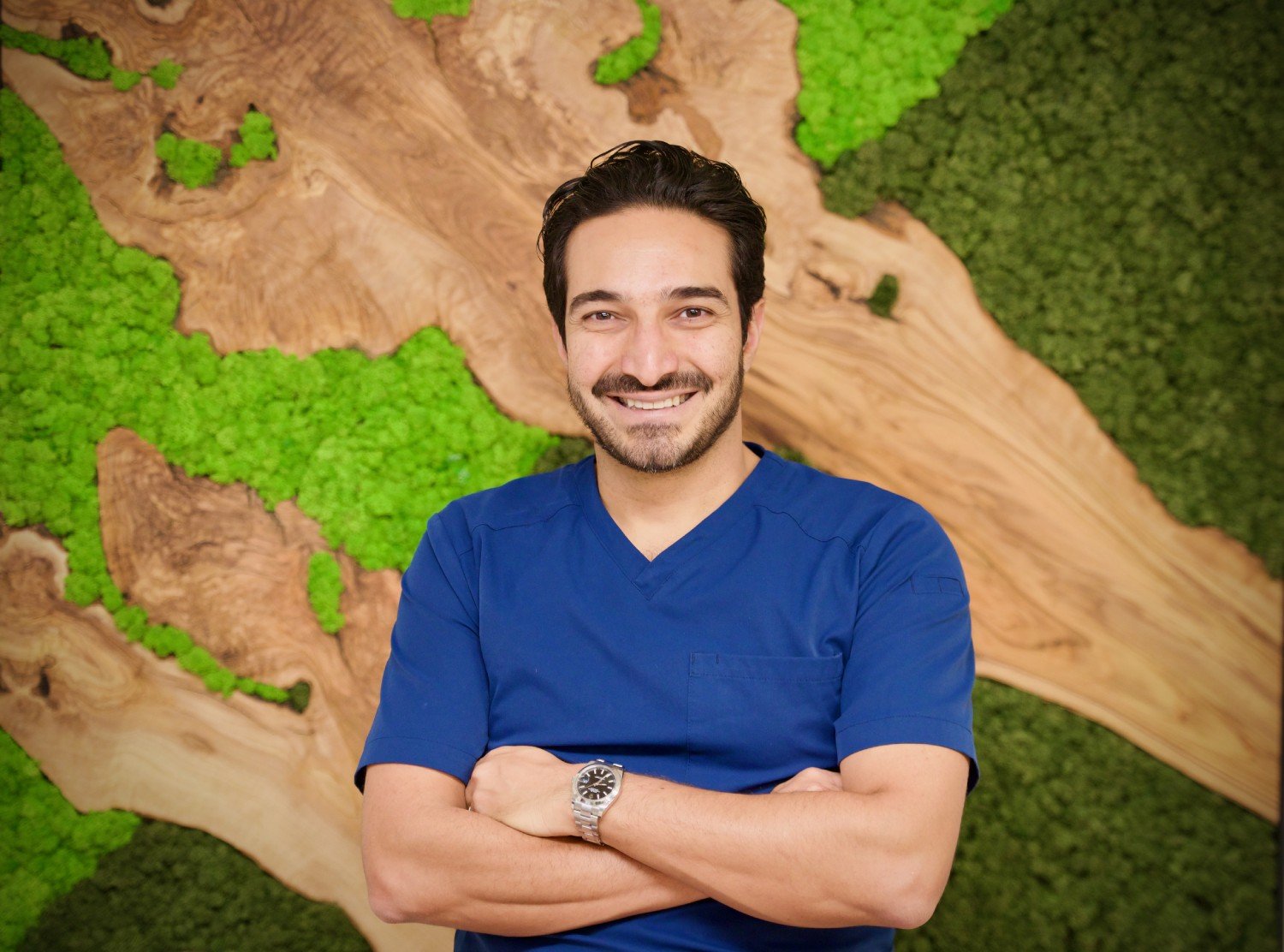
I'm Dr. Alireza Chizari, DC, DACNB, a board-certified chiropractic neurologist at California Brain & Spine Center in Calabasas. I came to this work from electrical engineering, and I still approach the nervous system the way I approached a circuit: measure what it is doing before trying to change it. You can read how that path unfolded on the About Dr. Alireza Chizari page.
You may be working full days while turning every monitor down, wearing a cap indoors, and choosing restaurants by their lighting. Perhaps you have been told the scan was clean. A clean scan is genuinely reassuring about some serious problems, and it still leaves open why a bright conference room can take the rest of your afternoon with it.
Key Takeaway
Light sensitivity after concussion is a recognized, common symptom that often eases, though in some people it can persist much longer. It often travels with post-traumatic headache. Long stretches in a dark room and constant indoor sunglasses may backfire. A focused evaluation looks at why light is provoking you before anyone asks you to push through it.
Is light sensitivity after concussion normal?
Yes, light sensitivity after concussion is normal in the sense that it is common and recognized. The CDC lists being bothered by light among concussion symptoms, and it often eases, though in some people it can persist much longer. Common does not mean you have to put up with it; persistent sensitivity deserves a proper look.
How common is light sensitivity after concussion?
Light sensitivity is one of the recognized symptoms of concussion. The CDC's HEADS UP guidance on concussion signs and symptoms lists being "bothered by light or noise" among the physical signs.
How long it hangs around varies from person to person. Light sensitivity is common after a concussion and often eases, though in some people it can persist much longer. A recent review of light-filtering lenses in traumatic brain injury describes it as present in many mild injuries, improving in most, and lingering well beyond the early recovery period in a smaller group.
When is it more than the concussion?
One situation sits outside the ordinary pattern, and it is an emergency. After a blow to the head, a headache that gets worse and does not go away, repeated vomiting, slurred speech, or one pupil larger than the other are danger signs, and they are covered in the safety box further down this page.
What does light sensitivity after concussion feel like?
It rarely feels like one thing. For some people it is a sharp, squinting discomfort under overhead lights. Others describe a heavy tiredness that builds at a bright screen, or a headache that seems to switch on somewhere between the parking lot and the produce aisle.
The CDC lists the symptom as being bothered by light or noise, and if both apply to you, that pairing belongs to the same picture. Light sensitivity after a concussion also often travels with post-traumatic headache, which is why the two are so hard to pull apart on a bad day.
What wears people down is the management. You may be adjusting monitor brightness all day, turning down evening plans because headlights are hard, and picking your seat in a meeting by where the window is. From the outside you look fine, while a good share of your energy goes into quiet workarounds.
One note worth keeping
Over the next stretch of days, write down what kind of light bothers you (sunlight, overhead LEDs, screens, headlights, glare) and what it causes: headache, eye ache, nausea, dizziness, fog. What follows the light is often more useful to an evaluation than how bright it was.
Why does the brain react to light after a concussion?
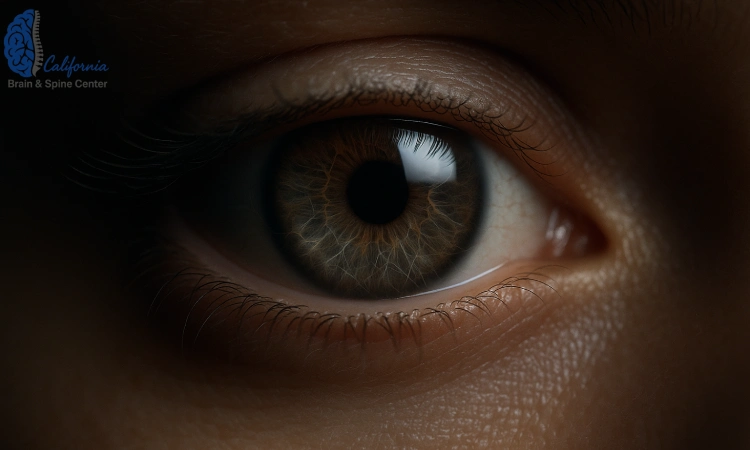
Photophobia is discomfort or pain from levels of light that most people tolerate without noticing. Light sensitivity after concussion is that discomfort appearing, or getting worse, after a head injury, and the research suggests several systems may be involved at once.
Light-sensing cells wired into pain pathways
One proposed mechanism is that certain light-sensing cells in the eye feed into the brain's pain pathways, so light can register as discomfort. These are intrinsically photosensitive retinal ganglion cells, which respond most strongly to blue light, and the lens review describes them sending signals along the trigeminal pain pathway.
Why light and headache so often arrive together
Light sensitivity after a concussion often travels with post-traumatic headache, and researchers think the two may share pathways. A narrative review in the Canadian Journal of Neurological Sciences examines that pairing and the mechanisms the two may have in common.
Filtering, pupils and balance
Several brain systems are thought to play a part in light sensitivity after concussion. The thalamus, which filters incoming sensory information, is thought to be involved. So is the autonomic nervous system, which sets pupil size and with it how much light reaches the retina. The balance system is also proposed as a contributor, which fits with how often light and dizziness show up in the same conversation.
Mood and pain processing belong in the picture
Mood and how the brain processes pain appear to influence light sensitivity and how well lenses help. In one study of people with traumatic brain injury, depressive symptoms were associated with a weaker response to tinted lenses, and a tendency to catastrophize pain, meaning to expect the worst from it and keep dwelling on it, went with greater light sensitivity.
That finding is a statement about how nervous systems work, and nobody should read it as a suggestion that the symptom is imagined. It is one reason an evaluation looks at the whole person.
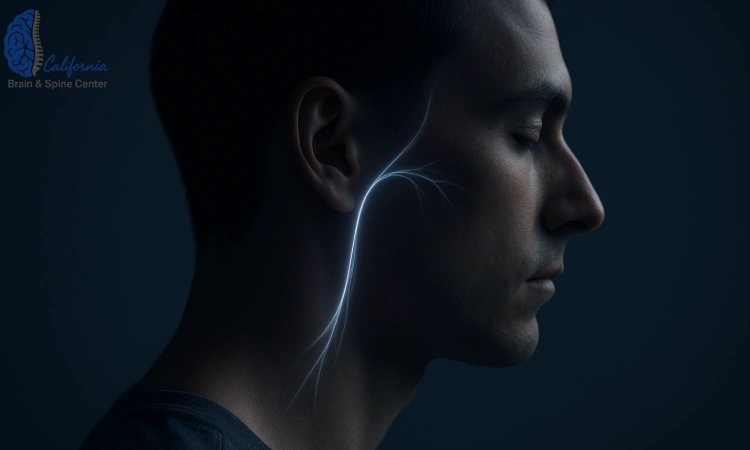
Light has been shrinking your days since the injury
If screens, bright rooms or headlights have been hard since a concussion, a focused neurological evaluation that includes the vestibular (balance) system may help show why light is so provoking and what may be worth working on.
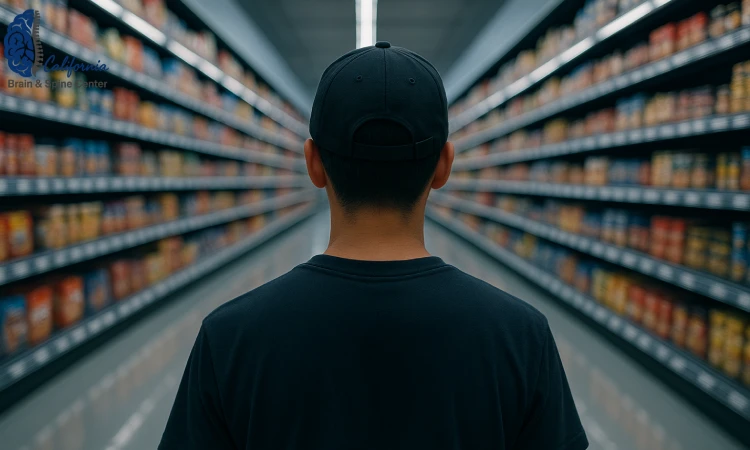
Why do bright stores make light sensitivity worse?
A large store asks a lot of an injured visual system at once: overhead lighting, reflections off polished floors, long shelves, people crossing your view, and constant turning of the eyes and head. Brightness is only one ingredient in that mix.
Because the balance system is thought to be one of the contributors to light sensitivity after concussion, it is often hard to tell whether the glare or the motion is doing more of the damage. The article on visual and sound triggers for dizziness goes into the motion side of that problem in detail.
Blurry or double vision after a head injury is a separate question again, and it has its own article on post-concussion vision problems elsewhere on this site.
How can you tell what is driving light sensitivity after concussion?
The same complaint can have different drivers, and they point to different next steps. Treat this table as a rough map for a conversation with a clinician.
| Typical presentation | Patterns that suggest something more | What the evaluation looks at |
|---|---|---|
| Light makes a headache worse | The headache keeps getting worse and does not go away | Emergency care comes first, before any appointment |
| Light bothers you along with noise | Both keep limiting work, driving or social plans | The full post-concussion symptom picture, since the CDC groups the two |
| Light bothers you along with dizziness | Busy stores, scrolling or head turns also provoke you | Eye movements, balance and tolerance of visual motion |
| Indoor light is uncomfortable and sunglasses help | You now wear them indoors for most of the day | Whether dark adaptation may be adding to the sensitivity |
| Light feels harder on low days | Mood and sensitivity seem to feed each other | Mood and pain processing alongside the visual findings |
When light sensitivity is an emergency
After a blow to the head, the CDC lists these as danger signs that need emergency care rather than a clinic appointment:
- a headache that gets worse and does not go away
- any seizure, or repeated vomiting
- slurred speech, or weakness or numbness
- double vision, or one pupil larger than the other
- drowsiness that keeps increasing
- confusion or unusual behavior
If symptoms come on suddenly or severely - a sudden severe headache, weakness, trouble speaking, vision loss, or fainting - that is an emergency. Call 911 or go to an emergency room, not a clinic appointment.
Should you stay in a dark room with light sensitivity after concussion?
For a short while, some relative rest is reasonable. For long stretches, probably not. Current guidance favors a brief period of relative rest and then gradual, tolerated activity, not long stretches in a dark room.
The American College of Sports Medicine's summary of the Amsterdam international consensus on concussion in sport describes early light aerobic activity, such as walking or stationary cycling, as long as it does not make symptoms worse. Prolonged strict rest is no longer the standard approach.
Darkness carries a cost of its own. Constant sunglasses indoors may backfire and can make sensitivity worse over time: the lens review notes that prolonged indoor use may dark-adapt the retina, which may paradoxically increase pain and light sensitivity.
The workable middle is to keep ordinary light in your day at a level you can tolerate, and to ease off when symptoms start to climb, in the same spirit as current activity guidance. It is an unexciting plan, and it has the merit of not making the world smaller than it needs to be.
Do tinted glasses help light sensitivity after concussion?
For some people, specific tinted lenses may help. Specific tinted lenses, such as FL-41, may improve light tolerance for some people after a brain injury. In the lens study, people with a traumatic brain injury tolerated less light than people without one, and both FL-41 and gray-filtering lenses improved light tolerance in both groups.
The evidence is still limited, and response varies. In the separate study on mood and pain processing, depressive symptoms were associated with a weaker response to both lens types, which is one more reason to look at the whole person before settling on a color.
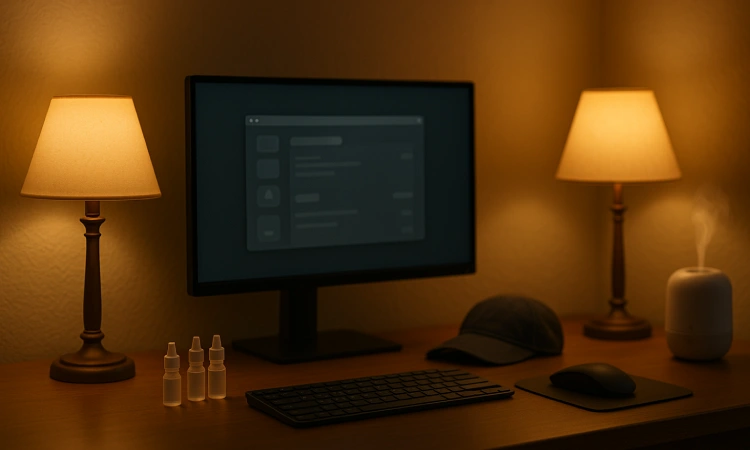
A tint used for specific situations, such as a long screen session or a bright store, is a different tool from dark sunglasses worn indoors all day. The first may make particular tasks more manageable. The second may backfire over time, for the dark-adaptation reason described above.
What does an evaluation for light sensitivity after concussion look at?
Dr. Alireza Chizari, DC, DACNB, approaches light sensitivity after concussion at California Brain & Spine Center in Calabasas the way functional neurology approaches most symptoms: as one output of a nervous system that can be measured and understood in context.
The evaluation starts with the history of the light itself: which kinds bother you, what they cause, how long it takes to settle, and what else changed after the injury. It also screens for what does not belong in a rehabilitation setting first, including the CDC danger signs, and refers out to medical neurology when that needs a look.
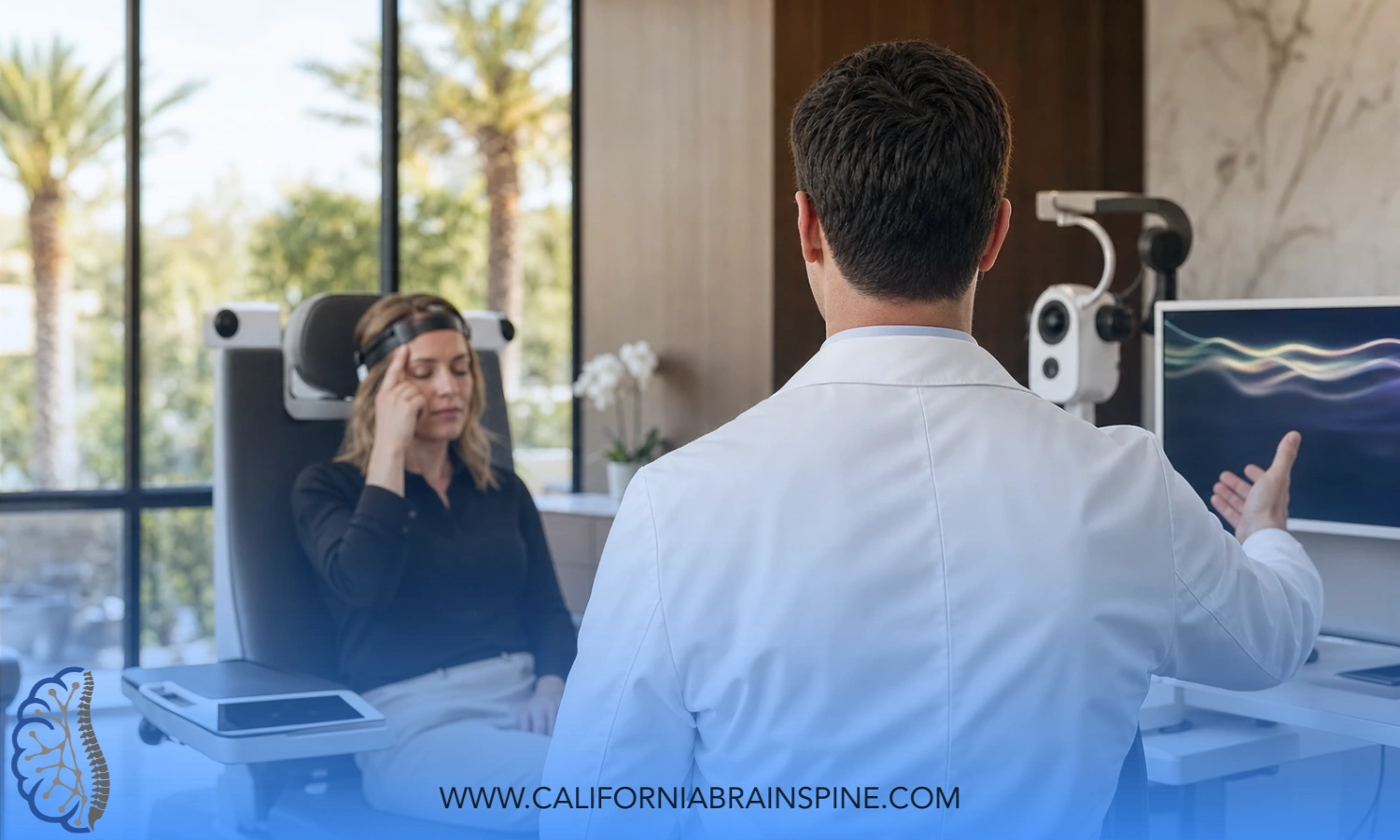
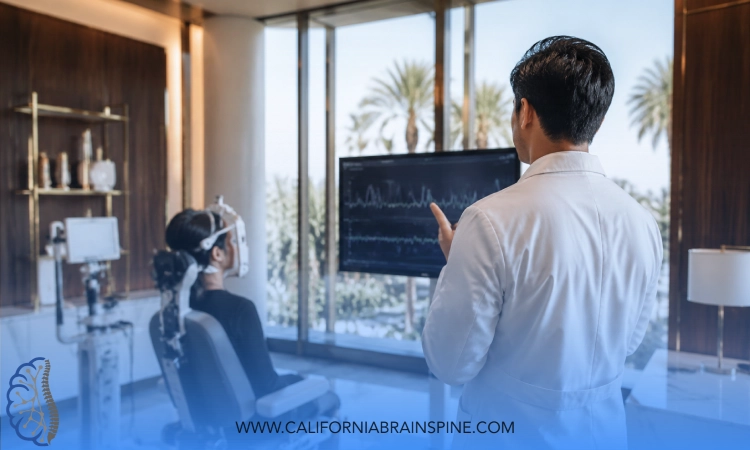
From there, a detailed neurodiagnostic assessment may examine eye movements, gaze stability, balance, and how symptoms respond to carefully chosen visual tasks. Because the balance system is thought to contribute, vestibular rehab therapies may also be considered for people whose sensitivity comes with dizziness.
Care may include, when clinically appropriate after evaluation, neurological rehabilitation built around eye-movement and balance work, practical changes to lighting at work, and a gradual return to tolerated light and activity in line with current guidance. The wider picture of post-concussion care sits on the concussion treatment in Calabasas page.
Good rehabilitation asks which visual task is provoking you, why, and how much your system can process without paying for it afterward.
What can you adjust at work and at home?
A complicated daily protocol can turn into one more job. A small number of changes usually gives more useful information than a room rebuilt from scratch.
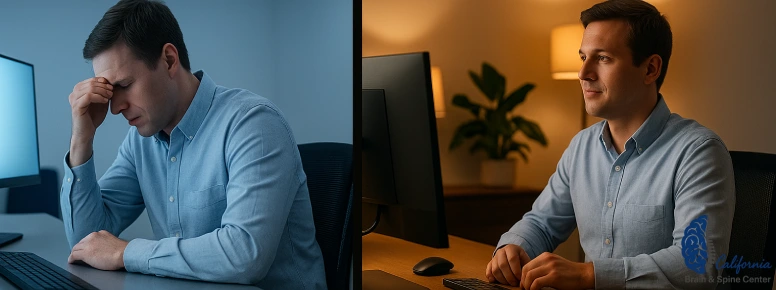
At a desk, move the monitor so it is not facing a bright window, bring the screen's brightness closer to the room around it, and angle yourself away from direct glare off overhead fixtures. Take a break when you notice symptoms starting to climb, rather than waiting until they peak. These are comfort measures that make a day more workable while the cause is being worked out.
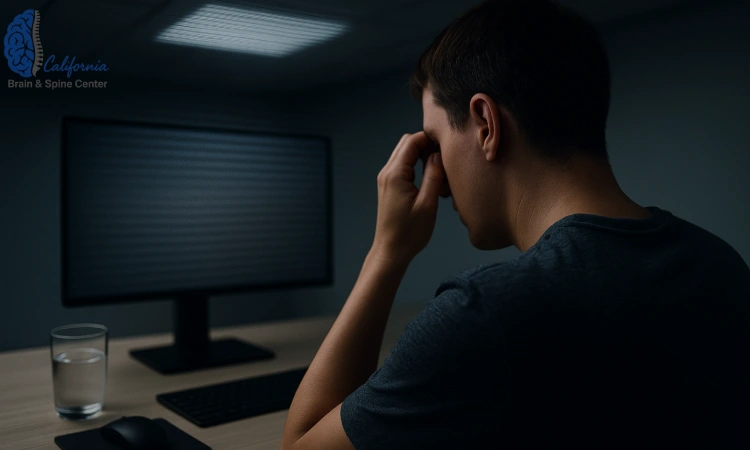
If a change helps, keep it. Give each one a fair try, and drop the ones that do nothing instead of stacking up workarounds because they sound neurological. Keeping some ordinary light in your day matters too, since long stretches of darkness may backfire.
How long does light sensitivity after concussion last?
There is no honest universal timeline, and I am not going to invent one. Light sensitivity is common after a concussion and often eases, though in some people it can persist much longer. Headache and mood are both linked to it in the research, and each may shape how the sensitivity behaves for you.
That is why I would measure progress in function rather than brightness. It might mean sitting through a bright meeting longer before symptoms begin, recovering faster after a grocery run, or needing fewer workarounds at your desk. Bright overhead light can stay unpleasant while the rest of your day gets bigger.
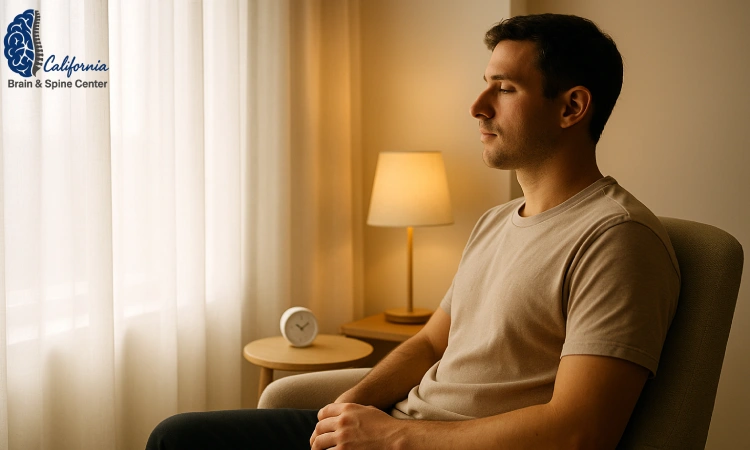
Where can you get light sensitivity after concussion evaluated near Calabasas?
Southern California light is its own test. For people in Calabasas and along the coast in Malibu, glare off windshields, white stucco and water, and the jump from indoor shade to full afternoon sun, are part of every day, and they can be hard going for a sensitive visual system.
If you are still commuting the 101 and working long hours in entertainment, tech, real estate or law, you probably know the cost already: the work gets done, and the evenings pay for it.
Dr. Alireza Chizari, DC, DACNB, sees patients from across the 101 corridor for this kind of evaluation, and the first step is a complimentary consultation to decide whether a full assessment makes sense for you.
Questions about light sensitivity after concussion
Why does light hurt after a concussion?
Light sensitivity after concussion is thought to involve several systems at once. One proposed route runs from light-sensing cells in the eye into the brain's pain pathways, so light can register as discomfort. The thalamus's filtering role, pupil control and the balance system are also thought to play a part.
Is it bad to wear sunglasses indoors after a concussion?
Occasional use in bright sun is one thing. Worn indoors for long stretches, sunglasses may backfire: research on light-filtering lenses notes that prolonged indoor use may dark-adapt the retina, which can increase light sensitivity. A specific tint for particular situations is a separate question, and worth raising at an evaluation.
Can light sensitivity after concussion come with dizziness?
Yes, the two can arrive together. The balance system is thought to be one of several contributors to light sensitivity after concussion, so bright, visually busy places such as stores can provoke dizziness and light discomfort together. Persistent dizziness deserves its own vestibular and neurological assessment rather than being folded into the light problem.
Should I stay in a dark room after a concussion?
Usually not for long. Current guidance favors a brief period of relative rest after a concussion, then gradual activity at a level you can tolerate, such as walking. Long stretches in a dark room are no longer the standard approach, and light sensitivity after concussion is one symptom where too much darkness may backfire.
Where can I get light sensitivity after concussion evaluated in Calabasas or Los Angeles?
California Brain & Spine Center in Calabasas evaluates light sensitivity after concussion for patients across the Los Angeles area. The assessment looks at eye movements, balance and visual motion alongside your history, and screens for danger signs that need emergency care first. The first step is a complimentary consultation.
What I would want you to take from this
I think light sensitivity after concussion becomes easier to live with once it stops being a mystery. The useful questions are which light provokes you, what follows it, which other systems are involved, and whether the next step is emergency care or a neurological evaluation. If light has been quietly shrinking your work and your evenings, that is reason enough to look closer.
More about how the practice works is on the California Brain & Spine Center home page.
California Brain & Spine Center | (818) 649-5300 | Calabasas, CA 91302
Book a complimentary consultation online
This content is for educational purposes only and is not medical advice. Consult a qualified healthcare provider about your specific situation.
Find out what light is asking of your nervous system
A complimentary consultation is a chance to talk through what light does to you, what else has changed since the injury, and whether a full neurodiagnostic assessment makes sense.