What vestibular exercises are, which ones fit which cause of dizziness, and how to practice them at home without setting yourself back.
Vestibular exercises may help some kinds of dizziness, but only when they match the cause, and that is the honest answer to most of the questions I am asked about them. In my Calabasas practice the question often arrives with a printed list of head turns and balance drills from a website, and the person holding it wants to know whether those drills are right for them.
Usually the person asking is still working, still driving the 101, still showing up, and steering around the head turns that set things off: the glance over the shoulder before changing lanes, the bend to the bottom shelf, the walk down a busy grocery aisle. From the outside everything looks fine. Inside, it can feel like running on a fraction of your usual battery.
This article covers what the exercises are and how they are thought to work, the main types, how a program is usually progressed, when practicing at home is reasonable, and when it is the wrong place to start. I am Dr. Alireza Chizari, DC, DACNB, and as a Board-Certified Functional Neurologist at California Brain & Spine Center in Calabasas I test the balance system before any exercise is prescribed. If dizziness is the main reason you are reading, the page on my dizziness evaluation in Calabasas explains how that process starts.
Key Takeaway
Vestibular exercises are movement drills that aim to retrain how the brain uses balance signals from the inner ear, eyes and body. Guidelines recommend supervised vestibular rehabilitation for inner-ear weakness, and home practice may be prescribed alongside it. BPPV usually needs repositioning first, and sudden dizziness can be a stroke sign. Testing comes before the exercise plan.
What Are Vestibular Exercises, and How Do They Work?
Vestibular exercises are specific head, eye and body movements that aim to retrain how the brain interprets balance signals, especially when the inner ear's balance organs send a weaker or mismatched message. Each one is chosen to challenge a particular part of the balance system in a small, repeatable dose.
Balance is a team effort. The inner ear senses head motion and position, the eyes provide a visual anchor, and sensors in the muscles and joints report where the body is in space. The brain blends all three into one working map of where you are. When one input becomes unreliable, that map can wobble, and dizziness, unsteadiness or blurred vision during head movement are common ways it shows up.
The exercises work through repetition rather than force. Deliberately and repeatedly provoking mild, manageable symptoms is thought to help the brain build tolerance and recalibrate, which is why a good program is short, specific and regular rather than long and punishing.
The evidence is strongest for one situation. A Cochrane systematic review found moderate to strong evidence that vestibular rehabilitation is a safe, effective management for unilateral peripheral vestibular dysfunction, a balance problem in one inner ear. That finding says much less about dizziness from other causes, which is why the cause comes before the exercise list.
Can You Do Vestibular Exercises at Home?
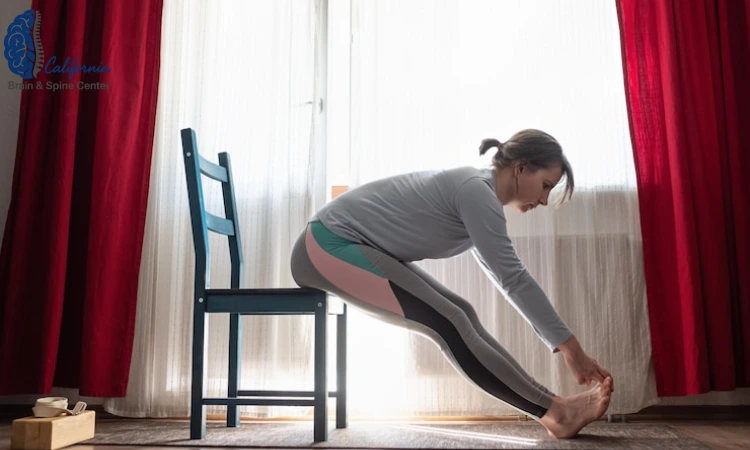
Yes, many people do vestibular exercises at home, usually as part of a program a clinician has set up after testing. The physical therapy guideline for inner-ear weakness recommends supervised vestibular rehabilitation, and a home exercise program may be prescribed alongside clinic visits. Some causes, such as BPPV, need a different first step.
Home practice is where most of the repetitions happen, so the useful question is how the home program is set up and who adjusts it. The clinical guideline on this topic is direct about how the two fit together.
What Does the Guideline Say About Home Practice and Supervision?
The updated clinical practice guideline from the Academy of Neurologic Physical Therapy states that clinicians should offer supervised vestibular physical therapy to people with peripheral vestibular hypofunction, meaning reduced function of the inner-ear balance organs. The same guideline describes clinic visits plus a home exercise program of gaze stabilization exercises as one way to structure care, so home practice sits alongside supervised visits rather than replacing them.
Supervision matters most for dose, and in my practice it is the part of a program I adjust most often. Someone watching your technique can also see what you cannot, such as a head turn that has slowed down until it no longer challenges anything.
When Is Home Practice the Wrong Place to Start?
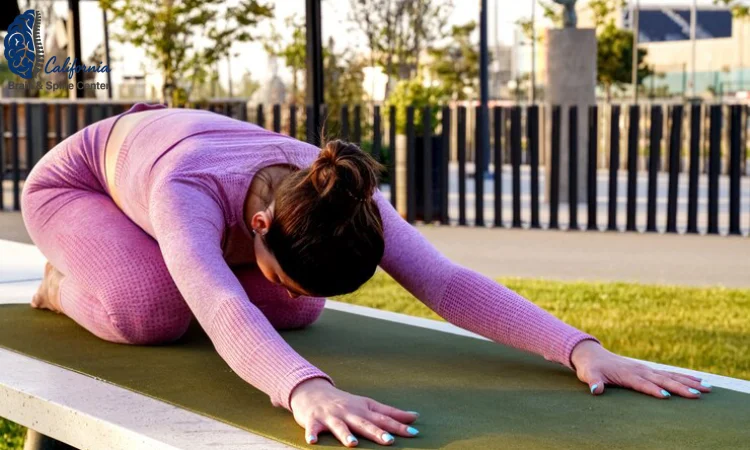
Some causes of dizziness need a different first step. For benign paroxysmal positional vertigo (BPPV), the same Cochrane review found that repositioning maneuvers are more effective in the short term than exercise-based vestibular rehabilitation. Those maneuvers are specific head positions performed by a clinician, and canalith repositioning is one of the things I may use, when clinically appropriate, after evaluation.
The guideline also notes that its recommendations may not apply to people with central vestibular disorders, where the problem sits in the brain's balance pathways rather than in the inner ear. A home handout cannot tell those situations apart. Testing can, and that is the reason I do not hand anyone an exercise list before I know which part of their balance system is struggling.
Not Sure Which Exercises Fit Your Dizziness?
A complimentary consultation in Calabasas is a chance to talk through what you have already tried, what sets your symptoms off, and whether testing is the right step before any home program.
Which Vestibular Exercises Are Used for Dizziness and Vertigo?
Vestibular rehabilitation exercises usually fall into three groups (gaze stabilization, habituation, and balance and gait training), and a program mixes them according to what testing shows. Repositioning maneuvers for BPPV sit beside them as a separate tool, and the table sets all of them side by side.
| Approach | What it trains | What it looks like | Worth knowing |
|---|---|---|---|
| Gaze stabilization | Steady vision while the head moves | Eyes on a fixed target while the head turns | Eye-only saccade or pursuit drills do not count as gaze exercises |
| Habituation | Lower sensitivity to a movement or scene that provokes symptoms | Repeating a trigger movement in a small, controlled dose | The aim is a mild bump that settles soon after stopping |
| Balance training | Control of the body's center of gravity using several senses | A narrower stance, a foam surface, less visual input | Progressed one change at a time |
| Gait training | Walking while the head and eyes are busy | Walking with head turns, the step-and-turn drill | Done near a wall or rail at first |
| Repositioning maneuvers | A treatment for BPPV rather than an exercise | Specific head positions performed by a clinician | More effective than exercise-based rehab for BPPV in the short term |
Gaze Stabilization Exercises
Gaze stabilization exercises are designed to keep vision steady while the head moves. The vestibular rehabilitation guideline describes them as developed from the concepts of adaptation and substitution of the vestibulo-ocular reflex, the automatic reflex that moves the eyes against the head's motion so the world does not bounce as you walk.
The simplest version keeps both eyes on a letter at eye level across the room while the head turns gently side to side, then up and down, slow enough that the letter stays sharp. If it blurs, the head is moving too fast for now. I go through the full set of drills and how they progress in a separate guide to gaze stabilization exercises for dizziness.
Eye-only drills are a different thing
Routines online often include drills where only the eyes move, such as jumping between two targets (saccades) or following a moving finger (smooth pursuit). The guideline advises clinicians not to offer saccadic or smooth-pursuit exercises as specific exercises for gaze stability. They may have other uses, but for a drill to count as gaze stabilization, the head has to move while the eyes hold the target.
Habituation Exercises
Habituation exercises systematically and repeatedly expose you to a movement or scene that provokes your symptoms, in a dose small enough to manage. The movement is chosen from your own triggers: turning to look behind you, bending to the floor and standing back up, or watching a busy visual scene. Repeated in a controlled way, the aim is for the brain to react less strongly, and the target in each session is a mild, brief bump in symptoms that settles soon after you stop.
In my practice, getting the dose right is most of the skill: I set it from how your symptoms respond during the drill and how the following day goes, and adjust it from there.
Balance Exercises for Vertigo and Unsteadiness
Balance exercises in vestibular rehabilitation may include center-of-gravity control training, multisensory training and gait training, according to the guideline. In plain terms, you stand and walk while the base of support, the surface or the visual input is changed, so the brain has to lean on its other balance signals.
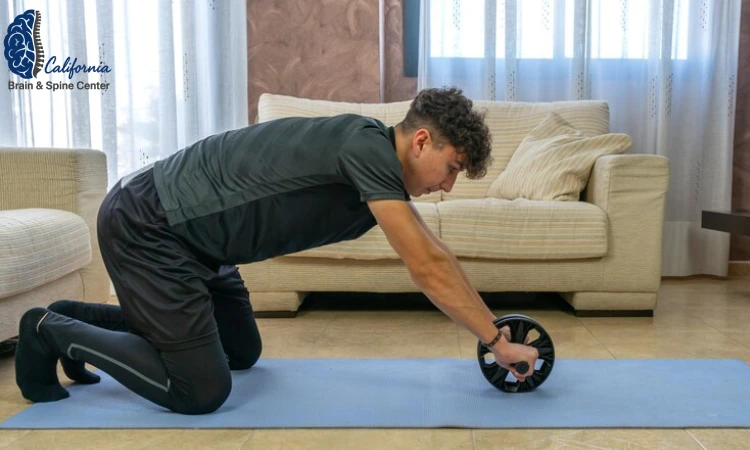
The drills below are the ones this page has carried for a long time. Each is done beside a kitchen counter or a heavy chair, with light fingertip support allowed at first.
- Feet together with gentle head turns, side to side and then up and down, keeping your eyes on a fixed target on the wall.
- Slow weight shifts from the left foot to the right like a pendulum, eyes on the target, adding a small heel lift on the unweighted side once that feels steady.
- March-and-hold, marching in place and pausing with each knee raised before lowering it.
- Tandem stance, one foot directly in front of the other with heel touching toe, softening your grip on the counter once you are in position.
- Single-leg support, lifting one foot just off the floor and standing tall, with the toes allowed to skim the floor if you need them.
- Walking along a hallway while turning the head gently to each side, with a wall within reach.
In my practice I narrow the base in stages, from feet apart to tandem to single leg, and I use single-leg stance as one of the markers I track over time.
Steady Step Balance System: The Step-and-Turn Drill
The steady step drill is where the separate pieces come together. Take a few slow steps forward along an imaginary line, pause, turn your head gently left, back to center, right and back to center, then take the same number of steps backward. Repeat it a couple of times.
Move as if you were carrying a full cup of tea: quiet feet, soft neck, eyes level. On this page, the steady step balance system is simply this drill, the last part of the home routine, and it is gait training in the guideline's sense because it combines walking with head movement. Nothing needs to be bought or downloaded to do it.
How Is a Vestibular Exercise Program Progressed?
A vestibular exercise program is usually progressed by changing one thing at a time, so the brain meets a challenge it can adapt to rather than several new demands at once. In my clinic, I change a single variable and see how the following day goes before changing another.
These are the directions I usually progress a program in, one at a time:
- From sitting to standing to walking, so each drill is learned first with the least balance demand.
- From a wide stance to feet together, then tandem, then single leg, narrowing the base in stages.
- From a firm floor to a foam pad, once standing on the floor feels easy.
- From eyes open to a dimmer room or eyes closed, always with support in reach.
- From slow head turns to quicker ones, only while the target stays clear.
- From a quiet room to busier settings, such as a hallway and then a store aisle.
Stepping back is part of the plan. Easier versions keep a light fingertip on the counter, shrink the range of the head turn, or shorten the hold. Harder versions belong only to days when you feel calm and steady.
The Stop, Spot, Breathe Reset
What I suggest to patients, if a wave of dizziness arrives in the middle of a drill, is simple: stop and plant both feet. Spot something still, the target on the wall or your thumbnail at arm's length. Take a few slow, easy breaths. Then restart smaller, with a shorter range or a hand back on the counter. If the wave does not settle, the session is over for the day.
How Can You Track Progress at Home?
A simple log every few days is enough: the longest steady hold in tandem and single-leg stance on each side, how big the dizziness bump felt during the drills, and one everyday task that felt easier, such as turning to grab the phone, stepping into the shower or getting off an elevator. Written down, small changes are easier to see, and so is a stall.
How long a program runs depends on the cause and on what testing shows, which is why I cover how long vestibular rehab therapy takes in its own article instead of putting a number here. If symptoms build over several days or progress stalls, scale back and have the plan reviewed.
When Should You Stop a Vestibular Exercise?
Stop a vestibular exercise when symptoms spike, linger well after you finish, or come with anything new; the aim is a mild, brief bump, and pushing through stronger symptoms is not part of the method. For the first sessions, the University of Mississippi Medical Center's ENT patient handout on balance exercises advises having another person nearby, and a counter or heavy chair within reach makes sense every time.
Some dizziness is not an exercise question at all. Dizziness that arrives suddenly, especially alongside other new symptoms, needs emergency care first.
When dizziness is an emergency
The CDC lists sudden trouble walking, dizziness, loss of balance or lack of coordination among the signs of stroke. Do not start or continue any exercise if you notice:
- Dizziness or loss of balance that comes on suddenly, with no clear trigger.
- Trouble walking or a lack of coordination that is new or getting worse.
- Dizziness together with a sudden severe headache, weakness, trouble speaking, vision loss, or fainting.
If symptoms come on suddenly or severely - a sudden severe headache, weakness, trouble speaking, vision loss, or fainting - that is an emergency. Call 911 or go to an emergency room, not a clinic appointment.
What Happens Before a Vestibular Exercise Program Starts?
Before a vestibular exercise program starts, the balance system should be tested, because the right drills depend on which part of it is struggling. Cleveland Clinic's overview of vestibular rehabilitation describes therapy that starts with tests to check your specific symptoms, with the exercises then taught for continued practice at home.
In my practice, that testing is the 120-minute neurodiagnostic assessment. Depending on the symptoms, it may include videonystagmography, which records how the eyes move in response to head position and visual targets, and computerized measures of postural stability, which show how much you rely on your eyes, your feet and your inner ear to stay upright. Only then do I choose which of the exercise groups above belong in your program, and at what starting dose.
The short video below shows part of a real balance assessment: how I look at lower-limb control, proprioception (the body's sense of where its joints and limbs are) and balance before prescribing any exercise. Seeing how the nervous system responds to movement first is what lets each drill be targeted.
Questions Patients Often Ask Me
One question patients often ask me is whether they can skip the visit and just do the exercises from a handout. My honest answer is that the handout may be fine, and testing is how we find out. A drill list cannot tell inner-ear weakness from BPPV, or either of those from a problem in the brain's own balance pathways, and the right first step differs for each.
Another is whether feeling dizzy during practice means the exercises are working. A mild, short-lived bump is expected with habituation work, but more dizziness does not mean more progress. When someone brings in a home routine, the first thing I look at is the dose: how hard each drill is, how long the symptoms last afterward, and whether the following day is better or worse.
If unsteadiness on your feet bothers you more than spinning, my balance disorder therapy page explains how that side of care is structured.
"Then we did the full examinations like eye tracking and balance test and he explained my results and what they mean for my symptoms."
From a Google review
Patients come to the clinic on Park Granada from across Calabasas and the West Valley, and many drive in from Woodland Hills along the 101. Every first visit has the same aim: understand the cause, then build a home program that fits it.
What Else Do People Ask About Vestibular Exercises?
Vestibular exercises raise a handful of practical questions that do not fit neatly into the sections above, so here are the ones I hear most often.
What Is the Steady Step Balance System on This Page?
It is the name this article uses for the step-and-turn drill: a few slow steps along a line, a pause with gentle head turns, and the same steps back. It needs no device, app or subscription. I cannot speak to commercial balance products or their reviews; the drill here needs only a clear hallway.
How Often Should You Do Vestibular Exercises at Home?
How often to do vestibular exercises at home depends on the program your clinician sets after testing. The physical therapy guideline describes clinic visits with a home program of gaze exercises alongside them. Short, regular practice is usually easier to keep up, and if symptoms build over several days, scale back and check in.
Do Vestibular Exercises Help BPPV?
For BPPV, vestibular exercises are usually not the first step. A Cochrane review found repositioning maneuvers more effective in the short term than exercise-based vestibular rehabilitation, so the cause is confirmed first. What comes next is decided after a detailed evaluation.
Do You Need Equipment for Vestibular Rehabilitation Exercises?
Most vestibular rehabilitation exercises need very little equipment: a kitchen counter or heavy chair for support, a sticky note on the wall as a visual target, and comfortable flat shoes. A foam pad is often added later to make standing drills harder, once a steadier stance on the floor feels easy.
Where Can I Get Vestibular Exercises Supervised Near Calabasas or Los Angeles?
At California Brain & Spine Center in Calabasas, vestibular exercises start after the 120-minute neurodiagnostic assessment, so the program matches what testing shows. Patients come from across the West Valley and greater Los Angeles. A complimentary consultation by phone or online is a simple way to ask whether testing makes sense for you.
Is It Normal to Feel Dizzy During Vestibular Exercises?
Mild dizziness during vestibular exercises is often expected, because habituation exercises deliberately repeat a movement that provokes symptoms. The aim is a small, manageable bump that settles soon after you stop. Symptoms that spike, linger for hours, or come with anything new are a reason to stop and call your clinician.
Vestibular exercises can be a useful part of care for the right kind of dizziness, and the right kind is the part worth checking first. If you have been working through a handout on your own and are not sure it fits, I would rather look at your balance system properly than guess. I am Dr. Alireza Chizari, DC, DACNB, and you can reach me at California Brain & Spine Center | (818) 649-5300 | Calabasas, CA 91302, or book online at californiabrainspine.janeapp.com.
If you would rather read more before calling, the California Brain & Spine Center home page lists the conditions I evaluate and how a first visit is arranged.
This content is for educational purposes only and is not medical advice. Consult a qualified healthcare provider about your specific situation.
Ready to Find Out Which Exercises Fit Your Balance System?
Book a complimentary consultation in Calabasas to talk through your symptoms and whether the 120-minute neurodiagnostic assessment is the right next step.