Home Vestibular Exercises vs. Supervised Rehab in California
If you are dealing with dizziness, imbalance, visual motion sensitivity, post-concussion symptoms, or a feeling that the world is moving when it should be still, it is natural to search for exercises you can do at home. You may have found gaze stabilization drills, balance exercises, or vestibular videos online and wondered whether they are enough.
I, Dr. Alireza Chizari, DC, DACNB, often meet patients at California Brain & Spine Center in Calabasas who have tried home vestibular exercises with mixed results. Some feel a little better. Some feel worse. Others feel confused because the same exercise that helped one person caused a symptom flare for them. That uncertainty can be frustrating, especially when dizziness is already affecting driving, work, screens, shopping, exercise, and confidence.
This guide explains Home Vestibular Exercises vs. Supervised Rehab in a clear and practical way. My goal is to help you understand when home exercises may be useful, when supervised vestibular rehabilitation is safer, and how a personalized neurological and vestibular evaluation can help you move from guessing to a structured plan.
Quick Answer: Home Vestibular Exercises vs. Supervised Rehab
Home vestibular exercises may help some patients maintain progress or practice simple, low-risk movements after proper instruction. Supervised rehab is often the better choice when symptoms are persistent, complex, post-concussion related, triggered by visual environments, connected with balance loss, or worsened by random exercises. At California Brain & Spine Center, we evaluate your vestibular, visual, neurological, cervical, cognitive, and autonomic patterns before building a personalized care plan. The next best step is a detailed evaluation so your exercises match your nervous system, not someone else’s symptoms.
Not Sure Whether to Exercise at Home or Get Supervised Care?
Dizziness rehabilitation works best when the challenge is specific, measured, and adjusted to your response. If your symptoms increase for hours or days after home exercises, if you feel unsafe walking, or if dizziness started after a concussion or traumatic brain injury, supervised care may be the safer and more effective starting point. We can help you understand what your symptoms mean and what level of support fits your situation.
Why Home Vestibular Exercises vs. Supervised Rehab Is Not a Simple Choice
Many patients assume vestibular exercises are like general stretching or strengthening. They are not. Vestibular rehabilitation works by giving the brain targeted sensory challenges so it can adapt. That process can involve the inner ear, eye movements, balance control, posture, neck input, visual processing, cognitive load, and the autonomic nervous system. If the challenge is too easy, it may not create meaningful change. If it is too intense, it may flare symptoms and reduce confidence.
That is why Home Vestibular Exercises vs. Supervised Rehab should be decided based on your diagnosis, symptom behavior, safety, and functional goals. A patient with mild motion sensitivity may be appropriate for a guided home program after evaluation. A patient with post-concussion dizziness, visual disturbances, dysautonomia, falls, severe nausea, or brain fog may need supervised progression and frequent adjustment.
In my clinical approach, I never want a patient to feel like they failed because an exercise made them worse. Often, the exercise was simply not matched to the patient’s nervous system at that stage. Your symptoms are information. They help us calibrate the plan.
“The right exercise is not the hardest one. It is the one your nervous system can learn from.”
What Vestibular Exercises Are Designed to Do
Vestibular exercises are designed to improve how your brain processes balance, motion, gaze stability, and spatial orientation. Some exercises focus on keeping your vision clear while your head moves. Others challenge balance on different surfaces, improve tolerance to motion, or help the brain reduce sensitivity to repeated triggers.
When used appropriately, vestibular exercises may support better walking stability, reduced visual motion sensitivity, improved confidence with head turns, better tolerance for grocery stores or traffic, and less dizziness during daily activities. However, the key phrase is “when used appropriately.” The same movement can be therapeutic for one patient and overwhelming for another.
Why Online Vestibular Exercises Can Be Risky for Some Patients
Online exercises usually do not know your history. They do not know whether you had a concussion, whiplash, vestibular migraine, BPPV, dysautonomia, cervical spine dysfunction, eye tracking difficulty, or anxiety-like autonomic symptoms. They also do not know how your symptoms behave after exercise. Without that context, you may accidentally train the wrong system, overload the right system, or miss a condition that requires a different strategy.
Key Insight: Dizziness Rehab Is About Precision
Vestibular rehabilitation is not just a list of exercises. It is a clinical process that uses assessment, progression, symptom response, neurological findings, and real-world goals to guide care.
What this means for you
If home exercises are helping and symptoms are mild, they may be part of your plan. If exercises are increasing dizziness, nausea, headaches, visual symptoms, or fatigue, it is time to stop guessing and get evaluated.
When Home Vestibular Exercises May Be Appropriate
Home exercises can be valuable when they are selected carefully and taught clearly. In many cases, home practice is part of successful rehabilitation. The question is not whether home exercises are good or bad. The question is whether your home program is safe, specific, measurable, and appropriate for your current neurological capacity.
I often use home exercises as a continuation of supervised care. Once we know the patient’s pattern, we can prescribe targeted activities with clear instructions, symptom limits, frequency, and progression. This helps the patient become an active participant in recovery. You are the hero of this process. The clinic is the guide helping you train with direction.
Good Candidates for a Home-Based Component
Some patients may be able to use home vestibular exercises safely, especially when symptoms are mild, balance is stable, red flags have been ruled out, and the exercises have been recommended after evaluation. Home practice can help maintain improvements between visits and build confidence in daily life.
- Mild, predictable dizziness: Symptoms are manageable and settle quickly after exercise.
- No recent serious head injury: Concussion, traumatic brain injury, or new neurological red flags have been properly assessed.
- Stable walking and balance: The patient is not falling or feeling unsafe with basic movement.
- Clear instructions: Exercises include exact dosage, symptom limits, and progression rules.
- Ongoing monitoring: A clinician can adjust the plan if symptoms change.
When Home Exercises Should Be Stopped or Modified
If an exercise causes severe dizziness, vomiting, new neurological symptoms, significant headache, prolonged visual disturbance, panic-like body reactions, or a symptom flare that lasts into the next day, it may not be the right exercise or the right dosage. More is not always better in vestibular care.
“Progress grows from consistency, but consistency must be guided by safety.”
When Supervised Vestibular Rehab Is the Better Starting Point
Supervised vestibular rehab is often recommended when symptoms are complex, unpredictable, or connected to other neurological systems. At California Brain & Spine Center, patients are evaluated through a functional neurological lens because dizziness rarely exists alone. It may overlap with concussion symptoms, visual disturbances, brain fog, memory changes, neck dysfunction, balance disorder, migraine, or autonomic nervous system dysregulation.
Home Vestibular Exercises vs. Supervised Rehab becomes especially important when a patient has already tried exercises and felt worse. That does not mean recovery is impossible. It may mean the treatment sequence needs to be redesigned.
Signs You May Need Supervised Rehab First
Supervised care can provide safer testing, clearer progression, immediate feedback, and a more complete understanding of your triggers. It can also help identify when symptoms are not purely vestibular and may require a broader neurological approach.
- Dizziness after concussion or whiplash: Post-concussion symptoms often involve multiple systems, not just the inner ear.
- Falls or near-falls: Safety must come before unsupervised challenge.
- Visual motion sensitivity: Grocery stores, screens, traffic, or crowds trigger symptoms.
- Brain fog or memory issues: Cognitive load may be affecting balance and symptom tolerance.
- Autonomic symptoms: Lightheadedness, heart rate changes, shakiness, fatigue, or dysautonomia patterns may be involved.
- Exercises make you worse: A flare lasting hours or days suggests the plan needs adjustment.
Why Supervision Can Change the Outcome
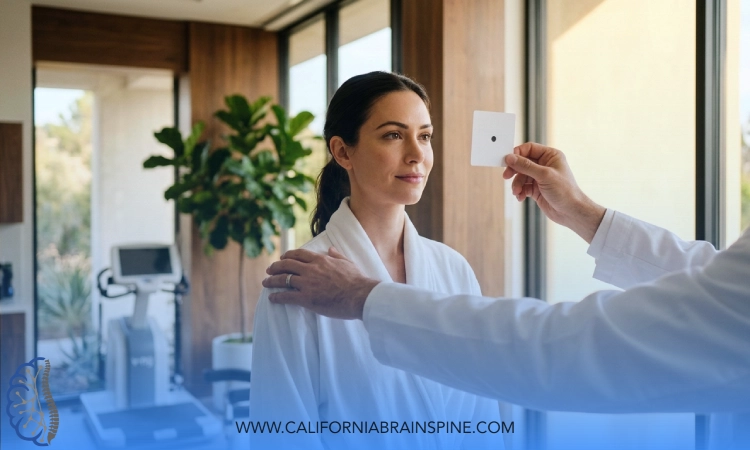
During supervised vestibular rehabilitation, the clinician can observe eye movement quality, posture, compensation patterns, gait, symptom thresholds, recovery time, and the interaction between visual and vestibular input. This helps determine whether the patient needs gaze stabilization, habituation, balance disorder therapy, cervical spine care, cognitive rehabilitation, autonomic support, or a staged combination.
The Importance of Assessment Before Treatment
At California Brain & Spine Center, patients are not treated with a generic protocol. The evaluation helps determine whether symptoms are driven by peripheral vestibular dysfunction, central vestibular processing, post-concussion visual disturbance, cervicogenic contribution, vestibular migraine features, dysautonomia, or another pattern that requires medical referral or co-management.
Personalized care protects your confidence
When patients understand why an exercise is chosen, what it is supposed to do, and how much symptom response is acceptable, they often feel less fearful. Clarity itself can be therapeutic because it replaces uncertainty with a plan.
Home Vestibular Exercises vs. Supervised Rehab: A Practical Comparison
The table below can help you compare Home Vestibular Exercises vs. Supervised Rehab from a patient-centered perspective. It is not a substitute for medical advice, but it can help you decide whether you should seek professional evaluation before continuing on your own.
| Decision Point | Home Vestibular Exercises | Supervised Vestibular Rehab |
|---|---|---|
| Best fit | Mild, stable symptoms after instruction | Complex, persistent, post-concussion, or worsening symptoms |
| Safety | Depends on correct exercise choice and balance safety | Clinician monitors symptoms, movement quality, and fall risk |
| Personalization | Often limited unless prescribed after evaluation | Adjusted to vestibular, visual, neurological, and autonomic findings |
| Progress tracking | Patient self-monitors symptoms | Objective and functional progress can be monitored over time |
| Main risk | Doing the wrong exercise, too much, too soon | Requires appointments, but often offers better guidance for complex cases |
“You do not need to choose between independence and guidance. The best plan often includes both.”
How California Brain & Spine Center Builds a Safer Vestibular Rehab Plan
At California Brain & Spine Center in Calabasas, patients are evaluated with attention to the systems that influence dizziness and balance. Dr. Alireza Chizari brings a unique background to this work. He first studied Electrical Engineering in Iran, then completed a master’s degree in Advanced Engineering & Management in the United Kingdom, and later worked in the United States as a Solar Engineer. That engineering training shaped his attention to feedback loops, timing, signal processing, and system integration.
After seeing his mother recover from a frozen shoulder through chiropractic care, he transitioned into healthcare, earned his Doctor of Chiropractic degree from Life Chiropractic College West, trained in the precise Gonstead technique, and pursued postdoctoral education in Clinical Neuroscience. Today, he evaluates complex cases involving traumatic brain injuries, post-concussion symptoms, vestibular dysfunction, dysautonomia, brain fog, memory loss, balance disorders, and visual disturbances after concussion.
What a Detailed Evaluation May Include
Assessment may vary depending on your story, but the purpose is always the same: understand what your nervous system is doing before choosing the intervention. This is especially important when deciding between Home Vestibular Exercises vs. Supervised Rehab.
- Vestibular and balance testing: To evaluate how you respond to movement, head turns, posture changes, and sensory challenge.
- Eye movement and gaze stability assessment: To identify visual tracking, focusing, and stabilization problems.
- Neurological and cognitive screening: To understand brain fog, attention, memory, processing speed, and post-concussion patterns.
- Cervical spine and posture evaluation: To determine whether neck input is contributing to dizziness or imbalance.
- Autonomic pattern review: To consider dysautonomia signs such as lightheadedness, heart rate changes, fatigue, or exercise intolerance.
Evidence-Informed, Non-Invasive Options When Clinically Appropriate
Care may include Vestibular Rehabilitation, Balance Disorder Therapy, Cognitive Rehabilitation, Neuroplasticity Rehabilitation, NeuroSensory Integration, NSI, and elements of the NeuroRevive Program. When appropriate, supportive non-invasive therapies may include Low-Level Laser Therapy, LLLT, Pulsed Electromagnetic Field, PEMF, Hyperbaric Oxygen Therapy, HBOT, or GammaCore Vagus Nerve Stimulation. These tools are considered within a broader plan, not used as one-size-fits-all solutions.
Safety Note: When Dizziness Needs Urgent Medical Care
Vestibular symptoms are often treatable in a rehabilitation setting, but some dizziness needs immediate medical attention. Seek urgent care if dizziness is sudden and severe or occurs with chest pain, fainting, new weakness, facial drooping, trouble speaking, severe new headache, new vision loss, confusion, difficulty walking, or symptoms after a significant head injury.
When in doubt, prioritize safety
A supervised neurological and vestibular evaluation is appropriate after emergencies have been ruled out or when symptoms are persistent, recurrent, or limiting your life.
Your Vestibular Rehab Pathway in Calabasas
At California Brain & Spine Center, the patient’s path is designed to move from uncertainty toward clarity. The goal is not simply to reduce a symptom for a few minutes. The goal is to help the nervous system function better in real environments, such as stores, sidewalks, screens, traffic, workplaces, gyms, and family life.
🧠 1. Story and Symptom Map
Your triggers, injury history, daily limitations, and goals help define the starting point.
👁️ 2. Neurological and Vestibular Testing
We assess balance, eye movement, gaze stability, sensory integration, cognition, and autonomic clues.
✨ 3. Personalized Rehab Plan
Your plan may combine supervised therapy with safe, specific home practice.
✅ 4. Progressive Challenge
Exercises are adjusted based on symptom response, function, and tolerance.
📈 5. Real-Life Confidence
Progress is measured by what you can do in daily life, not only by what happens in the clinic.
Why the Best Answer Is Often Supervised Rehab Plus Smart Home Practice
For many patients, the most effective answer to Home Vestibular Exercises vs. Supervised Rehab is not either-or. It is both, in the right sequence. Supervised care helps identify the problem, select the right exercises, monitor safety, and adjust progress. Home practice reinforces adaptation between visits and helps you build independence.
At California Brain & Spine Center, patients from across Southern California and beyond come to Calabasas because they want a plan that makes sense. Many have already tried generic exercises, medications, rest, or avoidance. Some have been told everything looks normal while still feeling dizzy and unstable. Their frustration is understandable. They deserve a clear explanation and a plan built around their actual nervous system.
Symptom Management Versus Root-Level Functional Improvement
Symptom management may help you get through the day. Root-level functional improvement asks a deeper question: why is your balance system struggling in the first place? Is the issue gaze stability, visual motion sensitivity, vestibular mismatch, neck input, cognitive overload, autonomic dysregulation, or a combination?
When the plan targets the underlying functional pattern, patients may experience better tolerance for daily activities. Outcomes vary, and no responsible clinician can guarantee results. But a personalized, evidence-informed approach can give you a more intelligent path forward than random exercise selection.
Get a Plan Before You Push Your Symptoms Further
If you are unsure whether home vestibular exercises are helping or hurting, you do not have to keep experimenting alone. A personalized neurological and vestibular evaluation can help determine whether you need supervised rehab, a safer home program, or a combined approach designed around your goals.
A Patient Story: When Home Exercises Were Not Enough
Some time ago, a patient named M. came to see me after months of dizziness following a mild concussion. She had watched videos online and started doing gaze stabilization exercises at home. At first, she felt hopeful. Then her symptoms became more unpredictable. Grocery stores triggered nausea, screens caused headaches, and walking in busy places made her feel unsteady. She felt discouraged because she thought she was doing the “right” exercises.
During her evaluation, I found that her dizziness was not only vestibular. She also had visual motion sensitivity, post-concussion cognitive fatigue, and signs that her autonomic nervous system was reacting strongly to sensory load. We adjusted her plan to include supervised Vestibular Rehabilitation, carefully dosed home practice, Cognitive Rehabilitation strategies, and Neuroplasticity Rehabilitation through a broader Brain Injury Recovery Program approach.
Her progress was gradual. We did not chase intensity. We focused on tolerance, recovery time, and real-life function. Over time, she was able to return to short shopping trips, tolerate computer work with better pacing, and walk in busier environments with more confidence. This is not a guaranteed result for every patient, but it shows why the right plan matters. Sometimes the problem is not that you are failing at home exercises. Sometimes you simply need the right guidance.
Conclusion: Making a Confident Choice About Home Vestibular Exercises vs. Supervised Rehab
Home Vestibular Exercises vs. Supervised Rehab is not about choosing the easiest path. It is about choosing the safest and most effective path for your specific nervous system. Home exercises may be useful when symptoms are mild, stable, and guided by a clinician. Supervised rehab is often the better starting point when dizziness is complex, post-concussion related, visually triggered, associated with imbalance, or worsened by generic exercises.
I, Dr. Alireza Chizari, want you to know that your symptoms are real and your frustration is understandable. At California Brain & Spine Center in Calabasas, we help patients move from confusion toward clarity through detailed neurological and vestibular assessment, personalized rehabilitation, and evidence-informed non-invasive care when appropriate.
If you are ready to understand your dizziness instead of guessing, contact California Brain & Spine Center or request an appointment. The goal is to help you move toward better function, stability, confidence, and the best version of your life, not just to manage isolated symptoms.
Call: +1 818-649-5300
Request an Appointment
How Gaze Stabilization Exercises Enhance Your Recovery Path
While choosing between home-based and supervised programs, understanding specific techniques is key. Gaze stabilization exercises for dizziness in Calabasas serve as a cornerstone of advanced vestibular rehabilitation, helping the brain recalibrate visual-vestibular signals. Integrating these targeted movements into a professional recovery plan often leads to more sustainable balance improvements.
Your Most Common Questions About Home Vestibular Exercises vs. Supervised Rehab
Are home vestibular exercises safe?
Home vestibular exercises can be safe when they are selected for your condition, taught correctly, and performed within clear symptom limits. They may be less safe if you have falls, severe dizziness, recent concussion, neurological red flags, significant nausea, or symptoms that flare for hours or days. If you are unsure, a supervised evaluation is the best starting point.
Can I recover from dizziness with home exercises alone?
Some people with mild and straightforward vestibular symptoms may improve with a well-designed home program. However, many patients with post-concussion dizziness, visual motion sensitivity, dysautonomia, brain fog, neck involvement, or balance problems need supervised rehab first. The best approach depends on your evaluation and how your symptoms respond to challenge.

Dr. Alireza Chizari
This article has been medically reviewed for clinical accuracy by Dr. Alireza Chizari, DC, DACNB. Committed to evidence-based practice, Dr. Chizari ensures all content reflects the highest standards of functional neurology care.
Comments
Find our article more easily in Google.
FAQ
What is Functional Neurology?
Functional Neurology is a healthcare specialty that focuses on assessing and rehabilitating the nervous system’s function. It emphasizes neuroplasticity—the brain’s ability to adapt and reorganize—using non-invasive, evidence-based interventions to improve neurological performance.
How does Functional Neurology differ from traditional neurology?
Traditional neurology often concentrates on diagnosing and treating neurological diseases through medications or surgery. In contrast, Functional Neurology aims to optimize the nervous system’s function by identifying and addressing dysfunctions through personalized, non-pharmaceutical interventions.
Is Functional Neurology a replacement for traditional medical care?
No. Functional Neurology is intended to complement, not replace, traditional medical care. Practitioners often collaborate with medical professionals to provide comprehensive care.
What conditions can Functional Neurology help manage?
Functional Neurology has been applied to various conditions, including:
• Concussions and Post-Concussion Syndrome
• Traumatic Brain Injuries (TBI)
• Vestibular Disorders
• Migraines and Headaches
• Neurodevelopmental Disorders (e.g., ADHD, Autism)
• Movement Disorders
• Dysautonomia
• Peripheral Neuropathy
• Functional Neurological Disorder (FND)
Can Functional Neurology assist with neurodegenerative diseases?
While Functional Neurology does not cure neurodegenerative diseases, it can help manage symptoms and improve quality of life by optimizing the function of existing neural pathways.
What diagnostic methods are used in Functional Neurology?
Functional Neurologists employ various assessments, including:
• Videonystagmography (VNG)
• Computerized Posturography
• Oculomotor Testing
• Vestibular Function Tests
• Neurocognitive Evaluations
How is a patient’s progress monitored?
Progress is tracked through repeated assessments, patient-reported outcomes, and objective measures such as balance tests, eye movement tracking, and cognitive performance evaluations.
What therapies are commonly used in Functional Neurology?
Interventions may include:
- Vestibular Rehabilitation
- Oculomotor Exercises
- Sensorimotor Integration
- Cognitive Training
- Balance and Coordination Exercises
- Nutritional Counseling
- Lifestyle Modifications
Are these therapies personalized?
Absolutely. Treatment plans are tailored to the individual’s specific neurological findings, symptoms, and functional goals.
Who can benefit from Functional Neurology?
Individuals with unresolved neurological symptoms, those seeking non-pharmaceutical interventions, or patients aiming to optimize brain function can benefit from Functional Neurology.
Is Functional Neurology suitable for children?
Yes. Children with developmental delays, learning difficulties, or neurodevelopmental disorders may benefit from Functional Neurology approaches.
How does Functional Neurology complement other medical treatments?
It can serve as an adjunct to traditional medical care, enhancing outcomes by addressing functional aspects of the nervous system that may not be targeted by conventional treatments.
How is technology integrated into Functional Neurology?
Technological tools such as virtual reality, neurofeedback, and advanced diagnostic equipment are increasingly used to assess and enhance neurological function.
What is the role of research in Functional Neurology?
Ongoing research continues to refine assessment techniques, therapeutic interventions, and our understanding of neuroplasticity, contributing to the evolution of Functional Neurology practices.