How the Brain Adapts During Vestibular Rehab
If you have been dealing with dizziness, motion sensitivity, balance problems, visual discomfort, or a strange sense that your body is not responding the way it used to, I want you to know that these symptoms are real and they deserve careful attention. I, Dr. Alireza Chizari, DC, DACNB often meet patients who feel frustrated because they have been told to simply wait, rest, or live with the symptoms, even when day-to-day life still feels unstable.
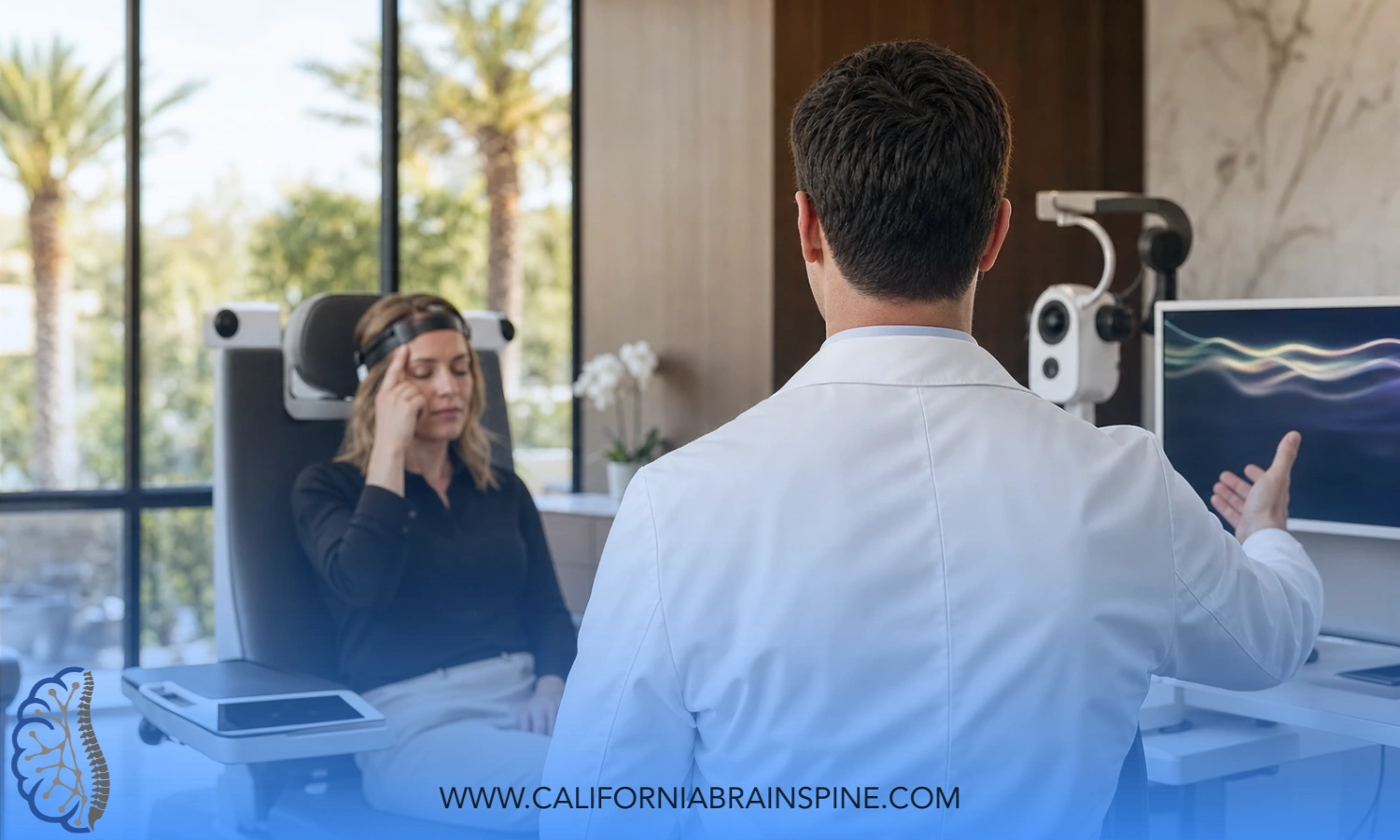
On this page, I will explain how the brain adapts during vestibular rehab in CA, why that adaptation matters, and how a personalized neurological and vestibular approach may help support better stability, clearer sensory processing, and more confidence in everyday movement.
At California Brain & Spine Center in Calabasas, we guide patients through a detailed process that starts with assessment, not assumptions. My background in engineering, advanced management, Gonstead chiropractic, and postdoctoral clinical neuroscience shapes how I think about complex cases. We look at how systems interact, not just where symptoms appear.
If you are searching for answers after concussion, vestibular dysfunction, visual disturbances, brain fog, balance issues, or ongoing post-injury symptoms, this article will help you understand what vestibular rehabilitation is designed to do, how the brain changes in response to it, and when it may be time to request a personalized evaluation.
Quick Answer: How the Brain Adapts During Vestibular Rehab
The brain adapts during vestibular rehab by learning to interpret motion, balance, visual, and body-position signals more accurately. This process is called neuroplastic adaptation. Through carefully selected exercises and neurological rehabilitation strategies, the brain may reduce overreactions, improve coordination between the eyes and inner ear, and build more efficient balance responses.
At California Brain & Spine Center, this work is not one-size-fits-all. A detailed evaluation helps identify whether symptoms may be related to post-concussion dysfunction, vestibular mismatch, sensory overload, autonomic issues, visual-vestibular imbalance, or broader neurological stress.
The best next step is a personalized neurological and vestibular evaluation so your care plan can be matched to the way your brain and body are currently functioning.
Take the Next Step With a Focused Vestibular Evaluation
If dizziness, balance issues, motion sensitivity, or post-concussion symptoms are affecting your life, we can help you understand what may be driving them and whether vestibular rehabilitation is appropriate for you.
Why Vestibular Symptoms Can Feel So Overwhelming
When people think about balance, they often think only about the ears. In reality, balance is a brain-based process. Your brain constantly combines information from the vestibular system, vision, muscles, joints, posture, and even your autonomic nervous system. If those signals stop matching well, your world can feel unsteady even when you are standing still.
I often explain to patients that dizziness is not always a sign of weakness. Sometimes it is a sign that the brain is working very hard to make sense of conflicting information. That can happen after concussion, traumatic brain injury, inner ear disruption, chronic stress on the nervous system, visual-vestibular mismatch, or prolonged compensation patterns that no longer work efficiently.
Key insight: Vestibular symptoms do not always mean the system is permanently damaged. In many cases, the brain has developed an inefficient adaptation pattern. Rehab is designed to help reshape that pattern in a more functional direction.
What Patients Commonly Notice Before They Seek Help
Before starting care, many patients describe symptoms like:
- Feeling off-balance in busy places such as stores, gyms, or crowded sidewalks
- Motion sensitivity while driving, turning the head, scrolling screens, or walking through visual clutter
- Visual discomfort including trouble focusing, light sensitivity, or feeling worse in patterned environments
- Brain fog and fatigue because the brain is spending too much energy just trying to stay oriented
Why the Symptoms Are Real Even When Tests Elsewhere Were Normal
One of the hardest parts of this journey is hearing that everything looks normal while you still feel unwell. Standard imaging or basic examination may not fully explain how the brain is processing motion, spatial orientation, and sensory integration in real life. That is why a more functional neurological and vestibular evaluation can be so important.
Healing often begins when a patient finally understands that confusion is not failure – it is a signal that the nervous system needs better guidance.
How the Brain Adapts During Vestibular Rehab in CA Through Neuroplasticity
How the brain adapts during vestibular rehab in CA is closely tied to neuroplasticity, which is the brain’s ability to change its connections and responses over time. The goal is not to force symptoms away. The goal is to give the nervous system structured, meaningful input so it can build more efficient processing patterns.
When clinically appropriate, vestibular rehab may challenge the brain just enough to encourage adaptation without overwhelming it. This matters because too little challenge may not create change, while too much can increase symptom burden and reduce tolerance. Precision matters.
Three Main Ways the Brain May Adapt
Although every patient is different, the brain often adapts during vestibular rehab in CA in three important ways:
Adaptation
The brain recalibrates how it uses vestibular signals, especially during head and eye movement tasks.
Habituation
Repeated, carefully dosed exposure may help reduce overreaction to movements or environments that trigger symptoms.
Compensation
The brain may improve how it uses vision, proprioception, posture, and timing to support better stability.
How Eye, Ear, and Brain Coordination Improves
A major part of vestibular function involves keeping the visual world stable while the head moves. If this system is not coordinating well, patients may feel like the room shifts, their focus lags, or motion becomes exhausting. Through targeted drills, the brain may improve the timing between head movement, eye stabilization, and postural control.
At California Brain & Spine Center, this process may be combined with broader support for concussion recovery, cognitive strain, visual disturbances, and nervous system regulation when clinically indicated. In some cases, addressing only one symptom in isolation misses the larger pattern.
What Makes a Personalized Vestibular Evaluation So Important
Not every dizzy patient needs the same exercises. Some need graded vestibular exposure. Others may need visual-vestibular retraining, post-concussion support, autonomic regulation strategies, cognitive rehabilitation, or a broader neuroplasticity-based recovery plan. The reason assessment matters is simple: the brain can only adapt well when the treatment matches the actual dysfunction.
What Is Commonly Evaluated at California Brain & Spine Center
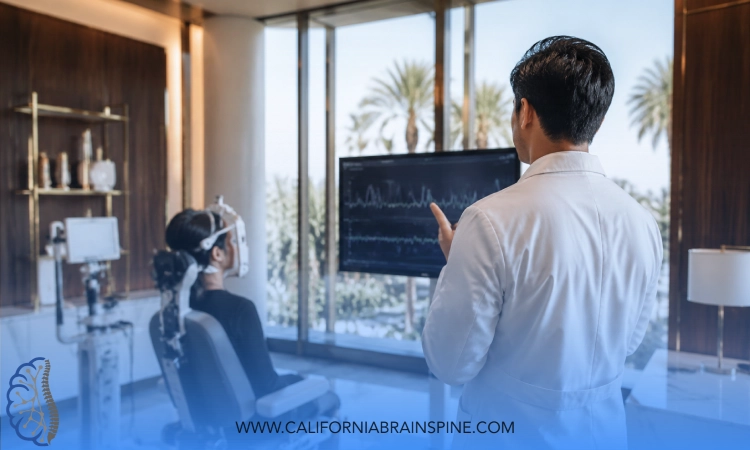
At California Brain & Spine Center, patients are evaluated with a functional neurological mindset that may include the following depending on the case:
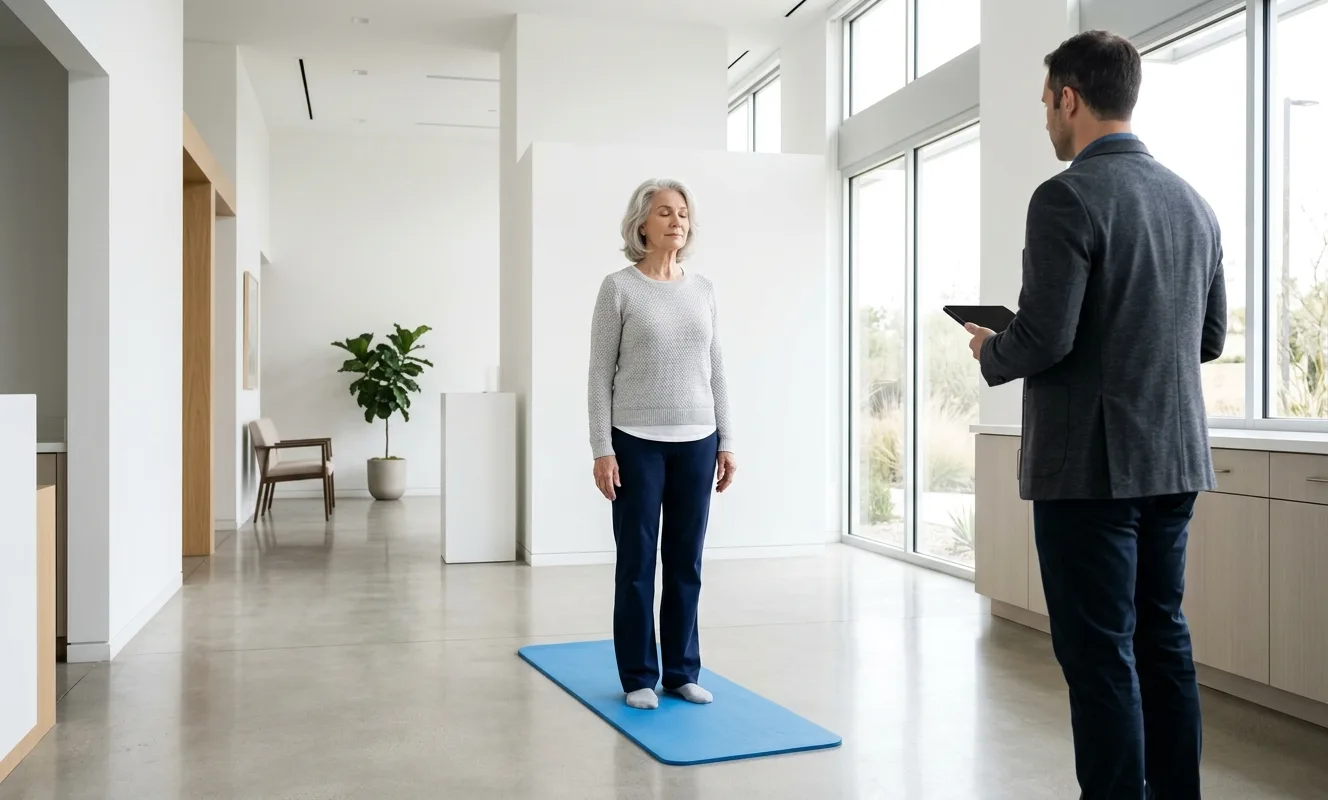
- Vestibular and balance testing to understand motion tolerance and postural control
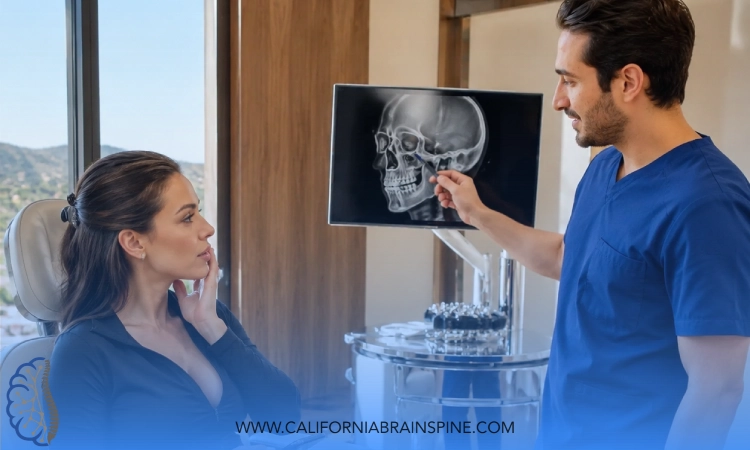
- Eye movement and visual-vestibular assessment for tracking, fixation, and sensory mismatch
- Neurological examination to identify asymmetries or processing inefficiencies
- Cognitive and symptom review when brain fog, concentration changes, or memory complaints are present
- Autonomic considerations when dysautonomia-like patterns or exertional intolerance may be contributing
A Useful Comparison for Patients
| Symptom Pattern | What It May Suggest | Why Personalized Rehab Matters |
|---|---|---|
| Dizziness with head turns | Vestibulo-ocular coordination issue | Exercises may target gaze stability and head-eye timing |
| Worse in stores or crowds | Visual-vestibular overload | Rehab may focus on sensory integration and graded exposure |
| Brain fog with motion sensitivity | Post-concussion or neurocognitive strain | May require vestibular plus cognitive rehabilitation support |
| Unsteady standing or walking | Postural integration or sensory weighting issue | Care may emphasize balance retraining and movement confidence |
Better outcomes often come from asking better questions about the nervous system, not from pushing harder through symptoms.
The Treatment Pathway: How the Brain Adapts During Vestibular Rehab in CA Step by Step
Patients often feel more confident when they know what the process looks like. At our Calabasas clinic, the pathway is designed to move from uncertainty toward clarity, from symptom confusion toward structured progress.
1. 🧠 Assessment
Neurological, vestibular, visual, and symptom-based evaluation to identify the likely drivers of dysfunction.
2. ✨ Mapping the Pattern
The team identifies whether the problem is primarily vestibular, post-concussion, visual-vestibular, autonomic, or mixed.
3. 💎 Personalized Plan
A targeted care plan may include vestibular rehabilitation, cognitive rehabilitation, NSI, or other non-invasive options.
4. ✅ Guided Progression
Exercises and therapies are adjusted based on tolerance, findings, and real-world function.
5. 🌿 Confidence Building
The long-term goal is better stability, less sensory overwhelm, and a stronger return to daily activities.
Therapies That May Be Part of the Plan
At California Brain & Spine Center, treatment plans are individualized. Depending on the patient, care may involve Vestibular Rehabilitation, Cognitive Rehabilitation, Neuroplasticity Rehabilitation, NeuroSensory Integration, and concussion-focused care. In select cases, supportive non-invasive strategies such as Low-Level Laser Therapy, PEMF, HBOT, GammaCore Vagus Nerve Stimulation, or the NeuroRevive Program may also be considered when clinically appropriate.
Why a Multi-System Approach Can Matter
Some patients do not improve because their problem is not purely vestibular. They may also be dealing with visual processing strain, post-concussion inflammation patterns, autonomic dysregulation, sleep disruption, or cognitive overload. A broader plan can support root-level functional improvement rather than short-term symptom chasing alone.
A Practical Truth Patients Appreciate
The brain adapts best when care is specific, measured, and meaningful. More exercise is not always better. The right exercise, at the right intensity, at the right time, is what usually matters most.
Who May Benefit From Learning How the Brain Adapts During Vestibular Rehab in CA
This kind of care may be relevant for adults and adolescents whose symptoms interfere with daily life, work, exercise, driving, reading, shopping, travel, or screen tolerance. It is especially important when symptoms linger and no one has clearly explained why.
Common Situations We See
Patients coming to our clinic in Calabasas and from across Southern California often report persistent dizziness after concussion, balance instability after head injury, visual disturbances after concussion, motion-triggered nausea, chronic disequilibrium, and brain fog that worsens in visually demanding environments. Others have had vestibular symptoms for much longer and are simply tired of living around them.
Patient guidance: If your symptoms are affecting confidence, work performance, exercise tolerance, driving, or your sense of safety in public spaces, a detailed vestibular and neurological evaluation may be more helpful than continuing to guess.
When a Safety-Focused Evaluation Matters First
Some symptoms should not be self-managed without proper medical assessment. Seek timely medical attention if dizziness is accompanied by concerning features such as sudden severe headache, new weakness, facial droop, double vision, fainting, chest pain, new slurred speech, or rapidly worsening neurological changes.
Safety note: Vestibular rehab should follow appropriate screening and a personalized assessment. Dizziness has many possible causes, and treatment should be matched to the underlying pattern whenever possible.
Confidence grows when a patient stops fighting unexplained symptoms alone and starts moving through a clear plan with support.
Why California Brain & Spine Center Takes a Different View of Vestibular Recovery
At California Brain & Spine Center, patients are not reduced to a checklist. The clinic approach is built around understanding the person in front of us, the nervous system patterns behind the symptoms, and the most appropriate non-invasive path forward. This is especially valuable for complex or chronic cases where dizziness overlaps with concussion symptoms, memory changes, dysautonomia, visual strain, or balance dysfunction.
Dr. Alireza Chizari, DC, DACNB brings an uncommon background to this work. His early training in electrical engineering and advanced engineering management helped develop a systems-based mindset. His transition into chiropractic care after witnessing meaningful recovery in his own family led him to advanced study at Life Chiropractic College West, precise Gonstead technique, and postdoctoral education in clinical neuroscience. That combination supports a thoughtful, analytical, and deeply patient-centered approach.
For patients asking how the brain adapts during vestibular rehab in CA, the answer is not just academic. It directly influences how the care plan is structured, how progress is monitored, and how decisions are made when symptoms overlap across several neurological systems.
A Short Case Story From My Clinic
Some time ago, a patient named A. came to see me after months of feeling off-balance following a concussion. She described difficulty shopping in busy stores, discomfort when turning quickly, fatigue after screen use, and a persistent fear that something was seriously wrong because she did not feel like herself anymore.
When I evaluated her, the picture was not just simple dizziness. There were signs of visual-vestibular mismatch, motion sensitivity, and cognitive overload. We built a plan that included Vestibular Rehabilitation, elements of Cognitive Rehabilitation, and a broader Neuroplasticity Rehabilitation strategy based on her tolerance and presentation. We progressed slowly and adjusted carefully rather than pushing her into symptom spikes.
Over time, she reported better tolerance in visually busy places, less fear around movement, and more confidence returning to normal routines. She did not improve because of a one-size-fits-all exercise sheet. She improved because the plan matched the way her nervous system was actually functioning. That does not mean every patient will respond the same way, but it does show why a personalized, evidence-informed process matters.
Ready for Clarity About Your Dizziness, Balance, or Post-Concussion Symptoms?
If you want to better understand how the brain adapts during vestibular rehab in CA and whether a personalized plan may fit your needs, our team in Calabasas is here to help guide the next step with care and precision.
Your Most Common Questions About How the Brain Adapts During Vestibular Rehab in CA
How long does it take for the brain to adapt during vestibular rehab?
It varies widely. Some patients notice meaningful changes within a few weeks, while others need a longer course depending on how long symptoms have been present, whether concussion or neurological stress is involved, and how well the exercises match the actual dysfunction. Progress is often gradual and tied to function, not just symptom intensity on a single day.
Can vestibular rehab help after a concussion?
Yes, when vestibular dysfunction is part of the post-concussion picture, vestibular rehabilitation may help support better eye-head coordination, reduced motion sensitivity, and improved balance. However, post-concussion patients often need a broader approach that also considers cognitive strain, visual symptoms, and nervous system regulation.
Why do symptoms sometimes get worse before they get better?
Because rehab asks the brain to work with signals it currently finds challenging. Mild, temporary increases in symptoms can happen when the nervous system is being trained, but treatment should be dosed carefully. If symptom increases are excessive or prolonged, the plan may need adjustment. This is one reason professional guidance matters.
Is every dizzy patient a candidate for vestibular rehab?
No. Dizziness can come from many causes, including cardiovascular, neurological, inner ear, medication-related, metabolic, or autonomic issues. A proper evaluation helps determine whether vestibular rehabilitation is appropriate, whether another issue should be addressed first, or whether a multi-system plan is needed.
What if I have dizziness plus brain fog, memory issues, or visual problems?
That pattern is not unusual, especially after concussion or more complex neurological stress. It may indicate that the issue is broader than balance alone. At California Brain & Spine Center, care plans may integrate Vestibular Rehabilitation with Cognitive Rehabilitation, NeuroSensory Integration, and other supportive strategies based on the findings.
What should I do if I want to know whether this approach is right for me?
The most practical next step is a personalized neurological and vestibular evaluation. That allows the team to understand your symptom triggers, history, testing findings, and goals, then determine whether vestibular rehab or another form of non-invasive neurological care may be the best fit.
Final Thoughts on How the Brain Adapts During Vestibular Rehab in CA
I want you to remember one central point: how the brain adapts during vestibular rehab in CA depends on the quality of the evaluation, the precision of the plan, and how well treatment fits your real neurological needs. If you have been living with dizziness, imbalance, visual discomfort, or post-concussion symptoms, you deserve more than guesswork. I, Dr. Alireza Chizari, DC, DACNB, invite you to contact California Brain & Spine Center in Calabasas for a personalized evaluation so we can help you move toward better function, more stability, and greater confidence in daily life.
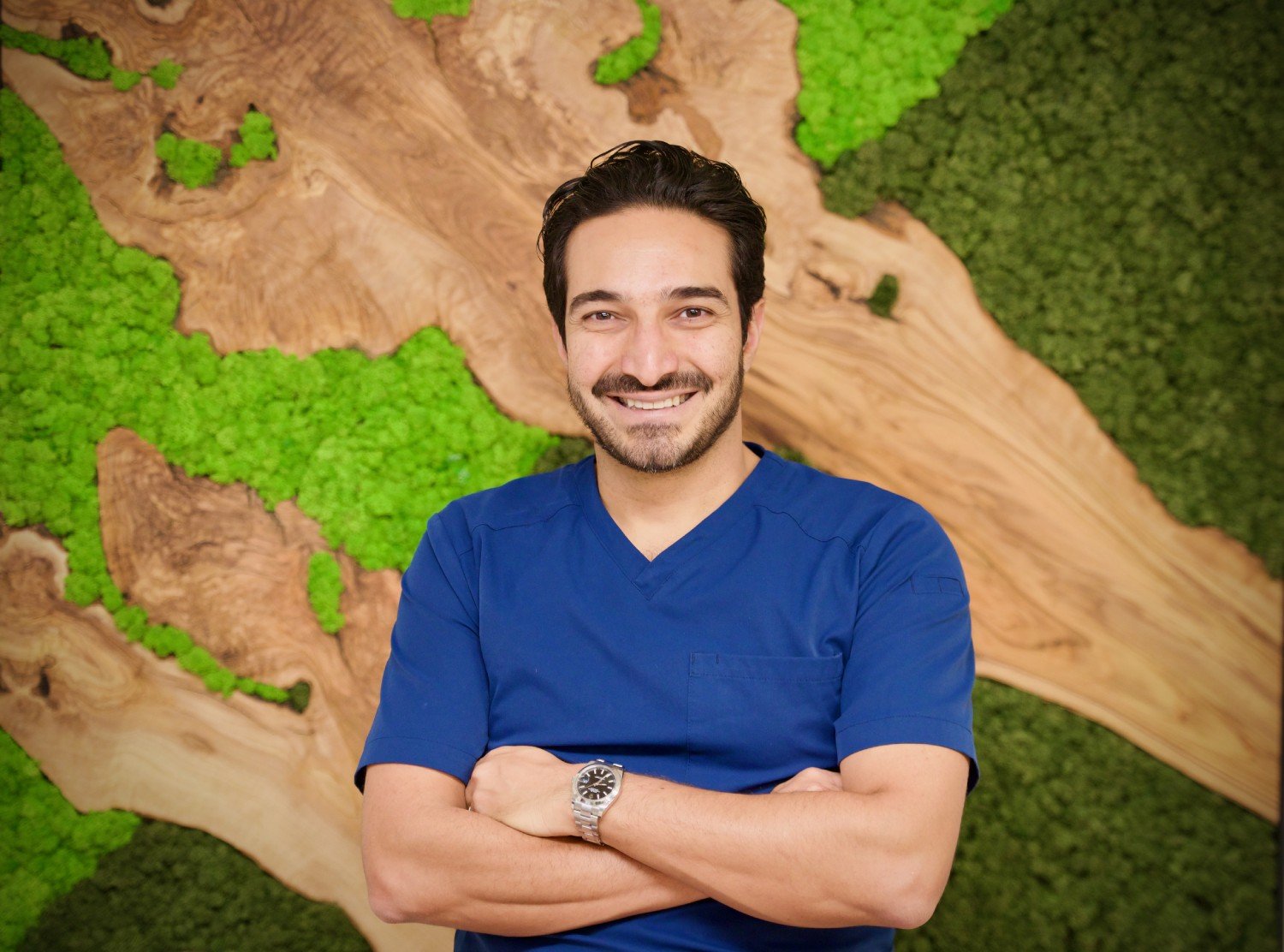
Dr. Alireza Chizari
This article has been medically reviewed for clinical accuracy by Dr. Alireza Chizari, DC, DACNB. Committed to evidence-based practice, Dr. Chizari ensures all content reflects the highest standards of functional neurology care.
Comments
Find our article more easily in Google.
FAQ
What is Functional Neurology?
Functional Neurology is a healthcare specialty that focuses on assessing and rehabilitating the nervous system’s function. It emphasizes neuroplasticity—the brain’s ability to adapt and reorganize—using non-invasive, evidence-based interventions to improve neurological performance.
How does Functional Neurology differ from traditional neurology?
Traditional neurology often concentrates on diagnosing and treating neurological diseases through medications or surgery. In contrast, Functional Neurology aims to optimize the nervous system’s function by identifying and addressing dysfunctions through personalized, non-pharmaceutical interventions.
Is Functional Neurology a replacement for traditional medical care?
No. Functional Neurology is intended to complement, not replace, traditional medical care. Practitioners often collaborate with medical professionals to provide comprehensive care.
What conditions can Functional Neurology help manage?
Functional Neurology has been applied to various conditions, including:
• Concussions and Post-Concussion Syndrome
• Traumatic Brain Injuries (TBI)
• Vestibular Disorders
• Migraines and Headaches
• Neurodevelopmental Disorders (e.g., ADHD, Autism)
• Movement Disorders
• Dysautonomia
• Peripheral Neuropathy
• Functional Neurological Disorder (FND)
Can Functional Neurology assist with neurodegenerative diseases?
While Functional Neurology does not cure neurodegenerative diseases, it can help manage symptoms and improve quality of life by optimizing the function of existing neural pathways.
What diagnostic methods are used in Functional Neurology?
Functional Neurologists employ various assessments, including:
• Videonystagmography (VNG)
• Computerized Posturography
• Oculomotor Testing
• Vestibular Function Tests
• Neurocognitive Evaluations
How is a patient’s progress monitored?
Progress is tracked through repeated assessments, patient-reported outcomes, and objective measures such as balance tests, eye movement tracking, and cognitive performance evaluations.
What therapies are commonly used in Functional Neurology?
Interventions may include:
- Vestibular Rehabilitation
- Oculomotor Exercises
- Sensorimotor Integration
- Cognitive Training
- Balance and Coordination Exercises
- Nutritional Counseling
- Lifestyle Modifications
Are these therapies personalized?
Absolutely. Treatment plans are tailored to the individual’s specific neurological findings, symptoms, and functional goals.
Who can benefit from Functional Neurology?
Individuals with unresolved neurological symptoms, those seeking non-pharmaceutical interventions, or patients aiming to optimize brain function can benefit from Functional Neurology.
Is Functional Neurology suitable for children?
Yes. Children with developmental delays, learning difficulties, or neurodevelopmental disorders may benefit from Functional Neurology approaches.
How does Functional Neurology complement other medical treatments?
It can serve as an adjunct to traditional medical care, enhancing outcomes by addressing functional aspects of the nervous system that may not be targeted by conventional treatments.
How is technology integrated into Functional Neurology?
Technological tools such as virtual reality, neurofeedback, and advanced diagnostic equipment are increasingly used to assess and enhance neurological function.
What is the role of research in Functional Neurology?
Ongoing research continues to refine assessment techniques, therapeutic interventions, and our understanding of neuroplasticity, contributing to the evolution of Functional Neurology practices.