Gaze Stabilization Exercises for Dizziness in Calabasas, CA

- Published
- No Comments
- Updated August 18, 2026
Gaze Stabilization Exercises for Dizziness in Calabasas, CA
Dizziness can quietly take over everyday life. Simple things like walking through a grocery store, turning your head while driving, or looking up at a screen can suddenly feel disorienting. Many people in Calabasas and across Southern California experience this, especially after a concussion, inner ear issue, or neurological imbalance.
I am Dr. Alireza Chizari, DC, DACNB, and at California Brain & Spine Center I regularly meet patients who feel frustrated because their dizziness has lasted far longer than expected. Many of them have tried medications or general therapy but still struggle with unstable vision and balance.
On this page, I will explain how Gaze Stabilization Exercises for Dizziness work, why they are an important part of vestibular rehabilitation, and how our team evaluates and guides patients through a personalized neurological recovery plan here in Calabasas, California.
| Quick Answer |
|---|
|
Speak With a Dizziness Specialist in Calabasas
If dizziness or unstable vision has been limiting your daily life, a personalized neurological evaluation may help identify whether gaze stabilization exercises for dizziness are appropriate for you.
Why Vision Feels Unstable When You Have Dizziness
One of the most frustrating parts of dizziness is the feeling that the world moves when you move your head. Patients often describe it as if their eyes cannot keep up with motion. This sensation can happen when the vestibular system and visual system are not coordinating properly.
In a healthy nervous system, the brain constantly uses signals from the inner ear, eyes, and body to keep your visual world stable. When this coordination breaks down, the brain struggles to stabilize images while the head is moving.
This is where gaze stabilization exercises for dizziness become important. These exercises are designed to retrain the brain to maintain clear vision even while the head moves.
When the brain relearns how to stabilize vision, the entire experience of movement can start to feel safer and more natural again.
How Gaze Stabilization Exercises for Dizziness Actually Work
I often explain to patients that gaze stabilization exercises are essentially brain training. They activate something called the vestibulo ocular reflex, which is the reflex that keeps your eyes steady while your head moves.
If this reflex becomes weak or inaccurate, the brain cannot stabilize images properly. That can cause blurred vision, dizziness, nausea, or motion sensitivity.
The Vestibulo Ocular Reflex
The vestibulo ocular reflex connects three major systems:
- The inner ear vestibular organs that detect head movement
- The brainstem and cerebellum that process balance information
- The eye muscles that adjust gaze in real time
When gaze stabilization exercises for dizziness are performed consistently and correctly, the brain gradually adapts. This process is known as neuroplasticity.
Who May Benefit From Gaze Stabilization Exercises for Dizziness in Calabasas
These exercises are often recommended for patients experiencing dizziness caused by vestibular dysfunction or neurological imbalance.
Common conditions where gaze stabilization exercises may help
- Post concussion dizziness
- Vestibular neuritis or inner ear disorders
- Persistent vertigo or motion sensitivity
- Balance disorders
- Visual motion intolerance
Many patients who search for gaze stabilization exercises for dizziness in Calabasas, CA are dealing with symptoms that affect driving, screen use, or walking in busy environments.
Recovery from dizziness often begins when the brain is gently challenged in the right way.
How Patients Are Evaluated Before Starting Gaze Stabilization Exercises
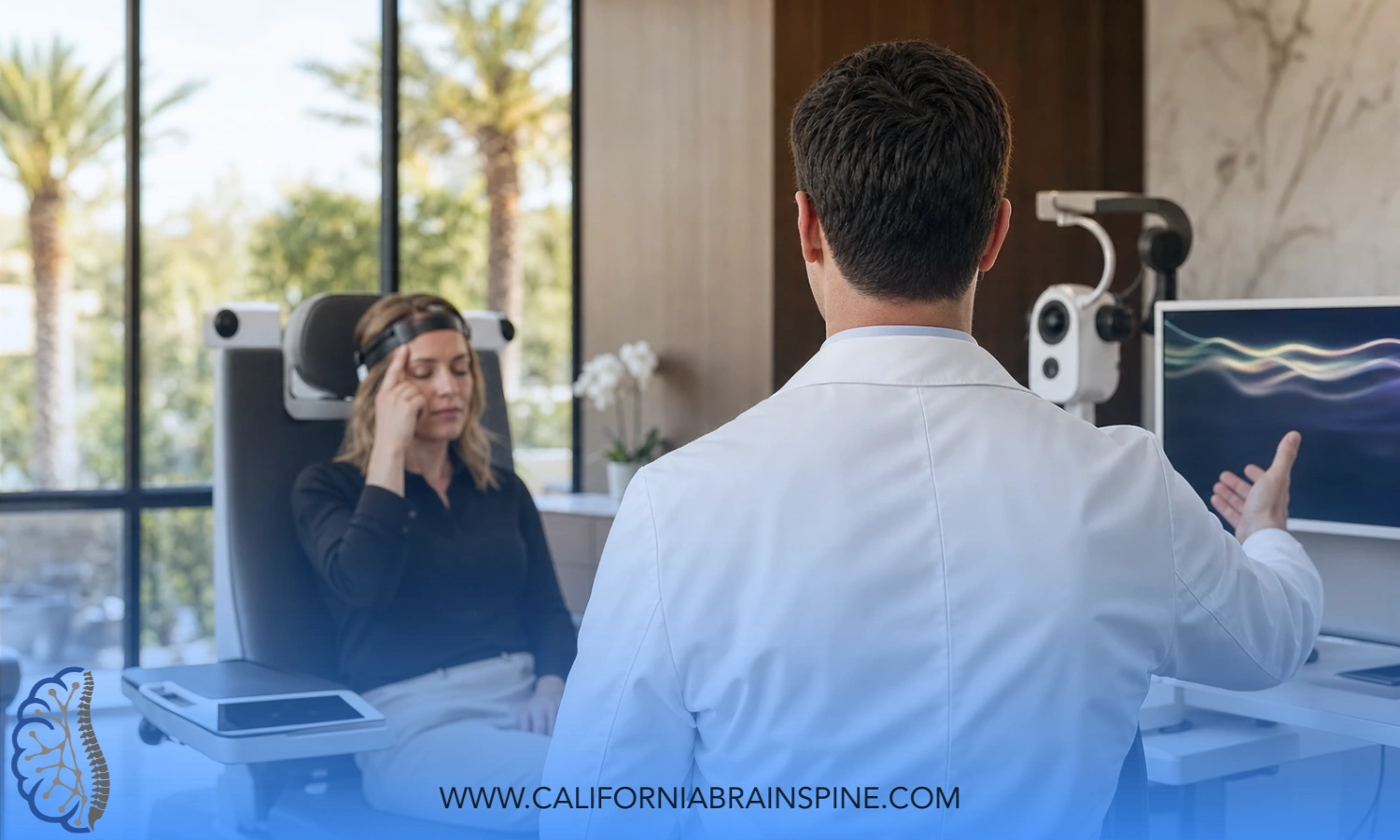
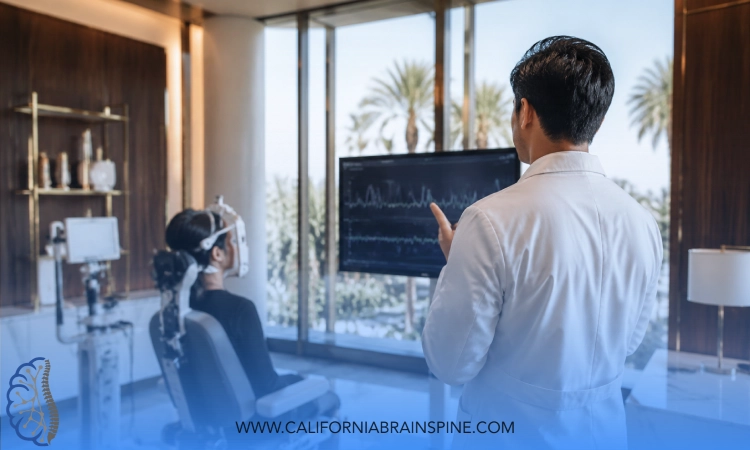
At California Brain & Spine Center, treatment does not begin with exercises alone. A detailed neurological and vestibular evaluation is performed first.
This helps determine which parts of the brain and vestibular system are underperforming.
Clinical assessment process
Patients visiting the clinic in Calabasas may undergo evaluation such as:
- Vestibular system testing
- Eye movement tracking and visual stability testing
- Balance and gait analysis
- Post concussion neurological screening
- Autonomic nervous system assessment when needed
This approach helps determine whether gaze stabilization exercises for dizziness are appropriate or if other therapies should be combined.
The Personalized Treatment Pathway for Dizziness Recovery
Step 1 – Comprehensive Assessment
Neurological and vestibular testing identifies the root cause of dizziness and visual instability.
Step 2 – Personalized Rehabilitation Plan
Exercises including gaze stabilization exercises for dizziness are tailored to each patient’s brain function.
Step 3 – Neurological Therapy
Vestibular rehabilitation may be combined with neuroplasticity training, cognitive rehabilitation, or supportive therapies.
Step 4 – Progress Monitoring
Objective testing helps track improvements in visual stability, balance, and daily function.
Advanced Therapies That May Support Vestibular Recovery
At California Brain & Spine Center in Calabasas, patients with persistent dizziness may receive a combination of therapies depending on their evaluation results.
| Therapy | Purpose |
|---|---|
| Vestibular Rehabilitation | Improves balance and vestibular processing |
| Cognitive Rehabilitation | Supports brain function after concussion or neurological stress |
| Neuroplasticity Training | Encourages the brain to reorganize and improve performance |
| Low Level Laser Therapy and PEMF | May support neurological recovery when clinically appropriate |
| Hyperbaric Oxygen Therapy | Sometimes used in complex neurological recovery programs |
Meaningful recovery often happens when the right therapies work together rather than relying on a single approach.
A Patient Story From My Clinic
Some time ago, a patient named S. came to see me at California Brain & Spine Center in Calabasas. She had experienced persistent dizziness and visual instability for months after a concussion.
She told me that walking through crowded environments or turning her head quickly made the world feel like it was bouncing. This is a common symptom when the vestibulo ocular reflex is not functioning properly.
After a detailed evaluation, we began a personalized program that included gaze stabilization exercises for dizziness, vestibular rehabilitation, and neuroplasticity based training.
Over time her visual stability improved. She gradually returned to driving and felt more comfortable in busy environments. Progress took patience and consistency, but her confidence slowly returned.
Start Understanding Your Dizziness
If you are experiencing unstable vision or dizziness during head movement, a neurological evaluation may help determine whether gaze stabilization exercises for dizziness are right for you.
Your Most Common Questions About Gaze Stabilization Exercises for Dizziness
What are gaze stabilization exercises for dizziness?
Gaze stabilization exercises are vestibular rehabilitation techniques that train the brain to keep vision stable while the head moves. They help improve communication between the eyes, inner ear, and brain.
Can gaze stabilization exercises help after a concussion?
Yes. Many concussion patients experience problems with visual stability and vestibular processing. In those cases, gaze stabilization exercises for dizziness may be part of a structured neurological rehabilitation program.
How long does it take for these exercises to help?
Every patient is different. Some people begin noticing improvement within several weeks, while others require longer rehabilitation depending on the underlying neurological condition.
Should I try gaze stabilization exercises on my own?
It is generally best to start these exercises after professional evaluation. Incorrect intensity or technique can sometimes worsen symptoms if the underlying condition is not identified.
Do patients travel to Calabasas for dizziness treatment?
Yes. California Brain & Spine Center regularly evaluates patients from across Southern California who are seeking specialized care for persistent dizziness and vestibular disorders.
Conclusion
Dizziness that disrupts vision and balance can feel overwhelming, but understanding the neurological cause often opens the door to real progress.
I am Dr. Alireza Chizari, DC, DACNB, and my goal at California Brain & Spine Center is to help patients move from confusion and instability toward clarity, confidence, and better function.
If you believe gaze stabilization exercises for dizziness in Calabasas, CA may help your situation, the best first step is a careful neurological and vestibular evaluation. Together we can determine the most appropriate path forward.

Dr. Alireza Chizari
This article has been medically reviewed for clinical accuracy by Dr. Alireza Chizari, DC, DACNB. Committed to evidence-based practice, Dr. Chizari ensures all content reflects the highest standards of functional neurology care.
Comments
Find our article more easily in Google.
FAQ
What is Functional Neurology?
Functional Neurology is a healthcare specialty that focuses on assessing and rehabilitating the nervous system’s function. It emphasizes neuroplasticity—the brain’s ability to adapt and reorganize—using non-invasive, evidence-based interventions to improve neurological performance.
How does Functional Neurology differ from traditional neurology?
Traditional neurology often concentrates on diagnosing and treating neurological diseases through medications or surgery. In contrast, Functional Neurology aims to optimize the nervous system’s function by identifying and addressing dysfunctions through personalized, non-pharmaceutical interventions.
Is Functional Neurology a replacement for traditional medical care?
No. Functional Neurology is intended to complement, not replace, traditional medical care. Practitioners often collaborate with medical professionals to provide comprehensive care.
What conditions can Functional Neurology help manage?
Functional Neurology has been applied to various conditions, including:
• Concussions and Post-Concussion Syndrome
• Traumatic Brain Injuries (TBI)
• Vestibular Disorders
• Migraines and Headaches
• Neurodevelopmental Disorders (e.g., ADHD, Autism)
• Movement Disorders
• Dysautonomia
• Peripheral Neuropathy
• Functional Neurological Disorder (FND)
Can Functional Neurology assist with neurodegenerative diseases?
While Functional Neurology does not cure neurodegenerative diseases, it can help manage symptoms and improve quality of life by optimizing the function of existing neural pathways.
What diagnostic methods are used in Functional Neurology?
Functional Neurologists employ various assessments, including:
• Videonystagmography (VNG)
• Computerized Posturography
• Oculomotor Testing
• Vestibular Function Tests
• Neurocognitive Evaluations
How is a patient’s progress monitored?
Progress is tracked through repeated assessments, patient-reported outcomes, and objective measures such as balance tests, eye movement tracking, and cognitive performance evaluations.
What therapies are commonly used in Functional Neurology?
Interventions may include:
- Vestibular Rehabilitation
- Oculomotor Exercises
- Sensorimotor Integration
- Cognitive Training
- Balance and Coordination Exercises
- Nutritional Counseling
- Lifestyle Modifications
Are these therapies personalized?
Absolutely. Treatment plans are tailored to the individual’s specific neurological findings, symptoms, and functional goals.
Who can benefit from Functional Neurology?
Individuals with unresolved neurological symptoms, those seeking non-pharmaceutical interventions, or patients aiming to optimize brain function can benefit from Functional Neurology.
Is Functional Neurology suitable for children?
Yes. Children with developmental delays, learning difficulties, or neurodevelopmental disorders may benefit from Functional Neurology approaches.
How does Functional Neurology complement other medical treatments?
It can serve as an adjunct to traditional medical care, enhancing outcomes by addressing functional aspects of the nervous system that may not be targeted by conventional treatments.
How is technology integrated into Functional Neurology?
Technological tools such as virtual reality, neurofeedback, and advanced diagnostic equipment are increasingly used to assess and enhance neurological function.
What is the role of research in Functional Neurology?
Ongoing research continues to refine assessment techniques, therapeutic interventions, and our understanding of neuroplasticity, contributing to the evolution of Functional Neurology practices.