A concussion is a traumatic brain injury graded mild, and once you see where it sits on that scale, your own records become much easier to read.
A concussion is a traumatic brain injury. When you compare concussion vs TBI, you are comparing one grade of injury with the whole category it belongs to: doctors often refer to a concussion as a mild TBI, and the two terms are commonly used interchangeably.
I am Dr. Alireza Chizari, DC, DACNB, a board-certified chiropractic neurologist, and at California Brain & Spine Center in Calabasas I practice functional neurology. Much of that work happens after the emergency part of a head injury is over, when the scans have been read, the paperwork has piled up, and the person in front of me still does not feel like themselves.
The question usually reaches me on a piece of paper. An urgent care discharge sheet says concussion. A letter from another office, written weeks later, says mild traumatic brain injury, or mTBI. Somewhere between the two documents a worry sets in that the injury got worse, or that someone found something new.
Often the vocabulary changed and the injury did not. Below I walk through what each term in the concussion vs TBI question means, how head injuries are graded, why a normal scan leaves the matter open, which danger signs need emergency care, and what an evaluation looks at when headaches, dizziness or brain fog keep getting in the way of work, driving and sleep. Every clinical statement here is tied to a public source you can open and read yourself.
Key Takeaway
In the concussion vs TBI question, a concussion is a mild traumatic brain injury, the least severe grade of TBI on the Glasgow Coma Scale. Mild describes that initial grade and says little about how disruptive your symptoms feel. Scans are often normal after a concussion. Danger signs need emergency care; symptoms that linger may deserve a closer look.
Is a concussion a TBI?
Yes, a concussion is a traumatic brain injury, so "is a concussion a TBI" has a one-word answer. Doctors often refer to a concussion as a mild TBI, and the terms are commonly used interchangeably. On the Glasgow Coma Scale, commonly used for grading, a score of 13 to 15 is mild TBI, also known as a concussion.
That short answer to the concussion vs TBI question is the one the sources below support, and it deserves some unpacking, because the details are where people get stuck. Two things do the work: the scale used to grade a head injury, and the direction in which the two words overlap.
How does the Glasgow Coma Scale grade concussion and TBI?
The Glasgow Coma Scale is a scoring tool used when a head injury is first assessed. According to the Cleveland Clinic's overview of the Glasgow Coma Scale, it scores three kinds of response in a neurological exam: eye response, motor response and verbal response. Put simply, the examiner looks at the eyes, at movement, and at speech.
The result is commonly used to classify the injury. A score of 13 to 15 is classed as mild traumatic brain injury, which is also known as a concussion. A score of 9 to 12 is classed as moderate TBI, and a score of 3 to 8 as severe TBI. The scale is one of several tools, and the grade reflects the injury at the moment it was scored.
A review of concussion research in Frontiers in Neurology describes the scale as placing every TBI, from concussion to coma, on a single mild, moderate and severe spectrum. That one line is the clearest picture I can offer anyone weighing concussion vs TBI. Concussion sits at the mild end. Coma sits at the other. Everything along the line is a traumatic brain injury.
Where does concussion stop and moderate TBI begin?
The overlap runs in one direction. Every concussion is a TBI, but a TBI graded moderate or severe is not called a concussion. On the Glasgow Coma Scale the word concussion belongs to the mild band, the scores from 13 to 15, and the lower scores carry the moderate and severe labels instead.
So when you see concussion vs TBI written as though they were two separate injuries, read it as a question about grade. If your record says concussion, you had a TBI graded mild. The chart was describing one injury in two vocabularies, and neither word alters what happened to you on the day.
The same reading helps with a sentence you may meet online, that a TBI is more serious than a concussion. Read carefully, that sentence compares grades: a moderate or severe TBI sits further along the scale than a mild one. It leaves a concussion inside the TBI category, and it gives no licence to treat a concussion as trivial, a point the CDC makes directly and one I come back to further down.
What is the difference between concussion and TBI?
A traumatic brain injury (TBI) is an injury that affects how the brain works. That is the definition in the CDC's overview of traumatic brain injury, and it says nothing about grade. It is the name of the whole category.
A concussion is the mild end of that category. The CDC describes a mild TBI or concussion as caused by a bump, blow or jolt to the head, or by a hit to the body that makes the head and brain move quickly back and forth. The phrasing is worth a second look: the CDC names the two terms together, as one injury, inside a single sentence.
Set the two descriptions side by side and the difference between concussion vs TBI turns into a difference of scope. TBI is the category. Concussion is the mild grade within it.
Why do concussion and mild TBI both appear in my records?
Doctors often refer to a concussion as a mild TBI, and the two terms are commonly used interchangeably. Which word lands on a given page tends to depend on who wrote it and for what purpose.
In my own conversations, concussion is the word patients, parents and coaches reach for. Mild traumatic brain injury, or mTBI, turns up more in formal documents: discharge summaries, referral letters, insurance and employer forms, rehabilitation notes. A switch from one word to the other between two documents is usually a switch of register. By itself it does not mean anyone re-graded your injury.
What does mTBI stand for?
mTBI is shorthand for mild traumatic brain injury. The lowercase m carries the grade, and the letters after it name the category.
I mention the abbreviation separately because it causes more worry than it should. Seeing mTBI printed on a form for the first time can read like a new diagnosis, especially when an earlier note said concussion. Often it is the same grade of injury, written the way forms like to write it, and the concussion vs TBI change is one of vocabulary.

Does the concussion vs TBI difference change anything for you?
Practically, the concussion vs TBI distinction changes less than the worry around it suggests. If your injury was graded mild, it was a concussion and a TBI at once, and the two words describe the same event. The next steps are shaped by a different set of facts: whether danger signs are present, which symptoms remain, and how they respond to the demands of an ordinary day.
Where the words do matter is in communication. Knowing that mild TBI and concussion can name the same injury lets you read a specialist's letter, an insurance form or a school note without reading escalation into it. It also lets you describe your history accurately, which helps every clinician who sees you after this one.
Is a mild head injury the same as a concussion?
Not quite, and the difference is in what each phrase describes. Mild head injury is an everyday phrase for the event: a knock, a fall, a collision. Concussion names what the event did to the brain. The CDC's definition of a mild TBI, or concussion, is an injury caused by a bump, blow or jolt to the head, or by a hit to the body, that makes the head and brain move quickly back and forth.
A traumatic brain injury, in the CDC's words, is an injury that affects how the brain works. That is the line between the two phrases. A knock to the head is where the question starts, and whether the brain's function changed is what turns it into a concussion. People sometimes call the result a mild concussion, though the mild is already built into the word. Whether the brain's function changed is answered by your symptoms and an examination. The danger signs further down this page always come first.
How can a concussion happen if you never hit your head?
Go back to the CDC wording: a concussion can come from a hit to the body that makes the head and brain move quickly back and forth. That description does not require a blow to the head. The force can travel up through the body.
That can include events people rarely file under head injury: a collision in which the body is struck and the head snaps forward and back, a hard fall onto the back or hip, a tackle that never touched the helmet. None of those leaves a bump to point at, and each of them can move the head quickly.
This is why a missing bruise, or no memory of your head striking anything, does not answer the question on its own. The definition turns on the movement the force caused, and a visible mark was never part of it.
If you are trying to tell a bump to the head apart from an injury to the brain, our guide to mild head injuries covers that distinction in more detail.

What does mild mean in mild TBI?
Mild is a grade, and it is the hinge of the whole concussion vs TBI question. It records where the injury fell on the scale when it was first assessed. Many people hear it as a forecast of how the coming weeks feel, and the word was never built to carry that.
The CDC puts it carefully: healthcare providers describe a mild TBI as usually not life-threatening, though its effects can still be serious. Both halves of that sentence are true at once. The first half is reassuring, and you are entitled to take the reassurance. The second half tends to get dropped, which is why I avoid calling any concussion minor, and why you should feel no pressure to call your own one minor either.
Grade and experience are separate questions
The grade describes how the injury looked on the day it was scored. How you feel at your desk, behind the wheel or at the end of a long day is a different question, and the answer to it comes from your symptoms and an examination, whatever the chart says.
Grade and experience can point in different directions, and neither one cancels the other. A mild grade and a hard month are fully compatible. So is a mild grade and a fairly easy few weeks. The grade was recorded to describe the injury at the time. Your symptoms describe what is still in the way now.
What does a concussion feel like day to day?
Here I want to set the vocabulary aside and talk about what people live with. According to the CDC's HEADS UP list of concussion signs and symptoms, symptoms may include headaches, dizziness or balance problems, being bothered by light or noise, trouble with attention or concentration, feeling slowed down, irritability, anxiety or nervousness, sadness, and sleeping more or less than usual.
That list reads calmly on a screen. In a real week it looks less tidy, because symptoms rarely arrive labelled. They show up as small failures of ordinary routine that are hard to explain to a colleague or a partner.
Headaches, dizziness and balance
Headaches and dizziness or balance problems are both on the CDC's list. Day to day, they can look like a grocery aisle that suddenly feels too busy to walk down, a quick head turn to check a blind spot that leaves you briefly unsteady, or a headache that builds through the afternoon on days full of screen work.
Sensitivity to light or noise can travel with them. A familiar office can feel too bright. The hum of a restaurant can become something you plan around. None of it looks dramatic from the outside, which is part of what makes it so tiring to live with.
Concentration and feeling slowed down
I hear trouble with attention and concentration, and the sense of being slowed down, described more cautiously than anything else, as though people are unsure it is allowed to count. It is on the list. It can look like reading a long email twice, losing the thread halfway through a meeting that used to be routine, or needing silence for work you once did with music on.
For people whose work runs on focus, and across this part of Los Angeles that is a great many people, this can be the symptom that sends them looking for answers. You can still do the job. It simply costs far more than it used to.
Mood and sleep
Irritability, anxiety and sadness sit on the same CDC list as headaches. So do changes in sleep, in either direction. I say this plainly because these are the symptoms people are most tempted to explain away as stress or personality, and they belong to the picture as much as anything else on the list.
If mood symptoms feel strong or frightening, tell your primary care clinician or a mental health professional promptly. That conversation deserves its own appointment, alongside anything else you are doing.
A few notes kept for a while can make any appointment more useful. When symptoms flare, it helps to record:
- What you were doing at the time, for example reading, screens, driving, exercise, crowds or noise.
- How long it took to settle, and what, if anything, helped it settle.
- Whether the overall pattern is easing, holding steady or getting worse; worsening quickly is a danger sign, covered below.
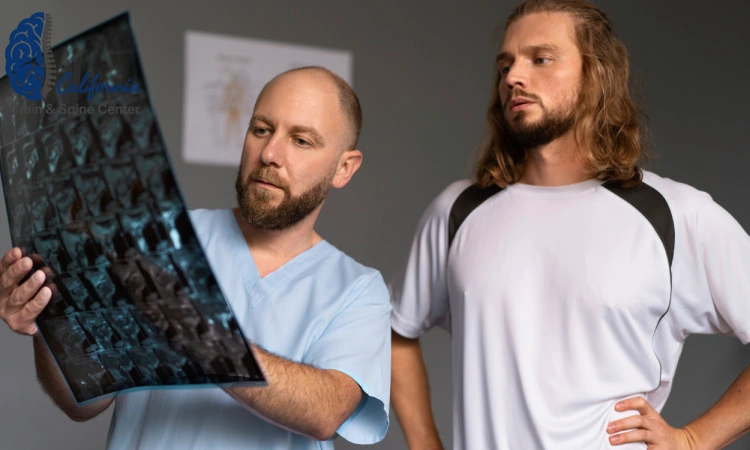
Still not feeling like yourself after a concussion?
If the emergency questions have been answered but headaches, dizziness, light sensitivity or brain fog keep shaping your day, an evaluation can look at which everyday demands are still provoking them.
Can a concussion or mild TBI show up on a CT or MRI scan?
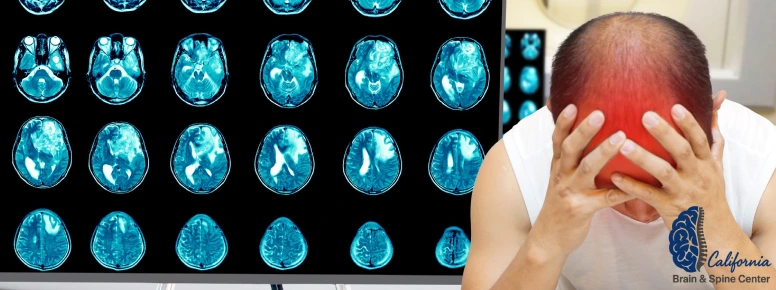
Often it does not. The same Frontiers in Neurology review notes that standard neuroimaging abnormalities are uncommon in concussion, and that a positive scan does not reliably predict long-term outcome. Scans are often normal after a concussion, and a normal scan does not rule one out.
That pair of facts can be hard to hold together. When a scan comes back clear, that is good news worth taking in. It also leaves open how the injury is affecting the way a person sees, balances, thinks and sleeps, because imaging findings may not match how a person feels.
A clear scan and a real concussion can sit in the same chart.
What does a normal MRI mean for concussion vs TBI?
For the concussion vs TBI question, a normal MRI changes less than people expect. A concussion is still a TBI whether or not the scan shows anything, and the grade still comes from the initial assessment. What a clear scan cannot do is describe the symptoms, so the practical questions (how the eyes track, how steady the balance is, how long concentration holds before symptoms build) are answered through the history and the examination.
Why do people keep hearing that their tests are normal?
Often, the tests really are normal. That statement is accurate, and it is also incomplete. Standard imaging looks for a kind of change that is uncommon in concussion, so a normal result is an expected finding for many people with a genuine concussion. "Your tests are normal" and "here is what is happening" answer two different questions, and someone with lingering symptoms usually needs both answered.
Hearing only the first answer can leave a person wondering whether the symptoms are real. They are. The CDC lists them as concussion symptoms, and a clear scan does not remove anything from that list.
Who decides on imaging after a head injury?
Imaging after a head injury is ordered and interpreted through medical care: emergency medicine, primary care and medical neurology. California Brain & Spine Center works alongside those clinicians. When Dr. Alireza Chizari, DC, DACNB, reviews imaging reports, they are read as part of the history and are never re-interpreted as a diagnosis.
What does an evaluation look at when concussion symptoms linger?
Dr. Alireza Chizari, DC, DACNB, approaches lingering symptoms with one working question: which everyday demands still bring symptoms on, and which systems may be involved in that pattern. The concussion vs TBI label is part of the history. Once the emergency questions have been answered, it is rarely the most useful part.
When clinically appropriate, after a review of the history, the neurodiagnostic assessment may include eye movement testing, balance and vestibular assessment (vestibular means the inner-ear balance system and its connections in the brain), cognitive tasks, an examination of the neck, and a check of how heart rate and blood pressure respond to a change in posture. Not every person needs every test. The aim is findings that can be reproduced and measured, so that each episode of dizziness or brain fog is not assumed to share one cause.

The table sets out how that tends to look in practice. The left column is what many people report. The middle column lists patterns that point toward a closer look or, where marked, toward emergency care. The right column is what an evaluation may focus on.
| Typical presentation | Patterns that suggest something more | What the evaluation looks at |
|---|---|---|
| Headache after the injury | A headache that gets worse and does not go away: emergency care first, not an evaluation | Headache triggers, neck involvement, tolerance of screens and sustained concentration |
| Dizziness or balance problems | Dizziness that returns with head turns, busy scenes or changes of position | Vestibular and balance testing, coordination of the eyes and head |
| Bothered by light or noise | Symptoms that build in stores, in traffic or during screen work | Eye tracking and tolerance of visual motion |
| Trouble concentrating, feeling slowed down | Concentration that fades as the day goes on | Cognitive tasks and how long they can be sustained |
| Irritability, anxiety or sadness | Mood changes that feel out of character or keep returning | History, sleep, and when to involve primary care or mental health care |
| Sleeping more or less than usual | Fatigue alongside symptoms that seem tied to standing, exertion or heat | Sleep history and, when clinically appropriate, autonomic responses to posture (the automatic control of heart rate and blood pressure) |
What happens at a first evaluation?
A first visit starts with the story of the injury in order: how it happened, what was noticed that day, what the emergency or urgent care records say, which terms appear in which documents, and what has changed since. Previous head injuries matter, and so does the rest of the health history.
The examination follows the history and is chosen from it. Someone whose main problem is dizziness in busy spaces needs a different emphasis from someone who loses concentration by mid-afternoon. At the end, the findings are explained in plain language, including what they do not show, and any recommendation is framed around what was measured.
What does the evaluation not do?
It does not replace emergency care, primary care or medical neurology, and it does not manage medication. It does not interpret imaging as a diagnosis, and it does not promise an outcome or a timeline. California Brain & Spine Center works alongside the clinicians already involved in someone's care, and when the examination raises a question outside functional neurology, the right move is to send that question back to them with a clear note of what was found.
Where does vestibular rehabilitation fit?
When dizziness is the main complaint, vestibular rehabilitation is one of the options worth understanding. A systematic review of randomised controlled trials of vestibular rehabilitation after concussion concluded that it appears to be a valid approach for managing dizziness after a concussion. In practice, that means it may help reduce dizziness in some patients, when the examination points that way.
If dizziness or balance is the problem you most want answered, the dizziness specialist page for Calabasas explains the vestibular evaluation in more detail.
Why does autonomic function come up after a concussion?
The autonomic nervous system runs the automatic work of the body, such as heart rate and blood pressure. Autonomic dysfunction, sometimes called dysautonomia, means that automatic control is not working as it should, and it has emerged in research on autonomic dysfunction after mild traumatic brain injury as a contributing factor in symptoms after mild TBI. Studies suggest it may persist in some patients after other concussion symptoms have settled.
That research is still developing, so an evaluation treats autonomic function as a question to ask, and never as an answer to assume. When symptoms seem tied to standing up, exertion or heat, checking how the body adjusts to a change in posture is one reasonable place to look.
What might care include?
Depending on what the evaluation finds, care may include, when clinically appropriate, neurological rehabilitation, vestibular exercises, canalith repositioning (a guided sequence of head positions used when a positional form of vertigo called BPPV is found), and Gonstead chiropractic for the neck (a hands-on chiropractic method in which a detailed examination comes before any adjustment). None of these is a default. Each is chosen from the findings, and the plan changes as the findings change.
The concussion treatment page for Calabasas describes how that care is organized at the practice.
If symptoms have lasted long enough that you have started reading about post-concussion syndrome, our guide to post-concussion syndrome and mild TBI covers that separate question.
Questions about returning to work, school or exercise come up in almost every conversation about concussion. An individual plan should come from the clinician who has examined you.
When is a concussion or TBI an emergency?
The grade on a chart does not change what to do when symptoms turn dangerous. Whatever the concussion vs TBI wording in your records, the danger signs in the CDC's HEADS UP guidance take priority over everything else in this article.
Danger signs after a head injury
If symptoms after a concussion are severe or rapidly worsening - such as a seizure, loss of consciousness with increasing drowsiness or trouble staying awake, not recognizing people or places, repeated nausea or vomiting, or a headache that gets worse and does not go away - call 911 or go to an emergency room, not a clinic appointment.
If symptoms come on suddenly or severely - a sudden severe headache, weakness, trouble speaking, vision loss, or fainting - that is an emergency. Call 911 or go to an emergency room, not a clinic appointment.
If you are unsure whether what you are seeing counts as a danger sign, treat it as one. An emergency department can send you home reassured. An outpatient appointment next week cannot help with something that needed attention today.
What does concussion vs TBI mean for patients in Calabasas and Agoura Hills?
If you live in Calabasas or Agoura Hills and you are reading this weeks after a head injury, you may look fine from the outside. The scan was clear. Friends have stopped asking. Yet the drive to the office leaves your eyes tired, a full calendar costs more than it used to, and a noisy restaurant on a Friday night has become something you plan around.
By then the concussion vs TBI question has done its job. You know what the word on the chart means. The more useful questions are practical: which activities bring symptoms on, how long they take to settle, and whether that pattern is moving.

What should I bring to a first appointment?
I would rather see your paperwork than a summary of it. Before any appointment, it helps to gather:
- Your discharge summary from the day of the injury, including any Glasgow Coma Scale score it records.
- Any imaging reports, as the written reports and not only a verbal summary of them.
- A short symptom diary noting what you were doing, what came on, and how long it lasted.
- A list of what you have stopped doing since the injury, from night driving to exercise.
With those in hand, less of a first appointment goes on reconstructing dates, and more of it goes on looking at how you actually function.
What should I ask when the wording changes?
If a new document says mild TBI where an older one said concussion, ask the person who wrote it one question: did the grade change, or only the wording? Often it is only the wording, since doctors often refer to a concussion as a mild TBI, and a concussion vs TBI switch on paper is usually a switch of vocabulary. If the grade did change, you deserve to know why, and that conversation belongs with the medical clinician who made the change.
The same reading applies to school and workplace forms. A form that asks whether you have had a traumatic brain injury is, in the case of a concussion, asking a question whose accurate answer is yes. Answering yes simply uses the category the form asked about, and the concussion vs TBI wording on the form does not change your injury.
What if my teenager had the concussion?
Parents usually want a timeline. I understand why, and I cannot honestly give one, for your child or for anyone else. What I can give is a process: what we look at, in what order, and how we tell whether things are moving. Keep the documents listed above, keep a simple record of school days and sport, and bring the questions you have been collecting. A student athlete's return to sport and to a full school day is decided with the treating clinicians and the school, based on how the student is actually doing.
How do I talk to my employer about a concussion?
Many of the people reading this work in jobs that run on screens, meetings and long days. If symptoms are affecting that work, a plain description of your symptoms tends to go further than a concussion vs TBI label. Telling a manager that screens bring on headaches after a stretch of reading, or that open-plan noise makes concentration hard, gives them something concrete to adjust. Written notes from your clinicians can support that conversation. What you share, and with whom, is your decision.
How is progress tracked without a timeline?
I am careful with the word recovery, because it invites people to picture a date on a calendar. In place of a date, an evaluation here tracks tolerance: how long you can read before symptoms build, how a head turn in a busy space feels, how you are sleeping, how you handle a full workday. Measured that way, change is visible when it happens, in either direction, and the plan can follow it.
Concussion vs TBI: frequently asked questions
Is concussion vs TBI a difference in severity or in wording?
Mostly wording, with severity built in. A concussion is a TBI, and doctors often call it a mild TBI. The concussion vs TBI distinction becomes about severity only when a TBI is graded moderate or severe, which the Glasgow Coma Scale classes as scores of 9 to 12 and 3 to 8.
Can you have a concussion with a normal MRI or CT scan?
Yes, you can. Standard neuroimaging abnormalities are uncommon in concussion, so scans are often normal after one, and a normal scan does not rule a concussion out. That puts more weight on your history and examination whenever concussion vs TBI questions come up after an injury.
Is mild TBI vs concussion the same injury?
Usually, yes. Doctors often refer to a concussion as a mild TBI, and the terms are commonly used interchangeably. If a later document says mild TBI or mTBI where an earlier one said concussion, the wording has usually changed and the injury has not. If the concussion vs TBI wording in your records leaves you unsure, ask whoever wrote it.
What are the TBI severity levels?
On the Glasgow Coma Scale, commonly used at the initial assessment, a score of 13 to 15 is classed as mild TBI, also known as a concussion, 9 to 12 as moderate TBI, and 3 to 8 as severe TBI. It scores eye, motor and verbal responses, so concussion and TBI sit on one scale.
When should someone in Calabasas or Los Angeles get a concussion evaluated?
Right away through emergency care if danger signs appear, such as a seizure, repeated vomiting or a headache that keeps getting worse. Once those questions are answered, an evaluation in Calabasas may help when headaches, dizziness, light sensitivity or trouble concentrating keep interfering with work, driving or sleep, whatever the concussion vs TBI wording in your records.
When someone asks me about concussion vs TBI, my answer is short: a concussion is a TBI, graded mild. I would rather spend the rest of our time on what your days feel like now, because that is where an evaluation can actually help. If the emergency questions have been answered and the symptoms still have a hold on your routine, I am glad to take a careful look.
Dr. Alireza Chizari, DC, DACNB
California Brain & Spine Center | (818) 649-5300 | Calabasas, CA 91302
Online booking: californiabrainspine.janeapp.com
This content is for educational purposes only and is not medical advice. Consult a qualified healthcare provider about your specific situation.
The label is clear. Your week may still not be.
When symptoms are still setting the terms of your work, driving or sleep, a complimentary consultation in Calabasas is a place to start mapping what triggers them.