PEMF therapy is safe for most people, a systematic review of randomised trials reports no serious adverse events, and a short, specific list of people should avoid it. Here is what the research reports about PEMF therapy side effects, who should not have it, and how it differs from the brain stimulation it gets confused with.
PEMF therapy side effects are, for most people, not the problem. Cleveland Clinic describes the therapy as safe for most people, a systematic review of the randomised trials found no serious adverse events, and the people who should avoid it form a short list: pregnancy, a pacemaker or other implant, medication through a skin patch, and epilepsy. That is the answer, and it is the one I give in my Calabasas office. The rest of this page is the evidence behind it, and the caution the evidence deserves.
The caution matters because of who is writing. I am Dr. Alireza Chizari, DC, DACNB, a board-certified chiropractic neurologist, and PEMF is one of the non-invasive supports offered at California Brain & Spine Center in Calabasas, so every sentence below about safety or benefit traces to a published source, and where the evidence is thin or mixed, I say so.
Key Takeaway
Cleveland Clinic describes PEMF therapy as safe for most people, and a systematic review of randomised trials reports no serious adverse events. The people who should avoid it are specific: pregnancy, a pacemaker, insulin pump or other implant, medication through a skin patch, and epilepsy. The seizure warnings you may have read belong to transcranial magnetic stimulation, a different device.
What Do People Mean by Electromagnetic Pulse Therapy?
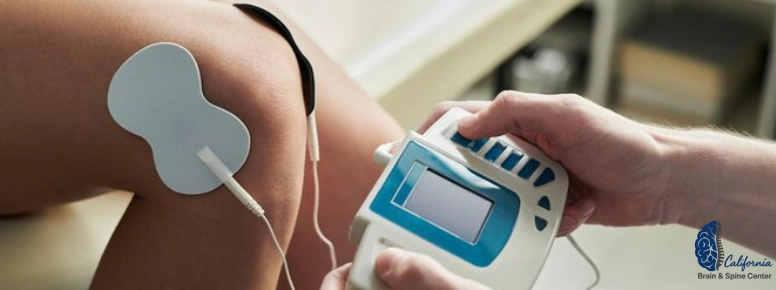
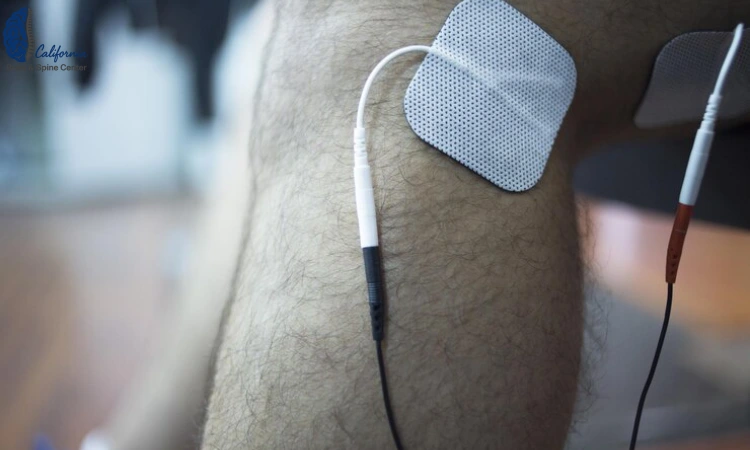
Two very different devices hide under that phrase, and separating them is the single most useful thing this article can do. Pulsed electromagnetic field therapy, PEMF, is the one offered in rehabilitation clinics and sold as home mats. Cleveland Clinic describes it plainly: it uses low-level pulses of electromagnetic waves to relieve pain and manage other symptoms, sending pulses of magnetic waves into a painful part of the body; the magnets pulse on and off to create an electromagnetic field, and the device is most commonly a mat you lie on, with smaller portable units for one part of the body. A provider may suggest it to help manage arthritis, pain after an injury, neuropathic pain, and the healing of fractures that have failed to join.
The other device is repetitive transcranial magnetic stimulation, rTMS. The FDA's guidance for rTMS systems describes an electromagnetic device that delivers a rapidly pulsed magnetic field to the cerebral cortex to activate neurons, and its list of risks includes scalp discomfort or burn, magnetic field effects on the functioning of other medical devices, and an increased seizure risk when pulse trains exceed certain limits. Those are rTMS warnings. The National Institute of Mental Health's own safety lecture on TMS says the safety profile of TMS is excellent, that its common side effects tend to be minor, that serious ones are rare, and that the most serious known one is a seizure, which is why patients are screened for seizure risk before it. A page that lists those points under "PEMF side effects" has mixed up two machines, and the earlier version of this very article did that. The practice does not offer rTMS.
Can PEMF Be Harmful, and Is PEMF Dangerous?
For most people, no. Cleveland Clinic says PEMF therapy is safe for most people, and a systematic review of randomised trials reports no serious adverse events. The honest answer to "can PEMF be harmful" is yes for one group: people who are pregnant, have a pacemaker or other implant, use a medication patch, or have epilepsy should avoid it.
What Do the Trials Report About PEMF Therapy Side Effects?
The most useful evidence on PEMF therapy side effects comes from the trials that looked for them. A systematic review of randomised trials of low-intensity PEMF and high-intensity magnetic stimulation for musculoskeletal pain found eight eligible trials, most reporting reductions in pain and improvements in function, with no serious adverse events reported; its authors conclude that magnetic field therapies appear to be safe and well tolerated, and that larger, more standardised trials are still needed. A second review, on PEMF for degenerating spinal discs, reports that clinically, PEMFs were safe and showed potential benefits in pain, function and mobility, especially alongside physiotherapy, while noting that results were inconsistent and methodological limitations were common.
Read those two sentences for what they say and what they do not. They say that in the trials that measured it, nothing serious happened, and that the treatment was tolerated. They do not say it works for everything, and the second one says out loud that the benefit results were inconsistent. That is the honest shape of today's PEMF literature: a good safety record and an uneven benefit record, and the two belong together on any page about PEMF therapy side effects.
Who should avoid PEMF therapy
The avoid-list is short and specific, and it is Cleveland Clinic's rather than mine: avoid PEMF therapy if you are pregnant, if you use a medical device such as an insulin pump, a pacemaker or other implants, if you take medication through a patch on your skin, or if you have epilepsy. Cleveland Clinic gives the list without the reasons behind each item, and I will not invent them. What the sources do add is that the FDA's rTMS guidance names magnetic field effects on the functioning of other medical devices as a risk to be labelled for the stronger device, which is the plain logic of the implant item. For the rest, following the list costs nothing and skipping it gains nothing.
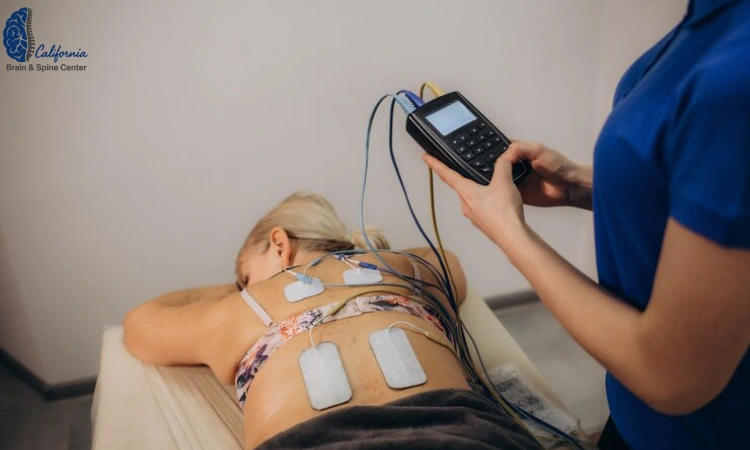
The list says "other implants" without defining them, so anything implanted, metal or electronic, belongs in the conversation before the first session rather than in a reader's own judgement. Ordinary age, chronic pain and a history of concussion or dizziness are not on the list; they are things to raise with the clinician rather than reasons to rule yourself out from a search result.
Can PEMF cause heart palpitations?
The sources this article rests on do not list palpitations as a PEMF side effect, and the trials reviewed above reported no serious adverse events. Two things still matter. First, anyone with a pacemaker or any other implanted device is on Cleveland Clinic's avoid-list, and the FDA names magnetic field effects on the functioning of other medical devices as a risk for the stronger magnetic device. Second, a new heart symptom during any therapy is a reason to stop the session and tell the clinician, whatever the therapy. Absence of a reported side effect in trials is reassurance, not a promise about you.
PEMF mat side effects at home
The device is most commonly a mat, and the mat is where most of the home use happens. Nothing in the sources separates the safety of a mat from the safety of a clinic device, so the same avoid-list applies to a mat in your living room. Two honest cautions come with home use. The review that reports no serious adverse events pooled eight randomised controlled trials, and a consumer mat used for hours on end is not the thing they measured. And a magnetic mattress or a magnetic pillow with fixed magnets in it is a different product from a pulsed field device; the sources here say nothing about static magnets, so neither can I.

What Does the Evidence Say PEMF Helps, and What Does It Not?
Safety is the easy half. The benefit evidence is where a careful reader should slow down, because it is genuinely mixed and the mix depends on what is being treated. Cleveland Clinic lists arthritis, pain after an injury or trauma, neuropathic pain and non-union fractures as the things a provider may suggest it for. The musculoskeletal review above found most trials reporting less pain and better function. A small sham-controlled pilot study of forty-two university employees with non-specific low back pain concluded that PEMF may decrease pain and disability and improve mobility and quality of life, which is encouraging and is also a pilot study, not a verdict.
Beyond pain, the evidence thins fast. The live version of this page linked a case report of one patient with post-COVID fatigue who improved over ten high-intensity sessions, and its own authors say sham-controlled studies are needed before that means anything general. One patient is a reason to study something, not a reason to sell it.
Neuropathic pain is the cautionary tale. A meta-analysis of thirteen randomised trials of PEMF against sham found the evidence highly fragmented: a pooled pain reduction that disappeared once missing studies were accounted for, a large effect in spinal or radicular pain, and no significant reduction in peripheral neuropathy. Its authors conclude that one-size-fits-all efficacy estimates are misleading. In plain words, PEMF may help a nerve pain that comes from the spine and may do little for a nerve pain that comes from the periphery, and the same result should not be promised for both.
That is why, at California Brain & Spine Center, PEMF is never the first thing that happens. It sits among the non-invasive supports that may be offered when clinically appropriate after a full evaluation, for the specific problem the evaluation found, and the PEMF therapy benefits worth expecting are the ones the literature actually supports for that problem, not a list borrowed from a device brochure.
| What patients typically describe | Patterns that suggest something more | What the evaluation looks at |
|---|---|---|
| Curious about PEMF for a painful joint or an old injury | A pacemaker, insulin pump or other implanted device | The avoid-list first, before any session is booked |
| Reading about mats after a friend recommended one | Pregnancy, a medication patch, or epilepsy | The same avoid-list, applied to home devices as well as clinic ones |
| Hoping it helps nerve pain | Pain that comes from the periphery rather than the spine | Where the pain originates, because the evidence differs by cause |
| Already had sessions elsewhere with no change | No evaluation was done before the sessions started | What the problem actually is, measured, before deciding whether PEMF fits it |
| Worried by warnings about seizures and scalp burns | The warning came from a page describing transcranial magnetic stimulation | Which device the warning belongs to |
| Feels something during or after a session | A new heart symptom, or anything that persists beyond the day | Stop, and tell the clinician; a reported trial safety record is not a promise about one person |
When to Stop and Call, Not Wait
Any new chest symptom, fainting, or a seizure during or after a session with any device is a medical emergency, not a question for the next appointment. If you have an implanted device and have already had PEMF, tell the clinician who manages the device.
If symptoms come on suddenly or severely - a sudden severe headache, weakness, trouble speaking, vision loss, or fainting - that is an emergency. Call 911 or go to an emergency room, not a clinic appointment.
Ask Whether PEMF Fits Your Problem Before You Try It
A therapy is only as safe as the reason it was chosen. PEMF therapy at the clinic in Calabasas comes after an evaluation that decides whether it fits what was found, and the avoid-list is checked before anything is switched on.
How Is PEMF Delivered, and What Does a Session Involve?
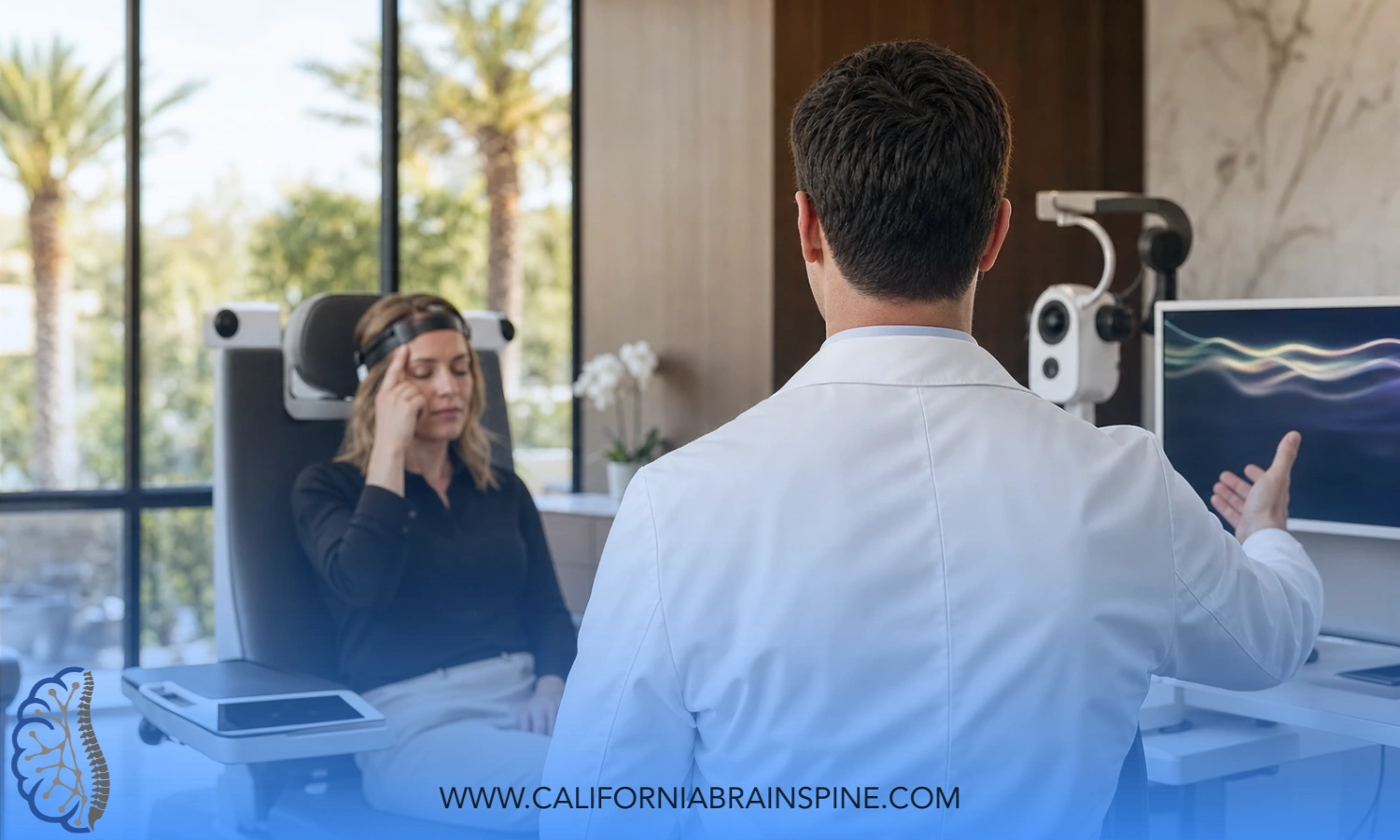
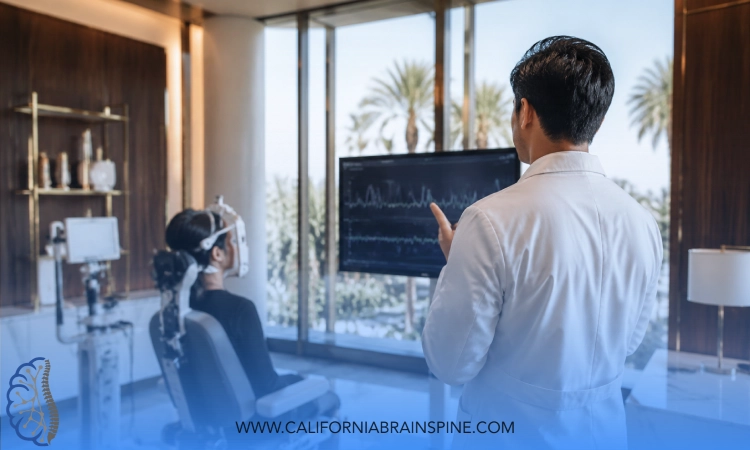
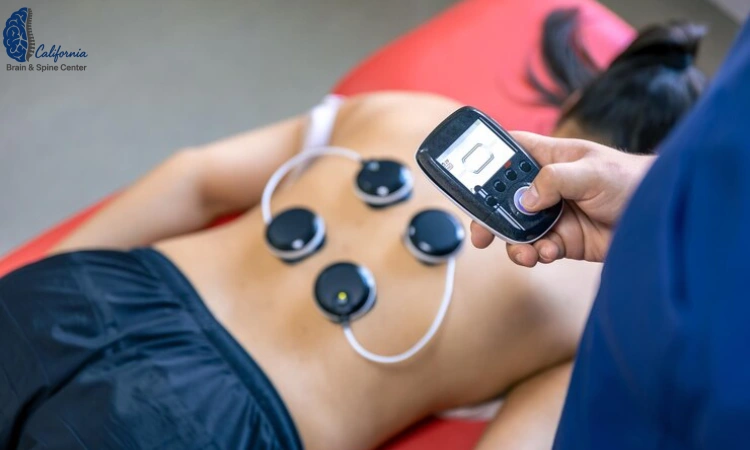
A PEMF session is, from the patient's side, undramatic. The device is a mat you lie on, or a smaller unit placed over one part of the body, and the magnets pulse on and off to create a field around that region. There is nothing to swallow and nothing to inject. What a clinic adds to the mat is the part that matters for safety: the avoid-list is checked, the region and the session are chosen for the problem the evaluation found, and someone is there if you feel something you do not expect.
Because PEMF is one of several non-invasive supports rather than a treatment on its own, it usually sits inside a plan. For back pain in particular, the practice's own guide to electromagnetic pulse therapy for back pain describes where it fits beside rehabilitation, and the disc-degeneration review's observation that benefits appeared especially alongside physiotherapy is the same point made by researchers. Nobody can promise a result from PEMF. What a clinic can promise is that the therapy was chosen for a measured reason and that the avoid-list was taken seriously.
Most of the people who ask me about this live along the 101, in Calabasas, Malibu and the surrounding valley, and a fair number arrive having already bought a mat online. There is nothing to be embarrassed about in that, and it is a good reason to have the evaluation the mat's packaging never mentioned.

A Pattern I See in Calabasas: The Mat Under the Bed
Cases like this are common in our Calabasas clinic. Someone in their fifties with a knee that has ached for two years and a lower back that joined in last winter, who bought a PEMF mat after a podcast, used it every night for a month, felt a little better for a while, and stopped when nothing else changed. Now the mat is under the bed and the person is in my office asking whether it was a scam, whether it was dangerous, and whether they should have kept going.
The evaluation begins with the history and the avoid-list, because the first question is not whether PEMF works but whether this person should have been using it at all: no implant, no patch, no epilepsy, not pregnant, so nothing on the list. Then the problem itself gets measured, the knee and the back examined and the source of each pain worked out, because the evidence says the benefit depends on what is being treated. In the pattern I am describing, the knee turns out to be the kind of joint pain the musculoskeletal trials studied, and the back pain has a mechanical, spinal origin rather than a peripheral one.
What follows is a plan in which PEMF is one component, chosen for the two problems it has reasonable evidence for, delivered in defined sessions alongside rehabilitation rather than alone under a duvet for hours. Improvement in the cases that go well is partial and gradual: a knee that tolerates the stairs better, a back that allows a longer walk. Not every case moves this way, and I would be misleading you to suggest it did. What the person gets either way is an answer to the three questions they walked in with: it was not a scam, it was not dangerous for them, and whether to keep going now has a measured reason behind it.
Common Questions About PEMF Therapy Side Effects
Can PEMF cause nerve damage?
Nerve damage is not among the PEMF therapy side effects the sources list, and the systematic review of musculoskeletal trials reports no serious adverse events. The benefit for nerve pain is uneven: a meta-analysis found a large effect for spinal or radicular pain and no significant reduction for peripheral neuropathy. Harm and benefit are different questions.
Can you use PEMF too much?
The sources set no safe upper dose for electromagnetic pulse therapy, and the safety record comes from eight randomised controlled trials rather than open-ended home use. That is a reason to let a clinician set the sessions, and to treat a mat's "more is better" instinct with suspicion, not a reason to fear the therapy itself.
Is PEMF the same as TMS?
No. PEMF sends low-level pulses into a painful part of the body, most often from a mat. Repetitive transcranial magnetic stimulation delivers a rapidly pulsed field to the brain's cortex, and the FDA's guidance lists scalp discomfort, effects on other medical devices and a seizure risk above certain pulse limits. Those warnings belong to TMS.
Is PEMF safe during pregnancy?
Cleveland Clinic's advice is to avoid PEMF therapy if you are pregnant, and the same source lists implanted devices, medication patches and epilepsy as reasons to avoid it. The source gives the instruction without a reason, and following it costs nothing, which makes the pregnancy item the easiest of all the PEMF therapy side effects questions to answer.
Where can PEMF therapy be evaluated near Calabasas?
California Brain & Spine Center is at 4768 Park Granada, Ste 107, Calabasas, CA 91302, serving Calabasas, Malibu and the greater Los Angeles area. Dr. Alireza Chizari, DC, DACNB performs the evaluation that decides whether PEMF fits the problem, and checks the avoid-list personally. Book a complimentary consultation at californiabrainspine.janeapp.com or call (818) 649-5300.
This content is for educational purposes only and is not medical advice. Consult a qualified healthcare provider about your specific situation.
If you came here afraid of PEMF therapy side effects, the sources are reassuring for most people and specific about who should stay away. If you came here hoping PEMF would fix something, the sources are more careful, and so am I. The useful next step is the one the mat never comes with: an evaluation that says what the problem is, and whether this is the right tool for it. California Brain & Spine Center | (818) 649-5300 | Calabasas, CA 91302, or book at californiabrainspine.janeapp.com.
Get the Evaluation the Mat Did Not Come With
A 120-minute neurodiagnostic assessment with Dr. Alireza Chizari, DC, DACNB measures the problem before any therapy is chosen, PEMF included. California Brain & Spine Center, 4768 Park Granada, Ste 107, Calabasas, CA 91302.