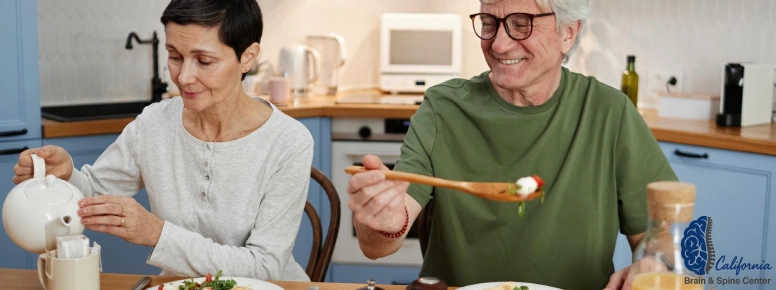
Preventing Neurodegeneration
Sun‑splashed hiking trails, open‑air farmers markets, and a community that values wellness give our city a head start on Preventing Neurodegeneration. Yet genetics, pollution drifting in from the 101, and 24/7 digital stress still challenge brain resilience. Today’s article unpacks practical, evidence‑based habits you can weave into everyday Calabasas life because Preventing Neurodegeneration is not a single hack but a long‑game lifestyle.
Move Like Your Brain Depends on It Because It Does
The 150‑Plus‑30 Rule
Recent multi‑center analyses show that 150 minutes of aerobic activity plus two 30‑minute strength sessions each week can slow cortical thinning and preserve hippocampal volume. Luckily, “aerobic” here can be a brisk loop around Calabasas Lake or power‑walking Las Virgenes Trail at sunset. Strength work? Body‑weight squats and resistance‑band rows on your patio qualify.
Why It Works
Exercise boosts brain‑derived neurotrophic factor (BDNF), an internal fertilizer for neurons, and clears amyloid before it clumps into plaques core mechanisms in Preventing Neurodegeneration.
High-level strategy is meaningless without day-to-day execution. “Brain & Spine’s Preventive Care Checklist” gives you a simple way to log sleep quality, nutrition wins, movement minutes, and cognitive challenges—then spot patterns over time. Link it here to turn this article’s insights into measurable habits and real progress you can actually see.
Eat the MINDful Mediterranean Way

Farmers‑Market Neuro‑Nutrition
Studies in 2024 and 2025 confirm that Mediterranean and MIND diets cut dementia risk by 11‑30 %. Build plates with:
-
Leafy greens (spinach, kale) four times a week
-
Berries our farmers bring Ventura blueberries bursting with anthocyanins
-
Extra‑virgin olive oil from local presses
-
Wild Pacific sardines (order from Malibu fishmongers) for DHA
Consistent adherence anchors any plan for Preventing Neurodegeneration while delighting the palate.
Sleep: Your Night‑shift Housekeeper
Prioritize REM Rhythm
A July 2025 study linked prolonged REM‑latency to increased Alzheimer’s risk. Separate research shows sleep disorders can raise dementia hazard ratios up to 5. Nature
Calabasas bedtime blueprint
-
Dim smart bulbs to amber at 9 p.m.
-
Park devices outside the bedroom.
-
Keep indoor temps near 65 °F (18 °C).
-
If freeway noise seeps in, play ocean‑wave white noise.
Quality sleep is a non‑negotiable pillar in Preventing Neurodegeneration.
Stress‑Proof Your Synapses with Canyon Calm

Cortisol vs. Cognition
Chronic stress accelerates hippocampal atrophy. Ten minutes of daily breath‑focused meditation or gentle yoga in Juan Bautista de Anza Park lowers cortisol, supporting the brain’s memory hubs. Integrated stress management emerged as a key success factor in recent dementia‑intervention trials.
Cultivate Cognitive Reserve Through Lifelong Learning
Turn Leisure into Brain Gym
Enroll in a Spanish course at the Calabasas Civic Center, join a community book club, or practice guitar. Each new skill builds neural redundancy essential for Preventing Neurodegeneration by delaying symptom onset even if pathology sneaks in.
Social Connection: The Synaptic Safety Net
Consistent social engagement slashes dementia risk nearly as much as physical activity. Game nights, volunteer days at Headwaters Corner, or simply chatting with vendors on Saturday can all reinforce the social web essential for Preventing Neurodegeneration.
Environmental Hygiene: Air, Water, and Blue‑Light Discipline
-
Air: Check daily AQI; exercise outdoors when levels are “Good.” Consider in‑home HEPA filters.
-
Water: Calabasas tap is safe, yet an under‑sink carbon filter removes trace heavy metals linked to neuro‑toxicity.
-
Screens: Install blue‑light‑limiting apps; digital detox weekends help maintain circadian rhythm, indirectly Preventing Neurodegeneration.
Micro‑Targeted Nutrients & Non‑Invasive Therapies

Smart Supplementation
Lion’s mane, omega‑3 fish oil, magnesium L‑threonate, and saffron all show promise as adjuncts in Preventing Neurodegeneration. Introduce one new product every two weeks to monitor benefits.
Advanced, Yet Gentle, Clinical Options
Hyperbaric Oxygen Therapy (HBOT) enhances cerebral blood flow; Pulsed Electromagnetic Field (PEMF) therapy supports mitochondrial vitality. Both modalities are non‑surgical, drug‑sparing avenues that complement lifestyle strategies.
Ready for Personalized Brain‑Health Coaching?
If you’re serious about Preventing Neurodegeneration and want a customized plan integrating movement, nutrition, sleep, stress mastery, smart supplements, and optional HBOT or PEMF sessions, schedule your Brain Optimization Consultation at California Brain & Spine Center.
Quick Summary
-
Preventing Neurodegeneration hinges on an interlocking set of Calabasas‑friendly habits: consistent exercise, Mediterranean‑MIND eating, restorative sleep, stress regulation, cognitive engagement, rich social life, and a toxin‑lite environment.
-
Supplements like omega‑3s and lion’s mane, plus gentle clinical tools such as HBOT and PEMF, add synergistic layers of protection.
-
Small, steady steps—taken today—compound into decades of mental clarity.
Frequently Asked Questions
- How soon will lifestyle changes make a difference?
Some benefits (better sleep, clearer focus) appear within weeks, but structural brain changes require 6–12 months of consistency—a realistic timeline for Preventing Neurodegeneration. - Is one bad night’s sleep harmful?
Isolated hiccups are fine. Chronic deprivation is the concern. Aim for 7–9 hours nightly, with stable bedtime/wake times, to stay on track. - Do I need all the supplements listed?
No. Begin with omega‑3s and magnesium L‑threonate, then layer others if goals or labs suggest. Personalized guidance helps prevent “pill fatigue.” - Can teenagers follow these tips?
Absolutely. Earlier adoption of brain‑protective habits amplifies the lifelong shield against neurodegeneration. Adjust doses and exercise volume to age. - What’s the single most powerful habit for Preventing Neurodegeneration?
Consistency. Whether it’s your evening power walk or your berry‑nut oatmeal, repeating the behavior daily wires protection deep into your physiology.
👨⚕️ Alireza Chizari, MSc, DC, DACNB
🧠 Clinical Focus
🔬 Assessment & Treatment Approach
Objective testing may include:
Treatment programs may involve:
📍 Clinic Information
✅ Medical Review
⚠️ Disclaimer