Children, Teens & Adults · Calabasas, CA
Neurodevelopmental Disorders TreatmentFunctional neurology evaluation in Calabasas
A diagnosis names the pattern. It does not tell you which parts of the nervous system are working hard, which are lagging, and where retraining could help.
At California Brain & Spine Center, Dr. Alireza Chizari, DC, DACNB, a board-certified chiropractic neurologist, evaluates how the visual, vestibular, balance, sensorimotor and autonomic systems are actually functioning in children, teens and adults with neurodevelopmental differences, then builds a rehabilitation plan around what the testing shows.
- No referral needed
- Objective testing & reassessment
Who we see
When the Label Is Known but the Day-to-Day Is Still Hard
Many families arrive with a diagnosis already in hand: autism spectrum disorder, ADHD, developmental coordination disorder, a sensory processing difference or a specific learning disorder. Others are adults who were never formally assessed and have spent years working around clumsiness, motion sickness, reading fatigue or attention that will not hold. What they have in common is that the label alone has not explained why certain things stay difficult.
Neurodevelopmental disorders treatment at our Calabasas clinic starts from a different question. Rather than asking what the diagnosis is, we measure how the underlying systems are performing. Patterns that show up often include:
- Eyes that lose their place on a page, skip lines, or tire quickly when reading
- Clumsiness, poor balance, or difficulty with coordinated movement
- Motion sickness in cars, on swings, or with busy visual scenes
- Sensitivity to light, sound or touch that changes with fatigue
- Attention that fades faster than effort would predict
- Dizziness, headaches or fatigue in teens and adults on standing or after concentration
Attention-focused concerns have their own page: ADHD care in Calabasas.

Differences we evaluate
Neurodevelopmental Differences We Commonly See in Calabasas
We do not diagnose these conditions; that belongs to your pediatrician, developmental pediatrician, psychologist or medical neurology team. What we add is a functional picture of the neurological systems underneath the diagnosis, so care can be aimed at something measurable.
Autism Spectrum Differences
Sensory, balance and eye-movement patterns that often travel with an autism diagnosis and can be measured and worked with directly.
ADHD & Attention Differences
Attention that depends heavily on eye control, posture and autonomic state. Evaluated here, with detail on our ADHD page.
Developmental Coordination Disorder
Dyspraxia and the clumsiness, slow handwriting and awkward movement that come with it, traced to balance, timing and body-position sense.
Sensory Processing Differences
Over- or under-response to light, sound, touch and movement, examined through the vestibular and visual systems that help regulate it.
Learning Differences With a Visual Component
Reading and writing difficulty where eye tracking, convergence or visual-vestibular coordination is part of the picture, alongside educational support.
Adults Never Assessed
Teens and adults who have compensated for years and want to understand, with measurements, what has been making certain tasks hard.
The evaluation
What the Neurodevelopmental Evaluation Actually Measures
Testing is adapted to age and tolerance. A young child's session looks like play and short tasks; a teen or adult's looks closer to a full functional neurology evaluation. Either way, the aim is a baseline that can be re-measured.
-
Eye Movement & Visual Tracking
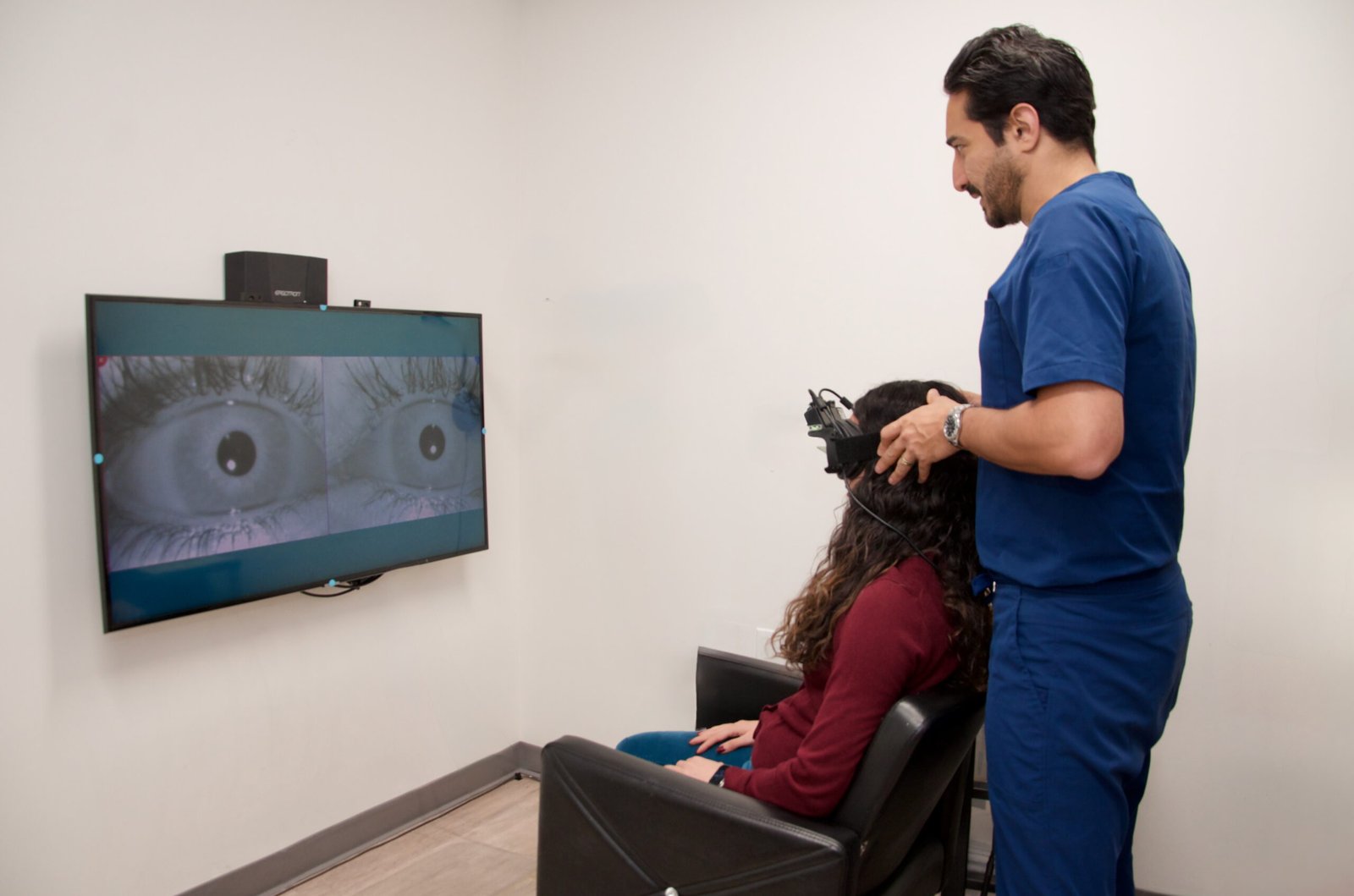
Video eye-movement (VNG) recording and oculomotor assessment: how the eyes fixate, track, jump between targets and hold a line of text.
-
Balance & Body-Position Sense
Computerized posturography where age allows, plus clinical balance testing, to see how visual, vestibular and proprioceptive input are being combined.
-
Pupillary & Autonomic Function
Pupillary light-reflex measurements and, for teens and adults, orthostatic heart-rate and blood-pressure responses, since autonomic state shapes attention and sensory tolerance.
-
Clinical Neurological Examination
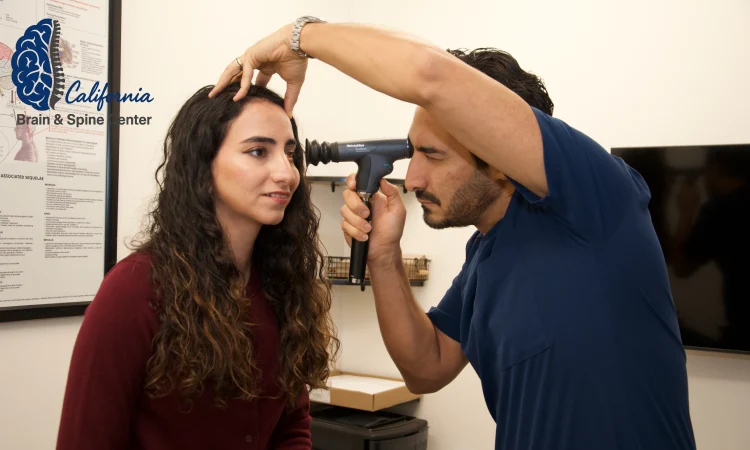
Coordination, reflexes, motor patterns, timing and left-right differences, examined hands-on by Dr. Chizari and recorded as the baseline for later comparison.
After the evaluation
Care Built From the Findings, Not the Diagnosis
Two children with the same diagnosis can have very different test results, and their plans should differ too. When the evaluation shows something we can work with, rehabilitation is individualized, paced to tolerance, and re-measured rather than assumed.
Complimentary Consultation
What you have noticed, what has already been tried, and what you are hoping to understand. Parents attend with younger children.
Evaluation & Findings Review
Testing adapted to age, then a plain-language review of what was found and whether care here is appropriate.
Individualized Rehabilitation
Where indicated, a program that may combine eye-movement, balance and sensorimotor retraining with a short home routine, built around the findings.
Reassessment
Key measurements are repeated to see what has changed and to decide the next stage, or whether care here has done its part.
Care at California Brain & Spine Center is designed to sit alongside, not replace, your existing team: pediatrician or primary care provider, developmental pediatrician, psychologist, school supports, and any occupational or speech therapy already in place. With your permission, findings can be shared so that everyone is working from the same picture.
Questions
Neurodevelopmental Disorders Treatment in Calabasas: Questions Families Ask
Do you diagnose autism, ADHD or learning disorders?
No. Diagnosis of neurodevelopmental disorders is made by developmental pediatricians, psychologists, psychiatrists or medical neurology. Our role is different: we measure how the visual, vestibular, balance, sensorimotor and autonomic systems are functioning, which adds a layer of objective information a diagnostic label does not include.
What ages do you see for neurodevelopmental evaluation?
Children, teens and adults. The testing is adapted to age and tolerance rather than fixed to a protocol. Some parts, such as computerized posturography or orthostatic testing, are used only when a child is old enough to take part reliably, and a young child's session is kept short and play-based.
Does my child need a referral to be seen in Calabasas?
No referral is needed. Many families book directly after a diagnosis, or while waiting for one, because they want to understand what is measurable now. If the evaluation suggests something outside this clinic's scope, Dr. Chizari will say so and point you to the right medical provider.
What happens at the first visit for a child?
A detailed history with the parent, then age-appropriate testing: eye-movement recording, balance and coordination tasks, pupillary measurements and a hands-on neurological examination. The findings are explained in plain language before any care is recommended, and nothing on the first visit is painful or invasive.
Do you see adults with ADHD, dyspraxia or sensory differences?
Yes. Adults who were never assessed as children, or who were diagnosed later in life, are evaluated with the same approach. For adults the evaluation typically includes orthostatic testing as well, since autonomic function often shapes attention, fatigue and sensory tolerance.
Which areas do you serve besides Calabasas?
The clinic is in Calabasas and regularly sees families from Woodland Hills, Agoura Hills, Encino and across the greater Los Angeles area. Care is in person, because both the testing and the retraining require it.
Start With What Can Be Measured
A complimentary consultation is a chance to talk through what you have noticed and whether a neurodevelopmental evaluation at California Brain & Spine Center in Calabasas makes sense for your child, your teen or yourself. No referral needed, and no obligation to continue.
California Brain & Spine Center · 4768 Park Granada, Ste 107, Calabasas, CA 91302 · (818) 649-5300
This page is educational and is not medical advice. Care is provided by Dr. Chizari, a Doctor of Chiropractic and board-certified chiropractic neurologist. This clinic does not diagnose neurodevelopmental disorders. Individual results vary, and no outcome is guaranteed.