Post-Concussion Vision · Calabasas, CA
Vision Problems After ConcussionVisual disturbances evaluated and treated in Calabasas
A concussion is called a mild brain injury, but blurred sightlines, bouncing text and a world that tilts when you turn your head do not feel mild.
At California Brain & Spine Center, Dr. Alireza Chizari, DC, DACNB, a board-certified chiropractic neurologist, measures how your eyes, balance system and visual processing are coordinating after a head injury, then builds retraining around what the testing shows. Most post-concussion vision problems are functional, not structural, which is why a normal eye exam and a normal scan can sit alongside very real symptoms.
- No referral needed
- Objective testing & reassessment
Common symptoms
Visual Disturbances After Concussion We See Most Often in Calabasas
More of the brain is involved in controlling the eyes and processing what they see than most people expect, so even a minor blow can disturb it. Published studies report eye-movement or visual deficits in a large share of people after concussion, with estimates varying widely by study and by the test used. The symptoms below are the ones patients describe most.
Blurred or Double Vision
Sight that will not sharpen, or two images that refuse to merge, especially when tired or reading up close.
Trouble Focusing on Text or Screens
Losing your place, rereading lines, and eye strain that arrives minutes into a page or a phone.
Light Sensitivity After Concussion
Headlights, fluorescent stores and bright screens that feel like spotlights and set off headache or nausea.
Motion Sensitivity
Busy aisles, scrolling feeds, traffic and crowds that make the world feel like it is sliding or swaying.
Headaches Behind the Eyes
Pressure around the eyes or temples that builds with reading, screens or concentration.
Misjudging Steps and Distances
Depth perception that is slightly off, so curbs, stairs and parked cars are closer or further than they look.
These symptoms often travel with brain fog, dizziness and headaches after a concussion. If they have lasted more than a couple of weeks, they are worth measuring rather than waiting out.
Why the eye exam was normal
The Eyes Are Usually Fine. The Coordination Is Not.
Only a small fraction of head injuries damage the eye itself. Far more often, post-concussion vision problems come from mis-coordination between three systems that normally work as one: the muscles that aim the eyes, the vestibular system that keeps the picture steady when your head moves, and the parts of the brain that turn what the eyes see into something you can read, judge and act on.
That is why an optometrist can find healthy eyes and a scan can show a healthy brain while you still cannot get through a page. Structural tests answer a different question. A functional evaluation asks how well the systems are working together, and it can be repeated to see whether they are improving.
- Eyes that cannot hold a target or jump cleanly between words tire quickly and blur the page
- A vestibular system that under- or over-corrects makes the world move when your head does
- Visual processing that is working too hard produces the fatigue, headache and light sensitivity
The evaluation
How We Measure Vision Problems After a Concussion
Every plan starts with a baseline, so change can be measured rather than guessed at. Dr. Chizari performs the evaluation himself.
-
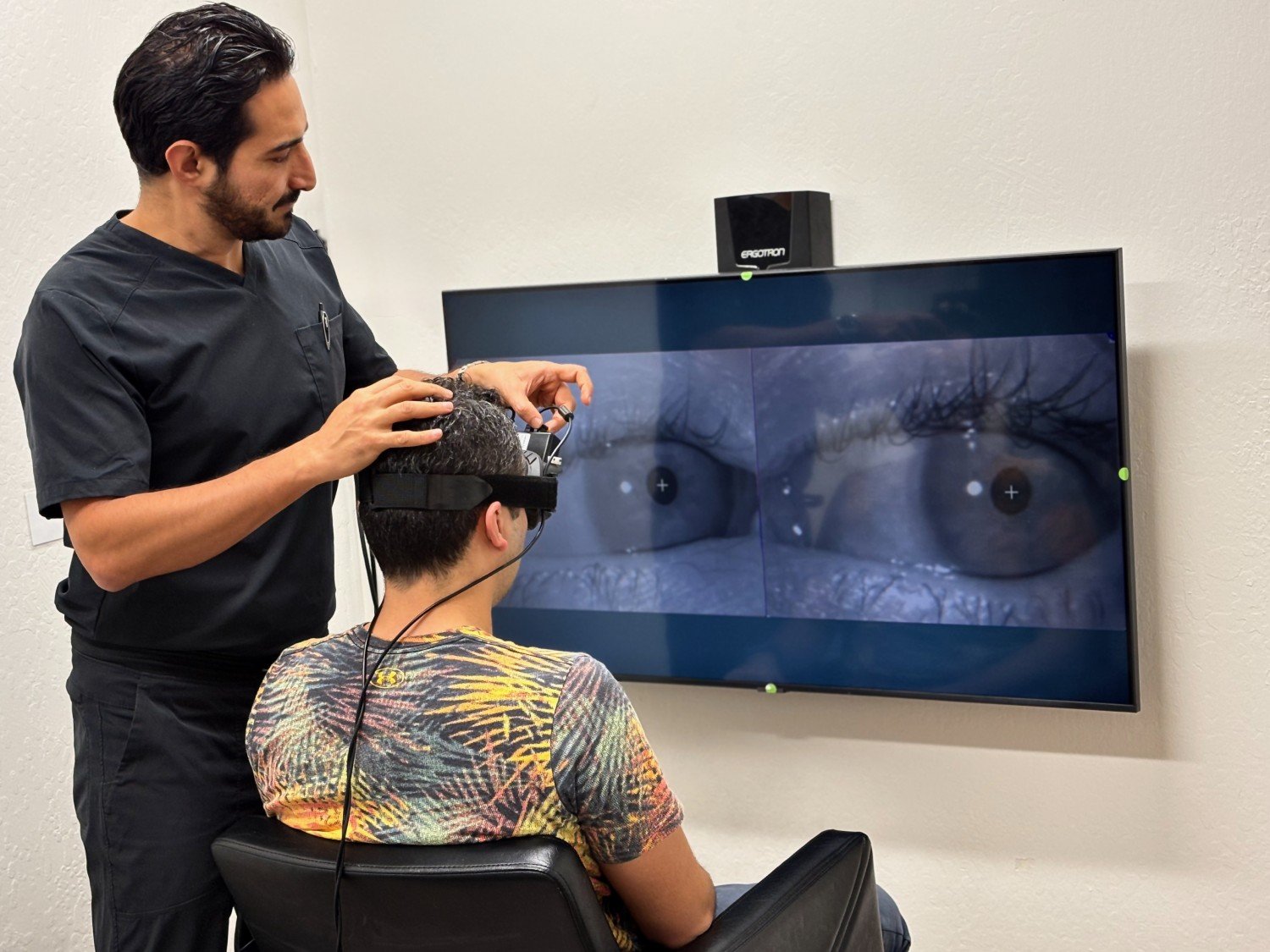
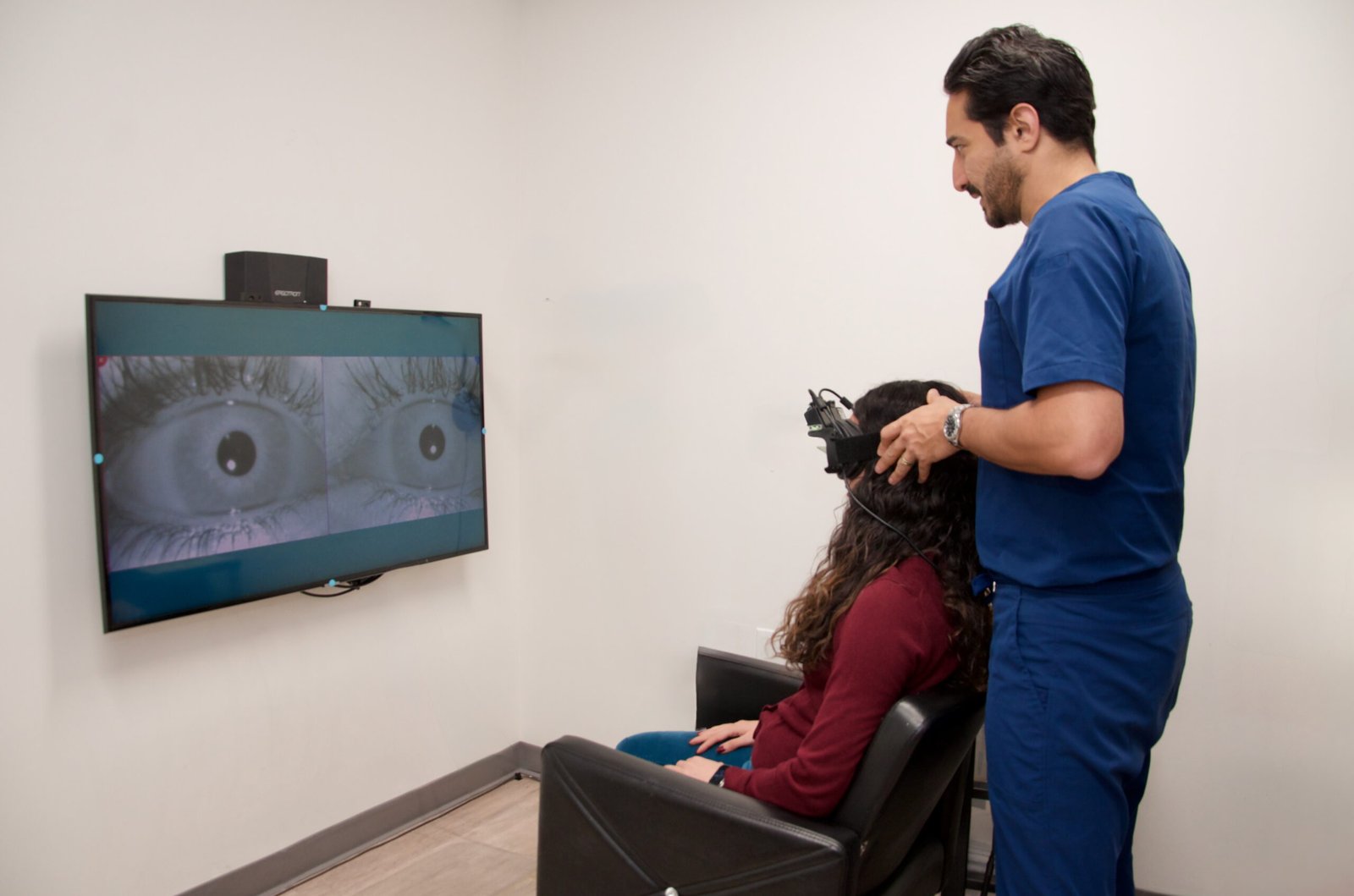
Video Eye-Movement (VNG) & Oculomotor Testing
Fixation, saccades, smooth pursuit, convergence and gaze stability recorded on video, so the exact eye-movement pattern behind the symptom is identified.
-
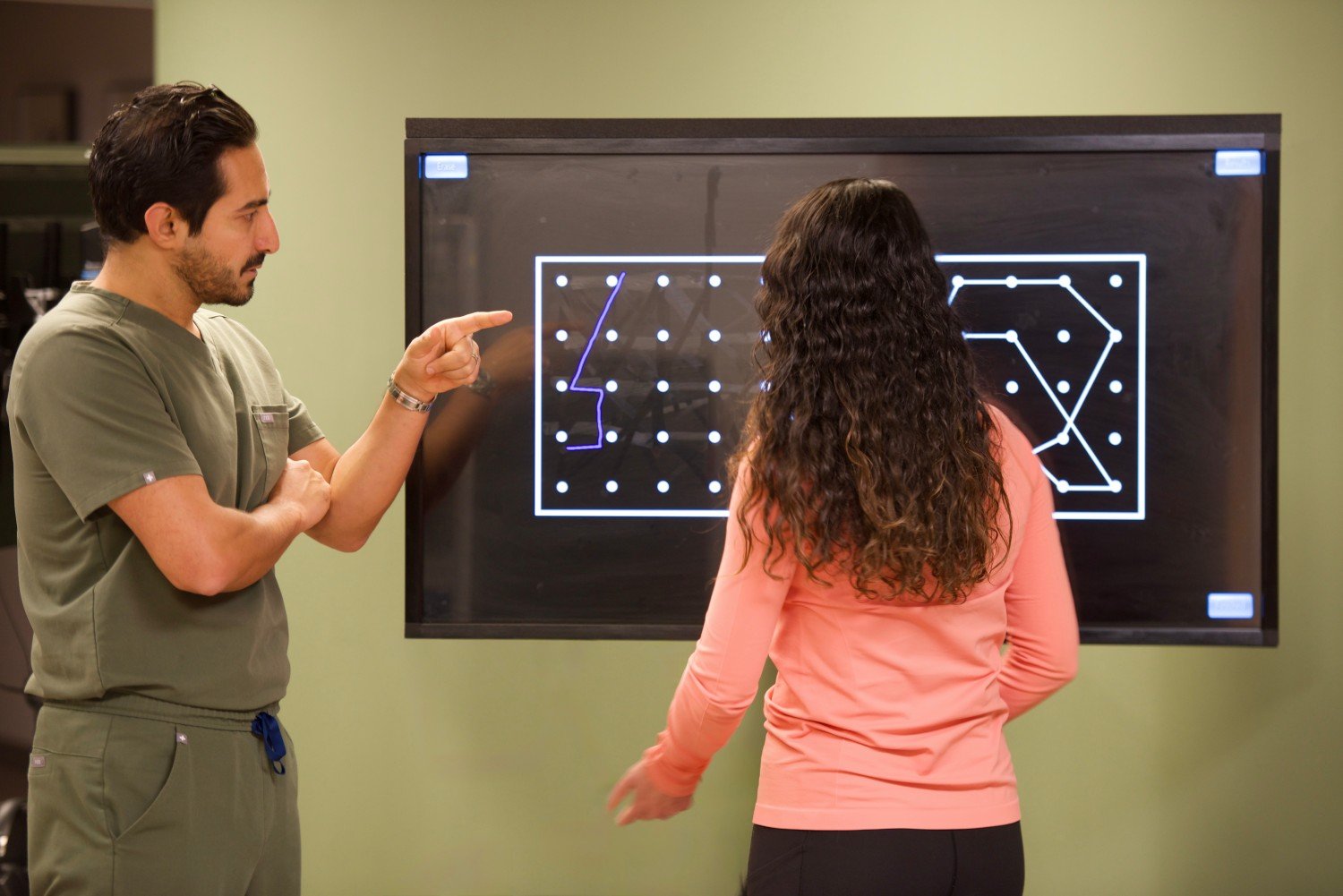
Balance & Visual-Vestibular Integration
Computerized posturography and clinical balance testing show how much your balance depends on vision, and how the two systems are combining.
-
Pupillary Light Reflex & Autonomic Function
Pupillary measurements and orthostatic heart-rate and blood-pressure responses, which often help explain light sensitivity and post-exertion symptoms.
-
Clinical Neurological Examination
Coordination, reflexes, eye-head coordination and neck contributors, examined hands-on and recorded as the baseline for reassessment.
After the evaluation
Concussion Vision Therapy Built From Your Findings
Retraining is active, graded and measured. Which of these you receive, and in what order, follows from the evaluation rather than a set protocol. Consensus statements and systematic reviews favour active, multi-system rehabilitation over passive rest alone for persistent visual and vestibular symptoms after concussion.
Eye-Movement Retraining
Saccade, pursuit and convergence drills that rebuild the stamina to read a line of text or follow traffic without strain.
Gaze Stabilization
Retraining the reflex that keeps the picture steady when your head moves, delivered through our vestibular rehabilitation.
Visual-Vestibular Integration
Where visual and balance input disagree, a short block of NeuroSensory Integration (NSI) may be used to settle the mismatch first.
Screen, Light & Return-to-Life Pacing
Graded screen time, light strategies and a staged return to school, work, driving and sport, adjusted at each reassessment.
Care runs alongside, not instead of, your optometrist or ophthalmologist, primary care provider and medical neurology where involved. If the evaluation shows something outside this clinic's scope, Dr. Chizari will say so and refer you on.
Questions
Vision Problems After Concussion: Questions Patients Ask in Calabasas
My eye exam was normal. Why do I still have vision problems after my concussion?
A standard eye exam checks the health of the eyes and how sharply they see a chart. Post-concussion vision problems usually live elsewhere: in how the eyes move together, how they coordinate with the balance system, and how the brain processes what they see. Those functions need different tests, which is what the evaluation here is for. Keep your eye doctor involved either way.
How long do visual disturbances after concussion last?
For many people they settle within the first couple of weeks. When they persist beyond that, the length of recovery depends on which systems are involved and how they respond to retraining. Care here is planned in stages with re-testing at each one, and no timeline or outcome can be promised in advance.
Does concussion vision therapy make symptoms worse?
Exercises may bring on brief eye fatigue or mild dizziness, which is a sign the systems are being challenged. Intensity is set from your testing and kept within tolerable limits, and anything that provokes lasting symptoms is dialled back at the next visit rather than pushed through.
Can children and teens be evaluated for vision problems after a concussion?
Yes. Reading difficulty, screen intolerance and light sensitivity after a sports or playground concussion are common reasons families come in. Testing is adapted to age, and return-to-learn planning is coordinated with the school so academic load rises in step with measured recovery.
Do I need a referral to be seen in Calabasas?
No. Many patients book directly after a concussion, or after an eye exam and imaging have come back normal. The clinic is in Calabasas and regularly sees patients from Woodland Hills, Agoura Hills and Encino. With your permission, findings are shared with your other providers.
When is a vision change after a head injury an emergency?
Sudden loss of vision, new double vision with a severe headache, a drooping eyelid or unequal pupils, weakness, confusion or worsening drowsiness after a head injury need emergency medical evaluation first, not a clinic appointment. Call 911 or go to an emergency room.
Bring the World Back Into Focus
Blurred vision, bouncing text and light that hurts should not be the price of a concussion. A complimentary consultation is a chance to talk through what you are experiencing and whether an evaluation at California Brain & Spine Center in Calabasas makes sense. No referral needed, and no obligation to continue.
California Brain & Spine Center · 4768 Park Granada, Ste 107, Calabasas, CA 91302 · (818) 649-5300
This page is educational and is not medical advice. Care is provided by Dr. Chizari, a Doctor of Chiropractic and board-certified chiropractic neurologist. Individual results vary, and no outcome is guaranteed.