
Headaches, staring spells, tics, dizziness after a knock on the head, a teacher's note about attention. Here is who does what, and how to tell a red flag from a phase.
The short answer to when to see a pediatric neurologist: when your child has symptoms that point to the brain, spinal cord, nerves or muscles and that are new, escalating or interfering with daily life: recurring headaches, spells that look like seizures, persistent tics, unexplained weakness or clumsiness, or developmental changes. A pediatric neurologist is a physician, and the tests families most often ask about, EEG, MRI and bloodwork, are ordered and interpreted through that route or through your pediatrician. Functional neurology, which is what our clinic practises, sits alongside that care: it evaluates and retrains how a child's eye-movement, balance and autonomic systems are working, most often after a concussion, with persistent dizziness, or as part of support for a neurodevelopmental difference.
I am Dr. Alireza Chizari, DC, DACNB, a board-certified chiropractic neurologist at California Brain & Spine Center in Calabasas. I am not a pediatric neurologist, and this article is written to help parents understand the difference and use both well. It answers the questions parents ask most: when a symptom needs a specialist, what an appointment involves, what the common tests actually are, how to handle headaches, spells, tics and concussions day to day, and what a functional neurology evaluation adds when a child is still struggling after the medical questions have been answered.
The short answer
- Pediatric neurology is medical care for seizures, headaches, developmental and neuromuscular conditions. Start with your pediatrician; they refer when needed.
- EEG, MRI and bloodwork are ordered by physicians and performed at hospitals or imaging centres. They are not performed at California Brain & Spine Center.
- Functional neurology measures function: eye movements, balance and autonomic responses. It is most useful for post-concussion symptoms, dizziness, and building a practical plan around a neurodevelopmental difference.
- Red flags go to emergency care, not to a diary or a waiting list. The list is below.
What Is a Pediatric Neurologist, and When Should We See One?
A pediatric neurologist is a physician trained in the medical care of the nervous system in infants, children and teens. See one, usually by referral from your pediatrician, for symptoms that may reflect a medical condition of the brain or nerves: seizures or seizure-like spells, headaches that are frequent, escalating or unusual, persistent tics, unexplained weakness, numbness or loss of skills, and developmental delays.
Reasons a pediatrician commonly refers to pediatric neurology include:
- Recurrent or escalating headaches that interrupt school or sport, or any headache with the red-flag features listed later.
- Spells of staring, dropping objects, jerking or confusion that could be seizure activity.
- Tics, motor or vocal, that persist beyond a few months or cause distress.
- Weakness, clumsiness, or a loss of skills the child previously had.
- Developmental delays in speech, motor skills or social communication, alongside developmental pediatrics.
- Sleep disturbances that drive daytime behaviour or mood problems and have not responded to routine changes.
Trust your instincts. If you are worried enough to search for this article, a conversation with your pediatrician is worth having, and it costs nothing to be told that watchful waiting is reasonable.
Where Does Functional Neurology Fit for Children?
After the medical questions have been asked, when a child is still not functioning well. A normal EEG and a normal MRI are reassuring and they do not explain why a teenager is still dizzy three months after a soccer concussion, or why a child with a known attention difference cannot tolerate a busy classroom. Functional neurology measures how the eye-movement, balance and autonomic systems are working and retrains them, in coordination with the child's physicians.
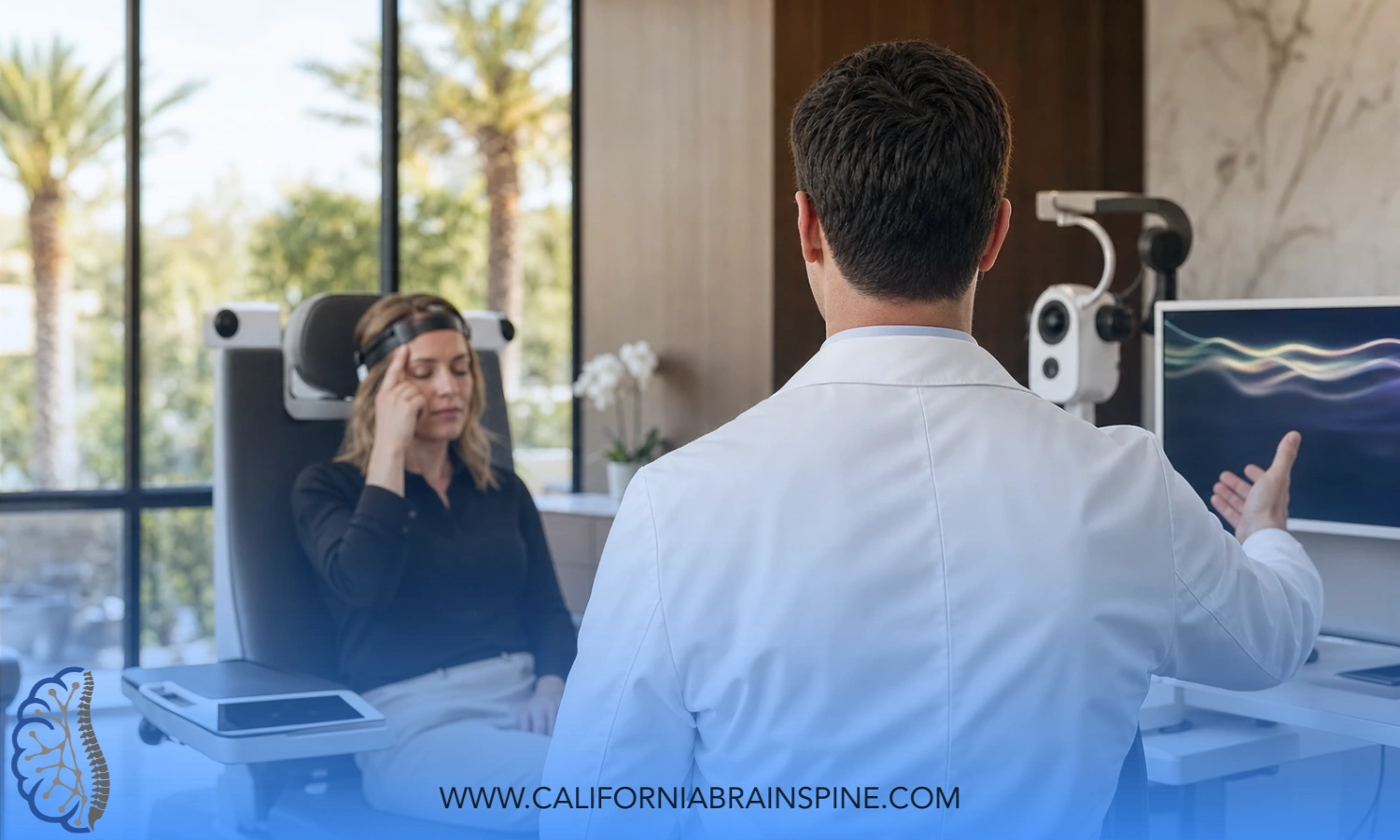
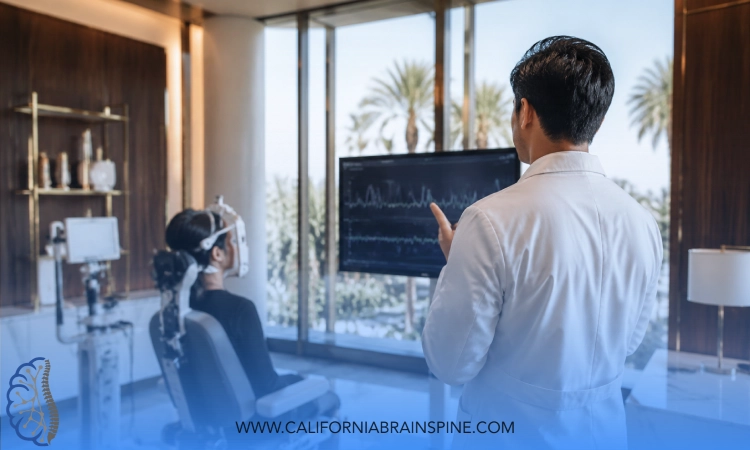
At California Brain & Spine Center, children and teens are evaluated by Dr. Alireza Chizari, DC, DACNB, with the same objective tools used for adults, adapted to age: video eye-movement (VNG) and oculomotor testing, computerized posturography for balance, pupillometry and the pupillary light reflex, orthostatic heart-rate and blood-pressure responses, and a hands-on neurological examination. Our neurodevelopmental disorders page describes how that evaluation is used to build a practical plan around attention, sensory and coordination differences, and our post-concussion care applies the same approach to student-athletes. We do not diagnose or treat epilepsy, order imaging, or manage medication; those remain with the pediatrician and pediatric neurologist, and the test results are shared with them.
What Happens at a First Visit?
Whether the appointment is with a pediatric neurologist or with our clinic, the shape is similar, and knowing it in advance takes some of the fear out of it for the child.
- The story first. Symptoms, timing, triggers, family history, teacher feedback, and any video you have managed to capture of a spell or a tic.
- A gentle examination. Eye movements, strength, sensation, coordination, reflexes and balance. In a medical visit this guides decisions about tests; in a functional neurology visit it is followed by the recorded measurements above.
- A plan you helped make. A pediatric neurologist decides whether to observe, order tests or start treatment. We decide whether retraining is likely to help, what it would involve, and how it will be re-measured.
Bring teacher notes, prior test results, a medication list and a short symptom timeline. You should leave either appointment with clear next steps, and if you do not, ask for them.
What Do the Common Tests Actually Do?

Parents ask about tests more than anything else. This is what each one is for and who performs it.
| Test | What it does | Who orders and performs it |
|---|---|---|
| EEG (electroencephalogram) | Sensors on the scalp record the brain's electrical activity, sometimes during a nap. NINDS describes it as a test that "can look for abnormalities in the person's brain waves", used mainly to evaluate possible seizures. | Ordered by a pediatrician or pediatric neurologist; performed at a hospital or neurology practice. Not performed at California Brain & Spine Center. |
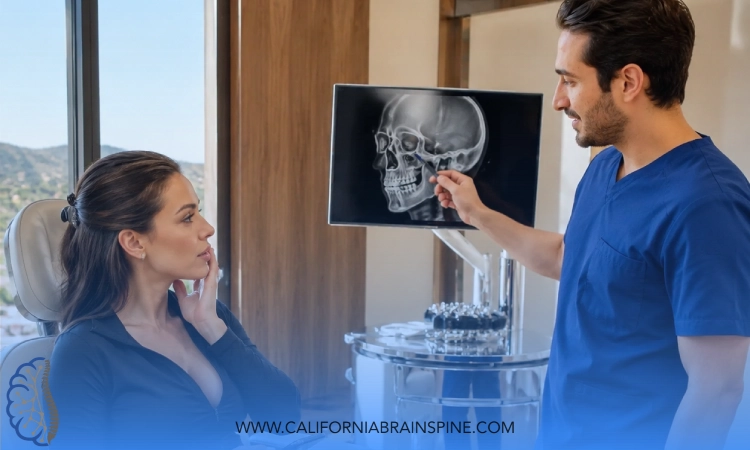
| MRI of the brain | Detailed pictures of brain structure to look for causes of headaches, spells or developmental changes when the history suggests one. | Ordered by a physician; performed at an imaging centre. |
| Bloodwork | Checks for medical contributors such as nutrient deficiencies, thyroid function or inflammation in selected cases. | Ordered by a physician. |
| Vestibular and oculomotor testing | Recorded eye movements, head-movement tolerance and balance under different sensory conditions, for dizziness, post-concussion symptoms and coordination differences. | Performed at California Brain & Spine Center as part of a functional neurology evaluation. |
| Autonomic measures | Pupillary light reflex and heart-rate and blood-pressure responses on standing, for light-headedness, exercise intolerance and stress sensitivity. | Performed at California Brain & Spine Center. |
| Neurocognitive and educational assessment | Structured tasks that profile attention, processing speed, memory and learning. | Formal assessment by a psychologist or school team; brief graded cognitive tasks against a baseline may be used at our clinic to track progress, not to diagnose. |
Cleared by the pediatrician, still struggling?
A functional neurology evaluation at our Calabasas clinic measures how a child's eye movements, balance and autonomic system are working, so a practical plan can be built alongside their medical care.
Headaches in Children: When Should I Worry, and What Helps?
Most childhood headaches are not dangerous, and the ones that need urgent attention announce themselves: a headache that wakes a child from sleep, a "worst ever" headache, or headache with fever, stiff neck, vomiting, weakness, confusion or visual change. Those need a call to your clinician the same day, or emergency care. For everything else, routines do more than most parents expect.
NINDS lists the everyday drivers of headache and migraine that apply just as much to children: irregular sleep, skipped meals, dehydration, stress and overuse of headache medication, which can worsen headaches over time. The practical version is a fixed sleep and wake time, breakfast every day, a water bottle that goes to school, a break from screens before bed, and a plain diary. A small "headache kit" in the school bag, water, a snack and sunglasses, gives a child a sense of control. Many children do improve as they grow and as routines settle; if headaches keep interrupting life, that is the point to ask the pediatrician about referral. If a child's headaches come with dizziness, visual strain or motion sensitivity, particularly after a head injury, a functional neurology evaluation can identify the vestibular and oculomotor contributors that a medical work-up is not designed to find.
What Should I Do About Seizure-Like Spells?

Blank stares, sudden unresponsiveness, falls, rhythmic jerking or confusion afterwards all need a medical evaluation, and the most useful thing you can do is document them. Write down what happened, how long it lasted, and how your child behaved afterwards; a phone video, taken when it is safe to do so, is worth more than any description. Not every spell is a seizure, and the pediatric neurologist decides whether an EEG is warranted. This is medical territory, and our clinic's role, if any, comes afterwards, when a child with a settled diagnosis is left with balance, coordination or attention difficulties that retraining can address.
If the spell followed a knock to the head, treat it as a concussion until a physician says otherwise. The Post-TBI Home Care Checklist gives parents and teachers day-by-day structure for sleep, school coordination and safe play during recovery.
Tics, Attention and Learning Differences: What Do Parents Actually Need to Know?
Tics wax and wane, and they worsen with fatigue, stress and excitement. Most fade or become manageable; persistent, painful or distressing tics belong with a pediatric neurologist, who may also involve behavioural therapy. Attention and learning differences are assessed formally by psychologists and school teams, and the most powerful tools are classroom accommodations, structured routines and targeted practice. Anxiety travels with both and responds to predictability, calm breathing and, when it persists, referral to a child mental-health professional. Where a functional neurology evaluation helps is in the sensory, balance and eye-movement contributors that make a classroom harder than it needs to be: a child who cannot hold a stable gaze on the board, or who is unsettled by a noisy, busy room, is working against their own nervous system before the lesson starts. Our neurodevelopmental page explains how that is assessed and supported.
How Should a Concussion Be Handled in a Student-Athlete?
Relative rest for a day or two, then a staged return to school before a staged return to sport, with a physician's clearance before contact. The CDC advises limiting screens and demanding activity in the first day or two, then easing back into regular activities even with mild symptoms, and seeing a healthcare provider if symptoms have not gone away within two to three weeks or worsen after returning to activity.
- First day or two: rest, hydration, sleep, and light activity that does not worsen symptoms. Not a dark room for a week.
- Return to learn, then return to play: short school blocks with breaks, then physical activity below the level that provokes symptoms, progressed in stages.
- Still symptomatic after a few weeks: this is the point for an evaluation of function. Persistent dizziness, screen intolerance, headache and fog in a teenager after concussion usually have measurable vestibular, oculomotor or autonomic causes, and they respond to retraining. The CDC guidance on what to do after a mild TBI covers the early phase; MedlinePlus is clear that rest matters early on, and that a second injury before recovery is the thing most worth avoiding.
Red flags in a child that need emergency care
- After a head injury: worsening headache, repeated vomiting, unusual drowsiness or inability to wake, increasing confusion, a seizure, unequal pupils, double vision, weakness or slurred speech.
- Headache with fever and stiff neck, a "worst ever" headache, or headache that wakes the child from sleep.
- A first seizure, a seizure lasting more than five minutes, or repeated seizures without recovery in between.
- Sudden weakness, loss of balance, or loss of a skill the child had.
The CDC's HEADS UP list of danger signs covers the head-injury items in detail. Call 911 or go to an emergency department. Nothing else in this article applies until these have been ruled out.
Sleep, Screens and Routines: Why Do They Come Up in Every Answer?
Because a child's nervous system runs on predictability, and most of the symptoms in this article get louder when sleep is irregular, meals are skipped and screens run late. The trio is simple: a consistent bedtime and wake time in a dark, cool room; screens parked outside the bedroom with a wind-down before sleep; and regular meals and water through the day. None of that is a treatment for a neurological condition. All of it lowers the load on a nervous system that is already working harder than its peers', and it makes every other plan work better. Detailed nutrition questions belong with your pediatrician.
How Do We Build a Home and School Support Team?
Parents do not have to carry this alone, and the children who do best usually have three simple structures around them: a named point person at school, a teacher or counsellor, especially at transitions; a one-minute nightly symptom note, a 0 to 10 for headache, focus, mood and sleep, without constant checking through the day; and a one-page support sheet that lists triggers, accommodations and calming strategies so that every adult is working from the same plan. A fifteen-minute school meeting at the start of term prevents months of confusion.
Rather than a week-by-week schedule, which never fits a real child, think in steps: get the medical questions answered first; put the routines in place; share the one-page plan with school; then, if function is still the problem, have it measured and retrained, and re-measure to see whether the plan is working. How long each step takes depends on the child, and no clinician can honestly tell you in advance.
A normal EEG and a normal MRI answer the question "is something medically wrong". They do not answer "why is my child still struggling". That second question is measurable too.
Pediatric Neurology FAQs Parents Ask Most
Will this get better?
Often, yes. Many childhood headaches, tics and post-concussion symptoms improve with time, steady routines and the right support, and children's nervous systems adapt readily to well-aimed retraining. How much and how quickly varies, and no honest clinician promises a timeline before evaluating the child.
Does my child always need an EEG or MRI?
No. Those decisions depend on the history and examination and are made by the pediatrician or pediatric neurologist. Many concerns are managed without imaging. Neither test is performed at California Brain & Spine Center; if the history suggests one is needed, we say so and refer.
How soon should school accommodations start?
As soon as symptoms are affecting learning. Early, modest supports such as breaks, extra time and a quieter seat prevent the frustration that turns a manageable difficulty into a bigger one.
Should my child stop sports?
Usually not, apart from the staged return after a concussion and any restriction a physician sets. Activity supports brain health. The goal is to adapt and progress safely, not to remove the thing a child loves.
What is the difference between a pediatric neurologist and a chiropractic neurologist?
A pediatric neurologist is a medical doctor who diagnoses and treats diseases of the nervous system in children, including with medication and hospital-based testing. A chiropractic neurologist holds a chiropractic licence with board certification in neurology (DACNB) and works on function: measuring and retraining eye-movement, balance and autonomic systems without medication. The two roles are complementary, and our clinic does not replace the first.
Does the clinic accept insurance for children's evaluations?
Care at California Brain & Spine Center is self-pay. A superbill is provided on request so you can submit it to your insurer for any out-of-network reimbursement your plan allows.
What to Remember About When to See a Pediatric Neurologist
Pediatric neurology is medical care for medical questions: seizures, unusual headaches, developmental and neuromuscular conditions, and the tests that go with them. Start with your pediatrician, document what you see, and go straight to emergency care for the red flags. Functional neurology comes in when the medical questions have been answered and a child is still struggling with dizziness, post-concussion symptoms or the sensory and coordination side of a neurodevelopmental difference, and it works by measuring function and retraining it, in step with the child's physicians.
If your child has been cleared and is still not themselves, I would be glad to measure what is actually happening. California Brain & Spine Center | (818) 649-5300 | Calabasas, CA 91302. Book online at californiabrainspine.janeapp.com.
A plan built alongside your child's doctors
A complimentary consultation at our Calabasas clinic is a chance to talk through your child's history, what has already been ruled out, and whether a functional neurology evaluation makes sense. California Brain & Spine Center, 4768 Park Granada, Ste 107, Calabasas, CA 91302.