recover from post-concussion syndrome naturally
Recovering from post-concussion syndrome naturally begins with gentle, graded activity think short daily walks and light stretching paired with vestibular and vision exercises to retrain balance and focus. Fuel your brain with anti-inflammatory foods rich in omega-3s, prioritize deep, consistent sleep, and practice mindfulness breathing to calm overstimulated nerves. With patience and consistency, these drug-free steps can shorten recovery time and restore clarity
A Gentle Welcome to the Journey
You may be reading this after weeks or months of headaches, foggy mornings, dizzy turns, and the nagging worry that your brain has forgotten how to feel “normal.” I’ve walked that hallway with countless patients, and I promise there is light ahead. The single question they ask most often is “How to recover from post-concussion syndrome naturally?” The good news? Nature and neuroscience can be allies, not opposites, in restoring clarity, balance, and energy.
Pair today’s lifestyle plan with “Why Rest Isn’t Enough: Real Answers for Post-Concussion Syndrome”—together they show the balance between active rehab and smart pacing.
What Exactly Is Post-Concussion Syndrome (PCS)?
A concussion is a mild traumatic brain injury. Most people bounce back in 7–14 days, yet up to 30 % develop lingering symptoms headache, dizziness, blurred vision, memory lapses, sleep changes, mood swings. When these persist beyond four weeks, we label it PCS. Micro-stretching of brain cells, autonomic imbalance, neck strain, ocular mis-alignment, and low-grade inflammation all play roles.
Why Choose a Drug-Free, Whole-Body Strategy?
Medication can soothe pain or calm nerves, but pills rarely re-train faulty reflexes or repair irritated nerve endings. Asking “How to recover from post-concussion syndrome naturally?” means choosing approaches that:
-
address root causes (visual–vestibular mismatch, neck dysfunction, sleep chaos),
-
carry minimal side-effects, and
-
empower you with lifelong self-management tools.
Cornerstones of Natural Recovery
| Pillar | Key Actions | Why It Works |
|---|---|---|
| 1. Active Rest & Graded Activity | 24–48 h quiet, then gradual increases in light aerobic work (brisk walks, stationary bike). | Movement boosts cerebral blood flow and stimulates neuroplastic repair without overwhelming the brain. |
| 2. Cervical & Vestibular Therapy | Gentle manual treatment for the upper neck, plus gaze-stabilization and balance drills. | Many “brain” symptoms stem from cervical joints and inner-ear sensors; recalibration eases dizziness and headache. |
| 3. Vision Training | Saccadic and smooth-pursuit exercises using tracking apps or therapist-guided drills. | Realigns eye-teamwork, shrinking light sensitivity and reading fatigue. |
| 4. Anti-Inflammatory Nutrition | Omega-3-rich fish, berries, leafy greens, turmeric, and plenty of water. | Reduces neuro-inflammation and supplies the raw materials for membrane repair. |
| 5. Neurofeedback & Mindfulness | Real-time EEG or simple breath-focus meditation, 10 min twice daily. | Downshifts overactive beta waves, calms the autonomic storm, improves sleep. |
| 6. Sleep Architecture Repair | Consistent bedtime, cool dark room, screen curfew 60 min prior. | Deep sleep is when the glymphatic system clears concussion debris; routines maximize this window. |
| 7. Resilience Coaching & CBT | Reframes catastrophic thoughts (“I’m broken forever”) into realistic, hopeful scripts. | Lowers stress hormones that perpetuate migraines and mood swings. |
Step-by-Step Roadmap: How to Recover from Post-Concussion Syndrome Naturally?
-
Week 1 – Protect & Prepare
-
Short sensory breaks; hydrate; start neck mobility stretches.
-
Document triggers in a simple journal screens, loud noise, crowded spaces.
-
-
Week 2 – Ignite Neuroplasticity
-
Add 15 min of light cardio daily.
-
Begin vestibular “X1” gaze drills (fix eyes on a letter while turning head).
-
Introduce DHA-rich meals (salmon, walnuts).
-
-
Week 3 – Integrate Vision & Balance
-
Progress to “X2” drills (moving target + moving head).
-
Practice smooth-pursuit eye slides on a phone app.
-
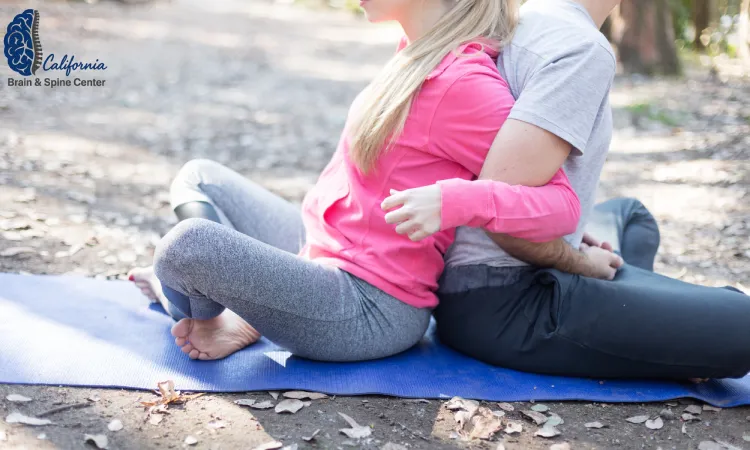
Ease into gentle yoga cat-camel, child’s pose, diaphragmatic breathing.
-
-
Week 4 – Challenge & Consolidate
-
Dual-task walks: gentle head turns while reading street signs.
-
Neurofeedback or mindfulness sessions 4×/week.
-
Titrate screen time upward in 15-min blocks, monitoring symptom rebound.
-
-
Week 5+ – Return-to-Life Protocol
-
Resume full work or school with pre-planned micro-breaks.
-
Maintain a “neuro-nutrition” plate and 7-hour sleep anchor.
-
Schedule monthly check-ins with your rehab team for tweaks.
-
Patients often tell me, “I finally believe I know how to recover from post-concussion syndrome naturally!” That belief paired with disciplined action accelerates physiology.
Red Flags: When Natural Needs Medical Backup
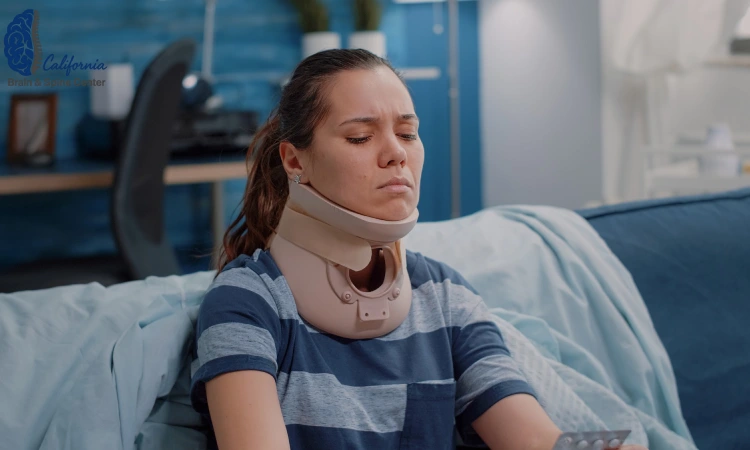
While the roadmap above covers most cases, seek immediate evaluation if you develop:
-
Sudden, worsening headache or repeated vomiting.
-
Weakness or numbness in arms/legs.
-
Slurred speech, new vision loss, or seizure.
Safety first; we can always resume natural strategies once serious issues are ruled out.
Success Stories That Prove the Brain’s Resilience
Lena, 27 – soccer midfielder, daily headaches and fog for 3 months. After five weeks of vestibular therapy, vision drills, and omega-3 bolstering, she returned to full training symptom-free.
Markus, 52 – slipped on ice, concussion plus neck strain. Combined cervical PT, neurofeedback, and CBT cut tinnitus and irritability by 70 % in six weeks.
Hearing these journeys reminds us why the question “How to recover from post-concussion syndrome naturally?” matters so deeply it’s the difference between surviving and thriving.
Your Integrated Healing Hub
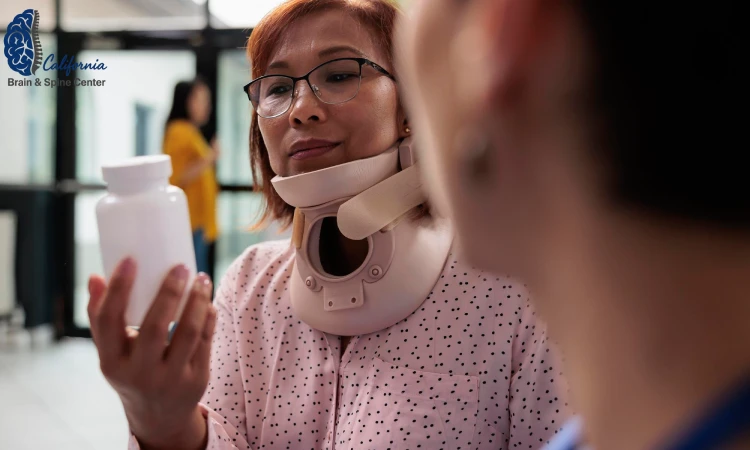
At California Brain & Spine our neurologists, vestibular therapists, vision specialists, and psychologists collaborate under one roof so your plan is coherent, not piecemeal. If you’re wondering how to recover from post-concussion syndrome naturally? we’ll tailor evidence-based strategies to your lifestyle, occupation, and goals.
Transform lingering concussion symptoms into a success story. Book a comprehensive neuro-rehab evaluation today or call (555) 123-4567 to speak with our care coordinator. Let’s rebuild your momentum naturally.
Summary
Natural recovery from PCS combines active rest, vestibular and vision rehabilitation, cervical therapy, anti-inflammatory nutrition, neurofeedback, sleep hygiene, and mindset coaching. Repeated, gentle challenges teach the brain to re-wire and the body to re-balance no long-term drugs required. Follow the step-by-step roadmap, stay alert for red flags, and partner with an integrated team. The answer to “How to recover from post-concussion syndrome naturally?” is inside you, ready to unfold with expert guidance and consistent practice.
Frequently Asked Questions
-
How long does natural recovery usually take?
Most patients see steady improvements within 4–6 weeks, though full resolution can take 3–6 months depending on age, injury severity, and adherence. -
Can I exercise during recovery?
Yes light aerobic activity is encouraged after the first 48 hours, provided symptoms do not spike more than 2 points on a 10-scale. -
Do I need special supplements?
A balanced anti-inflammatory diet often suffices, but omega-3 and magnesium may speed neural repair. Always consult your clinician before adding supplements. -
Is screen time off-limits?
Not forever. Gradual, timed exposure with blue-light filters helps retrain visual endurance without overwhelming the brain. -
What if symptoms plateau?
Plateaus signal the need for reassessment perhaps adding vision therapy, adjusting exercise intensity, or exploring mindfulness to calm residual autonomic dysregulation.
 Alireza Chizari, MSc, DC, DACNB
 Clinical Focus
 Assessment & Treatment Approach
Objective testing may include:
Treatment programs may involve:
 Clinic Information
 Medical Review
 Disclaimer