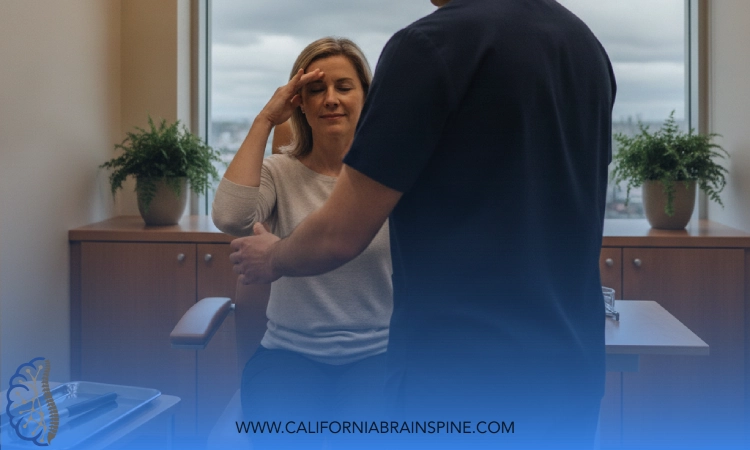

Vertigo is a spinning feeling and dizziness is the wider word, but when and how your symptoms show up often says more than either label.
Vertigo is one particular kind of dizziness: the feeling that you or the room is spinning even when nothing is moving. Dizziness is the wider word. It also covers feeling lightheaded, woozy or unsteady on your feet, so the dizziness vs vertigo question is really asking which kind you have.
People usually put the question to me after a spell that scared them, at a desk in the middle of a long day or standing up too fast from the couch. I am Dr. Alireza Chizari, DC, DACNB, a board-certified chiropractic neurologist practicing functional neurology at California Brain & Spine Center in Calabasas, and it is one of the questions I hear most often.
The word you choose turns out to be a weak guide to the cause on its own. When the feeling started, how long it lasts and what sets it off tend to say more. That thread runs through the rest of this article, along with the warning signs that belong in an emergency room, not a clinic appointment.
Key takeaway
Vertigo is a spinning feeling; dizziness is the broader word that also covers lightheaded, woozy or unsteady. The word alone is a weak guide to the cause, so timing and triggers carry more weight. An inner ear problem called BPPV is the most common cause of vertigo. Sudden dizziness with weakness, slurred speech or vision problems is an emergency.
Dizziness vs vertigo: is vertigo the same as dizziness?
No, vertigo is not quite the same as dizziness. Dizziness vs vertigo comes down to scope: dizziness is the umbrella for feeling lightheaded, woozy or unsteady on your feet, while vertigo is the specific sensation that you or the room is spinning even when nothing is moving. Every vertigo spell counts as dizziness; plenty of dizziness is not vertigo.
What does dizziness usually describe?
Dizziness is a broad word. MedlinePlus, the consumer health service of the U.S. National Library of Medicine, says dizziness can make you feel lightheaded, woozy or unsteady on your feet. That covers a lot of ground: the gray, faraway feeling of getting up too quickly, a head that feels stuffed with cotton by mid-afternoon, or the sense that the parking lot is not quite level on the walk to your car.
None of those involve spinning, and every one of them counts as dizziness.
What does vertigo feel like, and how is it different?
Vertigo is the feeling that you or the room is spinning even when nothing is moving. It is often traced to the inner ear, which houses part of the body's balance system, although migraine can cause vertigo as well. That makes vertigo a subset of dizziness: the spinning kind.

Can the way dizziness feels tell you what is causing it?
Less than you would expect. A study in Mayo Clinic Proceedings found that people's descriptions of what their dizziness feels like are often unclear and inconsistent. The word someone picks, whether spinning, lightheaded or off-balance, is therefore not a reliable guide to the cause on its own.
The difference between dizziness and vertigo still earns its place as the opening of the conversation. It just cannot carry the whole diagnosis.
Why the label alone can mislead
A review in the Journal of Emergency Medicine states the problem this way: the traditional approach of sorting dizziness by type, spinning versus lightheaded versus unsteady, does not distinguish benign causes from dangerous ones. The word you use becomes one clue among several.
What do timing and triggers add?
Clinicians increasingly look at timing and triggers, together with a targeted examination. Timing means when the symptoms happen and how long they last. Triggers are whatever sets them off, such as a change in head position or getting up too quickly.
Worth writing down before any appointment
When the spell started, how long it lasted, what you were doing just before it (turning your head, standing up, sitting at a screen), and anything else that came with it. A few lines in your phone can tell a clinician more than the word dizzy.

Dizziness vs vertigo: what can cause each one?
The list is long. MedlinePlus names a sudden drop in blood pressure, dehydration, getting up too quickly, inner ear problems, certain medicines, migraine and a head injury among the possible causes of dizziness and vertigo, which is part of why the label alone settles so little.
Which inner ear problems cause vertigo?
BPPV, short for benign paroxysmal positional vertigo, is an inner ear disorder with repeated episodes of vertigo set off by changes in head position. The clinical practice guideline from the American Academy of Otolaryngology-Head and Neck Surgery covers it in detail, and MedlinePlus calls it the most common cause of vertigo.
Other inner ear causes of vertigo include labyrinthitis and vestibular neuritis (inner ear conditions that can cause vertigo) and Ménière's disease (another inner ear disorder that can bring spells of vertigo).
If what you feel is more constant than episodic, my article on why you might feel dizzy all the time covers the wider range of causes. This page stays with the difference between the two words.
What else can make you dizzy?
Outside the ear, dizziness can come from a drop in blood pressure, dehydration, getting up too quickly or certain medicines, and a head injury belongs on the list as well.
Migraine can cause vertigo too. When spinning shows up alongside a migraine history, the practice's page on migraine with vertigo treatment explains how those overlapping cases are approached.
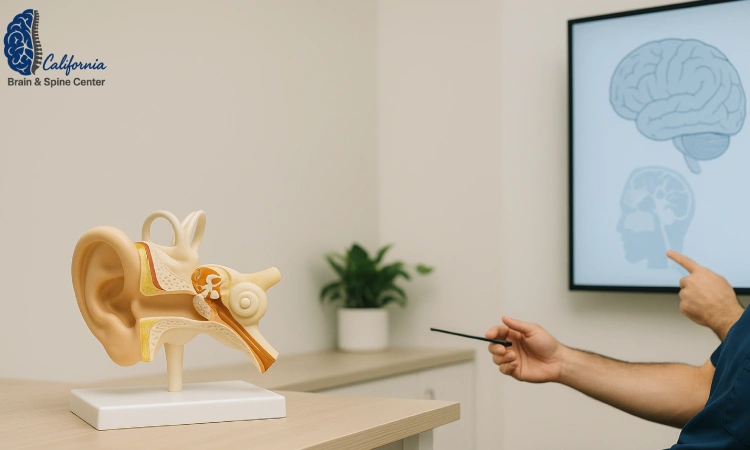
Spinning, swaying or lightheaded, and still no clear answer?
An evaluation that starts with your timing and triggers, then looks at eye movements and balance, gives a plan something real to work from. Start with a complimentary consultation in Calabasas.
How is dizziness evaluated, and how is BPPV treated?
What does a dizziness evaluation look at?
An evaluation starts with timing and triggers: when the symptoms began, how long they last and what sets them off. A targeted examination of eye movements and balance follows, guided by that history.
In emergency medicine, a bedside examination guided by timing and triggers is used to tell an inner ear cause such as vestibular neuritis apart from a stroke in someone with sudden, continuous dizziness. Emergency care, not a clinic appointment, is the right place when sudden or severe dizziness comes with vision problems, slurred speech or weakness.
When the balance system of the inner ear is underperforming, a problem called vestibular hypofunction, an updated clinical practice guideline reports strong evidence that vestibular rehabilitation can reduce symptoms and improve gaze stability, balance and function.
The practice's dizziness specialist in Calabasas page explains how that evaluation is set up, and the table below summarizes what it looks at.
| Typical presentation | Patterns that suggest something more | What the evaluation looks at |
|---|---|---|
| Spinning set off by a change in head position | Spinning that comes on suddenly or severely along with weakness, slurred speech or vision problems: emergency care | Eye movements and balance |
| Lightheaded or woozy after getting up too quickly | Fainting, or lightheadedness alongside other sudden symptoms: emergency care | Timing, fluids, blood pressure changes and a review of medicines |
| Unsteady on your feet without spinning | Unsteadiness that arrives suddenly with weakness or trouble speaking: emergency care | Balance and gaze stability |
| Spinning or dizziness in someone with migraine | A sudden, severe headache unlike their usual migraine: emergency care | How the episodes line up with migraine and its triggers |
| Dizziness after a head injury | Severe symptoms, vision loss or fainting: emergency care | Timing since the injury, eye movements and balance |
None of these rows replaces emergency care when the warning signs further down this page appear.
How is BPPV treated?
Clinical guidelines recommend treating posterior canal BPPV, the form that involves the rear balance canal of the inner ear, with a canalith repositioning procedure, a series of guided head movements, or referring to a clinician who can perform one. The same guideline notes that vestibular rehabilitation, either self-administered or with a clinician, may also be part of treating BPPV.
In the short video below, I walk through BPPV as a cause of vertigo.
At California Brain & Spine Center, care for dizziness may include canalith repositioning or neurological rehabilitation, when clinically appropriate after evaluation.

When is dizziness vs vertigo an emergency?
Whether it feels like spinning or lightheadedness makes no difference here. The warning signs decide.
Red flags: emergency care, not a clinic appointment
MedlinePlus advises getting emergency help right away if you have sudden or severe dizziness or vertigo along with vision problems, slurred speech or weakness.
If symptoms come on suddenly or severely - a sudden severe headache, weakness, trouble speaking, vision loss, or fainting - that is an emergency. Call 911 or go to an emergency room, not a clinic appointment.

Where can you get dizziness evaluated in Calabasas and Agoura Hills?
I see people from Calabasas, Agoura Hills and across the West Valley, many of them still putting in full days while quietly worried that something is wrong. That gap between how you are functioning and how you feel is usually what brings someone in.
A visit starts with a complimentary consultation. If a full evaluation makes sense, I look at timing, triggers, eye movements and balance, and explain what I find in plain language. When something points outside my scope, I refer to primary care, medical neurology or ENT and work alongside them.
You can read more about the practice on the California Brain & Spine Center home page before you book.
Frequently asked questions about dizziness vs vertigo
How can I tell dizziness vs vertigo at home?
Start with the feeling itself: vertigo is the sense that you or the room is spinning, while dizziness also covers lightheaded, woozy or unsteady. When you are weighing dizziness vs vertigo, notice when it started, how long it lasted and what set it off. Those details tend to help a clinician more than the label does.
Is BPPV the most common cause of vertigo?
Yes. BPPV, benign paroxysmal positional vertigo, is an inner ear disorder with repeated episodes of vertigo set off by changes in head position, and guidelines describe it as the most common cause of vertigo. In the dizziness vs vertigo picture, it sits on the spinning side, though a clinician should confirm it.
Can feeling lightheaded count as vertigo?
Usually not. Lightheadedness usually falls under the broader heading of dizziness, and it can come from a sudden drop in blood pressure, dehydration, getting up too quickly or certain medicines. Descriptions blur, though, so the dizziness vs vertigo label is a starting point. Timing and triggers usually say more about the cause.
What does vestibular rehabilitation involve?
Vestibular rehabilitation is an exercise-based approach for people whose inner ear balance system is underperforming. A clinical practice guideline reports strong evidence that it can reduce symptoms and improve gaze stability, balance and function in vestibular hypofunction. It may also be part of BPPV care, done at home or with a clinician.
Where can I get dizziness vs vertigo evaluated near Calabasas?
At California Brain & Spine Center in Calabasas, a dizziness vs vertigo evaluation looks at timing, triggers, eye movements and balance, with care that may include canalith repositioning or neurological rehabilitation when clinically appropriate. Patients come from Agoura Hills and across the West Valley. Sudden or severe symptoms belong in an emergency room first.
What should you do next?
If you are stuck on dizziness vs vertigo, you are asking a fair question, and the answer is still only a beginning. Write down when your spells happen, how long they last and what sets them off, and bring that to whoever evaluates you. Normal test results can be reassuring without explaining what you feel, and that gap deserves a careful look.

California Brain & Spine Center | (818) 649-5300 | Calabasas, CA 91302. You can book online at californiabrainspine.janeapp.com.
This content is for educational purposes only and is not medical advice. Consult a qualified healthcare provider about your specific situation.
Find out which kind of dizziness you are dealing with
Bring your notes on timing and triggers to a complimentary consultation, and leave with a clear sense of whether a full evaluation makes sense for you.