Breathing Exercises for Dizziness, Anxiety, and Brain Fog: A Step-by-Step Guide
I, Dr. Alireza Chizari, DC, DACNB, want to answer the most important question first: Breathing Exercises for Dizziness can help when lightheadedness is being amplified by rapid breathing, anxiety, autonomic arousal, or sensory overload, but they do not treat every cause of dizziness. If breathing makes you more dizzy, stop, return to normal breathing, sit somewhere safe, and reassess.
At California Brain & Spine Center in Calabasas, I often meet patients who describe the same frustrating combination: their head feels foggy, their balance feels unreliable, their chest feels tight, and they start taking bigger breaths because they are worried something is wrong. Sometimes those bigger breaths actually make the lightheaded feeling stronger.
That is why I do not teach patients to simply “take deep breaths.” I prefer slow, comfortable breathing that does not force the lungs, does not involve repeated large inhalations, and does not ignore the reason the dizziness started.
Breathing exercises for dizziness are controlled breathing techniques designed to reduce unnecessary overbreathing and support a calmer respiratory and autonomic pattern when breathing itself is contributing to symptoms. They are a tool, not a diagnosis and not a cure for vestibular, cardiac, neurological, or metabolic causes of dizziness.
The Short Answer
|
When dizziness keeps returning despite slowing your breathing
If screens, head movement, standing, driving, busy stores, or a previous concussion repeatedly trigger dizziness or brain fog, breathing alone may not address the source. A focused neurological and vestibular evaluation may help clarify the pattern.
nhs breathing exercises if you feel dizzy stop
Yes, for people searching “nhs breathing exercises if you feel dizzy stop,” the safest practical rule is to stop the exercise if it causes or clearly worsens dizziness. Return to comfortable normal breathing, sit or lie somewhere safe, and do not keep taking larger breaths in an attempt to push through the sensation.
Why can a breathing exercise make you dizzy?
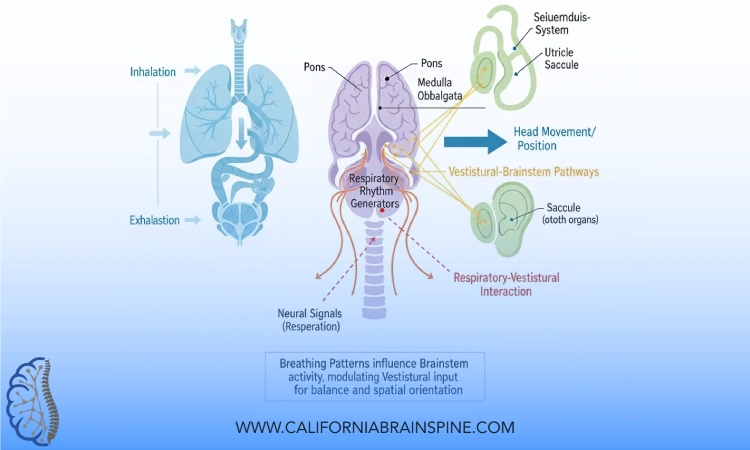
If you breathe more rapidly or more deeply than your body needs, you can exhale excessive carbon dioxide. That change can produce lightheadedness, tingling, chest sensations, and difficulty thinking clearly. MedlinePlus specifically lists dizziness, lightheadedness, weakness, and difficulty thinking clearly among symptoms of hyperventilation.
This explains why someone may think, “breathing deeply makes me dizzy.” The problem may not be a lack of oxygen. In some situations, the problem is simply that breathing has become larger or faster than necessary.
When should you not blame the breathing exercise?
Dizziness can have many causes. If you feel spinning with position changes, dizziness after a head injury, symptoms when standing, irregular heartbeats, new hearing symptoms, weakness, severe headache, or persistent imbalance, it is important not to assume breathing is the entire explanation.
If a breathing technique repeatedly makes you worse, that is useful information. A therapeutic exercise should not become a test of how much discomfort you can tolerate.
What Does Dizziness From Overbreathing Actually Feel Like?
Dr. Alireza Chizari, DC, DACNB, often asks patients to describe the quality of dizziness instead of using only the word “dizzy.” Overbreathing related lightheadedness often feels different from true spinning vertigo or the visual instability that can accompany vestibular dysfunction.
Lightheadedness, tingling, and a strange detached feeling
People may describe a floating sensation, pressure around the head, tingling around the mouth or hands, a need to sigh repeatedly, tightness in the chest, or a feeling that thinking has become harder. Anxiety can appear before those sensations, after them, or both.
MedlinePlus notes that hyperventilation can occur with anxiety and stress, but also lists medical causes including heart and lung problems, infection, medication effects, and other conditions. That is one reason persistent symptoms should not automatically be labeled as anxiety.
How dizziness and anxiety can reinforce each other
A common pattern is surprisingly simple. You feel slightly dizzy, become concerned, start monitoring your breathing, take larger breaths, become more lightheaded, and then become more convinced that something is wrong. The experience is real even when anxiety is contributing to the cycle.
A useful distinction: slow breathing should feel smaller and quieter, not dramatically deeper. If your shoulders rise, you repeatedly fill your lungs to maximum capacity, or you feel air hungry after every breath, reduce the effort rather than adding more air.
Can Breathing Exercises for Dizziness Also Help Brain Fog?
Breathing Exercises for Dizziness and Brain Fog may be useful when fogginess is occurring alongside anxiety, rapid breathing, autonomic arousal, or sensory overload. I would not tell a patient that breathing directly “clears the brain” or fixes every cause of cognitive fog because the evidence does not support that claim.
When breathing and brain fog may be connected
Overbreathing can make some people feel lightheaded or unable to think clearly. Slowing an unnecessarily fast respiratory pattern may therefore reduce one contributor to the foggy sensation. This is different from claiming that a breathing exercise treats a neurological disorder.
Slow diaphragmatic breathing is recognized as a relaxation technique by the National Center for Complementary and Integrative Health. NCCIH notes that relaxation techniques are intended to create a relaxation response characterized by slower breathing and reduced physiological arousal, while also emphasizing that these approaches should not replace conventional medical care. Review the NCCIH guidance on breathing and relaxation techniques.
When brain fog needs a broader evaluation
Brain fog is not a single diagnosis. Sleep problems, migraine, medication effects, autonomic disorders, concussion, anxiety, metabolic problems, and many other factors can affect clarity. The CDC lists dizziness, balance problems, feeling foggy or groggy, slowed thinking, concentration problems, and anxiety among possible concussion symptoms. See the CDC description of concussion symptoms and danger signs.
If the fog began after a head injury or occurs with visual motion sensitivity and imbalance, the pattern deserves more than a list of brain fog exercises.
Breathing can change how overwhelmed you feel. It cannot tell you why you became dizzy in the first place. That diagnostic question still matters.

What Is the Safest Breathing Exercise for Dizziness?
For many people, the best starting point is not an intense breathwork protocol. It is simply making breathing quieter, slower, and more comfortable while remaining seated and supported.
Step 1: Sit somewhere safe
Sit with your back supported and both feet resting comfortably. If you already feel faint, do not practice while standing. Keep your head in a comfortable neutral position and allow your shoulders to soften.
Step 2: Take a normal sized nasal breath
Inhale through your nose for about four seconds, but do not try to fill your lungs completely. The breath should feel ordinary and easy.
Step 3: Let the exhale become slightly longer
Exhale gently for about six seconds. Do not squeeze the air out. If counting makes you tense, forget the numbers and simply make the exhale a little slower than the inhale.
Step 4: Continue for only a short period at first
Try several comfortable cycles rather than forcing a long session. If you remain comfortable, you may continue for a few minutes. If you become more lightheaded, tingly, breathless, or anxious, stop and return to normal breathing.
NCCIH reports preliminary evidence that diaphragmatic breathing may help reduce stress and describes breathing exercises as one form of relaxation practice, but it also cautions against using relaxation techniques as a substitute for conventional medical care. Read the NCCIH overview of stress and slow breathing.
Are Box Breathing and Breath Holds Good for Dizziness?
Not always. Box breathing is popular, but equal inhale, hold, exhale, and pause periods are not automatically better for someone who is already lightheaded or highly focused on breathing.
Why breath holds can feel uncomfortable
Some patients become more anxious when asked to hold their breath. Others start compensating by taking unusually large inhalations before every hold. If that happens, a simple slow breathing pattern without holds may be more comfortable.
Who should be especially cautious?
People with unexplained fainting, significant respiratory disease, unstable cardiovascular symptoms, or severe dizziness should discuss new breathing protocols with an appropriate healthcare professional. The goal is not to win a breathing challenge. The goal is to make breathing less provocative.
Do Breathing Exercises for Vertigo Actually Treat Vertigo?
Breathing exercises for vertigo can reduce the anxiety or autonomic activation that sometimes accompanies an episode, but breathing does not reposition inner ear crystals in BPPV and does not directly correct every vestibular disorder.
Why breathing can still feel useful during vertigo
Vertigo can be frightening. Slower breathing may make the experience feel more manageable and can reduce unnecessary overbreathing while you remain still and safe. That is symptom support, not a vestibular cure.
When gaze and vestibular rehabilitation matter more
If turning your head, walking through stores, scrolling, or moving through traffic repeatedly creates dizziness or visual instability, vestibular testing and specific rehabilitation may be more relevant. The existing guide to gaze stabilization exercises for dizziness explains how eye and head movement training differs from simple breathing practice.
Patients with persistent vestibular symptoms can also learn about Vestibular Rehab Therapies in Calabasas and the clinic’s approach to individualized balance rehabilitation.
A calmer nervous system can make vestibular symptoms easier to tolerate, but calming the nervous system and rehabilitating a vestibular deficit are not the same treatment.
What Can Different Dizziness Patterns Tell You?
| Typical presentation | Pattern suggesting something more | What evaluation may examine |
|---|---|---|
| Lightheaded during rapid or large breathing | Symptoms continue after breathing normalizes | Respiratory pattern, medical history, autonomic factors |
| Spinning when rolling in bed | Consistent position triggered vertigo | Positional vestibular examination |
| Dizzy while scrolling or in busy stores | Visual motion sensitivity and unstable gaze | Oculomotor and vestibular integration |
| Lightheaded after standing | Palpitations, weakness, symptoms relieved by lying down | Orthostatic heart rate and blood pressure patterns |
| Dizziness and fog after concussion | Headache, visual intolerance, imbalance, cognitive symptoms | Neurological, vestibular, oculomotor, balance, cognitive findings |
| Dizziness during panic or intense anxiety | Chest pain, fainting, irregular rhythm, new neurological symptoms | Medical assessment before assuming anxiety |
Safety note: when dizziness needs urgent medical care
Seek urgent or emergency care for sudden severe dizziness with new weakness, facial droop, difficulty speaking, inability to walk, loss of consciousness, new severe headache, significant chest pain, severe shortness of breath, persistent irregular heartbeat, sudden hearing loss, repeated vomiting, or serious symptoms after a head injury.
After a concussion, the CDC advises emergency evaluation for danger signs such as worsening headache, repeated vomiting, seizures, slurred speech, unusual behavior, worsening confusion, weakness, unequal pupils, or inability to wake normally. Do not try to breathe through these symptoms.
What Does a Dizziness and Brain Fog Evaluation Look Like When Breathing Is Only Part of the Problem?
Dr. Alireza Chizari, DC, DACNB, does not assume that every dizzy patient needs breathing exercises. At California Brain & Spine Center, breathing may be considered as one small part of care when autonomic arousal appears relevant, but the evaluation starts by looking for the pattern behind the symptoms.
Define the dizziness
The first step is deciding whether the patient means spinning, lightheadedness, imbalance, visual motion sensitivity, or a detached feeling. Those experiences can point in different clinical directions.
Map the triggers
Clinicians look at standing, head movement, screens, stores, driving, exercise, meals, stress, breathing patterns, and previous concussion. A reproducible trigger is often more informative than symptom intensity alone.
Assess eye movements
Structured oculomotor testing may examine how the eyes track, fixate, and respond to motion. This is particularly relevant when reading or visual environments provoke symptoms.
Assess vestibular and balance responses
Video nystagmography and computerized postural stability testing may be considered when clinically appropriate. These findings can help distinguish a balance system problem from generalized lightheadedness.
Review autonomic patterns
If symptoms change with standing, heart rate, heat, or exertion, autonomic responses may be relevant. Orthostatic measurements and other testing are chosen according to the patient’s history.
Choose the smallest useful intervention
Breathing, gaze stabilization, vestibular habituation, balance work, graded activity, or cognitive rehabilitation may be used only when the evaluation supports them. Not every patient needs every therapy.
Patients whose dizziness is persistent or difficult to classify can review the clinic’s Dizziness Specialist Calabasas service page. When dizziness and brain fog follow a head injury, the Concussion Treatment in Calabasas page explains the broader neurological assessment process.
How Can Patients in Calabasas and Woodland Hills Practice Breathing More Safely?
For patients in Calabasas and nearby Woodland Hills, I suggest practicing when you are already relatively stable, not for the first time while standing in a crowded store, driving, or feeling close to fainting.
Start seated. Keep the breaths comfortable. Practice for a short period. Pay attention to whether the exercise lowers tension without increasing lightheadedness. If it consistently produces symptoms, stop trying to perfect the technique and investigate why it is provocative.
The point is not to become dependent on breath counting every time you feel strange. The goal is to have one simple tool you can use when appropriate while continuing to understand the actual source of recurrent dizziness.
Why Does Dr. Chizari Use a Measurement First Approach?
From engineering to clinical neuroscience
Dr. Alireza Chizari, DC, DACNB, began with a B.S. in Electrical Engineering in Iran, followed by a master’s degree in Advanced Engineering & Management in the United Kingdom. He later worked as a Solar Engineer in the United States before earning his Doctor of Chiropractic degree from Life Chiropractic College West, where he trained in the Gonstead technique.
He subsequently pursued postdoctoral education in Clinical Neuroscience. The engineering background still influences how he evaluates complex dizziness: measure the system before trying to change it.
That is particularly important with Breathing Exercises for Dizziness. If a patient has an eye movement problem, vestibular disorder, orthostatic problem, migraine pattern, or post concussion dysfunction, breathing should not be used to hide the missing diagnosis. You can read more about Dr. Chizari’s background on the About Dr. Alireza Chizari page.
Dr. Alireza Chizari, DC, DACNB, California Brain & Spine Center, Calabasas, and neurological rehabilitation are connected by a simple clinical principle: symptoms should be measured and interpreted before treatment is selected.
When a patient says breathing helps, I want to know why. When a patient says breathing makes things worse, I want to know why that happens too. Both responses can teach us something.
When breathing is not enough to explain the dizziness
If you have tried slowing your breathing but still struggle with screens, head movement, standing, driving, balance, or brain fog, a focused evaluation may help separate respiratory triggers from vestibular, neurological, and autonomic contributors.
What Did Breathing Look Like in a Real Calabasas Area Case?
I evaluated a Calabasas area patient who developed persistent dizziness, anxiety around movement, and brain fog after a concussion. The most frustrating part for the patient was being told, “your tests are normal,” while scrolling, walking through a busy store, and even turning the head during conversation still felt wrong.
The patient had already tried aggressive deep breathing videos online. Those exercises occasionally made the lightheadedness worse, which created even more anxiety about breathing.
During the evaluation, we looked at eye movements, visual motion sensitivity, balance, vestibular responses, and the way symptoms changed with activity. The examination suggested that breathing was only one small part of the picture.
The care plan included gentle respiratory regulation, targeted vestibular rehabilitation, gaze stabilization work, graded exposure to visual motion, and carefully progressed activity. The breathing component was deliberately simple. The patient was told not to chase a perfect breath and not to continue if lightheadedness increased.
Over the following weeks, the patient reported fewer episodes of escalating anxiety during dizziness, somewhat better tolerance for stores and screens, and longer periods of clearer thinking. Dizziness did not disappear completely. The meaningful change was that the patient could identify which sensations responded to slower breathing and which required vestibular rehabilitation.
The original link to California Brain & Spine Center is preserved for readers who want a broader overview of the clinic.
Frequently Asked Questions About Breathing Exercises for Dizziness
Can Breathing Exercises for Dizziness stop symptoms immediately?
Sometimes, especially when rapid breathing or anxiety is amplifying lightheadedness. They are less likely to stop dizziness caused by BPPV, vestibular migraine, orthostatic problems, medication effects, or other disorders. If slowing your breathing helps, that is useful. If symptoms persist, identifying the trigger remains more important than repeatedly practicing breathwork.
Why does breathing deeply make me dizzy?
Repeated large or rapid breaths can cause overbreathing and reduce carbon dioxide levels, which may make you feel lightheaded, tingly, weak, or mentally foggy. Try smaller, quieter breaths instead of larger ones. If dizziness continues even after your breathing returns to normal, another cause should be considered rather than assuming hyperventilation.
Can Breathing Exercises for Dizziness and Brain Fog help after concussion?
They may help manage anxiety or autonomic arousal in some patients, but they do not replace a concussion evaluation or directly correct vestibular and cognitive problems. If brain fog appears with headache, visual sensitivity, imbalance, nausea, or exercise intolerance after a head injury, the broader post concussion pattern should be evaluated.
Should I stop breathing exercises if I feel dizzy?
Yes, if the exercise causes new dizziness or clearly increases your symptoms, stop forcing the technique. Sit or lie somewhere safe and return to normal comfortable breathing. If dizziness is severe, persistent, recurrent, associated with fainting, chest symptoms, neurological changes, or follows a significant head injury, seek appropriate medical evaluation.
When should someone in Calabasas or Los Angeles see a dizziness specialist?
Consider evaluation when dizziness keeps returning, affects driving or walking, appears with head movement or visual motion, follows concussion, occurs with standing, or is accompanied by persistent brain fog. Breathing can be a useful tool, but recurrent symptoms deserve a clearer explanation before they are repeatedly attributed to stress or anxiety.
Conclusion: How I Use Breathing Exercises for Dizziness
I use Breathing Exercises for Dizziness as a simple supportive tool when breathing patterns or autonomic arousal appear to be contributing to symptoms. I do not use them as an explanation for every dizzy patient. Start gently, avoid repeated oversized breaths, and stop if the exercise makes you worse. Persistent dizziness deserves a careful look at the actual trigger.
California Brain & Spine Center | (818) 649-5300 | Calabasas, CA 91302
Book an appointment online