Practical attention and recall exercises, what the research actually supports, and how to tell whether practice is helping outside the exercise itself.
I, Dr. Alireza Chizari, DC, DACNB, often hear a very specific concern from adults visiting California Brain & Spine Center in Calabasas: "I can still do my job, but keeping my attention on it takes twice the effort." Someone may reread an email three times, lose the next point in a meeting, or feel mentally spent after a short period on a screen. Brain training for focus and memory can give that person a way to practice useful skills, but the right starting point depends on why the difficulty is occurring.
Brain training for focus and memory is structured practice of attention, working memory, recall, and everyday planning skills. It can improve performance on what you practice. Whether that improvement carries over to work, conversation, or independent living is a separate question, and results vary. No game, exercise, or device can be promised to restore memory or prevent dementia.
In my work with patients who also have dizziness, post-concussion symptoms, visual sensitivity, or fatigue, I pay attention to what happens when a task becomes demanding. A task that is helpful at one difficulty may be unproductive if it triggers a headache or leaves someone exhausted for hours. The goal is a meaningful activity the person can manage, not a perfect score on an app.
New or steadily worsening memory trouble deserves medical assessment, even when stress or poor sleep seems like an obvious explanation. This article is about safe, practical exercises and their limits. It is not a substitute for an evaluation of unexplained cognitive symptoms.
The short answer
- What practice may do: help you become more efficient at a selected attention, recall, or planning task.
- What it cannot promise: a cure for brain fog, improved job performance, or prevention of dementia.
- What matters most: whether a practiced skill helps you do something meaningful outside the exercise.
- What to monitor: task accuracy, fatigue, symptom response, and the real-world goal.
- What to do next: begin gently if appropriate, and seek medical assessment for new, progressive, or disruptive difficulties.
Finding It Harder to Concentrate After an Injury or Illness?
If symptoms persist despite sensible adjustments, we can discuss whether a cognitive rehabilitation assessment in Calabasas is appropriate. New or worsening neurological symptoms should be evaluated medically first.
Does Brain Training for Focus and Memory Really Work?
Sometimes, brain training for focus and memory improves performance on the skill being practiced, such as remembering a short list or sustaining attention during a task. Whether those gains transfer to everyday responsibilities is less certain. Meaningful progress should therefore be measured by both exercise performance and practical changes in daily function.
Getting better at a task is not the same as getting better at everyday life
Suppose a word-list exercise gets easier over several sessions. That tells us you have improved at that exercise. It does not automatically tell us that you will remember appointments, follow an unfamiliar meeting, or organize a busy morning more effectively. Those outcomes need to be checked directly, with examples and measurements that matter to you.
This distinction is supported by the INCOG 2.0 guidelines for attention rehabilitation after traumatic brain injury. For adults with moderate to severe TBI, the guideline emphasizes strategies applied to everyday tasks and notes that practicing isolated computerized attention tasks has limited evidence of generalizing to real life. These recommendations concern a specific clinical population and should not be interpreted as a universal treatment protocol for otherwise healthy adults.
Are commercial brain-training apps proven to work?
Apps can make practice convenient, show scores, and provide reminders. They are not equivalent to an individualized rehabilitation program. The National Institute on Aging notes that research-based cognitive training has shown some benefits in older adults, but there is insufficient evidence that commercially available brain-training games produce the same effects as the interventions studied in clinical trials.
That is not a reason to dismiss every game. A person may enjoy one, use it consistently, and improve a practiced task. The problem arises when a score is presented as proof that a medical condition has improved or that future cognitive decline has been prevented. Ask what the app measures, and then check whether your own functional goal changed.
"The result that matters is not only a better score. It is a daily task that feels more manageable without a significant symptom cost."
Why Do Focus and Memory Feel Worse Even When You Are Trying Hard?
Difficulty concentrating can arise from several overlapping contributors. Attention is the process that helps information reach memory in the first place. When someone is fatigued, in pain, distracted, or overwhelmed, the information may never be fully registered. Later, it can feel as though memory failed when the first problem was divided attention.
Sleep deprivation and inconsistent recovery
The National Heart, Lung, and Blood Institute explains that insufficient or poor-quality sleep can interfere with learning, attention, and reaction time. If your concentration worsened during weeks of shortened sleep, that belongs in the history before anyone recommends more difficult exercises. A consistent sleep opportunity is sensible, but it is not a guaranteed cognitive treatment, and suspected sleep apnea deserves medical assessment.
Stress, pain, mood, and repeated task switching
A stressful day can involve constant interruptions: an email arrives while you are speaking, a phone notification interrupts a calculation, and you return to a document without remembering where you stopped. This does not prove a neurological disorder. It does show why practicing one meaningful activity at a time may be more useful than demanding perfect concentration across five competing tasks.
Anxiety, depression, persistent pain, medication effects, and medical conditions can also affect attention. If symptoms are new or functionally disruptive, discuss them with your primary care clinician rather than assuming that exercise alone addresses the cause.
Visual motion, dizziness, and post-concussion symptoms
Some people report losing their train of thought most often in visually busy stores, during video calls, or when scrolling rapidly. Dizziness, visual discomfort, migraine, or post-concussion symptoms may coexist with mental fatigue. It is reasonable to describe both sets of symptoms during an evaluation. It is not accurate to assume that a vestibular disorder is the cause of every memory problem merely because the two occur together.

Before you increase the difficulty
Notice whether you are losing focus only in a particular setting, after poor sleep, during headache or dizziness, or across several activities. The pattern helps identify what deserves evaluation and prevents you from mistaking exhaustion for a lack of effort.
Which Brain Training Exercises Can You Try for Focus and Memory?
Start with a task connected to a real need. If your concern is losing the thread of a conversation, a brief spoken-summary exercise may be more relevant than a visual puzzle. If your difficulty is following several steps, practice organizing an everyday task. These are examples for people who can practice safely; they are not prescribed treatment for a neurological condition.
| Skill and task | Easier version | When to stop or simplify | Real-life goal |
|---|---|---|---|
| Sustained attention: read one short paragraph with notifications off, then state its main point. | Read two sentences in a quiet room. | Stop if concentration becomes unproductive or symptoms noticeably intensify. | Finish a short email or document with fewer restarts. |
| Selective attention: listen for a specific detail during a brief conversation or recording. | Use a quiet setting and one speaker. | Reduce background stimulation if headache or sensory discomfort develops. | Follow a meeting or conversation without losing the topic. |
| Working memory: keep two simple instructions in mind while completing a safe seated task. | Use one instruction and repeat it aloud. | Simplify if errors or distress increase rather than forcing more items. | Follow a short sequence while preparing for the day. |
| Delayed recall: summarize a short reading, pause, then recall the main ideas. | Use one idea and a written cue. | Take a break if repeated attempts become frustrating or fatiguing. | Remember a useful point from a call or conversation. |
| Planning: write the three steps needed for a small errand, then review the order. | Start with two steps and a checklist. | Pause if the task becomes confusing or creates unsafe decisions. | Complete a familiar routine more independently. |
| Attention recovery: take a planned screen break, then resume the same task. | Shorten the task and make breaks more frequent. | Stop for persistent dizziness, nausea, or worsening headache. | Manage an ordinary work block without a later symptom flare. |
How do you practice attention without turning it into another distraction?
Choose one task, decide what completion means, and put unrelated notifications aside. Work until the planned stopping point or until your symptoms indicate that you should stop sooner. Then write down whether you finished it and how you felt afterward. Even a short exercise can be useful if it helps you discover a workable level of effort.
Do not add a loud background, fast visual movement, or a walking challenge just to make an exercise seem advanced. Those additions may create unnecessary symptoms or a fall risk for some patients. Increased complexity is appropriate only when you can perform the simpler version safely and it serves a real goal.
How can a memory exercise become more relevant to daily life?
Try remembering the main point of a voicemail and checking it against the recording. Practice a grocery list while seated, then use a written list during the actual trip. A person recovering from a brain injury may need compensatory tools, such as calendars or alarms, alongside direct practice. Using an external aid is a strategy for independence, not evidence that the exercise has failed.

"Practice the activity you want to do better, and measure what happens when you actually do it."
How Often Should You Practice Brain Training for Focus and Memory?
There is no single schedule that is appropriate for every adult. The original idea of a fixed number of minutes on four days each week can be a helpful planning example, but it should not be presented as a medical dose. Someone managing post-concussion fatigue may tolerate less than a healthy person practicing for general organization. Frequency, task complexity, and rest should reflect symptoms, goals, and any clinician's guidance.
For an illustrative starting framework, you could choose one manageable task on a day when you feel able, practice briefly, and record what happened. On another day, practice recall or planning at a similar difficulty. Include time to review the real-life goal rather than increasing intensity automatically. If you are receiving rehabilitation, your clinician should set or adjust the plan.
What is a sign you should reduce the challenge?
A modest feeling of mental effort can be expected. Worsening dizziness, headache, nausea, confusion, or prolonged fatigue is a reason to stop and reassess rather than push through. Severe or sudden symptoms need urgent medical care. In people with persistent symptoms after brain injury, a clinician may recommend carefully graded activity, but the threshold should not be guessed from a generic online schedule.
Duration and complexity are two adjustable parts of a task. Make only one change at a time and compare performance with the previous attempt. If the task is already difficult, do not assume that more repetition will improve the result. Sometimes an easier task with a clear daily-life purpose is the better choice.
How Can You Tell Whether Brain Training Is Helping Outside the Exercise?
Track two different kinds of change. The first is near-task performance, such as remembering more items or making fewer mistakes within the drill. The second is functional performance, such as finishing a short work assignment, remembering an agreed task, or completing a morning routine with fewer prompts. The second measure prevents exercise scores from becoming the entire definition of progress.
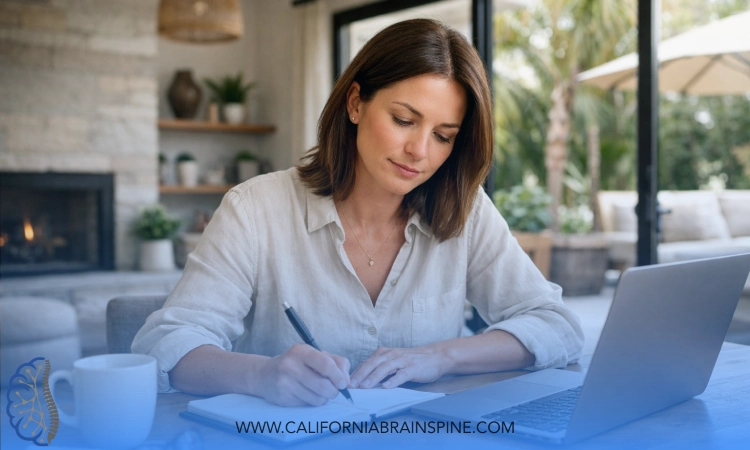
A useful practice log records the task, an approximate accuracy score when relevant, fatigue before and afterward, any symptoms that appeared, and a simple observation about the daily goal. Keep it short enough that recording it does not become more tiring than the exercise.
Printable brain-training practice log
Print this table or copy its headings into a notebook. Use brief notes rather than trying to calculate a medical score. A separate CSV version accompanies this article for a spreadsheet-based log.
| Date and task | Accuracy or completion | Fatigue and symptoms | Everyday function |
|---|---|---|---|
| Example: Monday, paragraph summary | Main idea recalled with one cue | Fatigue 2 before, 3 after; no new symptoms | Read a work email with one fewer restart |
| ________________ | ________________ | ________________ | ________________ |
| ________________ | ________________ | ________________ | ________________ |
| ________________ | ________________ | ________________ | ________________ |
| ________________ | ________________ | ________________ | ________________ |
Fatigue ratings in this example are personal notes, not clinical cutoffs. The example is illustrative rather than a real patient's data. If the same task keeps improving while your daily difficulties remain unchanged, that is a reason to reconsider the goal, the exercise, or the need for professional assessment.
When Is Brain Training Not Enough for Brain Fog or Memory Problems?
Brain fog is a description of symptoms such as slowed thinking, reduced concentration, and mental fatigue, not a diagnosis. Training can be part of a plan for some people, but it does not identify thyroid disease, a sleep disorder, medication effects, depression, a new neurological disease, or the cause of persistent symptoms after an injury. A medical assessment should come before assuming more practice is the answer.
For people with a history of traumatic brain injury, more specific strategies are discussed in our guide to cognitive therapy for brain fog after traumatic brain injury. That article owns the post-injury application of rehabilitation. Here, the goal is to explain exercises and evidence limits for the broader reader.
If the primary concern is new forgetfulness, missed medications, getting lost, or increasing dependence on others, read about early memory changes that need evaluation and arrange a medical appointment. Cognitive exercises should not delay investigation of progressive changes or be marketed as a means of preventing dementia.
When symptoms require emergency care
Sudden confusion, new difficulty speaking or understanding speech, weakness or numbness on one side, sudden vision changes, a sudden severe headache, or a seizure can signal an emergency. Call 911. Do not book a routine brain-training appointment instead. The CDC's stroke warning signs explain why these sudden changes require immediate action.
After a head injury, rapidly worsening symptoms or unusual difficulty staying awake also need urgent medical evaluation. New or gradually worsening cognitive difficulty without emergency signs still deserves timely assessment by a medical clinician.
What Does an Individualized Cognitive Rehabilitation Pathway Look Like?
An assessment begins with the person's history, medical context, and activities that are becoming difficult. When rehabilitation is appropriate, the tasks should be selected around those needs. The steps below are a general framework, not a claim that every patient receives the same tests or treatment.
1. Establish medical context
Review onset, prior head injury, medicines, sleep, and urgent concerns. Refer for appropriate medical assessment when the cause is unclear or symptoms are worsening.
2. Identify the daily-life target
Choose one meaningful goal, such as following a meeting or completing a routine. A target that matters to the patient is more useful than a generic game score.
3. Establish a baseline
Record what the person can complete, common errors, and fatigue. Relevant assessments may include structured cognitive or eye-movement tasks when indicated.
4. Match the practice
Use attention, recall, planning, or compensatory strategies that reflect the goal. Start at a level that can be completed without an unacceptable symptom flare.
5. Adjust effort and environment
Consider breaks, reduced distraction, visual comfort, and task complexity. Persistent dizziness or sensory symptoms may warrant separate examination.
6. Recheck real-world function
Compare task results and everyday independence over time. Modify the plan if scores improve but the practical problem does not.
At California Brain & Spine Center, cognitive rehabilitation in Calabasas is the relevant service for individualized attention and memory strategies. The clinic also describes neuroplasticity rehabilitation for selected neurological rehabilitation needs. Whether either service is appropriate depends on examination findings and medical context, not on the expectation that every person can benefit from a particular modality.
If memory loss itself is the principal concern, the memory-focused evaluation and rehabilitation service describes local care options. Unexplained or progressive memory changes require a medical diagnostic pathway first. None of these service pages should be interpreted as a guarantee of improvement.
How Does Dr. Chizari Approach Cognitive Concerns in Calabasas?
Dr. Alireza Chizari, DC, DACNB, practices chiropractic neurology at California Brain & Spine Center in Calabasas. His background began with electrical engineering in Iran, followed by advanced engineering and management study in the United Kingdom and solar engineering work in the United States. He later earned his Doctor of Chiropractic degree from Life Chiropractic College West, studied the Gonstead technique, and pursued advanced education in clinical neuroscience.
Why are the history and functional goal so important?
An engineering background can encourage a methodical question: what are we measuring, and does the measurement tell us something useful? In clinical care, that means listening to the patient's experience before choosing tests or activities. It does not mean every concentration problem can be explained with an instrument or that chiropractic neurology replaces a medical neurologist, primary care physician, or neuropsychologist.
Adults from Calabasas and Woodland Hills may be managing demanding jobs, commutes, or caregiving while dealing with persistent fatigue and uncertain cognitive symptoms. They need practical explanations rather than a catalogue of devices. If a symptom pattern suggests another specialty or a medical diagnosis is required, referral is part of responsible care. More about Dr. Chizari's training and approach is available on the About California Brain & Spine Center page.
Need a Plan for Persistent Focus or Memory Difficulties?
If everyday concentration remains difficult after medical concerns have been considered, ask whether a tailored cognitive or neurological rehabilitation evaluation may be relevant. The first conversation can also establish when another clinician is the more appropriate next step.
What Could a Realistic Starting Plan Look Like for a Busy Adult?
Consider an illustrative example, not an actual patient record: an adult in the Calabasas area has trouble concentrating on written work after long screen sessions. They report feeling worse when they try complicated memory games late at night, and they sometimes feel mildly dizzy in visually busy places. The first step would be medical review when indicated, not an assumption that more training is needed.
If cleared for appropriate practice, the person might begin with a short, quiet reading task, a written reminder for the next action, and a record of fatigue and completion. If dizziness remains a concern, a qualified clinician might consider vestibular or visual assessment. The exercise would be changed if it repeatedly aggravated symptoms. After a period of monitored practice, the meaningful question would be whether reading and workplace tasks had become easier, not merely whether a memory-game score rose.
There is no manufactured success story or promised outcome in this example. Some people improve with simple organizational adjustments; others need medical treatment or individualized rehabilitation, and some continue to have limitations. Tracking function and responding to new information are more credible than presenting a fixed recovery arc.
"A good plan leaves room to learn that the original exercise was not the right one."
Frequently Asked Questions About Brain Training for Focus and Memory
Does brain training for focus and memory improve performance at work?
It may improve a practiced attention or recall task, but improvement does not automatically transfer to work. Check whether you can complete a real task with fewer interruptions, errors, or symptoms. A workplace-relevant goal and a simple practice log are more informative than relying only on an app score.
Are brain-training apps equivalent to cognitive rehabilitation?
No. Commercial games generally provide standardized tasks and scores, while cognitive rehabilitation starts with assessment and functional goals. The National Institute on Aging cautions that commercial brain-training products have not been shown to produce the same benefits as research-based training. An app may be a tool, but it is not a diagnosis or complete treatment plan.
What if brain training makes dizziness, headaches, or fatigue worse?
Stop the activity and reduce the challenge rather than pushing through a significant symptom increase. Persistent or recurring reactions deserve evaluation, particularly after concussion or when visual motion triggers dizziness. Sudden severe headache, weakness, confusion, or speech changes are emergency symptoms and require immediate medical help.
Can brain training for focus and memory prevent dementia?
No commercial exercise or game has been established as a reliable way to prevent dementia. Research on particular cognitive-training interventions is more promising than evidence for consumer apps, but that does not justify a prevention guarantee. New or progressive memory changes need medical evaluation even if someone practices regularly.
Where can I ask about cognitive rehabilitation near Calabasas?
California Brain & Spine Center in Calabasas can discuss whether individualized cognitive rehabilitation is appropriate for selected persistent symptoms, including some post-injury concerns. A medical clinician should first assess unexplained or worsening memory problems. Bring a symptom timeline, medication list, and examples of affected daily tasks to help guide the decision.
What Is the Most Useful Next Step?
Brain training for focus and memory works best as a practical question rather than a promise: what specific ability are you practicing, how well can you tolerate the practice, and does it make a meaningful daily task easier? Sleep, health, symptoms, and environment can change the answer. A simple notebook, calendar, or well-chosen exercise may be appropriate for one person, while another needs medical evaluation before any training program.
I would rather help someone identify the right next step than encourage them to push through symptoms. If persistent focus or memory difficulties are affecting your everyday life, California Brain & Spine Center can discuss whether selected rehabilitation services are a suitable fit after proper evaluation. For broader lifestyle advice rather than exercises, our daily brain-health habits checklist addresses that separate topic.
California Brain & Spine Center | (818) 649-5300 | Calabasas, CA 91302. For a nonurgent consultation, book online.
This article is for education only, not a diagnosis, medical treatment plan, or guarantee of cognitive improvement. Sudden neurological symptoms require emergency care.