
Functional neurology is a specialty within chiropractic, with its own board certification, that examines how well the brain and nervous system are working, and this guide explains what that means, what it cannot do, and when it is worth considering.
If you have typed "what is functional neurology" into a search bar, you have probably already had a scan that came back normal and a set of symptoms that did not go away. That is the person this page is written for, in Calabasas and anywhere else. Functional neurology is a specialty within chiropractic that examines how the brain, the balance system, the eyes and the body are working together, and uses targeted rehabilitation, without medication, to change how they work. It is not medical neurology, and it does not try to be.
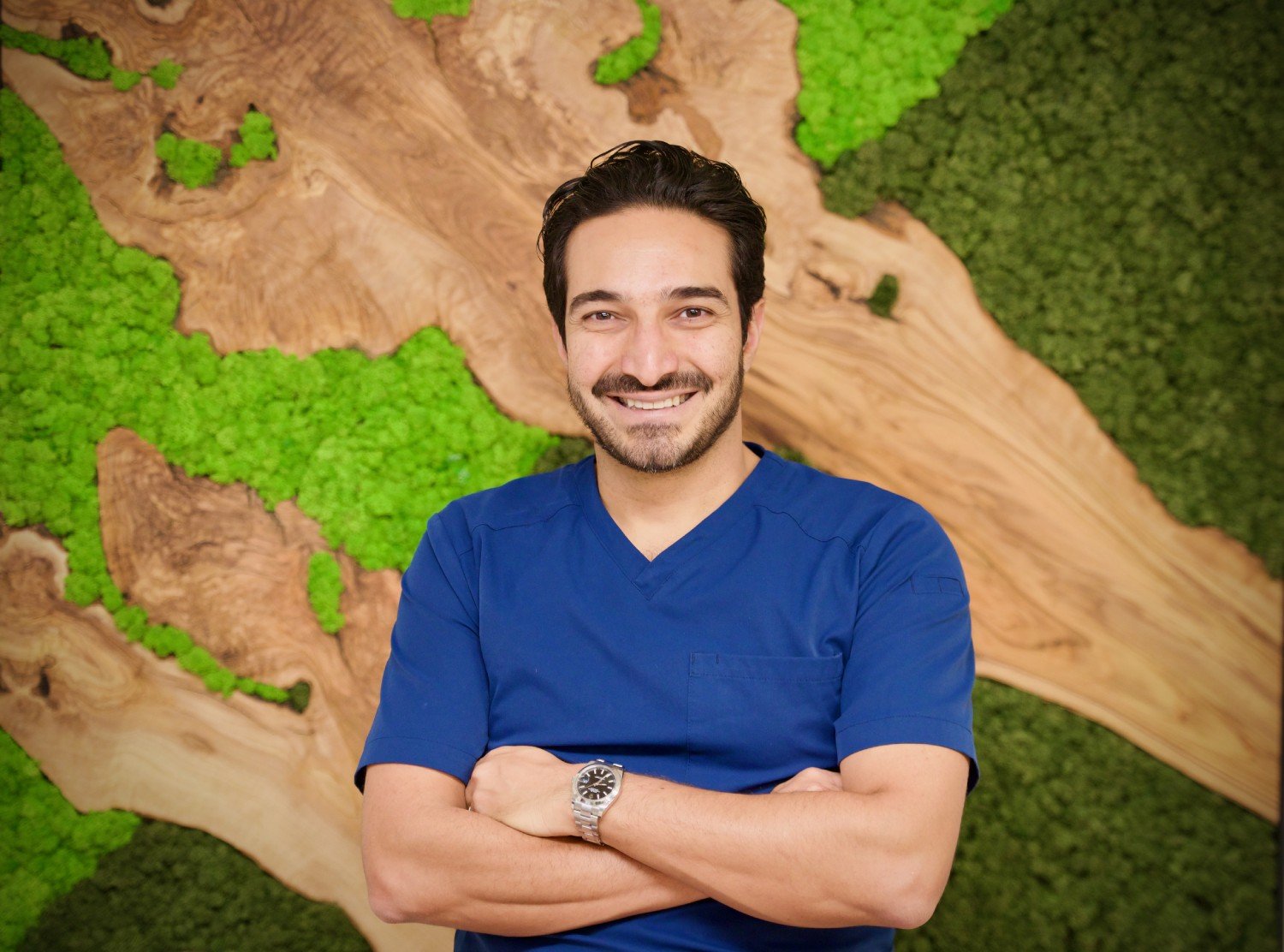
I am Dr. Alireza Chizari, DC, DACNB, a board-certified chiropractic neurologist, and functional neurology is what I practice every day at California Brain & Spine Center in Calabasas. This page is the plain explanation I wish every new patient had read before their first visit: what the specialty is, where it came from, what the training involves, what the evidence does and does not support, and how it fits alongside the medical neurologist you may already have.
Key Takeaway
Functional neurology is a chiropractic specialty, certified by the American Chiropractic Neurology Board after post-doctorate training and written and performance examinations. It measures how the nervous system is functioning, especially eye movements, balance and coordination, and uses rehabilitation-based care. It does not diagnose from imaging, prescribe medication, or replace medical neurology; it works alongside it.
What Is Functional Neurology?
Functional neurology is the examination and rehabilitation of how the nervous system functions, practiced mainly by chiropractors who have completed post-doctorate training in the field and passed a specialty board. Rather than searching only for structural disease, the evaluation measures how the eyes, the balance system and the body are performing, and builds care from those measurements.
Where did functional neurology come from?
The specialty developed inside chiropractic for a practical reason. As a published introduction in a clinical journal puts it, prescription pharmaceutical products and surgery are not therapeutic options for chiropractors, and that limit pushed part of the profession toward an approach built on examination and rehabilitation instead. The same introduction describes the training path: post-doctorate study that ends in examinations certifying a doctor of chiropractic as a Diplomate of the American Chiropractic Neurology Board, which is the DACNB after my name.
The board itself describes chiropractic neurology as a field that engages a person's internal and external environment in a structured and targeted way to affect changes in function. Its Diplomate requires a doctor of chiropractic, or the equivalent in healthcare, to complete 300 hours of post-doctorate education and training in the field and to pass both a written and a performance examination, and the certification program is accredited by the National Commission for Certifying Agencies. That is the credential to ask any clinic about, ours included.
What is the idea behind functional neurology?
Every part of the specialty rests on one property of the nervous system. Neuroplasticity is the ability of the nervous system to change its activity in response to intrinsic or extrinsic stimuli by reorganizing its structure, functions, or connections, which is to say that signals from inside the body and from the outside world can both change how the nervous system is wired and how it behaves. Rehabilitation medicine has relied on that property for a long time; stroke rehabilitation guidelines emphasize early assessment of deficits and progressively challenging, task-specific therapy for exactly this reason. The specialty applies the same logic to problems that are not strokes: if a circuit is underperforming, give it specific, repeated, graded input and measure whether it changes.
Is Functional Neurology Legitimate?
Yes, as a defined specialty with its own board certification inside a licensed profession, with an honest caveat about evidence. Chiropractic is licensed, and the field's assessment tools overlap with mainstream concussion and balance care. Published reviews also say some of its concepts are controversial and that evidence for the approach as a whole is thin.
That caveat deserves its own paragraph, because I would rather you hear it from me. A scoping review of the field concluded that some of its concepts are controversial, and a follow-up review of the clinical studies published in the field's own journal found no acceptable evidence on the effect or benefit of the approach in relation to various conditions. Those are fair criticisms of the literature, and a clinician who tells you the science is settled is overstating it.
What the evidence does support is narrower and more useful. Vestibular and eye-movement screening after concussion is mainstream: a review in the Journal of Athletic Training describes a screening tool that assesses pursuits, saccades, vestibular ocular reflex, visual motion sensitivity, and convergence. In plain words: how the eyes follow a moving target (pursuits), how they jump between two targets (saccades), whether they stay locked on a target while the head moves (the vestibular ocular reflex), how busy visual scenes are tolerated, and whether both eyes can turn inward on something close. The review reports that initial results support vestibular and visual-oculomotor therapies, especially those that target specific impairments, while noting that the evidence is limited and comes from small samples. The same tests, and the same targeted rehabilitation, sit at the center of the evaluation I run. So the honest position is this: the examination methods are shared with mainstream care, the rehabilitation principle is shared with mainstream care, and the field's broader claims are still being tested.
Licensure is the other half of legitimacy. Chiropractic is a licensed health care profession; chiropractors must earn a Doctor of Chiropractic degree, pass the National Board of Chiropractic Examiners exam, and hold a state license. In California the license authorizes the practice of chiropractic and does not authorize the practice of medicine or surgery, or the use of any drug. A functional neurologist works inside those lines, which is why the next section matters as much as this one.
What Does a Functional Neurologist Do?
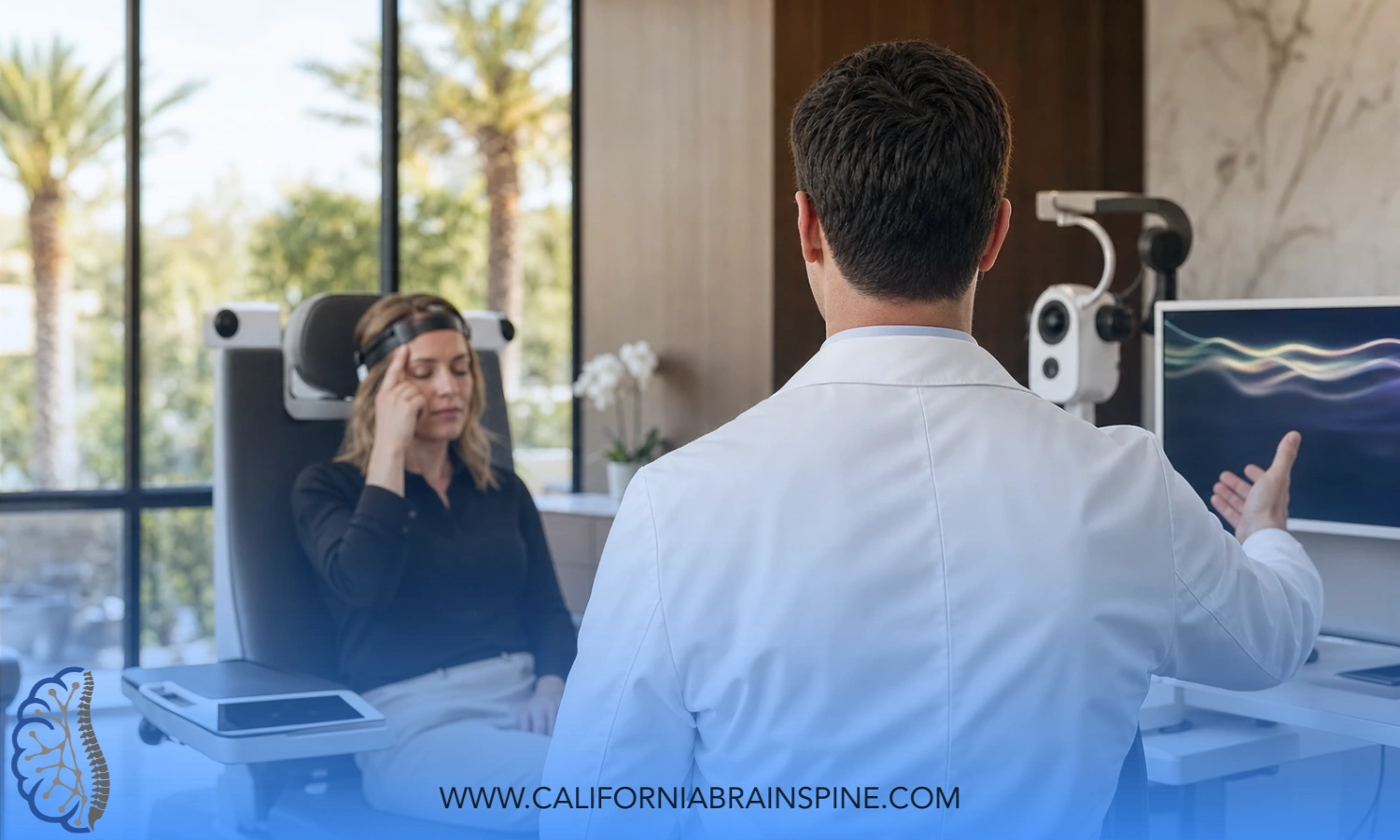
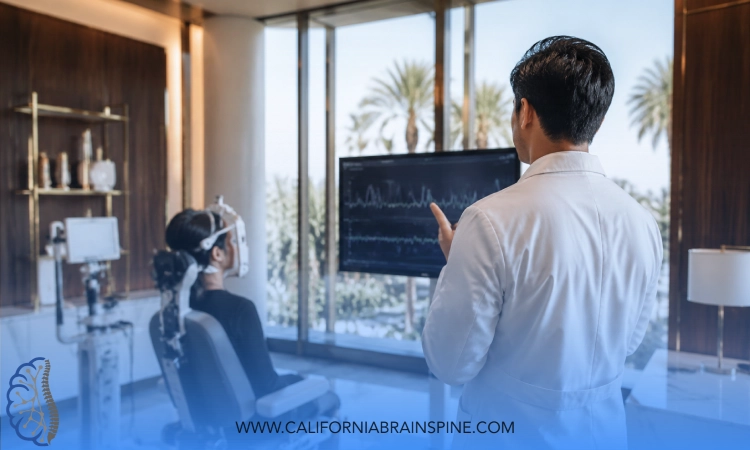
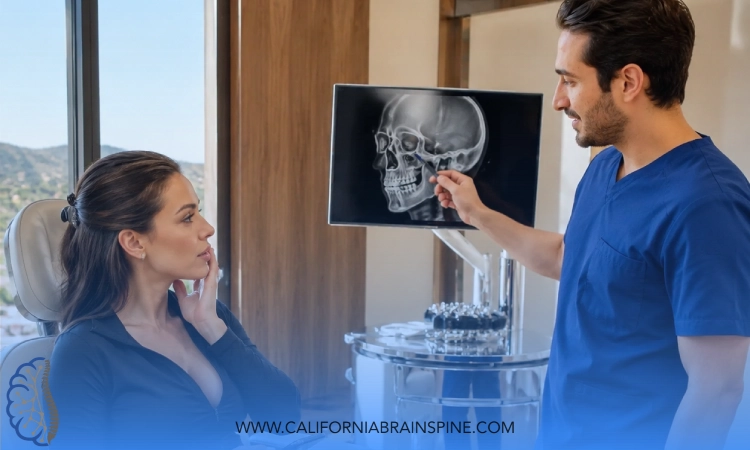
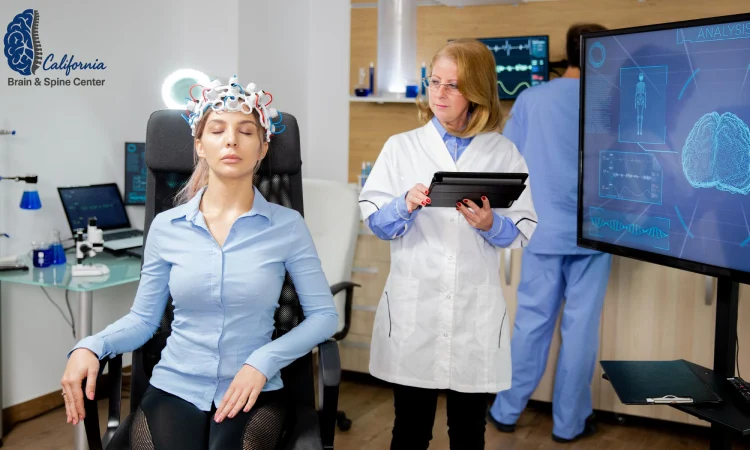
Measure first. At our clinic the first visit is a 120-minute neurodiagnostic assessment, and most of it is examination rather than conversation. Eye movements are recorded: how smoothly the eyes follow a target, how accurately they jump between two targets, whether they converge on something near, and whether they hold still when the head moves. Balance is tested with the eyes open and closed and on different surfaces. These are the same family of tests the National Institute on Deafness and Other Communication Disorders lists for investigating a balance disorder: a video nystagmogram, which measures eye movements and the muscles that control them, and posturography. Posturography is a standing test on a platform that records how much you sway as what you see and stand on changes. Gait, coordination, reflexes, sensation and the response of heart rate and blood pressure to standing are checked in the same session.
The findings are then read together. A functional neurologist is asking which parts of the system are underperforming and whether they can be trained, and the answer determines what care, if any, is offered. It may include, when clinically appropriate after evaluation, eye-movement and vestibular rehabilitation, balance and gait training, and graded exposure to the environments that provoke symptoms. Our guide to how to read your functional neurology report walks through what those findings look like on paper.
What does functional neurology not do?
It does not diagnose disease from an MRI or CT, because reading imaging for disease is a medical act. It does not prescribe or adjust medication, and it does not offer surgery, because California's chiropractic license excludes the practice of medicine, surgery and the use of drugs. It does not treat emergencies. And it should never keep a person away from a medical neurologist when one is needed: a new or changing neurological problem needs medical diagnosis first, and this is where many people come after that diagnosis has ruled out the things that need medicine.
See What the Evaluation Measures
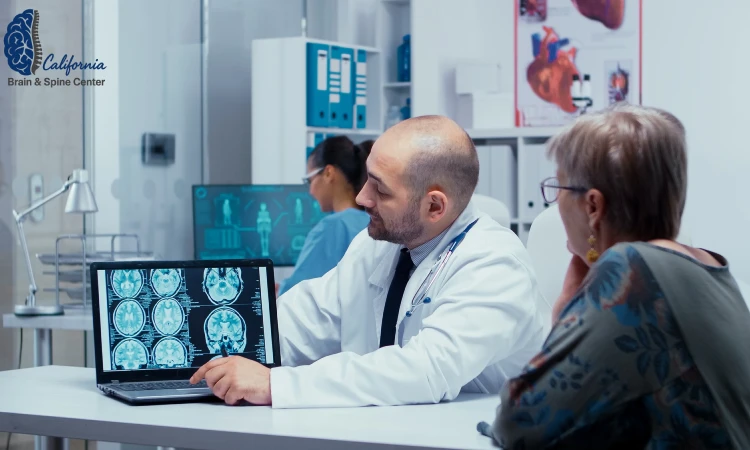
The functional neurology services in Calabasas at California Brain & Spine Center begin with measurement, not a treatment menu: a 120-minute neurodiagnostic assessment with Dr. Alireza Chizari, DC, DACNB, and a plain explanation of what was found.
How Is Functional Neurology Different From Medical Neurology?
A medical neurologist is a physician who diagnoses and treats diseases of the brain, spinal cord, nerves and muscles, with imaging, laboratory testing, medication and surgical referral at hand. When there is a disease to find, that is where you go, and I refer there without hesitation. A functional neurologist has none of those tools and does not pretend to. What we have is a detailed functional examination and rehabilitation. The two are complementary, and the patients who do well are usually the ones whose care is shared: the medical neurologist has excluded what needs medicine, and the specialty is working on what is left.
| What patients typically describe | Patterns that suggest something more (medical care first) | What the evaluation looks at |
|---|---|---|
| Dizziness or unsteadiness that comes and goes, worse in busy places | Sudden or severe dizziness with vision problems, slurred speech or weakness | Eye movements, inner-ear reflexes, balance with the eyes open and closed |
| Headaches that have been imaged and called normal | A sudden severe headache with no known cause | Visual and vestibular triggers, neck and posture, the response to standing |
| Brain fog and fatigue after a concussion that was called mild | Sudden confusion, trouble speaking, or difficulty understanding speech | Pursuits, saccades, convergence, the vestibular ocular reflex, doing two things at once |
| Light or sound sensitivity, motion sickness in cars or at screens | Sensitivity that began suddenly with weakness or trouble seeing | Visual motion sensitivity and how the senses are being integrated |
| A racing heart or lightheadedness on standing | Sudden weakness, or trouble speaking | Heart rate and blood pressure on standing, measured rather than described |
| Tingling or weakness the tests have not explained | Numbness or weakness on one side of the body | Reflexes, sensation and coordination, and whether a medical referral comes first |
Is this the same as functional neurological disorder?
No, and the similar names cause real confusion in search results. Functional neurological disorder, also called conversion disorder, is a psychiatric disorder characterized by symptoms affecting sensory or motor function, and it is diagnosed by medical specialists. The chiropractic specialty is a way of examining and rehabilitating the nervous system. The diagnosis belongs to medicine, and this page is not about that condition.
When is it an emergency, not an evaluation?
Some symptoms are never a functional question. The CDC lists sudden trouble walking, dizziness, loss of balance, or lack of coordination; sudden trouble seeing; sudden numbness or weakness in the face, arm, or leg, especially on one side of the body; sudden confusion, trouble speaking, or difficulty understanding speech; and a sudden severe headache with no known cause as signs of stroke, and says to call 911 right away. MedlinePlus gives the same instruction for sudden or severe dizziness or vertigo along with vision problems, slurred speech or weakness.
If symptoms come on suddenly or severely - a sudden severe headache, weakness, trouble speaking, vision loss, or fainting - that is an emergency. Call 911 or go to an emergency room, not a clinic appointment.
Who Should Consider Functional Neurology Care?
The people the evaluation tends to suit, in my experience, share a pattern rather than a diagnosis: real symptoms, normal or nearly normal tests, and a life that has shrunk to fit them. The commonest reasons people come to us in Calabasas, and from Woodland Hills and the rest of the valley, are dizziness and unsteadiness, headaches that have been imaged and reassured, brain fog and fatigue after a concussion, sensitivity to light, sound or busy visual scenes, motion sickness at screens, and a heart that races on standing. Each of those has a functional examination behind it. Dizziness is the clearest example, and our article on functional neurology for treating dizziness without medication explains how that evaluation runs.
Two things should be true before you book. A medical evaluation should already have happened if the problem is new, sudden or changing, so that anything needing medicine has been found. And you should want measurement rather than reassurance: the evaluation is long, it is detailed, and it ends with findings you can read. If you are weighing where to go, our guide to choosing a clinic for this kind of care lists the questions worth asking any practice, including ours.
What Does This Look Like for a Patient in Calabasas?
Cases like this are common in our Calabasas clinic. A professional in her forties, a minor rear-end collision on the 101, a night in the emergency room and a scan that was normal. The neck settled. The dizziness stayed: supermarkets, scrolling on a phone, the passenger seat on a curve. A medical neurologist, correctly, found no disease and said so. The dizziness went on regardless, and she began organizing her week around the places she could tolerate.
The evaluation in a pattern like this begins with the history, which already says that busy visual scenes and head movement provoke the symptoms, and then with the measurements. The eyes overshoot when they jump between targets and struggle to hold a moving one. Convergence gives out closer than it should. Balance is fine with the eyes open and poor with them closed, and a series of head turns reliably brings the dizziness on. None of that shows on an MRI, and all of it is a finding.
What follows is a plan built on those findings: eye-movement and vestibular rehabilitation, a graded return to the environments that provoke symptoms, and retests at each stage. The medical neurologist stays involved. Improvement in the cases that go well is partial and gradual: the supermarket becomes tolerable before it becomes easy, screen time stretches, local driving comes back before the freeway does. That is what the specialty looks like when it works, and it is measured rather than promised.
Common Questions About Functional Neurology
What is the difference between a functional neurologist and a medical neurologist?
A medical neurologist is a physician who diagnoses and treats diseases of the nervous system with imaging, laboratory tests, medication and surgery. A functional neurologist is a chiropractor with post-doctorate specialty training who measures how the nervous system is functioning and uses rehabilitation. One finds and treats disease; the other trains function, and the two work together.
What does a functional neurologist do in the first visit?
The first visit is mostly examination: recorded eye movements, balance with the eyes open and closed, gait, coordination, reflexes, sensation and the response to standing, followed by a plain explanation of the findings from the functional neurologist. Care is proposed only after that, and only where the findings support it. Nothing is prescribed, and no imaging is read for diagnosis.
Is functional neurology covered by insurance?
Coverage depends on your plan and on how each service is billed, so we check it before your first visit rather than guessing. Many patients in Calabasas and the greater Los Angeles area use out-of-network benefits or pay directly for the evaluation. Call (818) 649-5300 and our office can tell you what your plan allows.
Does functional neurology work for concussion?
Vestibular and eye-movement screening after concussion is mainstream, and published reviews report that targeted vestibular and visual-oculomotor therapies show supportive early results while cautioning that the evidence is limited. The specialty uses those same tests and therapies. Whether it helps you depends on what the examination finds, which is why we measure before we recommend anything.
Is a chiropractic neurologist the same as a functional neurologist?
In the United States the terms overlap: the American Chiropractic Neurology Board certifies Diplomates in the field, and DACNB is the credential the American Chiropractic Neurology Board issues to a functional neurologist. Some practitioners from other licensed professions also use the term, so ask any clinic which board certified them and in what.
This content is for educational purposes only and is not medical advice. Consult a qualified healthcare provider about your specific situation.
What is functional neurology, then? It is a chiropractic specialty with its own board certification that measures how your nervous system is working and trains what it finds, alongside the medical care you already have and never in place of it. If that describes the help you have been looking for, we are at California Brain & Spine Center | (818) 649-5300 | Calabasas, CA 91302, and you can book at californiabrainspine.janeapp.com.
Start With the Measurement
A 120-minute neurodiagnostic assessment with Dr. Alireza Chizari, DC, DACNB records eye movements, balance, coordination and the response to standing before any care is proposed. California Brain & Spine Center, 4768 Park Granada, Ste 107, Calabasas, CA 91302.