Drug-Free Dizziness Relief Through Functional Neurology
If your world feels as though it spins or sways even while you sit perfectly still you are not alone. More important, you are not powerless. Many of my patients arrive certain they will need pills forever. Yet modern, evidence-based, Functional neurology for treating dizziness without medication shows us another path. In the next few minutes you’ll discover how carefully targeted brain-based exercises can settle vertigo, steady gait, and restore confidence often faster than you imagined possible.
If you’re curious how comprehensive the approach can be, circle back to “Benefit from Functional Neurology Care” for a bigger picture of assessments, therapies, and long-term outcomes.
Why “Dizziness” Is Such a Tricky Symptom
Dizziness is an umbrella term that can mean spinning vertigo, lightheadedness, rocking disequilibrium, or “wooziness” when shifting focus. Each sensation originates from different neural circuits:
| Sensation | Likely Neural Source |
|---|---|
| Spinning | Inner-ear vestibular canals |
| Rocking | Cerebellar integration zones |
| Lightheadedness | Autonomic regulation centers |
| Visual blur | Cortical eye-movement networks |
Because multiple systems may be involved, standard drug protocols often mask one component while ignoring others. That’s precisely where Functional neurology for treating dizziness without medication excels it maps and trains the exact pathway in trouble instead of globally sedating you.
Functional Neurology in Plain Language
Functional neurology is a clinical approach that views the brain as a living network capable of rewiring through specific, graded stimulation. Think “physical therapy for neurons.” Instead of suppressing symptoms, we present carefully timed sensory inputs visual, vestibular, proprioceptive that coax underperforming circuits back online. The result? Your brain relearns balance from the inside out without relying on pharmaceuticals.
How Does the Brain Re-Balance Itself?
Neuroplasticity. Repeated, precise input strengthens synapses and forges new connections.
Central Compensation. When one side of the vestibular system weakens (after viral infection, trauma, aging), functional neurology exercises help the healthy side recalibrate overall tone.
Adaptive Modulation. By coupling head movements with specific eye or limb tasks, we teach higher brain centers to predict and dampen distortive signals.
Put simply: Functional neurology for treating dizziness without medication harnesses the brain’s natural updating software, whereas drugs merely mute the error messages.
Four Core Techniques You Might Experience
1. Gaze-Stabilization Drills
You focus on a stationary target while the doctor guides your head in micro-movements. The aim is to reset the vestibulo-ocular reflex (VOR) so words no longer “swim” when you read or drive.
2. Sensory-Reweighting Balance Tasks
Standing on foam with eyes closed forces ankle proprioceptors to turn up their signal volume while visual reliance turns down. Progressive challenges train multi-sensory harmony the bedrock of Functional neurology for treating dizziness without medication.
3. Optokinetic & Smooth-Pursuit Training
A light bar or scrolling pattern moves across a screen. You track it at set speeds, sharpening the timing between visual cortex and midbrain centers that coordinate motion perception.
4. Cervico-Vestibular Integration
Gentle neck mobilizations paired with head-mounted laser feedback teach cervical joints and vestibular nuclei to “speak the same language” again, crucial after whiplash or concussion.
What to Expect in a Session
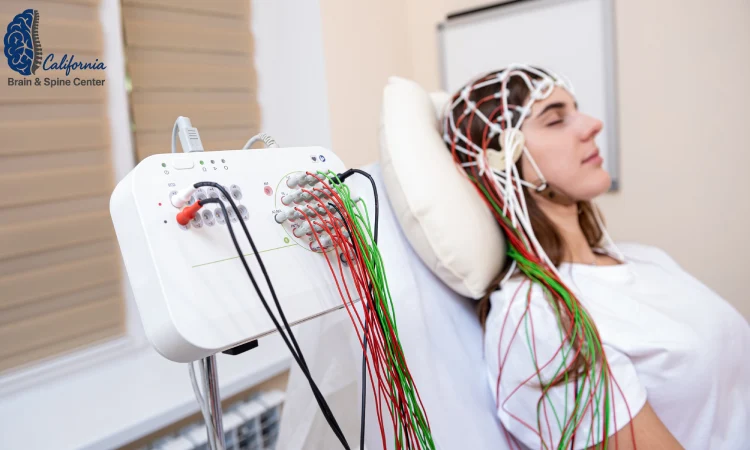
Whole-Body Intake. We ask about sleep, diet, stress factors that modulate neural tone.
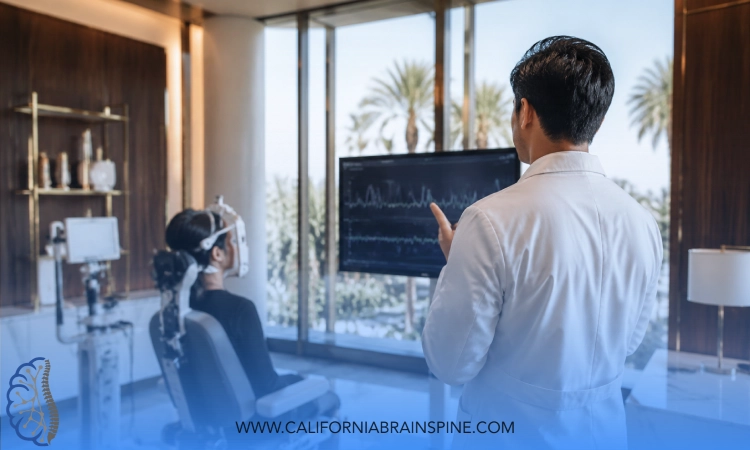
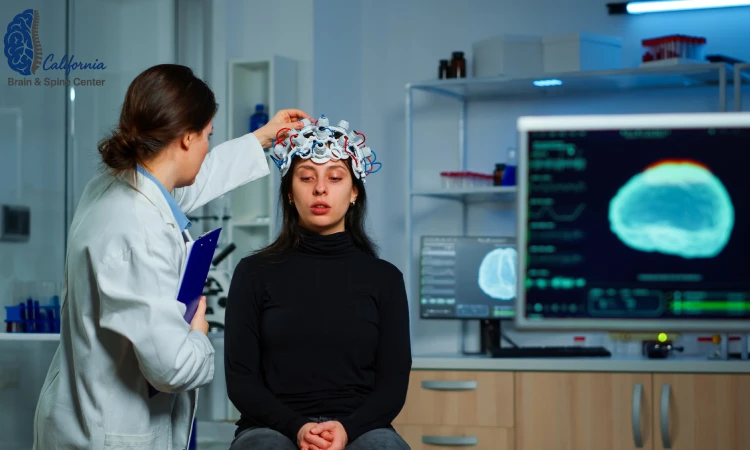
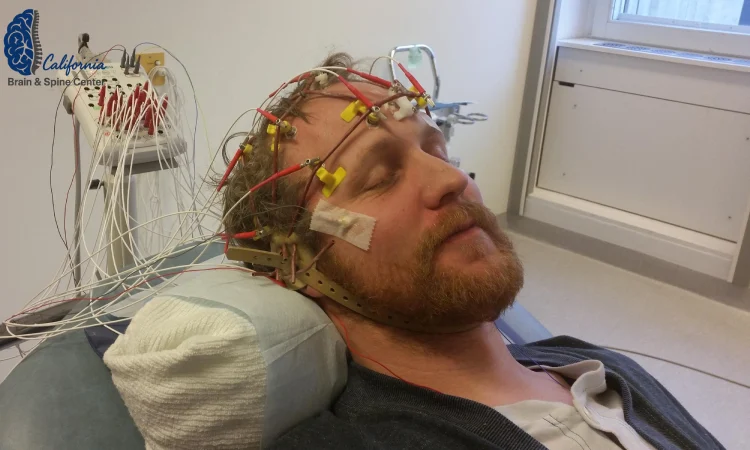
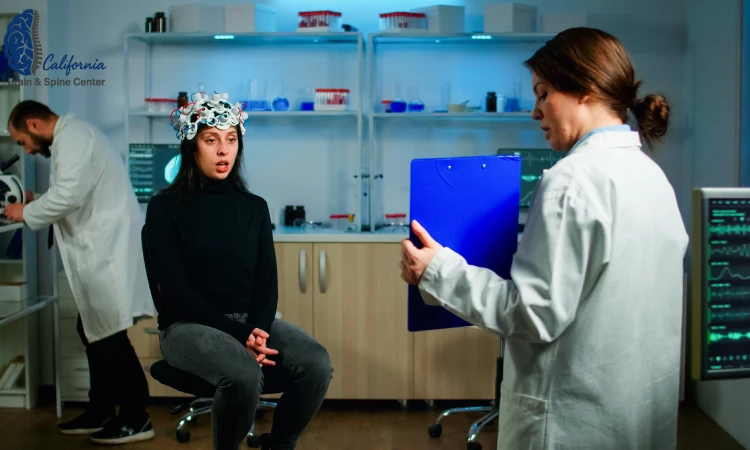
Eye-Tracking & Balance Testing. Infrared goggles, force-plate posturography, and dynamic visual-acuity screens pinpoint deficits.
Personalized Exercise Prescription. No cookie-cutter handouts; reps, speed, and rest intervals match your neural capacity.
Re-testing. Subtle gains (e.g., 3-degree improvement in head-impulse metrics) confirm the brain is adapting.
Most patients perform home drills 2–3 times daily for 4–6 weeks. The cumulative micro-doses of stimulation make Functional neurology for treating dizziness without medication both powerful and surprisingly gentle.
Real-Life Transformation: Jordan’s Story
Jordan, 48, developed chronic rocking vertigo after a severe sinus infection. Antihistamines dulled the seasick feeling but left him foggy at work. In our program he performed gaze-stabilization drills, single-leg stance on foam, and optokinetic stripes no medications. After five weeks Jordan hiked Mount Diablo without trekking poles and later emailed, “The ground finally feels solid again.” His journey captures the promise of Functional neurology for treating dizziness without medication: restoring life, not just reducing symptoms.
Supporting Your Brain Between Visits
Stay hydrated. Even mild dehydration amplifies neural noise.
Eat steady-glucose meals. Blood-sugar swings can mimic vertigo.
Sleep 7–9 hours. REM stages finalize the day’s neural rewiring.
Practice mindful breathing. Vagal tone stabilizes autonomic inputs that influence balance centers.
Limit scrolling. Rapid visual flow stresses recovering ocular reflexes.
Adopting these habits super-charges the gains you earn through Functional neurology for treating dizziness without medication.
Ready to Reclaim Steady Ground?
If dizziness is shrinking your world, schedule a Comprehensive Functional Neurology & Balance Evaluation at the California Brain & Spine Institute. Our compassionate team combines advanced diagnostics with customized neuro-exercise plans so you can step back into daily life clear-headed and confident.
Real Time Neurological Findings That Explain Dizziness Without Drugs
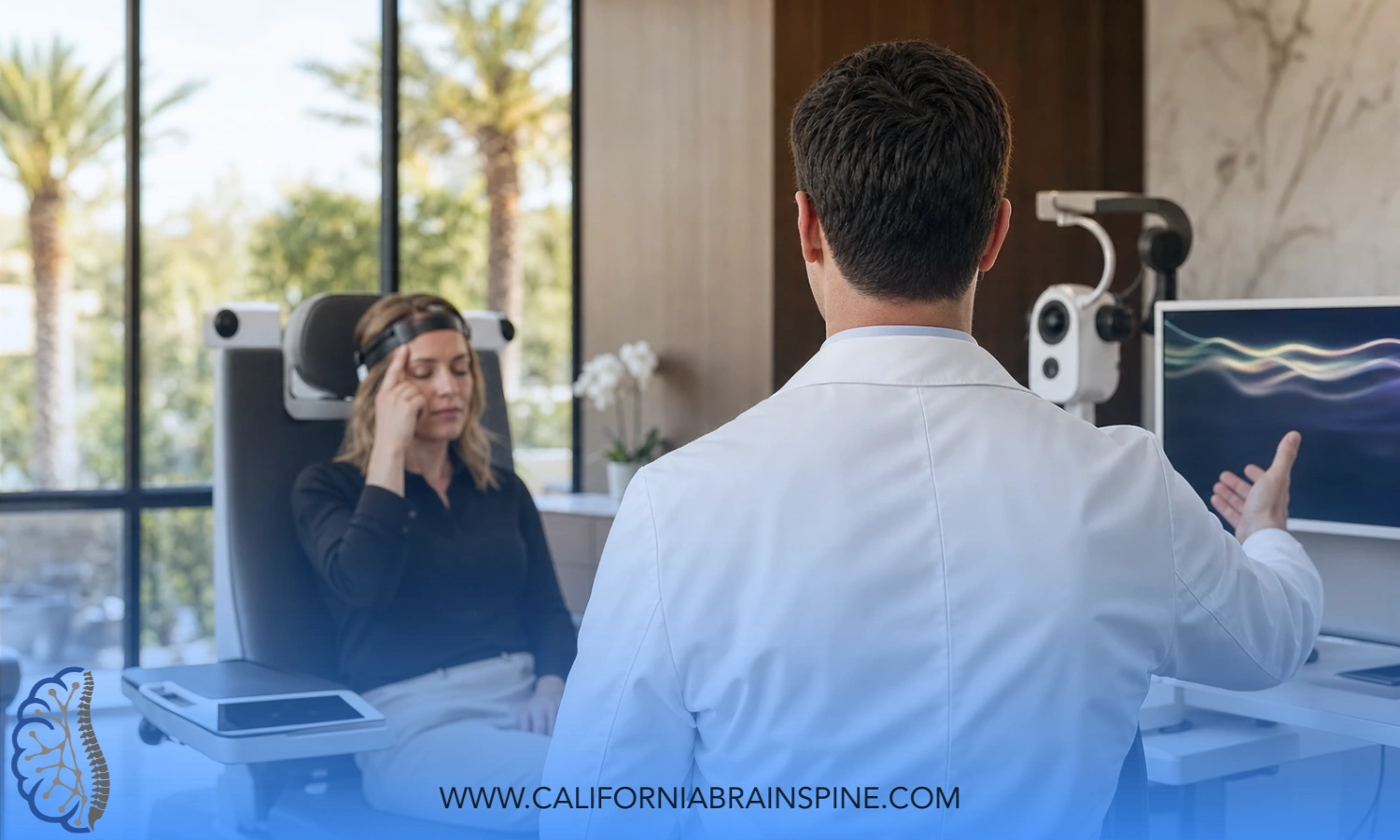
This clip highlights how we test the interaction between the spine, legs, and nervous system to uncover the root cause of dizziness. Many patients do not need medication because the real issue is a mismatch in how the brain integrates sensory input. This kind of evaluation allows us to create focused neurological strategies that restore balance naturally.
Summary
Medication has its place, but it isn’t the only path. Functional neurology for treating dizziness without medication identifies the exact neural bottleneck, then leverages targeted drills to reopen that pathway. Repeated stimulus sparks neuroplastic repair, equilibrium returns, and quality of life rebounds often in weeks, not years.
Frequently Asked Questions
1. How many sessions will I need?
Most patients complete 6–10 in-clinic visits across two months, paired with daily home drills.
2. Will the exercises make me temporarily dizzier?
Mild, short-lived symptom bumps are normal; they signal the brain is recalibrating.
3. Is functional neurology safe for seniors?
Absolutely. Exercises are scaled to cardiovascular and musculoskeletal limits, and older adults often experience dramatic stability gains.
4. Can I continue regular workouts?
Yes, if they don’t spike symptoms above a 3/10. Your therapist will guide modifications.
5. What if my dizziness began years ago?
Neuroplasticity persists lifelong. Many chronic cases still improve with persistent, tailored training.
6. Do I need a referral?
No. You can book directly. We’ll coordinate with your primary physician as needed.
7. How soon might I feel better?
Early changes like steadier vision often appear within two weeks. Full stabilization typically follows consistent practice over 4–8 weeks.
 Alireza Chizari, MSc, DC, DACNB
 Alireza Chizari, MSc, DC, DACNB
 Clinical Focus
 Clinical Focus
 Assessment & Treatment Approach
 Assessment & Treatment Approach
Objective testing may include:
Treatment programs may involve:
Clinic Information
 Clinic Information
 Medical Review
 Medical Review
 Disclaimer
 Disclaimer