
If you feel like your attention is slipping, your memory is not as sharp as it used to be, or your brain gets tired too quickly, you are not alone. Many high functioning adults describe the same thing: they can still push through the day, but it takes more effort, and the results feel inconsistent.
I, Dr. Alireza Chizari, DC, DACNB, wrote this article to give you a grounded, practical approach to brain training for focus and memory that respects how the nervous system actually works. You are the hero of the story. You are the one carrying responsibilities while trying to feel clear, steady, and confident again. My role is to be your guide, to help you understand the why behind your symptoms, and to show you safe steps that can support real change.
This page is about brain training for focus and memory through evidence informed habits, targeted exercises, and clinic guided rehabilitation when needed. If you are in Calabasas or anywhere in Southern California, you will also see how you can use our evaluation and non invasive neurological services at California Brain & Spine Center to build a personalized plan.
What brain training for focus and memory actually means?
Brain training for focus and memory is not a single app, a single game, or a magical shortcut. It is the intentional practice of skills that the brain uses every day: attention control, working memory, processing speed, and the ability to filter distractions. When practiced correctly, these skills can improve because the brain is plastic, meaning it can adapt through structured repetition and recovery.
In my clinical work, I also emphasize this: brain training for focus and memory must match the person. A stressed nervous system will not learn like a regulated nervous system. Poor sleep, chronic dizziness, post concussion symptoms, migraine physiology, or dysautonomia can all reduce your capacity to focus and remember. That does not mean you are broken. It means you need a plan that addresses the whole system.
The hidden reasons focus and memory get worse even in smart people
Focus is not only willpower. Memory is not only intelligence. Both are strongly influenced by energy, sensory load, stress physiology, and how well your brain can switch between tasks.
Common drivers include chronic sleep debt, constant multitasking, screen overload, and irregular meals that create blood sugar swings. Another overlooked driver is unresolved vestibular or visual strain. If your brain is working hard just to feel steady in space, it has less capacity left for attention and recall. Post concussion patterns can also reduce processing efficiency, even when imaging looks normal.
The most important shift is this: if your focus and memory are slipping, you do not need shame. You need clarity about the drivers.
When you treat attention like a skill instead of a flaw, progress becomes measurable.

Brain training for focus and memory starts with a stable nervous system
Before we talk about exercises, I want you to understand the foundation. The brain learns best when it is safe, regulated, and not constantly firefighting.
Sleep consistency is the first training tool
Memory consolidation happens during sleep. Attention control improves when the brain is rested. You do not need perfect sleep, but you do need consistency. If you go to bed and wake up at wildly different times, your brain has to spend energy adapting instead of learning.
Hydration and nutrition influence attention circuitry
Even mild dehydration can reduce cognitive performance. Skipping meals can make focus feel jittery, and it can increase anxiety, which then reduces working memory. I often tell patients: you cannot train a brain that is running on fumes.
Movement supports learning, not just fitness
Gentle movement increases blood flow and supports regulation. It also helps the brain practice rhythm and coordination, which are deeply connected to cognitive function.
Practical brain training for focus and memory you can start today
Here are a few starting points that work because they are simple, repeatable, and aligned with how attention actually functions. This is not a replacement for medical care, but it is a practical entry point.
• ✅ Single task practice for 10 minutes: one task, one window, phone away
• ✅ Timed recall: read a short paragraph, close it, summarize out loud from memory
• ✅ Working memory stacking: remember a short list, then do a small task, then recall the list
• ✅ Focus recovery breaks: 60 seconds of slow breathing between work blocks
• ✅ Visual rest: look far away for 20 seconds after screen time to reduce eye strain
If you do one thing consistently, choose single task practice. Distraction resistance is one of the highest value skills in brain training for focus and memory.
Small practices done daily become a new baseline. That is how brains change.

How to train attention without burning out?
The trap of doing too much too fast
Many people try brain training for focus and memory when they are already exhausted, then they add intense routines, and symptoms get worse. That is not failure. That is overload. The goal is to train at the edge of challenge, not at the edge of collapse.
Use the right difficulty signal
The right difficulty feels effortful but doable. You can recover within minutes, not hours. If an exercise creates headache, nausea, dizziness, or a crash later in the day, the dose is too high.
The two knobs you control
You can change duration and complexity. Start short. Increase one variable at a time. This is how we build neuroplasticity safely in clinic, and it applies at home too.
Brain training for focus and memory when brain fog is part of the picture
Brain fog is not a diagnosis, but it is a real experience. It often includes slowed thinking, word finding issues, and a sense that your brain is “not online.” Brain training for focus and memory can help, but only when we respect the underlying contributors.
In my practice, brain fog often overlaps with post concussion symptoms, dizziness, vestibular dysfunction, autonomic imbalance, and chronic stress. When those drivers are active, the brain may struggle to allocate resources. That is why evaluation matters. If brain fog is persistent, the best plan is not guessing. It is assessing.
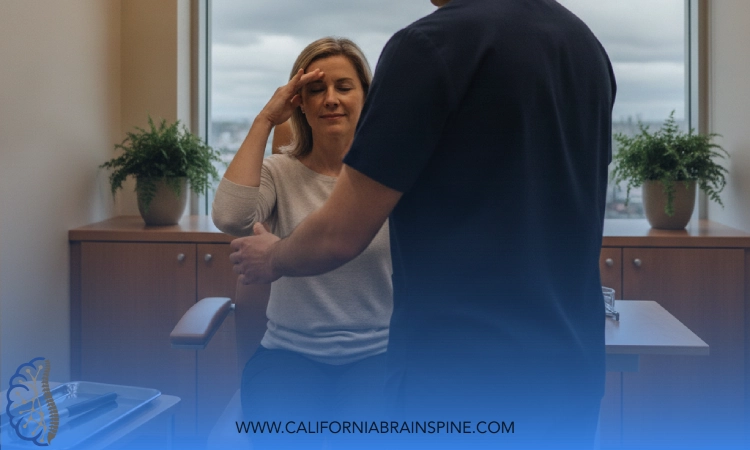
Image note: “A patient looking relieved while discussing brain fog concerns with a clinician, modern Calabasas clinic, warm professional tone, no text.”
Middle section: how California Brain & Spine Center approaches cognitive performance concerns?
At California Brain & Spine Center, patients are evaluated with a nervous system first lens. The clinic serves Calabasas and communities across Southern California, and many patients arrive with focus and memory concerns alongside dizziness, headaches, post concussion symptoms, visual strain, or fatigue.
Care is personalized based on findings. Patients may be supported with Cognitive Rehabilitation to improve attention, memory strategies, and processing efficiency. Neuroplasticity Rehabilitation may be used to create structured adaptation through progressive tasks and recovery. NeuroSensory Integration can be relevant when sensory processing and balance systems are affecting cognitive load. Vestibular Rehabilitation can also improve mental clarity when the brain is spending excessive resources on spatial stability.
In select cases, non invasive therapies may be considered as part of a comprehensive plan, such as Low Level Laser Therapy, Pulsed Electromagnetic Field, Hyperbaric Oxygen Therapy, and GammaCore Vagus Nerve Stimulation, along with structured care through the NeuroRevive Program when appropriate. These options are never presented as guarantees. They are tools that may support regulation and recovery depending on the clinical picture.
The most common mistakes that make focus and memory worse
This section is about what to stop doing, gently, without blame. These are common patterns I see in high performers who feel frustrated by their brain.
• Constant task switching every few minutes
• Heavy late night screen exposure that disrupts sleep timing
• Relying on caffeine while skipping food and hydration
• Trying to “power through” dizziness or headaches without a plan
• Measuring your brain only by your worst day
The brain needs consistency more than intensity. When you give it consistency, brain training for focus and memory becomes far more effective.
Your brain is not lazy. It is adapting to the conditions you give it.
Image note: “A simple scene showing a phone placed face down next to a notebook and a glass of water, calm productivity vibe, no text.”
A simple weekly plan that makes brain training realistic
This is a framework I often recommend because it fits real life and reduces the pressure to be perfect.
Week structure concept:
Session length: 10 to 20 minutes
Frequency: 4 days per week
Goal: consistency and clean recovery
Example weekly rhythm:
Day 1 attention control and single task practice
Day 2 working memory and timed recall
Day 3 recovery emphasis with gentle movement and visual rest
Day 4 combined session at a slightly higher difficulty
You will notice I did not say “every day forever.” Sustainability matters. If you want brain training for focus and memory to last, your plan must feel respectful.
When to get a professional evaluation instead of doing it alone?
I want you to train wisely, not blindly. Consider a clinical evaluation if you have focus and memory issues along with persistent dizziness, headaches, brain fog, sleep disruption, post concussion history, or symptoms that worsen with screens and busy environments. Those patterns can indicate a neurological, vestibular, or autonomic contributor that needs targeted care.
Also seek prompt medical attention if you have new neurological symptoms such as weakness, slurred speech, new severe headache, fainting, or sudden confusion. Safety comes first.
A short patient story before the conclusion
Some time ago, a patient named S. came to see me feeling embarrassed about forgetting simple things and losing focus in meetings. S. was successful, disciplined, and hardworking, yet the brain felt unreliable. The more S. tried to push harder, the worse the fatigue became. S. also mentioned subtle dizziness in stores and headaches after long screen time.
I started with a careful evaluation and explained that brain training for focus and memory works best when we reduce cognitive load from hidden drivers. We identified a pattern of visual strain and vestibular stress that was quietly consuming attention resources. We built a plan using Cognitive Rehabilitation strategies for attention and recall, paired with NeuroSensory Integration and vestibular oriented work to improve stability and reduce overwhelm. We also used pacing rules so S. trained without crashing.
After several weeks, S. reported sharper focus, fewer headaches after screens, and a return of confidence in daily work. The biggest change was emotional: S. stopped fearing the brain and started trusting the process.
Your most common questions about brain training for focus and memory
- Does brain training for focus and memory really work
It can help when it targets real skills like attention control, working memory, and processing efficiency, and when it is done consistently with proper recovery. Results are stronger when sleep, stress, and underlying neurological contributors are addressed. - Are brain training apps enough
Apps can be a helpful tool, but they are rarely enough on their own. Many people improve more when training is paired with real world habits, distraction control, and a plan that fits their symptoms and lifestyle. - How long does it take to see improvement
Some people notice small changes within a few weeks, especially in stamina and distraction resistance. Larger changes often require sustained practice and addressing underlying drivers like sleep disruption, dizziness, headaches, or post concussion issues. - What if brain training makes my symptoms worse
That usually means the dose is too high or an underlying driver is being missed. Reduce duration and complexity, focus on recovery, and consider a clinical evaluation if symptoms like headache, dizziness, nausea, or fatigue spikes keep happening. - Can dizziness or vestibular issues affect focus and memory
Yes. If the brain is working hard to stabilize balance and vision, it can have fewer resources available for attention and memory. Addressing vestibular and sensory integration issues can improve cognitive performance in many patients. - What can I do if I live near Calabasas and want help
You can request an evaluation at California Brain & Spine Center. A personalized plan may include Cognitive Rehabilitation, Neuroplasticity Rehabilitation, NeuroSensory Integration, Vestibular Rehabilitation, and supportive non invasive options when appropriate.
Conclusion
I, Dr. Alireza Chizari, DC, DACNB, want you to remember this: brain training for focus and memory is not about proving something to yourself. It is about building a steadier nervous system, training the right skills with the right dose, and creating consistency that your brain can trust. When we support sleep, hydration, pacing, and sensory stability, the brain becomes far more capable of attention control and memory recall.
If your focus and memory concerns are persistent, or if they come with dizziness, headaches, brain fog, or post concussion history, you deserve a real evaluation, not guesswork. My team and I in Calabasas work with complex neurological and vestibular patterns every week, and we build personalized plans that aim for stable, functional life improvements.
Contact California Brain & Spine Center to request an appointment or reach out for a personalized neurological and vestibular evaluation. Our goal is to help you move toward the best version of your life and function, not just manage isolated symptoms.