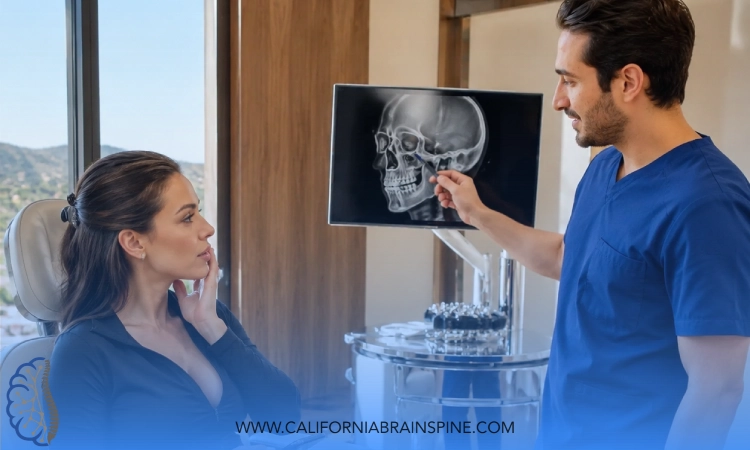

Eye Tracking and Antisaccade Testing: Advanced Tools for Concussion and Neurological Screening
If you have been struggling with dizziness, brain fog, visual discomfort, slowed thinking, or lingering symptoms after a concussion, you may be wondering why routine exams sometimes fail to explain what you are feeling. I, Dr. Alireza Chizari, DC, DACNB, want you to know that these symptoms are real, they can reflect measurable changes in neurological function, and there are advanced ways to evaluate them more precisely.
In this article, I will explain how eye tracking and antisaccade testing can help uncover subtle problems in brain and eye coordination that may be missed in a basic neurological screening. These tools can provide valuable insight into concussion recovery, traumatic brain injury, vestibular dysfunction, cognitive strain, and other neurological concerns.
You are the one living with the symptoms, asking hard questions, and trying to get your life back. My role, and our role at California Brain & Spine Center in Calabasas, is to guide you with a careful, scientific, and personalized approach so you can better understand what is happening and what your next steps should be.
If you are looking for more than symptom management, this page will help you understand what eye tracking and antisaccade testing actually measure, why they matter, and how our clinic can use these advanced neurological tools as part of a larger plan for recovery and improved function.
Why Eye Tracking and Antisaccade Testing Matter More Than Many Patients Realize
Many neurological symptoms begin with a simple complaint. A person says they feel off, tired, dizzy, unfocused, overstimulated, or not mentally sharp. Yet the brain does not always reveal subtle dysfunction through basic imaging or routine office screening. This is one reason eye tracking and antisaccade testing have become increasingly important in modern neurological evaluation.
The eyes are not just organs of sight. They are part of a highly sophisticated brain network involving the frontal lobes, cerebellum, basal ganglia, brainstem, vestibular system, and attention systems. When these systems are under stress after concussion or other neurological injury, eye movements often become less accurate, slower to adapt, or harder to control.
I often explain to patients that the brain speaks through movement. Eye movements are among the fastest and most measurable movements the nervous system produces. When we evaluate them carefully, we can learn a great deal about processing speed, inhibitory control, visual attention, motor planning, and vestibular integration.
Image note: “A close-up medical illustration of the human brain connected to eye movement pathways, showing the prefrontal cortex, cerebellum, brainstem, and visual tracking systems, in a clean and modern clinical style.”
What Eye Tracking and Antisaccade Testing Can Reveal About Brain Function
At a deeper level, eye tracking and antisaccade testing help us evaluate whether the brain is handling information efficiently. In a concussion or neurological screening setting, these tools can provide information about:
- ✅ Visual attention and focus
- ✅ Processing speed and reaction timing
- ✅ Response inhibition and executive control
- ✅ Coordination between visual and vestibular systems
- ✅ Subtle oculomotor dysfunction that may contribute to dizziness, reading fatigue, and brain fog
This matters because many patients with post-concussion symptoms are told that everything looks normal, even while daily life still feels difficult. A more advanced assessment can help bridge the gap between how you feel and what can be measured clinically.
Healing often begins the moment a patient feels seen, heard, and finally understood by the right evaluation.
How the Brain Uses Eye Tracking and Antisaccade Testing to Expose Hidden Dysfunction
When I discuss eye tracking and antisaccade testing with patients, I try to simplify a very technical idea. The brain must do far more than move the eyes from one point to another. It must suppress automatic responses, shift attention, maintain stability, process moving information, and coordinate sensory input from vision, balance, and body awareness.
An antisaccade task is especially useful because it requires the brain to resist a reflex. Instead of looking toward a target, the person must look in the opposite direction. That sounds simple, but neurologically it is demanding. It depends on executive function, frontal lobe control, and efficient communication between multiple brain regions.
If a patient struggles with that task, it may suggest difficulty with inhibitory control, cognitive flexibility, or cortical regulation after concussion, traumatic brain injury, or other neurological stressors. This does not replace a full diagnosis on its own, but it can become an important piece of a larger clinical picture.
Eye Tracking Is About Precision, Timing, and Real World Function
Eye tracking technology measures how the eyes move in response to targets, motion, attention demands, and changing visual tasks. In a clinical setting, this may include evaluating smooth pursuit, saccades, fixation stability, gaze holding, reaction time, and error patterns.
A patient may not realize that symptoms like losing place while reading, feeling overwhelmed in busy stores, getting dizzy in traffic, or struggling with screens can reflect disrupted oculomotor control. Those complaints are not merely vague. They may be signs that the brain is working harder than it should to process visual information.
Antisaccade Testing Challenges the Brain in a More Meaningful Way
Antisaccade tasks are especially valuable because they are cognitively demanding. They test whether a person can inhibit an automatic eye movement and generate a voluntary one instead. This creates a meaningful window into frontal lobe function, attentional control, and neurological efficiency.
At California Brain & Spine Center, advanced neurological thinking is applied to understand not only whether symptoms are present, but why they may be happening. That is where eye tracking and antisaccade testing can become highly relevant in concussion and neurological screening.
The goal is not simply to name symptoms. The goal is to understand the system behind them.
When These Advanced Tools Are Especially Helpful After Concussion
I often see patients who describe a very common story. They had a concussion weeks or months ago. The initial injury may have seemed mild, but they still feel off balance, mentally slower, visually uncomfortable, or unable to tolerate normal daily demands. In these cases, eye tracking and antisaccade testing can help us look beyond the surface.
Concussion can affect visual processing, vestibular function, autonomic regulation, and cognitive endurance. These changes are not always obvious on standard scans. However, eye movement testing may show abnormal latency, poor tracking, impulsive saccades, unstable fixation, or difficulty suppressing reflexive responses.
These findings can support a more accurate and individualized plan of care. Rather than relying on generic advice, we can better determine whether symptoms are more strongly tied to visual-vestibular dysfunction, cognitive overload, impaired sensory integration, or broader neurological dysregulation.
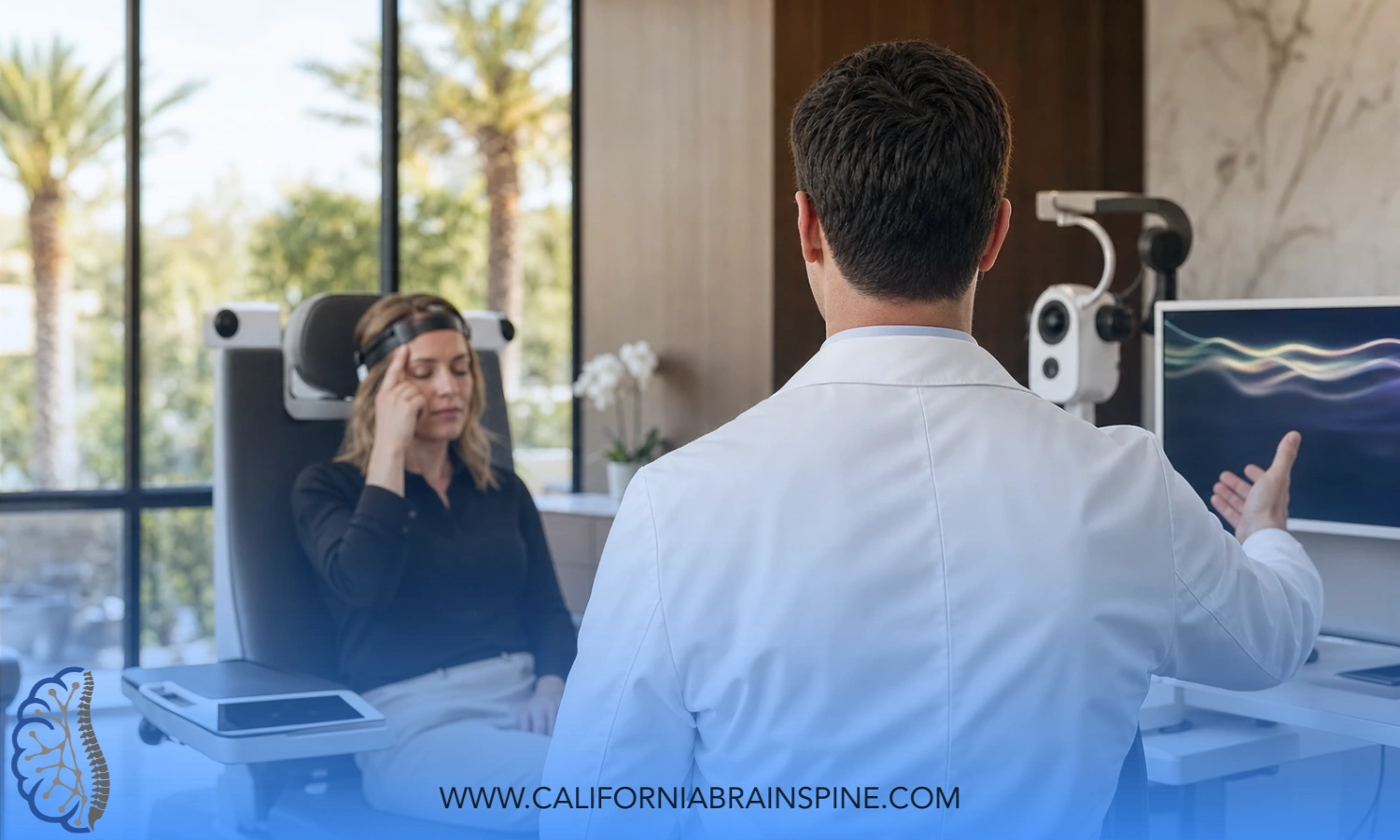
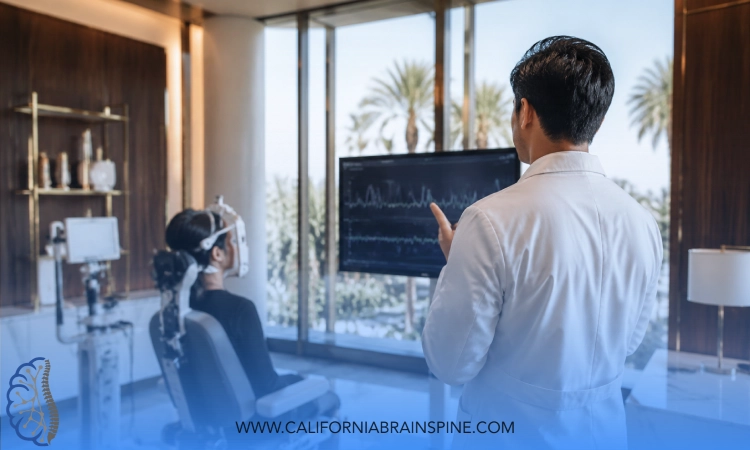
Image note: “An adult concussion patient in a modern Calabasas neurology clinic completing a computerized eye tracking assessment while a specialist reviews results on a monitor, calm and professional environment.”
Eye Tracking and Antisaccade Testing in Broader Neurological Screening
These tools are not limited to concussion alone. In a broader neurological screening context, eye tracking and antisaccade testing may help identify signs of dysfunction related to vestibular disorders, brain injury, cognitive impairment, autonomic imbalance, and certain neurodevelopmental or movement-related conditions.
At California Brain & Spine Center, patients are evaluated with a comprehensive lens. The clinic considers symptoms, history, physical examination findings, balance responses, oculomotor performance, autonomic features, and functional limitations. The goal is not to reduce a patient to one test, but to use advanced testing as part of a well-reasoned clinical framework.
Dr. Alireza Chizari, DC, DACNB’s background in engineering and clinical neuroscience supports a particularly analytical and systems-based approach to complex cases. That combination can be valuable when a patient presents with overlapping symptoms such as dizziness, visual strain, fatigue, brain fog, memory issues, and post-traumatic stress on the nervous system.
The most advanced care does not rush to conclusions. It builds clarity step by step.
Why Objective Testing Can Be So Reassuring for Patients
Many patients feel relief when they learn there are objective ways to evaluate part of what they are experiencing. When symptoms are invisible, people often begin to doubt themselves. Family members, employers, or even previous providers may not fully understand the extent of the struggle.
Objective measures from eye tracking and antisaccade testing can help validate those experiences. They can also help track progress over time. When a treatment plan is working, changes in eye movement control may accompany improvements in reading tolerance, dizziness, concentration, confidence, and overall function.
These Tests Are Powerful, But They Work Best Inside a Bigger Clinical Picture
No single assessment should be treated as the whole answer. Strong neurological care comes from integrating multiple layers of information. That includes history, symptoms, physical findings, vestibular evaluation, cognitive function, autonomic patterns, and patient goals.
For that reason, California Brain & Spine Center uses advanced tools thoughtfully. Eye tracking and antisaccade testing are most valuable when interpreted by clinicians who understand both the technology and the complex neurological systems behind the data.
How California Brain & Spine Center Integrates Testing With Real Treatment Planning
At California Brain & Spine Center in Calabasas, patients are not simply given a label and sent home. Once relevant findings are identified, the clinical team builds a personalized strategy that may include Vestibular Rehabilitation, Cognitive Rehabilitation, Neuroplasticity Rehabilitation, NeuroSensory Integration, and other evidence-informed, non-invasive neurological therapies.
Depending on the patient’s needs, care may also involve technologies and approaches such as LLLT, PEMF, HBOT, GammaCore Vagus Nerve Stimulation, and the NeuroRevive Program. These options are selected carefully, based on the patient’s pattern of dysfunction, tolerance, safety profile, and goals.
A strong care plan often includes:
- ✅ A detailed neurological and vestibular evaluation
- ✅ Identification of visual, balance, cognitive, and autonomic contributors
- ✅ A phased treatment strategy based on tolerance and progress
- ✅ Reassessment to measure functional improvement over time
This is one of the most important points for patients to understand: testing is most helpful when it leads to meaningful action. The purpose of advanced screening is not just to collect data. It is to create a smarter path forward.
Image note: “A multidisciplinary neurological rehabilitation setting in Calabasas, California, with a patient working through visual and vestibular exercises under professional supervision, bright and reassuring clinical atmosphere.”
What Patients Often Feel Before and After Proper Neurological Screening
Before advanced evaluation, many patients feel confused. They may know something is wrong, but they cannot explain it clearly. They feel fine for a short period, then crash after reading, driving, screen time, or busy environments. They may alternate between dizziness, fatigue, irritability, headaches, poor concentration, and sleep disruption.
After a more precise screening process, the experience often changes. Patients begin to see patterns. They understand that their symptoms are interconnected rather than random. They learn that visual strain, vestibular stress, cognitive overload, and autonomic dysregulation may all be part of the same larger picture.
This shift in understanding is powerful. It replaces uncertainty with direction, and fear with a more informed plan.
When patients understand the source of their struggle, they can begin to rebuild trust in their own recovery.
A Realistic Patient Story From My Clinical Experience
Some time ago, a patient came to see me after months of lingering post-concussion symptoms. She had already tried to push through work and daily responsibilities, but she kept experiencing dizziness, light sensitivity, screen intolerance, reading fatigue, and a frustrating sense of mental slowing. She told me that the hardest part was not knowing why she still felt so limited when others expected her to be fine.
As I evaluated her, it became clear that her symptoms were not random. We used advanced neurological assessment, including eye tracking and antisaccade testing, as part of a broader examination. The results suggested meaningful oculomotor inefficiency and visual-vestibular strain. In other words, her brain was still working too hard to perform tasks that should have felt automatic.
I explained the findings to her in plain language and built a personalized plan that included Vestibular Rehabilitation, Cognitive Rehabilitation, and targeted neuroplasticity-based care. Over time, her tolerance for reading improved, her dizziness episodes became less frequent, and her mental fatigue began to decrease. More importantly, she told me she finally felt understood and hopeful again.
That outcome matters. Not because every recovery is identical, but because it shows what can happen when symptoms are taken seriously and evaluated with the right tools.
Your most common questions about eye tracking and antisaccade testing
What is eye tracking and antisaccade testing used for in concussion care?
Eye tracking and antisaccade testing are used to measure how well the brain controls eye movements, attention, inhibition, and visual processing. In concussion care, these tools may help identify subtle dysfunction involving oculomotor control, visual-vestibular integration, and cognitive load that may not appear on a standard exam.
Can eye tracking and antisaccade testing diagnose a concussion by themselves?
No. These tests should not be viewed as a standalone diagnosis. They are advanced screening and assessment tools that provide meaningful data, but they work best when interpreted alongside patient history, symptom patterns, neurological examination, vestibular findings, and overall clinical context.
Why do eye movements matter so much in neurological screening?
Eye movements reflect the function of multiple brain systems working together at high speed. They can reveal problems with timing, inhibition, visual attention, motor planning, and sensory integration. Because of this, abnormal eye movements may offer insight into conditions such as concussion, traumatic brain injury, vestibular dysfunction, and other neurological disorders.
Who may benefit from eye tracking and antisaccade testing?
Patients who may benefit include those with lingering concussion symptoms, dizziness, balance problems, brain fog, reading difficulty, visual motion sensitivity, screen intolerance, concentration issues, or unexplained neurological complaints. These tools may also be useful in broader neurological screening when subtle dysfunction is suspected.
Are these tests uncomfortable or invasive?
In most cases, they are non-invasive and well tolerated. Patients are typically asked to look at targets or respond to visual cues while specialized systems record eye movement patterns. Some individuals with severe visual sensitivity or dizziness may feel mild temporary discomfort, but the process is generally safe and clinically manageable.
How do these tests help guide treatment?
When interpreted correctly, they can help identify whether symptoms are more related to oculomotor dysfunction, visual-vestibular mismatch, attentional control problems, or broader neurological dysregulation. This allows treatment to be more targeted and may support decisions related to Vestibular Rehabilitation, Cognitive Rehabilitation, Neuroplasticity Rehabilitation, and other personalized therapies.
Conclusion
I want to leave you with one important message: if you have ongoing symptoms after a concussion or another neurological event, the absence of obvious findings on a basic exam does not mean your struggle is insignificant. Eye tracking and antisaccade testing can provide a deeper look into how your brain is functioning, especially when it comes to visual control, attention, inhibition, and coordination.
At California Brain & Spine Center, I use a personalized and science-informed approach to help patients understand what their symptoms may be telling us. With my background in engineering, chiropractic care, and postdoctoral clinical neuroscience, I believe in careful analysis, real listening, and treatment planning that respects the complexity of the nervous system.
If you are dealing with dizziness, brain fog, visual discomfort, balance problems, or lingering post-concussion symptoms, you do not have to guess your way forward. A thorough neurological and vestibular evaluation may help clarify what is happening and what kind of care may actually move you toward better function.
If you are ready to take the next step, I invite you to contact California Brain & Spine Center in Calabasas to request an appointment or a personalized neurological and vestibular evaluation. Our goal is not just to help you manage isolated symptoms. Our goal is to help you move toward a stronger, clearer, and more functional version of your life.
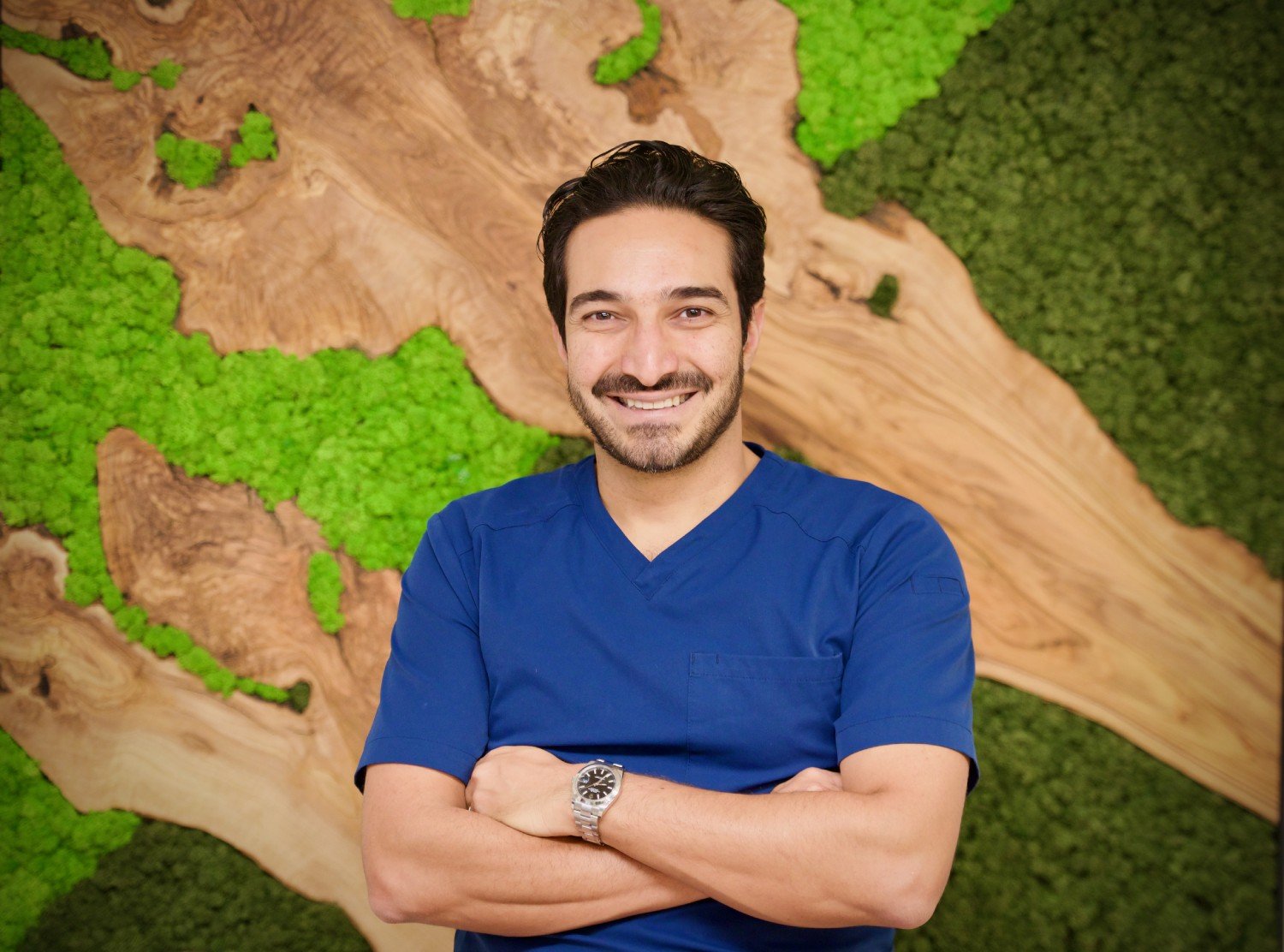
Dr. Alireza Chizari
This article has been medically reviewed for clinical accuracy by Dr. Alireza Chizari, DC, DACNB. Committed to evidence-based practice, Dr. Chizari ensures all content reflects the highest standards of functional neurology care.
Comments
Find our article more easily in Google.
FAQ
What is Functional Neurology?
Functional Neurology is a healthcare specialty that focuses on assessing and rehabilitating the nervous system’s function. It emphasizes neuroplasticity—the brain’s ability to adapt and reorganize—using non-invasive, evidence-based interventions to improve neurological performance.
How does Functional Neurology differ from traditional neurology?
Traditional neurology often concentrates on diagnosing and treating neurological diseases through medications or surgery. In contrast, Functional Neurology aims to optimize the nervous system’s function by identifying and addressing dysfunctions through personalized, non-pharmaceutical interventions.
Is Functional Neurology a replacement for traditional medical care?
No. Functional Neurology is intended to complement, not replace, traditional medical care. Practitioners often collaborate with medical professionals to provide comprehensive care.
What conditions can Functional Neurology help manage?
Functional Neurology has been applied to various conditions, including:
• Concussions and Post-Concussion Syndrome
• Traumatic Brain Injuries (TBI)
• Vestibular Disorders
• Migraines and Headaches
• Neurodevelopmental Disorders (e.g., ADHD, Autism)
• Movement Disorders
• Dysautonomia
• Peripheral Neuropathy
• Functional Neurological Disorder (FND)
Can Functional Neurology assist with neurodegenerative diseases?
While Functional Neurology does not cure neurodegenerative diseases, it can help manage symptoms and improve quality of life by optimizing the function of existing neural pathways.
What diagnostic methods are used in Functional Neurology?
Functional Neurologists employ various assessments, including:
• Videonystagmography (VNG)
• Computerized Posturography
• Oculomotor Testing
• Vestibular Function Tests
• Neurocognitive Evaluations
How is a patient’s progress monitored?
Progress is tracked through repeated assessments, patient-reported outcomes, and objective measures such as balance tests, eye movement tracking, and cognitive performance evaluations.
What therapies are commonly used in Functional Neurology?
Interventions may include:
- Vestibular Rehabilitation
- Oculomotor Exercises
- Sensorimotor Integration
- Cognitive Training
- Balance and Coordination Exercises
- Nutritional Counseling
- Lifestyle Modifications
Are these therapies personalized?
Absolutely. Treatment plans are tailored to the individual’s specific neurological findings, symptoms, and functional goals.
Who can benefit from Functional Neurology?
Individuals with unresolved neurological symptoms, those seeking non-pharmaceutical interventions, or patients aiming to optimize brain function can benefit from Functional Neurology.
Is Functional Neurology suitable for children?
Yes. Children with developmental delays, learning difficulties, or neurodevelopmental disorders may benefit from Functional Neurology approaches.
How does Functional Neurology complement other medical treatments?
It can serve as an adjunct to traditional medical care, enhancing outcomes by addressing functional aspects of the nervous system that may not be targeted by conventional treatments.
How is technology integrated into Functional Neurology?
Technological tools such as virtual reality, neurofeedback, and advanced diagnostic equipment are increasingly used to assess and enhance neurological function.
What is the role of research in Functional Neurology?
Ongoing research continues to refine assessment techniques, therapeutic interventions, and our understanding of neuroplasticity, contributing to the evolution of Functional Neurology practices.