
How the Brain Controls Antisaccades: The Role of the Prefrontal Cortex, Basal Ganglia, and Cerebellum
If you have been living with dizziness, brain fog, trouble focusing, visual overwhelm, reading fatigue, or symptoms after a concussion, you may already know that something feels “off” in the way your brain and eyes work together. I, Dr. Alireza Chizari, DC, DACNB, want you to know that these symptoms are real, and they often give us important clues about how your nervous system is functioning.
In this article, I will explain how the brain controls antisaccades and why this eye movement task can reveal so much about attention, inhibition, timing, coordination, and recovery after neurological injury. Antisaccades are not just an eye test. They are a window into how your brain chooses, suppresses, redirects, and organizes movement.
At California Brain & Spine Center in Calabasas, California, my goal is to help patients understand what their symptoms may be telling us. You are the hero of this story because you are the one living with the symptoms, searching for answers, and choosing to move forward. My role is to guide you with a careful neurological and vestibular evaluation, evidence-informed care, and a personalized plan designed around your brain, your goals, and your life.
If you are dealing with concussion symptoms, traumatic brain injury recovery, dizziness, balance problems, brain fog, visual disturbances, memory issues, or difficulty returning to work, school, driving, or daily function, understanding how the brain controls antisaccades can help you see why a detailed brain-based evaluation matters.
Why Antisaccades Reveal More Than Simple Eye Movement
An antisaccade is an eye movement where you are asked to look in the opposite direction of a visual target. For example, if a dot appears on the right side, your task is to look to the left. That may sound simple, but neurologically it is a very demanding task.
Your brain must notice the target, stop the automatic urge to look toward it, calculate the opposite direction, and then move the eyes accurately. This requires several brain systems to work together in real time.
When I explain how the brain controls antisaccades to patients, I often describe it as a test of the brain’s “pause, choose, and act” system. A normal reflexive saccade says, “Look at the target.” An antisaccade says, “Do not look at the target. Inhibit that impulse. Look the other way with precision.”
This is why antisaccades can be clinically meaningful in patients with:
- Concussion and post-concussion symptoms
- Traumatic brain injury
- Brain fog and slowed processing
- Dizziness and visual motion sensitivity
- Attention and executive function challenges
- Vestibular dysfunction and balance disorders
- Neurological conditions that affect timing, inhibition, or coordination
Antisaccades are valuable because they do not only test the eyes. They test how the brain controls attention, decision-making, suppression of reflexes, and motor planning.
The Big Picture: How the Brain Controls Antisaccades
To understand how the brain controls antisaccades, we need to think about the brain as a connected network, not as one isolated area. Several regions contribute to this task, but three major systems are especially important: the prefrontal cortex, the basal ganglia, and the cerebellum.
The prefrontal cortex helps with executive control. It allows you to suppress the automatic response and choose the correct movement. The basal ganglia help with action selection, meaning they help your brain decide which movement should be allowed and which should be blocked. The cerebellum helps with timing, accuracy, adaptation, and smooth coordination.
When these systems communicate well, antisaccades are faster, more accurate, and more controlled. When one or more parts of the network are stressed, injured, underperforming, or poorly integrated, a patient may show delayed responses, wrong-direction eye movements, overshooting, undershooting, fatigue, or symptom provocation.
Healing often begins when your symptoms stop feeling random and start making sense.
Image note: “A professional medical illustration showing the prefrontal cortex, basal ganglia, and cerebellum connected by glowing neural pathways, with subtle eye movement arrows in the background, clean modern neuroscience style.”
The Prefrontal Cortex: The Brain’s Executive Control Center
The prefrontal cortex plays one of the most important roles in antisaccade performance. It is involved in attention, impulse control, working memory, planning, and decision-making. When you perform an antisaccade, your prefrontal cortex helps you avoid the automatic mistake of looking directly at the target.
This is one reason antisaccade testing is so interesting in patients with concussion, traumatic brain injury, ADHD-like symptoms after injury, brain fog, and cognitive fatigue. Many of these patients do not simply have an “eye problem.” They may have difficulty with the executive control system that tells the eyes what to do.
When I evaluate patients with persistent symptoms, I am not only asking, “Can the eyes move?” I am asking deeper questions:
- Can the brain inhibit an automatic visual response?
- Can it hold an instruction in working memory?
- Can it shift attention quickly and accurately?
- Can it perform under visual demand without triggering symptoms?
The prefrontal cortex is central to those abilities. This is why how the brain controls antisaccades is closely connected to how the brain controls behavior, focus, and cognitive flexibility.
Why Inhibition Matters After Concussion and Brain Injury
After a concussion or traumatic brain injury, many patients describe a sense of mental overload. They may say, “I cannot filter things out anymore,” or “Busy places make me dizzy,” or “My brain gets tired quickly when I read or use screens.”
These symptoms may relate to impaired inhibition. Inhibition is the brain’s ability to suppress unnecessary information, block unwanted movements, and prevent overload from becoming overwhelming.
During an antisaccade task, the brain must inhibit the reflex to look at the target. If that inhibition is weak, the patient may first look toward the target by mistake and then correct the movement. Clinically, that pattern may suggest that the brain is struggling to suppress automatic responses.
At California Brain & Spine Center, patients with post-concussion symptoms, dizziness, visual disturbances, and brain fog may undergo a detailed neurological and vestibular evaluation. This can help identify whether their symptoms are connected to oculomotor dysfunction, vestibular imbalance, cognitive fatigue, autonomic dysregulation, or poor integration between visual, vestibular, and sensory systems.
The key point is this: antisaccade performance can help reveal how well the brain is controlling itself under demand.
Confidence grows when you learn that your symptoms have patterns, explanations, and possible pathways forward.
The Basal Ganglia: Choosing the Right Action and Blocking the Wrong One
The basal ganglia are deep brain structures that help regulate action selection. They play an important role in deciding which movement should happen and which movement should be suppressed. In antisaccades, this is critical because the brain must block one eye movement and permit another.
When discussing how the brain controls antisaccades, the basal ganglia can be understood as part of the brain’s internal gatekeeping system. They help regulate movement initiation, timing, and suppression. They also interact with frontal brain regions to support cognitive control.
If this system is not functioning efficiently, a person may have difficulty initiating the correct movement, suppressing the wrong movement, or switching between tasks. This can show up as delayed antisaccades, increased errors, or inconsistent performance.
In clinical functional neurology, basal ganglia circuits are also relevant to movement disorders, attention regulation, motivation, motor control, and certain cognitive functions. While antisaccade testing alone does not diagnose a specific condition, it can provide useful functional information about brain networks involved in control and regulation.
The Cerebellum: Precision, Timing, and Error Correction
The cerebellum is often associated with balance and coordination, but its role is much broader. It helps refine movement, regulate timing, correct errors, and support learning through repetition and adaptation.
In antisaccades, the cerebellum helps make the eye movement accurate. It contributes to whether the eyes land where they are supposed to land, whether the movement is smooth and well-timed, and whether the brain can adjust after mistakes.
This is especially important for patients with dizziness, imbalance, motion sensitivity, and post-concussion visual symptoms. The cerebellum works closely with vestibular pathways, eye movement systems, and sensory feedback. When cerebellar coordination is impaired, patients may experience visual instability, poor gaze control, imbalance, or difficulty tolerating complex environments.
At California Brain & Spine Center, vestibular rehabilitation, neuroplasticity rehabilitation, NeuroSensory Integration, and other non-invasive neurological therapies may be considered when appropriate. These approaches are designed to help the nervous system improve function through carefully dosed stimulation, repetition, and integration.
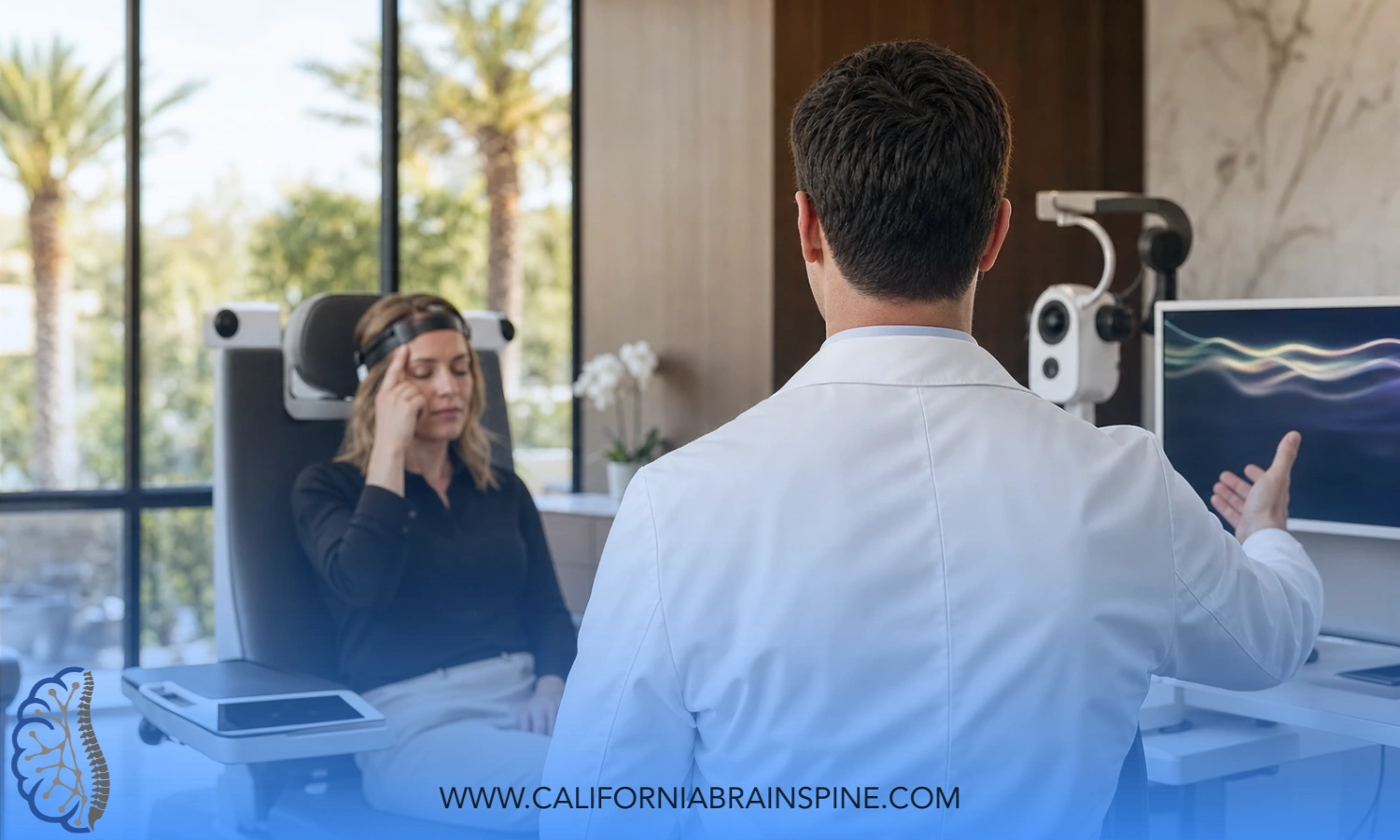
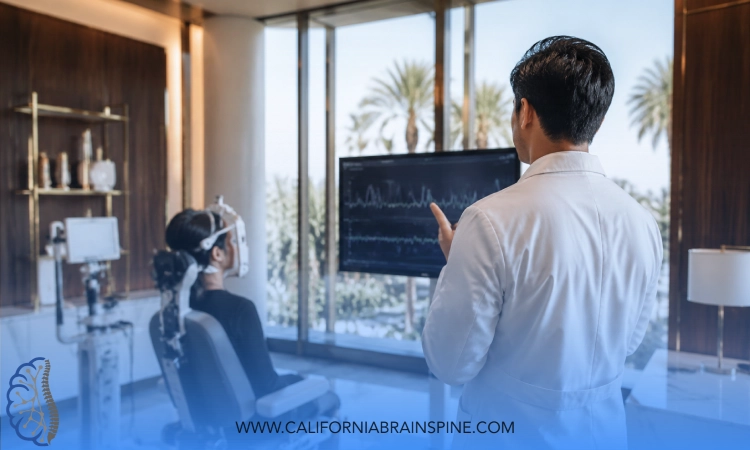
Image note: “A calm patient performing a guided eye movement assessment in a modern neurological rehabilitation clinic, with a doctor observing posture, gaze, and balance, professional clinical environment in Southern California.”
How the Prefrontal Cortex, Basal Ganglia, and Cerebellum Work Together
The most important thing to understand is that antisaccades are not controlled by one brain area alone. They are controlled by a network. The prefrontal cortex sets the rule and suppresses the reflex. The basal ganglia help select the correct action. The cerebellum fine-tunes timing and accuracy.
This network also interacts with visual pathways, the frontal eye fields, parietal attention systems, brainstem gaze centers, vestibular nuclei, and sensory feedback loops. That is why how the brain controls antisaccades is such a powerful topic in functional neurology. It connects cognition, movement, balance, and vision into one measurable behavior.
When the system works well, you may not notice it at all. Your eyes simply move correctly. But when the system is under stress, you may notice symptoms during reading, driving, screen use, grocery shopping, sports, or visually busy environments.
Patients often describe:
- Losing their place while reading
- Feeling dizzy when looking around quickly
- Struggling with computer work
- Feeling visually overwhelmed in stores
- Having delayed focus when shifting gaze
- Experiencing brain fog after visual tasks
- Feeling unsteady when turning the head or eyes
These symptoms may reflect poor integration between brain networks that normally control eye movements, balance, attention, and sensory processing.
The brain is not just trying to move your eyes. It is trying to keep your world stable.
What Antisaccade Problems Can Look Like in Real Life
In a clinical setting, antisaccade difficulty may appear as a measurable eye movement error. In daily life, however, it often feels much more personal. A patient may not say, “I have impaired antisaccades.” They may say, “I cannot function like I used to.”
They may feel embarrassed because normal activities suddenly require effort. Reading a few pages may cause fatigue. Driving may feel stressful. Conversations in busy environments may become draining. Bright lights, fast movement, or crowded places may trigger dizziness or pressure.
This is why patients deserve a careful explanation. If we understand how the brain controls antisaccades, we can better understand why symptoms may appear when the brain is asked to filter, focus, inhibit, and coordinate under pressure.
At California Brain & Spine Center in Calabasas, the clinical approach is designed to look beyond isolated symptoms. Patients may be evaluated for visual function, vestibular function, balance, autonomic nervous system regulation, cognitive performance, posture, movement patterns, and neurological integration.
A Brain-Based Evaluation: What We Look For
At California Brain & Spine Center, patients are evaluated with a personalized approach. The purpose is not to chase one symptom. The purpose is to understand how the nervous system is functioning as a whole.
A patient with difficulty performing antisaccades may also show signs of vestibular dysfunction, visual tracking problems, poor balance integration, cervical spine contribution, dysautonomia, cognitive fatigue, or post-concussion syndrome. Each patient is different, so the evaluation must be specific.
A brain-based evaluation may include:
- ✅ Oculomotor assessment, including saccades, pursuits, fixation, and antisaccade-related control
- ✅ Vestibular and balance testing to assess gaze stability and spatial orientation
- ✅ Cognitive and neurological screening for attention, processing speed, and executive function
- ✅ Autonomic and sensory integration review when symptoms suggest dysautonomia or overload
- ✅ Personalized treatment planning based on tolerance, safety, and measurable function
This kind of assessment helps identify where the nervous system may need support. It also helps avoid a one-size-fits-all approach, which is especially important for complex cases involving concussion, TBI recovery, dizziness, brain fog, and chronic neurological symptoms.
How Rehabilitation May Support Antisaccade Control
Rehabilitation for antisaccade-related dysfunction is not simply about practicing eye movements randomly. It must be specific, progressive, and matched to the patient’s tolerance. If the nervous system is overloaded too quickly, symptoms may flare. If the exercises are too easy or too generic, progress may be limited.
At California Brain & Spine Center, care may include vestibular rehabilitation, cognitive rehabilitation, neuroplasticity rehabilitation, NeuroSensory Integration, and non-invasive functional neurology therapies when clinically appropriate. The goal is to help the brain improve communication between systems that control gaze, posture, attention, balance, and sensory processing.
Some patients may also benefit from components of the NeuroRevive Program, depending on their history and examination findings. Non-invasive therapies such as Low-Level Laser Therapy, Pulsed Electromagnetic Field therapy, Hyperbaric Oxygen Therapy, GammaCore Vagus Nerve Stimulation, or other supportive approaches may be considered when appropriate and safe.
The goal is not just to improve a test score. The goal is to help you read, drive, work, move, think, and live with more stability and confidence.
Progress is not always dramatic at first. Sometimes it begins as a little more clarity, a little more balance, and a little more trust in your own body.
Image note: “A hopeful patient practicing gentle visual and vestibular rehabilitation exercises with a clinician nearby, modern clinic setting, warm natural light, calm and supportive atmosphere.”
Why Engineering and Clinical Neuroscience Matter in This Work
My background shapes the way I approach complex neurological cases. Before becoming a Doctor of Chiropractic, I studied Electrical Engineering in Iran, completed a master’s in Advanced Engineering & Management in the UK, and worked in the United States as a Solar Engineer. Later, after seeing my mother recover from a frozen shoulder through chiropractic care, I transitioned into healthcare and earned my Doctor of Chiropractic degree from Life Chiropractic College West, with specialization in the precise Gonstead technique.
I then pursued postdoctoral education in Clinical Neuroscience because I wanted to better understand the nervous system at a deeper level. Today, at California Brain & Spine Center in Calabasas, I apply that systems-based thinking to patients with concussion, traumatic brain injury, dizziness, vestibular dysfunction, dysautonomia, brain fog, memory loss, and other complex neurological concerns.
When I think about how the brain controls antisaccades, I see both the biology and the system design. The brain must detect input, process information, inhibit an automatic command, select a new command, execute movement, monitor accuracy, and correct errors. That is a remarkable system. When it becomes disrupted, we need to study it carefully and support it intelligently.
Why Personalized Care Is Essential
Two patients can have the same symptom and completely different neurological patterns. One person may feel dizzy because of vestibular dysfunction. Another may have visual motion sensitivity. Another may have cervical spine involvement. Another may have autonomic nervous system dysregulation. Another may have a combination of several systems.
That is why the question is not only “What symptom do you have?” The better question is, “What nervous system pattern is producing this symptom?”
Understanding how the brain controls antisaccades helps us ask better questions. It helps us connect eye movement findings with attention, inhibition, balance, cognitive load, and recovery capacity.
For example, a patient who makes many wrong-direction antisaccade errors may need support for executive control and inhibition. A patient who makes accurate but slow movements may need work on processing speed or fatigue tolerance. A patient whose symptoms flare with visual tasks may need careful pacing and integration of vestibular, visual, and autonomic strategies.
This is where a personalized neurological and vestibular plan becomes valuable.
The Link Between Antisaccades, Brain Fog, and Memory Complaints
Many patients with post-concussion symptoms or neurological fatigue report brain fog and memory issues. They may wonder why an eye movement test would matter for memory or thinking. The answer lies in shared brain networks.
The prefrontal cortex is involved in working memory, attention, planning, inhibition, and flexible thinking. These are the same types of functions required during antisaccade tasks. So when antisaccade performance is poor, it may reflect stress within networks that also support cognitive clarity.
This does not mean that antisaccade problems are the only cause of brain fog. It means they may provide one meaningful piece of the larger clinical puzzle.
At California Brain & Spine Center, cognitive rehabilitation may be integrated with vestibular rehabilitation and neuroplasticity-based care when appropriate. The goal is to help patients build tolerance, improve neurological efficiency, and return to meaningful daily activities with less symptom burden.
You are not weak because your brain gets tired. You may simply need the right map, the right pace, and the right support.
Safety, Pacing, and Neuroplasticity
Neuroplasticity is the brain’s ability to adapt and reorganize. It is one of the most important principles in rehabilitation. But neuroplasticity requires the right input at the right dose. Too much stimulation may aggravate symptoms. Too little may fail to create change.
This is especially true when working with eye movements, vestibular exercises, balance challenges, cognitive tasks, and sensory integration. Patients with concussion, TBI, dysautonomia, dizziness, or visual overload often need gradual progression.
A safe plan may involve:
- ✨ Starting with tolerable exercises that do not overwhelm the nervous system
- ✨ Measuring symptom response before increasing difficulty
- ✨ Combining visual, vestibular, cognitive, and balance work when appropriate
- ✨ Adjusting care based on real patient feedback and objective findings
- ✨ Prioritizing function, not just isolated performance
This is why professional guidance matters. When rehabilitation is personalized, patients are more likely to feel understood, protected, and supported as they move toward recovery.
A Realistic Patient Story: When Eye Movements Explained the Symptoms
Some time ago, a patient named A. came to see me after a concussion. She had already been told that her scans looked normal, but she still felt far from normal. Reading emails caused pressure behind her eyes. Grocery stores made her dizzy. She had trouble focusing in meetings, and by the afternoon she felt mentally exhausted.
During her evaluation, I noticed that her eye movement control became less accurate under cognitive demand. When asked to perform tasks similar to antisaccade control, she had difficulty suppressing the automatic response and became symptomatic when the visual environment became more complex.
I explained to her that this did not mean she was broken. It meant her brain was still struggling with timing, inhibition, sensory integration, and visual-vestibular coordination. That explanation alone gave her relief because her symptoms finally made sense.
We designed a personalized plan that included vestibular rehabilitation, cognitive rehabilitation, visual-vestibular integration, pacing strategies, and components of neuroplasticity rehabilitation. As her tolerance improved, we gradually increased the complexity of her exercises.
Over time, she was able to read longer, tolerate stores better, return to more consistent work hours, and feel more confident in her daily life. Her recovery was not instant, and it was not one single treatment. It was a guided process.
That is why I care so much about explaining how the brain controls antisaccades. For many patients, these details are not abstract neuroscience. They are the missing explanation behind everyday struggles.
Your Most Common Questions About How the Brain Controls Antisaccades
What does it mean if I have trouble with antisaccades?
Difficulty with antisaccades may mean that the brain is having trouble with inhibition, attention, timing, or motor planning. It does not automatically diagnose one specific disease or injury. Instead, it gives your clinician useful information about how your brain controls eye movements under demand. In patients with concussion, dizziness, brain fog, or visual symptoms, antisaccade difficulty may be one sign that deeper neurological and vestibular evaluation is needed.
Why are antisaccades important after a concussion?
After a concussion, the brain may struggle with filtering information, coordinating eye movements, maintaining balance, and tolerating visual stimulation. Antisaccades are important because they require the brain to suppress an automatic response and generate a controlled movement in the opposite direction. This can reveal problems with executive function, visual control, and sensory integration that may contribute to post-concussion symptoms.
Can antisaccade problems improve with rehabilitation?
In many cases, functional eye movement problems can improve when rehabilitation is personalized and properly paced. Care may include vestibular rehabilitation, visual-vestibular exercises, cognitive rehabilitation, balance training, and neuroplasticity-based strategies. The key is to identify the underlying pattern and avoid overwhelming the nervous system too quickly.
Is an antisaccade test the same as a regular eye exam?
No. A regular eye exam usually focuses on visual acuity, eye health, prescription needs, and structural eye concerns. Antisaccade-related assessment looks more at how the brain controls eye movement, attention, inhibition, and coordination. Both types of evaluation can be valuable, but they answer different questions.
What brain areas are most involved in antisaccade control?
Several brain areas are involved, but the prefrontal cortex, basal ganglia, and cerebellum are especially important. The prefrontal cortex supports executive control and inhibition. The basal ganglia help select and suppress actions. The cerebellum helps with timing, accuracy, and correction. These regions work with broader visual, vestibular, and brainstem networks.
When should I seek help for eye movement or visual symptoms?
You should consider a professional evaluation if you experience persistent dizziness, visual motion sensitivity, difficulty reading, screen intolerance, brain fog, balance problems, headaches with visual tasks, or symptoms after concussion or head injury. If symptoms interfere with daily life, work, school, driving, or confidence, a personalized neurological and vestibular evaluation may be appropriate.
Can these problems happen even if my MRI or CT scan is normal?
Yes. Many patients with concussion or functional neurological symptoms have normal structural imaging but still experience real symptoms. MRI and CT scans are important tools, but they may not show how well the brain is functioning during tasks such as eye movement control, balance, attention, or sensory integration. Functional neurological evaluation can help fill in that gap.
How does California Brain & Spine Center approach these cases?
At California Brain & Spine Center in Calabasas, patients are evaluated as whole people, not just as symptom lists. The clinic considers neurological function, vestibular control, cognitive load, autonomic regulation, visual processing, balance, and overall recovery goals. Care may include vestibular rehabilitation, cognitive rehabilitation, NeuroSensory Integration, neuroplasticity rehabilitation, and appropriate non-invasive therapies based on the patient’s needs.
Is this type of care only for athletes with concussion?
No. While athletes can benefit from concussion and vestibular care, many patients are not athletes. Symptoms may follow car accidents, falls, work injuries, viral illness, chronic neurological stress, or other events. Antisaccade and oculomotor findings can be relevant for adults, students, professionals, and older patients who are struggling with visual, cognitive, or balance symptoms.
How do I know if antisaccade testing is right for me?
If your symptoms involve visual strain, difficulty focusing, dizziness, balance problems, cognitive fatigue, brain fog, or post-concussion challenges, antisaccade-related assessment may be useful as part of a broader evaluation. The best way to know is to schedule a personalized consultation where your history, symptoms, and neurological findings can be reviewed together.
Conclusion: Understanding How the Brain Controls Antisaccades Can Help You Find a Better Path Forward
Understanding how the brain controls antisaccades gives us a meaningful window into the relationship between vision, attention, inhibition, balance, and neurological recovery. Antisaccades require the prefrontal cortex to control impulses, the basal ganglia to select the right action, and the cerebellum to refine timing and accuracy.
If you are dealing with dizziness, brain fog, visual disturbances, memory issues, post-concussion symptoms, or difficulty functioning after a brain injury, your symptoms may not be random. They may reflect how your nervous system is processing, filtering, and coordinating information.
I, Dr. Alireza Chizari, DC, DACNB, believe that patients deserve clear explanations, careful evaluation, and personalized care. At California Brain & Spine Center in Calabasas, our goal is to help you understand what your brain and body are telling you and to guide you toward better function with safe, evidence-informed, non-invasive neurological and vestibular care.
If you feel ready to take the next step, you can contact California Brain & Spine Center to request an appointment or schedule a personalized neurological and vestibular evaluation. The goal is not simply to manage isolated symptoms. The goal is to help you move toward the best version of your life, your function, and your confidence.

Dr. Alireza Chizari
This article has been medically reviewed for clinical accuracy by Dr. Alireza Chizari, DC, DACNB. Committed to evidence-based practice, Dr. Chizari ensures all content reflects the highest standards of functional neurology care.
Comments
Find our article more easily in Google.
FAQ
What is Functional Neurology?
Functional Neurology is a healthcare specialty that focuses on assessing and rehabilitating the nervous system’s function. It emphasizes neuroplasticity—the brain’s ability to adapt and reorganize—using non-invasive, evidence-based interventions to improve neurological performance.
How does Functional Neurology differ from traditional neurology?
Traditional neurology often concentrates on diagnosing and treating neurological diseases through medications or surgery. In contrast, Functional Neurology aims to optimize the nervous system’s function by identifying and addressing dysfunctions through personalized, non-pharmaceutical interventions.
Is Functional Neurology a replacement for traditional medical care?
No. Functional Neurology is intended to complement, not replace, traditional medical care. Practitioners often collaborate with medical professionals to provide comprehensive care.
What conditions can Functional Neurology help manage?
Functional Neurology has been applied to various conditions, including:
• Concussions and Post-Concussion Syndrome
• Traumatic Brain Injuries (TBI)
• Vestibular Disorders
• Migraines and Headaches
• Neurodevelopmental Disorders (e.g., ADHD, Autism)
• Movement Disorders
• Dysautonomia
• Peripheral Neuropathy
• Functional Neurological Disorder (FND)
Can Functional Neurology assist with neurodegenerative diseases?
While Functional Neurology does not cure neurodegenerative diseases, it can help manage symptoms and improve quality of life by optimizing the function of existing neural pathways.
What diagnostic methods are used in Functional Neurology?
Functional Neurologists employ various assessments, including:
• Videonystagmography (VNG)
• Computerized Posturography
• Oculomotor Testing
• Vestibular Function Tests
• Neurocognitive Evaluations
How is a patient’s progress monitored?
Progress is tracked through repeated assessments, patient-reported outcomes, and objective measures such as balance tests, eye movement tracking, and cognitive performance evaluations.
What therapies are commonly used in Functional Neurology?
Interventions may include:
- Vestibular Rehabilitation
- Oculomotor Exercises
- Sensorimotor Integration
- Cognitive Training
- Balance and Coordination Exercises
- Nutritional Counseling
- Lifestyle Modifications
Are these therapies personalized?
Absolutely. Treatment plans are tailored to the individual’s specific neurological findings, symptoms, and functional goals.
Who can benefit from Functional Neurology?
Individuals with unresolved neurological symptoms, those seeking non-pharmaceutical interventions, or patients aiming to optimize brain function can benefit from Functional Neurology.
Is Functional Neurology suitable for children?
Yes. Children with developmental delays, learning difficulties, or neurodevelopmental disorders may benefit from Functional Neurology approaches.
How does Functional Neurology complement other medical treatments?
It can serve as an adjunct to traditional medical care, enhancing outcomes by addressing functional aspects of the nervous system that may not be targeted by conventional treatments.
How is technology integrated into Functional Neurology?
Technological tools such as virtual reality, neurofeedback, and advanced diagnostic equipment are increasingly used to assess and enhance neurological function.
What is the role of research in Functional Neurology?
Ongoing research continues to refine assessment techniques, therapeutic interventions, and our understanding of neuroplasticity, contributing to the evolution of Functional Neurology practices.