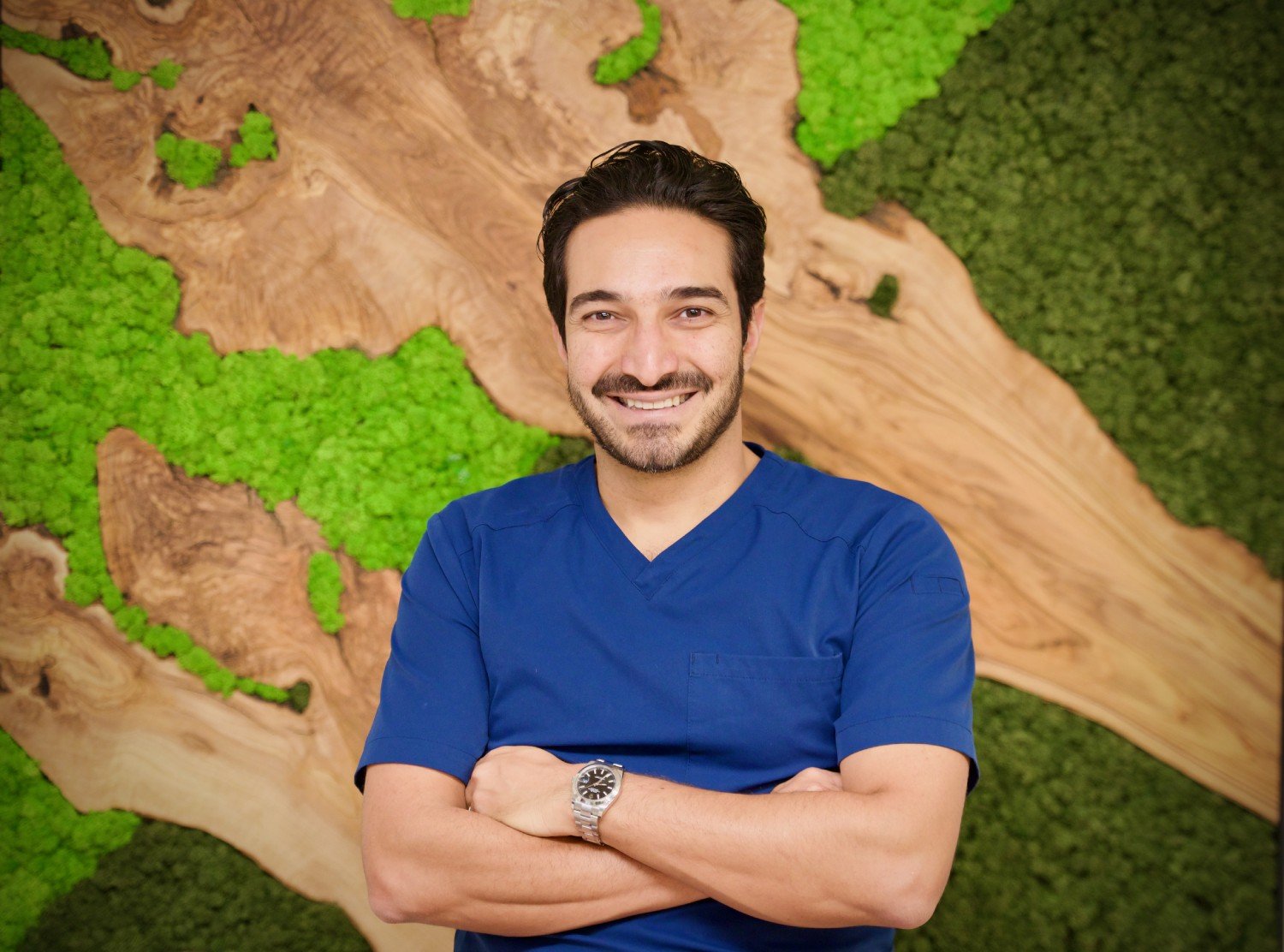

If you live near Westlake Village and feel like your mind is wrapped in cotton, words slip away, and your focus disappears halfway through a sentence, you are not alone. Many of my patients tell me they look “fine” on the outside, but inside they feel slow, disconnected, and constantly behind. In this article, I, Dr. Alireza Chizari, DC, DACNB, will explain how we approach care at a brain fog clinic near Westlake Village through California Brain & Spine Center in Calabasas, so you can move from confusion toward clarity and a concrete plan.
You are the hero of this story. You are the one who shows up for work, family, and daily responsibilities while silently carrying brain fog, fatigue, and worry that something deeper is wrong. My role, and the role of my team, is to be your expert guide. We use advanced neurological tools, clinical neuroscience, and non invasive therapies to understand why your brain feels this way and how to help it function more clearly.
brain fog treatment near Westlake Village
On this page, I will walk you through what brain fog really means, how a brain fog clinic near Westlake Village evaluates it, and which treatments may help when standard blood work or quick office visits do not explain your symptoms. If you choose to seek care with us, you can use this article as a roadmap for what to expect at California Brain & Spine Center.
When brain fog quietly takes over life near Westlake Village
Most people do not wake up one day and say, “I have brain fog.” Instead, they notice that reading emails takes longer, conversations feel harder to follow, and tasks that used to be automatic now demand effort. Living near Westlake Village, you might still be driving, working, and caring for others, but inside you feel like your mental bandwidth has shrunk.
You might recognize some of these patterns:
Losing your train of thought in the middle of a sentence
Struggling to find simple words or names
Feeling mentally “slow” even after sleeping
Needing to reread the same paragraph several times
Feeling overwhelmed by noise, screens, or busy environments
At a brain fog clinic near Westlake Village, none of this is brushed off as laziness or lack of motivation. These are often signs that your brain networks for attention, working memory, processing speed, or sensory integration are under strain. That strain can come from many sources, including concussion or mild traumatic brain injury, chronic stress, dysautonomia, vestibular dysfunction, sleep issues, inflammation, or a combination of factors.
Why choosing a dedicated brain fog clinic near Westlake Village matters
If you have already seen your primary care physician, you may have heard, “Your blood tests look normal” or “You are probably just stressed.” Normal labs are reassuring, but they do not mean your brain is functioning optimally. A brain fog clinic near Westlake Village is designed for situations where symptoms are very real, but standard tests do not tell the whole story.
In my clinic, I take brain fog as seriously as pain or dizziness. It affects how you work, relate to others, and see your future. Addressing it properly requires time, detailed questioning, and targeted testing of cognitive and neurological function. The goal is not to convince you that everything is fine, but to understand which systems are challenged so we know how to support them.
When your mind feels dimmed, it does not mean you are broken. It means your brain is asking for a different kind of care than it has received so far.
How I evaluate brain fog step by step
When you come to see me at a brain fog clinic near Westlake Village, I start by listening. My background in Electrical Engineering taught me to think in systems and signals. My clinical neuroscience training allows me to apply that thinking to your brain. Brain fog is not a single diagnosis. It is a pattern. Finding the cause means asking the right questions and running the right tests.
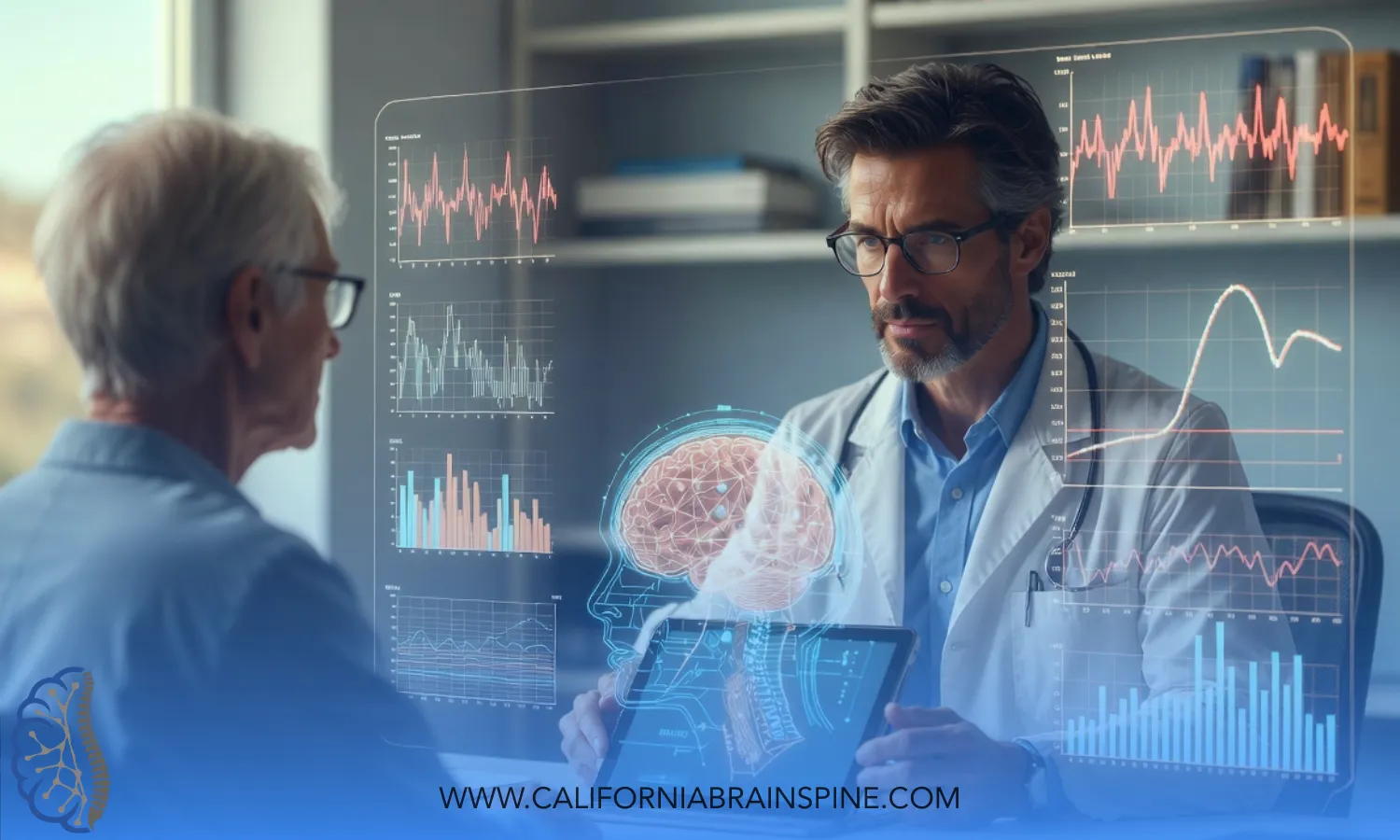
During your evaluation, I will ask about:
When you first noticed brain fog and what was happening in your life at that time
Whether symptoms started after a concussion, infection, major stress, hormonal change, or medication shift
How brain fog shows up day to day at work, at home, and in social situations
Other symptoms, such as dizziness, headaches, sleep problems, dysautonomia signs (like heart rate changes when standing), mood shifts, or memory issues
Then we move into a structured neurological and cognitive assessment, which may include:
Testing of attention, processing speed, and working memory
Assessment of eye movements and visual tracking, because inefficient eye control can increase brain load
Balance and vestibular checks if you also have dizziness or motion sensitivity
Screening of autonomic responses, such as heart rate and blood pressure changes with posture
Review of previous imaging, lab work, and medical records
The purpose is not to overwhelm you with tests, but to see how your brain performs in real time, not just on paper.
From engineering to clinical neuroscience – why my background matters for brain fog
You might wonder why my past as an Electrical Engineer and Solar Engineer matters if you are looking for a brain fog clinic near Westlake Village. It matters because brain fog is a problem of information processing. Your brain is a dynamic, electrical, chemical network. It needs clean signals, good integration between regions, and appropriate energy support.
My training in engineering taught me to:
Analyze complex systems with many variables
Look for patterns, not random details
Understand how small changes in input can lead to large changes in output
In Clinical Neuroscience, I learned how these principles apply to brain networks involved in attention, memory, balance, mood, and autonomic regulation. When your brain feels foggy, I am always asking:
Which circuits are overloaded or under functioning?
Is your brain spending too much energy on simply staying upright or processing sensory input?
How can we reduce “noise” in the system and support healthier signaling?
Clarity is rarely an accident. It is the result of understanding where your system is struggling and giving it exactly the support it needs to adapt.
What happens inside a brain fog clinic near Westlake Village
In the middle of your care journey, it helps to understand how California Brain & Spine Center operates as a brain fog clinic near Westlake Village. Many patients who come to our Calabasas clinic have already seen multiple providers, had normal scans, and still feel far from normal.
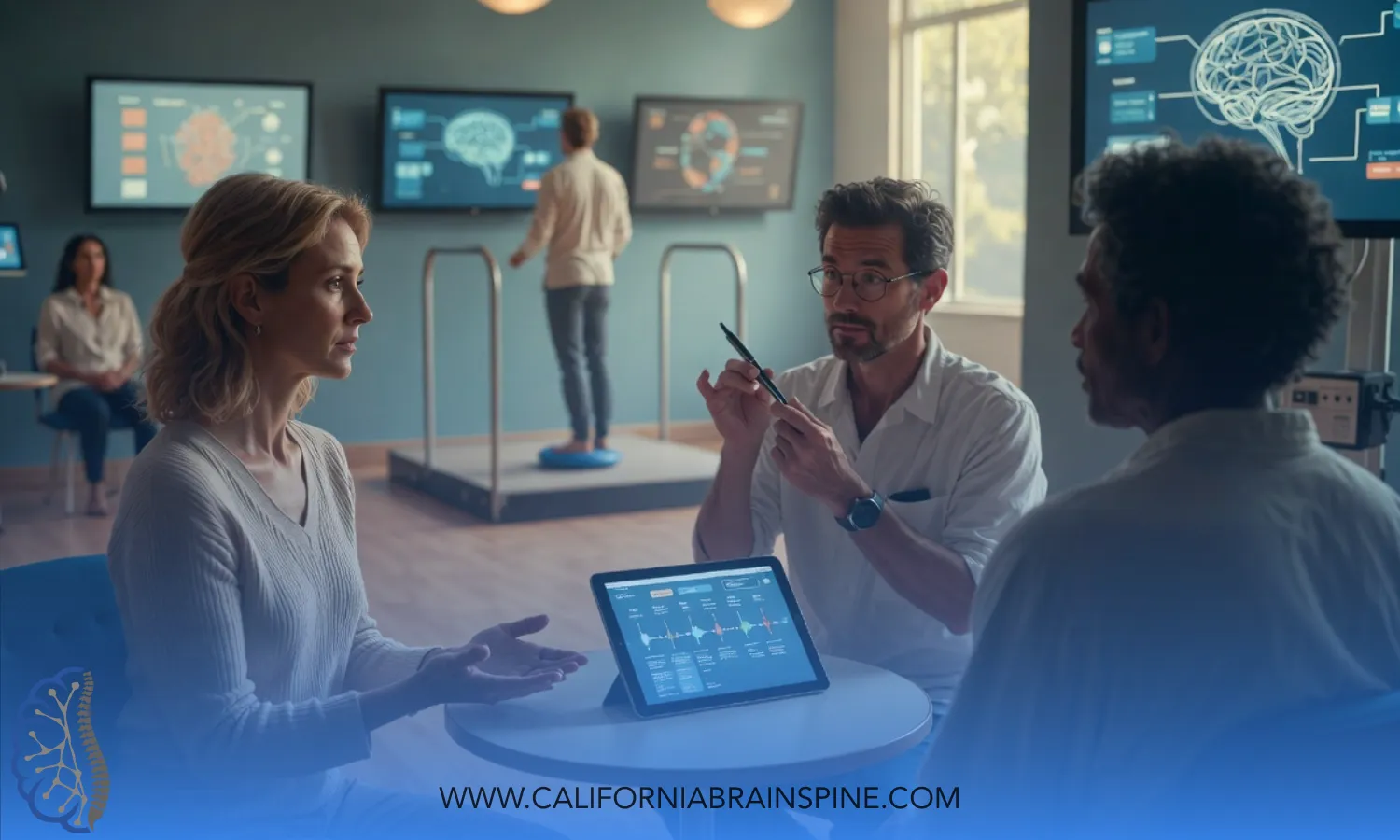
At California Brain & Spine Center, brain fog is evaluated through a combination of:
Detailed clinical interviews that map your life context, triggers, and symptom patterns
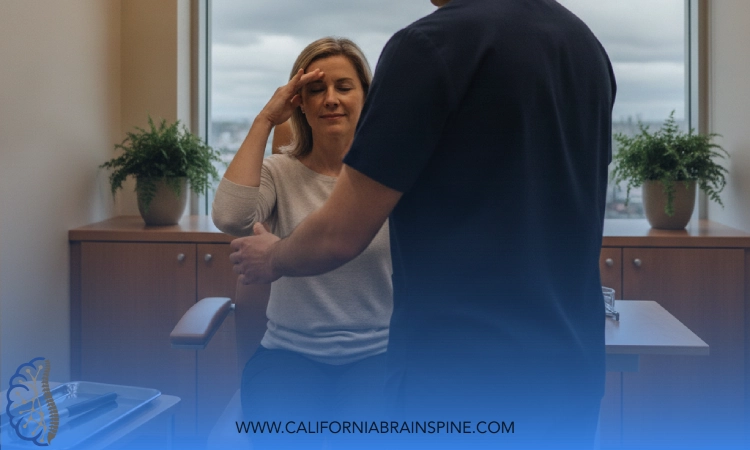
Neurological exams that look at eye movements, balance, coordination, and reflexes
Cognitive screening that highlights which domains are strong and which are underperforming
Vestibular and NeuroSensory Integration checks if light, sound, or motion worsen your brain fog
Autonomic assessment when symptoms change with posture, meals, or stress
Rather than simply labeling you with “post concussion,” “chronic fatigue,” or “stress,” the clinic builds a layered picture of how your brain is currently functioning in relation to your body and environment.
How advanced tools support diagnosis and treatment planning
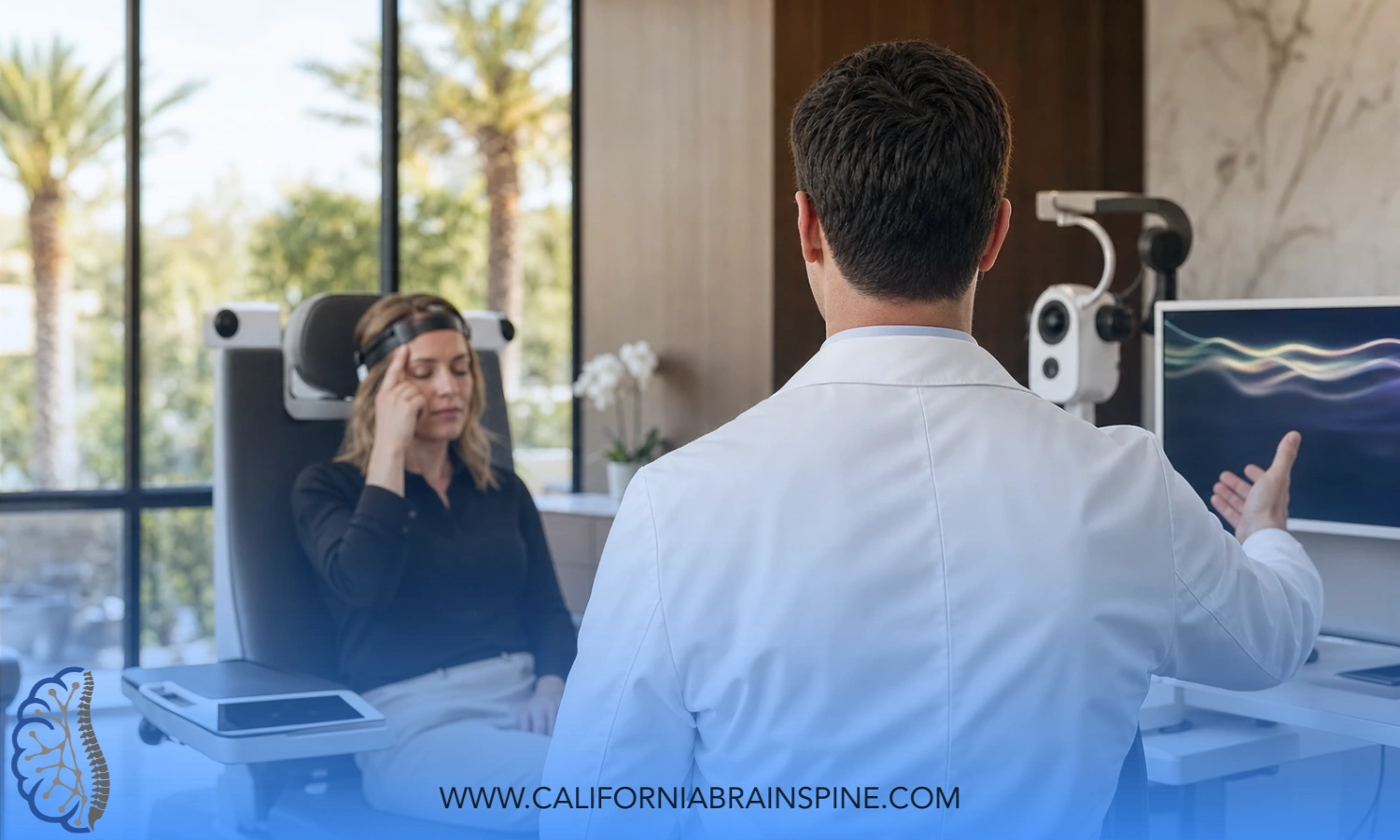
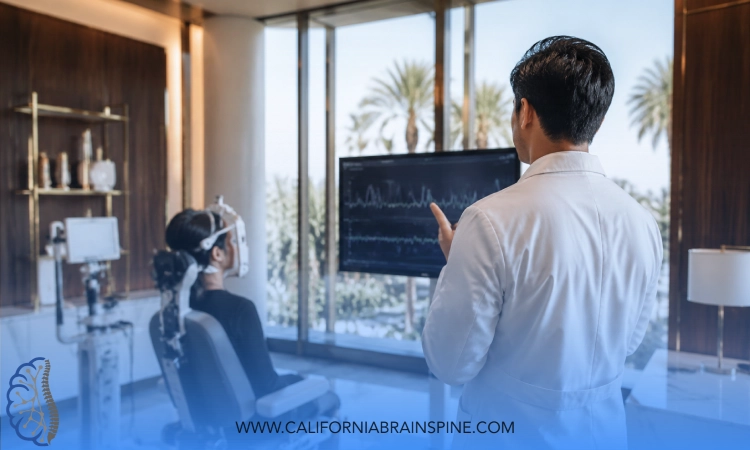
At California Brain & Spine Center, patients are evaluated with advanced vestibular and neurological tools when appropriate. This may include computerized eye tracking, dynamic balance testing, or specific cognitive tasks that reveal subtle deficits. This level of detail is important in a brain fog clinic near Westlake Village, because small findings can guide the choice of therapies.
If your brain fog is linked to concussion or traumatic brain injury, the Brain Injury Recovery Program, Concussion Treatment Calabasas, or NeuroRevive Program may be part of your plan. If memory loss is more prominent, Memory Loss Treatment and Cognitive Rehabilitation become central. If dizziness, balance issues, or dysautonomia are involved, services such as Vestibular Rehabilitation, Balance Disorder Therapy, or dysautonomia care are integrated.
A precise diagnosis is not just a label. It is a map that tells us which roads are blocked and which routes can lead you back to clearer thinking.
Treatment paths at a brain fog clinic near Westlake Village
Once we understand the likely drivers of your brain fog, treatment becomes more targeted and less frustrating. There is no single pill or exercise that fixes brain fog for everyone. At a brain fog clinic near Westlake Village, we focus on personalized, multi layer care.
Common elements of a treatment plan may include:
Cognitive Rehabilitation to strengthen attention, working memory, and processing speed with graded tasks
Neuroplasticity Rehabilitation to retrain specific brain networks that have been under functioning
NeuroSensory Integration (NSI) to reduce overload from light, sound, motion, or crowded environments
Vestibular Rehabilitation if dizziness, imbalance, or visual motion sensitivity are contributing to mental fatigue
Autonomic regulation strategies when dysautonomia, such as heart rate or blood pressure swings, is taxing your brain’s energy
Non invasive neurology therapies such as Low Level Laser Therapy (LLLT), Pulsed Electromagnetic Field (PEMF), Hyperbaric Oxygen Therapy (HBOT), or GammaCore vagus nerve stimulation in carefully selected cases to support cellular recovery and neurophysiology
The exact combination depends on your evaluation. For example, a patient with post concussion brain fog may receive different interventions than someone whose brain fog is tied mainly to chronic dysautonomia or vestibular dysfunction.
What cognitive and neuroplasticity rehabilitation feel like
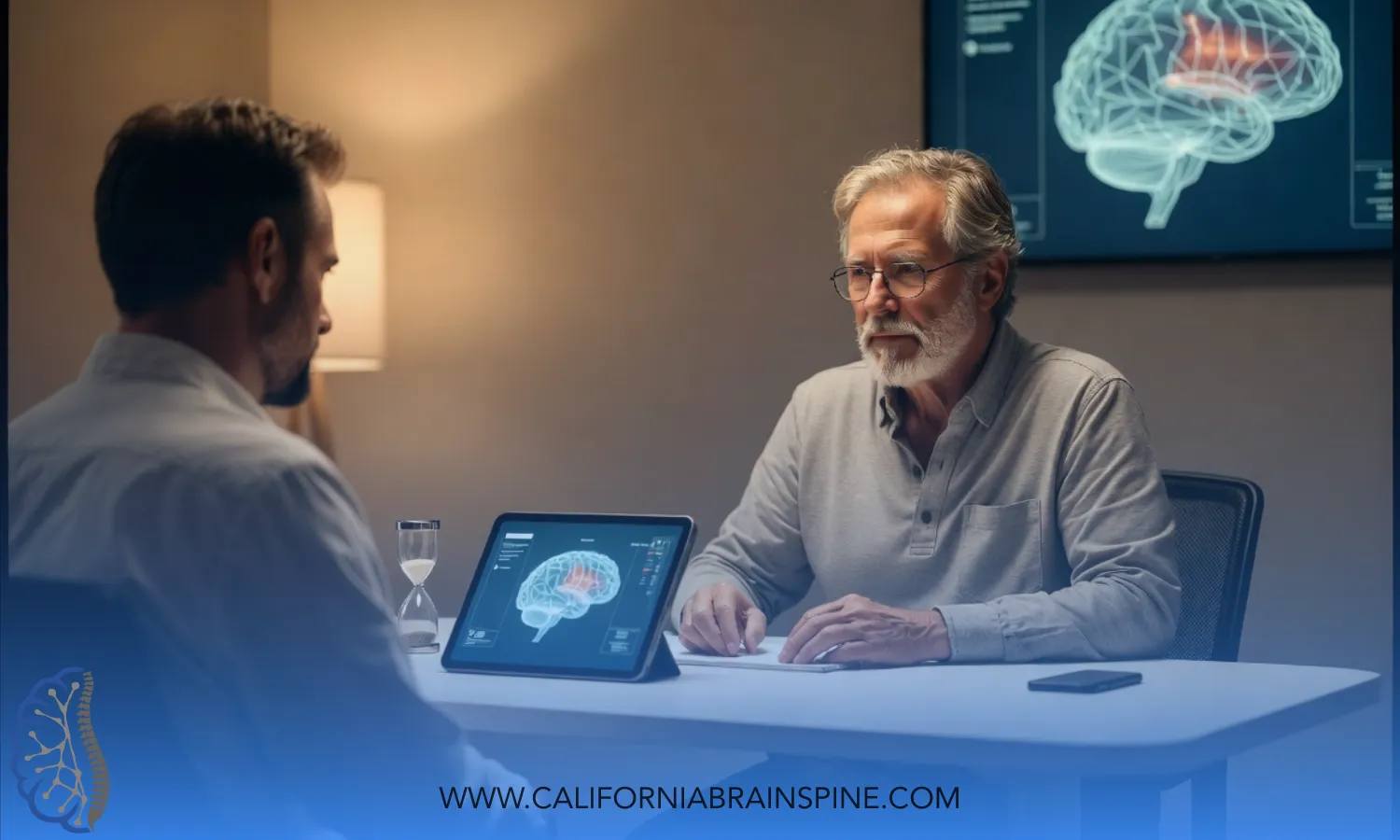
Patients often worry that Cognitive Rehabilitation will feel like school or that Neuroplasticity Rehabilitation will push them until they crash. In reality, at our brain fog clinic near Westlake Village, we aim for the sweet spot where exercises are challenging enough to promote adaptation but not so intense that you feel wiped out.
A typical session might include:
Short, focused tasks that engage attention or memory, followed by rest
Visual and eye movement tasks coordinated with simple head motions
Graded exposure to screens or reading with built in pause strategies
Education on pacing, so you can distribute your mental energy more wisely throughout the day
Over time, these sessions teach your brain to process information more efficiently, so everyday tasks require less effort.
Recovery is not about forcing your brain to do more. It is about teaching your brain to do what matters with less wasted energy.
How non invasive neurology therapies can support brain fog recovery
For some patients at our brain fog clinic near Westlake Village, especially those with traumatic brain injury, chronic inflammation, or autonomic involvement, non invasive neurology therapies can be helpful additions.
When appropriate, we may integrate:
LLLT to support cellular energy and local circulation in targeted brain regions
PEMF to influence neurophysiology and support recovery in cases of chronic neurological stress
HBOT as part of a broader program for selected patients with persistent post traumatic symptoms
GammaCore vagus nerve stimulation for autonomic balance and headache related brain fog in specific scenarios
These modalities are never used in isolation. They are woven into a comprehensive plan that includes Cognitive Rehabilitation, Neuroplasticity Rehabilitation, and lifestyle strategies. The goal is to support your brain’s biology while you actively retrain its functions.
Technology is most powerful when it amplifies your brain’s own healing capacity instead of trying to replace it.
What you can start doing at home while seeking a brain fog clinic near Westlake Village
Even before you step into a brain fog clinic near Westlake Village, there are simple, realistic steps you can take to reduce some of the strain on your brain. These are not cures, but they can make your daily life a bit more manageable and create a stronger foundation for rehabilitation.
Some key home strategies include:
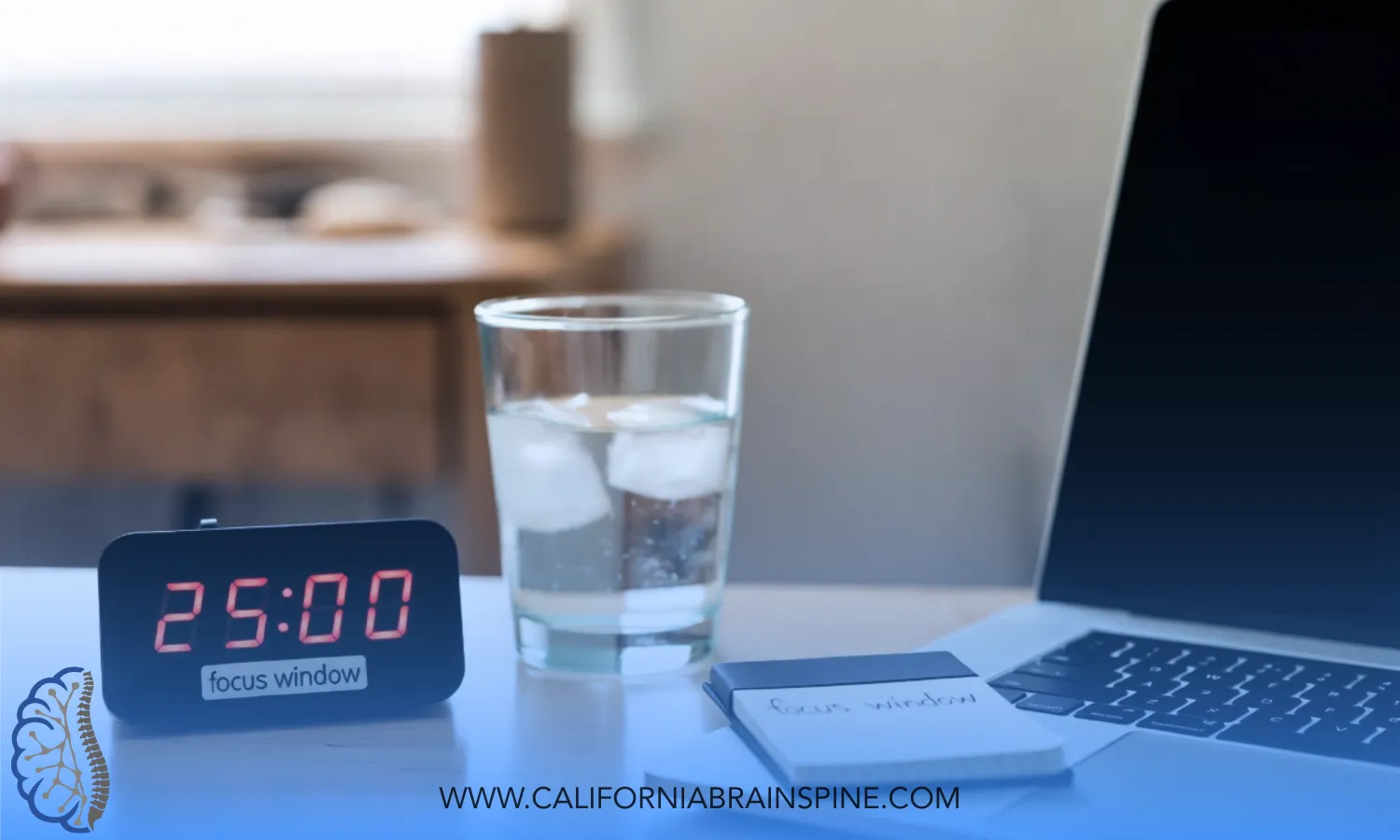
✅ Creating “focus windows” of 25 to 45 minutes for demanding tasks, followed by short breaks away from screens
✅ Reducing multitasking, such as checking your phone while watching TV or working, to lower cognitive load
✅ Optimizing sleep hygiene, including consistent bedtimes, a dark and cool room, and limiting stimulating screens before bed
✅ Hydrating and stabilizing blood sugar, since dehydration and large blood sugar swings can worsen brain fog
✅ Gently moving your body, like walking, simple stretching, or light activity approved by your doctor, to support circulation
These are general suggestions. In the clinic, we refine them based on your specific triggers and medical history, so they work with, not against, your nervous system.
A real story from near Westlake Village: from constant fog to clearer days
Some time ago, a patient from near Westlake Village came to see me who had been living with brain fog for over a year after a mild head injury and a period of intense stress at work. Let us call her M. She told me, “I look normal, but it feels like my brain is two steps behind everything. I am terrified I am losing myself.”
M. had already seen several doctors. Her brain MRI was normal, basic blood work was unremarkable, and she had been told to “rest” and “try to reduce stress.” But her daily reality was very different. She struggled to follow meetings, needed to reread emails multiple times, and felt exhausted after simple cognitive tasks. She also had occasional dizziness and sensitivity to busy visual environments.
During her evaluation at our brain fog clinic near Westlake Village, we found mild vestibular dysfunction, signs of autonomic imbalance, and specific weaknesses in working memory and processing speed. Her plan included Cognitive Rehabilitation to target those cognitive domains, Vestibular Rehabilitation for her dizziness, NeuroSensory Integration to help with visual motion, and simple autonomic breathing strategies.
Over the course of her program, M. noticed that she could follow conversations more easily and complete tasks with less mental effort. Her dizziness decreased, and she tolerated screens and stores better. She still had days of fatigue, but they were less frequent and less scary. Most importantly, she told me, “I feel like myself again. Not perfect, but present.”
This is what I want a brain fog clinic near Westlake Village to provide for you as well: not a promise that every symptom will vanish overnight, but a realistic, science based path toward clearer thinking and a more confident life.
Your most common questions about brain fog clinic near Westlake Village
Q1: How do I know if brain fog is serious enough to see a specialist?
If brain fog is affecting your work, relationships, or ability to keep up with daily tasks, it is serious enough to deserve a thorough evaluation. You do not have to wait until you “cannot function.” A brain fog clinic near Westlake Village is designed for people whose symptoms are persistent, disruptive, and not fully explained by basic tests or quick visits.
Q2: Can you help if my MRI and blood tests are normal?
Yes. Normal MRI and blood tests are important to rule out certain conditions, but they do not evaluate how your brain networks are functioning day to day. At California Brain & Spine Center, we look at cognition, vestibular function, NeuroSensory Integration, and autonomic patterns. Many patients with normal imaging still have clear, treatable findings on these more specific evaluations.
Q3: Is brain fog always related to concussion or head injury?
No. Brain fog can follow concussion or traumatic brain injury, but it can also occur with dysautonomia, vestibular disorders, chronic stress, sleep issues, hormonal changes, infections, or systemic illnesses. At a brain fog clinic near Westlake Village, we do not assume one cause. We take a detailed history and test multiple systems so we can identify the most likely drivers in your situation.
Q4: What treatments do you use most often for brain fog?
Treatment plans are individualized, but common components include Cognitive Rehabilitation, Neuroplasticity Rehabilitation, NeuroSensory Integration, Vestibular Rehabilitation, and autonomic regulation strategies. For some patients, non invasive neurology therapies such as LLLT, PEMF, HBOT, or GammaCore vagus nerve stimulation are used as part of a larger program like the NeuroRevive Program, especially when brain fog is linked to traumatic brain injury or complex neurological conditions.
Q5: How long does it usually take to notice improvement?
Timelines vary. Some patients notice early changes within a few weeks, such as less fatigue during tasks or clearer focus for short periods. Others, especially those with long standing symptoms or multiple contributing factors, may need a longer course. In a brain fog clinic near Westlake Village, we set realistic expectations based on your history and findings, and we track progress with both your subjective experience and objective measures.
Q6: Will I need to change my entire lifestyle to get better?
You may need to adjust certain habits that consistently overload your brain, such as excessive multitasking, erratic sleep, or pushing through severe fatigue. However, the goal is not to give you a rigid “perfect” routine. It is to help you build a sustainable structure that supports your brain. We work together to prioritize changes that have the greatest impact while respecting your real life responsibilities.
Conclusion: next steps if you are searching for a brain fog clinic near Westlake Village
If you are reading this because you typed “brain fog clinic near Westlake Village” into a search bar while feeling overwhelmed, confused, or worried about your mind, I want you to know that your symptoms are real and deserve careful attention. You are not “just tired,” “just stressed,” or “overreacting.” Your brain is telling us that it needs a different kind of support.
In this article, I have shared how we approach brain fog at California Brain & Spine Center in Calabasas. We combine my background in Engineering and Clinical Neuroscience with advanced vestibular and neurological tools, Cognitive and Neuroplasticity Rehabilitation, NeuroSensory Integration, and non invasive neurology therapies when appropriate. Most importantly, we never forget that you are the hero of your story. My role is to guide you with clarity, honesty, and respect.
If you recognize yourself in these descriptions, I invite you to take the next step. Reach out to our clinic, ask your questions, and consider scheduling a comprehensive evaluation. Together, we can work to understand what is driving your brain fog and design a plan that moves you toward greater clarity, energy, and confidence in your daily life.
You deserve to feel present in your own mind again. A brain fog clinic near Westlake Village is here to help you move toward that possibility, one informed and compassionate step at a time.
If you live in Westlake Village, Calabasas, or anywhere in Southern California and brain fog has been holding you back, you do not have to navigate this alone. Contact California Brain & Spine Center to request an appointment for a personalized neurological and cognitive evaluation. Our goal is not only to reduce your symptoms, but to help you move toward the best version of your life and function, supported by a clear understanding of how your brain works and how it can heal.