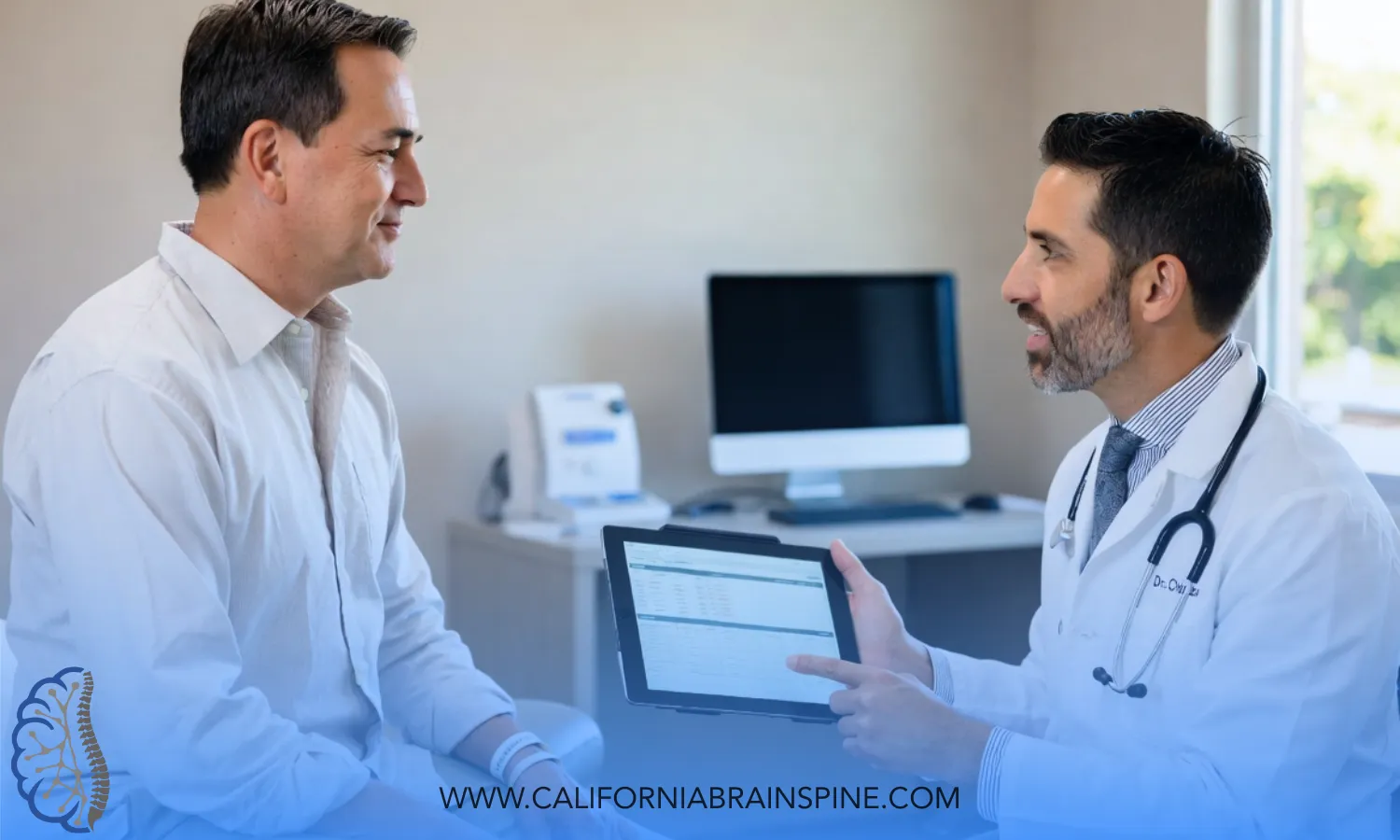
If you live in or near Hidden Hills and have had sudden vertigo attacks that come out of nowhere, I know how frightening that can feel. One moment you are standing in your kitchen or driving on the freeway, and the next the room is spinning, your stomach drops, and you are not sure if you are about to pass out. In this article, I, Dr. Alireza Chizari, will walk you through exactly how we approach sudden vertigo attacks evaluation in Hidden Hills and Calabasas so you can stop guessing and start understanding what your brain is trying to tell you.
My goal is to help you see that you are not weak, dramatic, or imagining things. You are the hero of this story, living with very real neurological symptoms, and you deserve a scientific, respectful evaluation. My role, and the role of my team at California Brain & Spine Center in Calabasas, is to be your expert guide through that evaluation so we can find the root causes and build a plan that fits your life.
Hidden Hills Sudden Vertigo Attacks Evaluation Guide
On this page, I will explain how sudden vertigo attacks are evaluated, which red flags should never be ignored, and which non invasive, brain based treatments we may use once we understand your unique pattern. If you decide to work with us, you can use the information here to feel more confident and prepared when you come for a dizziness or vestibular consultation.
When sudden vertigo attacks take over your life in Hidden Hills
When I meet a new patient from Hidden Hills who has sudden vertigo attacks, one of the first things I say is: this is not your fault. Sudden spins, surges of nausea, or feeling like the floor is dropping away are signs that your brain, inner ears, eyes, and autonomic nervous system are not working together smoothly. Sudden vertigo attacks evaluation in Hidden Hills is not about proving that something is wrong with you as a person. It is about understanding which systems are misfiring and why.
You might notice that attacks are triggered by rolling over in bed, looking up at a shelf, driving on a winding road, walking in the supermarket, or sometimes with no clear trigger at all. You may have been told it is “just anxiety,” or you may have received a quick prescription without a clear explanation. I take a different approach. I listen carefully to how your attacks start, peak, and settle, because those patterns already tell me a lot about whether the problem is mainly inner ear, brainstem, cerebellum, neck related, autonomic, or a combination.
If you are reading this, you have already taken a powerful step by looking for a proper sudden vertigo attacks evaluation in Hidden Hills instead of simply waiting for the next spin to hit. In the next sections, I will show you exactly what that evaluation looks like in my clinic and how it can guide a targeted recovery plan.
How I evaluate sudden vertigo attacks step by step
When I perform a sudden vertigo attacks evaluation in Hidden Hills patients, I follow a structured but highly personalized process. I draw on my background in Electrical Engineering, my training in the precise Gonstead chiropractic technique, and my postdoctoral education in Clinical Neuroscience to look at your nervous system the way an engineer looks at a complex, dynamic circuit.
The evaluation usually begins with a detailed history. I ask about:
-
When your first vertigo attack occurred and what you were doing at the time
-
How long each attack lasts and whether the sensation is spinning, rocking, tilting, or more like lightheadedness
-
Associated symptoms such as nausea, vomiting, tinnitus, ear fullness, headache, visual blurring, brain fog, or changes in heart rate or breathing
-
Past concussions, whiplash injuries, infections, periods of high stress, or major life changes
From there, I perform a full neuro vestibular exam that may include eye movement testing, positional tests for BPPV, balance and gait assessment, cervical spine evaluation, and simple autonomic checks such as heart rate and blood pressure response to posture changes. The goal is to see how your brain is actually behaving in real time, not just on paper.
If we need more data, we may move into advanced testing such as computerized eye tracking, dynamic balance assessment, or other non invasive neurological tools available at California Brain & Spine Center. Each piece of information helps me build a model of why your vertigo attacks are happening and what will most effectively calm them.
Healing begins the moment your symptoms are taken seriously and organized into a clear story, instead of being dismissed as random episodes you just have to live with.
Red flag signs during sudden vertigo attacks you should never ignore
Most sudden vertigo attacks are related to vestibular or neurological issues that can be evaluated and treated in an outpatient setting. However, part of a responsible sudden vertigo attacks evaluation in Hidden Hills is also being very clear about red flag signs that require urgent or emergency care.

When I take your history, I specifically watch for warning signs such as:
-
Sudden vertigo with severe headache that is the “worst headache of your life”
-
Double vision, trouble speaking, facial drooping, or weakness in the arms or legs
-
Chest pain, severe shortness of breath, or loss of consciousness
-
A new vertigo episode in the setting of known high stroke risk without previous evaluation
If any of these are present, I will advise immediate emergency evaluation, because conditions like stroke, bleeding, or serious cardiac problems must be ruled out quickly. Vertigo can be part of those patterns, and safety is always the first priority.
When emergency care is the safest first step
If your sudden vertigo attacks come with clear neurological deficits or sudden, severe headache, do not wait to see if they pass. In that situation, the most important “evaluation” is a rapid emergency workup, which may include CT or MRI imaging and urgent neurological assessment. Once the immediate danger is ruled out or treated, we can later perform a more detailed neuro vestibular and autonomic evaluation to address any lingering dizziness, imbalance, or brain fog.
When specialized neuro vestibular evaluation is more appropriate
On the other hand, if your sudden vertigo attacks are intense but followed by full recovery, or they repeat in specific positions such as rolling in bed or looking up, they are often more compatible with inner ear or central vestibular issues rather than a medical emergency. In those cases, a specialized sudden vertigo attacks evaluation in Hidden Hills through our Calabasas clinic is usually the most effective and efficient next step. We can safely recreate certain head movements, observe your eye reflexes, and test balance in a controlled environment to pinpoint the source of the problem.
Your body is not trying to sabotage you. Sudden vertigo attacks are often your brain’s loudest way of saying, “Something is out of sync. Please listen and realign me.”
From symptoms to systems: what sudden vertigo attacks are telling your brain
At this point, I want to shift from the story of “episodes” to the deeper story of “systems.” Sudden vertigo attacks are not random glitches. They are the visible tip of a hidden imbalance in how your brain integrates information from the inner ears, eyes, neck, and autonomic nervous system.
For example, brief spins triggered by lying back or rolling in bed may indicate benign paroxysmal positional vertigo (BPPV), where crystals in the inner ear canals confuse your brain about head motion. Longer lasting attacks with ear fullness, tinnitus, and fluctuating hearing can suggest inner ear fluid dynamics issues. Vertigo with strong visual motion sensitivity, noise sensitivity, and brain fog may point toward central vestibular or neuro sensory integration problems, often after concussion or neck trauma.
A thorough sudden vertigo attacks evaluation in Hidden Hills helps us map which systems are misaligned, so we can choose whether you need targeted repositioning maneuvers, vestibular rehabilitation, balance disorder therapy, neck and posture work, autonomic regulation strategies, or a combination of these.
How California Brain & Spine Center approaches sudden vertigo attacks evaluation in Hidden Hills
In the middle of your care journey, it is helpful to zoom out and look at how California Brain & Spine Center as a whole approaches sudden vertigo attacks evaluation in Hidden Hills and the surrounding communities.
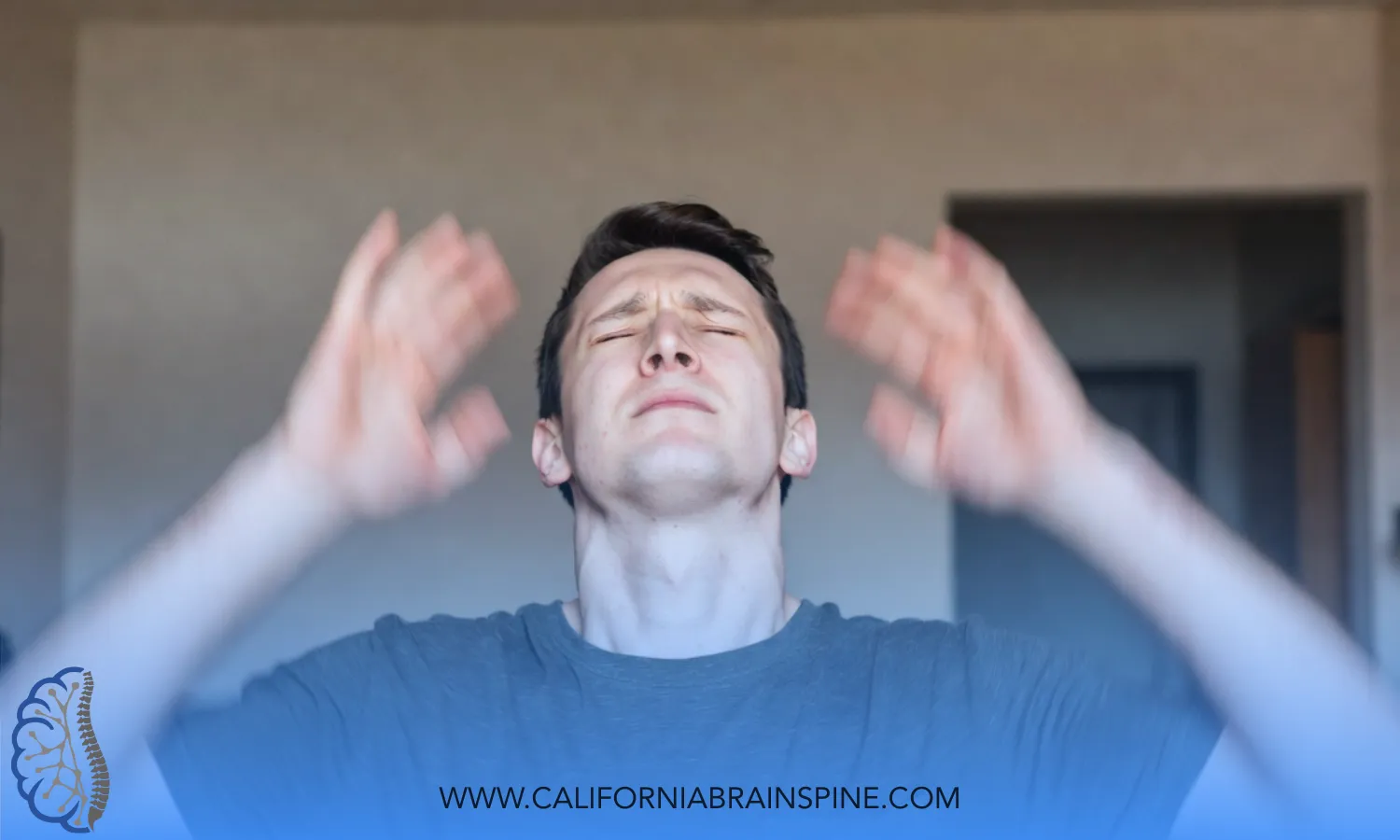
The clinic serves patients from Hidden Hills, Calabasas, and across Southern California who often arrive after seeing multiple other providers. They may have had basic ENT checks, normal brain MRIs, or short courses of vestibular exercises that did not fully resolve their symptoms. At this stage, a deeper, engineering level view of the nervous system becomes essential.
At California Brain & Spine Center, sudden vertigo attacks are evaluated with a combination of:
-
Detailed questionnaires about dizziness, balance, anxiety, and autonomic symptoms
-
Comprehensive neurological and vestibular examination focusing on eye movements, posture, gait, and reflexes
-
Advanced neuro diagnostic tools, such as computerized oculomotor testing, balance platform assessment, and in some cases autonomic function testing
-
Careful review of prior imaging, lab work, and medical records to avoid unnecessary repetition
This multi layer approach allows the team to see patterns that are often missed in short appointments. Rather than labeling patients simply as “vertigo,” “anxiety,” or “post concussion,” the clinic builds a layered picture of how brain networks, vestibular pathways, neck mechanics, and autonomic regulation all interact.
Detailed history taking focused on triggers, patterns, and context
During history taking, particular attention is paid to triggers, timing, and context. Does vertigo start after specific head movements, visual environments, hormonal changes, or periods of poor sleep? Do the attacks cluster with migraines or sinus infections? Are there underlying conditions such as dysautonomia, postural orthostatic tachycardia syndrome, or head and neck trauma that could be amplifying the episodes?
By organizing your story in this way, California Brain & Spine Center can tailor the sudden vertigo attacks evaluation in Hidden Hills patients to their real world experiences, rather than forcing them into a one size fits all diagnosis.
Advanced vestibular and neurological testing
Advanced testing might include tracking how your eyes move during smooth pursuit, saccades, or head impulse tests, as well as observing nystagmus patterns during positional maneuvers. Balance tests might challenge you on different surfaces, in different visual conditions, or with head motion. The goal is not to make you miserable, but to carefully provoke and measure the systems that are currently unstable, so they can be retrained through neuroplasticity based rehabilitation.
Precision testing is not about finding more labels. It is about discovering the smallest, most specific changes that can move your brain from survival mode back toward stability.
Evidence informed tools beyond a basic ENT visit
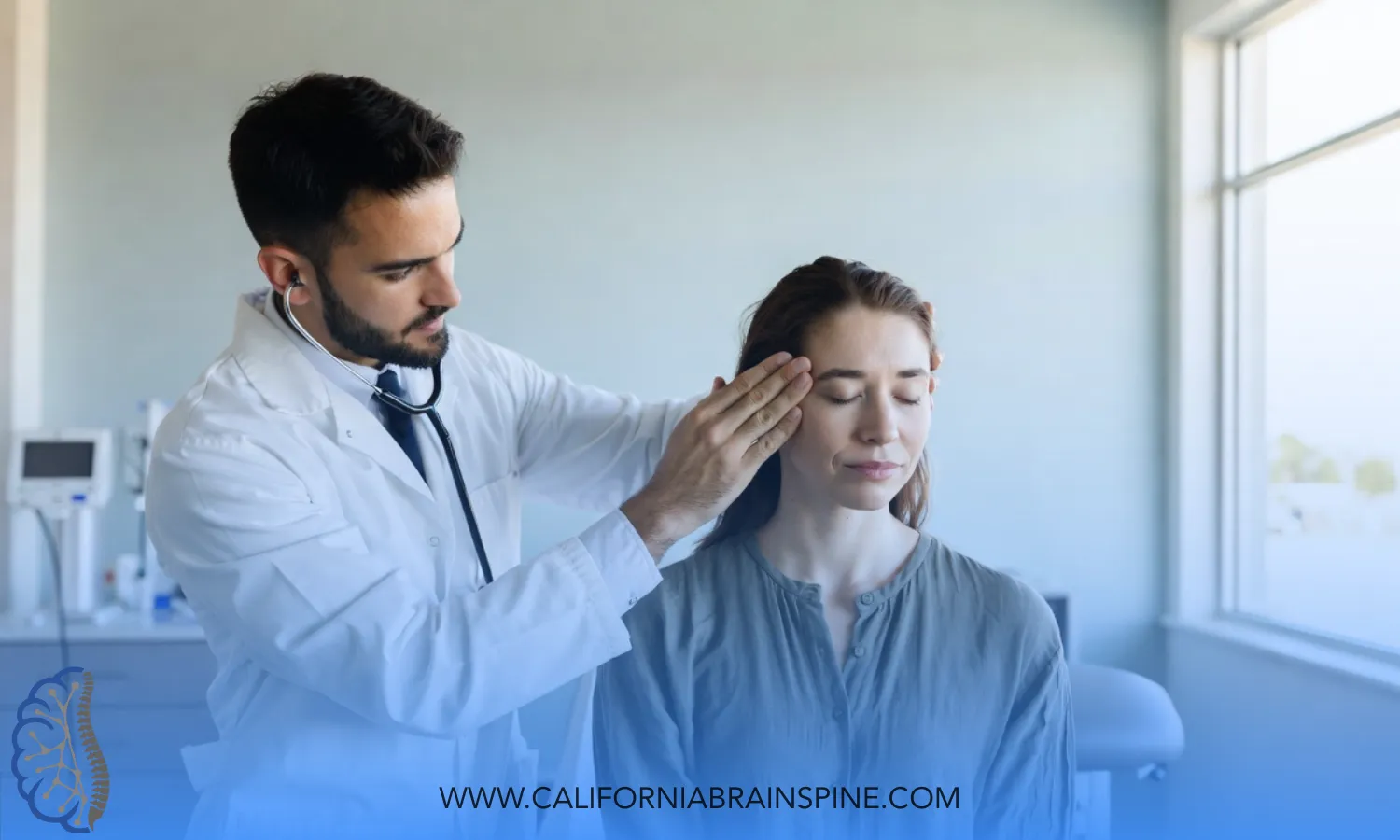
Many patients searching for sudden vertigo attacks evaluation in Hidden Hills have already seen an ENT or general neurologist. Those visits are important, but they often stop at basic imaging or simple positional maneuvers. California Brain & Spine Center expands on that foundation with evidence informed, non invasive tools that support recovery rather than only describing the problem.
Treatments that may be integrated into a personalized plan include:
-
Vestibular Rehabilitation and Balance Disorder Therapy to retrain how the inner ears and brain coordinate movement
-
NeuroSensory Integration (NSI) to reduce sensitivity to visual motion, noise, and complex environments
-
Neuroplasticity Rehabilitation and Cognitive Rehabilitation when vertigo is accompanied by brain fog, poor focus, or memory changes
-
Non invasive neurology therapies such as Low Level Laser Therapy (LLLT), Pulsed Electromagnetic Field (PEMF), Hyperbaric Oxygen Therapy (HBOT), and GammaCore vagus nerve stimulation to support cellular and autonomic recovery in select cases
-
Structured programs like the NeuroRevive Program for patients with traumatic brain injury or post concussion syndrome whose vertigo is part of a bigger neurological picture
All of these tools are chosen only after a careful sudden vertigo attacks evaluation in Hidden Hills patients to ensure they are safe and appropriate for the individual.
Treatment paths after a precise sudden vertigo attacks evaluation
Once the evaluation is complete, the next step is translating findings into a clear treatment path. Sudden vertigo attacks are rarely solved with a single maneuver or pill. Instead, they usually require a combination of targeted vestibular exercises, brain based rehabilitation, and lifestyle adjustments designed to support neuroplasticity.
Vestibular Rehabilitation and balance retraining
For many patients, vestibular rehabilitation is the backbone of treatment. Carefully designed exercises help retrain how your eyes, inner ears, and body communicate during head and body movement. These may include gaze stabilization drills, habituation exercises to desensitize triggers, and balance tasks that gradually challenge your stability without overwhelming your system.
When sudden vertigo attacks evaluation in Hidden Hills reveals specific canal involvement, canalith repositioning maneuvers are used to address BPPV. When the primary issue is central vestibular or neuro sensory integration, exercises are chosen to target those pathways instead of relying on generic protocols.
Neuroplasticity and cognitive rehabilitation when vertigo affects thinking
Vertigo rarely stays in the “balance” box. It often spills into concentration, memory, and emotional resilience. When patients also report brain fog, difficulty reading or using screens, or trouble processing conversation in busy environments, Cognitive Rehabilitation and Neuroplasticity Rehabilitation are woven into the plan.
This might involve graded cognitive tasks synchronized with eye and head movements, or sessions that combine vestibular input with focused attention exercises. The aim is not only to stop vertigo attacks but also to restore your confidence in thinking clearly and functioning at work, school, or home.
Recovery is not a straight line. It is a series of small, intentional adjustments that gradually teach your brain it is safe to move, to think, and to participate fully in your own life again.
What you can do at home between visits without making vertigo worse
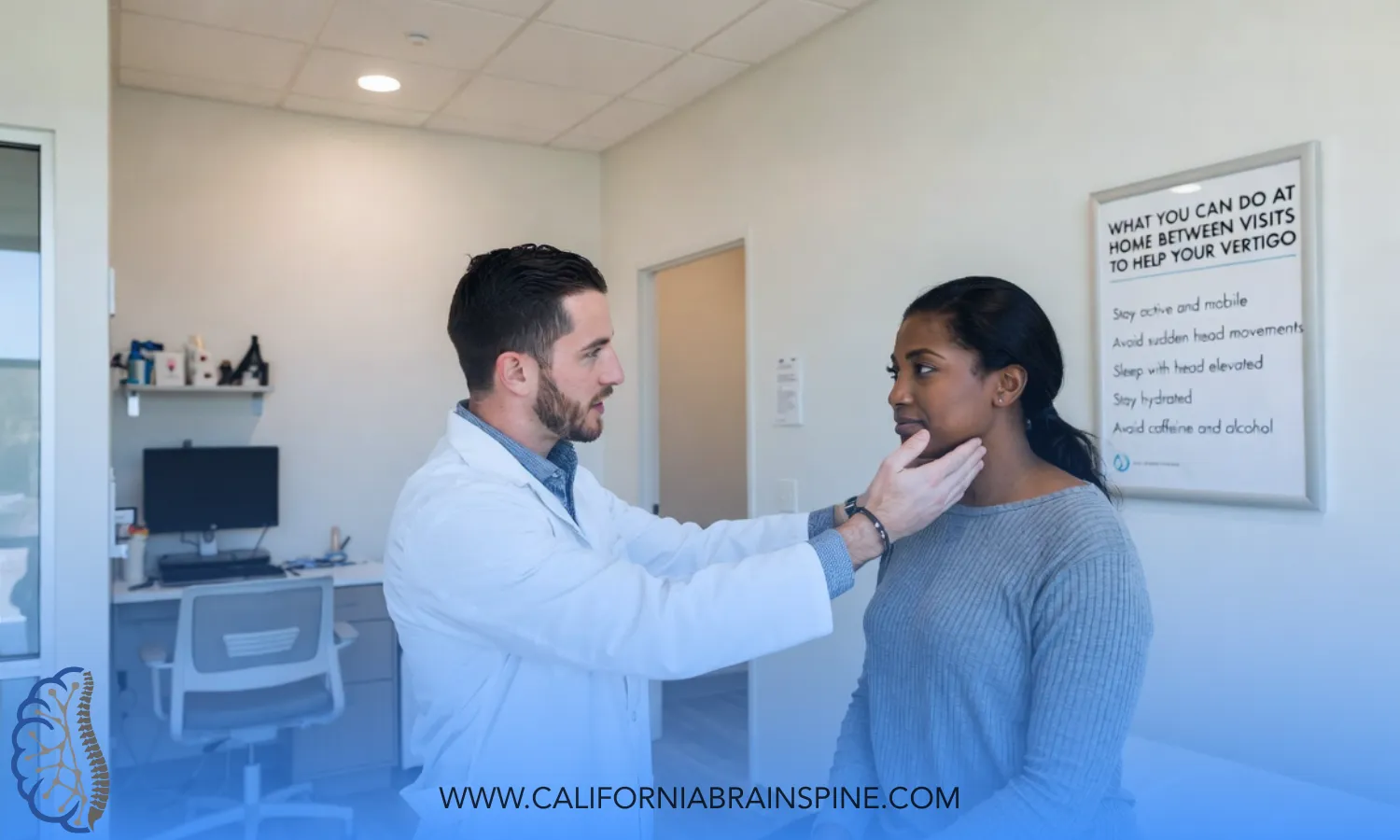
While clinical care is essential, what you do at home between visits can powerfully support or disrupt your progress. After a thorough sudden vertigo attacks evaluation in Hidden Hills, the team at California Brain & Spine Center usually provides customized home guidelines that might include:
-
Short, specific exercises that you perform once or twice a day, rather than random internet routines
-
Clear boundaries about what to avoid temporarily, such as rapid position changes while getting out of bed, until your system is more stable
-
Simple breathing and autonomic calming techniques to reduce the intensity of attacks when they do occur
-
Practical environmental changes, like modifying screen brightness, avoiding certain visual patterns, or improving bedroom lighting to make nighttime movements safer
The emphasis is always on doing the right amount, not the maximum amount. Over pushing can flare symptoms and slow progress. A good sudden vertigo attacks evaluation in Hidden Hills patients includes teaching them how to respect their current threshold while still nudging their nervous system toward greater resilience.
Self care is not giving up on your life. It is choosing the daily actions that quietly rebuild your capacity so that your life fits you again, instead of revolving around symptoms.
A real story from Hidden Hills: finding solid ground again after sudden vertigo attacks
Some time ago, a patient from Hidden Hills, let us call her L., came to see me after months of terrifying sudden vertigo attacks. Her first episode happened while she was loading groceries into her car. The parking lot started spinning, she clung to the cart, and she was convinced she was having a stroke. Emergency imaging was normal, and she was sent home with basic medication and the advice to “rest.”
When she arrived in my Calabasas clinic, she was afraid to drive, avoided turning her head quickly, and spent most of her evenings on the couch because she did not trust her balance. During her sudden vertigo attacks evaluation, I found position related nystagmus consistent with BPPV in one canal, but also noted significant visual motion sensitivity, neck stiffness, and autonomic signs suggesting dysautonomia.
Together, we built a plan. I performed precise canalith repositioning maneuvers to address the BPPV. We started Vestibular Rehabilitation tailored to her triggers, and we integrated NeuroSensory Integration exercises to reduce her supermarket and driving anxiety. Because she also had brain fog and fatigue, we added gentle Cognitive Rehabilitation tasks and simple autonomic breathing drills.
Over the next weeks, L. reported that the full spinning attacks disappeared. She still had moments of unsteadiness, but they were shorter and less frightening. She gradually returned to driving short distances, then longer ones. At the end of her program, she told me the most important change was not just that her vertigo was better, but that she finally understood what was happening inside her body and felt like she had tools to manage it.
That is the purpose of sudden vertigo attacks evaluation in Hidden Hills and Calabasas: not only to give you a label, but to help you move from fear and confusion toward clarity, stability, and participation in your own life again.
Your most common questions about sudden vertigo attacks evaluation in Hidden Hills
Q1: Do I really need a special evaluation if my MRI and basic tests were normal?
Yes. A normal MRI or CT scan is important to rule out serious structural problems, but it does not evaluate how your vestibular system, eye movements, neck, and autonomic nervous system are functioning in real time. Sudden vertigo attacks evaluation in Hidden Hills through our Calabasas clinic focuses on those dynamic systems. Many patients with normal imaging still have very clear, treatable neuro vestibular and autonomic findings that only show up with specialized testing.
Q2: How long does a typical sudden vertigo evaluation take, and what should I expect during the visit?
Most initial evaluations last longer than a standard office visit, often between 60 and 90 minutes, because there is a lot to cover. You can expect detailed questions about your symptoms, past medical history, and daily routines. We will perform neurological and vestibular tests, observe your balance and gait, and sometimes use computerized tools to track eye movements or measure balance responses. Everything is explained step by step so you always know what we are doing and why.
Q3: Will the evaluation itself make my vertigo worse?
Some tests may briefly provoke mild dizziness, especially positional maneuvers or visual motion challenges. However, they are done carefully, within your tolerance, and we stop if symptoms become too intense. The information gained is extremely valuable for targeting treatment. In most cases, any temporary increase in dizziness fades quickly, and we provide strategies to calm your nervous system afterward. Your long term stability is always more important than forcing a test.
Q4: What treatments are available after sudden vertigo attacks evaluation in Hidden Hills?
Treatment depends on what we find. It may include canalith repositioning maneuvers for BPPV, Vestibular Rehabilitation and balance training, NeuroSensory Integration exercises for visual or sound sensitivity, Cognitive Rehabilitation for brain fog and concentration issues, and non invasive neurology therapies such as LLLT, PEMF, HBOT, or GammaCore vagus nerve stimulation in select cases. For patients with concussion or traumatic brain injury, structured programs like concussion treatment in Calabasas, traumatic brain injury recovery, or the NeuroRevive Program may be recommended.
Q5: Can lifestyle changes really make a difference for sudden vertigo attacks?
Yes, but only when they are targeted to your specific pattern. For example, hydration, sleep quality, gentle movement, and breathing patterns can significantly influence vestibular and autonomic stability. Part of the sudden vertigo attacks evaluation in Hidden Hills is identifying which lifestyle factors are most relevant to you, so we can give focused, realistic recommendations rather than generic lists of do and do not advice.
Q6: I feel anxious and defeated after so many episodes. Is that normal, and can you help with that too?
It is absolutely normal to feel anxious, frustrated, or hopeless after repeated sudden vertigo attacks. Your nervous system has been on high alert for a long time. In our clinic, emotional responses are treated as a valid and important part of the picture, not as an excuse to dismiss your symptoms. We design care plans that support both your neurological and emotional recovery, and when needed, we collaborate with other professionals to ensure your anxiety and mood are addressed with the same seriousness as your vertigo.
Conclusion: next steps if sudden vertigo attacks are disrupting your life
As you can see, sudden vertigo attacks evaluation in Hidden Hills is much more than a quick look in your ears or a simple prescription. It is a structured, compassionate process that brings together advanced vestibular and neurological testing, my engineering and neuroscience background, and a deep respect for your lived experience.
If you only remember a few key points, let them be these: your symptoms are real, they are explainable, and they are often treatable when we look at the whole system instead of isolated pieces. You are the hero of this journey, and my role is to provide the map, the tools, and the guidance so you can move from instability and fear toward greater confidence and control.
If you are ready to explore why your sudden vertigo attacks are happening and what can be done about them, I would be honored to walk that path with you here at California Brain & Spine Center in Calabasas.
At the end of the day, the goal is not only to stop the room from spinning. It is to help you reclaim the parts of your life that vertigo has stolen, and to support you in building the most stable, meaningful version of your future that your brain and body will allow.
If you live in Hidden Hills, Calabasas, or anywhere in Southern California and sudden vertigo attacks are disrupting your work, relationships, or sense of safety, you do not have to keep facing them alone. Reach out to California Brain & Spine Center to schedule a personalized dizziness and vestibular evaluation. Together, we can identify the root causes of your symptoms and design a clear, evidence informed plan that uses tools like Vestibular Rehabilitation, NeuroSensory Integration, Cognitive Rehabilitation, and non invasive neurology therapies to support your brain.
You deserve more than short answers and temporary fixes. You deserve a careful, human centered approach that sees your whole story and helps you move toward the best possible version of your life and function.