
Positional Vertigo (BPPV)
If the room starts spinning when you roll over in bed, look up, or tie your shoes, you’re not “going crazy,” and you’re definitely not alone. The most common cause of brief, position-triggered spins is Positional Vertigo (BPPV). The good news? In many cases, you can calm often even stop those spins with simple, targeted movements at home. As a neurology specialist who’s coached many patients through this, I’ll guide you step by step with warmth, clarity, and confidence. You’ve got this.
What Exactly Is Positional Vertigo (BPPV)?
Positional Vertigo (BPPV) happens when tiny calcium crystals (otoconia) in the inner ear drift into one of the balance canals where they don’t belong. When you move your head, these crystals shift and send a “false motion” signal to your brain. The result is a sudden spinning sensation that lasts seconds to a minute or two, often with nausea, sometimes with eye flickering (nystagmus). The classic pattern: symptoms are brief, triggered by head position changes, and settle if you stay still.
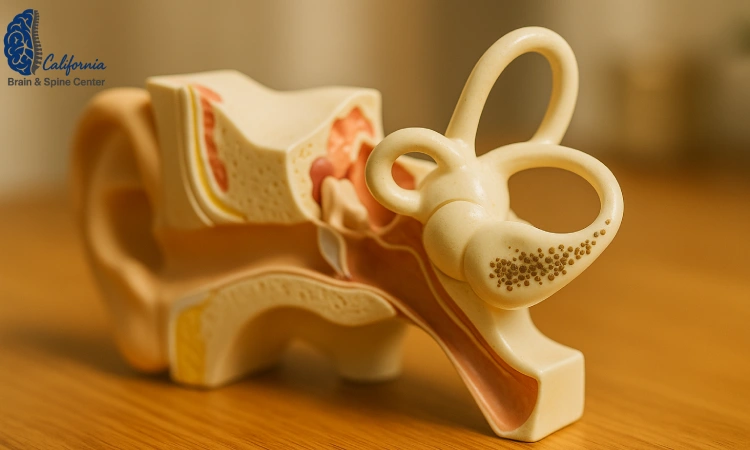
Key reassuring facts about Positional Vertigo (BPPV):
-
It is common and usually benign.
-
It’s mechanical (crystals out of place), not a disease attacking the brain.
-
It responds well to repositioning maneuvers that guide those crystals back where they belong.
Is It Likely Positional Vertigo (BPPV)? A Quick Self-Screen
You might be dealing with Positional Vertigo (BPPV) if:
-
The spinning is brief (seconds to a couple minutes) and triggered by turning in bed, looking up/down, or bending.
-
Your hearing is normal and there’s no ear pain during attacks.
-
You feel OK between episodes, maybe just a little “off” or wobbly.
Red flags seek urgent care instead of home maneuvers if you have:
-
Continuous vertigo that doesn’t ease with stillness
-
New weakness, numbness, trouble speaking, double vision, or severe unsteady gait
-
A new, severe headache or neck trauma
-
Fainting, chest pain, or a new hearing loss with ear fullness or ringing
If those don’t apply and the pattern fits, home maneuvers for Positional Vertigo (BPPV) are often appropriate.
Before You Start: Safety and Setup
Most people can safely perform home treatments for Positional Vertigo (BPPV). Still, consider these:
-
Neck/back caution: If you have severe neck arthritis, cervical disc disease, retinal detachment risk, or recent spine surgery, speak with a clinician before trying these.
-
Environment: Use a bed or sofa, good lighting, and a stable surface. Keep a bowl or towel nearby if you’re prone to nausea.
-
Support: A partner can help position your head, watch your eye movements, and steady you.
-
Pace: Move smoothly. If you feel intense nausea, pause, breathe deep, and resume when ready.
BPPV is famous for causing brief but intense spinning when you roll in bed or tip your head back, yet many patients also have a history of concussion or whiplash that has never been fully addressed. When crystals are only part of the picture, head movements can still feel unsafe even after repositioning maneuvers. If your vertigo story includes a previous head injury, our article on head movement exercises for post concussion dizziness shows how we gently rebuild tolerance to motion so you can move more freely without provoking episodes.
Canalith Repositioning For Fast BPPV Vertigo Relief
This short video explains how BPPV, the most common cause of vertigo, can often be relieved quickly with canalith repositioning maneuvers. When tiny crystals in the inner ear move where they do not belong, simple position based techniques can shift them back and stop the spinning sensation. At California Brain and Spine Center we combine these maneuvers with a full vestibular and neurological assessment so you understand both the cause of your vertigo and the most effective path to recovery.
Which Ear Is the Culprit?
With Positional Vertigo (BPPV), symptoms are typically worse when you roll onto the affected side. If the spin hits hardest when you turn right, the right ear is often the source. If you’re unsure, you can treat both sides just separate by a few minutes.
The Epley Maneuver (Posterior Canal): Gold-Standard for Many
This is the most famous maneuver for Positional Vertigo (BPPV) affecting the posterior canal (the most common type). Perform it on the side that triggers the worst spin.
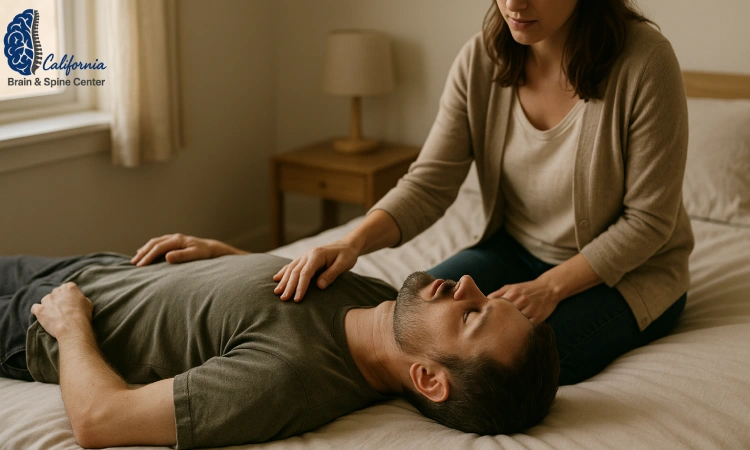
For the right ear:
-
Start seated, knees bent, head turned 45° to the right.
-
Lie back quickly so your shoulders rest on the pillow and your head is slightly extended off the edge (about 20–30° back), still turned right. Hold 30–60 seconds, or until spinning and eye movements stop plus ~15 seconds.
-
Turn your head 90° left (now 45° left of center) without lifting it. Hold 30–60 seconds.
-
Roll your body onto your left side, turning your head another 90° so your nose points down toward the bed. Hold 30–60 seconds.
-
Sit up slowly, bringing your legs off the bed.
For the left ear, reverse directions.
Do 1–3 rounds, separated by a minute or two. Many people notice rapid relief with this Positional Vertigo (BPPV) protocol.
The Half-Somersault (Foster Maneuver): A Great Self-Help Alternative
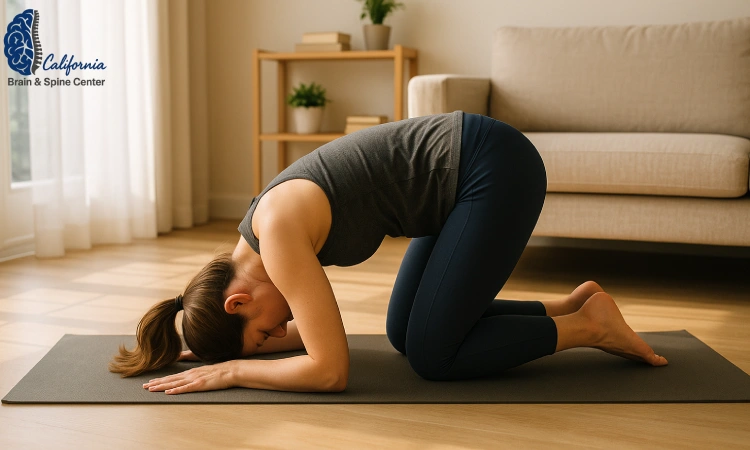
Some folks prefer this because it starts in a kneeling position and may feel gentler on the neck. It’s also for posterior-canal Positional Vertigo (BPPV).
-
Kneel and place both hands on the floor, then tip your head up to look at the ceiling briefly (this may trigger symptoms).
-
Tuck your chin and bring your head down to the floor (like starting a somersault). Hold 30–60 seconds.
-
Turn your head 45° toward the affected side (right for right-ear Positional Vertigo (BPPV)). Hold 30–60 seconds.
-
Keeping your head turned, raise your head until your back is parallel to the floor (head level with your spine). Hold 30–60 seconds.
-
Sit up slowly, keeping the head turn until you’re fully upright.
Repeat up to 3 times if needed.
The Semont (Liberatory) Maneuver: Fast and Effective for Some
The Semont maneuver can rapidly shift crystals in Positional Vertigo (BPPV), especially if cupulolithiasis is suspected.

For right-ear symptoms:
-
Sit upright with head turned 45° left (away from the affected ear).
-
Drop quickly onto your right side (affected ear down), keeping head angle. Hold 30–60 seconds.
-
In one fluid motion, swing to your left side without stopping in the middle, so your nose points down toward the mattress. Hold 30–60 seconds.
-
Return to sitting slowly.
Reverse for the left ear. This maneuver can feel intense; have assistance if you’re anxious.
Brandt–Daroff Exercises: Reset Residual Sensitivity
Even after crystals are back in place, you can feel “foggy.” Brandt–Daroff can desensitize your system for Positional Vertigo (BPPV):
-
Sit upright on the edge of the bed.
-
Lie onto your right side, turning your head up 45° (toward the ceiling). Hold 30–60 seconds after the spin stops.
-
Sit up again for 30 seconds.
-
Lie onto your left side, head up 45°. Hold 30–60 seconds.
-
Sit up again.
That’s one cycle. Do 5 cycles, twice daily for 1–2 weeks, or until you’ve had 2 symptom-free days.
Horizontal-Canal BPPV: The “Barbecue Roll” (Lempert)
If your spins are worst when rolling in bed and feel more “side-to-side,” you might be dealing with horizontal-canal Positional Vertigo (BPPV). The Lempert roll can help:
-
Lie on your back, head slightly elevated.
-
Turn your head 90° toward the affected ear. Hold 30–60 seconds.
-
Turn your head to center, hold 30–60 seconds.
-
Turn head 90° to the other side, hold 30–60 seconds.
-
Roll your body onto your stomach so your face points down. Hold 30–60 seconds.
-
Continue the roll onto your original side (completing a full “barbecue” turn) and then sit up.
Two or three rolls often settle horizontal-canal Positional Vertigo (BPPV).
Even when BPPV has been treated correctly, lingering sensitivity to movement often points to a broader vestibular issue that needs targeted rehab. Through our vestibular rehabilitation program we assess balance, gait, and eye movements to uncover any remaining weaknesses, then provide customized exercises to help your brain feel stable again in daily life.
Aftercare: Small Tweaks That Speed Recovery
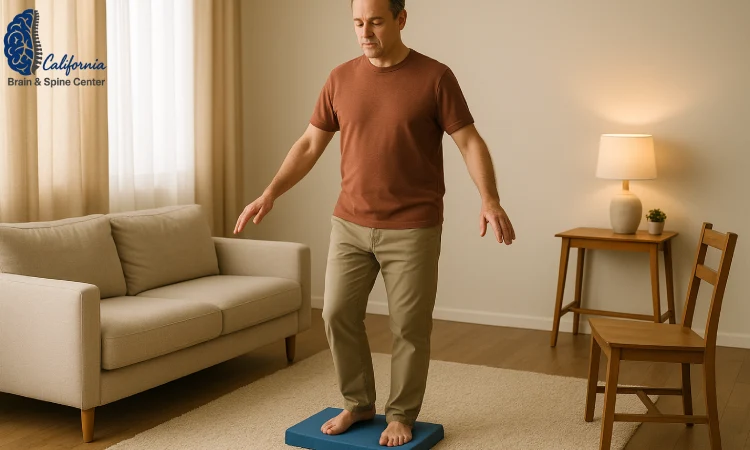
After successful maneuvers for Positional Vertigo (BPPV):
-
Stay upright for an hour if you can; avoid extreme head tilts the rest of the day.
-
Sleep with two pillows and try not to lie on the affected side overnight.
-
Hydrate, eat lightly, and take breaks if you feel woozy.
-
Gentle walking and, later, balance exercises (standing on foam, heel-to-toe) help the brain recalibrate.
-
Expect occasional brief “after-sensations.” This is normal and fades.
Troubleshooting: What If the Spins Persist?
If you’ve done the correct maneuver for your suspected side and Positional Vertigo (BPPV) persists after a couple of days:
-
You may be treating the wrong ear or wrong canal.
-
You may have cupulolithiasis, which can be stubborn.
-
You may have a different cause for dizziness (migraine-related vertigo, orthostatic issues, inner-ear inflammation).
That’s when a clinician can test your eye movements and confirm exactly which canal is involved so you can apply the right solution.
Recurrence: How to Lower Your Chances
Positional Vertigo (BPPV) can recur often months or years later. To reduce risk:
-
Maintain active movement of your head and body; gently expose yourself to normal daily motions.
-
Discuss vitamin D sufficiency with your clinician if you’re frequently recurrent.
-
Manage migraine triggers, sleep well, and keep stress in check; these don’t cause Positional Vertigo (BPPV), but they can heighten sensitivity.
-
Keep these instructions handy so you can treat early if symptoms return.
A Practical 10-Minute At-Home Routine
When a flare hits:
-
Identify the likely side (which roll in bed triggers it most).
-
Perform the Epley or Half-Somersault for that side 1–3 times.
-
Walk gently for a few minutes, hydrate, and take a short visual break (limit fast screen scrolling).
-
If residual wooziness lingers, do Brandt–Daroff in the evening.
-
Repeat the next day only if needed.
Most people with Positional Vertigo (BPPV) feel meaningful improvement within a day or two using this plan.
When to Seek Expert Help
-
You’re unsure which maneuver fits your Positional Vertigo (BPPV).
-
You have neck/back limitations.
-
You’ve tried correctly for 48–72 hours with no change.
-
You notice hearing changes, ear fullness, or persistent imbalance.
A focused exam can pinpoint the exact canal and resolve Positional Vertigo (BPPV) efficiently.
Your Next Step We’re Ready to Help
If you’d like a clinician-guided plan for Positional Vertigo (BPPV) including precise canal testing and personalized maneuvers our team at California Brain & Spine Institute can help you resolve it methodically and kindly. Explore our care options here: California Brain & Spine Institute. You can also read more about vertigo and related conditions on our site’s articles section: Learn more at California Brain & Spine Institute. Our experts will solve your problem for you with targeted, evidence-based care and practical coaching you can use right away.
Summary
Positional Vertigo (BPPV) is a crystal-displacement problem in the inner ear that causes brief, position-triggered spins. The Epley, Half-Somersault (Foster), Semont, Brandt–Daroff, and Barbecue Roll maneuvers are safe, practical ways to guide the crystals back where they belong. Most people improve quickly with the correct maneuver and a little patience. If symptoms persist, an expert can confirm the canal involved and tailor the fix. Keep moving gently, hydrate, and rest between steps. You are not alone Positional Vertigo (BPPV) is common, fixable, and you have a clear path forward.
Frequently Asked Questions
1) How do I know which ear is affected in Positional Vertigo (BPPV)?
Usually, the side that triggers the strongest spin when you roll in bed is the culprit. If the right roll is worse, treat the right ear. If uncertain, treat one side first; if there’s no change after a day, try the other side. A clinician can confirm with positional testing.
2) How many times should I repeat the Epley for Positional Vertigo (BPPV)?
Commonly 1–3 rounds in a session. If you feel significantly better, stop and resume normal activity. If symptoms linger, repeat once the next day. If there’s no improvement after 2–3 days, get evaluated.
3) Is medication necessary for Positional Vertigo (BPPV)?
Not usually. Because Positional Vertigo (BPPV) is mechanical, repositioning maneuvers are the main treatment. Short-term anti-nausea medication can help some people ride out the discomfort, but it doesn’t fix the underlying crystal issue.
4) Can I do these maneuvers if I have neck problems?
Many people can, but choose gentler methods (like the Half-Somersault) and avoid extreme extension. If you have significant neck or back conditions, ask a clinician to guide you through safe modifications.
5) Why do I still feel “off” even after the spins stop?
Residual wooziness is common after Positional Vertigo (BPPV) because your brain is recalibrating. Brandt–Daroff exercises, walking, hydration, and sleep usually clear this within days.
6) Can Positional Vertigo (BPPV) come back?
Yes, recurrence can happen. Keep these instructions handy, address vitamin D sufficiency with your clinician if you’re prone to frequent recurrences, and treat early if symptoms return.
7) Is it safe to fly with Positional Vertigo (BPPV)?
If you’re actively spinning with head movements, it can feel uncomfortable on a plane. If possible, perform maneuvers before travel, stay hydrated, and avoid sudden head turns. If symptoms are severe or atypical, consider delaying travel and getting evaluated.
8) What if my dizziness lasts hours, not seconds?
That’s not typical for Positional Vertigo (BPPV). Continuous vertigo, new hearing loss, severe headache, or neurological symptoms warrant medical evaluation rather than home maneuvers.
👨⚕️ Alireza Chizari, MSc, DC, DACNB
🧠 Clinical Focus
🔬 Assessment & Treatment Approach
Objective testing may include:
Treatment programs may involve:
📍 Clinic Information
✅ Medical Review
⚠️ Disclaimer