
Fear Of Movement After Brain Injury
At our clinic in Calabasas, I frequently meet patients who say something like this:
“Every time I try to walk faster, turn my head, or exercise, I am terrified my symptoms will come back. I feel safer if I barely move.”
Most of these patients are not lazy, unmotivated, or “in their head.” They are often high achievers who used to hike, work out, or manage busy jobs across California. After a concussion or other brain injury, movement started to trigger dizziness, nausea, headaches, heart racing, visual overwhelm, or a wave of fatigue that could last for days. Over time, their body and brain learned that movement equals danger.
Overcoming Fear Of Movement After Brain Injury is one of the most important parts of real recovery. If the nervous system stays stuck in a pattern of fear, patients may protect themselves from short term symptom spikes but pay a heavy long term price in weakness, deconditioning, and ongoing dizziness or brain fog.
In this guide, I will share how we think about Overcoming Fear Of Movement After Brain Injury at California Brain & Spine Center, what is happening inside the brain and body, and how a careful neurological and vestibular evaluation can open the door to safe, non invasive rehabilitation.
Understanding the fear of movement after brain injury

Fear of movement after a brain injury has a medical name: kinesiophobia. It is not just a psychological problem. It is a learned survival response, built from real experiences where movement did seem to make things worse.
Overcoming Fear Of Movement After Brain Injury starts with understanding why the fear feels so convincing.
Common patterns include:
-
A patient tries to return to walking, driving, or the gym and experiences severe dizziness, nausea, or headache later that day.
-
Small tasks such as grocery shopping or standing in a busy line trigger visual overload and a feeling of being “off” for hours.
-
A simple turn of the head or bending down causes the room to spin or creates a wave of instability.
The brain stores these experiences and becomes hyper sensitive to any sign of movement. Even the thought of moving faster, turning quickly, or exercising can activate a protective response. Muscles tense, breathing changes, and the autonomic nervous system shifts into a fight or flight state.
From this perspective, Overcoming Fear Of Movement After Brain Injury is not about forcing people to “just push through.” It is about retraining a nervous system that has become overprotective.
Why the brain starts to fear movement
After a concussion or other brain injury, several systems can be disrupted:
-
Vestibular system in the inner ear and brainstem
-
Visual processing and eye movements
-
Proprioception from the neck and spine
-
Autonomic nervous system that regulates heart rate and blood pressure
-
Cognitive systems that handle attention and sensory filtering
If these systems are not working together smoothly, movement becomes confusing. Turning the head, walking in a busy environment, or riding in a car sends mixed signals to the brain. The brain may interpret those conflicting messages as a threat.
To protect the person, the brain turns down movement and increases symptoms. This is why Overcoming Fear Of Movement After Brain Injury always has to consider vestibular function, eye movements, dysautonomia, and neck input. The fear is often logical from the nervous system’s point of view.
Over time, three things interact:
-
Real physiological instability with movement
-
Unpleasant symptoms that follow
-
Growing fear and anticipation of those symptoms
This loop keeps patients trapped and makes Overcoming Fear Of Movement After Brain Injury feel almost impossible without the right guidance.
When fear is protective and when it becomes a trap

In the early phase after a brain injury, some degree of rest and caution is appropriate. The brain is healing and needs time. Pushing aggressively in the first days or weeks can worsen symptoms.
However, long term immobilization and avoidance can become harmful. Muscles weaken, cardiovascular fitness drops, and the vestibular and visual systems never get the graded exposure they need to recalibrate. This is where Overcoming Fear Of Movement After Brain Injury becomes essential.
Signs that fear has become a trap rather than a healthy warning include:
-
Avoiding almost all exercise months after the injury
-
Refusing to turn the head quickly or walk on uneven surfaces
-
Feeling anxious at the idea of leaving the house
-
Planning the entire day around avoiding potential symptom triggers
-
Getting smaller and smaller in life, even though scans and basic tests look normal
In these situations, the nervous system is not just protecting the brain. It is limiting recovery.
The brain body loop in Overcoming Fear Of Movement After Brain Injury
To understand Overcoming Fear Of Movement After Brain Injury, it helps to see how the brain and body talk to each other.
-
The brain predicts danger with movement based on past experiences.
-
That prediction increases muscle tension, breathing rate, and heart rate.
-
These changes can directly increase dizziness, visual sensitivity, and fatigue.
-
The person moves and, because their system is already on high alert, symptoms are more likely.
-
The brain takes this as “proof” that movement is dangerous.
This loop has a strong autonomic component. Many patients with dysautonomia or POTS like symptoms notice that even simple standing or walking causes heart racing and lightheadedness. For them, Overcoming Fear Of Movement After Brain Injury must address both the vestibular system and the autonomic nervous system.
Breaking this loop requires a combination of education, vestibular rehabilitation, autonomic conditioning, and careful graded exposure. It is not a quick fix, but when approached correctly, the nervous system can learn that movement is safe again.
How clinicians evaluate fear of movement after brain injury
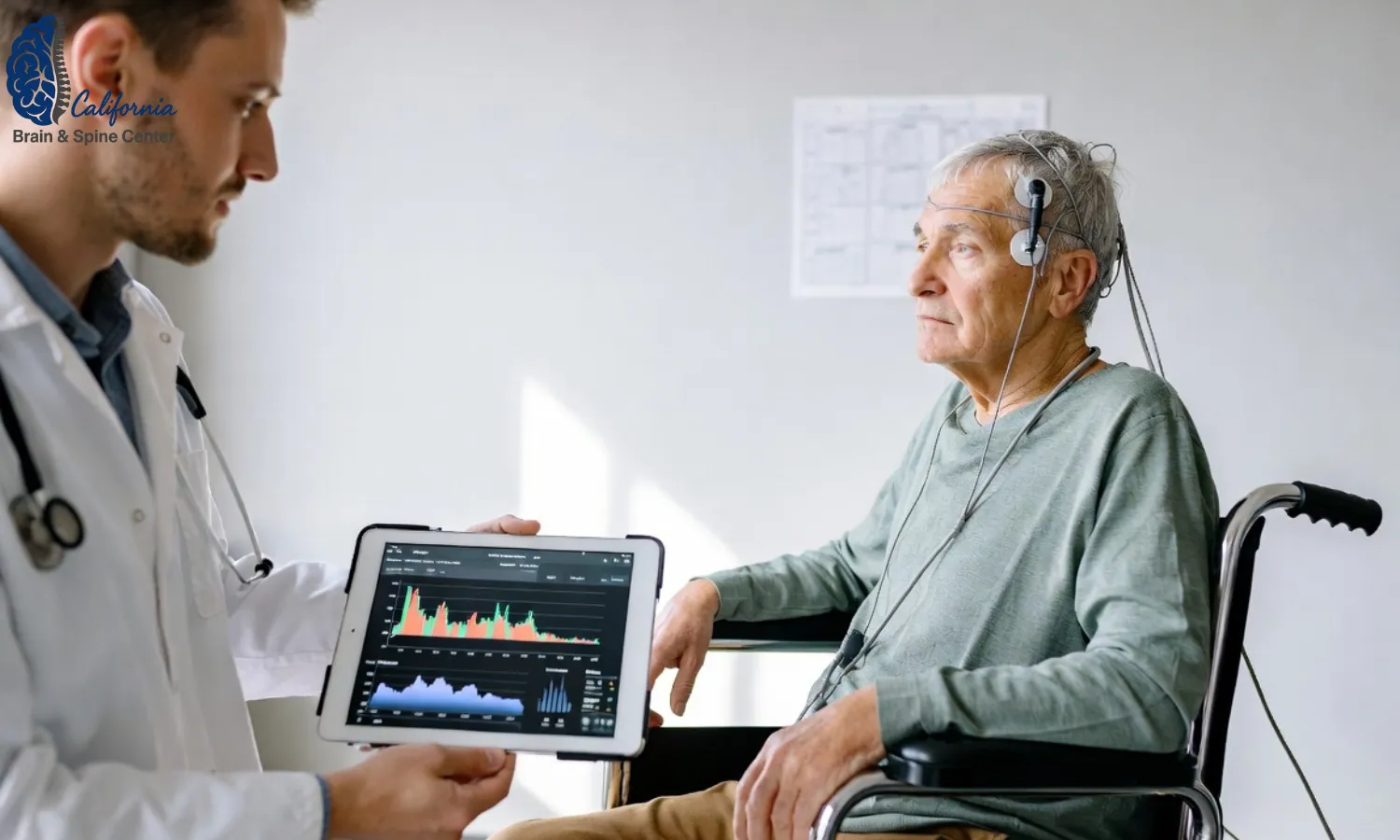
Overcoming Fear Of Movement After Brain Injury begins with an accurate, detailed evaluation. A simple “you are fine, just exercise” is not enough, and can actually worsen trust.
In a neurological and vestibular clinic, the evaluation typically includes:
1. Detailed history
The clinician will ask:
-
What movements trigger symptoms
-
How long symptoms last after those movements
-
What the patient has already tried
-
Any past concussions, whiplash injuries, or infections
-
Sleep, stress, and overall health patterns
Patients who travel to Calabasas from other parts of California often bring extensive prior records. That history helps, but the lived story is just as important.
2. Vestibular and eye movement assessment
Because balance and visual stability are central to Overcoming Fear Of Movement After Brain Injury, testing often includes:
-
Head impulse and gaze stability assessments
-
Smooth pursuit and saccadic eye movements
-
Positional testing if vertigo is suspected
-
Balance tasks on firm and compliant surfaces
If certain movements consistently create dizziness or visual blurring, this is a strong sign that the fear is rooted in real vestibular or visual mismatch.
3. Neck and proprioceptive evaluation
The neck plays a major role in how the brain senses head position. Stiffness, joint dysfunction, or asymmetry in neck input can contribute to dizziness and a floating sensation. A thorough examination will:
-
Check range of motion and strength
-
Look for tenderness or muscle guarding
-
Compare how symptoms change with gentle neck movements
This information guides Overcoming Fear Of Movement After Brain Injury by identifying which movements can be safely trained first.
4. Autonomic and cardiovascular testing
For patients with suspected dysautonomia, the clinician may:
-
Measure heart rate and blood pressure in lying, sitting, and standing positions
-
Observe symptoms during simple walking or light step tests
-
Assess how quickly the system recovers after light exertion
Because many patients with fear of movement also have autonomic instability, this part of the evaluation is critical for safe rehabilitation.
5. Cognitive and sensory load
Brain injury often affects attention, multitasking, and sensory processing. The clinician may observe how:
-
Bright lights
-
Busy visual environments
-
Background noise
-
Dual tasking, such as walking while talking
influence symptoms. This directly relates to Overcoming Fear Of Movement After Brain Injury, because many real world movements happen in complex sensory environments.
Key principles in Overcoming Fear Of Movement After Brain Injury
Once the assessment is complete, an individualized, non invasive plan can be built. Several core principles guide this work.
Principle 1: Validate the symptoms, reframe the threat
Patients need to hear that their symptoms are real and understandable. Dismissing them as “just anxiety” usually backfires. A more helpful frame is:
-
Your brain has become overprotective
-
The systems that support balance and movement are miscalibrated
-
With the right plan, we can gradually teach your nervous system that movement is safe again
This explanation is the foundation of Overcoming Fear Of Movement After Brain Injury and helps reduce the emotional intensity around symptoms.
Principle 2: Start where the nervous system is, not where you wish it were
Aggressively pushing into high level exercise on day one usually fails. Instead, clinicians look for the highest level of movement the patient can tolerate with only mild, short lived symptom increase.
That might be:
-
Walking for 5 minutes on flat ground
-
Gentle head turns while seated
-
Standing balance with eyes open
Overcoming Fear Of Movement After Brain Injury means choosing the right starting point, then building from there.
Principle 3: Separate “bad” pain and symptoms from “expected” discomfort
Patients need clear rules about when to pause and when to continue. For example:
-
Mild, temporary dizziness that settles within minutes may be acceptable.
-
Sharp new pain, significant vision loss, or severe chest discomfort are not.
These guidelines help patients feel safer during rehabilitation and support Overcoming Fear Of Movement After Brain Injury without reckless risk.
When you live with a brain injury, fear of movement often comes hand in hand with constant worry and “what if” thoughts. Many patients quietly struggle with racing thoughts, body hypervigilance, and a nervous system that never really feels safe. If your fear around moving is closely tied to panic, irritability, or feeling on edge all day, it can help to look at how anxiety and concussion interact. Our article on post concussion anxiety treatment explains how targeted brain based therapies calm the overprotective parts of the nervous system so movement feels less threatening again.
Non invasive treatment strategies that support movement confidence

In a clinic focused on vestibular and neurological rehabilitation, several tools can be combined to support Overcoming Fear Of Movement After Brain Injury.
Vestibular and balance rehabilitation
Customized exercises may aim to:
-
Improve gaze stability so the world feels less jumpy with head movement
-
Reduce motion sensitivity in busy environments
-
Rebuild confidence with walking, turning, and positional changes
Exercises are introduced in a very specific order. For example, a patient might start with slow horizontal head turns while staring at a target before progressing to faster movements or walking with head motion. Each step in Overcoming Fear Of Movement After Brain Injury is small but meaningful.
Autonomic and cardiovascular conditioning
For patients with dysautonomia or POTS like features, a graded cardiovascular program can:
-
Improve blood flow regulation
-
Reduce heart rate spikes with standing and walking
-
Increase overall endurance
Protocols might begin with recumbent or semi recumbent exercise, then move gradually toward upright work. Careful pacing is vital for Overcoming Fear Of Movement After Brain Injury when the autonomic nervous system is involved.
Breathing and CO2 tolerance training
Abnormal breathing patterns and low carbon dioxide tolerance often worsen dizziness and panic sensations with movement. Training can include:
-
Nasal breathing at rest and during light activity
-
Gentle CO2 tolerance work, supervised and tailored
-
Strategies to avoid over breathing with anxiety
This piece reinforces Overcoming Fear Of Movement After Brain Injury by calming the autonomic nervous system and reducing internal alarms.
Neck and spinal care
When neck dysfunction contributes to dizziness and fear of movement, treatment may combine:
-
Gentle manual care or chiropractic techniques
-
Specific neck and upper back mobility exercises
-
Postural training and ergonomic advice
At a center where neurological and chiropractic care are integrated, these tools play an important role in Overcoming Fear Of Movement After Brain Injury, especially when whiplash is part of the picture.
Cognitive and sensory integration
For some patients, the real challenge is not raw strength but tolerating complex environments. Therapy can include:
-
Walking while turning the head or scanning with the eyes
-
Practicing in gradually more stimulating visual settings
-
Dual task training, such as walking while counting or talking
These drills help the brain learn to handle everyday situations, which is essential for Overcoming Fear Of Movement After Brain Injury in a real world context.
Practical steps patients can start with at home
While a customized plan from a specialist is ideal, some general strategies are usually safe and helpful.
-
Keep a brief symptom and activity log to see patterns. Notice what movements you are avoiding entirely.
-
Choose one small, safe looking activity you have been avoiding and reintroduce it at a very low dose. For example, a 3 minute walk or a few extra steps inside the house.
-
Focus on nasal, quiet breathing during that activity. Avoid holding your breath or sighing repeatedly.
-
Rate your symptoms before, right after, and 30 minutes later. Look for trends over time, not perfection in one day.
-
Celebrate small gains. Overcoming Fear Of Movement After Brain Injury is often measured in gradual expansion of what you can do, not instant elimination of every symptom.
These steps do not replace medical evaluation, especially if symptoms are severe, but they respect how the nervous system learns and support the broader goal of Overcoming Fear Of Movement After Brain Injury.
When to seek an in person neurological and vestibular evaluation
Patients should seek urgent care right away if they experience:
-
Sudden weakness, trouble speaking, or facial droop
-
New, severe headache unlike anything before
-
Chest pain, severe shortness of breath, or collapse
For ongoing problems, it is wise to seek a specialized evaluation when:
-
Fear of movement is limiting daily life months after a brain injury
-
Dizziness, imbalance, or visual overload continue despite basic therapy
-
Standing or gentle activity causes strong heart racing, lightheadedness, or near fainting
-
You feel stuck, unsure what is safe, and worried that any movement might set you back
In these situations, Overcoming Fear Of Movement After Brain Injury usually requires a team that understands concussion, vestibular disorders, and dysautonomia together, not in isolation.
Rebuilding trust in your body after a brain injury is rarely about “pushing through” fear. You need a step by step plan that respects your current limits while gently re training balance, eye movements, and body awareness. In our structured brain injury recovery program, we combine detailed neurological testing with individualized rehab so you are never guessing which movements are safe and which are not. Patients often describe feeling more confident, more stable, and more hopeful about returning to the activities they love.
How California Brain & Spine Center can help
At California Brain & Spine Center in Calabasas, we work every day with patients who are living this exact problem. Many have already seen multiple providers in California and still feel scared to move, drive, shop, or return to the activities that make life meaningful.
Our approach to Overcoming Fear Of Movement After Brain Injury includes:
-
Detailed neurological and vestibular assessment
-
Careful evaluation of neck, proprioception, and autonomic function
-
Customized vestibular and balance rehabilitation
-
Autonomic and cardiovascular conditioning when needed
-
Breathing and CO2 tolerance work to calm internal alarms
-
Integration of chiropractic and neurological perspectives for complex cases
If you live in California or can travel to us in Southern California, you can learn more about our clinic at https://californiabrainspine.com/ and schedule a personalized evaluation to begin your own plan for Overcoming Fear Of Movement After Brain Injury.
If you recognize yourself in these descriptions, you are not alone. At our center in Calabasas, we regularly help patients who feel trapped between symptoms and fear. Our team understands that Overcoming Fear Of Movement After Brain Injury is not just about willpower. It is about giving your brain, vestibular system, neck, and autonomic nervous system the right sequence of safe challenges so they can relearn how to move with confidence.
Our experts can assess where your nervous system is today and build a non invasive rehabilitation plan that respects your limits while helping you move forward. If you are in California or able to travel to Southern California, reach out through californiabrainspine.com and let our team guide you through Overcoming Fear Of Movement After Brain Injury in a structured, supportive way.
Short summary
Fear of movement after concussion or other brain injuries is extremely common and often misunderstood. It develops when real symptom flares with movement teach the brain that activity is dangerous. Over time, avoidance leads to weakness, autonomic instability, and more dizziness or fatigue.
Overcoming Fear Of Movement After Brain Injury requires more than encouragement to “just exercise.” It calls for a detailed assessment of vestibular function, neck input, autonomic control, and sensory processing, followed by a carefully graded, non invasive rehabilitation plan. With the right guidance, the nervous system can learn that movement is safe again and patients can gradually reclaim their daily lives.
Frequently asked questions about Overcoming Fear Of Movement After Brain Injury
1. Is fear of movement after a brain injury normal?
Yes. It is very common for patients to become afraid of movement after they repeatedly experience dizziness, nausea, or fatigue when they try to be active. The brain remembers these experiences and tries to protect you by avoiding similar movements. Overcoming Fear Of Movement After Brain Injury means respecting that protective instinct while gradually teaching the nervous system that safe movement is possible.
2. How do I know if I am avoiding too much?
If you find yourself turning down invitations, avoiding leaving the house, or limiting even very simple activities because you are worried about symptoms, avoidance may be slowing your recovery. Overcoming Fear Of Movement After Brain Injury usually involves expanding your activity level in a planned, supported way, rather than waiting for symptoms to vanish on their own.
3. Will my dizziness and fear of movement improve on their own with time?
Some patients improve with time and gentle activity, but many do not, especially if vestibular, autonomic, or neck problems are still present. In those cases, Overcoming Fear Of Movement After Brain Injury is more successful when guided by a clinician who can identify the underlying issues and prescribe specific exercises and strategies.
4. Is it dangerous to push through symptoms?
Pushing aggressively through severe symptoms can backfire and increase fear. That is why Overcoming Fear Of Movement After Brain Injury focuses on graded exposure, where movements are challenging enough to stimulate adaptation but not so intense that they cause prolonged crashes. A specialist can help you find this balance.
5. How long does it take to overcome fear of movement?
The timeline varies. Some patients start to feel more confident within a few weeks of targeted vestibular and autonomic rehabilitation. Others with more complex or long standing issues may need several months. What matters most is consistent, well paced progress in your program for Overcoming Fear Of Movement After Brain Injury, rather than a fixed calendar date.
6. Can therapy make my symptoms worse?
If therapy is not properly tailored, it can temporarily increase symptoms and fear. At a specialized center, exercises are carefully chosen and adjusted based on your response. Over time, this thoughtful progression is what supports Overcoming Fear Of Movement After Brain Injury without overwhelming your nervous system.
7. Do I have to live near Calabasas to work with your clinic?
Many patients come from the greater Los Angeles area and across California. Some travel from out of state for a detailed evaluation and a clear plan they can continue locally. Because Overcoming Fear Of Movement After Brain Injury is complex, an in person assessment at the beginning is often important, especially if you have significant dizziness, imbalance, or dysautonomia.
👨⚕️ Alireza Chizari, MSc, DC, DACNB
🧠 Clinical Focus
🔬 Assessment & Treatment Approach
Objective testing may include:
Treatment programs may involve:
📍 Clinic Information
✅ Medical Review
⚠️ Disclaimer