Brain Injury & Recovery
Yes, the brain can change after a concussion, a stroke or another neurological injury, and it keeps doing so well beyond the first few months. Neuroplasticity after brain injury is not a hopeful theory. It is the mechanism every form of neurological rehabilitation depends on, and it is why a patient whose tests were “normal” in March can be measurably different by autumn.I am Dr. Alireza Chizari, DC, DACNB, a board-certified chiropractic neurologist at California Brain & Spine Center in Calabasas. Patients arrive in my office having been told, sometimes kindly and sometimes not, that what they have now is what they will have. This article explains what neuroplasticity actually is, what it can and cannot do after injury, what makes it work harder, and how a functional neurology evaluation uses it. It is written for the person still reading the same paragraph three times and wondering whether that is permanent.The brain is not a fixed machine that either recovers or does not. It reorganises around what you ask of it, and that is the whole basis of rehabilitation.
The short answer
- Neuroplasticity is the nervous system’s ability to reorganise its connections in response to what it experiences and practises. It happens at every age.
- It is not a treatment. No clinic sells neuroplasticity. Rehabilitation works by giving the brain specific, repeated, measured inputs that it adapts around.
- Change is driven by specificity, graded challenge, repetition and rest. Random stimulation does very little.
- The next step is measurement, so the inputs are aimed at the systems that are actually underperforming, not at the symptom name.
What Is Neuroplasticity, in Plain Language?
Neuroplasticity is the brain’s capacity to change its own structure and function in response to experience, injury and practice. Connections that are used strengthen, connections that are ignored weaken, and neighbouring networks can take over tasks from damaged areas. It is the reason learning is possible at all, and the reason rehabilitation after brain injury is possible.
Three kinds of change are usually described. Structural plasticity is physical rewiring: new branches and connections between neurons. Functional plasticity is a shift of a job from one area of the brain to another, often seen after stroke. Synaptic plasticity is the fine-tuning of how strongly one neuron signals the next, and it responds to how often a pathway is used. Children do all three quickly. Adults do them more deliberately, but the capacity never switches off.The National Institute of Neurological Disorders and Stroke describes research aimed at treatments that “repair, reshape, and renew the brain from within”. The everyday version of that idea is far less dramatic and far more available: the brain is already reshaping itself around whatever you do most. Rehabilitation simply makes that process deliberate.Understanding the mechanism is useful. Feeding it the right inputs is what changes outcomes. My earlier article on improving proprioception after a TBI is a worked example: graded sensory drills, careful exposure to movement, and feedback that teaches the nervous system where the body is in space again.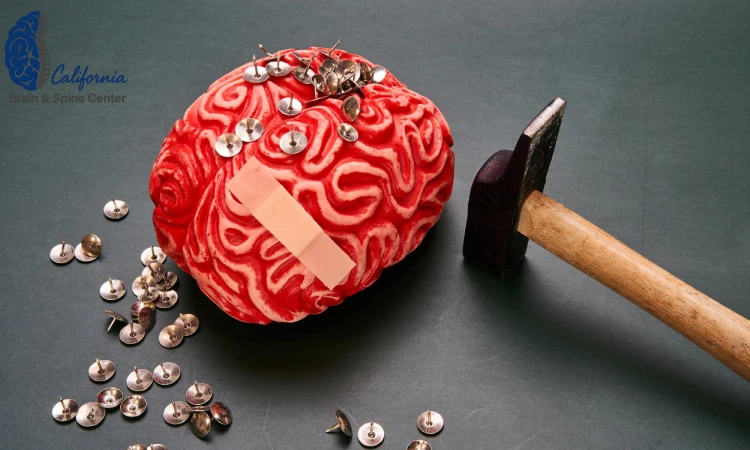
Can the Brain Heal Itself After an Injury?
Partly, and more than most people are told. In the days after a concussion or brain injury the tissue is in a metabolic crisis, and rest matters. Once that acute phase settles, the brain begins compensating on its own. Structured, specific practice steers that compensation toward the abilities you have lost, which is what neurological rehabilitation is.
Why rest first, then work
MedlinePlus is direct about the early phase: “Rest is very important after a concussion because it helps the brain to heal.” Blood flow drops, energy stores fall, and the tissue needs time before it can tolerate load. The mistake is not resting. The mistake is treating rest as the whole plan. After the acute window, the most productive phase begins, and it is active rather than passive.Why “compensation” is not the same as “recovery”
Left alone, the nervous system compensates in whatever way is easiest, not in whatever way is best. A person with unstable eye movements after a concussion learns to avoid reading. A person with a vestibular deficit learns to turn the whole body instead of the head. The symptom looks smaller because the trigger is being avoided, and the underlying deficit is untouched. Rehabilitation exists to redirect plasticity toward the deficit itself, under enough load to change it and not so much that it fails.For more severe injuries, NINDS notes that after stabilisation, patients “are often transferred to a rehabilitation center”. That model, evaluate, rehabilitate, reassess, is the same one a functional neurology clinic applies to milder injuries that never saw a hospital.Told your brain “is what it is”?
A functional neurology evaluation measures which systems are still underperforming after a concussion, stroke or head injury, so rehabilitation can be aimed at them rather than guessed at.What Makes Neuroplasticity Work Harder After a Brain Injury?
Four conditions decide whether practice changes the brain or just fills the afternoon. Every rehabilitation plan I write is a way of engineering these four.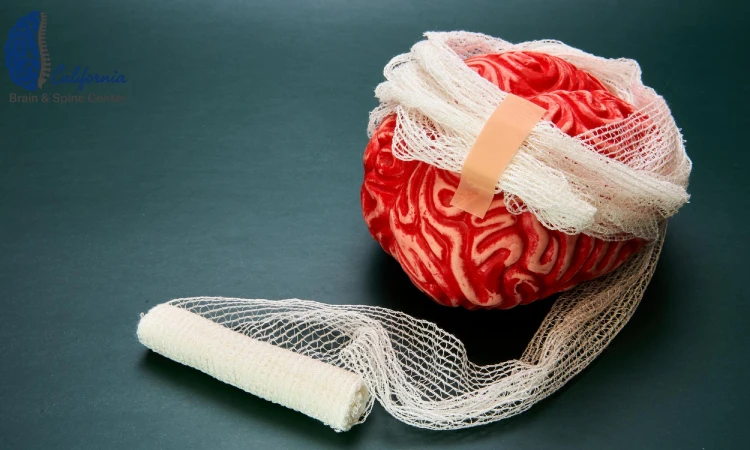
1. Specificity
The brain changes precisely around the task it practises. If saccades, the quick jumps the eyes make between words, are unstable, saccade drills change them and general “brain games” do not. If balance depends too heavily on vision, practice has to challenge balance with vision reduced. This is why the evaluation matters so much: you cannot be specific about a deficit you have not measured.2. Graded challenge
Too easy and the nervous system ignores the input. Too hard and fatigue or symptom flare cancels the gain. The useful zone is demanding but achievable, and it moves as you improve. Setting that dose is most of the clinical skill in rehabilitation, and it is why home programs work best when they are built from test results rather than a printout.3. Repetition with variation
Repetition builds the pathway. Small variations, a different speed, a different head position, a busier background, keep the brain engaged instead of automating and switching off. Brushing your teeth with the other hand is the classic example of novelty for its own sake; in rehabilitation the novelty is chosen to match the deficit.4. Rest and sleep
Consolidation happens between sessions, not during them. Sleep is not optional for this: the NHLBI lists trouble learning, focusing and reacting among the direct effects of insufficient sleep. A patient who trains hard and sleeps badly is loading a system that never gets to save its progress. When sleep is broken after an injury, that becomes part of the plan, in coordination with the patient’s primary care provider.“The brain rewires around what you do most. Rehabilitation decides what that is.”
How Does Neuroplasticity Show Up in Real Rehabilitation?
Patients sometimes expect something exotic. In practice, neuroplasticity after brain injury looks like precise, slightly boring, repeated work aimed at a measured deficit. Some examples from the clinic:- Eye-movement retraining. Saccade, pursuit and convergence drills for the patient whose reading endurance collapsed after a concussion. Progress is measured on video eye-movement (VNG) recording, not on how the reading feels.
- Gaze stabilisation and habituation. Head-movement drills that retrain the reflex keeping the picture steady, delivered through vestibular rehabilitation in Calabasas, and re-tested on posturography.
- Cognitive load cycling. Alternating attention, memory and language tasks under graded difficulty inside cognitive rehabilitation, so networks practise switching rather than sitting in one gear.
What the evaluation looks at
Apps and home exercises have their place, but a complex injury needs a baseline first. At California Brain & Spine Center, Dr. Alireza Chizari, DC, DACNB, performs that evaluation himself, and it means video eye-movement and oculomotor testing, computerized posturography for balance, pupillary light-reflex measurements, orthostatic heart-rate and blood-pressure responses, and a hands-on neurological examination. The point of the baseline is not the report. It is that the same measurements are repeated later, so change is a number rather than an impression.| What you notice | What may be underneath | What the evaluation measures |
|---|---|---|
| Reading tires you within minutes | Unstable saccades or convergence | Video eye-movement (VNG) and oculomotor testing |
| Busy places make you unsteady or queasy | Over-reliance on vision for balance | Computerized posturography with eyes open, closed and on foam |
| Bright light and screens hurt | Autonomic and visual processing load | Pupillary light reflex, orthostatic responses |
| Thinking is slow by early afternoon | Cognitive endurance under load | Graded cognitive tasks against a baseline |
| Symptoms are getting worse, not stable | Something other than a functional deficit | Referral to medical neurology before any rehabilitation |
When a brain injury needs urgent medical care, not rehabilitation
- A worsening headache, repeated vomiting, or drowsiness that is hard to rouse after a head injury.
- New weakness, slurred speech, facial droop, confusion, or a seizure.
- Sudden loss of vision, unequal pupils, or clear fluid from the nose or ears.
Does Neuroplasticity Slow Down With Age or Time Since Injury?
It slows, and it does not stop. Neuroplasticity after brain injury in older adults works through the same mechanism as in younger ones; they form new pathways with more repetition and more careful dosing, not with a different mechanism. Time since injury matters less than most patients fear. I regularly evaluate people two or three years after a concussion who assumed the window had closed, and the useful question is never “how long ago” but “which systems are still measurably off, and do they respond to a graded stimulus”. That answer comes from the evaluation, not from the calendar.Patients come to Calabasas for this from across the West Valley and from Thousand Oaks, often after a long stretch of being told everything looked fine. Normal imaging is good news. It is also an answer to a different question than the one they are asking.A Patient Story From the Clinic
A man in his forties came to see me about a year after a cycling concussion. His scans had been clear. His employer had been patient, then less patient. He could work for an hour before the screen seemed to swim, and he had quietly stopped driving on the freeway because merging made him feel sick. He had been told, in good faith, that this was his new baseline.His evaluation did not show a memory problem, which was what he expected. It showed unstable saccades and a balance system leaning almost entirely on vision, so anything visually busy, a moving freeway or a scrolling spreadsheet, overloaded it. We built a program around exactly those two findings: eye-movement retraining under graded load, gaze stabilisation and habituation through vestibular rehabilitation, and a short block of NSI at the start to settle the visual-vestibular mismatch. He did a ten-minute home routine most days and we re-tested at each stage.Over the following months his posturography scores shifted first, then his reading endurance. He went back to freeway driving before he went back to full days on screen, and full days still needed pacing. He did not get a miracle. He got a nervous system that had been given the right instructions, and a set of numbers that proved it was responding. Details changed to protect privacy. Individual results vary, and no outcome is guaranteed.Questions Patients Ask About Neuroplasticity After Brain Injury
How long does neuroplasticity continue after a brain injury?
It continues indefinitely. The most rapid changes are usually in the earlier months after injury, but the capacity to reorganise does not expire, and meaningful change has been documented years later with the right stimulus. What changes over time is the dose and patience required, not whether adaptation is possible.Can I drive neuroplasticity at home without a clinic?
Partly. Dual-task walking, graded reading, and balance work with the eyes closed all provide useful input. The limitation is aim: without measurement you cannot know which system to load, or how much. Home routines built from test results, and re-tested, tend to progress; generic ones tend to plateau.Is neuroplasticity a treatment I can book?
No, and be wary of anyone who sells it as one. Neuroplasticity is the mechanism that rehabilitation relies on, in the same way that muscle adaptation is the mechanism strength training relies on. What you book is an evaluation and, if appropriate, a rehabilitation plan built from what it finds.Does medication help the brain rewire after injury?
Medication may support sleep, mood or headache, all of which affect how well rehabilitation goes, and those decisions belong with your physician or medical neurologist. The rewiring itself is driven by specific, repeated, graded practice. Medication is not a substitute for that input, and rehabilitation is not a substitute for medical care.How do I know if neuroplasticity after brain injury is actually working for me?
By measuring. At our Calabasas clinic the same eye-movement, balance and cognitive measures taken at baseline are repeated at each stage of care. If the numbers move, the plan is working. If they do not, the plan changes. Feeling a little better is welcome, but it is not the evidence we rely on.What to Remember About Neuroplasticity After Brain Injury
The brain you have now is not fixed. It is reorganising around whatever you do most, which is why avoidance quietly makes deficits permanent and why specific, graded, repeated practice with enough rest does the opposite. Neuroplasticity is the mechanism, not the product. The product is a good evaluation followed by rehabilitation aimed at what it found.If you have been told your tests are normal and your symptoms are not, I would be glad to measure what is actually happening. California Brain & Spine Center | (818) 649-5300 | Calabasas, CA 91302. Book online at californiabrainspine.janeapp.com.
Find out which systems are still responding
A complimentary consultation at our Calabasas clinic is a chance to talk through your injury, what you have tried, and whether an evaluation makes sense before any rehabilitation is recommended. California Brain & Spine Center, 4768 Park Granada, Ste 107, Calabasas, CA 91302.
COVID Headache: Why It Lingers and What May Help
A COVID headache is driven by the immune response, not brain damage - and it can outstay the infection. Why it lingers and what may help, from Calabasas.
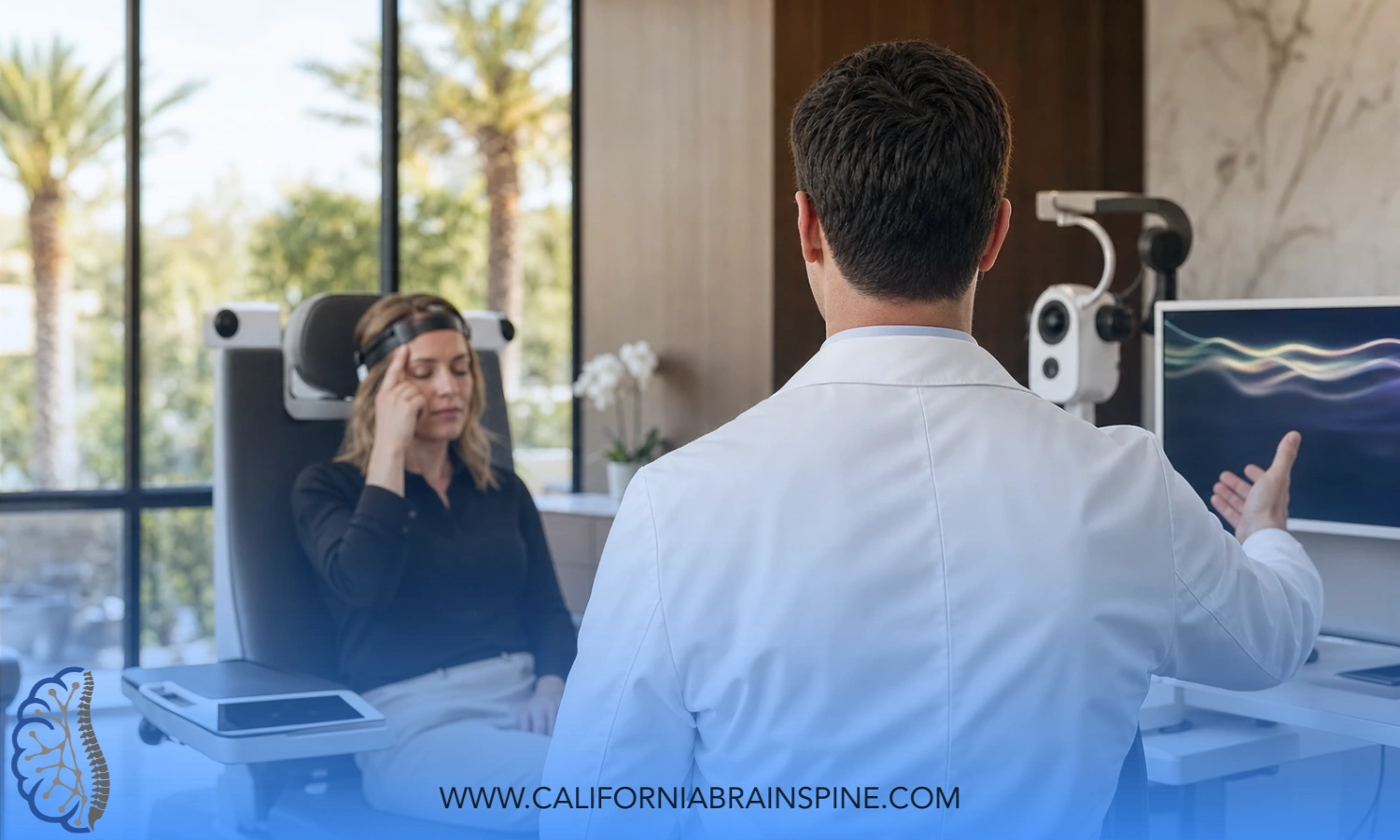
Head Feels Heavy Every Day!: Causes and What to Do
Daily head pressure is a symptom pattern, not a diagnosis. Learn the vestibular, cervical, post-concussion and autonomic causes behind a heavy head, and when to seek care.
Barometric Pressure Migraines
Weather-triggered migraines are real. Learn how barometric pressure affects sensitive neurological, vestibular and autonomic systems — and when it's worth getting evaluated.
Functional Neurology vs. General Neurology
General neurology diagnoses disease; functional neurology evaluates how your nervous system performs. Here's which one fits your symptoms — and when you need both.
Care for repeated concussions in athletes in Woodland Hills
A second or third concussion often behaves differently than the first. Danger signs, why symptoms feel random, and how return-to-play decisions should actually be made.
Dizziness When Scrolling: Why Screens Make You Dizzy
A feed moves, your body does not, and your brain has to decide which one to believe. Here is why scrolling can make you dizzy or queasy