If you live in or near Westlake Village and you are tired of feeling like the room might spin or your head might explode at any moment, you are not imagining things. Migraine and dizziness together can make even simple tasks, like driving on the 101 or walking through a grocery store, feel risky and unpredictable.
I am Dr. Alireza Chizari, and in this article I will explain how I approach care as a migraine and dizziness specialist in Westlake Village and the surrounding communities through our clinic in Calabasas. My goal is to help you understand what might be happening in your brain and inner ear, how a careful evaluation works, and which non invasive treatment options can help you move toward steadier, clearer days.
Expert Migraine and Dizziness Specialist in Westlake Village
You are the hero of this story. You are the one who has kept working, parenting, and showing up for life while dealing with headaches, vertigo, and strange visual or balance symptoms. My role, and the role of our team at California Brain & Spine Center, is to be your expert guide and partner.
If you have been searching online for a migraine and dizziness specialist in Westlake Village and are wondering whether anyone can truly connect the dots, this page will show you what we do, how we think, and how you can use our services to get a thorough, science based, and compassionate approach to your care.
Why migraine and dizziness often travel together
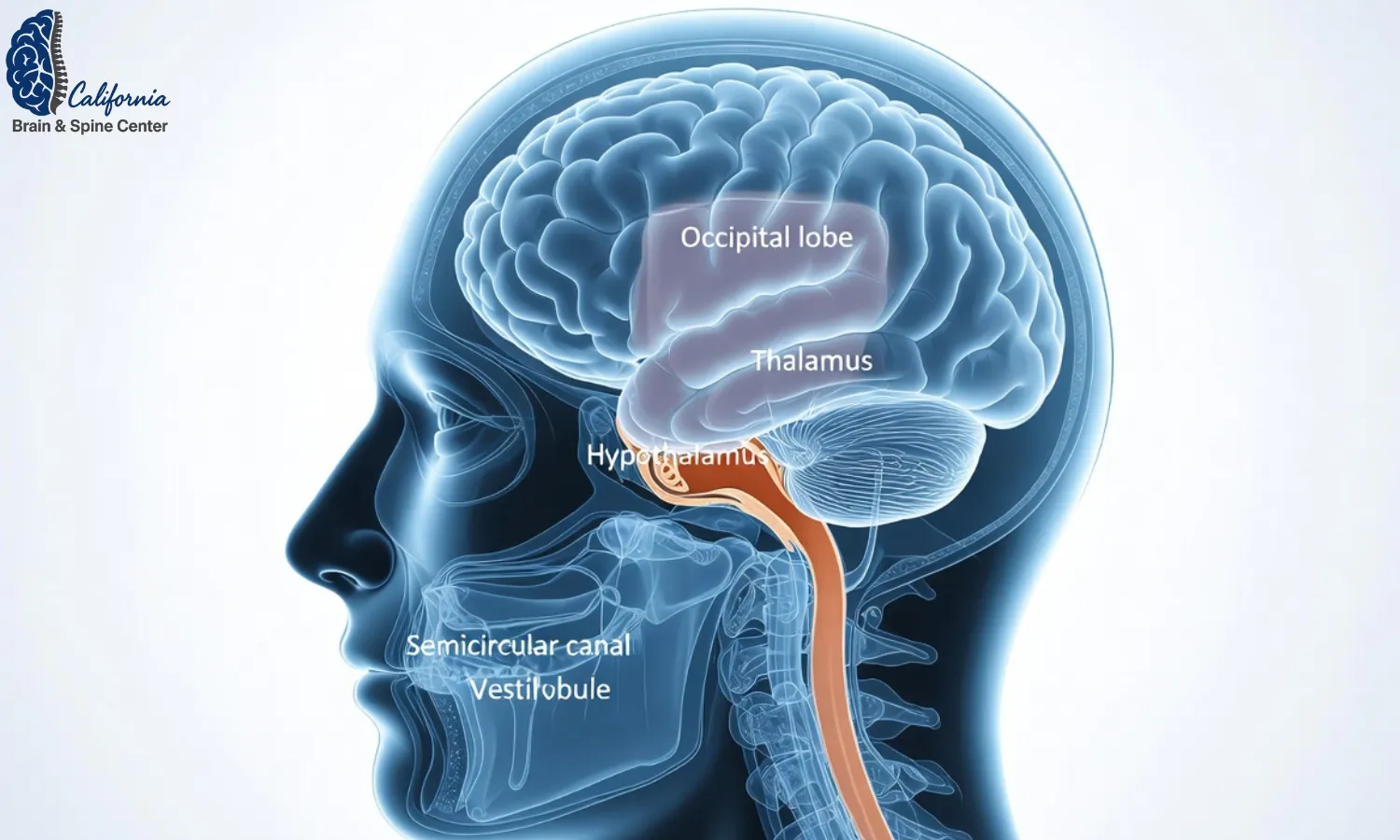
Many people are surprised to learn that migraine is not only a headache problem. It is a brain network problem. In some people, that network instability affects the systems that control balance and eye movements, leading to what is often called vestibular migraine or migraine associated vertigo. In these conditions, dizziness, vertigo, and imbalance can be as disabling as the pain itself.
As a migraine and dizziness specialist in Westlake Village, when I listen to patients, I frequently hear:
-
Spells of spinning, rocking, or feeling pulled to one side
-
Pressure or pain in the head that may be one sided or diffuse
-
Sensitivity to bright light, loud sounds, or busy visual environments
-
Nausea, motion sickness, or feeling seasick on solid ground
-
A sense that the world is moving when it should be still
These experiences can fit with vestibular migraine, but they can also overlap with other vestibular disorders like benign paroxysmal positional vertigo (BPPV) or Ménière’s disease. The diagnostic criteria for vestibular migraine include recurrent episodes of vertigo or dizziness, a history of migraine, and a clear link between vestibular episodes and migraine features, while ruling out other causes.
From my engineering background, I see this as a systems problem. It is not enough to say “you have migraine.” We need to understand how your pain networks, vestibular system, neck, vision, and autonomic nervous system are interacting.
When to seek a migraine and dizziness specialist in Westlake Village
Because dizziness and headaches are common, many people are unsure when they should seek a specialist. They may be told it is “just stress” or “just sinuses” and sent home with stronger painkillers or decongestants, even when the pattern clearly suggests something more complex.
In my experience as a migraine and dizziness specialist in Westlake Village, an in depth evaluation is usually appropriate if:
-
You have repeated spells of dizziness or vertigo with or without strong head pain
-
Bright lights, busy stores, or scrolling on a screen easily trigger symptoms
-
You feel unsteady, as if walking on a boat, especially during or after headaches
-
You have a history of migraine and now dizziness has joined the picture
-
You have had a concussion or head injury and your migraine and dizziness never fully resolved
There are also urgent red flags that always require immediate medical attention before anyone focuses on vestibular migraine or chronic dizziness:
-
Sudden, severe “worst headache of my life”
-
New weakness, numbness, difficulty speaking, or vision loss
-
Chest pain, severe shortness of breath, or sudden collapse
If these appear, emergency services come first. A responsible migraine and dizziness specialist in Westlake Village will always screen for dangerous causes before considering any long term plan.
You are not overreacting when you listen to your symptoms. You are taking the first step toward understanding a nervous system that has been asking for help for a long time.
Many people who come to us for migraine related dizziness have a long history of headaches that have gradually become more frequent, intense, or resistant to medication. The brain and neck often adapt in subtle ways over time, which is why dizziness, visual motion sensitivity, and balance problems can appear even years into a migraine journey. If you recognize that your dizzy spells sit on top of a chronic headache pattern, our article on chronic headache clinic in Thousand Oaks explains how we evaluate stubborn head pain and why a brain based rehab approach can do more than simply chase symptoms.

How a migraine and dizziness specialist in Westlake Village thinks about diagnosis
In the middle part of your journey, it helps to understand how your case is evaluated at a clinic that truly lives in this world every day.
At California Brain & Spine Center in Calabasas, patients who search for a migraine and dizziness specialist in Westlake Village are seen with a structured, multi system approach. The team looks at:
-
Migraine patterns and triggers
-
Vestibular and inner ear function
-
Eye movements and visual processing
-
Neck and spinal mechanics
-
Autonomic regulation, especially in patients with lightheadedness or POTS like symptoms
This style reflects Dr. Chizari’s combined background in Electrical Engineering, Advanced Engineering & Management, and Clinical Neuroscience, as well as extensive clinical work with traumatic brain injuries, post concussion symptoms, dysautonomia, and vestibular disorders.
Step 1 – Detailed neuro vestibular history
The first step is an in depth conversation that maps your symptoms over time, not just in the last week. The clinician will explore:
-
Headache history, including frequency, duration, and type of pain
-
Dizziness and vertigo characteristics, such as spinning, rocking, or swaying
-
Triggers, including visual patterns, motion, hormones, stress, sleep changes, or specific foods
-
Past concussions, whiplash injuries, or neck problems
-
Coexisting symptoms like brain fog, tinnitus, ear fullness, or palpitations
The aim is to see whether your symptoms match recognized patterns such as vestibular migraine, BPPV, Ménière’s disease, or other vestibular and neurological conditions.
Step 2 – Advanced neurological and vestibular examination
Next, patients are guided through:
-
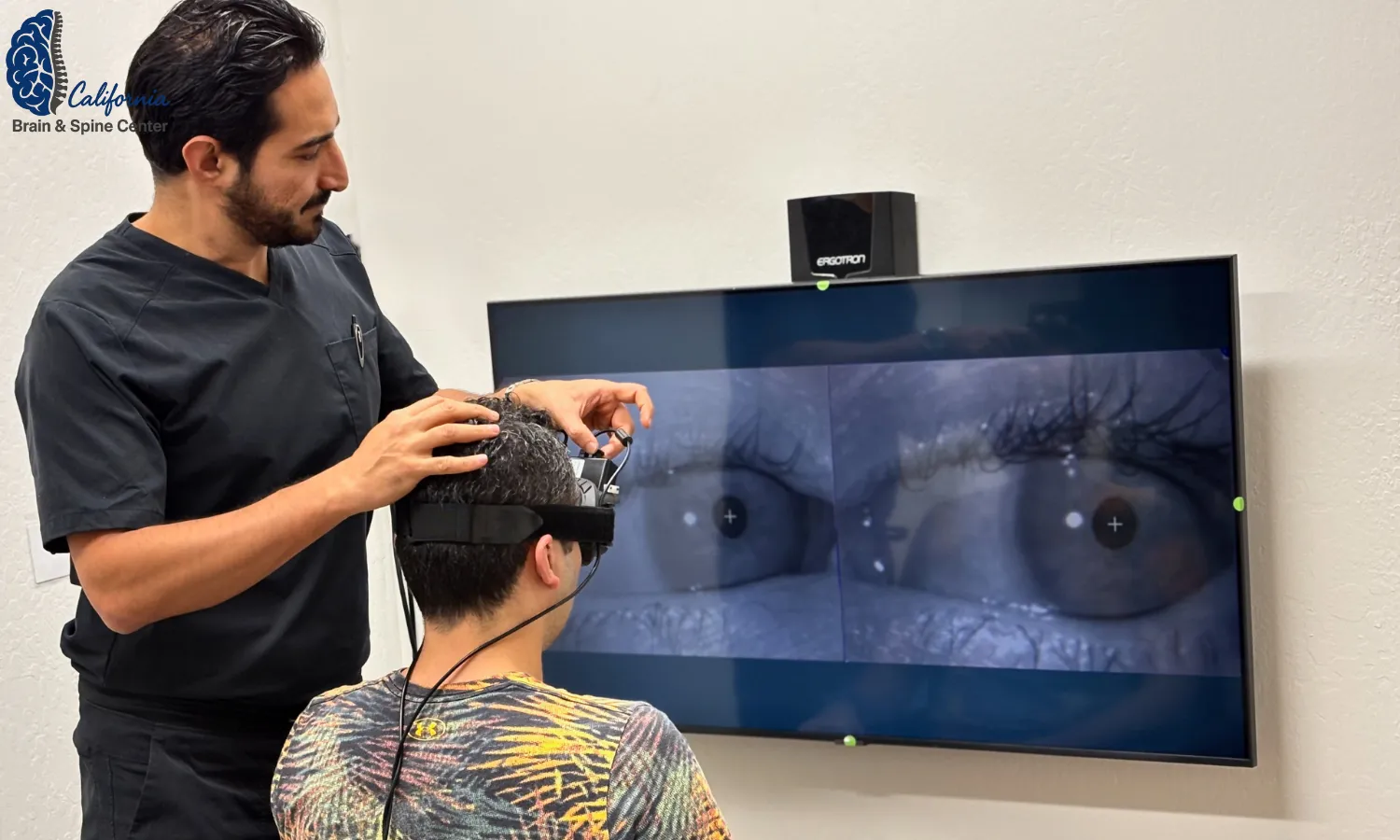
Neurological tests of sensation, strength, coordination, and eye movements
-
Positional maneuvers to check for BPPV or other positional vertigo
-
Balance and gait assessment on different surfaces and with eyes open or closed
-
In some cases, subjective visual vertical tests or other specialized measures of vestibular function
For patients whose symptoms suggest autonomic involvement, orthostatic testing and other markers of dysautonomia may also be considered.
A meaningful diagnosis is not a shortcut. It is a careful process of ruling in what fits and ruling out what does not, so that every step of treatment has a reason behind it.

How California Brain & Spine Center supports Westlake Village patients
At this point, it is helpful to zoom out and see how all of this fits into a treatment plan.
At California Brain & Spine Center, patients who look for a migraine and dizziness specialist in Westlake Village receive care from a team that blends chiropractic precision, clinical neuroscience, and advanced vestibular rehabilitation.
The clinic is located in Calabasas and regularly serves patients from Westlake Village, Thousand Oaks, Agoura Hills, Woodland Hills, Malibu, and the broader Southern California region. The focus is on non invasive, evidence informed methods that support neuroplasticity and stabilize the nervous system, rather than chasing isolated symptoms.
Vestibular Rehabilitation and NeuroSensory Integration
Vestibular Rehabilitation uses targeted exercises to retrain how the brain processes motion and head position. This can include gaze stabilization, balance tasks, and gradual exposure to visual and motion stimuli. Research shows vestibular rehab can significantly reduce dizziness and imbalance in various vestibular disorders, including vestibular migraine.
NeuroSensory Integration (NSI) builds on this by integrating:
-
Visual tracking and eye head coordination
-
Proprioceptive input from the neck and body
-
Spatial orientation and balance tasks
For someone who has sought a migraine and dizziness specialist in Westlake Village, NSI can be a powerful way to reduce sensitivity to busy environments, screens, and motion that previously triggered episodes.
Structural and cervical spine care
In cases where neck pain, whiplash history, or cervical dysfunction contribute to migraine and dizziness, precise structural care is often part of the plan. Using the Gonstead chiropractic technique, adjustments are performed with careful imaging and palpation guidance, targeting specific segments rather than broad, generalized manipulation.
This can help:
-
Reduce mechanical irritants contributing to head and neck pain
-
Improve proprioceptive input from the neck into the brainstem
-
Support more stable posture and movement patterns
All of this is integrated with the broader neurological picture, especially when concussion or traumatic brain injury are part of the history.
The most effective care does not choose between “neck” and “brain.” It respects how closely they talk to each other and works with both.

Neuromodulation and non invasive therapies in complex migraine and dizziness
For some patients, especially those who have lived with migraine and dizziness for years, neuromodulation can be an important component of care. At California Brain & Spine Center, non invasive neurology therapies are chosen and combined carefully rather than used as stand alone gimmicks.
These may include:
-
Low-Level Laser Therapy (LLLT) to influence local blood flow and cellular signaling
-
Pulsed Electromagnetic Field (PEMF) therapy to support cellular health and neuroplastic processes
-
Hyperbaric Oxygen Therapy (HBOT) to increase oxygenation in sensitive or injured brain regions, particularly in post concussion patients with migraine and dizziness
-
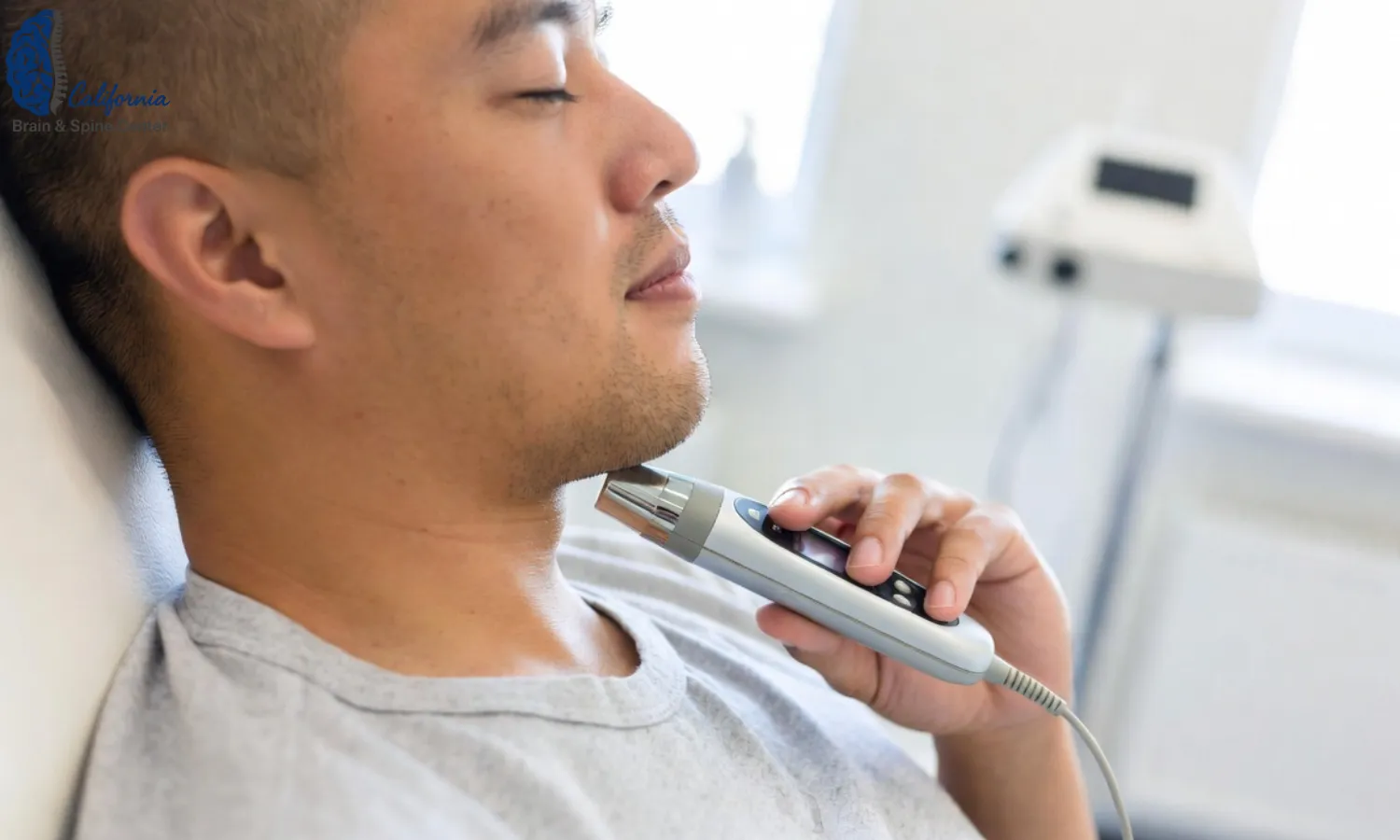
GammaCore vagus nerve stimulation to modulate pain pathways and autonomic tone
-
The NeuroRevive Program, which integrates specific neuromodulation tools with vestibular rehab, NSI, and cognitive pacing strategies
A patient might be referred by a neurologist for these non invasive options when medication alone has not provided adequate relief or has produced burdensome side effects. The goal is not to replace medical care, but to complement it in a scientifically grounded way.
Technology is most powerful when it is used in the service of a clear clinical plan and a human story, not as a shortcut around them.
How I guide you as a migraine and dizziness specialist in Westlake Village
Now I want to return to first person, because your story and my role need to fit together in a way that feels real and respectful.
When you come to me as a migraine and dizziness specialist in Westlake Village, my first priority is that you feel believed and understood. You may have already seen multiple doctors, perhaps even been told your symptoms are “just anxiety” or “just stress.” While stress can certainly influence migraine, it is almost never the full story.
My approach is to:
-
Listen carefully to when your symptoms began and how they have evolved
-
Ask detailed questions to connect patterns across headache, dizziness, neck pain, sleep, and cognition
-
Perform examinations and tests that make sense based on your story, not a generic checklist
-
Explain what I see in clear, non technical language so that you feel involved in every decision
From there, we design a plan that balances precision with compassion. I will guide the technical side, using my training in engineering, chiropractic care, and clinical neuroscience. You guide the goals, the pace, and the boundaries of what is realistic for your life.
As we work together, the phrase migraine and dizziness specialist in Westlake Village is not just about geography. It is about shared understanding. You bring your lived experience. I bring structured expertise. Between us, there is room for progress.
A real patient story from Westlake Village
Some time ago, a patient in her late 30s from Westlake Village came to see me after three years of unpredictable migraine and dizziness. She had two children, a demanding job, and a life that looked “fine” from the outside. Inside, she felt like she was constantly bracing for the next attack.
Her symptoms included:
-
Episodes of spinning vertigo lasting minutes to hours
-
Throbbing head pain on one side during some, but not all, episodes
-
Intense sensitivity to light, sound, and grocery store aisles
-
Brain fog and exhaustion after each flare
She had been given nasal sprays, migraine medications, and anxiety medications at different times, but no one had connected the full picture. When she searched for a migraine and dizziness specialist in Westlake Village, she found our clinic.
During her evaluation, her history and testing were consistent with vestibular migraine, layered on top of an old concussion from a skiing fall and subtle neck dysfunction from years of desk work. We built a plan that included:
-
Vestibular Rehabilitation and NeuroSensory Integration to recalibrate her brain’s response to motion and visual input
-
Gentle, precise cervical spine care to address neck tension and proprioceptive input
-
Short, carefully monitored neuromodulation sessions within the NeuroRevive framework
-
Pacing strategies and simple home habits to support her autonomic nervous system
We worked closely with her neurologist, who continued to manage her medications. Over several months, her vertigo attacks decreased in frequency and intensity. More importantly, her fear of daily life began to soften. She started driving further from home, returned to certain stores she had avoided, and described feeling “present” with her children again.
Her story is not a guarantee of what will happen for you. But it is a real example of what can occur when a migraine and dizziness specialist in Westlake Village looks beyond labels and works with your nervous system as a dynamic, changeable system.
Your most common questions about migraine and dizziness specialist in Westlake Village
Can you help if my imaging and standard tests have all been “normal”?
Yes. It is very common for MRI, CT, and basic lab tests to be normal in vestibular migraine and many migraine related dizziness conditions. A migraine and dizziness specialist in Westlake Village focuses on functional patterns of how your brain, inner ear, neck, and autonomic system behave, not only on structural abnormalities. Normal imaging is often reassuring, but it does not mean your symptoms are not real or treatable.
Will I have to stop my current migraine medications to work with you?
Not necessarily. Medication decisions are always made together with your prescribing physician or neurologist. Our role as a migraine and dizziness specialist in Westlake Village is to add non invasive tools such as vestibular rehab, NSI, structural care, and neuromodulation. In some cases, as function improves, your medical team may choose to adjust medication doses, but that is done gradually and safely.
How long does it usually take to see improvement?
Timelines vary from person to person. Some patients notice early shifts within a few weeks of targeted care. Others need several months of consistent work before improvements feel stable. Your history, the duration of symptoms, past injuries, and overall health all influence the speed of change. What matters most is that we follow a clear plan and adjust based on how your nervous system responds.
I live in Westlake Village and work full time. Is the commute to Calabasas practical?
Most patients coming to a migraine and dizziness specialist in Westlake Village find the short drive to Calabasas manageable. We plan visit frequency based on need and practicality. Early on, visits may be more frequent as we stabilize your system. Later, as your symptoms improve and you gain more tools, visits are often spaced out.
What if my dizziness is not from migraine at all?
That is exactly why a careful evaluation is so important. Dizziness can come from inner ear disorders, cardiovascular issues, medication side effects, anxiety, or a combination of factors. As a migraine and dizziness specialist in Westlake Village, my responsibility is not to force a migraine label but to accurately identify the dominant pattern and, if needed, coordinate with other specialists.
Conclusion – moving toward steadier, more confident days
Migraine and dizziness can make your world feel smaller, less predictable, and more exhausting than most people realize. If you have been carrying this alone in Westlake Village, I want you to know that there are structured, science based ways to approach your symptoms.
In this article, I have shown you how I work as a migraine and dizziness specialist in Westlake Village through our clinic in Calabasas. We listen deeply to your story, evaluate your brain, vestibular system, neck, and autonomic function as one connected network, and design a personalized plan that may include Vestibular Rehabilitation, NeuroSensory Integration, precise structural care, and non invasive neuromodulation such as LLLT, PEMF, HBOT, GammaCore, and the NeuroRevive Program.
Most importantly, I see you not as a diagnosis, but as a person who has already shown immense resilience. You are the hero of this journey. My background in engineering and Clinical Neuroscience helps me bring precision to your case, but our real success comes from working together toward the kind of life you want to lead.
If you are ready to explore what is possible with a migraine and dizziness specialist in Westlake Village, I invite you to contact California Brain & Spine Center, ask your questions, and schedule a personalized neurological and vestibular evaluation. Our goal is not only to reduce attacks, but to help you move toward a life where you feel more stable, more confident, and more free to do what matters most.
Migraine related dizziness is not just “in your head” and it is not something you have to navigate alone. When you work with a dedicated dizziness specialist in Calabasas, you get access to advanced vestibular testing, eye movement analysis, and gait evaluation that reveal exactly how your brain is processing motion. From there we design highly specific exercises and neuromodulation strategies to calm the overactive pathways that drive your symptoms so you can feel steadier in busy stores, on screens, and while driving.
If this article describes your experience and you live in or near Westlake Village, you do not have to keep guessing or managing this alone. Reach out to California Brain & Spine Center in Calabasas to request an appointment, discuss your history, and see whether our integrated approach with a migraine and dizziness specialist in Westlake Village is the right fit for you.
We are here to support you in moving toward the best version of your life and function, not just a temporary reduction of symptoms.
👨⚕️ Alireza Chizari, MSc, DC, DACNB
Clinical Focus
Assessment & Treatment Approach
Objective testing may include:
Treatment programs may involve:
📍 Clinic Information
✅ Medical Review
⚠️ Disclaimer