
Rehab Travel Tips for TBI Survivors
If you’re living with the after-effects of a traumatic brain injury (TBI), the idea of traveling can spark both excitement and apprehension. As a neurology specialist who’s walked beside many patients on the road from injury to independence, I want you to hear this clearly: with the right plan, your next trip can be safe, restorative, and genuinely enjoyable. This guide gathers practical, compassionate Rehab Travel Tips for TBI Survivors the very strategies I share in clinic so you can go from “maybe someday” to “I’m really doing this.”
Why traveling after TBI is possible and worth it
Healing brains thrive on meaningful experiences: sunlight, gentle movement, contact with loved ones, and small wins that rebuild confidence. Thoughtful travel can deliver all of that. The goal isn’t to “push through.” The goal is to shape the trip around your current brain capacity so that the journey itself becomes part of your rehabilitation. That’s the spirit behind all the Rehab Travel Tips for TBI Survivors you’ll find below.

Traveling for TBI rehab often means leaving behind familiar routines, support systems, and spiritual communities, which can feel destabilizing even when you are excited about getting help. Many patients tell us that their inner emotional and spiritual life becomes just as important as their physical therapy schedule. Our article on Calabasas spiritual care for neuro recovery explores how we weave meaning, values, and emotional support into the rehab process so your time away from home feels grounding rather than chaotic.
The three pillars: pace, predictability, permission
Before we get into specifics, anchor your plan on three pillars:
-
Pace Your brain heals best when demands stay under your symptom threshold. Create margins. Protect buffers.
-
Predictability Routines calm the nervous system. Repeatable patterns (wake, meals, rest) are medicine.
-
Permission You are allowed to stop, shorten, or skip. This is not “giving up” it’s excellent brain care.
When you use these pillars as your compass, every other one of the Rehab Travel Tips for TBI Survivors becomes easier to apply.
Build a neurology-informed itinerary
-
Choose a single anchor activity per day. Add optional “micro-moments” (a café, a short walk) only if energy allows.
-
Front-load rest. Plan a restorative first evening and a slow first morning.
-
Cap transitions. Each change of location, noise level, or lighting is a cognitive tax. Limit how many you’ll pay in one day.
-
Schedule quiet time (20–40 minutes) after any high-stimulation segment (airports, ferry terminals, museums).
These are simple but powerful Rehab Travel Tips for TBI Survivors because they lower cognitive load while preserving joy.
Pre-trip medical prep (without overcomplicating)
-
Medication essentials: Keep a 48–72 hour “essentials kit” in your personal item (not checked baggage).
-
Symptom plan: Write a one-page card: your common triggers, early warning signs, and the exact steps that help (hydrate, darken room, nap, breathing).
-
Contact sheet: Your clinician’s office number, a trusted family contact, plus your own key notes (allergies, sensitivities).
-
Travel letter (optional): A short note that explains your condition and accommodations that help (quiet seating, dimmed lights, extra time).
-
Trigger mapping: List likely triggers (motion, fluorescent lighting, scent, noise) and 2–3 counter-moves for each.
Among all Rehab Travel Tips for TBI Survivors, this preparation is the one that most often turns crisis into “manageable bump.”
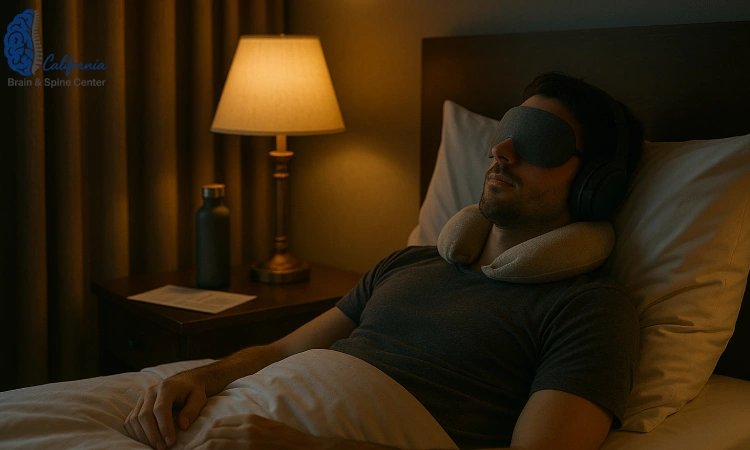
Sensory-smart packing (small items, big impact)
-
Noise control: Over-ear noise-reducing headphones or simple earplugs.
-
Light control: Soft eye mask, brimmed hat; consider lightly tinted lenses if you’re photosensitive.
-
Comfort tools: Travel pillow, scarf/hoodie (for pressure and warmth regulation), and a small soft towel to place behind the neck.
-
Hydration & nutrition: Refillable bottle; snacks with slow-release energy (nuts, seeds, oat bars, fruit).
-
Cooling/warming options: Compact cooling pack or hand warmers tiny adjustments can prevent symptoms from snowballing.
-
Low-stimulation kit: Downloaded playlists, an e-reader with large fonts, and a simple grounding object (smooth stone, fidget).
This sensory kit may be the single most cost-effective of all Rehab Travel Tips for TBI Survivors.
Transportation choices: match the mode to your triggers
Cars: Frequent rest stops, eyes-forward seating, supportive neck position. Use route options with fewer stop-and-go segments if motion sensitivity is strong.
Trains: Calmer than airports for many people; pick a quiet car if available; sit near a window you can control for light.
Flights:
-
Pre-board to set up calmly; request an aisle seat for easy walk breaks.
-
During taxi, takeoff, landing: Gentle pressure at the shoulder girdle or a soft neck pillow can reduce perceived jolt.
-
Hydration and movement: Aim for a few minutes of aisle standing or seated ankle pumps every hour.
Transportation is where many Rehab Travel Tips for TBI Survivors pay off especially pacing and sensory control.

Sleep and jet lag: protect the repair cycle
-
Hold your bedtime and wake time within a 60–90 minute window.
-
Light is medicine: Morning daylight helps reset the clock; dim evenings help you wind down.
-
Nap rules: Power naps of 20–30 minutes only; long day-time sleeping can fragment night rest.
-
Wind-down ritual: Same 3–4 steps nightly (wash face, stretch, breath work, short reading). Repetition lowers arousal.
Solid sleep is a hidden star of Rehab Travel Tips for TBI Survivors because it amplifies every other effort you make.
Fueling your brain: simple, steady, supportive
-
Hydrate early and often. Even mild dehydration worsens headaches and fatigue.
-
Steady meals. Pair complex carbs with protein/healthy fats (oats + nut butter, yogurt + berries, whole-grain wrap + eggs).
-
Mind caffeine and alcohol. Both can disrupt sleep and spike then crash energy; use intentionally, not reactively.
-
Electrolytes on long travel days can reduce “hangover” fatigue even without alcohol.
Nutrition isn’t glamorous, but reliable eating and drinking are underrated Rehab Travel Tips for TBI Survivors.

Managing cognitive load: think in “attention budgets”
Your brain’s resources are finite. Spend them where it matters most.
-
Automate decisions: Pre-select outfits, meals, and transportation the night before.
-
One-screen rule: If using phone for navigation, don’t message simultaneously.
-
Cue cards: Keep 2–3 “if-then” cards: If overwhelmed → step outside, hydrate, 5-breath reset, reassess schedule.
-
White-space blocks: Put empty blocks in your calendar this is brain margin, not “wasted time.”
These cognitive guardrails are core Rehab Travel Tips for TBI Survivors that prevent overload before it happens.
Activity-rest rhythm: treat rest as a booked appointment
-
The ratio: Start with 1 part activity to 2 parts rest on travel days; adjust gradually based on symptoms.
-
Wind-down micro-rituals: Two minutes of slow breathing, then eyes closed with the eye mask for five.
-
“Green-yellow-red” self-check: Green = proceed, Yellow = shorten/sit, Red = exit and recover.
When patients truly honor this rhythm, other Rehab Travel Tips for TBI Survivors become easier to maintain.

Preparing your companions: kindness multiplied
Brief your partner, friend, or family member:
-
Signals: Agree on a word or hand signal when you need to pause without explaining.
-
Roles: One person handles tickets and logistics; you focus on regulation and orientation.
-
Script: Teach your companion a one-sentence script to advocate for a quiet space or a moment to sit if you’re symptomatic.
Supportive companions are a force multiplier for all Rehab Travel Tips for TBI Survivors.
Calabasas-specific notes: terrain, pace, and quiet pockets
If Calabasas is part of your plan, aim for gentle, shaded walks early or late in the day, and seek quiet pockets a café nook, a library table, or a park bench for scheduled recovery breaks. Hills can be beautiful but demanding; choose short segments and celebrate them. Many patients find that nature-adjacent time, followed by planned rest in a calm indoor space, is a restorative rhythm that fits perfectly with Rehab Travel Tips for TBI Survivors.
Headaches, dizziness, and sensory spikes: your rapid-response playbook
-
Headache rise: Hydrate, dim light, apply a cool pack to the back of the neck or forehead, add light pressure at the temples, and rest for 20 minutes.
-
Dizziness/sway: Sit, feet on the floor, hands on thighs; take slow nasal breaths; orient to the room (name five things you see).
-
Sensory overwhelm: Reduce inputs (earplugs/eye mask), step outside for fresh air, and do a grounding routine (press palms together, count breaths).
Having a plan ready is one of the most practical Rehab Travel Tips for TBI Survivors you can adopt today.
Micro-itineraries you can copy
A gentle 48-hour getaway
-
Day 1 morning: travel + check-in → 60–90 min rest
-
Afternoon: 20-minute shaded walk → café pause → early dinner
-
Evening: wind-down ritual, early lights-out
-
Day 2: one anchor activity (garden, short museum visit) → long midday rest → optional sunset stroll
Family visit framework
-
Pre-agree on quiet room access
-
Block two protected rest windows daily
-
Keep visits to 60–90 minutes before a reset break
Both frameworks are living examples of Rehab Travel Tips for TBI Survivors turned into real days.
Technology that helps when used gently
-
Reminders for meds, hydration, and rest windows.
-
Offline maps to reduce data/decision load.
-
Screen hygiene: Large fonts, lower brightness, and nighttime settings to protect your eyes and sleep.
These small supports round out your Rehab Travel Tips for TBI Survivors without inviting tech fatigue.
When to pause and reassess
If you notice escalating headaches, persistent nausea, confusion, or any new neurological symptoms, step back and contact your clinician. Pushing harder is not heroic; listening to your brain is. Protecting safety is the most important of all Rehab Travel Tips for TBI Survivors.
Whether you are driving in from nearby or flying across the country, our traumatic brain injury recovery program is built to maximize every day you spend in Calabasas. Through detailed neurological testing and intensive, customized therapy blocks, we aim to make your trip truly worth the effort while also giving you clear strategies to continue progress once you return home.
Your compassionate travel checklist
-
One anchor activity per day
-
Rest block after each high-stimulus event
-
Sensory kit (earplugs/headphones, eye mask, hat)
-
Hydration + steady snacks
-
One-page symptom plan and contact sheet
-
Attention budget for decisions and transitions
-
Permission to stop always
Keep this list in your pocket; it’s the heart of practical Rehab Travel Tips for TBI Survivors.
A word on mindset (from your friendly neurologist)
You are not “behind.” You are rebuilding. Travel isn’t a test it’s a practice field for your recovering brain. Take the smallest next step that feels kind. Then celebrate it. That mindset, more than any single tactic, unlocks the full power of these Rehab Travel Tips for TBI Survivors.
If you’d like a tailored travel-readiness plan one that aligns your route, daily schedule, and sensory strategies with your current recovery visit the California Brain & Spine Institute. Our team lives and breathes rehabilitation-focused neurology; our experts will solve your problem for you when it comes to planning and optimizing travel around TBI recovery. Start here:
Summary
Travel can nurture recovery after TBI when you plan with compassion and structure. The most effective Rehab Travel Tips for TBI Survivors revolve around pacing, predictability, and permission to rest. Build neurology-smart itineraries, pack a sensory toolkit, match transportation to triggers, protect sleep, fuel steadily, and manage cognitive load with attention budgets. Use micro-itineraries, tech supports, and a clear symptom plan to keep your trip calm and restorative. Above all, treat every adjustment as proof that you’re listening to your brain and that is true progress.
Frequently asked questions
1) Is it safe to fly after a TBI?
Many survivors can fly safely once symptoms are stable. Choose aisle seating, pre-board, wear noise-reducing headphones, hydrate well, and schedule a quiet recovery window after landing. Always discuss timing with your clinician; combine their guidance with the Rehab Travel Tips for TBI Survivors in this guide.
2) How do I prevent headaches and dizziness while traveling?
Hydrate, avoid long gaps between meals, use a soft neck support, manage light/noise with your sensory kit, and insert rest blocks after high-stimulus segments. These are cornerstone Rehab Travel Tips for TBI Survivors.
3) What should my travel companion know?
Agree on signals, keep logistics with one person, and rehearse a one-sentence advocacy script for quiet space or short pauses. Teamwork amplifies all Rehab Travel Tips for TBI Survivors.
4) How much activity is “too much”?
Use the “green-yellow-red” check. If symptoms rise or linger, shorten and rest. A 1:2 activity-to-rest ratio is a good starting point, then adjust. Listening early is one of the wisest Rehab Travel Tips for TBI Survivors.
5) Which small items make the biggest difference?
Noise control (earplugs/headphones), eye mask, hat, hydration bottle, slow-release snacks, and a simple grounding routine. This compact kit underpins many Rehab Travel Tips for TBI Survivors.
6) Can I keep up with family plans on vacation?
Yes if the plan flexes with your needs. Anchor one must-do activity daily, surround it with buffers, and protect rest windows. That’s exactly how Rehab Travel Tips for TBI Survivors translate into real-life joy.
7) What if I get overwhelmed in a crowded place?
Step outside or to a quieter corner, reduce inputs (earplugs/eye mask), hydrate, and use your grounding script. Reassess the day’s plan with kindness. This response loop is central to effective Rehab Travel Tips for TBI Survivors.
👨⚕️ Alireza Chizari, MSc, DC, DACNB
🧠 Clinical Focus
🔬 Assessment & Treatment Approach
Objective testing may include:
Treatment programs may involve:
📍 Clinic Information
✅ Medical Review
⚠️ Disclaimer