1 | Why Definitions of Concussion & Mild TBI Matter
Precise language sits at the heart of modern neuroscience. When clinicians, researchers, and patients all mean the same thing by concussion vs mild TBI, three benefits emerge:
-
Diagnostic clarity. The right phrase cues the correct imaging sequence, vestibular panel, or neuro-psychological battery.
-
Patient understanding. A coherent mild traumatic brain injury definition lowers anxiety and sets realistic expectations.
-
Research consistency. Harmonised terminology lets data sets speak the same dialect, accelerating bench-to-bedside discovery.
If you’d like to visualize how those definitions play out over months and years, see “From Immediate Signs to Long-Term Effects: How Mild TBIs Impact the Brain.”
2 | Concussion vs Mild Traumatic Brain Injury (mTBI)

A concussion is the most common subset of mild traumatic brain injury, but the two labels are not always interchangeable. A concussion stems from rotational forces that stretch neuronal membranes and upset ionic balance; the resulting symptoms—headache, dizziness, mental fog—are usually transient. A mild traumatic brain injury definition by contrast uses formal criteria (Glasgow Coma Scale 13-15, any loss of consciousness < 30 min, post-traumatic amnesia < 24 h) and embraces mechanisms ranging from blast exposure to whiplash.
Put plainly: every concussion is a mild TBI, yet not every mild TBI is a classic concussion.
Because search engines and academic indices alike index the term concussion vs mild TBI, our clinic keeps both descriptors in play—but we map them to the same evidence-based care pathway.
3 | Top Misconceptions—Debunked
Let’s dismantle the four myths that keep popping up in emergency rooms and locker rooms:
-
“You must black out.” False—roughly 90 % of patients with a concussion never lose consciousness.
-
“A normal CT means no damage.” Many micro-structural shifts hide below CT or routine MRI resolution.
-
“Symptoms appear right away.” Cognitive fog or blurry vision may surface hours—or days—later.
-
“Every concussion heals in two weeks.” A quarter of adults struggle past 30 days with lingering invisible brain injury symptoms such as irritability, insomnia, or photophobia.
Disproving these concussion misconceptions short-circuits the “just shake it off” culture that lengthens recovery.
4 | Grading Systems at a Glance
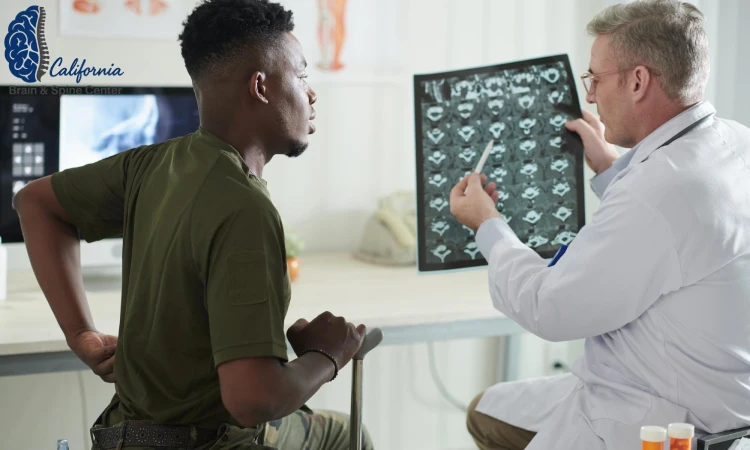
Although modern guidelines prefer an individualised return-to-activity protocol, familiarity with each concussion grading system keeps communication crisp:
-
Cantu (Revised)
-
Grade 1 – no loss of consciousness; symptoms < 30 min
-
Grade 2 – loss of consciousness < 1 min or symptoms 30 min–24 h
-
Grade 3 – loss of consciousness ≥ 1 min or symptoms > 24 h
-
-
American College of Rehabilitation Medicine (ACRM)
Centres on measurable neurologic impairment: any loss of consciousness < 30 min, or amnesia < 24 h, or mental-state alteration ≤ 24 h. -
Department of Defense (DoD)
Adds blast-wave mechanisms and vestibulo-ocular findings common to combat personnel.
Grading supplies a roadmap: how long to rest metabolically, when to introduce vestibular drills, and when to escalate referral.
5 | Invisible Injuries—Seeing What Scanners Miss
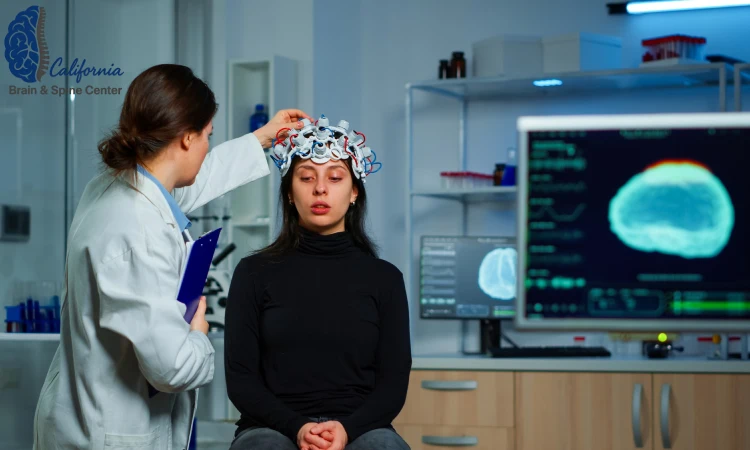
Even an Olympic-ready CT can miss invisible brain injury symptoms:
-
Cognitive drag – word-finding hiccups and turtle-paced processing.
-
Emotional volatility – mood swings that seem unprovoked.
-
Sleep fragmentation – restless nights followed by daytime haze.
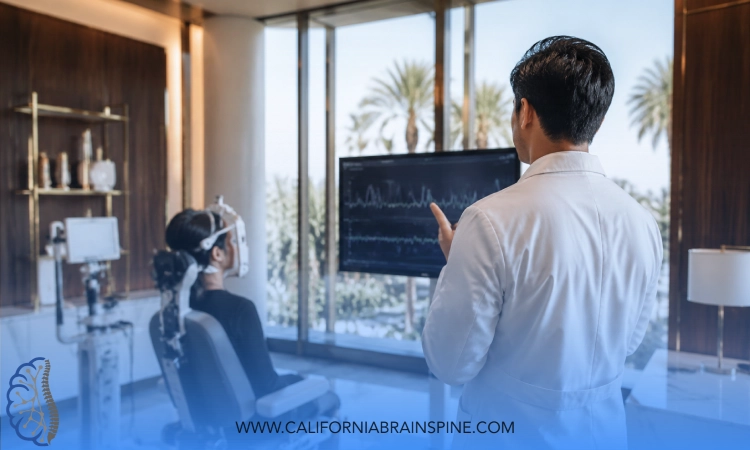
Quantitative EEG, vestibular-ocular reflex testing, and tablet-based cognitive batteries convert those invisible complaints into measurable treatment targets.
6 | Early Intervention Beats Passive Waiting
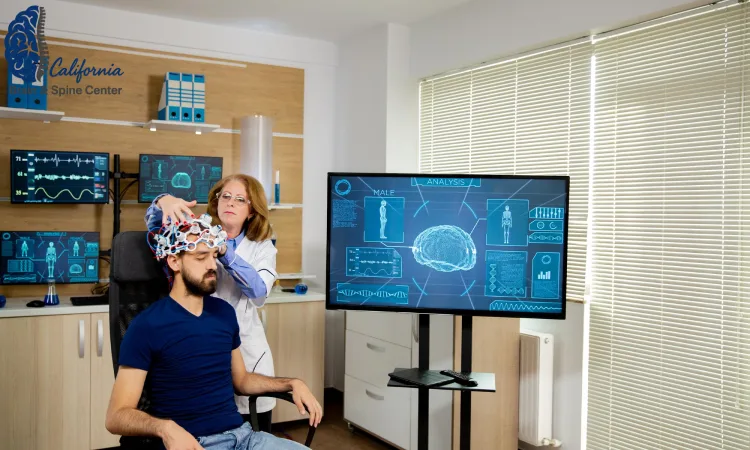
Red-flag alarms—worsening headache, repeated vomiting, focal weakness—demand emergency imaging. Yet even apparently “mild” cases profit from prompt, non-surgical care:
-
Metabolic rest, not bed rest. Light aerobic work below symptom threshold quickens neuro-vascular recovery.
-
Targeted vestibular and ocular rehab. Accelerates resolution of screen intolerance and gaze instability.
-
Neuro-nutrition. Omega-3, creatine, and antioxidant-rich diets assist mitochondrial reboot.
Unresolved concussion misconceptions can delay that care; bust them early, heal sooner.
7 | Your Non-Surgical Pathway in Calabasas
Persistent dizziness, headaches, or mental fog? Our Post-Concussion Syndrome & Mild TBI program delivers:
-
qEEG, eye-tracking, autonomic analysis—data that numbers your progress.
-
Custom neuro-rehab plans—no scalpels, no habit-forming meds.
-
Weekly dashboards so you see improvement, not just hope for it.
Ready to regain clarity and confidence? Book a complimentary consultation—let’s write your recovery roadmap together.
8 | Frequently Asked Questions
- How long do concussion symptoms last?
From days to months. Structured rehab trims the tail of post-concussion syndrome. - Do I always need CT or MRI?
No. Imaging targets red flags; functional tests often outclass scans in uncomplicated mild TBI. - Can I return to work or school right away?
Only if symptom-free at rest and after light cognitive load. A staged plan prevents setbacks. - Should I wake someone every two hours the first night?
Modern protocols prioritise continuous observation over rigid awakenings; follow clinician guidance. - Is full prevention possible?
Total prevention is elusive, but helmets, safe play, and home fall-proofing drop risk dramatically.
9 | Key Takeaways
-
The phrase concussion vs mild TBI reminds us that every concussion qualifies as a mild TBI, yet diagnostic grey zones exist.
-
A robust mild traumatic brain injury definition anchors assessments and research comparability.
-
Busting entrenched concussion misconceptions speeds help-seeking and recovery.
-
Knowing each concussion grading system steers return-to-play, classroom, or duty decisions.
-
Tracking invisible brain injury symptoms with objective tech transforms the unseen into the treatable.
If lingering doubt shadows your recovery, the California Brain & Spine Center stands ready to harness neuroplasticity—no surgery required. Your clearer, steadier future starts the moment precise words meet precision care.
 Alireza Chizari, MSc, DC, DACNB
 Clinical Focus
 Assessment & Treatment Approach
Objective testing may include:
Treatment programs may involve:
 Clinic Information
 Medical Review
 Disclaimer