Why Antisaccades Matter: A Simple Eye Test With Powerful Neurological Insights
If you have been living with brain fog, dizziness, visual discomfort, poor focus, slowed reaction time, or lingering symptoms after a concussion, you may feel like something is wrong even when standard tests do not fully explain it. This is one reason antisaccades matter so much in neurological evaluation. A simple eye movement task can sometimes reveal how your brain is managing attention, inhibition, timing, and control.
I, Dr. Alireza Chizari, DC, DACNB, will explain in this article why antisaccades can provide powerful neurological insights, how this eye test works, and why it may be useful for patients dealing with concussion symptoms, dizziness, balance problems, brain fog, memory concerns, and other complex neurological complaints.
You are the hero of this story. You are the one living with symptoms, searching for answers, and trying to return to a more stable, confident, functional life. My role, and the role of California Brain & Spine Center in Calabasas, California, is to serve as a knowledgeable guide, helping you understand what your nervous system may be showing us and how we can use that information to build a personalized path forward.
This page is about why antisaccades matter, what they reveal about brain function, and how a neurological and vestibular evaluation may help you move beyond uncertainty toward clearer answers and more targeted care.
Why Antisaccades Matter When Symptoms Feel Invisible
Many patients come to my clinic after being told that their imaging looks normal, their symptoms are vague, or their condition simply needs more time. Yet they still feel off. They may feel mentally slower, visually overwhelmed, dizzy in busy environments, unable to read comfortably, or less steady than before.
This is where antisaccades can become clinically meaningful. An antisaccade is an eye movement where you are asked not to look at a sudden visual target, but instead to look in the opposite direction. That may sound easy, but it requires a high level of brain coordination.
Your brain must detect the target, suppress the automatic urge to look toward it, calculate the opposite direction, and then move the eyes accurately. In a fraction of a second, the brain has to use attention, inhibition, processing speed, executive control, and motor planning.
That is why antisaccades are more than a simple eye test. They are a window into how the brain manages control under pressure.
When someone makes frequent antisaccade errors, responds too slowly, or shows inconsistent performance, it may suggest that the brain is struggling with subtle but important functions. These findings do not diagnose a condition by themselves, but they can help us understand why a patient feels the way they do.
The Simple Eye Test That Challenges Complex Brain Networks
I often tell patients that the eyes are one of the most useful ways to observe the brain in action. Every eye movement depends on timing, communication, and coordination between multiple neurological systems.
With antisaccades, the brain cannot simply react. It must pause, inhibit, choose, and execute. That makes the test especially useful when we are evaluating patients with post-concussion symptoms, brain fog, dizziness, visual disturbances, attention problems, or difficulty with mental stamina.
The task activates areas of the brain involved in decision-making, impulse control, spatial awareness, and movement precision. These include the frontal lobes, parietal regions, basal ganglia, cerebellum, brainstem, and visual pathways. The vestibular system may also influence how the patient feels during visual tasks, especially after concussion or in cases of dizziness.
In my clinical experience, antisaccades can help connect the dots between what a patient feels and what the nervous system is actually doing.
Sometimes the most important clues are not loud or dramatic. They are quiet patterns that finally explain why daily life feels harder than it should.
What Happens During an Antisaccade Eye Test?
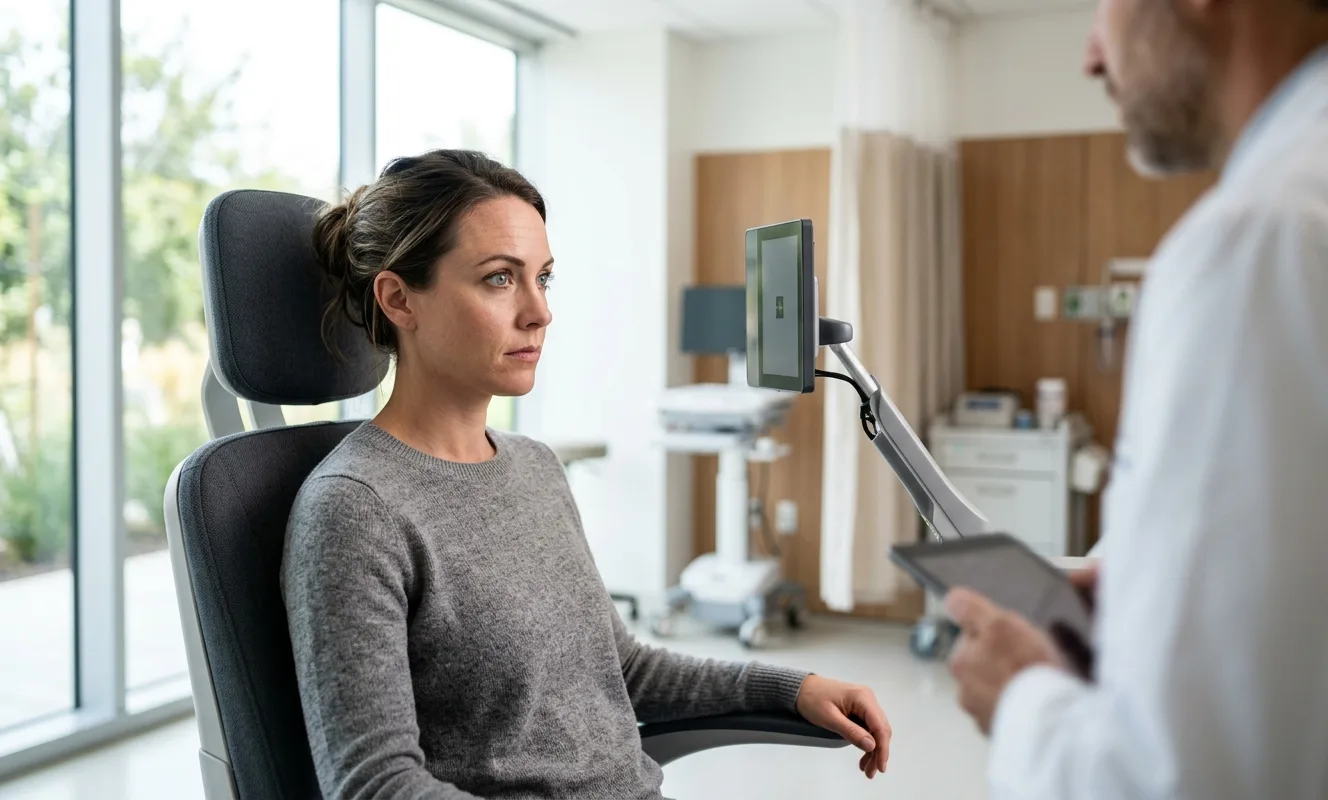
During an antisaccade eye test, a patient is usually asked to focus on a central point. Then a visual target appears suddenly to one side. Instead of looking toward the target, the patient must look in the opposite direction.
This creates a challenge for the brain. The natural reflex is to look toward new visual information. To perform the task correctly, the brain must stop that reflex and generate a voluntary movement away from the stimulus.
When I evaluate antisaccades, I am not only looking at whether the movement was correct. I am also looking at how the person performs the task, how quickly they respond, whether they make repeated direction errors, whether fatigue changes performance, and whether the movement appears smooth, delayed, or poorly controlled.
Important patterns may include:
- ✅ Looking toward the target instead of away from it, which may suggest reduced response inhibition
- ✅ Delayed eye movement, which may reflect slower processing or reduced neurological efficiency
- ✅ Inconsistent performance, which may suggest fatigue, poor regulation, or difficulty maintaining executive control
- ✅ Visual discomfort during the task, which may point toward sensory sensitivity or post-concussion visual strain
The value of antisaccades is not in one isolated score. The value is in understanding the pattern and connecting it to the patient’s real-life symptoms.
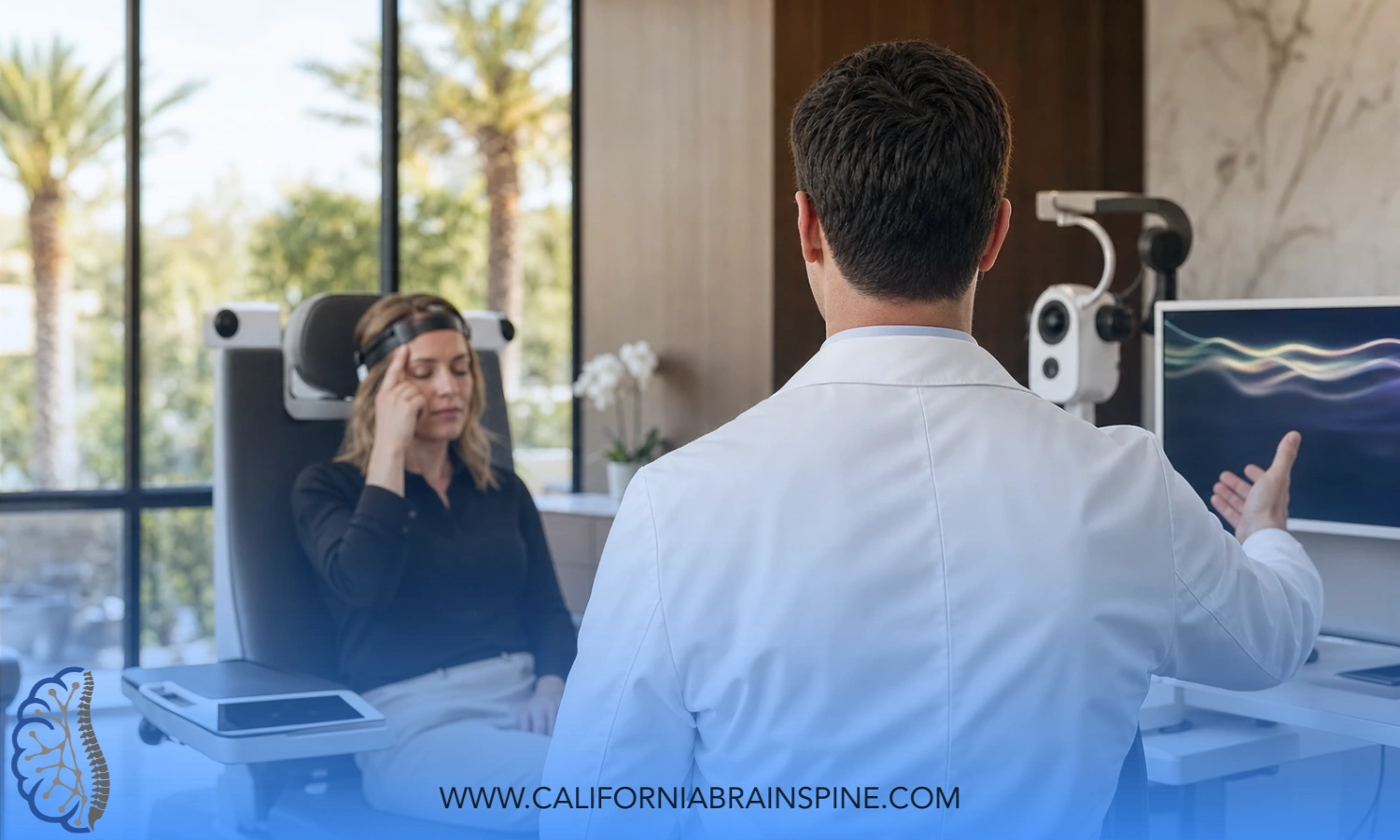
Image note: “A clean medical illustration showing a patient performing an antisaccade eye movement task, with arrows showing the target on one side and the correct eye movement in the opposite direction, modern neuroscience style.”
Why Antisaccades Reveal More Than Basic Vision Tests
A standard eye exam is important, but it does not always tell us how the brain is controlling visual attention and eye movement. A person can have 20/20 vision and still struggle with visual tracking, screen tolerance, reading endurance, motion sensitivity, or visual overwhelm.
That is one reason antisaccades matter in neurological care. They are not simply asking, “Can the eyes see?” They are asking, “Can the brain control where the eyes go when it has to override an automatic response?”
This difference is extremely important for patients with concussion, traumatic brain injury recovery needs, dizziness, vestibular dysfunction, brain fog, or cognitive fatigue. These patients may not have a primary eye disease, but their brain may still struggle to coordinate visual and neurological function.
When the brain is under stress, eye movements can become less accurate, slower, or harder to control. Patients may notice this as difficulty reading, losing their place on a page, feeling overwhelmed in stores, becoming dizzy with motion, or struggling to focus during work or school.
The eyes do not just show what you see. They can reveal how your brain organizes attention, control, and stability.
How I Connect Antisaccades to Your Real Symptoms
When I evaluate a patient, I never want them to feel reduced to a test result. Your story matters. Your symptoms matter. Your daily struggles matter. Antisaccades are useful because they can help explain experiences that may otherwise feel confusing.
For example, if you feel mentally foggy and your antisaccade responses are delayed, that may support the idea that your brain is taking longer to process and execute controlled responses. If you feel distractible or visually overwhelmed and you make frequent direction errors, that may suggest difficulty suppressing automatic visual responses. If you become fatigued during testing, that may mirror what happens when you try to work on a computer, drive, read, or function in busy environments.
My background helps shape how I interpret these patterns. I first studied Electrical Engineering in Iran, then completed a master’s degree in Advanced Engineering & Management in the UK, and later worked in the United States as a Solar Engineer. That training taught me to think in systems, signals, inputs, outputs, timing, and feedback loops.
After seeing my mother recover from frozen shoulder through chiropractic care, I transitioned into healthcare, earned my Doctor of Chiropractic degree from Life Chiropractic College West, trained in the precise Gonstead technique, and continued into postdoctoral education in Clinical Neuroscience. Today, at California Brain & Spine Center in Calabasas, I apply that systems-based thinking to complex neurological and vestibular cases.
That means I do not look at antisaccades as a stand-alone trick. I look at them as part of a bigger neurological conversation.
When Antisaccades May Be Especially Helpful
Some patients benefit from antisaccade testing because their symptoms involve more than pain or simple vision changes. They may have a nervous system that is struggling with coordination, inhibition, sensory processing, balance, or cognitive endurance.
I may consider antisaccades as part of a broader evaluation when a patient reports:
- ✅ Lingering symptoms after concussion or head injury
- ✅ Brain fog, memory changes, or slower thinking
- ✅ Dizziness, imbalance, or motion sensitivity
- ✅ Visual disturbances after concussion, including screen intolerance
- ✅ Difficulty focusing, reading, or filtering distractions
- ✅ Symptoms connected to dysautonomia or nervous system regulation
In these situations, the goal is not to force every patient into the same testing model. The goal is to choose the right tools for the right person based on their history, symptoms, and functional goals.
A meaningful evaluation should help you understand why your symptoms are happening and what can be done next.
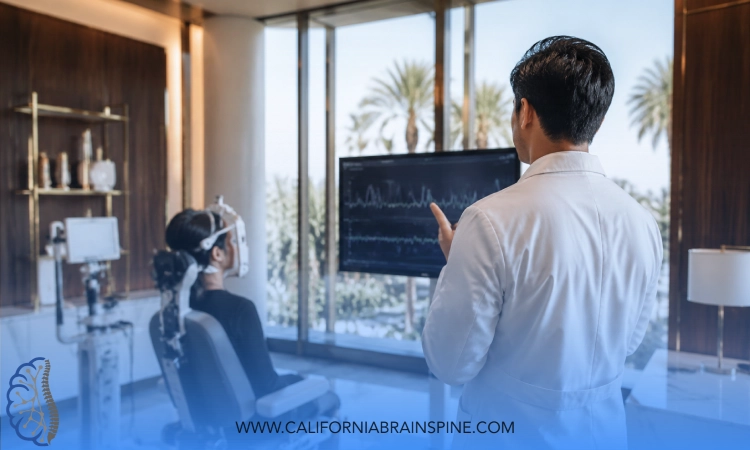
Image note: “A calm doctor in a modern Calabasas neurological clinic reviewing eye movement test results with an adult patient, warm lighting, professional and reassuring atmosphere.”
Healing becomes more possible when your symptoms are no longer treated as random, but understood as part of a pattern.
The Brain Regions Involved in Antisaccades
At California Brain & Spine Center, antisaccade performance is understood as a reflection of multiple interacting brain networks. The frontal lobes help suppress automatic responses and guide voluntary control. The parietal lobes support spatial attention. The basal ganglia help select and inhibit movements. The cerebellum contributes timing, accuracy, and coordination. The brainstem carries out the final eye movement commands.
This is why antisaccades can be so informative. They require communication across several systems. If one part of the network is inefficient, the eye movement may reveal that inefficiency through delayed responses, poor accuracy, or repeated errors.
For patients with concussion or traumatic brain injury recovery concerns, this can be especially relevant. A concussion can disrupt the timing and integration of neurological networks even when structural imaging does not show a major abnormality. Functional testing may help reveal the strain that a patient still feels in daily life.
At California Brain & Spine Center, findings from eye movement assessment are considered alongside vestibular function, balance, cognitive performance, symptom history, neurological examination findings, autonomic symptoms, and the patient’s tolerance to visual and physical stimulation.
Why Antisaccades Matter After Concussion
After a concussion, many patients expect headaches to be the main symptom. But post-concussion symptoms can be much broader. Patients may experience dizziness, brain fog, light sensitivity, visual discomfort, poor concentration, fatigue, anxiety in busy environments, or difficulty returning to work and school.
Antisaccades matter after concussion because they challenge the same systems many patients depend on for daily function. To drive safely, read efficiently, follow conversations, navigate crowded spaces, and work on a computer, the brain must constantly manage visual attention and response control.
When antisaccade performance is abnormal after a concussion, it may suggest that the brain is still having difficulty with executive control, visual processing, or neurological timing. This does not mean the patient is permanently damaged. It means the brain may need a more specific rehabilitation approach.
At California Brain & Spine Center in Calabasas, concussion-related care may include Vestibular Rehabilitation, Cognitive Rehabilitation, Neuroplasticity Rehabilitation, NeuroSensory Integration, and carefully selected non-invasive therapies when appropriate. The clinic also works with patients dealing with traumatic brain injury recovery, brain fog, dizziness, balance disorders, visual disturbances after concussion, dysautonomia, and memory concerns.
The focus is always personalized. A patient with dizziness and visual motion sensitivity needs a different strategy than someone whose main issue is cognitive fatigue or poor inhibition.
A normal scan can be reassuring, but it does not always mean the nervous system is functioning at its best.
How Antisaccades Fit Into a Complete Neurological Evaluation
At California Brain & Spine Center, antisaccades are not used as a stand-alone answer. They are one part of a complete functional assessment designed to understand the patient’s nervous system as a whole.
A patient may undergo assessment of eye movements, visual tracking, fixation, convergence, vestibular function, balance, posture, cognitive endurance, symptom triggers, and neurological coordination. The goal is to identify the systems that are underperforming and understand how they interact.
For example, a patient with dizziness may show visual motion sensitivity and poor vestibular integration. Another patient with brain fog may show slowed processing and difficulty maintaining attention. A patient after concussion may show both eye movement abnormalities and balance dysfunction.
The clinic’s approach is evidence-informed, non-invasive, and patient-centered. Depending on the case, care may involve Vestibular Rehabilitation, Cognitive Rehabilitation, Neuroplasticity Rehabilitation, NeuroSensory Integration, Low-Level Laser Therapy, Pulsed Electromagnetic Field therapy, Hyperbaric Oxygen Therapy, GammaCore Vagus Nerve Stimulation, or the NeuroRevive Program.
Not every patient needs every therapy. The most effective plan is the one built around the patient’s specific neurological pattern, tolerance, goals, and safety needs.
What Abnormal Antisaccades May Suggest
Abnormal antisaccades can suggest that certain brain systems are not performing efficiently, but they must be interpreted carefully. A patient may make errors because of poor inhibition, slow processing, fatigue, attention difficulty, vestibular stress, visual discomfort, or a combination of factors.
This is why clinical context matters. The same test pattern may mean different things in different patients. A teenager with attention difficulties, an adult recovering from concussion, and an older patient with balance concerns may all show antisaccade abnormalities, but the interpretation and care plan may be different.
Abnormal findings may suggest difficulty with:
- ✨ Response inhibition and impulse control
- ✨ Executive function and attention regulation
- ✨ Visual processing speed
- ✨ Brain fatigue and cognitive endurance
- ✨ Coordination between visual, vestibular, and motor systems
These insights can help guide care, but they do not replace a medical diagnosis, imaging when needed, or appropriate referral for urgent symptoms.
Image note: “A detailed neuroscience diagram showing the frontal cortex, basal ganglia, cerebellum, brainstem, and eyes connected during controlled eye movement testing, clean professional medical style.”
The goal is not to label you by a test result. The goal is to understand your nervous system well enough to help it move forward.
Safety, Limits, and When to Seek Urgent Care
Antisaccade testing is non-invasive and generally safe when performed in a proper clinical setting. However, some patients with concussion, vestibular sensitivity, migraine tendencies, or visual motion sensitivity may feel tired, strained, or mildly symptomatic during eye movement testing.
At California Brain & Spine Center, patient tolerance is taken seriously. Testing and rehabilitation should be dosed appropriately. More intensity is not always better. The nervous system often responds best to precise, measured challenge.
It is also important to understand the limits of antisaccades. They cannot diagnose every neurological condition by themselves. They cannot replace emergency care, medical imaging when indicated, or evaluation by the appropriate medical provider when red flags are present.
If you experience sudden weakness, severe worsening headache, repeated vomiting, seizure, slurred speech, sudden vision loss, loss of consciousness, chest pain, or rapid neurological decline, you should seek urgent medical attention immediately.
For non-emergency symptoms like persistent brain fog, dizziness, screen intolerance, balance problems, or post-concussion difficulty, antisaccade testing may be one helpful part of a deeper clinical evaluation.
How Personalized Care Can Use Antisaccade Findings
At California Brain & Spine Center, the purpose of testing is not simply to collect data. The purpose is to create a more accurate and useful plan.
If antisaccades show poor inhibition, the care plan may include specific exercises designed to improve executive control and visual response regulation. If delayed responses are present, the plan may include cognitive rehabilitation and graded neurological activation. If eye movement findings are paired with dizziness, vestibular rehabilitation may be a key part of care. If the patient shows sensory overload, NeuroSensory Integration may help support better regulation.
For some patients, non-invasive neurology therapies may be considered as part of a broader strategy. These may include LLLT, PEMF, HBOT, GammaCore Vagus Nerve Stimulation, or the NeuroRevive Program when clinically appropriate.
The clinic serves patients in Calabasas, across Southern California, and beyond. Many patients arrive after trying multiple approaches without feeling fully understood. The goal is to provide a careful, scientific, and compassionate evaluation that connects symptoms to function.
When care is personalized, patients often feel less confused, more empowered, and better equipped to participate in their recovery.
A Patient Story: When a Simple Eye Test Helped Explain Months of Frustration
Some time ago, a patient I will call M. came to see me after a mild concussion. Months had passed, but she still felt foggy, dizzy, and visually overwhelmed. Grocery stores bothered her. Reading made her tired. Computer work caused pressure behind her eyes. She had been told that her scan did not show anything alarming, which was reassuring, but it did not explain why she still felt so different.
During her evaluation, I included eye movement testing, including antisaccades. She understood the instructions, but her responses were delayed and she made several direction errors. That pattern matched her daily experience. Her brain was having difficulty suppressing automatic visual responses and maintaining efficient control under demand.
We created a personalized plan that included Vestibular Rehabilitation, Cognitive Rehabilitation, and Neuroplasticity Rehabilitation. We also carefully managed pacing so her brain was challenged without being overloaded. As she improved, her screen tolerance increased, her dizziness decreased, and she became more confident returning to daily activities.
What mattered most was not just that she improved. It was that she finally felt understood. She told me, “Now I know I was not imagining it. My brain just needed the right kind of help.”
That is why antisaccades matter. Sometimes a simple eye test can give patients language for symptoms they have struggled to explain for months or even years.
Your Most Common Questions About Antisaccades
What are antisaccades?
Antisaccades are controlled eye movements where you are asked to look away from a sudden visual target instead of toward it. This task tests the brain’s ability to inhibit an automatic response, shift attention, and create a voluntary eye movement in the opposite direction.
Why do antisaccades matter in neurological care?
Antisaccades matter because they challenge brain systems involved in attention, executive control, response inhibition, processing speed, and eye movement coordination. Abnormal performance may help reveal subtle dysfunction that relates to brain fog, concussion symptoms, dizziness, visual discomfort, or cognitive fatigue.
Can antisaccades diagnose a concussion or brain disorder?
No. Antisaccades do not diagnose a concussion or neurological disorder by themselves. They are one part of a broader neurological and vestibular evaluation. Their value comes from how the results are interpreted alongside symptoms, history, physical findings, balance testing, and other clinical information.
Are antisaccades useful after a concussion?
Yes, they can be useful for many post-concussion patients because concussion can affect visual processing, inhibition, reaction time, and executive control. If a patient has lingering brain fog, screen intolerance, dizziness, or difficulty focusing, antisaccade testing may help identify functional patterns that guide rehabilitation.
Is antisaccade testing uncomfortable?
The test is non-invasive and usually simple to perform. However, patients with concussion, vestibular issues, migraine sensitivity, or visual motion sensitivity may feel tired or mildly symptomatic during testing. A trained clinician should monitor tolerance and adjust the evaluation appropriately.
Where can I get antisaccade testing in Calabasas?
California Brain & Spine Center in Calabasas, California offers personalized neurological and vestibular evaluations that may include antisaccade testing when appropriate. Dr. Alireza Chizari, DC, DACNB evaluates patients with concussion symptoms, dizziness, brain fog, balance disorders, visual disturbances, and other complex neurological concerns.
Conclusion: Why Antisaccades Matter for Your Brain Health Journey
If you only remember one thing from this article, I want it to be this: antisaccades are simple, but the brain processes behind them are powerful. This eye test can help reveal how your nervous system manages inhibition, attention, timing, visual control, and neurological coordination.
For patients with concussion symptoms, dizziness, brain fog, visual disturbances, balance problems, or cognitive fatigue, antisaccades may provide meaningful insight when symptoms feel difficult to explain. They do not replace a complete evaluation, but they can be an important part of understanding how your brain is functioning in real time.
I believe you deserve care that listens to your story, respects your symptoms, and looks deeper than surface-level explanations. At California Brain & Spine Center in Calabasas, my goal is to help you understand your nervous system, identify the patterns behind your symptoms, and create a personalized plan that supports your return to a more stable and functional life.
If you are ready to better understand what your brain and body may be telling you, I invite you to contact California Brain & Spine Center, request an appointment, or reach out for a personalized neurological and vestibular evaluation. The goal is not simply to manage isolated symptoms. The goal is to help you move toward the best version of your life and function.

Dr. Alireza Chizari
This article has been medically reviewed for clinical accuracy by Dr. Alireza Chizari, DC, DACNB. Committed to evidence-based practice, Dr. Chizari ensures all content reflects the highest standards of functional neurology care.
Comments
Find our article more easily in Google.
FAQ
What is Functional Neurology?
Functional Neurology is a healthcare specialty that focuses on assessing and rehabilitating the nervous system’s function. It emphasizes neuroplasticity—the brain’s ability to adapt and reorganize—using non-invasive, evidence-based interventions to improve neurological performance.
How does Functional Neurology differ from traditional neurology?
Traditional neurology often concentrates on diagnosing and treating neurological diseases through medications or surgery. In contrast, Functional Neurology aims to optimize the nervous system’s function by identifying and addressing dysfunctions through personalized, non-pharmaceutical interventions.
Is Functional Neurology a replacement for traditional medical care?
No. Functional Neurology is intended to complement, not replace, traditional medical care. Practitioners often collaborate with medical professionals to provide comprehensive care.
What conditions can Functional Neurology help manage?
Functional Neurology has been applied to various conditions, including:
• Concussions and Post-Concussion Syndrome
• Traumatic Brain Injuries (TBI)
• Vestibular Disorders
• Migraines and Headaches
• Neurodevelopmental Disorders (e.g., ADHD, Autism)
• Movement Disorders
• Dysautonomia
• Peripheral Neuropathy
• Functional Neurological Disorder (FND)
Can Functional Neurology assist with neurodegenerative diseases?
While Functional Neurology does not cure neurodegenerative diseases, it can help manage symptoms and improve quality of life by optimizing the function of existing neural pathways.
What diagnostic methods are used in Functional Neurology?
Functional Neurologists employ various assessments, including:
• Videonystagmography (VNG)
• Computerized Posturography
• Oculomotor Testing
• Vestibular Function Tests
• Neurocognitive Evaluations
How is a patient’s progress monitored?
Progress is tracked through repeated assessments, patient-reported outcomes, and objective measures such as balance tests, eye movement tracking, and cognitive performance evaluations.
What therapies are commonly used in Functional Neurology?
Interventions may include:
- Vestibular Rehabilitation
- Oculomotor Exercises
- Sensorimotor Integration
- Cognitive Training
- Balance and Coordination Exercises
- Nutritional Counseling
- Lifestyle Modifications
Are these therapies personalized?
Absolutely. Treatment plans are tailored to the individual’s specific neurological findings, symptoms, and functional goals.
Who can benefit from Functional Neurology?
Individuals with unresolved neurological symptoms, those seeking non-pharmaceutical interventions, or patients aiming to optimize brain function can benefit from Functional Neurology.
Is Functional Neurology suitable for children?
Yes. Children with developmental delays, learning difficulties, or neurodevelopmental disorders may benefit from Functional Neurology approaches.
How does Functional Neurology complement other medical treatments?
It can serve as an adjunct to traditional medical care, enhancing outcomes by addressing functional aspects of the nervous system that may not be targeted by conventional treatments.
How is technology integrated into Functional Neurology?
Technological tools such as virtual reality, neurofeedback, and advanced diagnostic equipment are increasingly used to assess and enhance neurological function.
What is the role of research in Functional Neurology?
Ongoing research continues to refine assessment techniques, therapeutic interventions, and our understanding of neuroplasticity, contributing to the evolution of Functional Neurology practices.