
Antisaccades and Neuroplasticity: How the Brain Learns to Override Automatic Responses
If you have been living with brain fog, dizziness, visual discomfort, poor concentration, or lingering symptoms after a concussion, you may feel as if your brain reacts before you have a chance to control it. You may look toward distractions automatically, lose your place while reading, feel overwhelmed in busy environments, or struggle to stay mentally clear when your visual system is challenged.
I, Dr. Alireza Chizari, DC, DACNB, will explain in this article how antisaccades and neuroplasticity can help us understand one of the brain’s most important abilities: learning to pause, inhibit an automatic response, and choose a more controlled action. This matters deeply for patients recovering from concussion, traumatic brain injury, vestibular dysfunction, brain fog, memory issues, and complex neurological symptoms.
At California Brain & Spine Center in Calabasas, California, my goal is not simply to label your symptoms. My goal is to help you understand what your nervous system is trying to tell us, then guide you toward a more stable, confident, and functional life. You are the hero of this story. I am here as your clinical guide, helping you connect the dots between your symptoms, your brain function, and your path forward.
This page is about how antisaccades and neuroplasticity relate to brain recovery, executive control, visual processing, and neurological rehabilitation. If your brain feels reactive, overstimulated, slow, foggy, or difficult to trust, this article will help you understand why that may be happening and how a personalized evaluation can point the way toward meaningful improvement.
Why Antisaccades and Neuroplasticity Matter When Your Brain Feels Reactive
When I evaluate patients with post-concussion symptoms, dizziness, visual disturbances, or cognitive fatigue, I often hear a similar concern: “I do not feel like my brain responds the way it used to.” Some patients describe feeling mentally delayed. Others feel visually overwhelmed. Some feel emotionally reactive, easily startled, or unable to filter distractions.
One powerful way to understand this is through antisaccades and neuroplasticity.
A saccade is a quick eye movement toward something that captures your attention. If a light flashes to your right, your automatic reflex is to look toward it. An antisaccade asks your brain to do something more advanced: resist looking at the target and instead look in the opposite direction.
That may sound simple, but neurologically it is quite sophisticated. It requires your brain to:
- Notice the stimulus
- Inhibit the automatic response
- Hold a rule in working memory
- Plan a voluntary movement
- Execute that movement accurately
This is why antisaccade testing can reveal more than eye movement. It can reflect executive function, response inhibition, attention control, processing speed, and frontal lobe regulation. In clinical neuroscience, these systems are closely tied to how well the brain can override automatic responses and choose a more intentional action.
Neuroplasticity is the brain’s ability to adapt, reorganize, and learn new patterns. When we discuss antisaccades and neuroplasticity, we are discussing how the brain can improve its ability to regulate itself through carefully guided, targeted, and individualized rehabilitation.
The Brain’s Hidden Skill: Learning to Pause Before It Reacts
One of the most important functions of a healthy nervous system is not just speed. It is control.
Many people assume that a faster brain is always better. In reality, a well-functioning brain must know when to respond quickly and when to pause. It must filter distractions, suppress unhelpful reflexes, and select the right action for the moment.
This is where antisaccades become clinically meaningful. During an antisaccade task, your brain must override a built-in visual reflex. That ability depends heavily on networks involving the frontal lobes, parietal regions, basal ganglia, cerebellum, brainstem eye movement centers, and visual-vestibular pathways.
When these systems are functioning well, you may not think about them at all. You can read, drive, walk through a grocery store, work on a computer, and shift attention without feeling overwhelmed. But after concussion, traumatic brain injury, chronic vestibular dysfunction, dysautonomia, or prolonged neurological stress, these systems can become less efficient.
That is why I pay close attention to patterns of visual tracking, saccades, fixation stability, vestibular integration, and cognitive control. Antisaccades and neuroplasticity help us understand whether the brain is simply reacting, or whether it can organize, inhibit, and adapt.
Healing often begins when the brain is given the right information, the right challenge, and the right environment to relearn control.
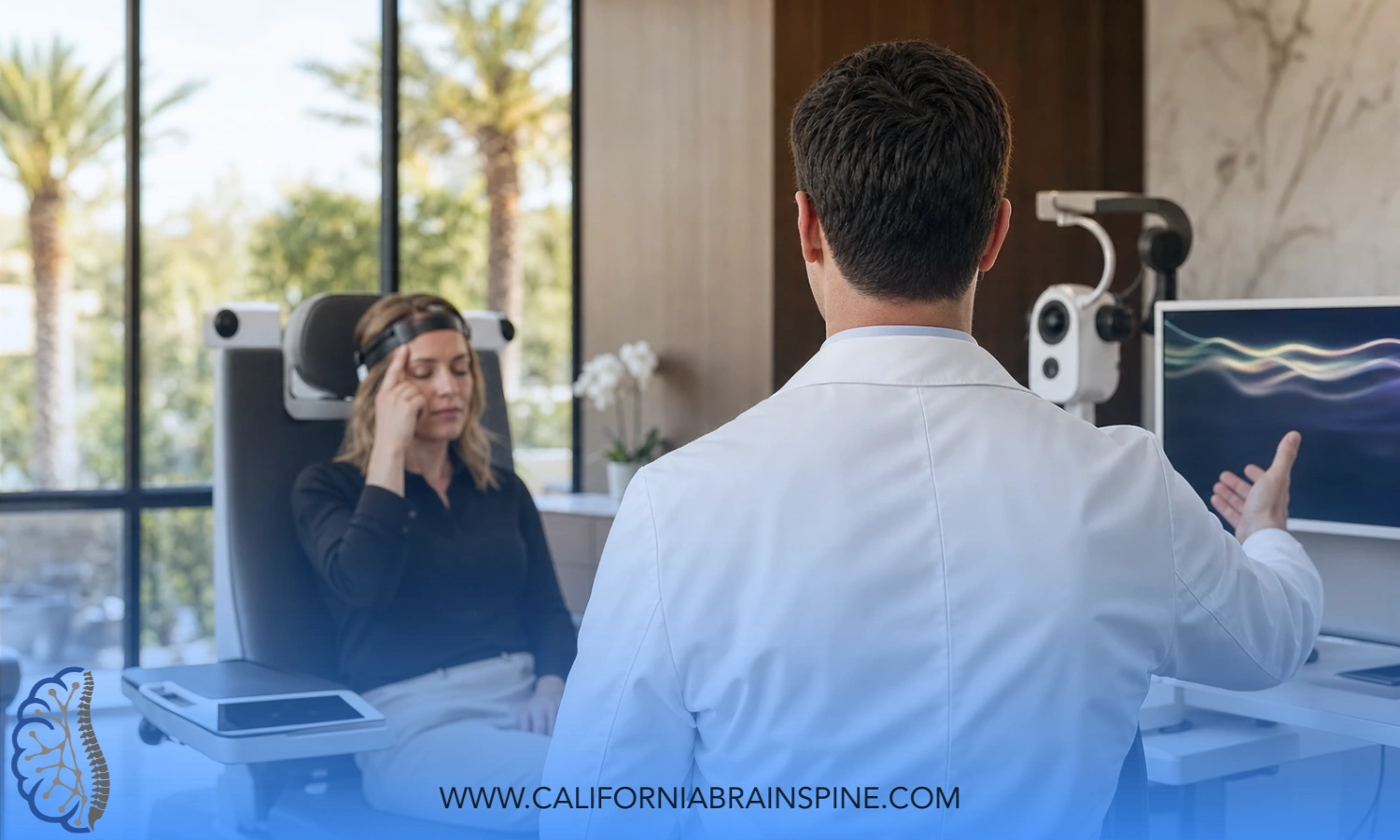
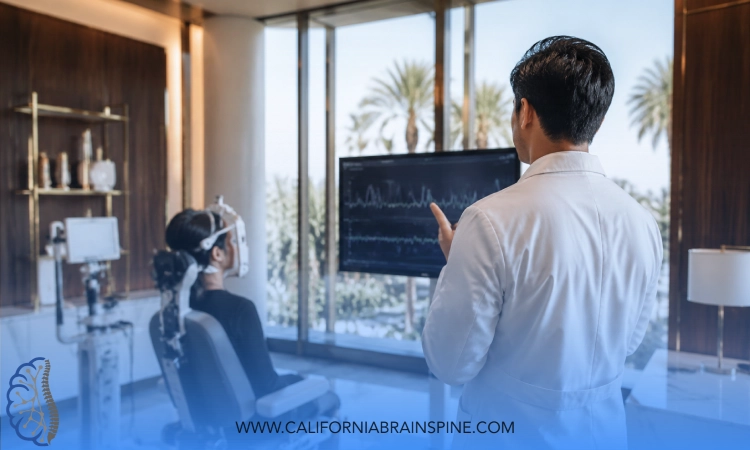
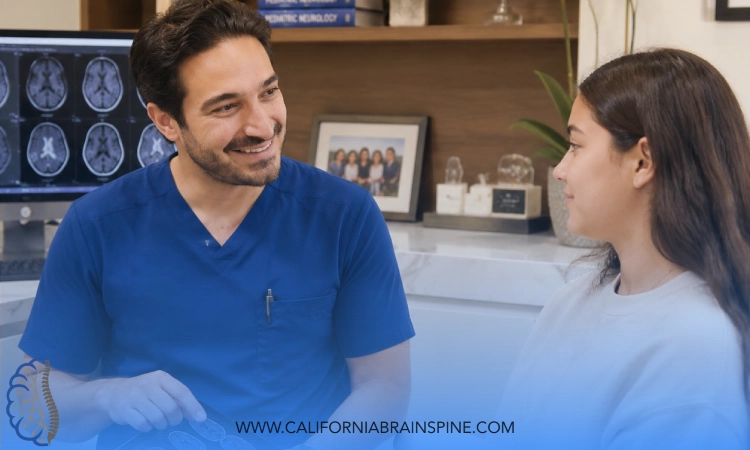
Image note: “A calm doctor in a modern neurological clinic in Calabasas reviewing eye movement data with an adult patient, showing visual tracking and brain function on a screen, warm professional lighting.”
What an Antisaccade Test Reveals About Executive Control
An antisaccade test is not just about where your eyes move. It is about how your nervous system manages conflict.
Your automatic system says, “Look at the target.”
Your executive system says, “Do not look there. Look the other way.”
That conflict gives us valuable clinical information. When I look at antisaccade performance, I am interested in several features: whether the patient makes errors, how quickly they respond, whether they can correct mistakes, and whether fatigue changes performance over time.
For someone recovering from a concussion, this can be especially important. A patient may pass a basic neurological exam but still struggle with reading, driving, screens, busy environments, memory, focus, or emotional regulation. In these cases, more advanced functional testing may reveal subtle issues that standard exams can miss.
Antisaccades and neuroplasticity are connected because the same systems that struggle during an antisaccade task can often be trained through carefully dosed neurological rehabilitation. The brain can learn. But it needs the right input, at the right intensity, in the right order.
How Neuroplasticity Helps the Brain Rebuild Better Patterns
Neuroplasticity is not magic. It is biology.
Your brain changes based on repeated experience, sensory input, movement, attention, and feedback. Every time you practice a controlled response, your nervous system has an opportunity to strengthen that pathway. Every time you reduce an inappropriate automatic response, your brain has an opportunity to refine inhibition.
In my clinical approach, I think of neuroplasticity as guided learning. The nervous system is always adapting, but not all adaptation is helpful. For example, after a concussion, a patient may adapt by avoiding movement, avoiding screens, limiting activity, or becoming overly dependent on visual fixation for balance. These adaptations may feel protective in the short term, but over time they can contribute to dizziness, visual sensitivity, fatigue, and reduced confidence.
The goal of Neuroplasticity Rehabilitation is to help the brain adapt in a healthier direction. When appropriate, this may involve visual exercises, vestibular rehabilitation, cognitive rehabilitation, balance training, autonomic regulation strategies, NeuroSensory Integration, and non-invasive functional neurology therapies.
The key is personalization. A brain that is overstimulated does not need random intensity. It needs precision.
Why Concussion Patients Often Struggle With Automatic Responses
After a concussion or mild traumatic brain injury, many patients notice they are more sensitive to light, movement, sound, stress, screens, or busy visual environments. They may become more reactive, more fatigued, or less able to filter distractions.
This can happen because concussion may disrupt communication between multiple brain networks. The injury does not have to appear dramatically on standard imaging for the patient to feel real symptoms. Functional changes can affect visual tracking, vestibular processing, autonomic regulation, sleep, attention, and emotional control.
In these cases, antisaccades and neuroplasticity give us a useful framework. The antisaccade task challenges the brain’s ability to suppress an automatic visual response. Neuroplasticity gives us the pathway for helping the brain improve that ability over time.
When the brain cannot inhibit effectively, patients may experience symptoms such as:
- Difficulty concentrating in visually busy environments
- Losing place while reading
- Feeling dizzy in stores or crowds
- Screen intolerance and eye strain
- Brain fog, mental fatigue, or slowed processing
- Trouble shifting attention without feeling overwhelmed
These symptoms are not signs of weakness. They are signs that the nervous system may need a more specific evaluation and a better rehabilitation plan.
Your symptoms are not your identity. They are signals from a nervous system asking for clearer guidance and safer ways to adapt.
The Engineering Mindset Behind My Neurological Approach
Before I became a Doctor of Chiropractic and pursued postdoctoral education in Clinical Neuroscience, I studied Electrical Engineering in Iran, completed a master’s degree in Advanced Engineering & Management in the United Kingdom, and worked in the United States as a Solar Engineer. That background shaped the way I think.
Engineering taught me to respect systems. Clinical neuroscience taught me that the human nervous system is the most complex system we will ever try to understand.
When I evaluate symptoms like dizziness, brain fog, memory problems, balance issues, post-concussion visual disturbances, or dysautonomia, I do not look for one isolated problem. I look for patterns. I ask: How is the system communicating? Where is the signal inefficient? Where is the response poorly regulated? What input does the brain need in order to reorganize?
That is one reason antisaccades and neuroplasticity are so clinically interesting to me. Antisaccade performance shows how the brain handles inhibition, timing, prediction, and voluntary control. Neuroplasticity shows us that the system can change when guided correctly.
At California Brain & Spine Center, this combination of analytical thinking and patient-centered care helps me design more targeted rehabilitation plans. I believe patients deserve both compassion and precision.
Image note: “A professional portrait-style scene of Dr. Alireza Chizari, DC, DACNB in a modern Calabasas clinic, combining engineering diagrams and neurological brain mapping visuals in the background, warm and trustworthy atmosphere.”
How California Brain & Spine Center Evaluates Brain Control and Adaptation
At California Brain & Spine Center in Calabasas, patients are evaluated with a comprehensive view of neurological function. The clinic focuses on understanding how the brain, eyes, vestibular system, spine, autonomic nervous system, and sensory pathways interact.
For patients with concussion, traumatic brain injury recovery needs, dizziness, balance disorders, brain fog, memory issues, visual disturbances, or autonomic nervous system disorders, testing is not limited to one symptom. The goal is to understand the underlying functional patterns contributing to the patient’s daily challenges.
A personalized evaluation may consider eye movement control, balance, gait, posture, visual-vestibular integration, cognitive load tolerance, autonomic signs, and symptom behavior during specific tasks. When relevant, antisaccade-style concepts help reveal whether the brain can inhibit reflexive responses and organize controlled output.
This is where antisaccades and neuroplasticity become practical rather than theoretical. The information gathered during evaluation can help guide a care plan that is specific, measurable, and responsive to the patient’s nervous system.
From Testing to Training: Turning Brain Data Into Recovery
At California Brain & Spine Center, neurological findings are not collected just for information. They are used to guide action.
When a patient shows difficulty with visual tracking, gaze stability, response inhibition, vestibular integration, or cognitive endurance, the next step is to identify the safest and most effective way to support neuroplastic change. The clinic may use a combination of evidence-informed therapies depending on the patient’s needs and tolerance.
These may include:
- ✅ Vestibular Rehabilitation to improve balance, gaze stability, and motion tolerance
- ✅ Cognitive Rehabilitation to support attention, memory, processing speed, and executive function
- ✅ Neuroplasticity Rehabilitation to help the brain relearn healthier patterns
- ✅ NeuroSensory Integration, also known as NSI, to improve how sensory systems communicate
- ✅ Non-Invasive functional Neurology Therapy such as LLLT, PEMF, HBOT, GammaCore Vagus Nerve Stimulation, or the NeuroRevive Program when clinically appropriate
The purpose is not to overwhelm the brain. The purpose is to create the right challenge so the brain can adapt. In neurorehabilitation, more is not always better. Better is better.
A healing brain does not need pressure. It needs precision, consistency, safety, and a plan that respects its current capacity.
Antisaccades and Neuroplasticity in Visual Disturbances After Concussion
Visual symptoms after concussion can be confusing. A patient may visit an eye doctor and be told their vision is “fine,” yet they still experience eye strain, headaches, dizziness, reading problems, or difficulty tracking moving objects.
This is because seeing clearly and using vision efficiently are not the same thing.
Eye movement control depends on communication between the eyes and the brain. Smooth pursuits, saccades, fixation, convergence, visual attention, and vestibular-ocular reflexes all contribute to comfortable visual function. If these systems are poorly coordinated, the patient may feel visually unstable even with normal eyesight.
In this context, antisaccades and neuroplasticity can help explain why visual symptoms are sometimes connected to executive control. The brain must not only see a stimulus, but decide what to ignore, what to follow, and how to coordinate eye movements with posture, balance, and attention.
For a patient who feels worse in stores, on screens, while reading, or while driving, this distinction can be life changing. It shifts the conversation from “your eyes are fine” to “your visual neurological system may need targeted rehabilitation.”
Image note: “An adult patient experiencing visual discomfort while looking at a computer screen, with a subtle overlay of eye movement pathways and brain networks, clinical but calming style.”
The Vestibular System: Why Balance and Eye Control Are Connected
The vestibular system helps the brain understand motion, head position, and spatial orientation. It works closely with the eyes because every time the head moves, the brain must stabilize vision.
When the visual and vestibular systems are not communicating well, patients may experience dizziness, motion sensitivity, imbalance, nausea, or difficulty walking in complex environments. They may feel stable at home but overwhelmed in a grocery store, parking lot, restaurant, or crowded hallway.
At California Brain & Spine Center, vestibular rehabilitation may be integrated with visual and cognitive exercises when appropriate. This is important because the brain does not function in separate compartments. Eye movements, balance, posture, attention, and autonomic regulation often influence one another.
Antisaccades and neuroplasticity fit into this larger model because the brain’s ability to inhibit, stabilize, and choose the correct response affects both visual and vestibular function. A patient who cannot suppress an inappropriate visual response may also struggle to stay balanced in a visually complex environment.
This is why a comprehensive approach can be more effective than treating dizziness, vision, or brain fog as isolated problems.
Why Brain Fog and Memory Loss May Involve Inhibition, Not Just Memory
Many patients describe brain fog as if their mind is “covered in static.” They may say they cannot think clearly, remember details, follow conversations, or complete work tasks without exhaustion.
While memory systems may be involved, brain fog is often more complex than memory alone. It can involve attention regulation, sensory overload, autonomic imbalance, sleep disruption, inflammation, vestibular dysfunction, visual strain, and impaired executive control.
The ability to inhibit irrelevant information is essential for clear thinking. If your brain cannot filter distractions efficiently, everything feels louder. More visual input, more noise, more movement, more internal stress, more mental effort.
This is why the relationship between antisaccades and neuroplasticity is so meaningful. Antisaccade performance can reflect how well the brain suppresses automatic responses. Neuroplastic rehabilitation can help the nervous system improve regulation over time.
At the clinic, patients with brain fog or memory loss are approached with a broad neurological lens. The goal is to understand what is draining cognitive capacity and how to restore more efficient function.
Safety, Personalization, and Why the Right Dose Matters
In neurological rehabilitation, dosage matters. The right exercise can help when applied correctly, but it can flare symptoms when applied too aggressively or too soon.
At California Brain & Spine Center, care plans are designed with attention to safety, tolerance, and progression. Patients recovering from concussion, traumatic brain injury, dysautonomia, vestibular dysfunction, or chronic neurological symptoms often need careful pacing.
A well-designed plan considers:
- Symptom threshold
- Fatigue response
- Visual and vestibular tolerance
- Cognitive load tolerance
- Autonomic stability
- Sleep and recovery capacity
- Patient goals and daily demands
This is especially important when working with antisaccades and neuroplasticity. Training inhibition and eye movement control requires the brain to work. But the work should be therapeutic, not destabilizing.
A personalized plan respects both your potential and your current capacity. That balance is where meaningful progress often begins.
The goal is not to force the nervous system to perform. The goal is to teach it how to feel safe, organized, and capable again.
How NeuroSensory Integration Supports Better Brain Communication
NeuroSensory Integration, or NSI, is part of a broader approach to helping the nervous system process information more effectively. Many patients with chronic neurological symptoms are not dealing with one single pathway problem. They are dealing with coordination problems between systems.
The visual system may be overactive. The vestibular system may be underperforming. The autonomic nervous system may be dysregulated. The spine and proprioceptive system may be sending inconsistent information. The cognitive system may be working too hard to compensate.
At California Brain & Spine Center, NSI may be used as part of a personalized program to help improve communication between sensory systems. This can be relevant for patients with dizziness, balance problems, post-concussion symptoms, visual disturbances, developmental neurological challenges, or autonomic issues.
In relation to antisaccades and neuroplasticity, NSI supports the idea that the brain can improve when it receives clearer, more organized input. If the brain learns to interpret sensory information more accurately, it may become better at choosing appropriate responses instead of reacting automatically.
Non-Invasive functional Neurology Therapy and the NeuroRevive Program
Some patients require additional support beyond exercises alone. Depending on the case, California Brain & Spine Center may incorporate non-invasive functional neurology therapies such as Low-Level Laser Therapy, Pulsed Electromagnetic Field therapy, Hyperbaric Oxygen Therapy, GammaCore Vagus Nerve Stimulation, or the NeuroRevive Program.
These therapies are selected based on clinical reasoning, patient history, goals, safety considerations, and neurological findings. They are not used as one-size-fits-all solutions. The purpose is to support the nervous system’s capacity for regulation, recovery, and adaptation.
When discussing antisaccades and neuroplasticity, these supportive therapies may be considered when the brain needs help tolerating rehabilitation, improving recovery capacity, or regulating stress responses. For example, a patient with autonomic dysregulation and post-concussion symptoms may need a different plan than a patient whose main challenge is visual tracking or balance.
The central principle remains the same: identify the patient’s functional pattern, guide the nervous system carefully, and support the brain’s ability to change.
Image note: “A peaceful modern rehabilitation room with non-invasive neurological therapy equipment, a patient resting comfortably, soft lighting, advanced but calming clinical environment.”
Antisaccades and Neuroplasticity Are About More Than Eye Movements
It is easy to hear the word “antisaccade” and think this topic is only about the eyes. But clinically, it is much bigger.
Antisaccades challenge the brain’s ability to override a reflex. That ability touches many parts of life. It affects how you focus during a conversation, how you ignore distractions while driving, how you remain steady in a visually busy space, and how you maintain emotional control when your nervous system is stressed.
Antisaccades and neuroplasticity are also deeply connected to confidence. When your brain feels unpredictable, your world can become smaller. You may avoid stores, screens, work tasks, social gatherings, exercise, or travel. Over time, this can affect your identity and quality of life.
A strong rehabilitation plan is not just about improving test scores. It is about helping you return to the activities that matter. It is about helping you trust your brain and body again.
When Should You Consider a Neurological and Vestibular Evaluation?
I encourage patients to seek a comprehensive evaluation when symptoms persist, especially if they interfere with daily life. You do not need to wait until symptoms become severe. In many cases, earlier evaluation provides a clearer path forward and reduces frustration.
You may benefit from a neurological and vestibular evaluation if you experience ongoing dizziness, imbalance, visual sensitivity, brain fog, headaches, memory problems, reading difficulty, screen intolerance, motion sensitivity, or poor concentration after a concussion or head injury.
You may also benefit if you feel that your symptoms are real but previous testing has not explained them. Many functional neurological problems require a more detailed look at how the brain performs during specific tasks.
In my work with patients from Calabasas, Southern California, and beyond, I have seen how validating it can be when a patient finally understands why they feel the way they feel. Antisaccades and neuroplasticity can be one part of that understanding.
Clarity gives patients power. When you understand what your brain is struggling with, you can begin taking informed steps toward change.
A Realistic Patient Story: Learning to Trust the Brain Again
Some time ago, a patient I will call M. came to see me after a concussion. She was bright, motivated, and used to being highly productive. But after her injury, she felt like her brain was no longer cooperating. Reading made her tired. Grocery stores made her dizzy. Screens caused headaches. She also noticed that she reacted quickly to distractions and had trouble staying focused during conversations.
When I evaluated her, I looked beyond the symptom labels. We assessed her visual tracking, balance, vestibular tolerance, cognitive load, and how her nervous system responded to specific challenges. Her pattern suggested that her brain was struggling with visual-vestibular integration, cognitive endurance, and response control.
I explained to her that this was not a character flaw and not a lack of willpower. Her nervous system needed better organization.
We built a personalized plan using elements of Concussion Treatment, Vestibular Rehabilitation, Cognitive Rehabilitation, and Neuroplasticity Rehabilitation. As she improved tolerance, we gradually introduced more challenging visual and cognitive tasks. The plan was paced carefully so her brain could adapt without being overwhelmed.
Over time, she began reading longer without losing her place. She tolerated screens more comfortably. Grocery stores became less intimidating. Most importantly, she told me, “I finally feel like I can trust my brain again.”
That is the deeper goal of working with antisaccades and neuroplasticity. It is not just to train eye movements. It is to help the nervous system regain control, confidence, and resilience.
Your Most Common Questions About Antisaccades and Neuroplasticity
What are antisaccades, and why do they matter for brain function?
Antisaccades are voluntary eye movements made in the opposite direction of a visual target. They matter because they require the brain to suppress an automatic response and choose a controlled one. This involves executive function, attention, frontal lobe regulation, visual processing, and motor planning. In neurological care, antisaccade performance can provide insight into how well the brain manages inhibition and control.
How are antisaccades and neuroplasticity connected?
Antisaccades and neuroplasticity are connected through learning and adaptation. If the brain struggles to inhibit automatic responses, targeted rehabilitation may help it practice more controlled patterns. Neuroplasticity allows the brain to reorganize and strengthen pathways through repeated, carefully dosed input. This is especially relevant for concussion recovery, cognitive rehabilitation, and visual-vestibular therapy.
Can antisaccade problems happen after a concussion?
Yes. After a concussion, some patients develop difficulty with eye movement control, attention, visual tracking, processing speed, and response inhibition. This may contribute to symptoms such as brain fog, dizziness, screen intolerance, reading problems, and visual overwhelm. Antisaccade-related challenges may be one part of a larger post-concussion pattern.
Is this type of testing painful or invasive?
No. Eye movement and neurological screening methods related to antisaccade function are generally non-invasive. The patient may be asked to look at targets, follow instructions, or perform visual and cognitive tasks. The goal is to observe how the nervous system performs. At California Brain & Spine Center, testing and therapy are adapted to the patient’s tolerance and safety needs.
Can neuroplasticity rehabilitation help adults, or is it only for children?
Adults can absolutely benefit from neuroplasticity. While the brain changes rapidly during childhood, adult brains remain adaptable throughout life. The key is using the correct type of stimulation, repetition, progression, and recovery. Patients with concussion, traumatic brain injury, dizziness, brain fog, memory concerns, or vestibular dysfunction may benefit from personalized neuroplasticity-based care.
How do I know if I need this kind of evaluation?
If you have persistent dizziness, visual discomfort, brain fog, poor concentration, memory issues, balance problems, screen sensitivity, or symptoms after a concussion, a neurological and vestibular evaluation may be appropriate. This is especially true if standard testing has not explained your symptoms or if you feel your brain is more reactive and less controlled than before.
Conclusion: Your Brain Can Learn New Patterns With the Right Guidance
Antisaccades help us understand how the brain overrides automatic responses. Neuroplasticity helps us understand how the brain can change, relearn, and rebuild more efficient patterns. Together, antisaccades and neuroplasticity offer a powerful way to understand symptoms like brain fog, dizziness, visual overwhelm, poor focus, and post-concussion difficulty with control.
I want you to remember this: your symptoms are real, and they deserve a thoughtful explanation. If your brain feels reactive, foggy, overstimulated, or difficult to trust, that does not mean you are broken. It may mean your nervous system needs a more precise evaluation and a personalized rehabilitation plan.
At California Brain & Spine Center in Calabasas, I combine clinical neuroscience, advanced neurological evaluation, and a patient-centered approach to help people move toward better function. My goal is to help you understand your nervous system, make informed decisions, and take the next step toward the best version of your life.
If you are dealing with lingering concussion symptoms, dizziness, visual disturbances, brain fog, memory issues, balance problems, or neurological symptoms that have not been fully explained, I invite you to contact California Brain & Spine Center. You can request an appointment for a personalized neurological and vestibular evaluation with Dr. Alireza Chizari, DC, DACNB in Calabasas, California.
The goal is not just to manage isolated symptoms. The goal is to help your brain and body work together again so you can return to life with more clarity, confidence, and stability.

Dr. Alireza Chizari
This article has been medically reviewed for clinical accuracy by Dr. Alireza Chizari, DC, DACNB. Committed to evidence-based practice, Dr. Chizari ensures all content reflects the highest standards of functional neurology care.
Comments
Find our article more easily in Google.
FAQ
What is Functional Neurology?
Functional Neurology is a healthcare specialty that focuses on assessing and rehabilitating the nervous system’s function. It emphasizes neuroplasticity—the brain’s ability to adapt and reorganize—using non-invasive, evidence-based interventions to improve neurological performance.
How does Functional Neurology differ from traditional neurology?
Traditional neurology often concentrates on diagnosing and treating neurological diseases through medications or surgery. In contrast, Functional Neurology aims to optimize the nervous system’s function by identifying and addressing dysfunctions through personalized, non-pharmaceutical interventions.
Is Functional Neurology a replacement for traditional medical care?
No. Functional Neurology is intended to complement, not replace, traditional medical care. Practitioners often collaborate with medical professionals to provide comprehensive care.
What conditions can Functional Neurology help manage?
Functional Neurology has been applied to various conditions, including:
• Concussions and Post-Concussion Syndrome
• Traumatic Brain Injuries (TBI)
• Vestibular Disorders
• Migraines and Headaches
• Neurodevelopmental Disorders (e.g., ADHD, Autism)
• Movement Disorders
• Dysautonomia
• Peripheral Neuropathy
• Functional Neurological Disorder (FND)
Can Functional Neurology assist with neurodegenerative diseases?
While Functional Neurology does not cure neurodegenerative diseases, it can help manage symptoms and improve quality of life by optimizing the function of existing neural pathways.
What diagnostic methods are used in Functional Neurology?
Functional Neurologists employ various assessments, including:
• Videonystagmography (VNG)
• Computerized Posturography
• Oculomotor Testing
• Vestibular Function Tests
• Neurocognitive Evaluations
How is a patient’s progress monitored?
Progress is tracked through repeated assessments, patient-reported outcomes, and objective measures such as balance tests, eye movement tracking, and cognitive performance evaluations.
What therapies are commonly used in Functional Neurology?
Interventions may include:
- Vestibular Rehabilitation
- Oculomotor Exercises
- Sensorimotor Integration
- Cognitive Training
- Balance and Coordination Exercises
- Nutritional Counseling
- Lifestyle Modifications
Are these therapies personalized?
Absolutely. Treatment plans are tailored to the individual’s specific neurological findings, symptoms, and functional goals.
Who can benefit from Functional Neurology?
Individuals with unresolved neurological symptoms, those seeking non-pharmaceutical interventions, or patients aiming to optimize brain function can benefit from Functional Neurology.
Is Functional Neurology suitable for children?
Yes. Children with developmental delays, learning difficulties, or neurodevelopmental disorders may benefit from Functional Neurology approaches.
How does Functional Neurology complement other medical treatments?
It can serve as an adjunct to traditional medical care, enhancing outcomes by addressing functional aspects of the nervous system that may not be targeted by conventional treatments.
How is technology integrated into Functional Neurology?
Technological tools such as virtual reality, neurofeedback, and advanced diagnostic equipment are increasingly used to assess and enhance neurological function.
What is the role of research in Functional Neurology?
Ongoing research continues to refine assessment techniques, therapeutic interventions, and our understanding of neuroplasticity, contributing to the evolution of Functional Neurology practices.