Expert Vertigo After Minor Head Injury Care Near Westlake Village
When vertigo shows up after what doctors call a “minor” head injury, it does not feel minor to you at all. The spinning, swaying, nausea, visual strain, and fear of falling can change how you move through your day, especially if you live in a busy place like Westlake Village. You may look normal on the outside, but inside, your balance and confidence can feel shaken.
I am Dr. Alireza Chizari, DC, DACNB, and in this article I will walk you through how I approach vertigo after minor head injury care in Westlake Village and the surrounding communities. My goal is to help you understand what might be happening in your brain, inner ear, neck, and nervous system, and how we can build a safe, personalized plan to help you move forward.
You are the hero of this story. You are the one who has to live with the symptoms and make decisions about your health. My role, and the role of California Brain & Spine Center in Calabasas, is to be your guide: to listen carefully, use advanced neurological and vestibular tools, explain things clearly, and design a program that fits your life, not just your test results.
If you are searching for vertigo after minor head injury care in Westlake Village, I want you to know that there are structured ways to evaluate and treat these symptoms. You do not have to simply “wait and see” while feeling dizzy, unsteady, and uncertain about the future.
What vertigo after a minor head injury really feels like
When people come to me after a minor head trauma, their scans are often “normal,” but their daily life is not. They might describe:
- A feeling that the room is spinning or tilting when they turn their head
- Unsteadiness when walking in grocery store aisles or crowded places
- Nausea or motion sensitivity while riding in a car up and down the hills around Westlake Village
- Difficulty focusing their eyes on screens, especially at work or on the phone
Vertigo after minor head injury care in Westlake Village is not only about the spinning sensation. It is also about how safe you feel walking on your own, how quickly you get fatigued, how confident you feel driving, and how much you trust your own body again.
In this early stage, my first job is to validate what you are feeling and to help you understand that vertigo after a “mild” concussion or head bump is a real and common complication, not your imagination or a sign of weakness.
Is vertigo after minor head injury serious when you live in Westlake Village
People often ask me: “If my CT or MRI was normal, is this vertigo still serious?” The answer is that it can be serious for your function and quality of life, even when it is not an emergency.
Living in Westlake Village, you may drive on winding roads, walk in busy shopping centers, and move between bright outdoor light and indoor environments many times a day. Vertigo after minor head injury care in Westlake Village must respect these daily demands. Even small balance issues can turn into real limitations when your environment constantly challenges your vestibular and visual systems.
I look for specific patterns:
- Does your vertigo increase when you lie down or roll in bed
- Is it triggered by looking up at shelves, or bending forward
- Do busy visual environments, like Costco aisles, make you feel disconnected or off balance
- Are you more sensitive to light, sound, or screen time since the injury
These details help me separate inner ear causes, neck and proprioceptive issues, visual disturbances after concussion, and deeper brain or autonomic nervous system changes.
Healing from a brain or vestibular injury is not about being “tough enough.” It is about giving your nervous system the right inputs, at the right intensity, in the right sequence.
Why vertigo can appear after a “minor” head injury
Even a “minor” hit to the head, neck, or body can disturb several systems that keep you balanced. Understanding these mechanisms can be deeply reassuring, because once we understand the “why,” we can design a more precise recovery plan.
Inner ear and vestibular system disruption
Inside each ear, there is a small but powerful balance organ. A minor head injury can:
- Dislodge tiny crystals, leading to BPPV (benign paroxysmal positional vertigo)
- Disturb the fluid dynamics inside the semicircular canals
- Irritate the nerve pathways that send balance information to your brain
Vertigo after minor head injury care in Westlake Village often begins with a detailed bedside and computerized vestibular exam to see whether your inner ear is sending noisy or misleading signals.
Neck, vision, and brain working out of sync
The head and neck are one unit. When the neck is strained, and the eyes are overworked from screens or driving, your brain may struggle to combine these signals smoothly. This can create:
- A sense of floating or rocking rather than spinning
- Brain fog, trouble concentrating, and feeling “not quite yourself”
- Visual disturbances after concussion, like difficulty tracking moving objects or reading
Here, vertigo after minor head injury is less about the ear and more about how your brain integrates visual, neck, and inner ear information. This is where neuroplasticity rehabilitation, NeuroSensory Integration (NSI), and vision balance coordination exercises can be very effective.
Red flag symptoms: when vertigo after minor head injury needs urgent care
In most cases, vertigo after minor head injury care in Westlake Village can be managed in an outpatient setting. However, there are situations where I immediately recommend emergency evaluation:
- Sudden, severe headache unlike anything you have felt before
- Vertigo with trouble speaking, swallowing, or one-sided weakness
- Double vision, loss of vision, or difficulty staying conscious
- Recent blood thinner use with a new head injury
- Progressive neurological symptoms, such as worsening weakness or confusion
If any of these appear, the priority is to rule out stroke, brain bleeding, or other life threatening conditions before focusing on vestibular or concussion related causes.
For many patients, though, the emergency phase is already past. They come to me weeks or months later, still dizzy and exhausted, after being told “everything looks fine.” My role is to pick up the story from there and look deeper.
The goal is not just to rule out what is dangerous. The goal is to rule in what is treatable and give you a clear path forward.
How California Brain & Spine Center evaluates vertigo after minor head injury in Westlake Village
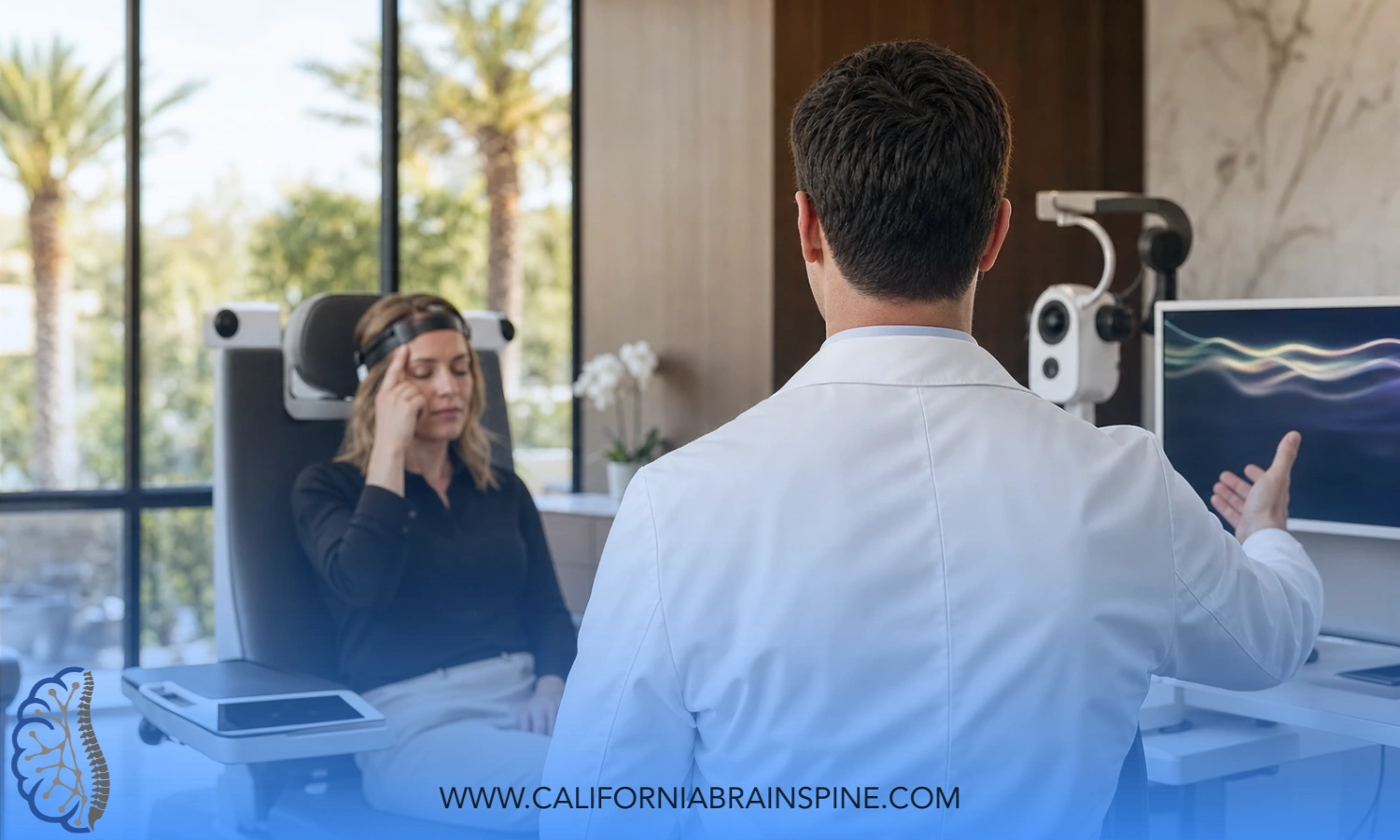
At California Brain & Spine Center in Calabasas, patients from Westlake Village and surrounding communities receive a structured, stepwise evaluation for vertigo after minor head injuries and other dizziness related conditions. The clinic blends engineering level precision with a human centered approach that respects each patient’s story.
When someone seeks vertigo after minor head injury care in Westlake Village, the team first takes a detailed history. They clarify the exact mechanism of injury, any prior concussions, neck or spine issues, medications, and pre existing conditions such as anxiety, migraines, or dysautonomia.
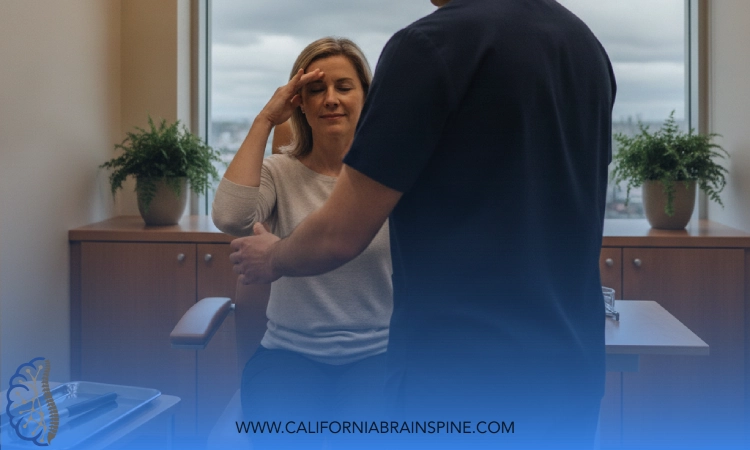
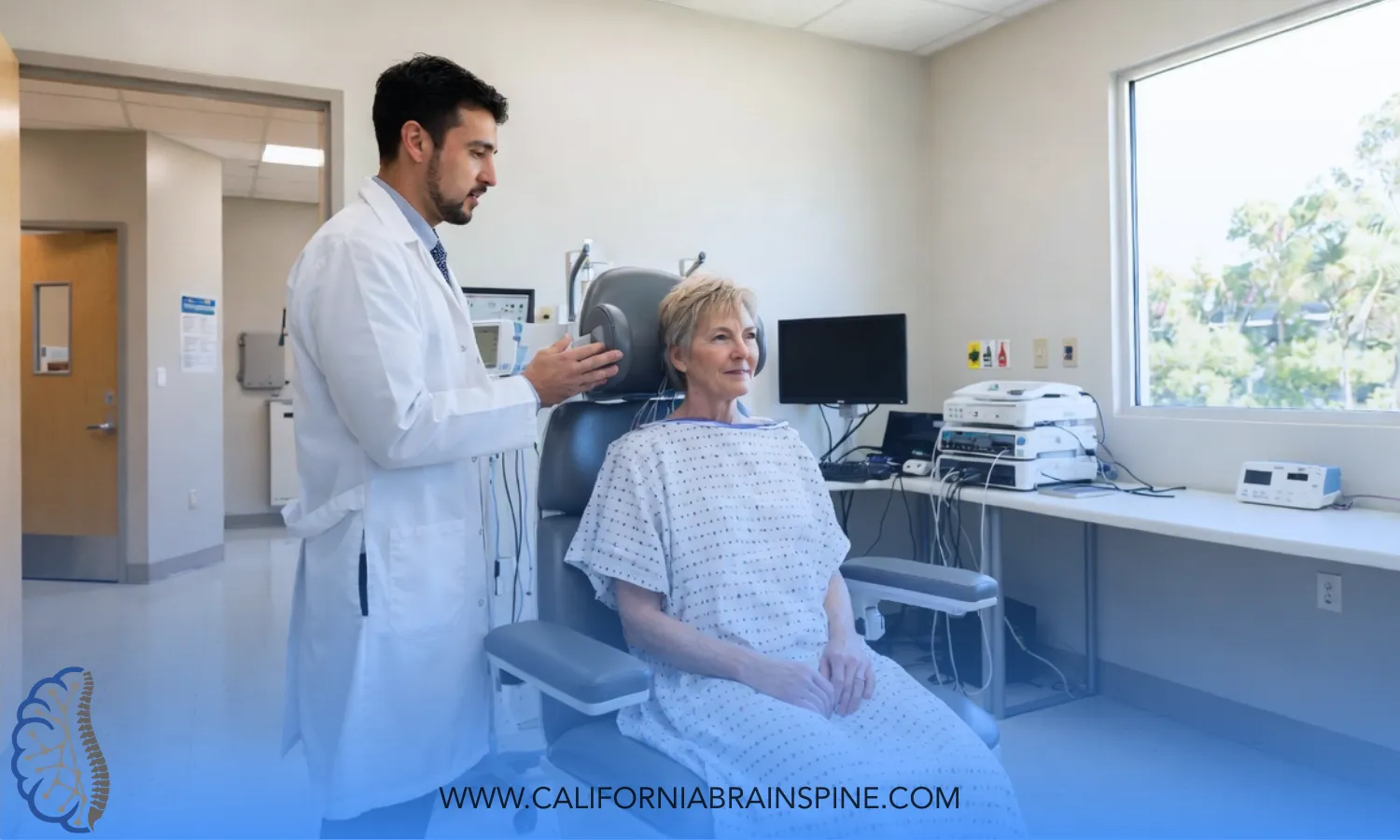
This is followed by a targeted physical and neurological exam, including:
- Eye movement and gaze stability testing
- Positional tests to look for BPPV or canal involvement
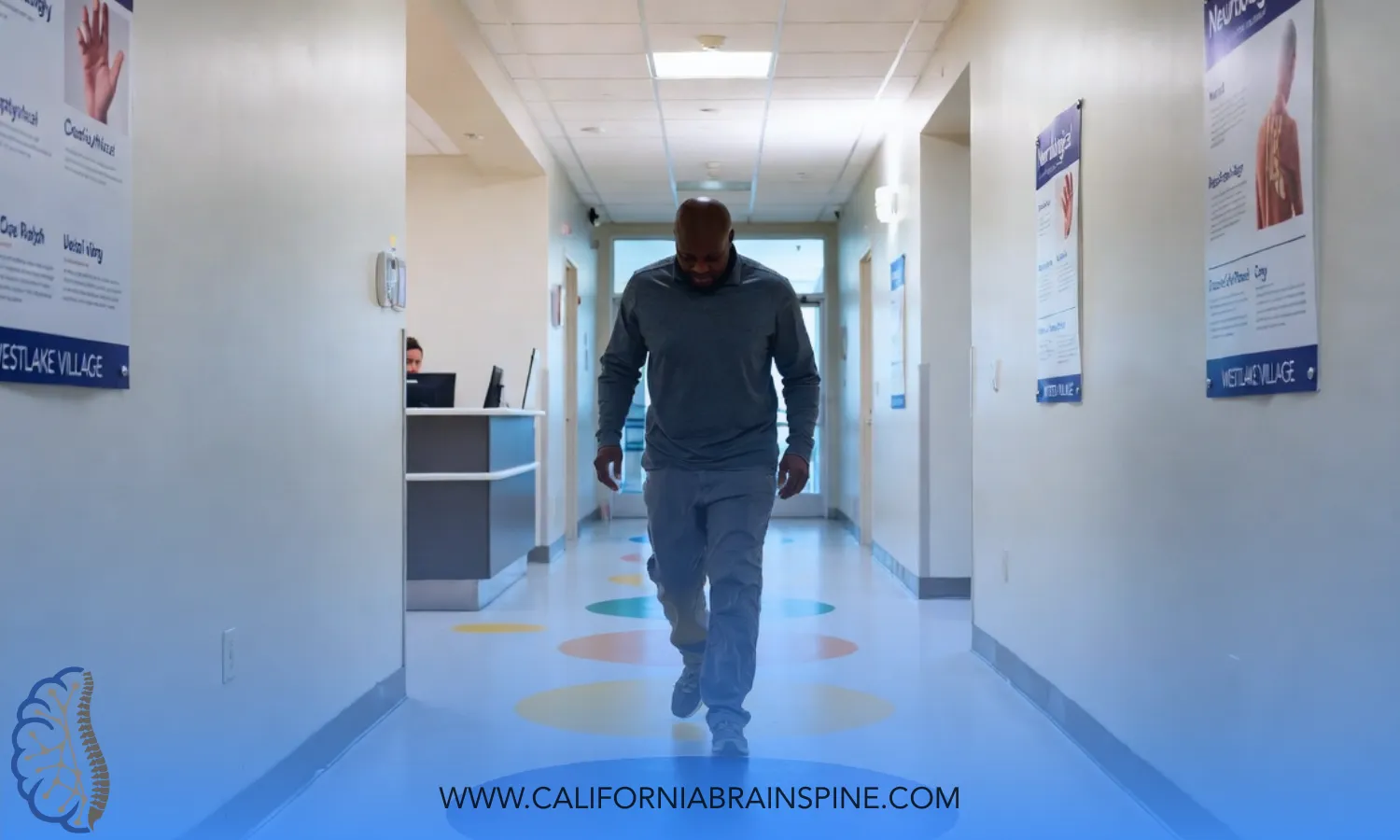
- Gait and balance evaluation on firm and unstable surfaces
- Cognitive and autonomic screening when needed
The aim is to identify whether the main drivers of vertigo are inner ear, cervical spine, visual, cognitive, or autonomic in nature, or a combination of several systems.
Advanced vestibular and neurological testing near Westlake Village
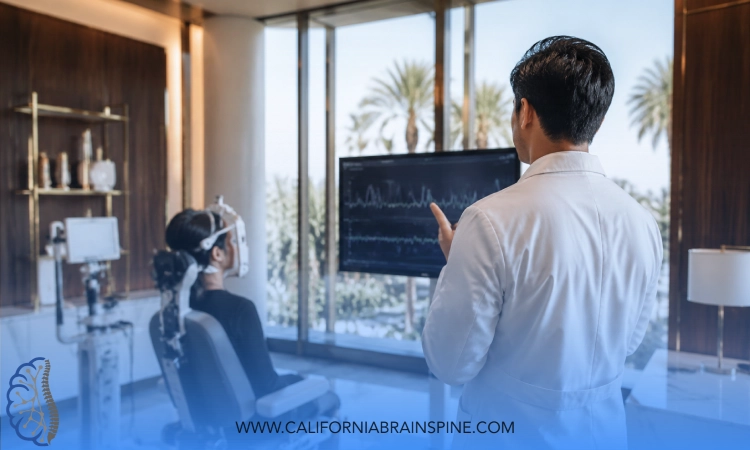
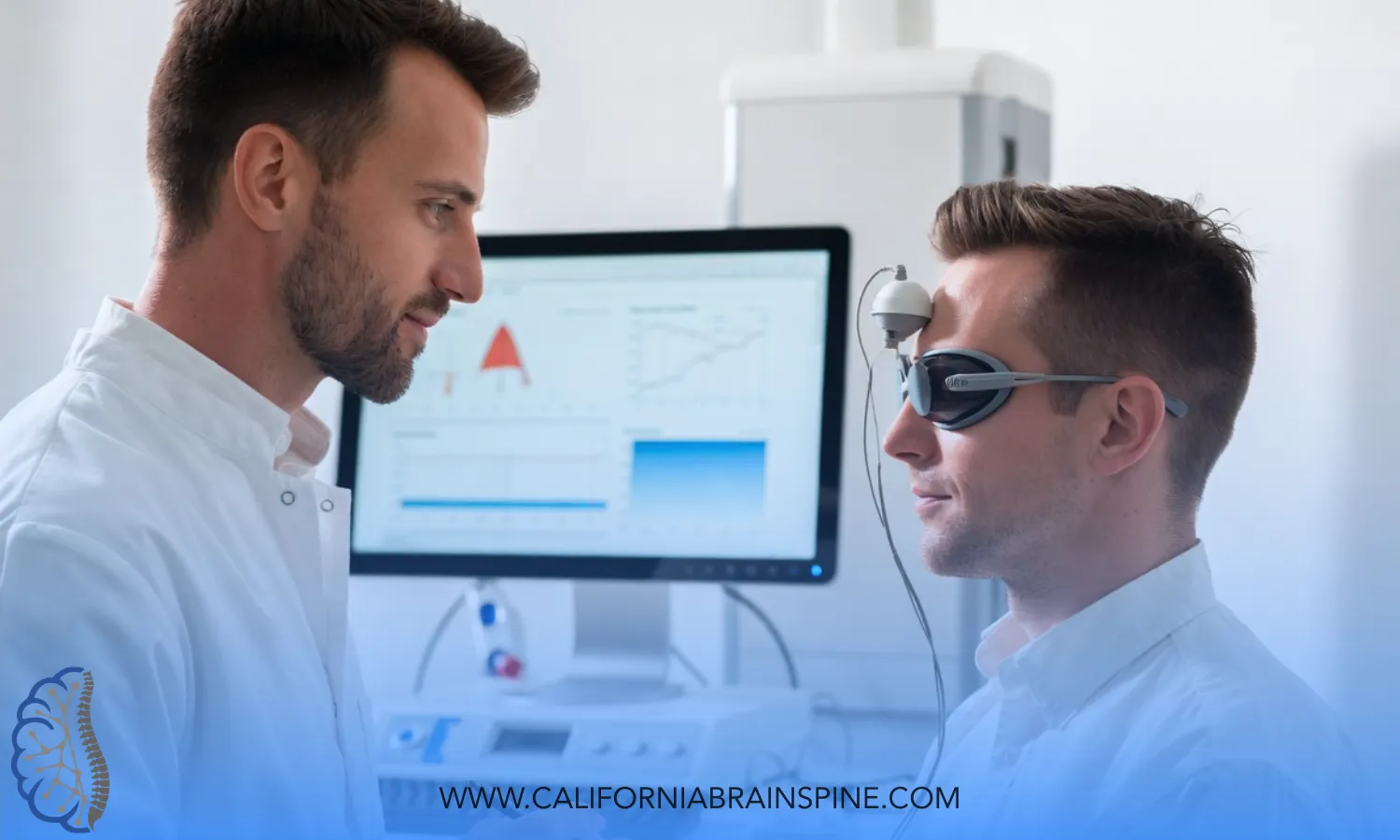
For more complex cases, advanced tools may be used to refine the diagnosis. At California Brain & Spine Center, patients can be assessed with:
- Computerized vestibular testing to quantify inner ear function
- Balance platform evaluations to track sway patterns and fall risk
- Visual and oculomotor assessments to identify subtle tracking deficits
- Autonomic nervous system testing when dysautonomia is suspected
These methods are guided by Dr. Chizari, DC, DACNB’s engineering background and his postdoctoral training in Clinical Neuroscience. They support a high level of E E A T by combining objective measurements with real world function.
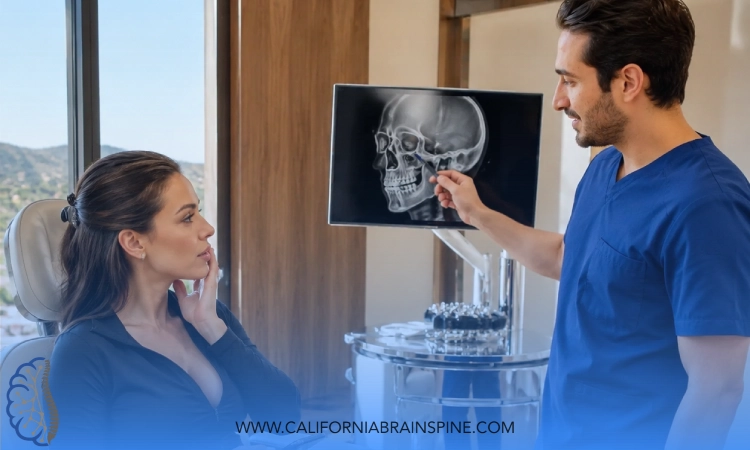
Ruling out dangerous causes while focusing on what is treatable
The clinic’s philosophy is to protect patient safety while also avoiding the trap of “normal tests, no problem.” If brain imaging or emergency evaluations have already ruled out life threatening issues, attention shifts to the systems that can be retrained through neuroplasticity.
Vertigo after minor head injury care in Westlake Village is therefore framed not as a dead end but as a starting point for targeted vestibular rehabilitation, balance training, and cognitive support.
A clear diagnosis turns fear into a plan. When patients finally understand why they are dizzy, they can stop blaming themselves and start working with their nervous system instead of against it.
Personalized treatment options for vertigo and dizziness after minor head injury
Once the main contributors to dizziness are identified, treatment is tailored to each patient’s unique pattern of findings, lifestyle, and goals. There is no generic “one size fits all” protocol.
For vertigo after minor head injury care in Westlake Village, treatment plans may include:
- Specific repositioning maneuvers for BPPV
- Gradual vestibular habituation exercises
- Balance disorder therapy focused on walking, turning, and real life tasks
- Support for visual disturbances after concussion
- Autonomic nervous system regulation strategies for those with dysautonomia
The intensity and pacing of each exercise are carefully controlled to avoid overwhelming the nervous system. Progress is measured, not guessed.
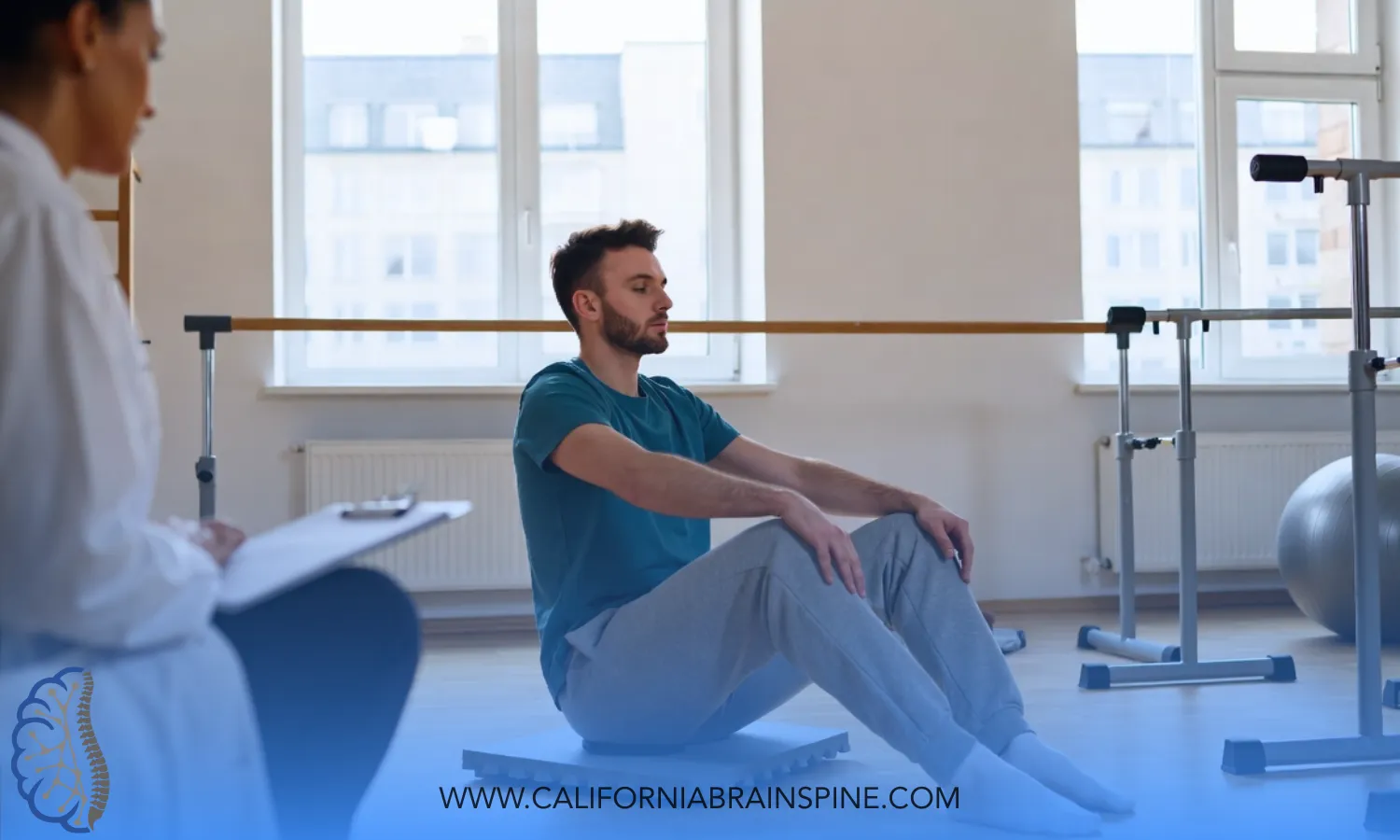
Vestibular rehabilitation and low impact balance training
Low impact balance training is a core part of rehabilitation for many patients. The goal is to build steadiness and confidence without pushing the body into exhaustion.
Typical elements include:
- Gaze stabilization exercises combined with gentle head movements
- Walking drills with change of direction, speed, and surface
- Standing tasks with eyes open and closed to train sensory integration
- Safe, low impact challenges that mimic daily life in Westlake Village environments
Vertigo after minor head injury care in Westlake Village benefits from this kind of structured balance training, especially for patients who also experience TBI related fatigue. Exercises are adjusted to the patient’s energy levels so that progress is sustainable, not a boom and crash cycle.
Supporting brain recovery with NeuroRevive and non invasive neurology therapies
In addition to traditional vestibular rehabilitation, California Brain & Spine Center may use non invasive neurology therapies to support brain and autonomic recovery. Depending on the case, this can include:
- Low Level Laser Therapy (LLLT) to support tissue healing and cellular energy
- Pulsed Electromagnetic Field (PEMF) therapy for neuromodulation and recovery
- Hyperbaric Oxygen Therapy (HBOT) in appropriate cases to support brain oxygenation
- GammaCore Vagus Nerve Stimulation for autonomic nervous system regulation
- The proprietary NeuroRevive Program, which combines these tools with targeted neuroplasticity exercises
These approaches are always applied in a scientific, individualized way, not as generic “add ons.” They are integrated into an overall plan that emphasizes function, safety, and measurable improvement over time.
The nervous system is not a fixed machine. With the right inputs and enough time, it can learn, adapt, and build new pathways for balance and calm.
Practical self care tips for living in Westlake Village with vertigo
Between appointments, daily choices can make a big difference. Patients seeking vertigo after minor head injury care in Westlake Village often benefit from simple, evidence informed strategies that reduce symptom spikes and support recovery.
Some examples include:
- Pacing activities: Break tasks into smaller blocks with short rest periods, especially when shopping or working at a screen.
- Visual hygiene: Reduce harsh glare, adjust screen brightness, and use larger fonts when reading.
- Hydration and nutrition: Maintain steady fluid intake and regular meals to support autonomic stability.
- Gentle movement: Completely avoiding head movement can delay recovery. Guided, gentle motion is often more helpful than strict immobilization.
- Sleep and routine: Regular sleep and wake times support brain healing and can reduce dizziness intensity for many people.
These are not a substitute for professional care, but they can support the work being done in clinic based vertigo and balance programs.
A real patient story: vertigo after a “simple” fall in Westlake Village
Some time ago, a patient from Westlake Village, let us call her M., came to see me after what was described as a “simple” fall at home. Her initial emergency room scan was normal, and she was told to rest. Yet for weeks she felt as if the ground was moving under her feet. Walking through the local supermarket made her dizzy. Turning in bed triggered a sudden spinning sensation. She started avoiding driving and felt more and more isolated.
When M. came to California Brain & Spine Center, we performed a detailed vestibular and neurological evaluation. We found two main issues: a form of BPPV causing positional vertigo, and a mild visual vestibular mismatch made worse by screen time and busy visual environments.
I explained to her that vertigo after minor head injury care in Westlake Village did not mean her life was over. It meant we needed a clear, stepwise plan. We treated the BPPV with precise repositioning maneuvers and designed a customized vestibular rehabilitation program with low impact balance training and vision balance coordination exercises.
Over the following weeks, M. gradually increased her activity. The intense spinning spells disappeared. Her sense of unsteadiness in stores decreased. She returned to driving short distances, then longer ones. Most importantly, she felt that she understood her body again and was no longer afraid of every small symptom.
Stories like M.’s are why I am committed to providing structured vertigo after minor head injury care in Westlake Village and the surrounding communities.
Your most common questions about vertigo after minor head injury care in Westlake Village
Q1: How long does vertigo after a minor head injury usually last?
There is no single timeline. Some patients improve within a few weeks, especially when BPPV is the main problem and is treated correctly. Others, particularly those with combined vestibular, visual, and autonomic involvement, may need several months of targeted care. What matters most is that your symptoms are not simply ignored as “stress” or “in your head,” but are evaluated with a clear plan for follow up and progression.
Q2: Do I always need imaging like MRI if I have vertigo after a minor head injury?
Not always, but it must be considered based on your specific case and red flag symptoms. If emergency physicians have already ruled out serious conditions and your symptoms are stable, the focus often shifts to detailed vestibular and neurological exams rather than repeated imaging. However, if there are new or worsening neurological signs, imaging may be necessary again.
Q3: Can vestibular rehabilitation make my vertigo worse?
Well designed vestibular rehabilitation uses controlled exposure. It may briefly increase symptoms during exercises, but the goal is to reduce symptoms over time by retraining your brain’s response to movement and visual input. When rehabilitation is carefully paced and personalized, the risk of long term worsening is low, and the potential for improvement is significant. Clear communication with your clinician helps fine tune the intensity.
Q4: What if my dizziness is mostly a feeling of “brain fog” and imbalance rather than spinning?
Vertigo after minor head injury care in Westlake Village covers a spectrum of experiences, including spinning, rocking, unsteadiness, and brain fog. Non spinning dizziness often points to issues in sensory integration, autonomic function, or cognitive load, rather than a pure inner ear problem. In these cases, NeuroSensory Integration, cognitive rehabilitation, and autonomic support strategies may be as important as classic vestibular exercises.
Q5: I have anxiety now because of my vertigo. Is that part of the problem?
Yes, and it is understandable. Living with unpredictable dizziness can naturally increase anxiety and hypervigilance. Anxiety can then increase muscle tension, alter breathing, and make symptoms feel even stronger. In care plans at California Brain & Spine Center, we recognize this interaction and may include breathing techniques, pacing strategies, and when appropriate, coordination with mental health professionals to break this cycle.
Q6: Do I need to live in Calabasas to receive care, or can I come from Westlake Village or other areas?
Many patients come from Westlake Village, Thousand Oaks, and across Southern California to seek vertigo after minor head injury care. The clinic is located in Calabasas, but care is structured so that in person visits are used efficiently, with clear home programs in between. The goal is to respect your time, energy, and travel while still providing high level neurological and vestibular care.
Conclusion: taking the next step in your recovery
Vertigo after a minor head injury can be one of the most unsettling experiences a person goes through. The world that used to feel stable can suddenly feel unreliable. If you live in or near Westlake Village, the combination of driving, screens, busy environments, and daily responsibilities can make the situation even more challenging.
I want you to know that vertigo after minor head injury care in Westlake Village is not about “just dealing with it.” It is about understanding which systems have been disturbed, using advanced yet non invasive evaluations, and building a personalized plan that includes vestibular rehabilitation, balance training, neuroplasticity based therapies, and practical self care strategies.
My team and I at California Brain & Spine Center in Calabasas are here to act as your guide, not your judge. You bring your story, your symptoms, and your goals. We bring clinical neuroscience, engineering level precision, and years of experience with complex dizzy and post concussion patients. Together, we work toward better balance, clearer thinking, and a calmer nervous system.
If you are ready to explore a structured, scientific, and compassionate approach to vertigo after minor head injury care in Westlake Village, I invite you to reach out. Contact our clinic, request an appointment, or schedule a personalized neurological and vestibular evaluation. Our goal is not only to manage individual symptoms, but to help you move toward the best version of your life and function, one steady step at a time.