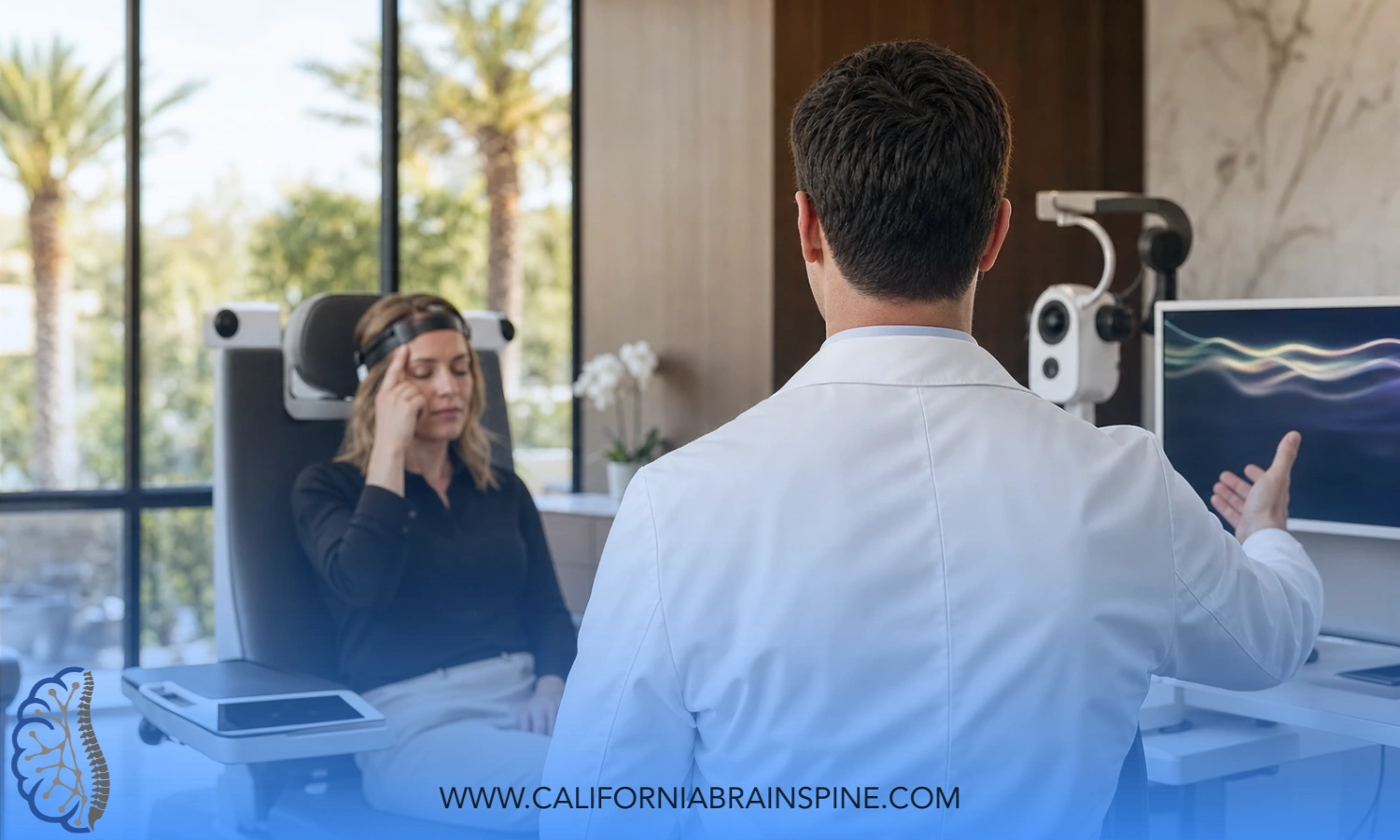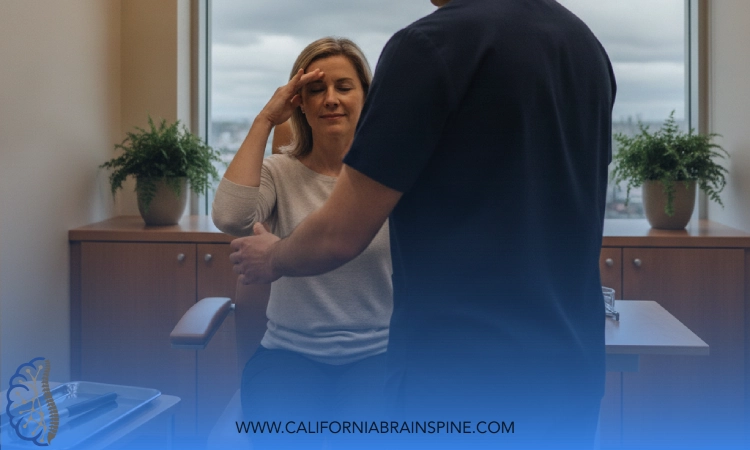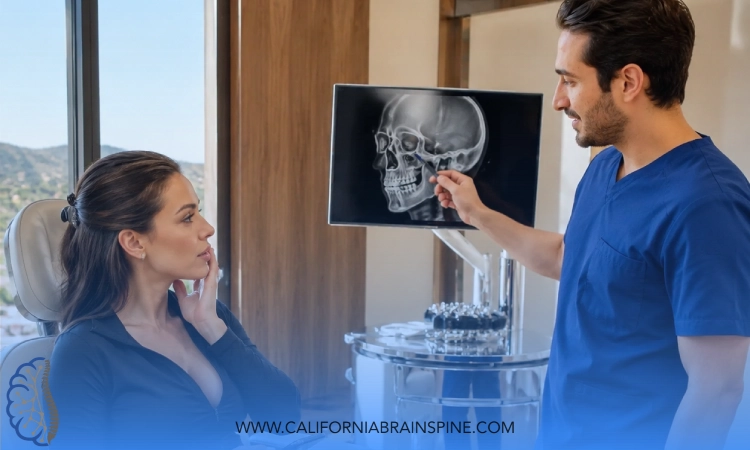

What vestibular migraine treatment involves, from the first careful diagnosis to the daily work, for people whose dizziness now sets the pace of the week.
Vestibular migraine treatment usually starts with getting the diagnosis right. It then works on two fronts: the triggers that set episodes off, and the gaze and balance systems that have become easy to overwhelm. Medication can be part of it. When it is, that decision belongs to medical neurology or your primary care physician.
I am Dr. Alireza Chizari, DC, DACNB, a board-certified chiropractic neurologist, and at California Brain & Spine Center in Calabasas I approach vestibular migraine through functional neurology: a long, careful evaluation first, then a plan built from what that evaluation finds.
If you are reading this, the headache may be the smaller part of your problem. The kitchen seems to sway while you stand still. Turning your head too fast in the car brings a wave of nausea. You sit through a meeting holding very still so nobody notices, then drive home on the 101 more carefully than you used to. Your scans may have come back normal, and you have started to wonder whether you are imagining it.
You are not. Vestibular migraine is a clinical diagnosis made from your history, and testing is mainly there to rule other conditions out, so a clean scan does not settle the question either way (Vestibular Disorders Association).
This guide covers how vestibular migraine is diagnosed, what vestibular migraine treatment involves, where vestibular rehabilitation fits, what medication questions belong with your physician, and what you can do between appointments. If you came looking for the side-by-side with ordinary migraine, that lives in a separate article on vestibular migraine vs regular migraine.
Key takeaway
Vestibular migraine can cause vertigo and dizziness with little or no headache. It is diagnosed from your history after other causes are ruled out. Vestibular migraine treatment may combine trigger tracking, vestibular rehabilitation and, where needed, medication managed by medical neurology or your primary care doctor. The sensible next step is a careful evaluation.
What is vestibular migraine treatment, and what does it involve?
Usually, vestibular migraine treatment combines three things: a careful diagnosis that rules out other causes of dizziness, day-to-day trigger management, and vestibular rehabilitation that trains gaze stability and balance. Medication, when it is needed, is prescribed through medical neurology or primary care. The evidence is still developing, so the plan is fitted to the person.
That answer is short on purpose. Each part gets its own space below, because the order of vestibular migraine treatment matters as much as the parts themselves.
Why the diagnosis comes before any treatment
No single scan or blood test confirms vestibular migraine. The joint criteria from the Bárány Society and the International Headache Society describe a diagnosis based on recurrent vestibular symptoms, a history of migraine, a link in time between the dizziness and migraine symptoms, and the exclusion of other causes of vestibular symptoms (Lempert and colleagues, Journal of Vestibular Research).
That last condition does a lot of work. Dizziness can come from more than one place, and some of those places need a different kind of care entirely. So the first stretch of vestibular migraine treatment is a sorting job: making sure the dizziness is what it looks like before anyone starts treating it.
How the plan works on several fronts
The Vestibular Disorders Association describes vestibular migraine treatment as a multidisciplinary plan that may combine lifestyle changes, medication, nutraceuticals, vestibular rehabilitation and attention to other conditions that travel with it. No one piece of vestibular migraine treatment carries the whole load.
Trigger tracking shows you what tends to set episodes off. Rehabilitation trains how your eyes and balance cope with movement. Medication and supplements, when they are on the table, are a prescribing physician's decision. My part sits mostly in the first two, and in keeping the pieces working together.
What does vestibular migraine feel like when there is no headache?
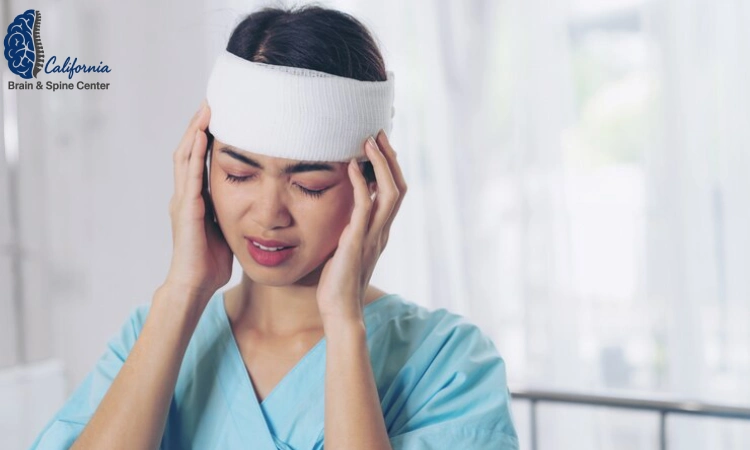
This is the question behind a lot of late-night searching. A large share of people with vestibular migraine have no headache with their episodes at all; vertigo or dizziness is the main symptom (Vestibular Disorders Association). That catches people off guard, because the word migraine has taught everyone to expect pain.
Vestibular migraine is a form of migraine in which vertigo or dizziness is the main symptom, with or without a headache alongside it. That matters for vestibular migraine treatment, because the thing being treated is the dizziness.
Under the international criteria, the symptoms that count include various kinds of vertigo, and dizziness brought on by head movement with nausea, of moderate or severe intensity, in episodes lasting anywhere from 5 minutes to 72 hours (Bárány Society and International Headache Society criteria). The Vestibular Disorders Association describes vestibular migraine as one of the most common neurological causes of vertigo in adults, which is worth knowing if you have been made to feel like an unusual case.
In ordinary life that might be a room that seems to drift while you sit still, nausea when you turn your head to check a blind spot, or a trip through a brightly lit store that you cut short without quite being able to say why. None of it shows on your face. That is part of what makes it so lonely to live with.
If you were told it cannot be migraine without a headache
The criteria ask for a history of migraine and a link in time between the dizziness and migraine symptoms. They do not ask that your head hurt during every dizzy spell, and many people with vestibular migraine have no headache with their episodes. It is a fair point to raise with whoever is evaluating you.
How is vestibular migraine diagnosed?
Mostly by listening. Because vestibular migraine is a clinical diagnosis, the history carries more weight than any single test, and the history is where vestibular migraine treatment really begins. I want to know when the dizziness started, what it actually feels like, how long an episode lasts, what comes with it, what seems to set it off, and whether you have had migraine before. The timing between the dizziness and any migraine symptoms gets particular attention, since that link in time is one of the things the criteria look for.
At California Brain & Spine Center, that conversation is part of a 120-minute neurodiagnostic assessment. Alongside the history, the examination looks at how your eyes, your balance and your head movement work together, because those are the systems vestibular rehabilitation trains later on. The aim is to understand the pattern, and to notice anything that does not fit it.
Anything that does not fit is where the exclusion part of the criteria comes in. Testing is often used to rule out other conditions, and if something in your history or examination points away from vestibular migraine, the right next step may be medical neurology, ENT or your primary care physician. I work alongside those clinicians, and a referral in the right direction is part of doing this properly.
If you already have records, bring them. A clean MRI, a hearing test, notes from an ENT visit: each one narrows the field, and nothing you have already been through is wasted.
What triggers vestibular migraine attacks?
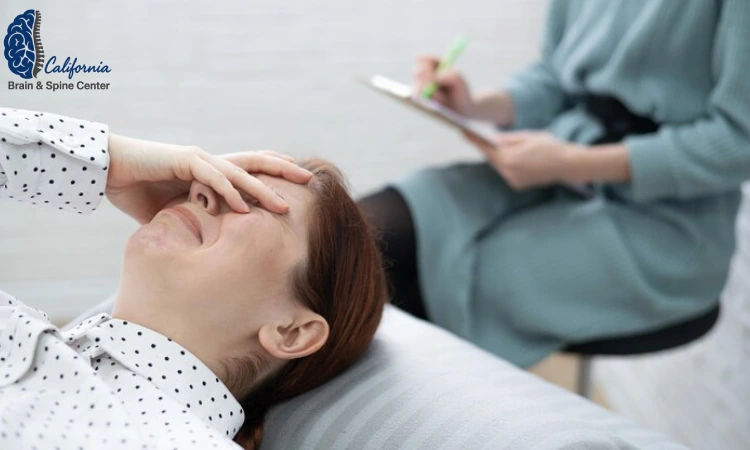
Often the same things that trigger other migraine. The Vestibular Disorders Association lists stress, weather changes, menstruation, irregular sleep, missed meals, dehydration, bright lights, loud noise and motion sickness among the typical triggers that provoke vestibular migraine attacks.
Some of those you can influence and some you cannot. Nobody controls the Santa Ana winds or a hormonal cycle. Sleep timing, meals and water are usually more within reach, which is why trigger work tends to start there, and why vestibular migraine treatment usually includes some version of it.
Why a trigger journal is worth the effort
The American Migraine Foundation advises people affected by vestibular migraine to notice their triggers. A short daily note is enough. Patterns that feel random from inside a bad week often become visible on paper, and that record is one of the more useful things you can bring to an evaluation.
- The date, the time an episode started and roughly how long it lasted
- How you slept the night before and when you last ate
- How much water you had, and whether the day brought stress, travel, screens or bright light
- Where you were in your cycle, if that applies to you
Is dizziness setting the pace of your week?
A careful evaluation in Calabasas can sort out what is driving it and what a sensible vestibular migraine treatment plan looks like for you.
How does vestibular rehabilitation for vestibular migraine work?
Vestibular rehabilitation is exercise-based training for the systems that keep you steady, and it is one of the main tools in vestibular migraine treatment. For vestibular migraine it typically consists of repeated training of two reflexes: the vestibulo-ocular reflex, which keeps your vision stable while your head moves, and the vestibulo-spinal reflex, which supports balance and posture.
Gaze stability work
Gaze stability exercises ask you to keep a target clear while your head moves. It sounds simple. It often feels anything but, which is why the starting point is chosen with care and moved forward gradually, based on how you respond from one session to the next.
Balance, walking and busy environments
Balance work trains the vestibulo-spinal side. Reviews of vestibular migraine care describe a wider toolkit that can include habituation exercises, gait retraining and sensory re-weighting tasks, in which you practice relying on different senses to stay balanced (Zanandrea and colleagues).
At the practice, this sits within neurological rehabilitation and is offered, when clinically appropriate, after evaluation. The exercises are picked for your pattern. Someone whose worst moments come in the car needs a different starting point from someone who struggles in open, crowded spaces.
What the evidence says so far
One systematic review and meta-analysis found that vestibular rehabilitation was associated with a clinically meaningful reduction in dizziness-related disability in adults with vestibular migraine, though differences between the included studies limit how far that result can be generalized (El Ahdab and colleagues, Headache). That makes it a promising option, with evidence that is still developing.
Some reviews lean further toward caution and position rehabilitation mainly for people who still have frequent episodes despite optimal medical treatment (Zanandrea and colleagues, Vestibular Migraine Therapy: Update and Recent Literature Review). Read together, the literature places rehabilitation alongside medical care in vestibular migraine treatment. That is how I use it.
People often ask how long this part takes. There is no single honest figure, and the factors that shape it are laid out in how long vestibular therapy takes.

Where does medication fit in vestibular migraine treatment?
Medication decisions, acute or preventive, belong with medical neurology or your primary care physician. I do not prescribe, and nothing in this article recommends a specific drug. What I can do is make sure your prescribing physician has a clear picture of your pattern, which can help them weigh their options.
It also helps to know the state of the research. A literature review concluded that the overall evidence base for vestibular migraine treatment remains sparse, with most studies of low quality, and that includes preventive medication (Vestibular Migraine Therapy: Update and Recent Literature Review). That is an honest reason a first plan is often adjusted: the research cannot yet say with confidence which approach suits which person.
You may also have read about non-drug neuromodulation devices. The practice has a page on gammaCore that describes the device. Whether any device fits your situation is a question for your evaluation and your prescribing physician, and I make no claim here about its role in vestibular migraine.
Supplements sit in the same place. The Vestibular Disorders Association mentions nutraceuticals as one possible part of a multidisciplinary plan, and like medication they are worth running past the physician who knows your full history and everything else you take.
Is this typical vestibular migraine, or something to check more closely?
Here is how I think about the pattern during an evaluation for vestibular migraine treatment. The first column describes what often fits vestibular migraine. The second describes what should prompt a closer look or, in some cases, emergency care. The third is what the assessment focuses on.
| Often fits vestibular migraine | Needs a closer look or urgent care | What the evaluation looks at |
|---|---|---|
| Episodes of vertigo, or dizziness with nausea brought on by head movement | Dizziness, loss of balance or trouble walking that comes on suddenly | How episodes start, how long they last and what comes with them |
| Mild headache, no headache, or headache in only some episodes | A sudden, severe headache | Your migraine history, past and present |
| Episodes that tend to follow sleep loss, missed meals, stress, hormonal shifts, bright light or motion | Symptoms that another condition could explain, which has to be ruled out first | Your trigger journal and the timing between dizziness and migraine symptoms |
| Motion sensitivity, for example as a passenger in a car | Sudden numbness or weakness on one side of the body | Balance, posture and walking |
| Standard tests that come back normal, since the diagnosis is clinical | Sudden trouble speaking or seeing | Gaze stability while the head moves |
When dizziness is an emergency
If symptoms come on suddenly or severely - a sudden severe headache, weakness, trouble speaking, vision loss, or fainting - that is an emergency. Call 911 or go to an emergency room, not a clinic appointment.
Dizziness needs particular care here. The CDC lists sudden trouble walking, dizziness, loss of balance or lack of coordination among the signs of stroke, especially alongside sudden numbness or weakness on one side, trouble speaking, trouble seeing or a sudden severe headache (CDC, Signs and Symptoms of Stroke). If that sounds like what is happening, do not wait to see whether it passes.
Where can I get vestibular migraine treatment near Calabasas?
California Brain & Spine Center is at 4768 Park Granada, Suite 107, in Calabasas. If you live in Hidden Hills or anywhere along the 101, the practice is a short drive, and the process is the same for everyone: a detailed history and a 120-minute neurodiagnostic assessment, followed by a written plan that explains what the assessment found and what comes next.
Vestibular migraine treatment here is built around functional neurology and neurological rehabilitation, and it works alongside the rest of your care. If you already see a primary care physician, medical neurology or an ENT, I would rather coordinate with them than duplicate what they are doing. That collaboration is part of the plan from the first visit.
The first visit is also where the honest conversation happens: what vestibular rehabilitation for vestibular migraine can reasonably be expected to help with, where the evidence is still thin, and which parts of your vestibular migraine treatment should stay with other clinicians.

What can you do between appointments?
Quite a lot, as long as it stays sensible. The everyday side of vestibular migraine treatment is unglamorous, and it is where you have the most say.
Start with the triggers that are within reach. Regular sleep and wake times, meals without long gaps, and enough water through the day each target a trigger on the Vestibular Disorders Association's list. Bright light and loud noise are on that list too, so it can make sense to turn screen brightness down and give yourself quieter stretches on heavy days.
- Keep the trigger journal going on good days as well, so the comparison is fair
- Protect a consistent wake time, weekends included
- Carry water and something to eat when you know the day will run long
- Write down what you tried and what seemed to make a difference, for your next visit
One thing I would hold off on is copying a vestibular exercise routine from a video. The right starting point differs from person to person, and it is something to set after an evaluation, once other causes of dizziness have been ruled out.
And on a rough day, go easier on yourself. A bad stretch is part of the pattern you are tracking, and the journal entry for that day still counts as useful information for your vestibular migraine treatment plan.

Questions about vestibular migraine treatment
Can vestibular migraine treatment help if I never get a headache?
It may. Many people with vestibular migraine have little or no headache during episodes, and the diagnostic criteria focus on the dizziness, your migraine history and the timing between them. Vestibular migraine treatment is then aimed at the dizziness itself, through trigger work, vestibular rehabilitation and, where a physician decides it fits, medication.
Is vestibular rehabilitation for vestibular migraine safe to start on my own?
I would not start on your own. The exercises in vestibular rehabilitation for vestibular migraine, gaze stability and balance training, are chosen and paced after an evaluation, because other causes of dizziness have to be ruled out first and the right starting point differs from person to person.
How long does vestibular migraine treatment take?
There is no honest fixed answer. It depends on how often episodes come, what sets them off, what else is going on, and how the plan is adjusted along the way. The published evidence on vestibular migraine treatment is still limited, so I describe the process and the checkpoints rather than promise a date.
Where can I find vestibular migraine treatment in Calabasas?
California Brain & Spine Center is at 4768 Park Granada, Suite 107, in Calabasas, close to Hidden Hills and the 101. Care starts with a 120-minute neurodiagnostic assessment. Where medication or other specialist input is needed, I work alongside your primary care physician, medical neurology or ENT.
Can vestibular migraine treatment prevent every episode?
No plan can promise that. The goal of vestibular migraine treatment is to reduce how much the episodes run your life, through trigger work, vestibular rehabilitation and, where appropriate, physician-managed care. Some triggers, such as weather changes and menstruation, cannot be avoided, which is part of why the plan has more than one piece.
A last word from me
If dizziness has taken over more of your life than you let on, I understand how tiring it is to keep performing through it. Vestibular migraine treatment starts with a careful, unhurried look at the whole pattern and continues as a plan you understand and can adjust as you go. I would be glad to be part of that.
You can read more about how the practice works on the California Brain & Spine Center home page, or book directly through the online booking page.
California Brain & Spine Center | (818) 649-5300 | Calabasas, CA 91302
This content is for educational purposes only and is not medical advice. Consult a qualified healthcare provider about your specific situation.
Ready to understand your dizziness?
Start with a complimentary consultation in Calabasas and leave with a clear picture of your vestibular migraine treatment options and what comes next.