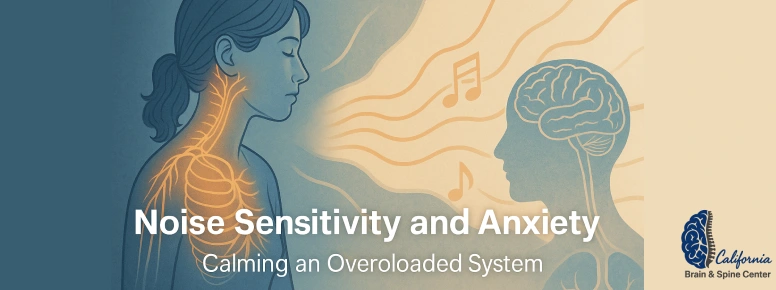
When ordinary sound starts to feel like too much, it deserves a careful explanation before anyone calls it nerves.
Everyday sound can start to feel too loud when your tolerance for ordinary noise drops, and anxiety can be part of that change without being the whole explanation. Knowing which is which changes what you do next.
If the dishwasher makes you flinch, a busy restaurant leaves you wrung out for the evening, and someone has already told you it is probably stress, this is written for you. Noise sensitivity anxiety is what many people type into a search bar once sound and worry start feeding each other. I am Dr. Alireza Chizari, DC, DACNB, and in my functional neurology practice at California Brain & Spine Center in Calabasas, the people who describe this to me are usually still working, still driving the 101 to the office, still showing up, and spending a large share of their energy just getting through the noise.
Key Takeaway
When sound and worry feed each other, ordinary sound feels uncomfortably loud and the discomfort feeds worry. In hyperacusis, a reduced tolerance to everyday sound, reactions can include fear and anxiety, and sound sensitivity is among the primary physical symptoms described after concussion. An evaluation looks for the drivers first. The next step is an assessment, not more avoidance.
Is noise sensitivity anxiety, or is something else going on?
Sometimes, and it is worth checking what else is involved. Noise sensitivity anxiety is a recognisable pattern: in hyperacusis, a reduced tolerance to everyday sound, reactions are often not purely auditory and can include fear, anxiety and stress. Sound sensitivity is also among the primary physical symptoms described after concussion, so an evaluation looks for that driver too.
When anxiety is part of the picture
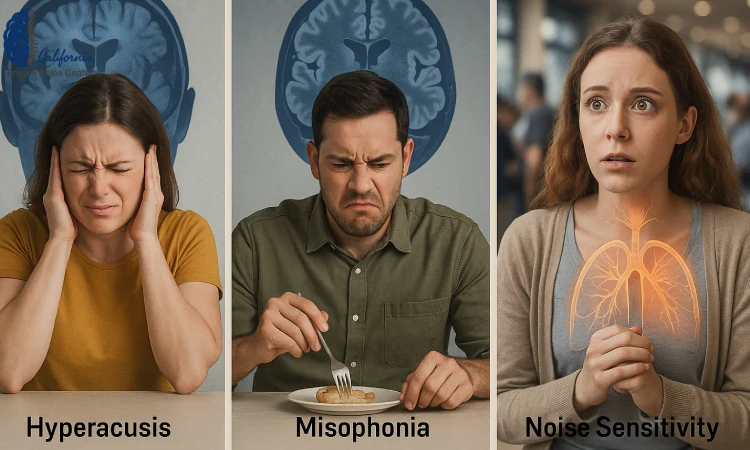
Hyperacusis is commonly defined as reduced tolerance to sounds that most people perceive as normal, or that the person themselves found normal before it began, according to a recent scoping review of sound therapy for hyperacusis. Nothing in that definition says the problem is imagined.
The reaction to sound in hyperacusis often goes beyond hearing. Researchers describe responses that can include annoyance, fear, anxiety, stress and physical pain. The National Institute on Deafness and Other Communication Disorders notes that stronger connection and activity between the brain's hearing areas and the areas for emotion, memory, attention and arousal may contribute to the anxiety or fear seen in sound-tolerance disorders. That is the loop between sound and worry, and it is worth naming plainly because it is also the part people tend to feel embarrassed about.
When something in the nervous system is driving it
Sound sensitivity that began after a head injury, or that shows up alongside dizziness, raises a different set of questions. Head injury is among the recognised causes of hyperacusis, so in those situations I want to know what else is going on in the nervous system before anyone settles on anxiety as the explanation. Both can be present at once, and the order in which they are looked at matters.
What does noise sensitivity feel like day to day?
Hardly anyone describes it in clinical language. They describe the grocery store at five in the evening, the open-plan office on a deadline day, a gym class whistle, the restaurant where every table is talking at once. Sound that other people treat as background can feel uncomfortably loud, sometimes painful, and the rest of the day pays for it.
The effects are reported to reach sleep, concentration and psychological well-being, and so quality of life. Then comes the part that is hard to talk about. You start bracing before the sound arrives. You turn down invitations. You get good at sitting near the door. From the outside it can look like worry, and from the inside it feels like protecting yourself from something that genuinely hurts.
What a normal hearing test does and does not tell you
A normal hearing test tells you something useful about how your ears detect sound. It leaves open why ordinary sound has become hard to tolerate, and that is still a fair question to bring to an evaluation. Hearing that your tests are normal can be a relief and a frustration at the same time.
Is it all everyday sound, or only certain sounds?
Hyperacusis, as defined above, is about reduced tolerance to everyday sounds in general, the kind most people hear as normal. So it is worth asking yourself a plain question before you come in: is it everyday sound in general that feels like too much, or is it particular sounds?
I would not try to answer that from an article. Bring your answer to the evaluation, because it changes the questions that come next and which other clinicians may need to be involved.

Why does sound feel too loud after a concussion or with vestibular migraine?
Two recognised patterns connect sound sensitivity to conditions this practice evaluates, and each one changes the questions worth asking.
Sound sensitivity after a concussion
Sensitivity to sound, whether called phonophobia or hyperacusis, is among the primary physical symptoms of concussion, alongside light sensitivity, according to a paper in Scientific Reports. The same paper reports animal research in which altered processing in circuits linking the senses and emotion made neutral sounds take on threatening properties after brain injury, and the authors suggest this may help explain why brain injury and PTSD often occur together.
In a small study of athletes after a sport-related concussion, fifty percent (14 of 28) reported sensitivity to sounds, and the authors pointed to changes in the brain's auditory processing rather than damage to the ear. For a parent watching a teenager wince in a loud cafeteria after a hit on the field, that matters: the symptom is recognised, and it belongs in the conversation about recovery.
Sound and worry may also be linked over time. In a study of older adults after mild traumatic brain injury, noise hypersensitivity soon after the injury was associated with anxiety symptoms later on. It is one study in one age group, and it is a reason to ask about sound early rather than a forecast for any one person.
Vestibular migraine: dizziness and sound together
In vestibular migraine, dizziness episodes are frequently accompanied by migraine features, most often sensitivity to light and sound (photophobia and phonophobia), in a study of patients diagnosed under the Bárány Society and International Headache Society criteria. It is one reason a dizziness history and a sound history belong in the same evaluation, even when only one of them brought you in.
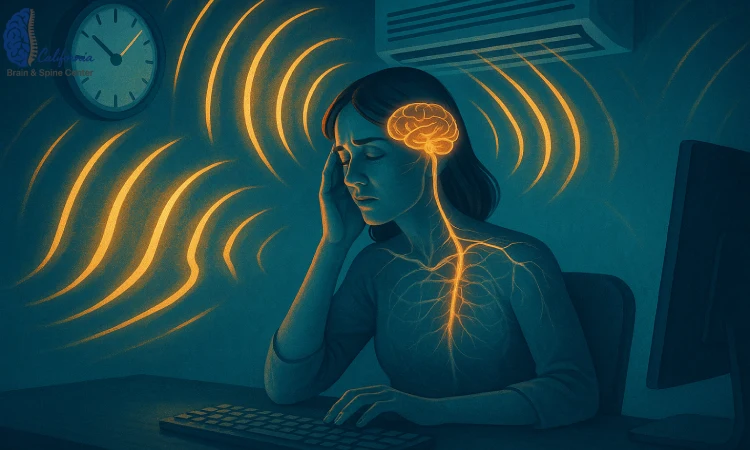
Sound sensitivity after a concussion or with dizziness deserves a proper look
A neurodiagnostic assessment in Calabasas looks at your concussion history, dizziness, balance and eye movement alongside your sound symptoms, before anything is recommended.
What should an evaluation for noise sensitivity look at?
Dr. Alireza Chizari, DC, DACNB, approaches sound sensitivity the way an engineer approaches a system that is misbehaving: map the inputs, check each one, then decide what to change. The 120-minute neurodiagnostic assessment is built around that order. The table below shows how the questions sort out in practice.
| Typical presentation | Patterns that suggest something more | What the evaluation looks at |
|---|---|---|
| Everyday sound feels uncomfortably loud in busy places | The sensitivity began after a blow to the head | Concussion history and the other symptoms that followed it |
| Noise and dizziness arrive together | Episodes of vertigo or spinning, with light sensitivity or headache | Vestibular and eye-movement testing, and whether migraine features travel with the episodes |
| Sound is harder to bear on bad-sleep or low-focus days | Sleep and concentration slipping along with sound tolerance | How far the sound symptoms reach into daily function |
| Bracing for noise and turning down plans | Avoidance that keeps growing | The anxiety and avoidance loop, with referral to a psychologist when appropriate |
| Discomfort at volumes others find normal | Hearing loss, ear fullness or ringing that changes | Referral to audiology or ENT, and emergency care for any sudden hearing loss |
Some of those questions sit outside functional neurology, and the evaluation says so. Hearing itself is assessed by audiology or ENT, anxiety may call for a psychologist, and a medical question goes to primary care or medical neurology. California Brain & Spine Center works alongside those clinicians rather than in place of them.
What helps with noise sensitivity anxiety?
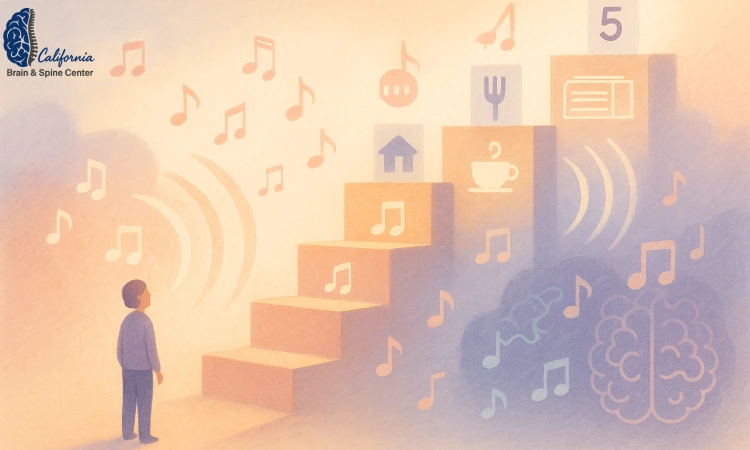
Hyperacusis often involves avoiding sound, and one option studied for that is cognitive behaviour therapy. In a randomized controlled trial of cognitive behaviour therapy for hyperacusis, the therapy group improved on sound tolerance and several other measures, though not on the anxiety scale, and the authors call it promising while saying more research is needed.
Sound therapy is another. Some people with mild loudness hyperacusis improve with sound therapy that uses very soft broadband sound to build tolerance, while people whose sound sensitivity is painful may find the same approach makes it worse. Which of those describes you is a question for an evaluation, not for a general article.
At California Brain & Spine Center, care may include, when clinically appropriate after evaluation, neurological rehabilitation. What is recommended depends on what the evaluation finds, and when it points to anxiety, hearing or a medical cause, the referral to the right clinician is part of the plan.
When a sound symptom is an emergency
If symptoms come on suddenly or severely - a sudden severe headache, weakness, trouble speaking, vision loss, or fainting - that is an emergency. Call 911 or go to an emergency room, not a clinic appointment.
Sudden hearing loss belongs in the same category. The NIDCD advises treating sudden deafness as a medical emergency and seeing a doctor immediately, rather than booking a clinic appointment or waiting it out.
Getting noise sensitivity evaluated in Calabasas and Agoura Hills
The Calabasas office sits on the 101, a short drive from Agoura Hills and the rest of the West Valley, which matters when a noisy commute is part of the problem. Before you come in, a week of simple notes helps: which places were hardest, whether headache or dizziness came along, and how long it took to settle afterwards.
If you are still weighing where to go, I have written about what I think a patient-centered neuro clinic should offer, which may help you ask good questions wherever you end up.

Questions about noise sensitivity and anxiety
Is avoiding sound part of noise sensitivity anxiety?
Often, yes. Hyperacusis often involves avoiding sound, which is part of why noise sensitivity anxiety can shrink a person's week. In one randomized trial, cognitive behaviour therapy improved sound tolerance, though not the anxiety scale, and the authors call it promising with more research needed. An evaluation can help decide whether it fits you.
Is sound sensitivity after a concussion common?
It is among the primary physical symptoms described after concussion, alongside light sensitivity. In one small study, half of the concussed athletes reported sensitivity to sounds, and the authors pointed to how the brain processes sound rather than the ear. If it appears alongside headaches or dizziness, mention both together at your evaluation.
Why do sound sensitivity and dizziness come together?
In vestibular migraine, dizziness episodes are frequently accompanied by migraine features, most often light and sound sensitivity. If your sound symptoms peak during dizzy spells, that pattern is worth recording. It points the evaluation toward vestibular migraine as one possible driver rather than treating the sound problem as worry alone.
Should I see an audiologist or ENT for noise sensitivity?
Often, yes. Hearing itself is assessed by audiology or ENT, and that belongs early in working out noise sensitivity anxiety. Sudden hearing loss should be treated as a medical emergency and seen by a doctor immediately, not waited out. A functional neurology evaluation then looks at the concussion and vestibular side.
Where can I get noise sensitivity anxiety evaluated near Calabasas?
California Brain & Spine Center in Calabasas offers a 120-minute neurodiagnostic assessment that looks at concussion history, dizziness and balance alongside your noise sensitivity anxiety symptoms. It sits on the 101, a short drive from the rest of the West Valley, and you can start with a complimentary consultation at (818) 649-5300.
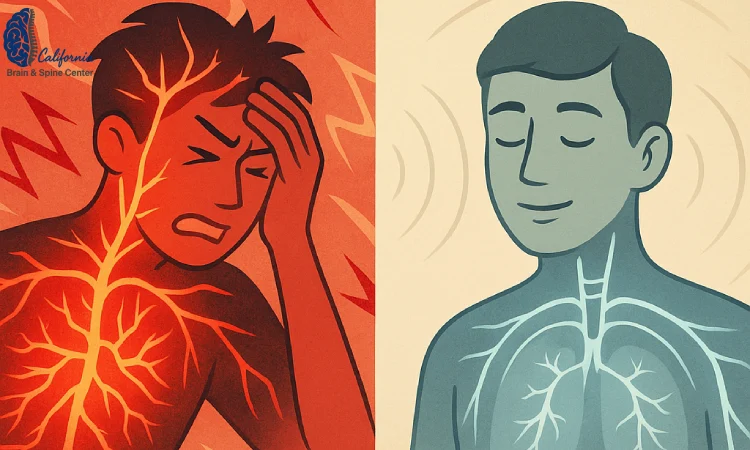
If sound has started to shape where you go and how you spend your evenings, you do not have to accept "it is probably stress" as the final word. Noise sensitivity anxiety is real, anxiety can be part of it, and a concussion or vestibular migraine can be part of it too. My job is to help you find out which pieces apply to you, and to send you to the right clinician elsewhere when a piece sits outside functional neurology.
California Brain & Spine Center | (818) 649-5300 | Calabasas, CA 91302
Booking is online at californiabrainspine.janeapp.com, or by phone if you would rather talk it through first.
This content is for educational purposes only and is not medical advice. Consult a qualified healthcare provider about your specific situation.
Ready to find out what is driving the noise?
Start with a complimentary consultation at California Brain & Spine Center in Calabasas. The conversation covers your history and whether an evaluation makes sense for you.