Therapy for Vertigo: Best VRT Exercises
When the world tilts without warning, life shrinks. You may avoid grocery aisles, step off escalators with fear, or turn your head more slowly than you used to. Here’s the encouraging truth: with the right plan, your brain can retrain how it processes balance signals. That plan is called vestibular rehabilitation therapy and in everyday language, it’s simply Therapy for Vertigo done through targeted, repeatable exercises. As a neurology specialist who has coached many people through this process, I’ll walk you through what to do, what to expect, and how to stay confident from day one.
This guide explains what’s going on in your inner ear and brain, exactly which exercises to start, how to structure your week, and how to measure progress. You’ll find that Therapy for Vertigo is less about “pushing through” dizziness and more about gentle, precise exposure that helps your brain adapt.
Why Therapy for Vertigo Works: Your Brain’s Ability to Adapt

Your balance system blends inputs from three places: the inner ear (vestibular organs), vision (eyes), and proprioception (joints and muscles). When one piece is disturbed after a virus, a mild concussion, aging changes, migraine, or benign paroxysmal positional vertigo (BPPV) signals don’t line up. The result can be spinning, rocking, or a “floating” sensation.
Therapy for Vertigo uses neuroplasticity. By carefully repeating specific movements, you teach your brain to:
Compensate for a weaker ear,
Adapt the vestibulo-ocular reflex (VOR) so eyes stay steady while the head moves, and
Habituate to triggers so the same movements provoke less dizziness over time.
This is not about doing random balance drills. The heart of Therapy for Vertigo is consistency, progressive challenge, and measured rest short sessions, multiple times a day, with gradual increases.
Safety First: When to Pause Home Exercises and Seek Care
While most people can safely begin Therapy for Vertigo at home, stop and seek medical care if you have:
Continuous spinning that doesn’t settle with stillness
New weakness, numbness, slurred speech, double vision, or severe imbalance
A new, severe headache or recent head/neck trauma
Sudden hearing loss or a feeling of ear blockage that’s new
If none of these apply, it’s reasonable to start with the basic program below. If you have neck or back concerns, modify ranges gently and move slowly.
Where Canalith Repositioning Fits In Your Vertigo Therapy Plan
In this clip you learn how BPPV related vertigo can often be improved quickly with specific canalith repositioning maneuvers. For many patients this is the first step before adding vestibular rehabilitation exercises. At California Brain and Spine Center we use a structured approach that may include repositioning maneuvers, gaze stability work, balance drills, and neuro based rehab so your vertigo care plan is built on the exact mechanism causing your symptoms.
How to Use This Program
Frequency beats intensity. Short sessions (5–10 minutes), 2–3 times daily.
Mild symptoms are expected. Aim for a 3–5/10 dizziness spike during exercises that settles within a few minutes of rest.
Track your triggers. Noting which movements spark symptoms helps fine-tune Therapy for Vertigo to your needs.
Progress weekly. Increase speed, range, surface challenge, or visual complexity in small steps.
Core Pillars of Therapy for Vertigo

1) Gaze Stabilization (VOR x1 and VOR x2)
These build the reflex that keeps your eyes stable when your head moves. They’re foundational in Therapy for Vertigo.
VOR x1 (beginner → intermediate)
Hold a target at arm’s length (a letter on a sticky note or your thumb).
Keep eyes fixed on the target.
Move your head horizontally at a comfortable speed for 30 seconds. Rest 30–60 seconds.
Repeat vertically for 30 seconds.
Do 3 sets each direction, 2–3 times/day.
Progress by: moving faster while the target stays clear, enlarging head range, or performing while standing.
VOR x2 (intermediate → advanced)
Same as above, but move the target in the opposite direction of your head (head right, target left).
Start with 20 seconds, rest, and repeat 3 sets each direction.
Progress by standing on a firm surface, then foam, then adding a busy background (striped wall, patterned TV screen with sound off).
Coaching tip: If the target blurs, slow down. Clarity is the metric of success in Therapy for Vertigo, not bravado.
Home vertigo exercises can be a powerful first step, but many patients with long standing symptoms also struggle with overall unsteadiness while walking, especially on uneven ground or in low light. If you notice that you still feel wobbly even between vertigo episodes, you may benefit from a more comprehensive rehab plan. Our article on the program for chronic unsteady walking in Malibu explains how we combine VRT with gait training, sensory integration, and brain based rehab to rebuild confidence step by step.
2) Habituation Drills for Motion Sensitivity

When certain moves like looking up, rolling in bed, or bending keep triggering symptoms, we desensitize you with habituation. This is a core part of Therapy for Vertigo when dizziness is provoked by repeatable head or visual motions.
Pick 2–4 triggers from your daily life. For each trigger:
Perform the movement 5–10 times in a row, or until your dizziness peaks at a tolerable level.
Rest until symptoms settle back near baseline (usually 1–2 minutes).
Complete 2–3 rounds, 1–2 times/day.
Examples: Looking up/down at a shelf, turning the head quickly left/right in a chair, rolling right/left in bed, or scanning a patterned background.
Goal: Over days, the same movement should provoke less dizziness and resolve faster a reliable sign Therapy for Vertigo is working.
3) Balance and Proprioception Training

Balance challenges teach your body to rely on the right inputs at the right time. In Therapy for Vertigo, we start easy and layer complexity.
Level A (foundation)
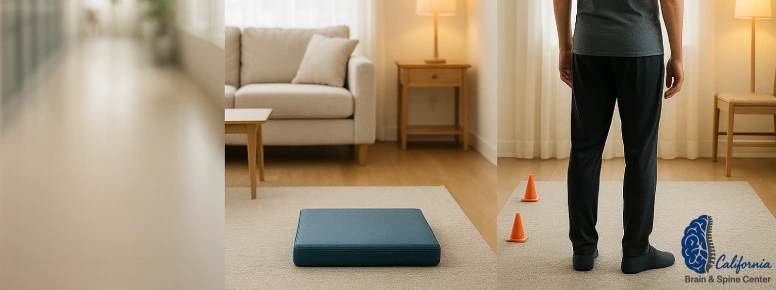
Feet together, eyes open, firm floor: 30–60 seconds x 3
Semi-tandem (one foot slightly ahead), eyes open: 30–60 seconds x 3
Tandem (heel-to-toe), eyes open near a counter: 20–40 seconds x 3
Level B (progression)
Repeat all three with eyes closed (safety first stand near support).
Add head turns: slow “no-no” and “yes-yes” while holding each stance.
Try foam or a folded exercise mat to decrease surface feedback.
Level C (advanced)
Single-leg stance 10–20 seconds x 3 each side
Tandem on foam 15–30 seconds x 3
Add dual tasks: count backwards by 3s, recite days of the week, or gently toss/catch a ball while maintaining stance.
Perform balance work once daily (10–15 minutes). In Therapy for Vertigo, these drills are like strength training for your balance circuits steady, repeatable, and progressive.
4) Dynamic Gait: Take Your Balance on the Road

Walking drills integrate your gains into real movement. This is the bridge between structured Therapy for Vertigo and everyday confidence.
Walk with head turns (hallway): every 3 steps, turn head right-left, then up-down; 5 hallway lengths.
Tandem walk (heel-to-toe on a line): 5–10 steps x 3 passes.
Figure-8 walk around two cones or chairs: 2 minutes.
Obstacle step-overs (books or foam blocks): 10 passes.
Eyes-on-target walk: walk while keeping your eyes fixed on a letter posted ahead; 3 passes.
Do dynamic gait 3–4 times/week. It’s the “real world” portion of Therapy for Vertigo, where your brain learns to stay steady amid motion and distraction.
5) Visual and Optokinetic Tuning
Busy visuals (supermarket aisles, scrolling screens) can provoke symptoms. We tame that with graded exposure inside Therapy for Vertigo.
Start by tracking a slow-moving object across your visual field (a metronome arm, a moving finger) for 60–90 seconds.
Progress to watching videos with patterned motion (muted) for 1–2 minutes, then 3–4 minutes, keeping symptoms in the 3–5/10 range.
Add head micro-movements while watching tiny nods or turns to train your visual-vestibular team to cooperate again.
DIY exercises are useful, but they cannot replace a full evaluation of how your eyes, inner ears, and brain are working together. In our vestibular rehabilitation program we use precise testing to find your unique weak links, then prescribe targeted movements that challenge those areas without pushing you into a flare, helping vertigo become less frequent and less intense over time.
A 2–4 Week Starter Plan
Week 1
VOR x1: 3 sets in each direction, 2–3x/day
Habituation: choose 2 triggers, 2 rounds/day
Balance Level A: daily 10 minutes
Walk with head turns: 3 passes, 3x/week
Week 2
VOR x1 faster + begin VOR x2 (20 sec sets)
Add a third habituation trigger
Balance Level B (eyes closed, gentle head turns)
Figure-8 walk and tandem walking
Week 3
Increase VOR x2 to 30 seconds, add busy background
Balance on foam; add single-leg stance
Optokinetic tuning with short patterned videos
Eyes-on-target walk and obstacle step-overs
Week 4
Maintain VOR work; add dual tasks (e.g., counting) during balance
Longer figure-8s and tandem on foam
Progress visual challenges (slightly faster or longer exposure)
Reassess and taper frequency if stable
This structure keeps Therapy for Vertigo deliberate and measurable. If any step feels too hard, scale back the duration or complexity for two days, then try again.
Measuring Progress: Make Wins Visible
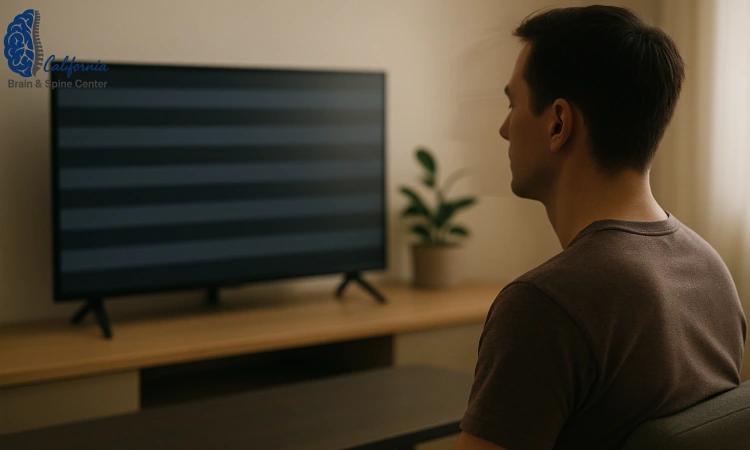
Therapy for Vertigo success often shows up in small, meaningful ways:
You can turn your head faster with less blur.
The “down the aisle” feeling in stores is milder or shorter.
Getting into bed doesn’t provoke the same rush.
You’re walking with a looser, more natural posture.
Use a 0–10 daily rating of dizziness (baseline + peak during exercises + time to settle). Winning trends look like: lower peaks, quicker recovery, and more activities done without thinking about them.
Special Notes for Common Diagnoses
BPPV: Repositioning maneuvers are first-line for crystal displacement. Once the spinning settles, Therapy for Vertigo helps clear residual fogginess, motion sensitivity, and balance confidence.
Vestibular neuritis/labyrinthitis recovery: Therapy for Vertigo focuses more on VOR and gait to rebuild symmetry.
Migraine-related dizziness: Progress is often steady but benefits from good sleep, hydration, and migraine trigger management alongside Therapy for Vertigo.
Motivation Matters: Kind, Consistent, Patient
You’re not “broken.” You’re retraining a system that got startled. In Therapy for Vertigo, your job is to show up for short, focused sessions and let your nervous system learn. Many patients see meaningful gains within 2–4 weeks; deeper resilience keeps building with continued practice. Celebrate the quiet victories: a steadier shower, a faster head turn, a calmer grocery run.
Practical Troubleshooting
“I get too dizzy.” Shrink the range, slow the speed, or shorten sets. Mild provocation is the sweet spot.
“I plateaued.” Add a single new challenge (foam, busier background, light dual task) rather than changing everything.
“Neck feels tight.” Warm up with gentle range-of-motion arcs and keep movements smooth, not forceful.
“Bad day.” Do half the plan or focus solely on VOR x1, then resume tomorrow. Consistency beats perfection in Therapy for Vertigo.
Your Next Step Guided Care That Solves the Problem
If you want a personalized program with pinpoint testing and progression, our team at California Brain & Spine Institute is ready to help. Explore care options and articles here: California Brain & Spine Institute. We combine clinical assessment with tailored Therapy for Vertigo progressions so our experts will solve your problem for you methodically, kindly, and with a plan you can trust.
Summary
Therapy for Vertigo re-trains how your brain integrates inner-ear, visual, and body signals. The core tools are gaze stabilization (VOR x1/x2), habituation to specific triggers, balance/proprioception drills, dynamic gait, and visual exposure. Keep sessions brief and frequent, aim for only mild symptom provocation, and progress intentionally over 2–4 weeks. Most people report steadier vision, fewer spikes, and confident motion when they practice Therapy for Vertigo with consistency. If you need tailored guidance, professional assessment sharpens the plan and accelerates results.
Frequently Asked Questions
1) How fast does Therapy for Vertigo work?
Many feel early wins within 1–2 weeks clearer vision during head turns, less supermarket discomfort. Stronger, lasting gains usually build over 4–8 weeks of consistent Therapy for Vertigo.
2) How “dizzy” should I allow myself to get during exercises?
Aim for a 3–5/10 peak that settles within a few minutes. If symptoms spike higher or linger, reduce speed, range, or duration. Therapy for Vertigo should challenge you, not overwhelm you.
3) Should I do every exercise every day?
No. Rotate pillars: daily VOR and balance; habituation for 2–4 triggers; gait and visual tuning several times weekly. Therapy for Vertigo improves with smart repetition, not exhaustion.
4) Can I keep working or exercising while doing Therapy for Vertigo?
Usually, yes. Walks are encouraged. Avoid risky environments immediately after challenging sets. If your job involves fast head turns, schedule exercises when you can rest briefly afterward.
5) What if scrolling on my phone makes me woozy?
Dim the screen, increase font size, and practice short visual tuning sessions. Over days, the same screen exposure should provoke less dizziness a sign Therapy for Vertigo is helping.
6) Do I need special equipment?
A sticky note, a hallway, a stable chair, and (optional) a foam pad are enough. Therapy for Vertigo is deliberately simple so you can stay consistent.
7) Is Therapy for Vertigo safe with neck arthritis?
Often, with modifications: smaller arcs, slower speed, and more breaks. If you have significant neck pain or prior surgery, get personalized guidance to adapt Therapy for Vertigo safely.
8) I had BPPV last month should I still do these?
Yes, after repositioning settles the spins, Therapy for Vertigo helps resolve motion sensitivity and rebuilds confidence. If true spinning returns with certain positions, get reassessed to rule out recurrence.
9) How do I know it’s time for expert help?
If you’re unsure which exercises fit your pattern, if symptoms don’t improve after 2–3 weeks, or if red flags appear, schedule a clinical assessment. Guided Therapy for Vertigo is often faster and easier.
10) Can Therapy for Vertigo prevent future episodes?
It can improve resilience. Regular VOR tune-ups, occasional balance drills, good sleep, and staying active make your system more stable. Many keep a “maintenance” mini-routine.
👨⚕️ Alireza Chizari, MSc, DC, DACNB
🧠 Clinical Focus
🔬 Assessment & Treatment Approach
Objective testing may include:
Treatment programs may involve:
📍 Clinic Information
✅ Medical Review
⚠️ Disclaimer