
Visual Disturbances After Concussion In Calabasas
A concussion may be called a “mild” traumatic brain injury, but its impact on vision can be anything but mild. Blurred sightlines, double vision, or feeling as if the world tilts when you move your head can linger for weeks—or even months—without the right care. At California Brain & Spine Institute, our evidence-based Visual Disturbances After Concussion program provides non-surgical diagnostics and therapies that restore clear, comfortable vision for residents of Calabasas, Woodland Hills, Agoura Hills, and the greater West Valley.
Visual strain can drain mental clarity; our Brain Fog Treatment tackles that side effect head-on.
Common Visual Problems After Concussion In Calabasas
More than half of the neural pathways in the human brain support eye control and visual processing, so even a minor blow can ripple through this complex system. Research shows:
-
Up to 69 % of people experience an ocular or eye-movement deficit after concussion.
-
Between 30 % and 90 % of mild TBI patients report at least one visual symptom, including light sensitivity or blurred vision.
-
In children and teens, light sensitivity, blurred vision, or double vision appear in as many as 40 % immediately after injury.
-
Smooth-pursuit tracking deficits—difficulty following moving objects—are documented in roughly 60 % of concussion cases PMC.
Most-Reported Symptoms
-
Blurred or double vision
-
Difficulty focusing on text or screens
-
Light or motion sensitivity
-
Headaches around the eyes or temples
-
Words “bouncing” while reading
-
Loss of depth perception, causing misjudged steps or curb heights
If these issues persist beyond 10–14 days, targeted Visual Disturbances After Concussion care can prevent them from snowballing into academic struggles, driving anxiety, or chronic migraine.
Why Choose Non-Surgical Diagnosis and Care
Only a tiny fraction of head injuries involve structural eye damage that would ever require surgery. The overwhelming majority of post-concussion vision problems arise from functional mis-coordination between the eyes, vestibular system, and visual cortex. A non-surgical approach offers three key advantages:
-
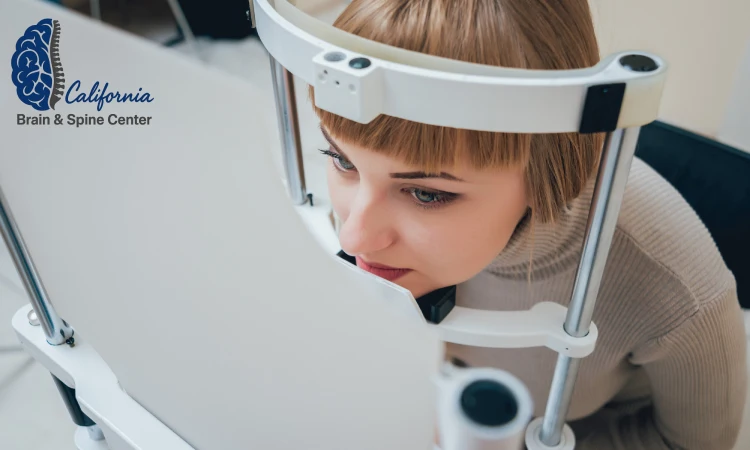
Precision without risk — High-resolution eye-tracking, qEEG, and vestibular screenings map deficits without anesthesia or operative downtime.
-
Adaptive scheduling — Forty-five-minute sessions fit seamlessly around work, school, or sports rehabilitation.
-
Data-driven tweaks — Objective metrics (gaze-stability scores, reading-speed gains) guide weekly adjustments, so every exercise delivers maximum neurologic return.
Consensus statements and systematic reviews confirm that multi-modal rehabilitation—not passive rest alone—drives the fastest resolution of visual and vestibular concussion symptoms.
Severe visual changes deserve evaluation within our Traumatic Brain Injury Recovery pathway.
Our Treatment Protocols
Each customized plan begins with a comprehensive intake: neurological exam, computerized oculomotor testing, balance/posture analysis, cognitive screen, and targeted bloodwork. Then we layer therapies proven to recalibrate vision pathways without surgery.
Vision Therapy & Eye-Head Coordination Drills
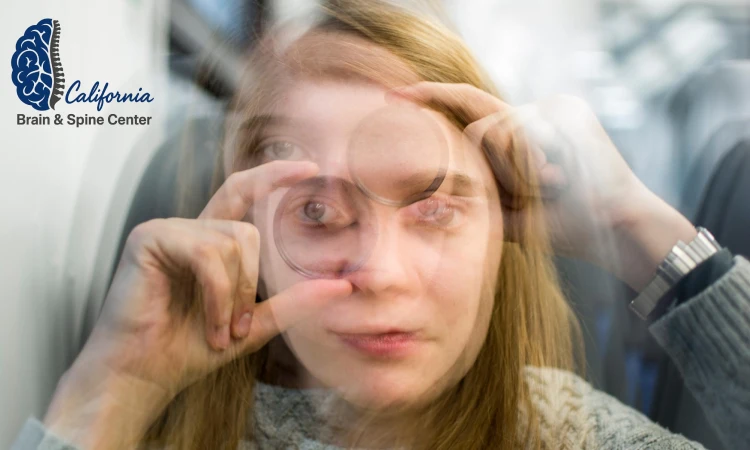
Clinical audits show that 85 % of convergence-insufficiency patients and over 90 % of accommodative-insufficiency patients complete vision therapy with successful or improved outcomes PubMed. Guided by board-certified specialists, exercises train:
-
Convergence and divergence stamina
-
Saccades (quick target shifts) for reading lines of text
-
Smooth pursuits for sports or driving
Neurofeedback & Non-Invasive Neuromodulation
Real-time brain-wave feedback teaches the visual cortex to down-regulate hyper-excitability or boost underactive networks linked to focus and light tolerance.
Vestibulo-Ocular Reflex (VOR) Rehabilitation
Using gaze-stability platforms and foam-surface challenges, therapists retrain the reflex linking head movement to compensatory eye movement—essential for walking on uneven Calabasas trails without dizziness.
Nutritional Counseling for Neuro-Visual Recovery
Anti-inflammatory meal plans rich in omega-3s, flavonoids, and B-vitamins support neural membrane repair and optic-nerve metabolism. Supplement protocols tackle any vitamin-D or magnesium deficits that amplify light sensitivity.
Lifestyle & Screen-Use Coaching
Ergonomic adjustments, blue-light-filter strategies, and graded screen-time schedules keep recovery on track in today’s digital landscape.
If these symptoms began after sports or an accident, visit Concussion Treatment Calabasas first.
Patient Success Stories
“Every grocery-store aisle looked like it was swaying. After six weeks of targeted eye-tracking drills, I can shop at The Commons again without nausea.” – Former concussion patient, 42
“Bright headlights felt like spotlights after my soccer injury. The clinic’s light-desensitization program had me driving at night within a month.” – Student athlete, 18
“I read the same sentence five times. With vision therapy, my reading speed doubled, and the headaches faded.” – Marketing executive, 35
These anonymous victories highlight how structured Visual Disturbances After Concussion care transforms daily life.
FAQs
How long does recovery take?
Most mild cases show measurable gains within four to six sessions. Complex or long-standing symptoms may need 10–12 weeks, always guided by ongoing testing.
Does therapy hurt?
Exercises may trigger brief eye fatigue or mild dizziness—signs that neural pathways are being challenged—but intensity is carefully titrated to stay within safe, tolerable limits.
Can children participate?
Absolutely. Pediatric protocols use game-like visuals that keep younger brains engaged while correcting underlying deficits.
Do I need a physician referral?
Not for an initial assessment. We can coordinate with your primary doctor or neurologist once therapy starts.
The Clear Path Forward Starts Today
Blurred vision and light sensitivity should not derail your life—or your recovery. Reclaim crisp, comfortable sight with a personalized, surgery-free Visual Disturbances After Concussion plan at California Brain & Spine Institute. Book your free consultation now by calling our friendly team or reserving your spot online at californiabrainspine.com. Let’s bring the world back into focus—together.