
Traumatic Brain Injury Recovery In Calabasas
Traumatic Brain Injury Recovery In Calabasas
Feeling like you are living inside a mental fog after a bump, blow, or jolt to the head can be frightening—but it is not uncommon. At California Brain & Spine Institute, our comprehensive Traumatic Brain Injury Recovery Calabasas program delivers modern, non-surgical diagnostics and therapies that help children, adults, and athletes regain clarity, balance, and independence without the risks of hospital operating rooms.
Once the acute phase stabilises, enrolling in the Brain Injury Recovery Program speeds long-term healing.
Understanding Traumatic Brain Injury
Traumatic brain injury (TBI) ranges from a short-lived concussion to severe hemorrhage, yet most cases sit in the middle of that spectrum. Nationwide, the Centers for Disease Control and Prevention reported 214,110 TBI-related hospitalizations in 2020 and 69,473 deaths in 2021—about 190 deaths every day. The numbers do not include the millions treated only in an emergency department or primary-care office.
Why the Brain Struggles After Impact
-
Microscopic axonal stretching slows information transfer.
-
Inner-ear (vestibular) sensors misfire, causing dizziness.
-
Inflammatory cascades drain mental energy, leading to headaches and mood swings.
Left unaddressed, these changes can trigger chronic problems such as light sensitivity, slowed reaction time, and even heightened risk of future injuries. Yet surgical intervention is rarely required: large-scale reviews show only 4 %–29 % of hospitalized TBI patients need emergency brain surgery PMC. That means roughly three out of four people can—and should—recover through targeted, conservative care.
Why Choose Non-Surgical Recovery in Calabasas?
Calabasas residents value active lifestyles—from trail running in Upper Las Virenque Preserve to long commutes on the 101. Non-surgical Traumatic Brain Injury Recovery Calabasas care:
-
Addresses root causes—sensory mismatch, neuro-inflammation, and de-conditioning—without anesthesia-related downtime.
-
Fits your schedule—most sessions last 45–60 minutes and can be clustered around work or school.
-
Adapts as you heal—objective re-testing lets us dial therapies up or down weekly.
Because only a minority of TBIs are surgical, our service bridges the wide gap between “wait it out” and the operating theater, giving the brain the active stimuli it needs to re-wire itself.
If post-TBI forgetfulness persists, review the tools in Memory Loss Treatment.
Our Evidence-Based Recovery Framework
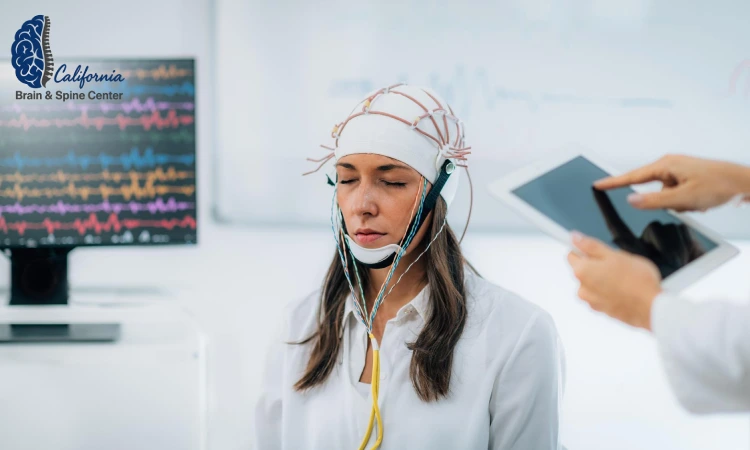
Every Traumatic Brain Injury Recovery Calabasas plan starts with advanced testing—videonystagmography (eye-tracking), computerized posturography, neuro-cognitive screening, and neuro-quant MRI review—so we know where to focus first.
Comprehensive Neurological Assessment
Board-certified neurologists and chiropractic neurologists join forces to map your vestibulo-ocular reflexes, visual tracking, and cognitive speed.
Vestibular Rehabilitation Therapy (VRT)
Randomized trials show VRT significantly reduces dizziness in mild TBI (standardized mean difference = –0.33), and real-world studies echo those gains in chronic cases Frontiers. Exercises progress from seated head turns to dynamic balance challenges on our sensorimotor platforms.
Cognitive Rehabilitation
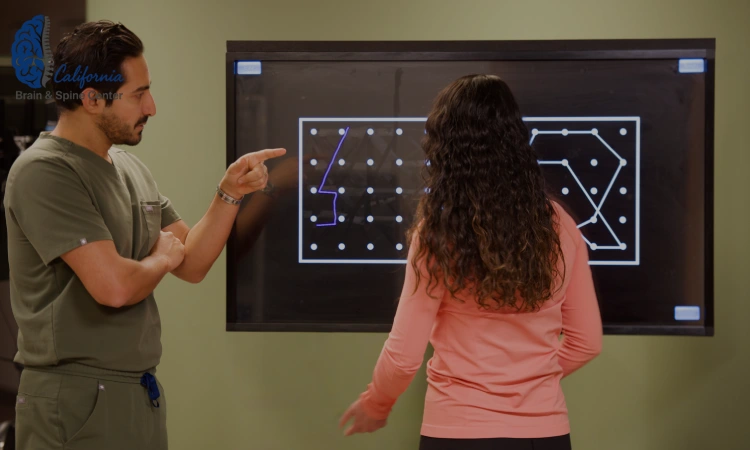
Systematic reviews report moderate-to-strong evidence that structured cognitive rehab improves attention, memory, and executive function. We blend computer-based drills with everyday task simulations—like navigating The Commons at Calabasas—to ensure skills transfer outside the clinic.
Neurofeedback & Neuromodulation
For patients with lingering fog or mood instability, qEEG-guided neurofeedback and non-invasive stimulation (e.g., rTMS) help synchronize neural firing. Studies suggest these tools can boost cognition and functional outcomes after TBI.
Physical Therapy & Sensorimotor Integration
Specialized PT targets neck proprioceptors, core stability, and gait mechanics. Combining visual-motion cues with split-surface treadmills rebuilds confidence for hiking Canyon Overlook trails.
Nutrition & Metabolic Support
Deficiencies in omega-3s, B-vitamins, or vitamin D slow neural repair. Our registered dietitians craft anti-inflammatory meal plans and hydration strategies that fit Calabasas farmers-market lifestyles.
Psychosocial Resilience Training
Research links anxiety and depression with slower TBI recovery. In-house psychologists teach mindfulness, graded exposure, and sleep hygiene so emotional health keeps pace with neurological gains.
Coordinated Care & Progress Tracking
Weekly case conferences align all providers, and cloud-based dashboards let you (and, if desired, family) visualize improvements in reaction time, sway velocity, and symptom scores.
Meet Your Board-Certified Recovery Team
-
Dr. Maya Ellington, MD, FAAN – Neurologist with sub-specialty in brain injury medicine
-
Dr. Rafael Gomez, DC, DACNB – Chiropractic neurologist and vestibular rehabilitation authority
-
Alyssa Chen, DPT – Residency-trained neuro PT and certified concussion specialist
-
Noah Garcia, PhD – Licensed psychologist focusing on post-TBI anxiety and sleep disorders
-
Megan Hollis, RD – Registered dietitian specializing in neuro-inflammatory diets
Their combined expertise anchors every Traumatic Brain Injury Recovery Calabasas plan in clinical rigor and compassionate care.
Athletes from the region can follow our acute protocol in Concussion Treatment Calabasas.
Success Stories from Your Neighbors
“I went from needing sunglasses in the grocery store to presenting at a Pepperdine law seminar—no surgery, just the Institute’s layered therapies.” – “Dana S.”, 31
“Six weeks after my cycling accident I could barely stand at the Calabasas Stairs. Twelve weeks into VRT I’m back to five-mile trail runs.” – “Marcus L.”, 42
“My teen missed half a semester at Viewpoint School. Cognitive rehab and neurofeedback gave her focus back—she just aced AP Chem.” – “Elena R.”, parent
These outcomes illustrate how strategic, non-invasive science rewrites recovery timelines.
Frequently Asked Questions
- How long does recovery take?
Most mild-to-moderate cases show measurable gains within six sessions, and many patients “graduate” by week 12. Severe injuries may require longer but still benefit from the same principles. - Is therapy uncomfortable?
Exercises provoke brief, low-level symptoms to nudge neural adaptation. Your provider adjusts intensity so you leave sessions feeling challenged, not overwhelmed. - Can I start even if my injury was months ago?
Yes. Neuro-plasticity persists for decades; even chronic symptoms often improve with properly dosed stimuli. - Do you work with athletes?
Absolutely. We liaise with local coaches—from Calabasas High to youth soccer clubs—to coordinate safe return-to-play timelines.
Your Next Step Toward Healing
You do not have to wait and hope your brain “snaps back.” The sooner you engage a guided, non-surgical plan, the faster you reclaim sharp thinking, steady balance, and full days. Click or call today to schedule your free consultation with the California Brain & Spine Institute—the trusted leader in Traumatic Brain Injury Recovery Calabasas and surrounding neighborhoods. Your brain’s comeback story starts at californiabrainspine.com.