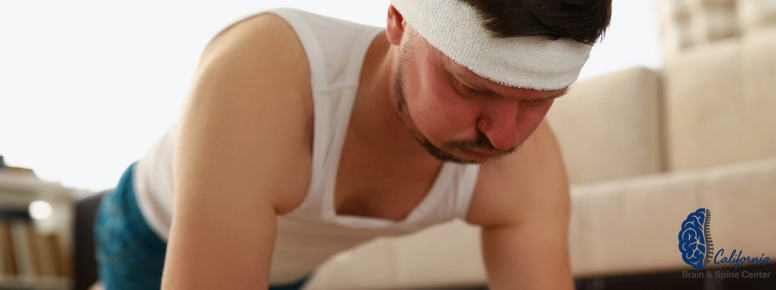
If walking feels normal in a quiet hallway but the grocery store, head turns, stairs or a busy sidewalk suddenly make you unsteady, the problem may be how your visual, vestibular and body-position systems are working together after concussion.
I am Dr. Alireza Chizari, DC, DACNB, at California Brain & Spine Center in Calabasas. If you are looking for natural ways to improve balance after a concussion, the most useful answer is not to collect as many balance exercises as possible. It is to identify which balance system is underperforming and then challenge it at a level your nervous system can actually learn from.
After a concussion, balance can become unreliable even when strength is normal and routine imaging is reassuring. You may feel steady while sitting but drift when walking. Turning your head may make the world feel unstable. Closing your eyes in the shower may suddenly feel uncomfortable. A visually busy store can be harder than a quiet sidewalk.
Those differences matter because balance is not one sense. It is the brain continuously combining visual information, vestibular information from the inner ear, proprioceptive information from muscles and joints, and movement information from the neck and the rest of the body.
The goal of balance exercises after concussion is therefore not simply to make standing harder. The goal is to retrain the specific pieces of that system that are not integrating normally, then gradually put them back together under real-world conditions.
The short answer
- Balance problems after concussion are often multi-system. Vision, vestibular function, proprioception, neck input and cognitive load may all contribute.
- Start with the easiest version you can control. Seated eye and head coordination or supported standing may be more appropriate than unstable-surface drills early on.
- Progress one variable at a time. Head movement, a softer surface, reduced visual input and a cognitive task all make balance harder in different ways.
- Some symptom increase can occur during vestibular rehabilitation, but large, prolonged or unpredictable worsening means the task needs to be reconsidered.
- Eyes-closed and unstable-surface work increase fall risk. They should not be treated as generic home exercises for every person recovering from concussion.
- Persistent imbalance deserves measurement. The best exercise depends on what your visual, vestibular and proprioceptive systems are actually doing.
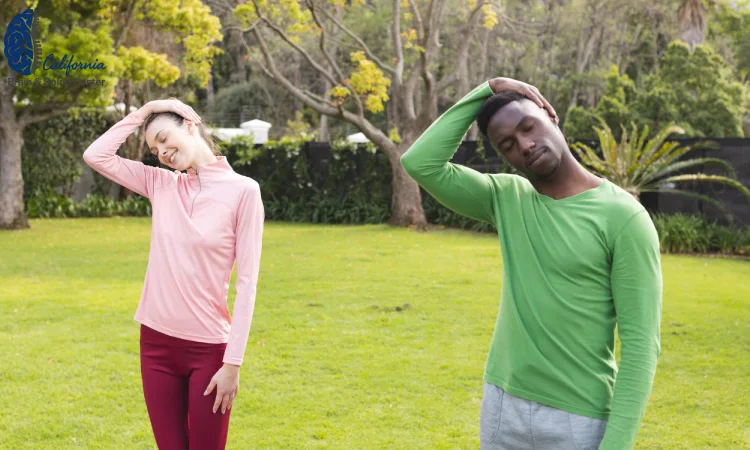
Before attempting more challenging drills, our existing guide on dizziness after concussion and why it happens explains why post-concussion dizziness can come from more than one system and why the trigger matters.
Why Does Balance Suffer After a Concussion?
Balance can suffer after concussion because the brain may temporarily process visual, vestibular and proprioceptive information less efficiently. When those signals no longer agree, standing and walking require more conscious effort. Head movement, low light, uneven surfaces and visually busy environments can expose the mismatch even when ordinary strength testing looks normal.
The CDC includes dizziness and balance problems among common symptoms of mild traumatic brain injury and concussion and notes that symptoms can vary substantially from person to person. CDC concussion symptom guidance also makes clear that symptoms can change during recovery rather than follow one predictable pattern.
The vestibular system tells the brain how the head is moving
The vestibular organs in the inner ear detect head movement and orientation. The brain combines that information with eye movement and body-position signals to keep the visual world stable and maintain posture.
After concussion, vestibular symptoms may include dizziness, motion sensitivity, unsteadiness, blurred vision with head movement and difficulty tolerating movement through busy environments.
Vision can become too dominant
Some patients become unusually dependent on vision for balance. They may stand reasonably well with their eyes open on a stable floor but feel dramatically less secure when the lights are low, the surface changes, or the eyes close.
The problem is not necessarily weak legs. The nervous system may be relying too heavily on one sensory channel because the other balance inputs are less reliable.
Proprioception tells you where your body is without looking
Proprioceptive receptors in muscles, joints and connective tissues continuously inform the brain about body position. After injury, the brain may use that information less efficiently, particularly when visual or vestibular input is also disrupted.
This is one reason a person can feel very different standing on firm flooring compared with foam, grass, an uneven trail or another compliant surface.
The mismatch matters more than any one system
A 2026 review of post-concussive vestibular dysfunction describes balance problems after mild traumatic brain injury as a complex interaction involving central and peripheral vestibular function, cervical input and impaired sensory reweighting rather than a single isolated lesion. The review discusses mechanism-based vestibular assessment after concussion.
What visual vestibular proprioceptive mismatch can feel like
You may feel relatively normal in a quiet room but unstable when walking through a store, turning your head while moving, stepping onto uneven ground, standing in the dark or trying to talk while walking. Those changes in context alter which sensory inputs the brain has to trust.
What Does Concussion Balance Dysfunction Look Like in Real Life?
Balance dysfunction after concussion is not always dramatic vertigo. Many patients use words such as floating, swaying, veering, disconnected, visually overwhelmed or uncertain on their feet.
One person may struggle when turning quickly. Another may be fine while walking straight but become unsteady when looking from side to side. Someone else may notice that carrying on a conversation while walking feels much harder than walking silently.
| Daily situation | What the patient notices | What may deserve testing |
|---|---|---|
| Walking while turning the head | The visual world feels unstable or the body veers | Gaze stability, vestibular processing, cervical input |
| Standing in the shower with eyes closed | Sudden loss of confidence or increased sway | Proprioceptive and vestibular reliance |
| Busy grocery store | Dizziness, nausea or a floating sensation | Visual motion sensitivity and visual-vestibular integration |
| Walking on grass or uneven ground | Feet feel less predictable or the body stiffens | Proprioception and dynamic postural control |
| Walking while talking | Slower gait, veering or mental overload | Dual-task balance and cognitive-motor integration |
| Quick directional changes | Instability appears despite normal straight-line walking | Dynamic gait, anticipatory control and vestibular integration |
If balance only fails when the environment changes, the environment is giving you useful diagnostic information.
Which Balance Exercises After Concussion Are Actually Useful?
The most useful balance exercises after concussion are the ones matched to the system that is underperforming. A seated eye-head drill, supported single-leg stance, tandem walking, gaze stabilization during walking or a dual-task exercise can all be appropriate, but they train different problems and should not automatically be prescribed together.
Vestibular rehabilitation has meaningful evidence behind it, although research does not support one universal protocol or dose for every patient. A systematic review and meta-analysis found vestibular rehabilitation was associated with improvement in perceived dizziness after mild traumatic brain injury, while also noting that the evidence base remains heterogeneous. Read the systematic review and meta-analysis of vestibular rehabilitation after mTBI.
Another systematic review of randomized trials found vestibular rehabilitation can be useful after concussion but emphasized the wide variation in exercise prescription, patient populations and outcomes. Review the randomized-trial evidence for vestibular rehabilitation after concussion.
1. Seated head and eye coordination
This is often a more controlled starting point than standing on an unstable surface. A patient may practice moving the eyes toward a target, moving the head while maintaining visual fixation, or coordinating eye and head movement in specific directions.
The point is not simply to make the patient dizzy. The clinician is looking at accuracy, visual stability, symptom response and whether the task becomes more efficient with practice.
2. Supported single-leg balance
Single-leg balance with support can challenge postural control without immediately removing the patient's safety options. A stable counter, rail or clinician may provide support while the nervous system learns to control smaller postural corrections.
Someone with significant dizziness, fall risk, lower-extremity weakness or recent worsening symptoms should not assume that single-leg standing is an appropriate independent home exercise.
3. Lateral weight shifts and controlled reaching
Lateral weight shifts teach the nervous system to move the center of mass deliberately rather than stiffening in place. Cross-body reaches and controlled X-pattern reaches can later add trunk rotation, visual targeting and coordination.
These exercises can be useful when someone moves cautiously because weight transfer feels uncertain after concussion.
4. Heel-to-toe and tandem walking
Heel-to-toe walking, also called tandem walking, narrows the base of support and increases the demand on dynamic postural control. It is commonly used as both an assessment and a rehabilitation challenge.
It should usually begin in a safe environment with access to support. Speed, head movement, visual demands and cognitive tasks can be added later rather than all at once.
5. Gaze stabilization while walking
Gaze stabilization while walking combines locomotion with the need to maintain clear vision during head movement. It can be helpful when patients say the environment feels unstable as they walk and look around.
This is a more complex task than seated gaze stabilization. It is generally progressed after simpler visual and vestibular tasks are reasonably controlled.
6. Marching on a compliant or unstable surface
Marching on an unstable surface changes the reliability of information coming from the feet and ankles, forcing greater sensory integration. It can be valuable for the right patient, but it also increases fall risk.
Foam surfaces, unstable pads and similar tools are not automatically safe home exercises after concussion. Support and clinician supervision matter, especially when eyes are closed or head movement is added.
7. Swiss ball weight shifts
Swiss ball weight shifts can introduce controlled trunk motion and body-position feedback while the person is seated. For selected patients, this may be a safer way to begin dynamic weight transfer than standing on an unstable surface.
The task can later become more complex by adding reaching or visual targets, but difficulty should be progressed according to control rather than novelty.
8. Cross-body coordination
Cross-body movement can combine proprioception, coordination, visual targeting and trunk rotation. Examples may include controlled cross-body reaches or stepping patterns that move across the body's midline.
These tasks become especially relevant when a patient's balance worsens as movement becomes multidirectional.
9. Eyes-closed balance work
Eyes-closed balance work removes the visual input many post-concussion patients have learned to rely on. That makes it diagnostically informative and potentially useful in rehabilitation.
It also makes the task less safe. Eyes-closed balance should not be performed casually on unstable surfaces or away from support simply because it appears on an online exercise list.
10. Dual-task balance training
Dual-task balance training combines movement with a second demand such as counting, answering questions, scanning the environment or carrying out a simple cognitive task.
Daily life is full of dual-task situations. You walk while talking, scan traffic while crossing a street, carry groceries while planning your next step, and navigate stairs while thinking about something else.
That is why cognitive and balance dual-task training can be important later in recovery. It should generally come after simpler movement patterns are safe enough to tolerate the added cognitive load.

How Do We Evaluate Balance and Coordination After a Concussion?
Balance exercises become much more useful when the exercise is tied to a finding.
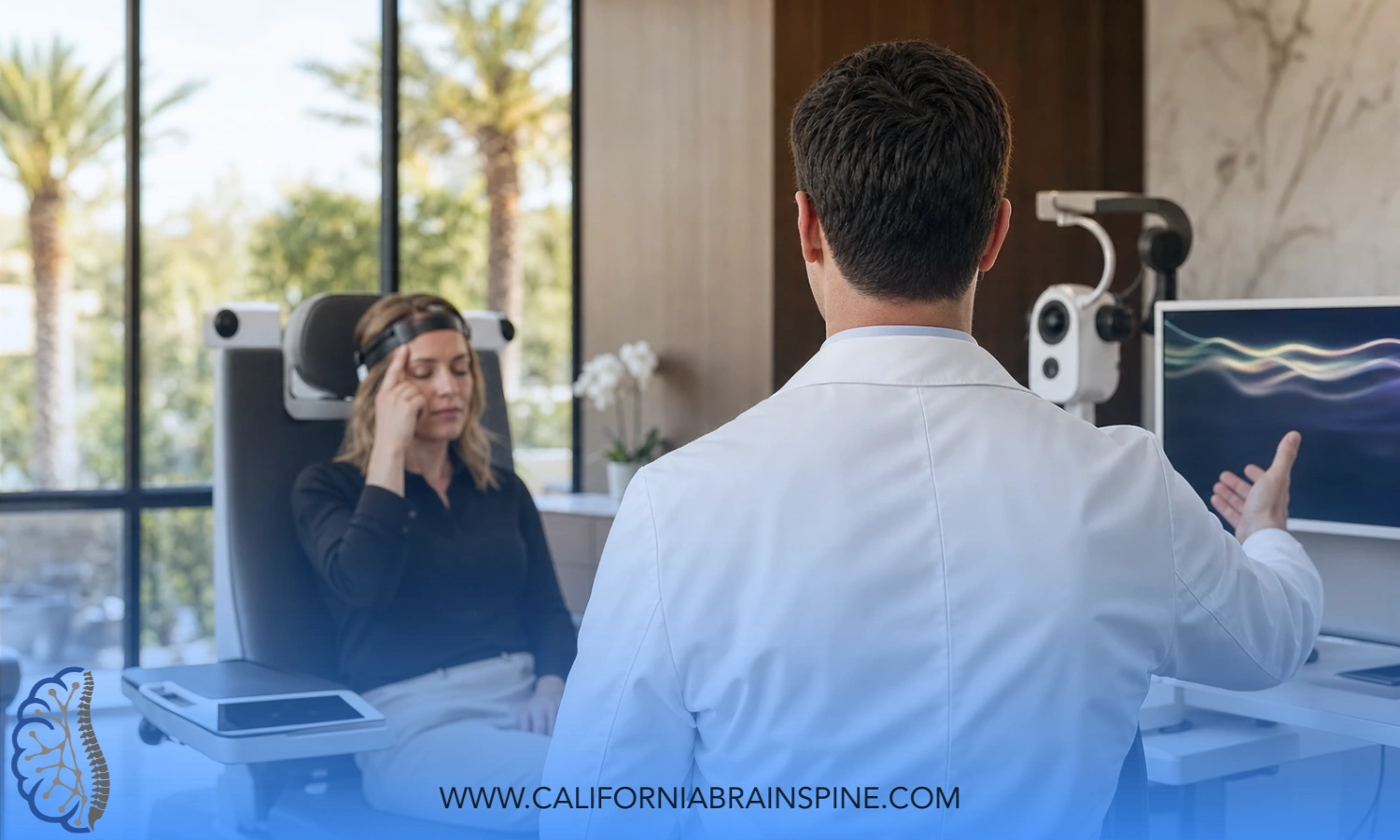
This video shows one way neurological coordination and movement can be observed during an evaluation. The purpose is not to make every patient perform the same drill. It is to see where movement, visual input, balance and coordination stop working together efficiently.
At California Brain & Spine Center, a post-concussion balance evaluation may include neurological examination, eye-movement assessment, vestibular testing, positional testing when indicated, gait observation and computerized assessment of postural stability.
The clinic's Balance Disorder Therapy in Calabasas page explains the broader evaluation and rehabilitation process for patients whose main problem is unsteadiness or impaired postural control.
How Should Concussion Balance Exercises Progress?
The old version of this page included a fixed seven-day schedule and recommended automatically increasing difficulty each week. That looks practical on paper but does not reflect how neurological rehabilitation should be progressed.
A patient who cannot yet tolerate seated head movement should not progress simply because Monday became Friday. Another patient may be ready to progress faster in one domain but still need more time in another.
Progress balance exercises after concussion by changing one challenge at a time and observing control, symptom response and recovery afterward. A progression might move from supported to unsupported, stable to compliant surfaces, eyes open to reduced visual input, simple to head-moving tasks, and single-task to dual-task work. The calendar alone should not decide.
Begin with a controlled baseline
Start with the simplest version of the impaired task that can be performed safely. For some patients that is seated eye-head coordination. For others it may be quiet standing with support.
Add controlled weight transfer
Lateral weight shifts, supported stepping, controlled reaching or seated Swiss ball shifts can add movement without immediately removing every source of stability.
Narrow the base of support
Supported single-leg stance, heel-to-toe positioning or tandem walking may be introduced when basic standing control is adequate.
Change the sensory environment
A softer surface, lower visual dependence, head movement or controlled visual motion can test whether the nervous system can reweight sensory information appropriately.
Make movement dynamic
Walking with gaze stabilization, turning, directional changes and more complex cross-body patterns bring the task closer to real-life movement.
Add cognitive load last
Conversation, counting, visual scanning or another cognitive task can be layered onto walking or balance once the movement itself is reasonably safe and controlled.
What weekly exercise progression should actually mean
Weekly progression should mean reviewing whether the current task is easier, more accurate and better tolerated, then adjusting the exercise accordingly. It should not mean automatically increasing repetitions, speed or instability every seven days.
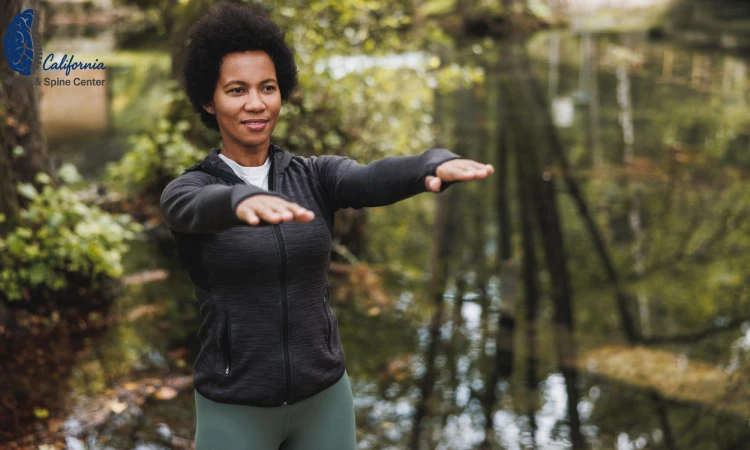
How Much Dizziness During Balance Exercises Is Too Much?
This is one of the most important questions because vestibular rehabilitation sometimes uses controlled exposure to movements that provoke symptoms.
The goal is not zero sensation during every exercise, but the goal is also not to trigger a major flare and simply call that neuroplasticity.
Symptoms should be interpreted in context. What matters includes how strongly the task increases symptoms, whether movement quality deteriorates, how quickly symptoms settle after stopping, whether the patient is safe and whether later activities that day are significantly affected.
Research supports individualized vestibular rehabilitation but does not establish one universal symptom number or recovery-time cutoff that is appropriate for every concussion patient. Earlier reviews also noted substantial variation in how vestibular exercises were prescribed and progressed. A systematic review of vestibular rehabilitation after concussion discusses this lack of standardized prescription.
Use symptoms as information
- A small and brief increase may sometimes be expected during appropriately selected vestibular rehabilitation.
- A large or prolonged flare is not a badge of progress. The task may be too difficult, too long or targeting the wrong system.
- New neurological symptoms are different from familiar exercise-provoked symptoms. New weakness, severe worsening headache, repeated vomiting, confusion or other danger signs require medical assessment.
- Falls and near-falls matter. An exercise that repeatedly compromises physical safety should not be continued simply because it is difficult.
Do Balance Exercises Work Better Than Rest Alone?
In the first phase after concussion, relative rest has a role. Staying completely inactive for prolonged periods is not the universal strategy it once was.
The CDC currently recommends easing back into regular activity after the first one or two days as tolerated and reducing activity when symptoms clearly worsen. CDC recovery guidance after mild TBI or concussion supports a gradual return toward normal activity rather than indefinite strict rest.
A systematic review and meta-analysis of physical interventions after concussion found evidence supporting subthreshold aerobic exercise and individually tailored physical interventions, with vestibular, cervical and oculomotor therapies forming part of the broader rehabilitation literature. Review the evidence for physical interventions after concussion.
That does not mean everyone should immediately begin difficult balance exercises. It means recovery is usually better thought of as gradual re-exposure to normal movement and activity rather than avoiding movement indefinitely.
Rest can calm an overloaded nervous system. Rehabilitation teaches that nervous system how to perform the task again.
When Should You Get Clinician Clearance Before Active Balance Rehabilitation?
Clinician clearance is especially important when balance loss is significant, the diagnosis is uncertain, symptoms are worsening, falls are occurring or the proposed exercise involves reduced visual input or unstable surfaces.
You should also be evaluated before assuming post-concussion imbalance is purely vestibular. Inner-ear conditions, cervical injury, medication effects, migraine, autonomic dysfunction and other neurological or medical causes can produce overlapping symptoms.
Red flags: emergency evaluation comes before balance rehabilitation
- A headache that progressively worsens or does not go away.
- Repeated vomiting or a seizure.
- Increasing confusion, unusual behavior, severe agitation or inability to stay awake normally.
- New weakness, numbness, slurred speech or marked loss of coordination.
- Double vision, new vision loss or one pupil becoming larger than the other.
- A new or rapidly worsening neurological change after the head injury.
The CDC lists worsening headache, repeated vomiting, seizures, increasing confusion, weakness and other neurological changes among concussion danger signs. These symptoms require urgent medical evaluation rather than an outpatient balance exercise program.

What Does a Post-Concussion Balance Evaluation Add?
Dr. Alireza Chizari, DC, DACNB, evaluates balance by trying to determine which sensory and neurological conditions make stability break down.
Standing still with both feet on a hard floor is only one condition. A more useful assessment may compare performance when vision changes, the support surface changes, the head moves, cognitive load is added or the patient has to coordinate walking with a second task.
Depending on the clinical picture, evaluation may include:
- Eye movement and gaze testing for fixation, pursuit, saccades and visual stability.
- Vestibular and positional assessment when dizziness suggests a vestibular contribution.
- Computerized postural stability testing to compare balance under changing sensory conditions.
- Dynamic gait assessment including head turns, directional changes and dual-task demands.
- Cervical and proprioceptive examination when neck injury or altered body-position feedback may contribute.
- Symptom response and recovery measurement so the exercise dose can be adjusted instead of guessed.
For patients whose post-concussion symptoms extend beyond balance, our Concussion Treatment in Calabasas page explains how visual, vestibular, cognitive, cervical and autonomic findings may be integrated into the rehabilitation plan.
For patients with prominent gaze instability, motion sensitivity or vestibular symptoms, the clinic's Vestibular Rehabilitation therapies page describes the role of gaze stabilization, habituation and visual-vestibular integration in more detail.
What Can Balance Recovery Look Like for Patients in Calabasas?
Balance recovery often becomes most noticeable outside the clinic.
A patient may first notice that the supermarket no longer feels as visually overwhelming. Turning the head while walking becomes less disorienting. Looking over the shoulder before changing lanes feels easier. Uneven ground requires less conscious attention.
Those changes are more meaningful than being able to perform a difficult exercise for its own sake.
For someone commuting through the West Valley, working long hours or trying to return to school or sports, the goal is not to become excellent at standing on foam. The goal is for the nervous system to handle changing sensory environments without consuming all of the patient's attention.
Why Does Dr. Chizari Measure Balance Before Progressing the Exercises?
From engineering to clinical neuroscience
Dr. Alireza Chizari, DC, DACNB, began his professional path with a B.S. in Electrical Engineering in Iran. He later earned a master's degree in Advanced Engineering & Management in the United Kingdom and worked as a Solar Engineer in the United States before moving into healthcare.
He earned his Doctor of Chiropractic degree from Life Chiropractic College West, trained in the Gonstead technique, and later pursued postdoctoral education in Clinical Neuroscience.
That engineering background still influences the clinical process: measure the system before deciding what should be adjusted.
For post-concussion balance rehabilitation, that means an exercise is not chosen because it looks neurological or difficult. It is chosen because the evaluation identified a reason to use it, and it is continued only if symptoms, performance or objective testing suggest the patient is moving in the intended direction.
You can read more about his background on the About Dr. Alireza Chizari page.
Still unsteady after the concussion?
If ordinary walking is mostly fine but head turns, busy environments, uneven ground or multitasking still expose the problem, a neurological and vestibular evaluation can help determine which balance inputs are not integrating normally.
A Realistic Balance Recovery Pattern From the Clinic
I evaluated a patient from the Calabasas area after a concussion who could walk normally down a quiet hallway but felt unstable in stores, on uneven ground and whenever head movement was added to walking.
The frustrating part was that routine imaging had been reassuring and basic strength testing looked normal. The patient had started trying increasingly difficult balance exercises at home, including unstable surfaces and eyes-closed work, but the symptoms were becoming more unpredictable rather than more controlled.
The evaluation showed a different pattern. Balance deteriorated disproportionately when visual information was removed, gaze stability became less accurate with head movement, and cognitive tasks made walking less consistent. The problem was not a lack of effort.
We simplified the work first. The early rehabilitation focused on controlled eye-head coordination, supported weight shifting and gaze stabilization at a level that could be performed accurately. Tandem walking and head movement were added later.
Once those pieces became more stable, the exercises became more dynamic. Visual scanning was added during walking. The support surface was changed. Cross-body reaching and more complex stepping patterns were introduced. Dual-task work came later, once walking itself no longer required so much conscious effort.
Over time, the patient reported less disequilibrium in stores and better tolerance for walking while looking around. The objective balance findings also became more consistent under conditions that had previously been difficult.
There were still symptom fluctuations on tired days. Busy environments remained harder than quiet ones for a while. The improvement was gradual rather than dramatic, which is why reassessment mattered more than promising a fixed recovery date.
Frequently Asked Questions About Balance Exercises After Concussion
What are the safest balance exercises after concussion?
The safest starting exercise depends on the person's symptoms, fall risk and examination findings. Seated eye-head coordination, supported standing and controlled weight shifts are often easier to supervise than eyes-closed or unstable-surface work. If balance is significantly impaired, get clinician guidance before progressing to single-leg or dynamic exercises.
Can gaze stabilization help balance after concussion?
It may help when impaired gaze stability or vestibular dysfunction contributes to dizziness and imbalance. Gaze stabilization is usually progressed from simpler head and eye tasks toward walking and more complex visual environments. It should be matched to findings rather than performed at an arbitrary speed or duration copied from an online routine.
Should I practice balance with my eyes closed?
Eyes-closed work reduces visual compensation and can be useful for evaluating or training vestibular and proprioceptive reliance. It also increases fall risk. Do not combine eyes closed with unstable surfaces, single-leg standing or other difficult challenges unless the task has been judged appropriate and you have adequate support.
Why do I balance well until I try to talk or think while walking?
Walking while thinking is a dual task. After concussion, balance and gait may require more conscious attention than they did before the injury. Adding conversation, mental arithmetic or environmental scanning can reveal this reduced reserve. Dual-task training can be useful later in rehabilitation when simpler gait tasks are already safe.
How should I progress concussion balance exercises each week?
Do not progress automatically because another week has passed. Progress when the current exercise is safer, more accurate and better tolerated. Usually only one variable is made harder at a time, such as reducing hand support, narrowing stance, adding head movement, changing the surface or adding a cognitive task.
What if balance exercises make my dizziness worse?
A small, brief symptom increase can occur during appropriately selected vestibular work, but a large or prolonged flare is a reason to reduce the challenge and review the exercise. New neurological symptoms, falls, repeated vomiting, severe worsening headache or rapidly changing symptoms need medical assessment rather than continued exercise.
What to Remember About Improving Balance After a Concussion
The most useful natural ways to improve balance after a concussion are not the hardest exercises. They are the exercises that expose the right problem at the right level.
Balance depends on the brain combining vision, vestibular information and proprioception while also controlling the body in motion. A concussion can disturb how those systems are weighted and integrated. That is why seated head-eye coordination, supported single-leg work, tandem walking, gaze stabilization, sensory challenges, cross-body coordination and dual-task training may all have a role, but not necessarily at the same time or for the same patient.
Progress should be symptom-gated and measurement-driven rather than tied to a seven-day program or a fixed percentage increase. If a drill repeatedly causes a major flare or compromises safety, pushing harder is not automatically better rehabilitation.
If your scans were reassuring but your balance still changes with head movement, low light, busy environments, uneven ground or cognitive load, the next useful step may be identifying which part of the balance network is still underperforming.
California Brain & Spine Center | (818) 649-5300 | Calabasas, CA 91302
Find out why your balance changes when the environment changes
A complimentary consultation at our Calabasas clinic is a chance to discuss the concussion, the situations that still make you unsteady and whether a detailed neurological and vestibular evaluation makes sense before progressing your balance exercises.