What this handheld device is, what it is cleared for, what the trials did and did not show, and why a safety screening comes before any decision.
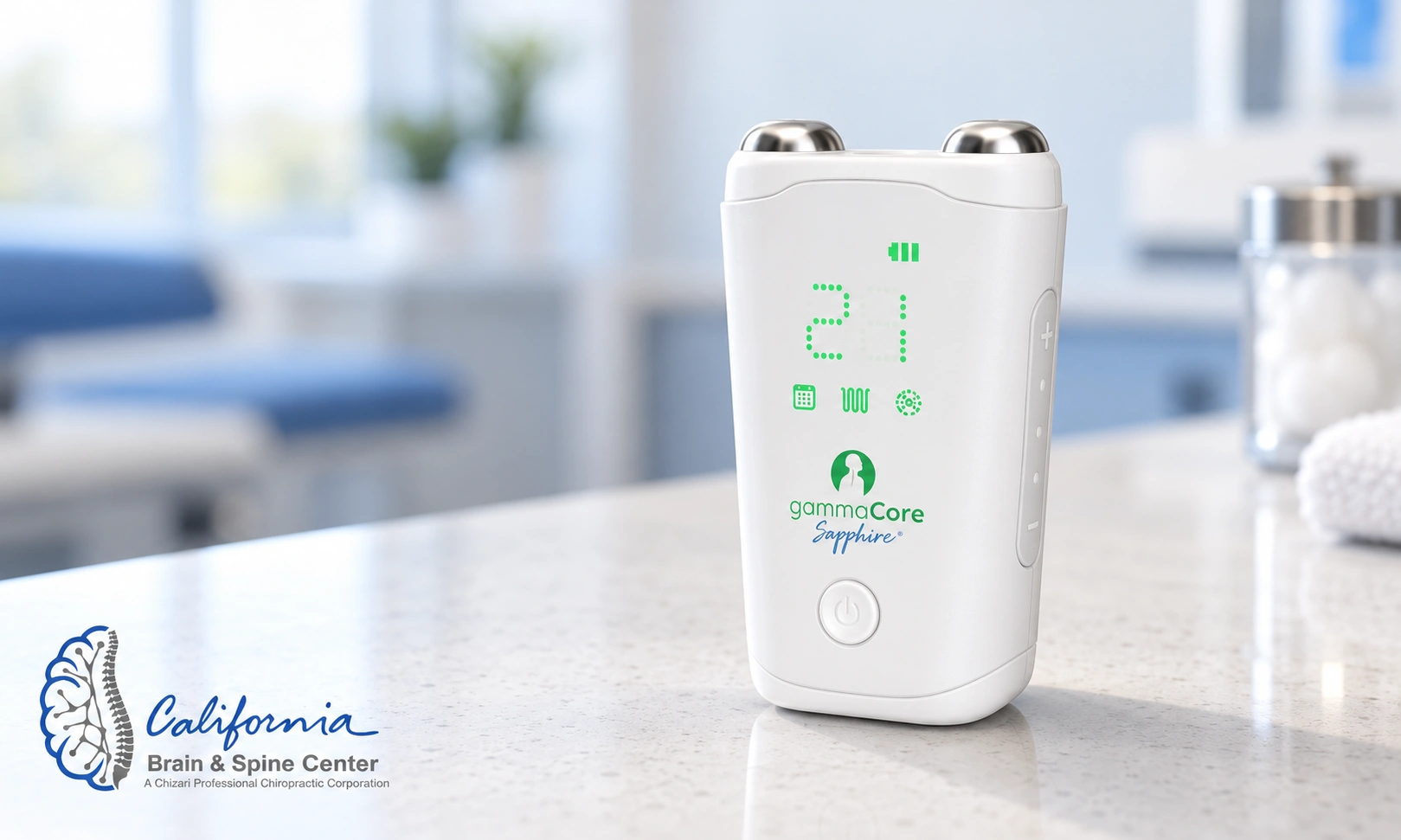
A gammaCore device is a handheld stimulator that delivers gentle electrical stimulation through the skin at the side of the neck, over the vagus nerve. In the United States it is FDA cleared for migraine and for certain uses in cluster headache. You may be reading about it after another week lost to headaches. If so, you probably want to know whether it is worth asking about and what the research says.
I am Dr. Alireza Chizari, DC, DACNB, a Board-Certified Functional Neurologist at California Brain & Spine Center in Calabasas. Here, gammaCore is one option a functional neurology evaluation may lead to for some people with headaches. When someone asks me about it, I want them to have the trial results in both directions, including the disappointing ones.
How gammaCore fits into care at the practice is set out on the gammaCore service page. This guide stays with the device itself: the nerve it targets, what it is cleared for, what the trials found, who should not use it, and why an evaluation comes first.
Key Takeaway
A gammaCore device is a handheld, non-invasive vagus nerve stimulator held at the side of the neck. In the US it is FDA cleared for migraine (age 12 and up) and for certain uses in cluster headache. The trials were mixed. It never replaces prescribed medication, and an evaluation and safety screening come first.
What Is a gammaCore Device?
A gammaCore device is a handheld stimulator that delivers gentle electrical stimulation through the skin at the side of the neck, over the vagus nerve. It involves no surgery and no implant. In the United States it is FDA cleared for the acute and preventive treatment of migraine from age 12, and for certain uses in cluster headache.
How the device is applied
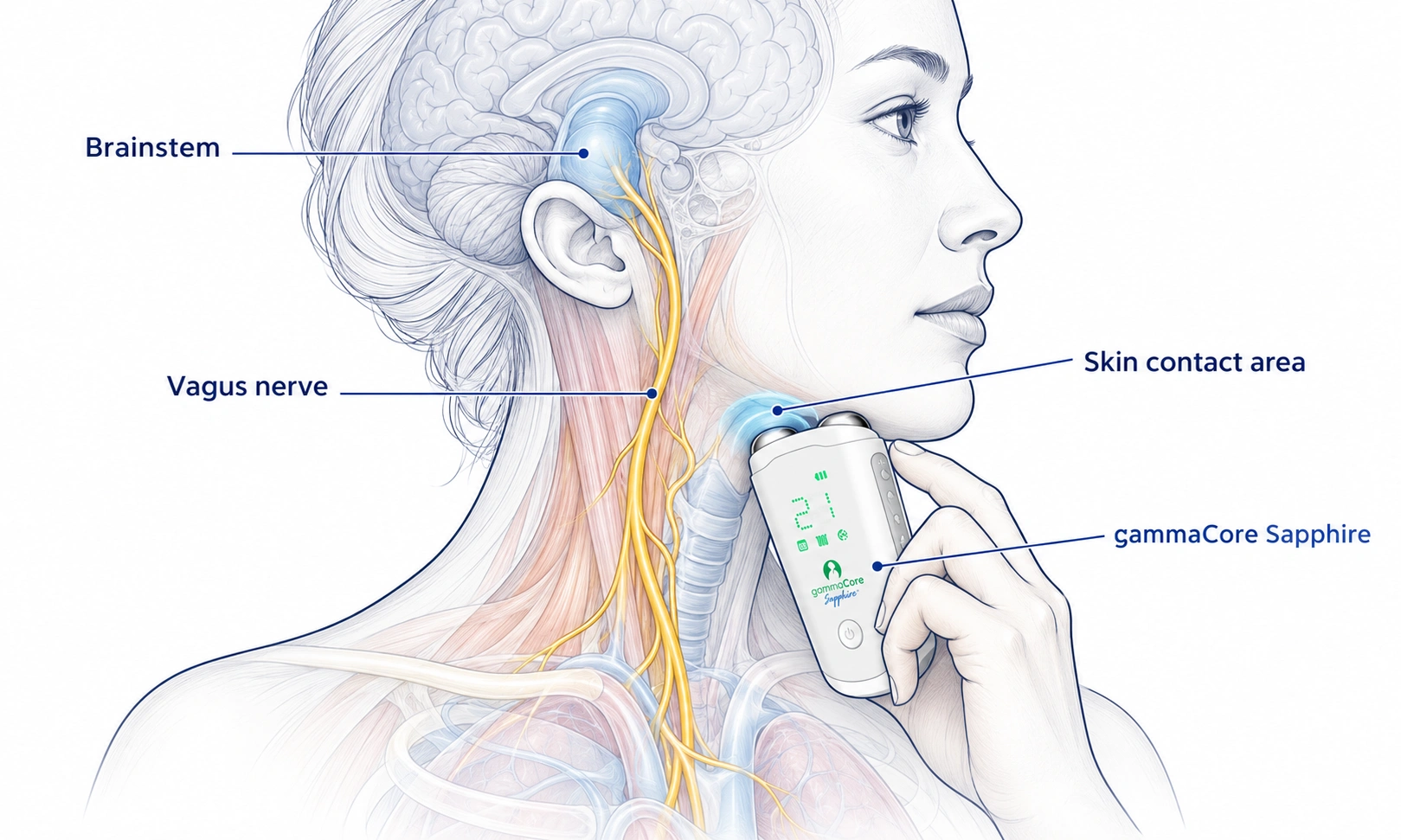
The manufacturer describes gammaCore as a small, portable device that delivers gentle electrical stimulation through the skin, without surgery. In the PRESTO trial described below, participants applied the stimulation themselves, in 120-second doses, to the right and left sides of the neck over the vagus nerve. That is the research setting. It describes how the device was tested, and how it is used in any one person's care is decided after an evaluation.
What FDA clearance means here
FDA clearance describes what a device may be marketed for. It does not tell you how well the device may work for a particular person. According to the manufacturer's published US indications, gammaCore is cleared for the acute and preventive treatment of migraine in adolescents aged 12 and older and in adults. It is also cleared for adjunctive preventive use in cluster headache, meaning alongside other care, and for the acute treatment of episodic cluster headache pain in adults.
What Is the Vagus Nerve, and Why Target It?
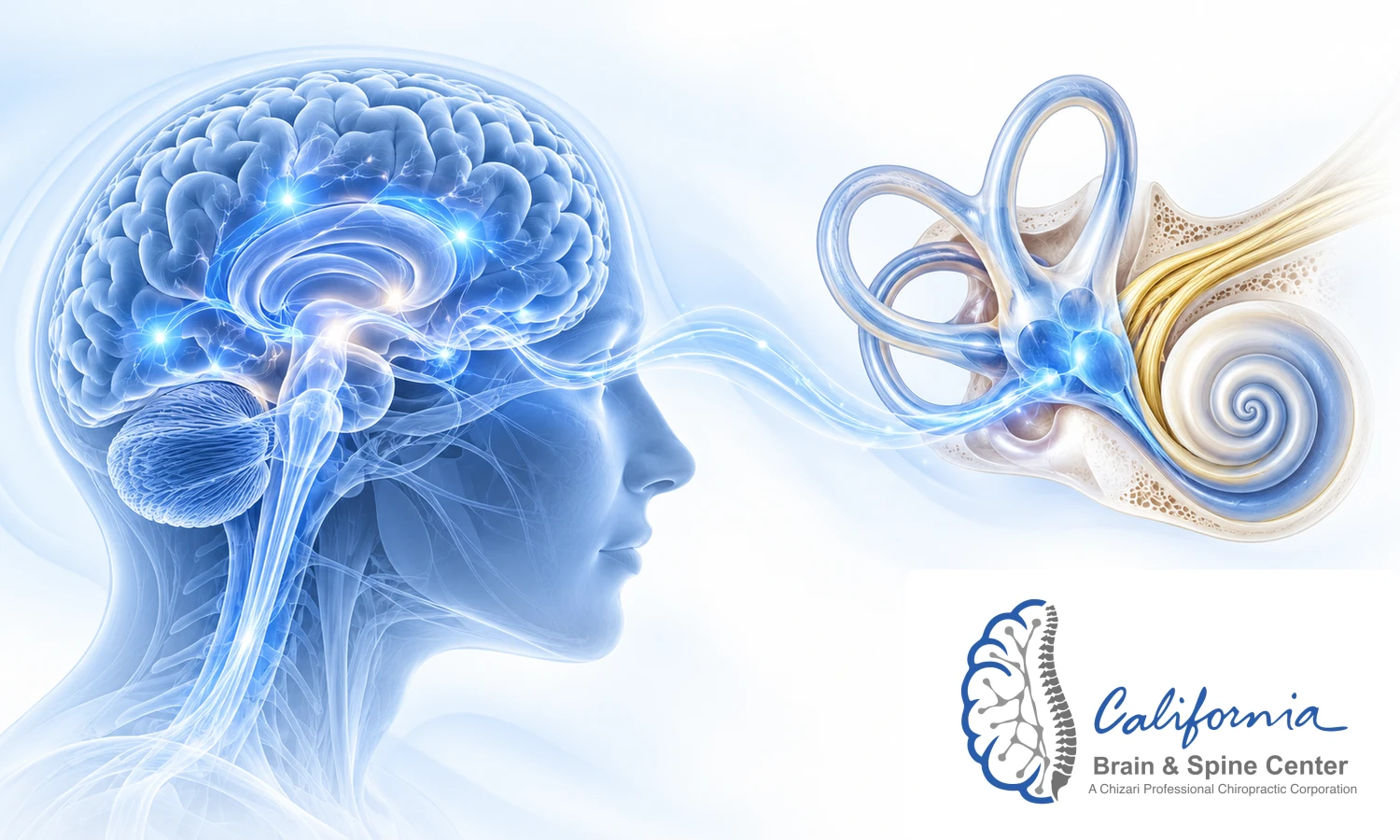
The vagus nerve is the main nerve of the parasympathetic, or rest-and-digest, nervous system, and researchers propose that stimulating it may dampen activity in the pain pathway involved in migraine. That proposal is why a device aimed at this nerve was studied for headache at all.
The nerve runs from the brainstem down through the neck to the chest and abdomen, as the Cleveland Clinic's overview of the vagus nerve describes. Because its path passes through the neck, the side of the neck is where non-invasive vagus nerve stimulation is applied, from outside the body, with nothing implanted.
The proposed mechanism behind vagus nerve stimulation for migraines
Why stimulating this nerve might change a migraine attack is not fully understood. One proposed explanation, discussed by the PRESTO investigators, is that vagus nerve stimulation may dampen activity in the trigeminovascular system, the pain pathway involved in migraine. Researchers describe this as a proposed mechanism and it remains unsettled, so treat it as the reason the device was studied. The trials in the next section are where its effect was actually tested.
Wondering whether gammaCore fits your headaches?
Start with an evaluation and safety screening in Calabasas, and get a plain explanation of your results before any device is discussed.
What Did the gammaCore Trials Find?
The gammaCore trials were mixed: one migraine trial showed an early benefit over a sham device, a prevention trial did not, and two cluster headache trials missed their main goals while showing some benefits over sham. Each trial compared the real device against something, and that comparison matters as much as the result.
Treating a migraine attack: PRESTO
PRESTO, a randomized, sham-controlled trial, compared real stimulation with a sham device in people with episodic migraine. More people had no pain at 30 and 60 minutes after treating an attack with the real device than with the sham. The trial did not meet its main goal, which was having no pain at the two-hour mark. An early signal alongside a missed main goal is a reason for careful interest, and one trial cannot tell you what the device may do for you.
Preventing migraine: PREMIUM
The PREMIUM trial tested daily preventive stimulation in episodic migraine, again against a sham device. Across the whole trial population, the real device was not better than the sham for prevention. The same trial reported that most device-related side effects were mild and short-lived, with discomfort where the device was applied being the most common.
Cluster headache: ACT1, ACT2 and PREVA
A review of the cluster headache evidence reports that the two sham-controlled trials, ACT1 and ACT2, did not meet their primary endpoints, though each showed some significant benefit over sham. A third study, PREVA, found that adding gammaCore to standard care did better than standard care alone in chronic cluster headache. Some of the review's authors were manufacturer staff, which is worth keeping in mind as you read it.
| Trial | Who was studied | What it compared | Main result |
|---|---|---|---|
| PRESTO | Episodic migraine, treating an attack | Real device vs sham device | Main two-hour goal not met; more people had no pain at 30 and 60 minutes with the real device |
| PREMIUM | Episodic migraine, prevention | Daily real device vs sham device | Not better than sham across the whole trial; most side effects mild and short-lived |
| ACT1 and ACT2 | Cluster headache | Real device vs sham device | Primary endpoints missed; each showed some significant benefit over sham |
| PREVA | Chronic cluster headache | gammaCore added to standard care vs standard care alone | Did better than standard care alone |

Who Should Not Use a gammaCore Device?
A gammaCore device should not be used by anyone with an active implanted medical device, such as a pacemaker, a hearing aid implant or any implanted electronic device, according to the manufacturer's labeling. That is the starting point, and the practice's own screening goes a little further.
Before gammaCore is considered at California Brain & Spine Center, every person goes through a safety screening. It looks for:
- any implanted electrical device, including a pacemaker
- any metal implant near the neck
- any significant carotid artery disease
If something on that list applies to you, the device is not used, and the rest of the evaluation still shapes your plan.
Why Does an Evaluation Come Before Any Device?
An evaluation comes before any device because the headache pattern needs to be understood, and a safety screening completed, before gammaCore can be considered at all. At the practice, it may be used as part of a personalized plan for migraine and other headache patterns, and never as a stand-alone promise.
Headaches come in more than one pattern, and the migraine and headache page sets out how the practice approaches them.
If your headaches come with dizziness or a sense of motion, the difference between vestibular migraine and regular migraine is worth reading before a visit.
A practical first step is the headache impact test, a short questionnaire about how headaches affect your days. You can take it at home and bring your answers to the evaluation.
When a headache is an emergency
If symptoms come on suddenly or severely - a sudden severe headache, weakness, trouble speaking, vision loss, or fainting - that is an emergency. Call 911 or go to an emergency room, not a clinic appointment.
A device of any kind belongs to planned care. Sudden or severe symptoms need emergency care first.
Where Can I Get Evaluated for gammaCore Near Calabasas?
California Brain & Spine Center is at 4768 Park Granada, Ste 107, in Calabasas, and people come from across the West Valley, including Agoura Hills, for the evaluation that comes before gammaCore is considered.
If your week runs on the 101 and a migraine day means a lost workday, a 120-minute neurodiagnostic assessment can look like a lot of time to set aside. It is that long so there is room to test, to screen and to explain. Dr. Alireza Chizari, DC, DACNB, goes through each result in plain language before any option, gammaCore included, is discussed.
What Do Patients Ask Me About New Headache Options?
One question patients often ask me about any new headache option is whether it means they can take less medication. My answer is the same for gammaCore as for anything else I offer: it is never a reason to stop or change a prescribed medication, and that decision stays with the physician who prescribed it.
The device's own cluster headache clearance names it as an add-on, for adjunctive preventive use alongside other care. I read that the same way for migraine. If gammaCore has a place in your plan, it sits next to the care you already have.
Another thing people ask is what the first visit involves. It is built around the neurodiagnostic assessment, in which I look at how your headaches behave, how your eyes move and how your balance holds up. gammaCore comes up only after that, and only if the screening allows it.
"He listened carefully to all my concerns and took the time to explain my condition and the treatment options in a way that was clear and easy to understand."
From a Google review
Common Questions About the gammaCore Device
Short answers to the questions people search for most about the gammaCore device, from cost to side effects.
How much does a gammaCore device cost?
The practice does not publish prices for the gammaCore device on any page. Whether it fits your plan depends on your evaluation and safety screening, and that comes first. For cost questions, call (818) 649-5300 or book a complimentary consultation, and the practice can talk you through it before you decide anything.
Where is a gammaCore device applied?
A gammaCore device is applied at the side of the neck, over the vagus nerve. In the PRESTO trial, participants gave themselves two-minute stimulations on the right and left sides of the neck. The manufacturer describes the stimulation as gentle and delivered through the skin, with no surgery or implant involved.
Is gammaCore for migraines FDA approved?
gammaCore for migraines is FDA cleared, the regulatory term that applies to it, rather than FDA approved. In the US it is cleared for the acute and preventive treatment of migraine in adults and in adolescents aged 12 and older. Clearance describes what it may be marketed for, not how well it may work for you.
Does non-invasive vagus nerve stimulation have side effects?
In the PREMIUM trial of non-invasive vagus nerve stimulation, most device-related side effects were mild and short-lived, and discomfort where the device was applied was the most common. That does not mean anyone can use it: the labeling rules out people with an active implanted electronic device, which is why screening comes first.
Can I be screened for a gammaCore device in Calabasas?
Yes. At California Brain & Spine Center in Calabasas, the gammaCore device is considered only after an evaluation and a safety screening for implanted electrical devices, pacemakers, metal implants near the neck and significant carotid artery disease. If it suits your plan, it is one part of that plan, never the whole of it.
If you are weighing a gammaCore device, I would like you to go in with the whole picture: a cleared, non-invasive option with mixed trial results, which may have a place in a personalized plan for some people with migraine or cluster headache after a careful evaluation. Bring your questions, your headache history and your medication list, and I can go through them with you.
California Brain & Spine Center | (818) 649-5300 | Calabasas, CA 91302
Book online at californiabrainspine.janeapp.com.
This content is for educational purposes only and is not medical advice. Consult a qualified healthcare provider about your specific situation.
Talk through gammaCore with Dr. Chizari
Bring your headache history and your medication list. A complimentary consultation is the place to ask whether an evaluation makes sense for you.