NeuroSensory Integration · Calabasas, CA
NeuroSensory Integration (NSI)Retraining how the brain combines what it sees, feels and senses
When the eyes, the inner ear and the body report different things, the brain has to guess. Busy stores, screens, traffic and crowds become exhausting, and balance starts to feel unreliable.
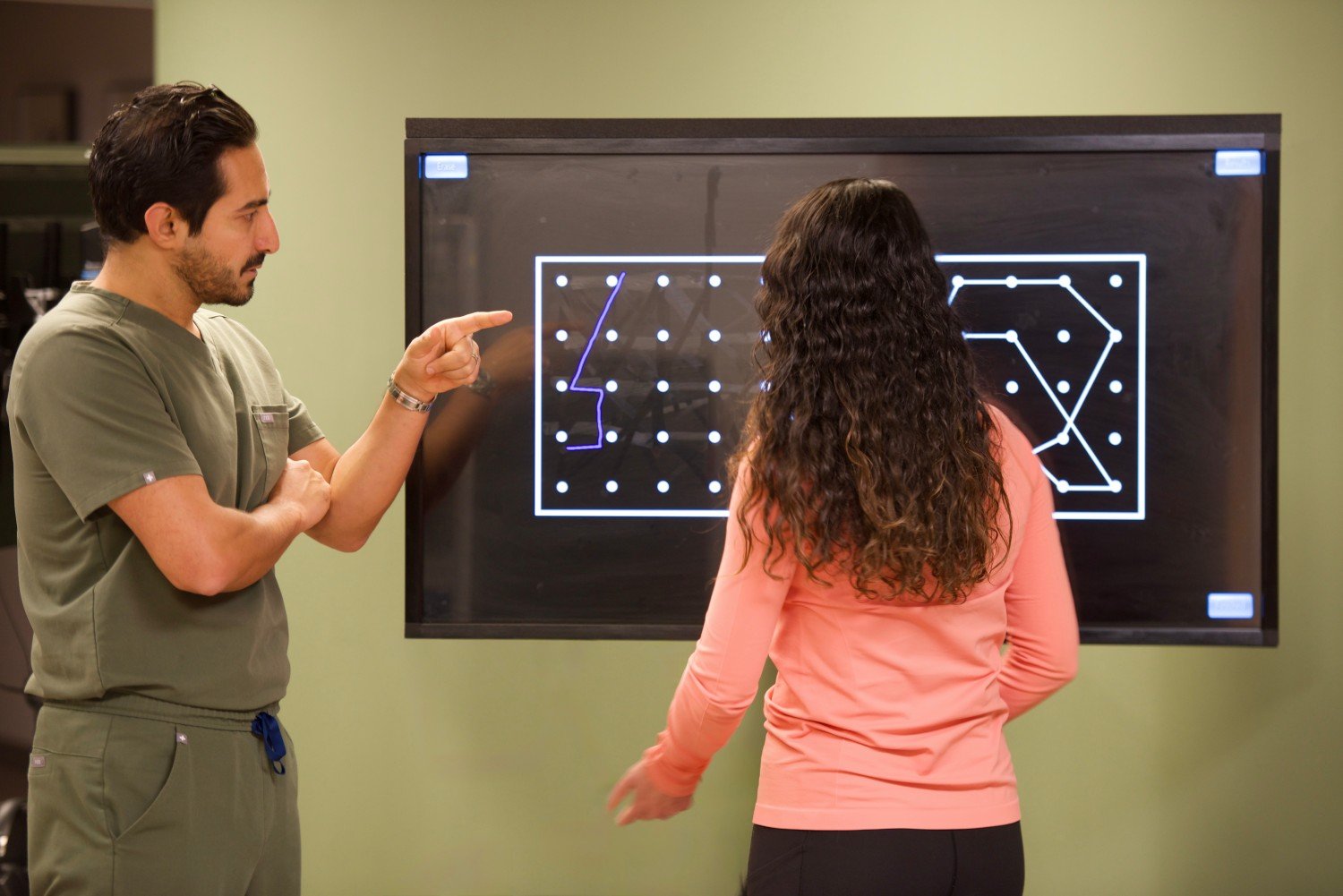
NeuroSensory Integration is the structured sensory retraining used at California Brain & Spine Center when testing shows that sensory systems are in conflict. Dr. Alireza Chizari, DC, DACNB, a board-certified chiropractic neurologist, measures how your visual, vestibular and body-sense systems are working together, then delivers controlled, graded sensory input aimed at the mismatch the testing found. It is used most often after concussion, with persistent dizziness and motion sensitivity, and as part of support for children and adults with sensory processing differences.
- Evaluation first, always
- Objective testing & reassessment
Who NSI is for
Signs the Senses Are Not Agreeing With Each Other
The brain builds its sense of balance and position from three sources at once: the eyes, the vestibular system of the inner ear, and the body's own position sense. After a concussion, with a vestibular problem, or in some children and adults with sensory processing differences, those sources stop agreeing. The symptoms below are the ones that most often lead to NSI being considered.
Sensory Overload
Supermarkets, malls, restaurants and crowds that leave you drained, irritable or nauseated within minutes.
Visual Motion Sensitivity
Scrolling feeds, moving traffic, patterned floors and being a passenger that make the world feel like it is sliding.
Unsteadiness and Clumsiness
Bumping into door frames, misjudging steps, holding the cart or the wall, and a balance that depends on being able to see.
Light and Sound Sensitivity
Fluorescent lighting, headlights and background noise that feel far louder and brighter than they used to.
Post-Concussion Sensitivity
Dizziness, fog and fatigue that persist after a head injury even though scans, eye exams and hearing tests were normal.
Sensory Differences in Children
A child who is overwhelmed by sounds, textures or busy rooms, or whose coordination and body awareness lag behind their peers.
These patterns are common after concussion and mild TBI, alongside dizziness and vertigo, and in some neurodevelopmental differences. Whether NSI is the right tool depends on what the evaluation shows, not on the symptom name.
What NSI actually is
Controlled Sensory Input, Aimed at a Measured Mismatch
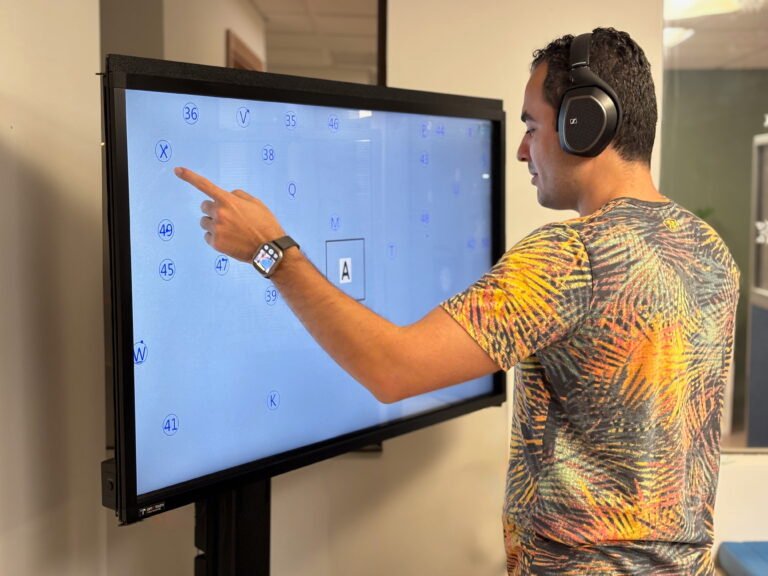
NeuroSensory Integration is not a device and not a single exercise. It is a structured way of giving the nervous system specific visual, vestibular, auditory and body-position input in a controlled order and at a controlled intensity, so that the systems which have stopped agreeing are asked to work together again under conditions they can manage.
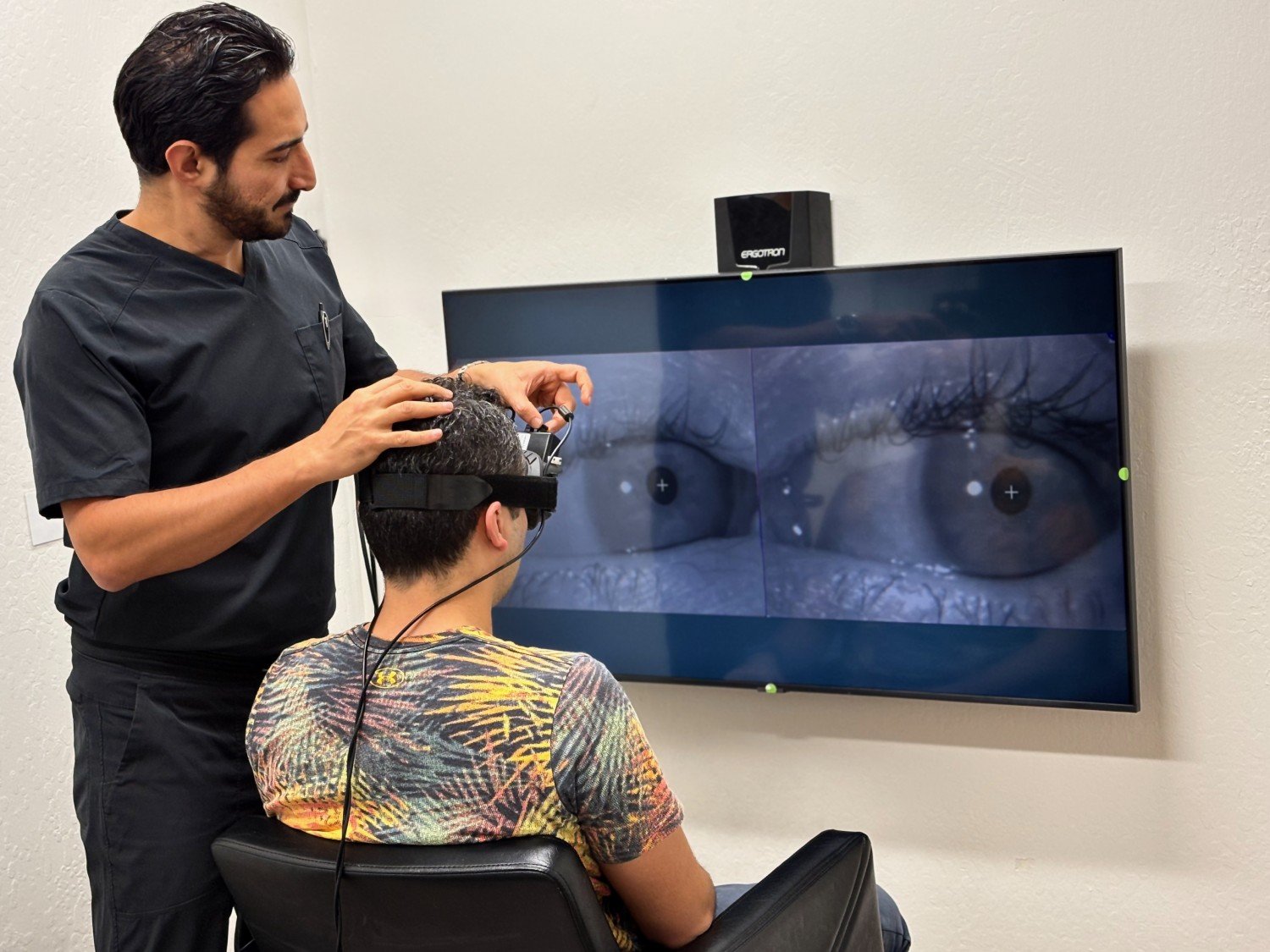
The starting point is always the evaluation. Recorded eye-movement testing and balance testing under different sensory conditions show which input the brain is over-relying on and which it is discounting. NSI then deliberately changes that balance: reducing the input that is dominating, adding the input that is being ignored, and progressing the challenge only as the response settles. The brain's capacity to reorganise around what it practises, its neuroplasticity, is the mechanism this relies on; it is not something the clinic sells, and NSI is not a substitute for the vestibular, oculomotor or cognitive retraining that usually follows it.
- Sensory recalibration: graded exposure to the light, sound and visual motion that currently overwhelm, so tolerance rises without provoking a crash
- Balance and coordination input: vestibular and body-position challenges that teach balance to rely less on vision alone
- Visual-motor integration: tracking, timing and hand-eye tasks that reconnect what the eyes see with how the body responds
The evaluation
How We Decide Whether NSI Is the Right Tool
NSI is prescribed from findings, never from a symptom list. Dr. Chizari performs the evaluation himself, and the same measures are repeated at each stage of care so change is a number rather than an impression.
Video Eye-Movement (VNG) & Oculomotor Testing
Fixation, saccades, smooth pursuit, convergence and gaze stability recorded on video, showing how the visual system behaves under load.
Computerized Posturography
Balance measured with eyes open, eyes closed and on an unstable surface, which reveals how much the balance system depends on each sensory input.
Pupillary Light Reflex & Orthostatic Responses
Pupillometry and heart-rate and blood-pressure changes on standing, which often explain light sensitivity and the fatigue that follows sensory overload.
Clinical Neurological Examination
Coordination, reflexes, eye-head coordination, body-position sense and neck contributors, examined hands-on and recorded as the baseline.
How a course of care works
Where NSI Sits in the Plan
NSI is usually a short, early block rather than the whole program. Its job is to settle the sensory conflict enough that the harder retraining can begin. How long each stage takes depends on your findings and your response, and no timeline is promised before testing.
Evaluation and Baseline
The testing above, plus a detailed history of when and where symptoms are worst. The output is a baseline every later measurement is compared against.
NeuroSensory Integration Block
Controlled sensory input in the clinic, progressed session by session as tolerance rises, with a short home routine that keeps the input consistent between visits.
Active Retraining
Gaze stabilisation and habituation through vestibular rehabilitation, oculomotor drills, and cognitive rehabilitation where endurance under load is the limiting factor.
Reassessment and Real Life
The baseline measures are repeated. Screen time, busy environments, driving and sport are reintroduced in stages, and a short maintenance routine is kept.
In selected cases, supportive technologies such as photobiomodulation, PEMF or hyperbaric oxygen may be added alongside the plan; they are never the plan itself. Care runs alongside, not instead of, your physician, and if the evaluation shows something outside this clinic's scope, Dr. Chizari will say so and refer you on. Care is self-pay, and a superbill is provided on request.
Patient reviews
What Patients Say About Our Care
Verified Google reviews from patients of California Brain & Spine Center in Calabasas, in their own words.
Reviews reflect individual experiences. Results vary from person to person and no outcome is guaranteed.
Questions
NeuroSensory Integration: Questions Patients Ask in Calabasas
What is NeuroSensory Integration therapy?
It is structured sensory retraining: controlled visual, vestibular, auditory and body-position input delivered in a planned order and intensity, aimed at the specific mismatch between sensory systems that your evaluation identified. It relies on the nervous system's capacity to adapt to what it practises, and it is followed by active vestibular, oculomotor or cognitive retraining rather than replacing them.
Is NSI evidence-based?
The components are: graded sensory exposure, vestibular habituation, gaze stabilisation and visual-motor training each have supporting research for dizziness, motion sensitivity and post-concussion symptoms. NSI is this clinic's structured way of sequencing them from objective findings. What makes it accountable is measurement: the same tests are repeated at each stage, and if the numbers do not move, the plan changes.
How many NSI sessions will I need?
That is decided after the evaluation, not before it, and it is revised as re-testing shows how you respond. NSI is usually a short block at the start of a plan rather than a long course on its own. Anyone quoting a fixed number of sessions before testing you is guessing.
Can children have NeuroSensory Integration?
Yes. Sensory overload, poor body awareness and coordination differences are common reasons families come in, and the testing is adapted to age. NSI supports, and does not replace, the care of the child's pediatrician, developmental specialists, occupational therapist or school team, and findings are shared with them with your permission.
Will the sessions make my symptoms worse?
Brief, mild symptoms during a session are expected; they are the sign that the right system is being challenged. Intensity is set from your testing and kept below the level that provokes a lasting flare. Anything that leaves you worse for hours is dialled back, not pushed through.
Do you accept insurance for NSI?
Care at California Brain & Spine Center is self-pay. A superbill is provided on request so you can submit it to your insurer for any out-of-network reimbursement your plan allows. No referral is needed to book an evaluation.
Find Out Whether Your Senses Are Working Against Each Other
A complimentary consultation is a chance to talk through what you or your child are experiencing and whether an evaluation at California Brain & Spine Center in Calabasas makes sense. No referral needed, and no obligation to continue.
California Brain & Spine Center · 4768 Park Granada, Ste 107, Calabasas, CA 91302 · (818) 649-5300
This page is educational and is not medical advice. Care is provided by Dr. Chizari, a Doctor of Chiropractic and board-certified chiropractic neurologist. Individual results vary, and no outcome is guaranteed.