Non-invasive · Calabasas · Same-week appointments
Dysautonomia Specialist
Calabasas
An invisible illness is still an illness.
Dizzy every time you stand. A heart that races for no reason. Fatigue and brain fog that don't match your life. And test results that keep coming back "normal." At California Brain & Spine Center, Dr. Alireza Chizari, DC, DACNB, our board-certified functional neurologist, takes autonomic symptoms seriously - with structured, non-invasive dysautonomia treatment in Calabasas built on pattern recognition.
You're not imagining it
Dismissed too often, real all along
- Autonomic disorders affect over 70 million people worldwide
- POTS - the best-known subtype - was estimated to affect 1–3 million Americans before the pandemic, and about 1 in 100 teenagers
- In a large patient survey, people with POTS reported lengthy delays and misdiagnosis before the right diagnosis - a median of 24 months
The system behind the symptoms
What is dysautonomia - and why does it touch everything?
Dysautonomia is the umbrella term for dysfunction of the autonomic nervous system - the network that quietly runs your body in the background. When it stops regulating well, the body overreacts to ordinary things: standing, walking, heat, meals, stress, exertion.
Some patients have a recognizable subtype such as POTS (postural orthostatic tachycardia syndrome); others have mixed or less clearly defined autonomic patterns. That's why structured dysautonomia treatment in Calabasas starts with a proper evaluation - because dysautonomia is not the same in every patient. We see patients from Calabasas, Woodland Hills, Agoura Hills, Malibu, Thousand Oaks, and the greater Los Angeles area.
Request an evaluation →
Your autonomic nervous system regulates all of this - which is why dysautonomia symptoms feel like they're everywhere at once:
Understanding dysautonomia
The six ways autonomic dysfunction shows up
Symptoms may occur alone or in combination - some patients have mostly upright intolerance, others have stronger cognitive, digestive, or post-concussion features.
Standing Intolerance
Dizziness, light-headedness, or near-fainting when you stand - symptoms that flare with posture changes. Why do I feel dizzy when I stand up?
Racing Heart & BP Swings
Rapid heart rate, palpitations, or blood pressure instability - sometimes with chest discomfort or shakiness. Heart racing when standing
Fatigue & Brain Fog
Exhaustion that doesn't match your activity level, slowed thinking, and trouble concentrating. Fatigue in POTS
Digestive Symptoms
Nausea, bloating, constipation, or early fullness - autonomic dysfunction reaches digestion too. POTS and nausea
Heat & Exercise Intolerance
Mild exertion or warm environments trigger flares - with post-exertional crashes and slow recovery. POTS and heat intolerance
Sleep & Sensory Overload
"Wired but tired" - unrefreshing sleep, visual sensitivity, and feeling overwhelmed by light, noise, or busy spaces. POTS and sleep
Your path to answers
What to expect at our dysautonomia clinic in Calabasas
Autonomic symptoms overlap with anxiety, thyroid, vestibular, and other conditions - so the evaluation asks what pattern is present, what triggers it, and what must be ruled out for safety.
History & pattern mapping
A detailed symptom history: your triggers and flare patterns, prior testing and diagnoses, and how symptoms affect work, school, exercise, and daily function - the full picture, not a checklist.
In-clinic screening
Posture-related symptom assessment, orthostatic measurements when appropriate, neurological screening, and vestibular screening when dizziness or imbalance is present - all non-invasive.
Your roadmap - and referrals
Dr. Chizari, DC, DACNB, determines whether your pattern looks primarily autonomic, vestibular, metabolic, or multi-factorial - and when your case calls for co-management with primary care, cardiology, medical neurology, or lab testing, that referral is part of the plan.
Watch
Dysautonomia evaluation and care, explained
Dr. Chizari explains how autonomic symptoms are evaluated and treated at California Brain & Spine Center in Calabasas.
Inside the program
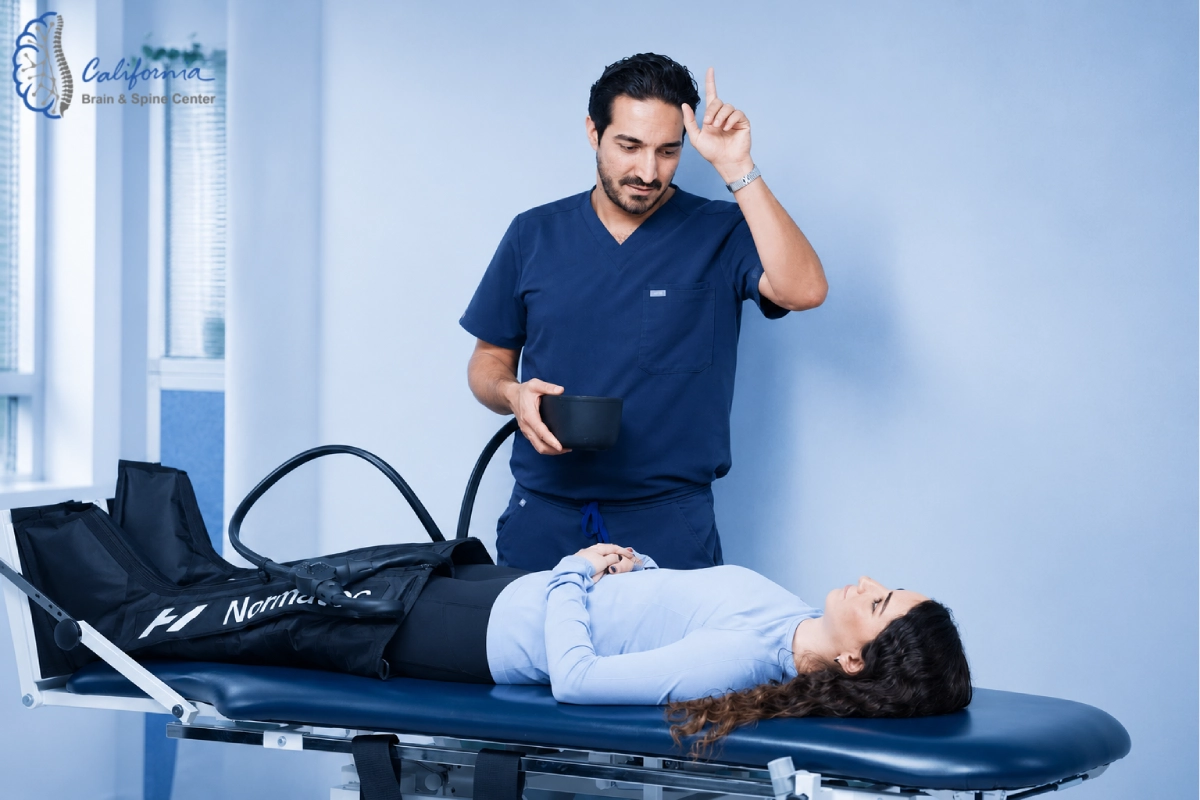
Non-invasive care built around your pattern
Treatment for dysautonomia is not one-size-fits-all. Depending on your symptom pattern, tolerance, and clinical findings, your plan may include:
Safety first
Symptoms we evaluate - and when to go to the ER first
Most autonomic symptoms are not emergencies - but some patterns must be evaluated urgently before any routine appointment.
We evaluate symptoms like these
- Dizziness or near-fainting when standing
- Rapid heart rate or palpitations with posture changes
- Fatigue, brain fog, and sensory overload that don't match your activity level
- Heat intolerance and post-exertional crashes
- Nausea, digestive discomfort, and unrefreshing sleep
If hydration alone hasn't solved it - or you've been told it's anxiety but the pattern feels physical and consistent - an evaluation is worth it. No referral needed.
Seek urgent or emergency care right away for
- Chest pain, chest pressure, or severe shortness of breath
- Repeated fainting, or fainting with injury
- Sudden one-sided weakness, facial drooping, slurred speech, or vision loss
- Vomiting blood, or black or bloody stools
- Severe dehydration, severe confusion, or a new severe headache unlike your usual pattern
If symptoms come on suddenly or severely - a sudden severe headache, weakness, trouble speaking, vision loss, or fainting - that is an emergency. Call 911 or go to an emergency room, not a clinic appointment.
Emergency symptoms should always be evaluated first. Once you've been cleared, an evaluation can look at what remains.
Keep reading
Reading that helps before and after your first visit
Most people who land on this page have already spent months collecting symptoms without a name for them. If you have not been evaluated yet, start with how POTS is diagnosed, step by step. If the diagnosis is already in hand, the symptom guides tend to be more useful: adrenaline dumps in POTS, shortness of breath and air hunger in POTS, and the POTS symptoms checklist, a practical way to organise what you have noticed before you speak to Dr. Chizari. Exercise for POTS covers the part of care most people are nervous about. None of these replace an evaluation, but they usually make the first conversation shorter and more useful.
Common questions
Frequently asked questions
What does a dysautonomia specialist do?
A dysautonomia specialist evaluates symptoms tied to autonomic nervous system dysfunction - dizziness, rapid heart rate, near-fainting, fatigue, brain fog, and posture-related flares. The goal is to identify your pattern, rule out important overlaps, and build an individualized treatment strategy rather than a generic label.
Is dysautonomia just anxiety?
No - though it's frequently mistaken for it. In a large patient survey, people with POTS reported lengthy delays and misdiagnosis before the physical cause was found. Anxiety can coexist with autonomic dysfunction, but a consistent, posture-triggered physical pattern deserves a proper autonomic evaluation, not a dismissal.
Do I need a dysautonomia specialist near me if I think I have POTS?
If you suspect POTS or another autonomic disorder and symptoms affect your ability to function, yes. A structured evaluation can determine whether your symptoms fit an autonomic pattern, and whether confirmatory medical testing - such as a tilt-table or standing test through cardiology - should be coordinated.
Can dysautonomia be treated without medication?
Non-invasive care may help, depending on the pattern: hydration and electrolyte strategy, activity pacing, trigger management, vestibular and cognitive rehabilitation, and neuroplasticity-based retraining. When medication or further workup is appropriate, we coordinate with your primary care provider, cardiologist, or medical neurology - co-management is part of safe care.
When should I see a dysautonomia clinic in Calabasas?
Consider an evaluation if you have ongoing dizziness when standing, rapid heart rate, unexplained fatigue, fainting, brain fog, heat intolerance, or poor tolerance for normal daily activity - especially if testing has come back "normal" while symptoms continue. Our Calabasas clinic offers structured, autonomic-focused evaluations with no referral needed.
Take the next step
You don't need perfect motivation.
You need the right roadmap.
Dysautonomia makes life unpredictable - but a structured evaluation and a paced, non-invasive plan can help you work toward a more stable, functional daily life. That's how Dr. Chizari, DC, DACNB, approaches dysautonomia treatment in Calabasas.
California Brain & Spine Center · 4768 Park Granada, Ste 107, Calabasas, CA 91302
This content is for educational purposes only and is not medical advice. Consult a qualified healthcare provider about your specific situation.