Non-invasive · Non-thermal · Calabasas
Cold Laser Therapy
in Calabasas
Low-level laser therapy (LLLT), with the evidence stated plainly.
Pain that lingers, nerve irritation, symptoms after a head injury, or the frustration of a body that is not recovering the way you expected. Cold laser therapy, also called low-level laser therapy or photobiomodulation, is a non-invasive treatment that uses non-thermal light. At California Brain & Spine Center in Calabasas, Dr. Alireza Chizari, DC, DACNB, a Board-Certified Functional Neurologist, considers it only after an evaluation, as one part of a personalized plan.
The quick, honest answer
What to know first about cold laser therapy
What it is
Light without heat
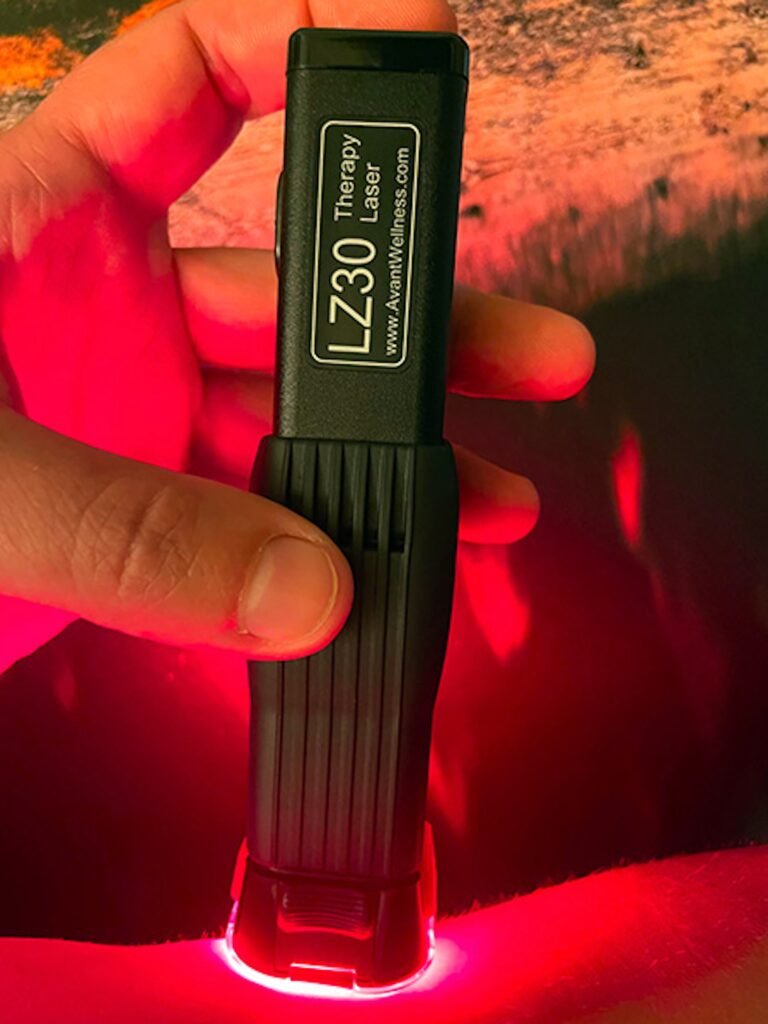
Cold laser therapy is a non-invasive treatment in which non-thermal laser light is applied to the painful area. Researchers also call it photobiomodulation, and it has been studied for pain relief, tendon problems, nerve injury, osteoarthritis and wound healing.
How the clinic may help
Matched to your evaluation
Treatment decisions rest on a detailed neurological, musculoskeletal and functional evaluation. When clinically appropriate, cold laser therapy may sit alongside vestibular rehabilitation, concussion care, PEMF, HBOT or the NeuroRevive Program.
The next step
Evaluate before you decide
A personalized evaluation helps decide whether cold laser therapy fits your condition and goals, or whether something else should come first. You can book a complimentary consultation or call to talk it through.
The science, simply
How the light may act on cells
Cold laser therapy does not cut, burn or heat tissue. Its light is thought to be absorbed inside the mitochondria, the cell's energy centers, and one of the main light-absorbing molecules there is an enzyme called cytochrome c oxidase (de Freitas and Hamblin). A central hypothesis in that review is that the light frees nitric oxide from that enzyme, which may increase the cell's energy (ATP) production.
That proposed mechanism is one reason photobiomodulation has been studied for problems as different as pain, tendinopathy, nerve injury, osteoarthritis and wound healing (review on Europe PMC). Dr. Chizari considers it only as one part of a plan, which is why the evaluation looks at the whole person first.
What the research shows
What the research on cold laser therapy shows
Careful language matters. These are findings from published studies, not promised outcomes, and results vary between people.
Light Absorbed by an Enzyme
Cytochrome c oxidase, in the mitochondria, is one of the main molecules thought to absorb red and near-infrared light.
A Proposed Energy Effect
A central hypothesis is that the light may increase mitochondrial energy (ATP) production.
Neck Pain Evidence
In a Lancet meta-analysis, it was associated with reduced neck pain, and in chronic cases the reduction lasted some weeks after treatment ended.
Mild Side Effects
In that review, reported side effects were mild and no different from placebo (Europe PMC record).
A Broad Research Base
Photobiomodulation has been studied for pain relief, tendinopathy, nerve injury, osteoarthritis and wound healing.
Brain Injury: Early Research
Most brain-injury studies are in animals; the one human study in a systematic review supports safety and feasibility, not proven benefit.
Where it may fit in
Concerns cold laser therapy is considered for
Evaluation comes first, and it looks at the whole person. Cold laser therapy is meant to support a care plan, not replace one.
Musculoskeletal Pain
Neck pain has a published meta-analysis behind it, and tendon and joint problems have been studied too. It may be considered as part of care for chronic neck and spine pain.
Nerve Irritation & Neuropathy
Nerve injury is among the uses researchers have explored. It may be considered once the evaluation has identified the likely cause of the nerve symptoms.
Post-Concussion & Brain Fog
Research here is early and mostly in animals, so it is never the plan by itself. Any use sits inside a broader plan for post-concussion symptoms and brain fog.
Post-Surgical Recovery
Wound healing is one of the studied uses. It is considered only with your surgeon's or treating provider's clearance and at a suitable healing stage.
Within a neurological plan
Cold laser therapy within functional neurology
The evaluation examines your history, your symptoms and clinical testing of the nervous and musculoskeletal systems, and looks at how these systems work together before choosing any single therapy.
Light applied to the head, sometimes called transcranial photobiomodulation, is still an early field. In a systematic review of acute brain injury, most studies were in animals, and the human data so far speak to safety and feasibility rather than proven benefit. Dr. Chizari explains that plainly before it becomes part of any plan.
Your treatment pathway
Understandable and grounded
Here is what the process looks like, step by step.
Assessment
History, symptoms, functional goals and clinical testing guide whether cold laser therapy is appropriate. See how to read your functional neurology report.
Precision mapping
Dr. Chizari identifies which tissues, nerves or systems need support, and why.
Personalized plan
Any laser use is matched to your findings, tolerance and recovery priorities, with session count set individually.
Integrated therapy
May be combined with neurological, vestibular, cognitive or rehabilitative therapies.
Progress tracking
Symptoms, function, tolerance and objective changes are monitored over time.
The goal: function
The aim is greater stability, comfort, confidence and daily capacity, not chasing symptoms one at a time.
Watch
What the light is actually doing
A short video from California Brain & Spine Center about low-level laser therapy and how it fits into care at the practice.
Honest clinical communication
How therapies are combined, and what safety requires
The purpose of combining therapies is never to stack treatments for their own sake. It is to support different layers of recovery in a coordinated way.
May be paired with cold laser therapy
- Vestibular rehabilitation and cognitive rehabilitation
- PEMF, when clinically appropriate
- HBOT, after its own screening
- GammaCore and the NeuroRevive Program
Each part of a combination plan is chosen for a clear purpose, not added by default.
Why screening comes first
- Side effects reported in trials were mild, but not every patient should receive the same treatment
- Medical history and current diagnosis matter
- Treatment region and the tissue's healing stage matter
- Neurological status shapes the right approach
That is why Dr. Chizari evaluates before recommending cold laser therapy, rather than assuming it is right for everyone.
If symptoms come on suddenly or severely - a sudden severe headache, weakness, trouble speaking, vision loss, or fainting - that is an emergency. Call 911 or go to an emergency room, not a clinic appointment.
A question patients often ask
When recovery has stalled
One question patients often ask me is whether cold laser therapy can help when symptoms after a head injury have not settled. My honest answer starts with the research: in brain injury, most studies so far are in animals, and the human data speak to safety and feasibility, not proven benefit. So the first visit is not about the laser. The 120-minute neurodiagnostic assessment looks at your history, your symptoms, your goals and clinical testing, and the plan follows what it finds. Our guide to post-concussion recovery explains the wider picture.
If cold laser therapy has a place in your plan, you should know why it is there and what the evidence does and does not show.
Dr. Chizari
Common questions
Frequently asked questions
What is cold laser therapy used for?
Cold laser therapy has been studied for pain relief, tendon problems, nerve injury, osteoarthritis and wound healing, and neck pain has a published meta-analysis behind it. At the practice it may be considered for musculoskeletal pain, nerve irritation, post-surgical support with clearance, and as an adjunct in selected neurological plans, when it matches the cause.
Does cold laser therapy work?
Cold laser therapy has some published support, and it depends on the problem. A Lancet meta-analysis found it was associated with reduced neck pain, lasting some weeks after treatment in chronic cases. For brain injury, research is early and mostly in animals, so a benefit there is not established. Results vary between people.
Is LLLT safe?
In the neck-pain trials reviewed in the Lancet, reported side effects of low-level laser therapy were mild and no different from placebo. Safety still depends on screening, correct application and your medical history, which is why Dr. Chizari evaluates before recommending it rather than assuming it suits everyone.
How much does cold laser therapy cost, and does insurance cover it?
Prices are not published on this page; for pricing, call (818) 649-5300 or book a complimentary consultation. Coverage should not be assumed: major insurers such as Aetna class cold laser therapy as experimental, investigational or unproven for many uses, including neck and back pain and traumatic brain injury.
How many LLLT sessions might I need?
There is no fixed number. Session count and frequency are set individually after the evaluation, based on the condition, how long it has been present, the tissue involved and whether low-level laser therapy is part of a larger plan. The plan is reviewed as progress is tracked.
Where can I find cold laser therapy near me in the Los Angeles area?
California Brain & Spine Center offers cold laser therapy at 4768 Park Granada, Ste 107, Calabasas, CA 91302, convenient to Agoura Hills, Woodland Hills and Los Angeles. Every course starts with an evaluation, so the first step is a complimentary consultation or a call to (818) 649-5300.
If you feel stuck
You don't have to guess
your way forward.
Some patients may benefit from cold laser therapy as part of their care. Others need a broader neurological or vestibular plan, and some need both. A personalized evaluation in Calabasas clarifies the next step, with the goal of better function and stability rather than symptom management alone.
California Brain & Spine Center · 4768 Park Granada, Ste 107, Calabasas, CA 91302 · Serving Southern California
This content is for educational purposes only and is not medical advice. Consult a qualified healthcare provider about your specific situation.