
If you live in or near Woodland Hills and you feel unsteady, off balance, or afraid you might fall, I know how disruptive that can be. Simple things like walking through a store, stepping into the shower, or turning quickly in the kitchen can suddenly feel unsafe. In this article, I, Dr. Alireza Chizari, DC, DACNB, will explain how we approach care at a balance problems treatment center in Woodland Hills area through our clinic in Calabasas, so you can move from uncertainty toward a clear, scientific plan.
You are the hero of this story. You have been carrying the weight of dizziness, unsteadiness, or near falls while still trying to show up for work, family, and your own goals. My role, together with my team at California Brain & Spine Center, is to be your guide. We use advanced vestibular and neurological tools, along with a deep understanding of neuroplasticity, to help your brain and body find stability again.
balance disorder treatment near Woodland Hills
This page is about what you can expect from a balance problems treatment center in Woodland Hills region: when to seek urgent help, what a thorough balance evaluation looks like, which treatments we use, and how you can support your own recovery. If you choose to work with us, this article will help you feel prepared for your first visit to our Calabasas clinic.
When balance problems quietly take over daily life in Woodland Hills
When patients first see me, they rarely say, “I have a balance disorder.” They say things like, “I feel wobbly,” “It is like walking on a boat,” or “I am afraid I might fall if I turn too fast.” These are exactly the people a balance problems treatment center in Woodland Hills area is designed to help.
You might notice that:
-
You reach for walls, furniture, or railings more than you used to.
-
Dark rooms or uneven ground around Woodland Hills make you especially anxious.
-
Quick head turns, busy visual environments, or getting out of bed trigger unsteadiness.
-
You avoid activities you once enjoyed, just in case you lose your balance.
From my perspective, these are not just minor annoyances. They are signals that your brain, inner ears, eyes, neck, and body are not integrating information as smoothly as they once did. My goal is to listen carefully to how balance problems show up in your life, then use that information to guide a precise evaluation.
When to worry: balance problems that need urgent medical care
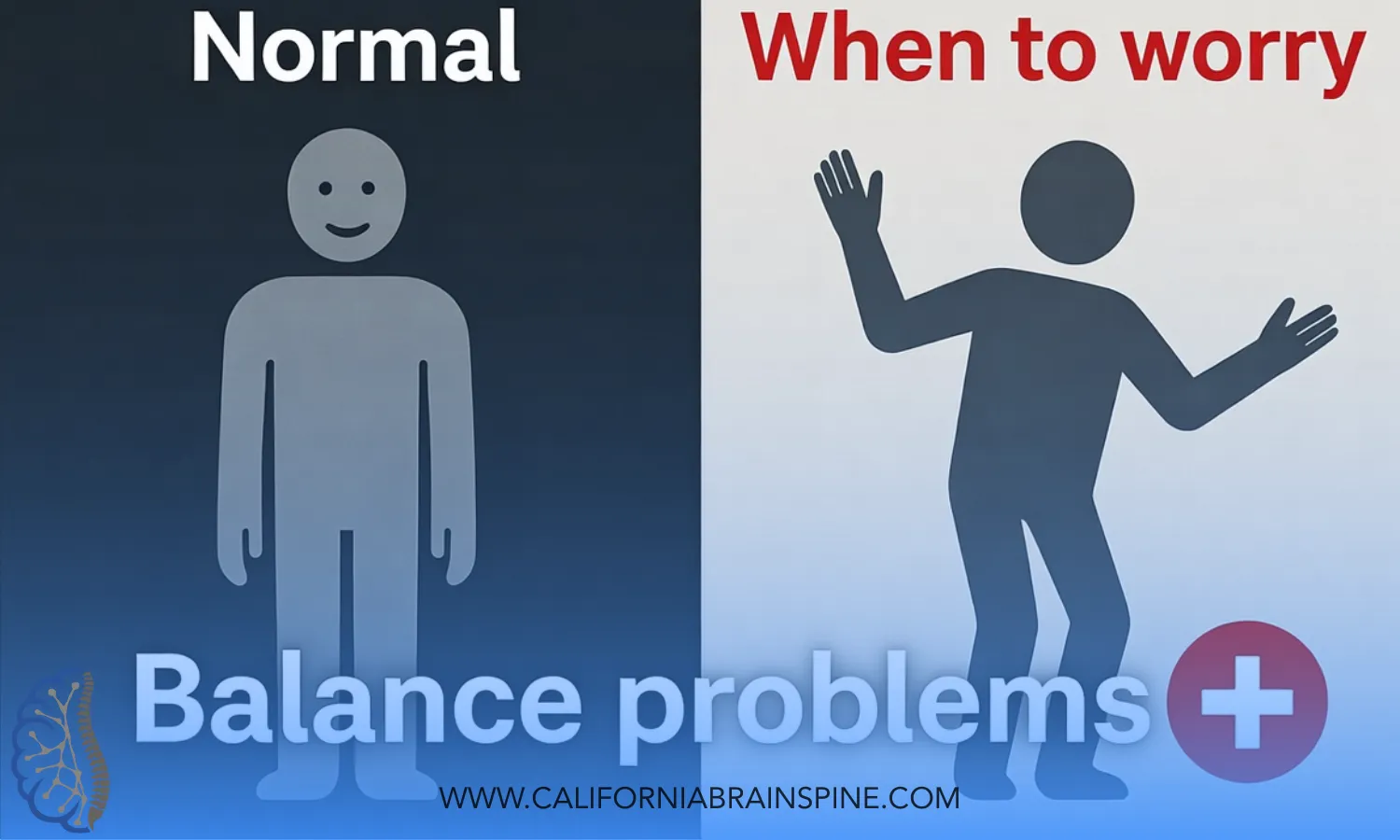
Before we talk about rehabilitation, we must talk about safety. Most people who come to a balance problems treatment center in Woodland Hills area do not have a medical emergency, but some symptoms should never be ignored.
You should seek urgent or emergency care if balance problems occur with:
-
Sudden weakness or numbness on one side of the body
-
New slurred speech, facial drooping, or difficulty understanding others
-
Sudden, severe headache unlike anything you have felt before
-
Chest pain, severe shortness of breath, or loss of consciousness
-
Sudden inability to stand or walk that appears out of nowhere
If these red flag signs are present, the first step is emergency evaluation, often with brain imaging and urgent neurological assessment. Once life threatening causes such as stroke or bleeding are ruled out, that is when a balance problems treatment center serving Woodland Hills residents becomes invaluable, to address any ongoing unsteadiness, dizziness, or gait changes.
The first step in healing is making sure you are safe. Once dangerous causes are ruled out, we can focus on rebuilding the systems that keep you steady on your feet.
How I evaluate balance problems at our treatment center
When you come to me with balance issues from Woodland Hills, I do not start with assumptions. I start with your story. My background in Electrical Engineering and Advanced Engineering & Management trained me to think in systems and patterns. My clinical neuroscience training allows me to apply that mindset to your nervous system.
During your visit, I will ask about:
-
When you first noticed balance changes and what was happening in your life at that time
-
Whether you feel spinning, rocking, tilting, or just “off”
-
How symptoms change with head turns, walking, turning in bed, or being in busy places
-
Any history of concussion, neck injury, ear problems, diabetes, neuropathy, medication changes, or blood pressure issues
-
Coexisting symptoms such as dizziness, visual blurring, brain fog, memory changes, or anxiety about falling
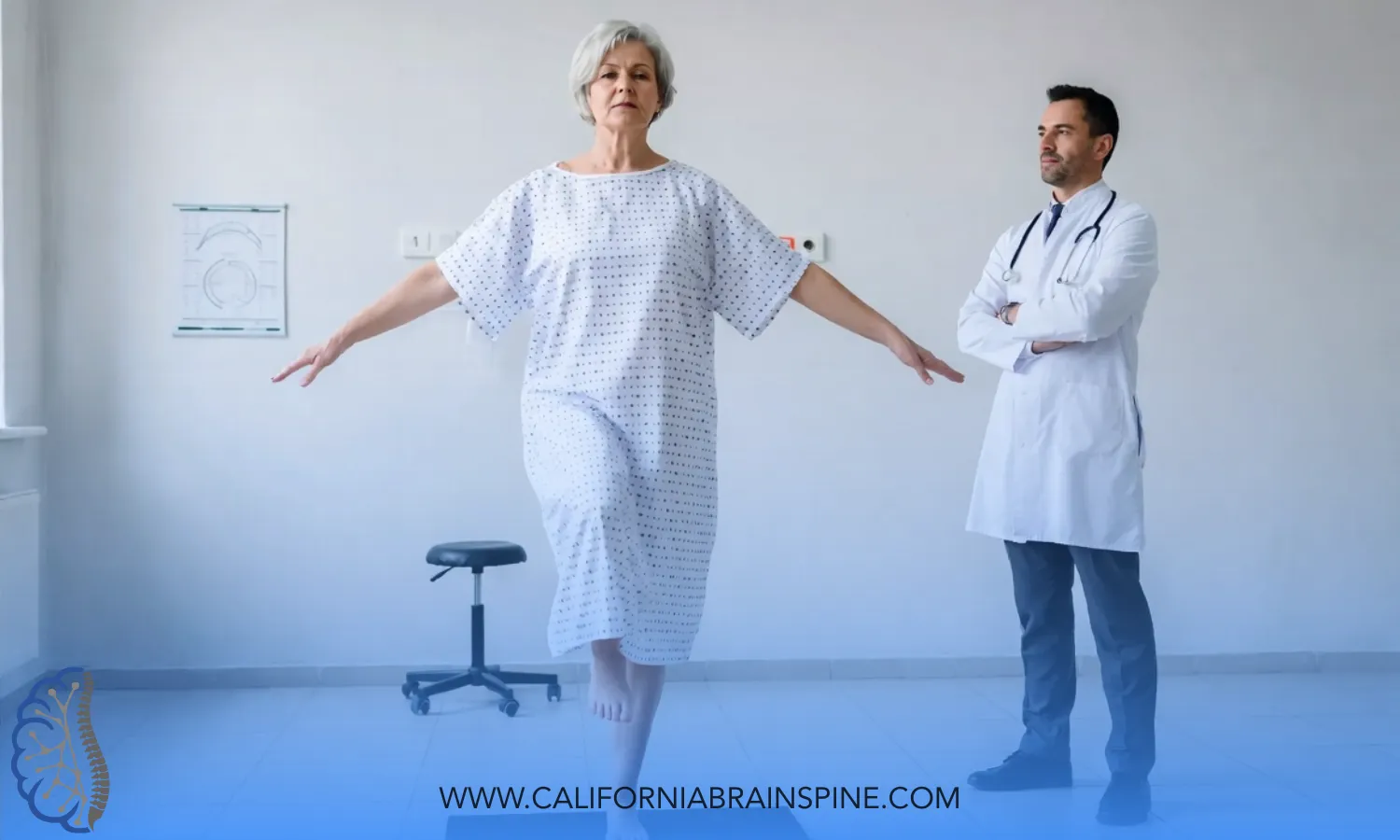
Then I perform a comprehensive neurological and vestibular exam that may include:
-
Eye movement testing in different directions and speeds
-
Head and body position tests that may briefly bring out dizziness or instability
-
Balance and gait assessment on firm and compliant surfaces, with eyes open and closed
-
Strength, sensation, and reflex testing in the limbs
-
Simple autonomic checks such as heart rate and blood pressure changes with posture
Each piece of this evaluation helps us understand whether your balance problems are primarily vestibular, neurological, sensory, musculoskeletal, autonomic, or a combination.
Why engineering and clinical neuroscience matter for your stability

You might wonder why my engineering background matters if you are simply looking for a balance problems treatment center in Woodland Hills area. The reason is that balance is essentially a complex real time control system. Your brain must constantly integrate signals from the inner ears, eyes, joints, and muscles to keep you upright with minimal effort.
My training in Electrical Engineering taught me how to model and troubleshoot dynamic systems that receive multiple inputs and produce precise outputs. In Clinical Neuroscience, I learned how those ideas apply to the brain, vestibular system, and spinal cord. When I look at your balance problems, I am always asking:
-
Which inputs are noisy, delayed, or missing?
-
Which pathways in the brain or spinal cord might not be processing information correctly?
-
How can we gently challenge those pathways so they adapt and become more efficient?
This combination of engineering and neuroscience helps us design rehabilitation that is not random exercise, but targeted retraining of specific networks.
Balance is not just strength or willpower. It is the coordinated dance of many systems. When one partner is out of rhythm, the whole dance feels off until we help it find the beat again.
Inside a balance problems treatment center near Woodland Hills
In the middle of your care journey, it helps to see the bigger picture of how California Brain & Spine Center approaches these issues. While our clinic is located in Calabasas, many people searching for a balance problems treatment center in Woodland Hills come to us because they want a more detailed, brain based evaluation than they have received elsewhere.
At California Brain & Spine Center, patients with balance problems are evaluated with advanced vestibular and neurological tools. The focus is not only on whether you can stand still for a few seconds, but on how your body reacts to subtle changes in vision, surface, and head position.
The clinical process often includes:
-
Standardized balance testing to compare your stability in different conditions
-
Observation of how your eyes and head move together when you track targets or turn your head
-
Analysis of gait, including step length, turning speed, and how you use your arms for support
-
Integration of past medical data such as imaging, lab results, and prior therapies
By taking this whole system approach, the clinic can identify patterns that might be missed in shorter visits focused only on one part of your body.
Advanced tools we use to understand your dizziness and unsteadiness
To serve as a true balance problems treatment center for Woodland Hills area residents, California Brain & Spine Center integrates multiple evidence informed modalities, such as:
-
Vestibular Rehabilitation for patients whose inner ear and eye reflexes are not aligned
-
Balance Disorder Therapy that uses graded standing and walking tasks to retrain postural control
-
NeuroSensory Integration (NSI) for those who feel overwhelmed by visual motion, sound, or complex environments
-
Neuroplasticity Rehabilitation and Cognitive Rehabilitation when balance issues are tied to brain fog, slower processing, or attention difficulties
-
Non invasive neurology therapies like Low Level Laser Therapy (LLLT), Pulsed Electromagnetic Field (PEMF), Hyperbaric Oxygen Therapy (HBOT), and GammaCore vagus nerve stimulation in selected cases where cellular and autonomic support may be beneficial
-
Structured programs like the NeuroRevive Program for patients whose balance problems are part of broader concussion or traumatic brain injury symptoms
Each tool is chosen to match the patient’s findings and goals rather than being used routinely for everyone.
The right treatment is not about doing more. It is about doing what your specific brain and body need to feel safe, coordinated, and capable again.
Treatment paths at a balance problems treatment center in Woodland Hills area
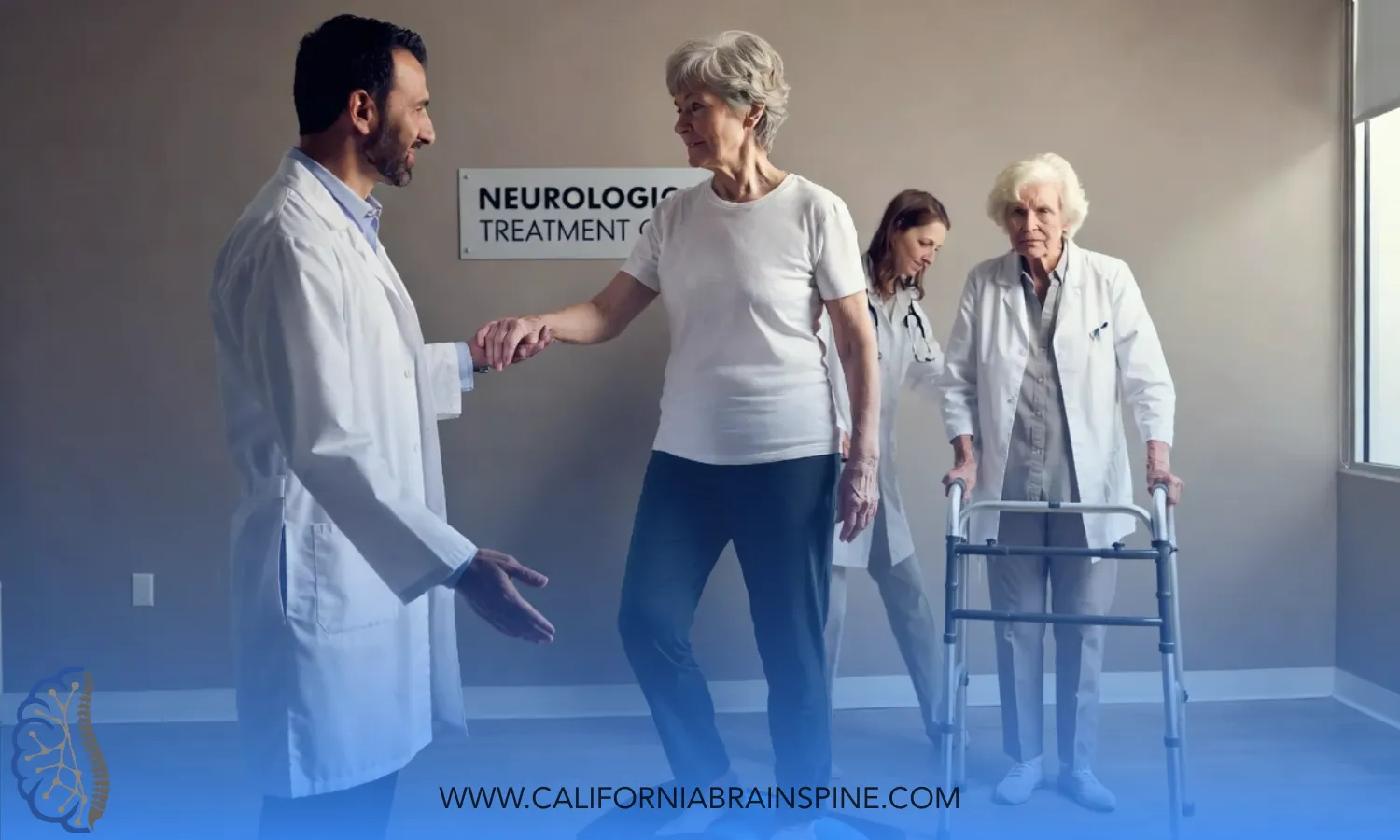
Once evaluation is complete, treatment can move forward with clarity. At a balance problems treatment center in Woodland Hills region, you should expect a plan that is personal, not generic.
Typical treatment paths might include:
-
Targeted Vestibular Rehabilitation if tests show inner ear or eye head coordination issues
-
Balance Disorder Therapy focusing on standing stability, turning, and walking on different surfaces
-
Exercises that integrate vision, head motion, and body awareness, rather than isolating each piece
-
Strength and conditioning components when weakness contributes to unsteadiness
-
Autonomic regulation strategies if blood pressure or heart rate changes are involved in near falls
The aim is to gradually expand what you can do without feeling unsafe. We move in small, measurable steps instead of jumping from “I am afraid to stand in the shower” to “Run a 5K.” Every success, however small, teaches your nervous system that it can trust your body again.
Home strategies that support your rehabilitation, not sabotage it
Your progress does not depend only on what happens in the clinic. A good balance problems treatment center in Woodland Hills area also gives you practical home strategies that protect you from unnecessary risk while supporting neuroplasticity.
These may include:
-
Simple home exercises prescribed at the right intensity, not copied from the internet
-
Environmental changes such as improved lighting, cleared walkways, and grab bars where needed
-
Guidance on footwear and assistive devices if appropriate
-
Pacing strategies so you can be active without pushing your nervous system into overload
You are always encouraged to move, but to move wisely, with an understanding of how your specific balance system responds.
Healing is rarely about one dramatic breakthrough. It is the accumulation of many small, safe steps that gradually rewrite what your brain believes is possible.
A real patient story: from holding the walls to walking with confidence
Some time ago, a patient from near Woodland Hills came to see me who felt like her world had shrunk to the distance between the couch and the kitchen. Let us call her L. She described walking along the hallway while sliding one hand along the wall because she did not trust her balance. Supermarkets, parking lots, and even church felt terrifying because she feared she might fall.
During her evaluation at our clinic in Calabasas, we discovered several contributing factors. L. had mild vestibular hypofunction on one side, visual motion sensitivity, and early signs of neuropathy in her feet. She also had significant fear of falling after a previous minor fall, which made her move stiffly and cautiously, actually increasing her instability.
We created a detailed plan using Vestibular Rehabilitation to improve her eye head reflexes, Balance Disorder Therapy to retrain her posture and gait, and simple NeuroSensory Integration drills to help her tolerate visual motion in places like Woodland Hills supermarkets. We also gave her foot specific exercises and home safety recommendations, including better lighting and a few strategic grab bars.
Over the next months, L. began to notice changes. She could walk down the hallway without sliding her hand along the wall. She navigated a local store for the first time without feeling like she needed to leave after a few minutes. Eventually, she went back to social activities she had abandoned. She told me that the most important change was not just her steadier steps, but the feeling that her world was open again, not shrinking.
This is the kind of transformation I want a balance problems treatment center in Woodland Hills region to offer: not a promise of perfection, but a realistic, science based path toward a larger, safer, more confident life.
Your most common questions about balance problems treatment center in Woodland Hills
Q1: How do I know if I really need a specialist for my balance problems?
If you are changing how you move because you are afraid of falling, avoiding certain places in Woodland Hills, or noticing that balance issues are not improving on their own, it is time to see a specialist. A balance problems treatment center in Woodland Hills area can provide a detailed vestibular and neurological evaluation that goes far beyond a quick in office balance check or a simple prescription.
Q2: What happens during a balance evaluation at your clinic?
At California Brain & Spine Center, a typical evaluation includes a detailed discussion of your symptoms and medical history, followed by neurological, vestibular, and balance testing. We observe how you stand, walk, turn, and move your head, and we may use specialized tools to assess eye movements and postural control. The goal is to understand the specific pattern behind your balance problems so your treatment can be customized.
Q3: Can balance problems really improve, or do I just have to accept them as part of aging?
Age can influence balance, but it does not automatically mean you must live with unsteadiness or fear. Many balance issues are related to vestibular function, vision, strength, sensation, or autonomic regulation, all of which can be improved with targeted rehabilitation. At a balance problems treatment center in Woodland Hills area, we regularly see patients gain stability and confidence through carefully designed programs, regardless of age.
Q4: What types of treatments do you use for balance problems?
Treatment depends on the cause. It may include Vestibular Rehabilitation, Balance Disorder Therapy, NeuroSensory Integration, strength and coordination training, autonomic strategies, and in some cases non invasive neurology therapies like LLLT, PEMF, HBOT, or GammaCore vagus nerve stimulation. For patients with concussion or traumatic brain injury, programs such as Concussion Treatment Calabasas, Traumatic Brain Injury Recovery, or the NeuroRevive Program may be recommended.
Q5: How long does it usually take to see improvement?
Some patients notice changes within a few sessions, especially if their balance problems are related to specific vestibular issues that respond quickly to rehabilitation. Others, particularly those with multiple contributing factors, need a longer, more gradual approach. During your evaluation, we will discuss a realistic time frame based on your findings, and we will track progress together so you can see concrete changes over time.
Q6: I am afraid of falling during exercises. How do you keep therapy safe?
Safety is always the priority. Exercises start at a level where you can succeed with proper support, such as using parallel bars, a stable surface, or a harness system when needed. As a balance problems treatment center serving Woodland Hills residents, we design each step so that your brain is challenged but not overwhelmed, and we adjust as you gain strength and confidence.
Conclusion: choosing the right balance problems treatment center in Woodland Hills area
If balance problems have been shaping your life in Woodland Hills, limiting where you go and what you feel safe doing, you deserve more than reassurance that “this is just how it is now.” You deserve a careful, science based evaluation and a plan that respects your body, your goals, and your story.
In this article, I have shared how we approach care at a balance problems treatment center in Woodland Hills region through California Brain & Spine Center in Calabasas. By combining my background in Engineering and Clinical Neuroscience with advanced vestibular and neurological tools, we work to understand why you feel unsteady and what can truly help. We use Vestibular Rehabilitation, Balance Disorder Therapy, NeuroSensory Integration, Cognitive and Neuroplasticity Rehabilitation, and non invasive neurology therapies when appropriate, always in a personalized way.
If what you have read here sounds like your experience, I invite you to take the next step. Reach out, ask your questions, and consider scheduling a comprehensive balance and vestibular evaluation. You are not defined by your unsteadiness. With the right guidance, your nervous system can learn, adapt, and move you closer to the most stable and fulfilling version of your life.
At California Brain & Spine Center, our goal is not just to reduce your risk of falls. It is to help you feel safe in your own body again, so you can walk through Woodland Hills, your home, and your future with more confidence and ease.
If you live in Woodland Hills, Calabasas, or anywhere in Southern California and balance problems have been limiting your life, you do not have to handle this alone. Contact California Brain & Spine Center to request an appointment for a personalized neurological and vestibular evaluation. Together, we can design a clear, evidence informed treatment plan that supports your brain, your body, and your goals, so you move beyond simply managing symptoms and toward the best version of your daily function and independence.