Non-surgical · Evidence-based · Calabasas
Memory Loss Treatment
Calabasas
Answers first. Then a plan.
Few things are more unsettling than forgetting a familiar name, misplacing your keys three times before breakfast, or losing the thread of a conversation you started. Whether those lapses follow a concussion, chronic stress, hormonal change, or early cognitive decline, they deserve careful, science-based answers — not reassurance and a wait-and-see. Dr. Alireza Chizari, DC, DACNB, our board-certified functional neurology specialist, starts by finding out what's actually driving them.
The quick, honest answer
Memory loss treatment in 30 seconds
What it is
Diagnosis before therapy
A structured evaluation of memory, attention, vestibular, and metabolic function to identify what's driving the lapses — followed by non-surgical rehabilitation aimed at that specific driver.
Who it may help
When forgetting isn't normal
People whose memory changed after a concussion, illness, hormonal shift, or period of sustained stress — and those noticing gradual decline who want to know where they actually stand.
Best next step
Get evaluated early
Memory concerns are one area where waiting rarely helps. An evaluation clarifies whether this is a functional, reversible pattern or something that needs a medical specialist — and either answer is worth having.
Why memory falters
Common causes of memory loss
Understanding why memory falters is the first step toward effective treatment — because these causes call for very different plans.
Concussion & TBI
Even a "mild" blow can stretch neuronal wiring and spark inflammation that blurs short-term memory
Age-Related Changes
Subjective memory decline becomes more common with each decade — early, structured care matters most here
Metabolic & Hormonal
Thyroid imbalance, insulin resistance, B-12 deficiency, and perimenopausal shifts all slow memory function
Chronic Stress
Prolonged cortisol exposure affects memory-critical brain structures and everyday recall
Sleep Debt
Fragmented sleep disrupts the overnight consolidation that turns experience into lasting memory
Neurodegenerative Disease
Where suspected, early detection and referral to the right medical specialist gives the best options
Memory lapses often travel with that hazy, hard-to-focus feeling — see our brain fog treatment and concussion treatment programs.

Why acting early matters
Most people never have the conversation
Memory concerns are among the most common things people worry about privately and discuss with a clinician least. That gap costs time — and time is the one variable that consistently matters in cognitive care.
- Alzheimer's Association research finds two in three Americans want brain-health guidance from a healthcare provider — but only about 14% have actually discussed it with their doctor
- An estimated 7.4 million Americans aged 65 and older are living with Alzheimer's in 2026 — roughly 1 in 9 people in that age group
- Many memory complaints, however, are not neurodegenerative at all — they're functional, metabolic, or sleep-driven, and those are often reversible with the right plan
Finding the driver
What your evaluation includes
Every plan begins with a thorough intake — because "memory loss" is a symptom, not a diagnosis.
History & neurological exam
Timeline, triggers, medications, sleep, and a functional neurological examination — the pattern of what you forget is often more informative than how much.
Computerized memory testing
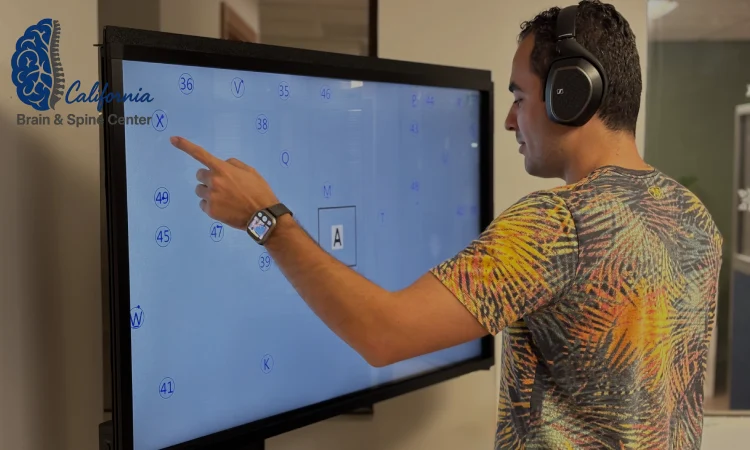
Objective measurement of working memory, processing speed, and executive function — establishing a real baseline instead of an impression.
Vestibular & oculomotor screening
Eye-movement and balance testing, since visual and vestibular instability frequently show up as "memory" complaints.
Targeted lab review
Vitamin B-12, vitamin D, thyroid panel, and inflammatory markers — reviewed and, where needed, coordinated with your physician or healthcare provider.
Your personalized plan
Non-surgical memory treatment options
Because most memory challenges arise from functional rather than structural disruption, they respond well to conservative, layered care.

Setting expectations honestly
What this care can — and cannot do
Why non-surgical care fits memory complaints
- No anesthesia risk — evaluation relies on neuro-cognitive testing, functional examination, and bloodwork
- Adaptive scheduling — 45-minute sessions fit around work, school, or caregiving
- Objective progress checks — measurable metrics guide weekly adjustments rather than guesswork
- Reversible causes get found — thyroid, B-12, sleep, and stress drivers are treatable once identified
Brain plasticity is greatest in the first year after a noticeable change — but meaningful improvement is documented years later too. Starting sooner simply gives more to work with.
When you need a medical specialist
- Rapidly progressing memory loss over weeks or a few months
- Disorientation to time or place, or getting lost on familiar routes
- Significant personality or behavioral change
- Memory loss with weakness, speech difficulty, or new severe headache — seek urgent care
Functional neurology does not diagnose or cure neurodegenerative disease. Where findings point that way, Dr. Chizari says so directly and refers you to medical neurology or geriatric care — early detection matters, and an honest answer is the most useful thing we can offer.
Patient stories
Confidence, restored
Details changed to protect privacy. Representative of possible outcomes — not a guarantee of any specific result.
A 54-year-old Calabasas boutique owner found herself losing mid-sentence thoughts after menopause. Her evaluation pointed to a combination of sleep fragmentation and metabolic factors rather than early decline. Eight weeks of structured cognitive work paired with sleep and nutrition changes brought her recall back — she runs her shop now without sticky notes on every surface.
A 39-year-old who came off a mountain bike was left fuzzy on names and faces. Cognitive drills and sleep retraining cleared the haze, and he's back leading team meetings. And a family worried about a father misplacing keys and repeating stories found real value simply in getting a clear picture and actionable daily routines at home.
Forgetfulness doesn't have to define your future — but the first step is always finding out what's actually causing it.
Common questions
Frequently asked questions
How soon should I start?
As early as you're concerned. Brain plasticity is greatest in the first 12 months after a noticeable change, though meaningful improvements are documented years later as well. Early evaluation also rules things in or out while there are more options available.
Is this the same as being tested for dementia?
No. Our evaluation assesses how your memory and related systems are functioning and looks for treatable drivers. It isn't a dementia diagnosis, and if findings suggest a neurodegenerative process, you'll be referred to medical neurology or geriatric specialists for formal diagnostic workup.
Is the therapy uncomfortable?
Sessions are interactive and paced to your tolerance. Short-lived mental tiredness afterward is common and generally signals productive neural engagement — but pacing is adjusted if it's more than that.
Can children be evaluated?
Yes. Pediatric protocols adjust task difficulty and workload for developing brains, and evaluation always comes first.
Do I need a physician referral?
Referrals are welcome but not required. We can perform the initial assessment directly and coordinate findings with your primary care physician or specialist.
Take the first step
Ready to reclaim
your memory?
Forgetfulness doesn't have to define your future. A structured, science-backed evaluation tells you what's actually happening — whether that means a treatable functional pattern or a referral to the right specialist. Serving Calabasas, Woodland Hills, Agoura Hills, and the greater West Valley.
California Brain & Spine Center · 4768 Park Granada, Ste 107, Calabasas, CA 91302